Why Is My Mole Itchy? Causes, Warning Signs & When to See a Doctor
An itchy mole is one of the most common skin concerns that prompts people to search for answers online — and for good reason. While the majority of itchy moles have entirely benign explanations such as dry skin or friction from clothing, persistent or unexplained itching can occasionally be an early signal worth investigating. This article explains the full range of causes, from the harmless to the clinically significant, and gives you a clear framework for deciding when professional evaluation is the right next step.
Key Takeaways
- Most itchy moles are caused by benign factors such as dry skin, friction, sun exposure, or skincare products — not skin cancer.
- Persistent itching lasting more than two to three weeks, especially alongside changes in size, shape, colour, or border, warrants prompt dermatologist evaluation.
- The ABCDE rule — and its extended ABCDE-I variant — provides a practical framework for identifying mole changes that need professional assessment.
- Specific named conditions such as Meyerson nevus and halo nevus directly cause mole itching and are frequently overlooked in general health information.
- Never scratch, pick, or apply home remedies to an itchy mole; doing so can cause trauma, infection, or mask changes that a clinician needs to assess.
Is It Normal for a Mole to Itch?
Occasional, brief itching around a mole is relatively common and is usually not a cause for alarm. Moles — medically called nevi — are clusters of melanocytes, the pigment-producing cells of the skin. Like any area of skin, a mole and the tissue surrounding it can respond to everyday irritants, environmental changes, and minor trauma. The nerve endings that run through and around a mole can be stimulated by inflammation, dryness, or pressure, producing an itch sensation in the same way that any patch of skin might itch after exposure to cold air or a new fabric.
What matters clinically is the pattern of the itching. A mole that itches briefly after sun exposure and then settles is very different from one that itches persistently for weeks, particularly if the mole itself appears to be changing. Understanding the distinction between these two scenarios is the core purpose of this article.
Common Benign Causes of an Itchy Mole
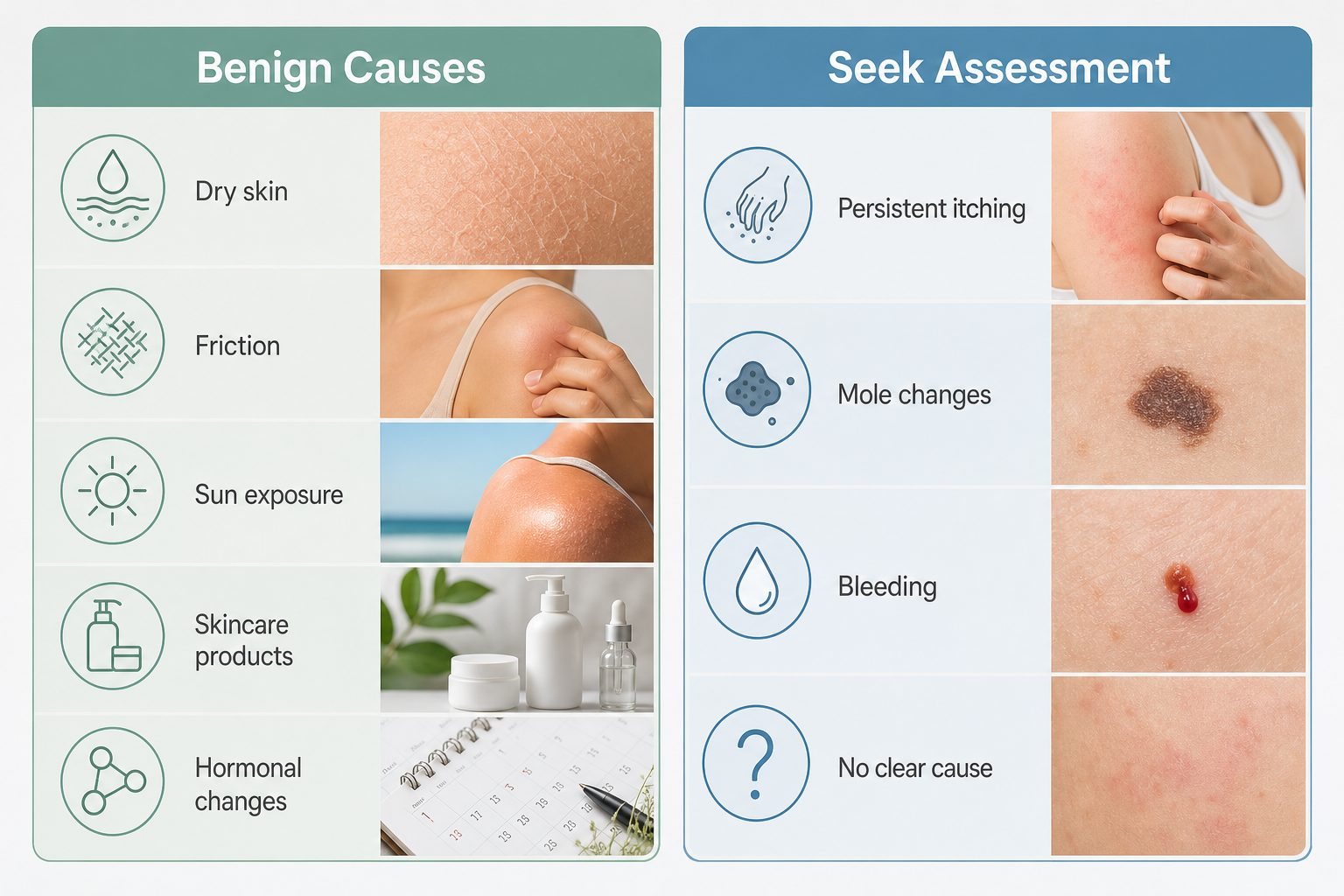
The majority of itchy moles have a straightforward, non-cancerous explanation. Identifying the likely cause can help you manage the symptom appropriately while remaining alert to any changes that need professional attention.
Dry Skin
Dry skin is one of the most frequent reasons a mole itches. When the skin around or over a mole loses moisture — particularly in cold weather, low-humidity environments, or after using harsh soaps — the surface becomes tight and irritated. The mole itself does not itch in isolation; rather, the surrounding skin triggers the sensation. Applying a fragrance-free moisturiser to the area often resolves this type of itching within a few days.
Friction from Clothing or Jewellery
Moles located on the bra line, collar area, waistband, or anywhere that fabric or jewellery repeatedly rubs are particularly prone to irritation. Friction from clothing causes low-grade mechanical trauma to the skin surface, stimulating nerve endings and producing an itch or mild soreness. Choosing softer fabrics, adjusting clothing fit, or using a small protective dressing can reduce this type of irritation significantly.
Sun Exposure and UV Damage
UV radiation from sun exposure can irritate the skin around a mole, causing temporary redness, warmth, and itching — essentially a localised sunburn response. Moles may be slightly more sensitive to UV than the surrounding skin because of their higher concentration of melanocytes. Consistent use of a broad-spectrum SPF 30 or higher sunscreen over moles, particularly on the face, shoulders, and back, reduces this risk and is recommended by dermatologists regardless of mole symptoms.
Shaving and Razor Burn
Moles that contain hair — a common and entirely benign feature — are frequently irritated during shaving. The blade can catch the raised surface of the mole, causing minor trauma, razor burn, or follicular irritation. This typically produces short-lived itching or tenderness that resolves within a day or two. If a mole is regularly irritated by shaving, a dermatologist can discuss whether removal is appropriate.
Skincare Products, Cosmetics, and Allergens
New skincare products, perfumes, sunscreens, or cosmetics applied near a mole can trigger a localised allergic reaction or contact dermatitis. The mole itself is not the source of the problem; rather, the skin over and around it reacts to a chemical ingredient. Fragrances, preservatives such as parabens, and certain active ingredients like alpha hydroxy acids are common culprits. Discontinuing the suspected product and observing whether the itching resolves is a reasonable first step.
Hormonal Changes
Hormone fluctuations during puberty, pregnancy, and menopause can cause existing moles to change subtly in size, colour, or sensitivity. During pregnancy in particular, elevated oestrogen and progesterone levels can stimulate melanocytes, making moles temporarily more prominent or reactive. Mild itching associated with these hormonal changes is generally benign, but any mole that changes noticeably during pregnancy should still be assessed by a dermatologist, as pregnancy does not eliminate the possibility of an atypical mole developing.
Hair Follicle Irritation
Moles that sit over hair follicles can itch when the follicle becomes mildly inflamed or blocked — a process called folliculitis. This is particularly common on the scalp, beard area, and legs. The itching tends to be localised and may be accompanied by a small red bump at the base of a hair within or near the mole.
Skin Conditions That Cause Mole Itching
Several specific dermatological conditions can cause a mole to itch and are worth understanding because they are frequently missed in general health information.
Meyerson Nevus
A Meyerson nevus is a benign mole surrounded by a ring of eczematous (inflamed, scaly) skin. The condition is thought to represent a localised immune response in which the body’s inflammatory cells react to the skin immediately around the mole, producing itching, redness, and scaling in a halo pattern. Meyerson nevus is not associated with malignancy, but it can look alarming and is often mistaken for something more serious. A dermatologist can confirm the diagnosis through visual examination or dermoscopy. Treatment typically involves a short course of topical corticosteroid cream applied to the inflamed ring, not to the mole itself.
Halo Nevus (Sutton’s Nevus)
A halo nevus develops when the immune system targets the melanocytes within a mole, causing the pigment to fade and a pale, depigmented ring to form around it. The mole may eventually disappear entirely. Halo nevi are most common in adolescents and young adults and are generally considered benign. However, because the immune response that causes a halo nevus can occasionally be associated with vitiligo or, rarely, with melanoma elsewhere on the body, a dermatologist should evaluate any new halo nevus to confirm the diagnosis and rule out other concerns.
Eczema and Contact Dermatitis
Eczema (atopic dermatitis) and contact dermatitis can affect any area of skin, including skin that overlies a mole. When these conditions flare in the vicinity of a mole, the mole may appear to be the source of the itching when in fact the surrounding skin is inflamed. Identifying and managing the underlying skin condition — through moisturisers, topical steroids, or allergen avoidance — usually resolves the itching.
When an Itchy Mole May Be a Warning Sign
While most itchy moles are benign, itching can occasionally be one of the early signs of cellular changes within the mole. Understanding when to be concerned requires knowing what other features to look for alongside the itch.
Melanoma and Other Skin Cancers
Melanoma is the most serious form of skin cancer and arises from melanocytes — the same cells that make up a mole. Basal cell carcinoma (BCC) and squamous cell carcinoma (SCC) can also develop in or near a mole, though they arise from different cell types. Itching alone is not a reliable indicator of melanoma; many melanomas do not itch, and many itchy moles are entirely benign. However, when itching occurs alongside other changes in a mole’s appearance, the combination warrants urgent professional assessment. Melanoma detected at an early stage has significantly better outcomes than melanoma identified late, which is why dermatologists emphasise regular skin self-examination and prompt evaluation of changing moles.
Dysplastic Nevus (Atypical Mole)
A dysplastic nevus, also called an atypical mole, is a mole with irregular features that place it between a typical benign mole and melanoma on the clinical spectrum. Dysplastic nevi are not cancerous, but they carry a modestly elevated risk of developing into melanoma over time, particularly in people with a family history of melanoma or a large number of atypical moles. An itchy dysplastic nevus should be evaluated by a dermatologist, who may recommend monitoring, dermoscopy, or a mole biopsy depending on its features.
Why Moles Can Itch During Cellular Changes
When cells within a mole begin to change — whether due to inflammation, immune activity, or abnormal growth — the surrounding nerve endings can be stimulated by inflammatory mediators, increased blood vessel formation (vascularisation), or physical pressure from expanding tissue. This is the biological mechanism behind itch in a changing mole: it is not the mole’s surface that is irritated, but the nerve fibres responding to internal activity. This distinction is clinically important because it means that an itchy mole with no visible surface irritant deserves closer attention than one with an obvious external cause.
The ABCDE Rule — and the ABCDE-I Extension
The ABCDE rule is the most widely used framework for identifying mole changes that may indicate melanoma. Dermatologists and skin cancer organisations recommend applying it during monthly skin self-exams and whenever a mole appears to be changing.
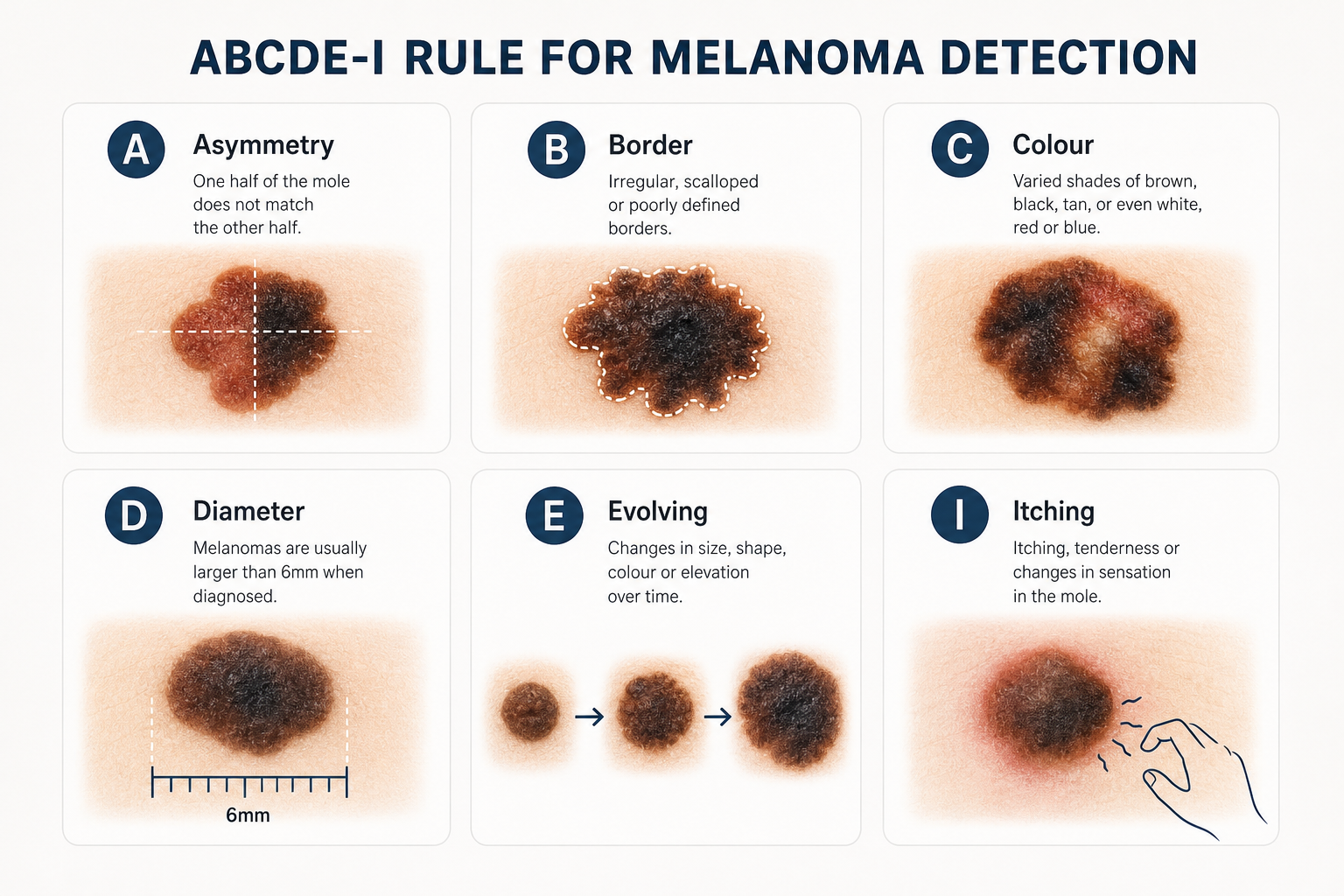
- A — Asymmetry: One half of the mole does not match the other half in shape.
- B — Border: The edges are irregular, ragged, notched, or blurred rather than smooth and well-defined.
- C — Colour: The mole contains multiple shades — brown, black, red, white, or blue — rather than a uniform single colour.
- D — Diameter: The mole is larger than approximately 6 mm (roughly the size of a pencil eraser), though melanomas can be smaller.
- E — Evolving: The mole is changing in size, shape, colour, or any other characteristic over weeks or months.
Some dermatologists use an extended version — the ABCDE-I rule — that adds a sixth criterion: I for Itching. This acknowledges that persistent, unexplained itching in a mole, particularly when no external cause is apparent, can be a clinically relevant symptom. The ABCDE-I framework is not universally adopted, but it reflects the clinical reality that itch is sometimes the first symptom a patient notices before visible changes become apparent.
If a mole meets one or more of the ABCDE criteria — with or without itching — a dermatologist evaluation is appropriate. Meeting multiple criteria increases the clinical urgency.
Itchy Mole That Also Bleeds
An itchy mole that bleeds is a combination that should always be assessed by a dermatologist promptly. Bleeding from a mole can have two broad explanations. The first is trauma: scratching an itchy mole, catching it on clothing, or shaving over it can cause minor surface bleeding that resolves quickly and leaves no lasting change in the mole’s appearance. The second, more concerning explanation is spontaneous bleeding — bleeding that occurs without any obvious physical cause. Spontaneous bleeding from a mole can indicate increased vascularisation within the lesion, which may be associated with abnormal cellular activity. If a mole bleeds without a clear traumatic cause, or if bleeding is accompanied by crusting, oozing, or a change in the mole’s appearance, professional assessment should not be delayed.
Itchy Moles by Body Location
The location of an itchy mole often provides useful context for identifying its cause. Moles on the bra line, waistband, or collar area are frequently irritated by friction from clothing and are among the most common sites for benign mechanical itching. Moles on the face may react to cosmetics, sunscreens, or facial cleansers. Scalp moles can be irritated by hair products, heat styling, or folliculitis. Moles on the back and shoulders — areas with high cumulative UV exposure — may itch after sun exposure or sunburn. Moles in skin folds, such as under the arms or beneath the breasts, can be affected by moisture, friction, and localised skin conditions. Recognising the location-specific trigger can help distinguish a benign cause from one that warrants further investigation.
What Not to Do with an Itchy Mole
This is an area that most general health resources overlook, yet it carries genuine safety implications. Scratching an itchy mole repeatedly can cause surface trauma, bleeding, and secondary infection, all of which can alter the mole’s appearance and make clinical assessment more difficult. Picking at a mole carries similar risks and should be avoided entirely.
Home remedies — including apple cider vinegar, garlic, tea tree oil, and similar substances — are sometimes promoted online as ways to remove or treat moles. Applying these to a mole is not recommended. They can cause chemical burns, scarring, and significant skin damage. More importantly, they can destroy tissue that a dermatologist would need to examine, potentially masking a lesion that required a proper mole biopsy. If a mole is causing concern, the appropriate response is professional evaluation, not self-treatment.
How to Monitor Your Moles at Home
A monthly skin self-exam is a practical and recommended habit for anyone with multiple moles, a history of sun exposure, or a family history of melanoma. The process involves examining the entire skin surface — including the scalp, between the toes, and under the nails — in good lighting, using a hand mirror for areas that are difficult to see directly.
Photographing moles is a particularly useful monitoring tool that is underused. Taking a clear, well-lit photograph of a mole and comparing it to images taken one to three months later can reveal subtle changes in size, shape, or colour that might otherwise go unnoticed. Many dermatology practices also offer professional mole mapping, in which dermoscopy images of all significant moles are recorded and compared at follow-up appointments. This approach is especially valuable for people with a large number of moles or a personal or family history of atypical moles.
Interim Relief for a Benign Itchy Mole
If a mole is itching due to a clearly identifiable benign cause — dry skin, friction, or a mild allergic reaction — there are practical steps that may provide relief while you monitor the situation. Applying a fragrance-free, hypoallergenic moisturiser to the area can address dryness-related itching. A low-potency over-the-counter hydrocortisone cream (1%) applied briefly to the skin around (not directly on) the mole may reduce inflammation from contact dermatitis or mild eczema, though this should not be used for extended periods without medical guidance. An antihistamine cream or oral antihistamine may help if an allergic reaction is suspected. Avoiding the identified trigger — whether a fabric, product, or activity — is the most direct approach.
These measures are appropriate only when the cause of the itching is clearly benign and the mole itself shows no signs of change. They are not a substitute for dermatologist evaluation when any doubt exists.
When to See a Dermatologist
Certain situations call for professional assessment rather than watchful waiting. A dermatologist can perform a visual examination and dermoscopy — a non-invasive technique using a magnifying instrument with polarised light — to evaluate the internal structure of a mole in detail. If the dermoscopy findings are inconclusive or concerning, a mole biopsy can be performed to obtain a tissue sample for laboratory analysis.
Seek dermatologist evaluation if any of the following apply:
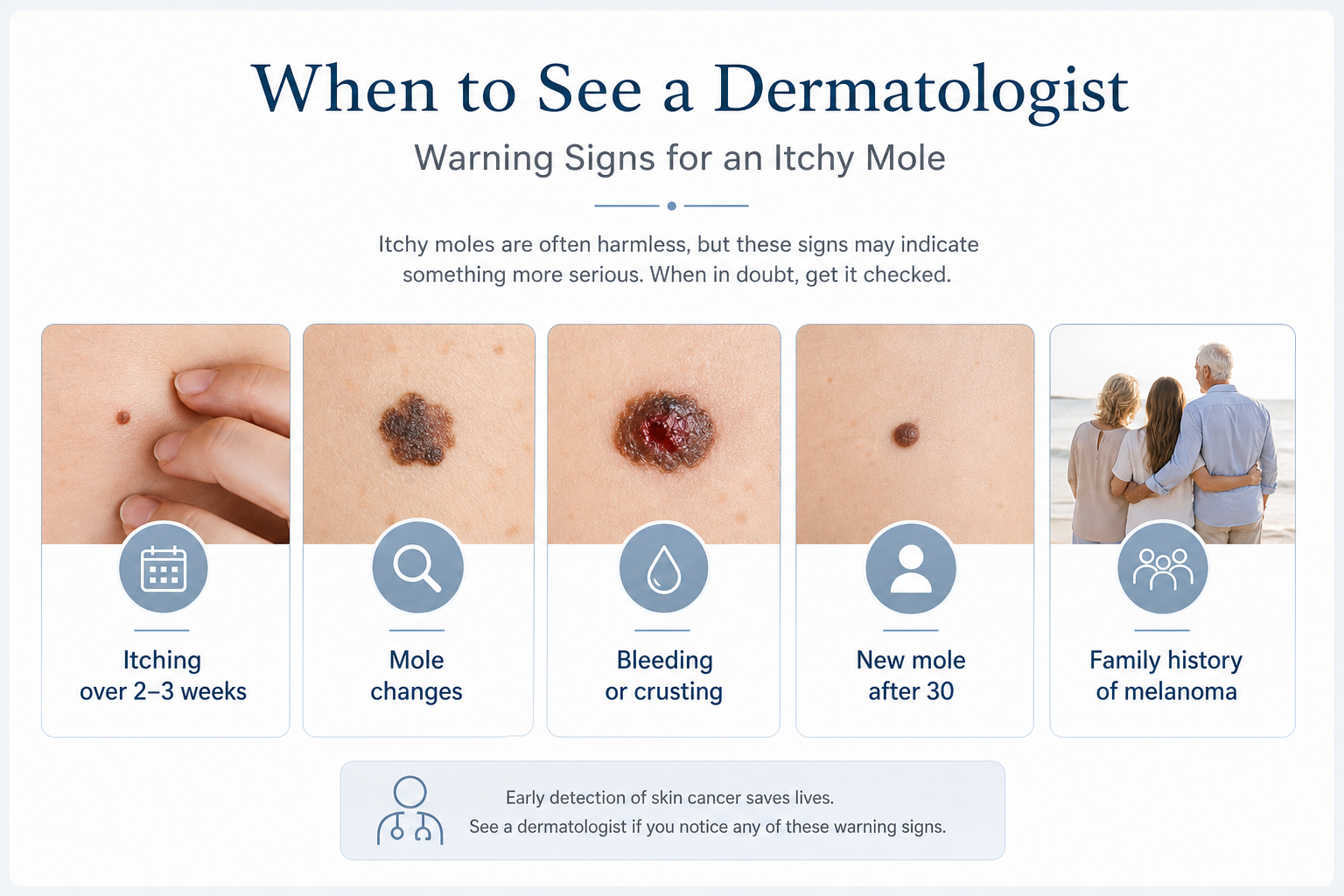
- The itching has persisted for more than two to three weeks without a clear benign cause.
- The mole has changed in size, shape, colour, or border alongside the itching.
- The mole is bleeding, crusting, or oozing without a clear traumatic cause.
- The mole appeared after the age of 30 — new moles in adulthood are more likely to warrant assessment.
- You have a personal or family history of melanoma or dysplastic nevus syndrome.
- The mole is painful, tender, or surrounded by redness that is spreading.
- You have a large number of moles and have not had a professional skin check recently.
Early detection of melanoma is associated with significantly better outcomes. A dermatologist evaluation for a mole that turns out to be benign is always preferable to delayed assessment of one that is not.
Frequently Asked Questions
Can a mole itch without being cancerous?
Yes — the majority of itchy moles are entirely benign. Dry skin, friction from clothing, sun exposure, skincare products, and specific skin conditions such as Meyerson nevus are all common causes of mole itching that have nothing to do with cancer. Itching alone is not a reliable indicator of melanoma, but persistent itching without an obvious cause, particularly alongside mole changes, should be assessed professionally.
How long is it acceptable to wait before seeing a doctor about an itchy mole?
If the itching has a clear benign explanation — such as a new fabric rubbing against the mole — and the mole itself looks unchanged, monitoring for two to three weeks while addressing the cause is reasonable. If the itching persists beyond that period, has no obvious cause, or is accompanied by any change in the mole’s appearance, a dermatologist appointment should be arranged promptly rather than delayed further.
What is a Meyerson nevus?
A Meyerson nevus is a benign mole surrounded by a ring of inflamed, scaly, eczema-like skin. It causes itching and can look alarming, but it is not associated with skin cancer. A dermatologist can confirm the diagnosis and usually treats the inflamed ring with a short course of topical corticosteroid cream.
Does an itchy mole always need to be removed?
No. Most itchy moles do not require removal. If the cause is benign and the mole shows no concerning features, management focuses on addressing the underlying trigger. Mole removal — by surgical excision or surgical shave — may be recommended if the mole is repeatedly traumatised, if dermoscopy reveals atypical features, or if a biopsy confirms abnormal cells. The decision is made on clinical grounds, not on the basis of itching alone.
Can hormonal changes during pregnancy make a mole itch?
Yes. Hormone fluctuations during pregnancy can cause moles to become temporarily more sensitive or reactive, and mild itching may occur. However, any mole that changes noticeably during pregnancy — in size, shape, colour, or border — should be assessed by a dermatologist, as pregnancy does not eliminate the possibility of an atypical mole or melanoma developing.
What is the ABCDE-I rule?
The ABCDE-I rule is an extension of the standard ABCDE melanoma detection framework that adds a sixth criterion: I for Itching. Some dermatologists use this extended version to acknowledge that persistent, unexplained itching in a mole can be a clinically relevant early symptom, even before visible changes become apparent. It is not universally adopted but reflects the clinical observation that itch sometimes precedes other detectable changes.
Is it safe to use apple cider vinegar or other home remedies on an itchy mole?
No. Applying apple cider vinegar, garlic, or similar substances to a mole is not safe and is not recommended by dermatologists. These can cause chemical burns, scarring, and skin damage. More importantly, they can destroy tissue that a clinician needs to examine, potentially masking a lesion that requires proper biopsy and diagnosis. If a mole is causing concern, professional evaluation is the appropriate course of action.
When to Act on an Itchy Mole: A Practical Summary
An itchy mole is a symptom that deserves a measured, informed response — neither panic nor dismissal. The majority of cases have a benign explanation that can be identified and managed without medical intervention. Dry skin, friction from clothing, sun exposure, and localised skin conditions such as Meyerson nevus account for most presentations. Addressing the underlying trigger, protecting the mole from further irritation, and monitoring it with regular skin self-exams and photographs is appropriate when the cause is clearly benign and the mole itself is unchanged.
The threshold for seeking dermatologist evaluation should be low when itching is persistent, unexplained, or accompanied by any change in the mole’s appearance. Dermoscopy and mole biopsy are straightforward, low-risk procedures that can provide definitive answers. Melanoma warning signs — assessed using the ABCDE rule — should be checked whenever a mole draws attention, and any mole that meets one or more of those criteria warrants professional assessment regardless of whether it itches. If you are uncertain, a dermatologist evaluation is always the right choice.