
Lip Filler Dissolving Treatments in London
When previously placed dermal filler no longer suits a patient’s face — through migration, overfilling, or an uneven result — independent specialists can offer a filler treatment dissolving using hyaluronidase, an enzyme that breaks down hyaluronic acid. This approach is planned to focus on the area where filler is identified, subject to clinical assessment, rather than the surrounding tissue.
Science Beauty connects patients researching filler dissolving London options with verified clinics and featured practitioners who assess each case individually. An anatomical review, product history, and the amount of product present all inform whether dissolving injections, a staged dissolving process, or an ultrasound-guided procedure is the more appropriate route.

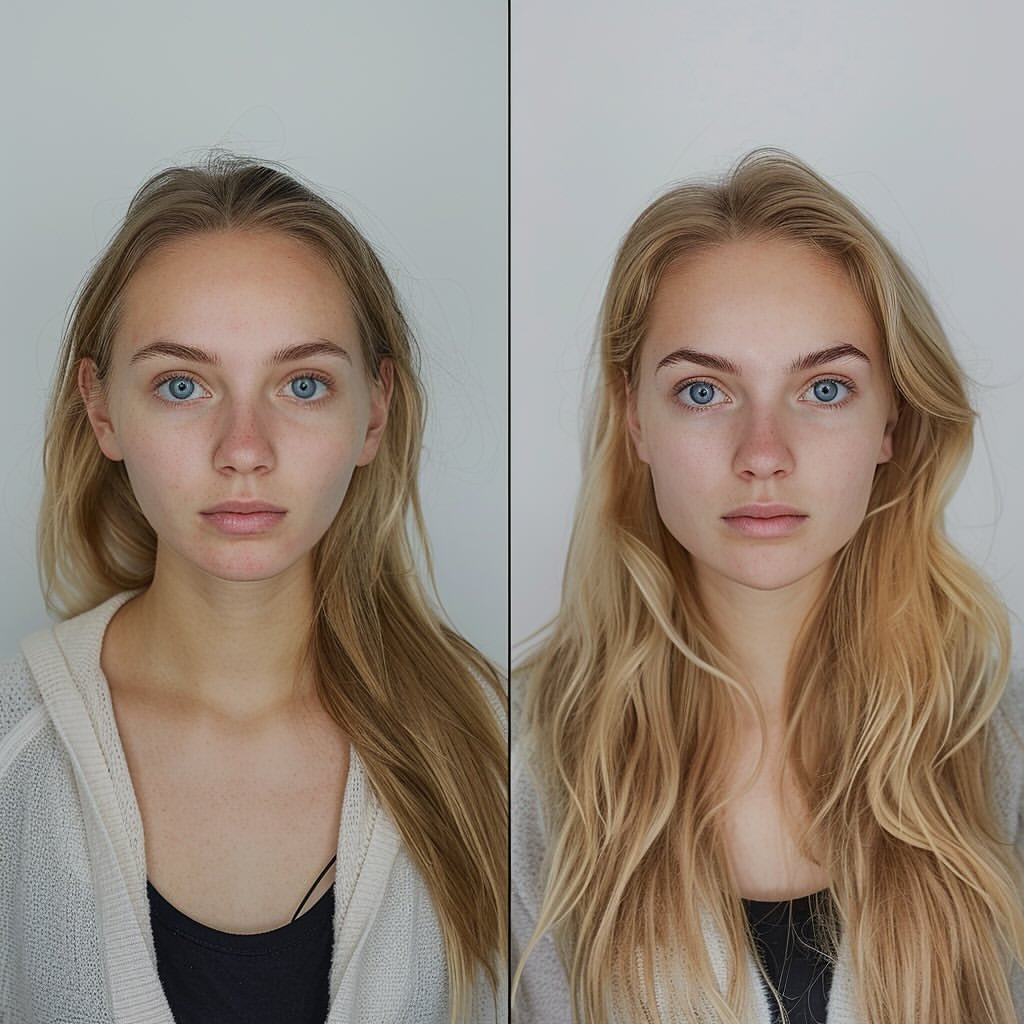


carrying out the procedure on the day of the appointment

How Much Does Dissolving Lip Filler Cost in London?
Direct Answer
Dissolving lip filler in London typically costs between £150 and £300 per session, with an average price of around £200–£220. Prices vary based on the amount of filler to be dissolved, whether ultrasound guidance is used, and clinic location, with a partial, targeted dissolve starting around £120–£150. Premium central London and Harley Street clinics often charge £300–£450 or more for complex or full-dissolve cases.
Typical Dissolving Lip Filler Prices in London
- Partial / targeted dissolve (small area of lip): £120–£150
- Standard full-lip dissolve: £150–£300
- Complex / ultrasound-guided dissolving: £300–£450
- Premium / Harley Street session: £300–£450
- Follow-up top-up dissolve (if needed): £100–£150
Key Pricing Factors
- Practitioner qualifications: GMC-registered doctors and independent prescribers charge more, as hyaluronidase is a prescription-only medicine requiring proper assessment and a patch test.
- Clinic location: Harley Street and central London clinics typically charge 30–60% more than equivalent sessions in outer London.
- Technology used: Ultrasound-guided dissolving, which precisely maps filler position within the lip before treatment, costs 2–3× more than standard “blind” dissolving techniques.
- Amount of filler to remove: Dissolving several previous rounds of built-up filler typically costs more than a single recent treatment, as it may require a higher hyaluronidase dose and a longer appointment.
- What’s included: Some clinics quote a low headline price and charge separately for the mandatory patch test or a follow-up review.
What Should Be Included in the Price
- Consultation and assessment with a GMC or NMC registered independent prescriber
- Mandatory patch test before treatment to check for allergic reaction
- Confirmation of the hyaluronidase dose planned for your lips
- Guidance on the 1–2 week window to see full dissolving results
- Follow-up review, particularly if the dissolving is addressing a complication
Pricing Red Flags
Dissolving lip filler advertised below £80 in London is a warning sign rather than a bargain. Suspiciously low prices usually indicate one of: an unqualified provider without prescribing rights, a skipped patch test, or a non-clinical setting. Correcting a poorly managed dissolving session — over-dissolving natural lip tissue or an allergic reaction — costs significantly more than a properly performed treatment in a CQC-regulated clinic.
For a personalised quote based on the amount and complexity of your lip filler, book a free consultation.
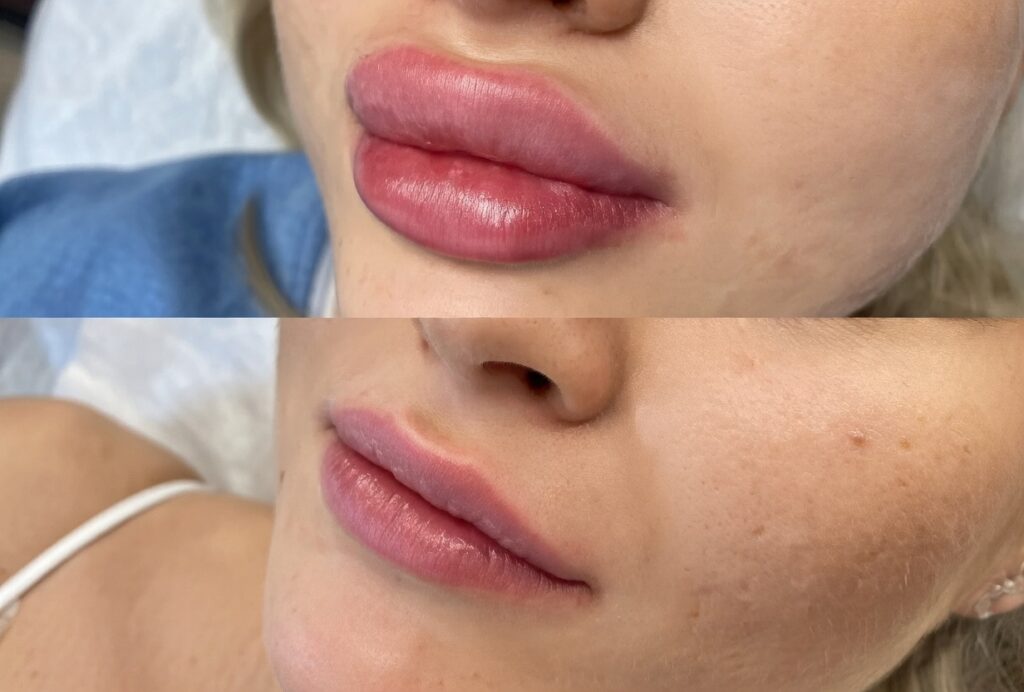
Before and After Lip Filler Dissolving Treatment
Patients considering lip filler dissolving often want treatment that may help reduce the appearance of overfilled or migrated filler, with previous asymmetry, puffiness, or lumps addressed. Independent specialists describe this as a gradual settling process rather than an instant change, since swelling can temporarily affect how the area looks.
Outcomes depend on individual anatomy, the amount of filler injected previously, the treatment plan agreed at consultation, and practitioner technique. Photographs shared by clinics represent individual patient outcomes, and results vary between individuals.
Changes commonly discussed by patients considering dissolving:
- Helping the treated area appear more even
- Reduction of lumps, unevenness, or product migration
- Correction of overfilled or asymmetrical lips
- A foundation for a smaller, more precise new filler amount if desired

What is Lip Filler Dissolving?
Lip filler dissolving is a treatment that uses hyaluronidase, a naturally occurring enzyme, to help break down hyaluronic acid dermal filler that has been previously injected. Because most modern lip injections are hyaluronic acid-based, they can typically be targeted with this approach, unlike some older or non-HA materials.
The enzyme is introduced by injection directly into the treated area, where it acts on the hyaluronic acid dermal filler already present. Some practitioners use real-time ultrasound scanner guidance beforehand, which helps them see exactly where the product sits before dissolving is carried out.
Hyaluronidase is classed as a prescription-only medicine in the UK. Where a prescription is clinically required, this is provided through a face-to-face consultation and clinical assessment by an appropriately qualified prescriber working with the independent clinic.
The Lip Filler Dissolving Process: Step by Step
Initial Consultation
An independent specialist reviews previous filler history, the type of product used where known, and the patient’s goals for the treated area.
Clinical Assessment
Ultrasound imaging may be used to locate the product precisely, assess its depth, and rule out overfill or filler elsewhere in the tissue.
Pre-Treatment Protocol
The treatment plan is confirmed, including the amount of hyaluronidase considered appropriate and whether a patch test is advised beforehand.
Treatment Implementation
Hyaluronidase is injected into the identified area, sometimes guided by ultrasound, to begin the dissolving process where the product has been placed.
Post-Procedure Care
Aftercare guidance covering swelling, bruising, and expected timelines is provided directly by the treating clinic following the appointment.
- Procedure time: 15—30 minutes
- Recovery: Swelling or bruising often eases within 24 to 48 hours

Benefits of Lip Filler Dissolving
For patients unhappy with a previous treatment result, dissolving can offer a way to correct migration, overcorrection, or lumps without waiting for the hyaluronic acid filler to break down naturally over many months. This may support a more balanced appearance after previous filler, where suitable.
An ultrasound-guided procedure, in particular, allows a practitioner to assess product location before treatment, which may support a more targeted dissolving procedure rather than a generalised approach across the whole lip.
Reasons patients seek dissolving treatment:
- Correcting product migration or an uneven result
- Reducing an overfilled or disproportionate appearance
- Addressing lumps following previous injection
- Creating a clearer starting point before any new product is considered
Lip Filler Dissolving Treatment Options
Independent specialists and verified clinics available through the platform typically offer more than one approach to dissolving treatment, depending on how much filler is present and where it sits.
Targeted Spot Dissolving
A focused injection into a specific area of concern, such as a lump or localised overfill, without affecting the surrounding lip filler.
Full Lip Reversal
A more comprehensive dissolving treatment intended to remove the greater part of previously injected product, often used before a full new filler plan.
Ultrasound Guided Dissolving
Real-time ultrasound helps the practitioner confirm product placement and depth before injecting hyaluronidase, which may support precision in more complex cases.
Summary of available approaches:
- Targeted spot dissolving for localised concerns
- Broader lip dissolving plan for larger or long-standing product
- Ultrasound-guided procedure for complex or uncertain product location
- Staged dissolving across multiple sessions where clinically appropriate

Why Choose Science Beauty for Lip Filler Dissolving?
Science Beauty is an independent booking platform. It does not perform injections, prescribe hyaluronidase, or provide aftercare directly; these are delivered by the independent specialist or clinic the patient chooses to see.
Specialists featured on the platform are reviewed against a set of selection criteria before patients can book a consultation with them.
Specialist selection criteria:
- Active GMC, GDC, or NMC registration
- Verified clinical experience in dermal filler dissolving
- CQC-compliant clinical environments where applicable
- Evidence-based, documented treatment protocols
Frequently Asked Questions
How long does lip filler dissolving take to work?
Many patients notice the treated area beginning to settle within 24 to 48 hours, with hyaluronidase acting on the hyaluronic acid fairly quickly. Full results are usually clearer after any swelling or bruising has resolved, which can take several days. Some cases with a larger amount of product injected previously may need more than one session to reach the intended outcome.
Is filler dissolving dangerous?
As with any injectable treatment, filler dissolving carries potential risks and considerations, including swelling, bruising, or an allergic reaction to the enzyme in rare cases. A thorough consultation, patch test where appropriate, and a qualified practitioner can help manage these considerations. Every treatment plan should be discussed individually before proceeding.
How much hyaluronidase is used in a session?
The amount of filler present, its depth, and the treatment goals all influence how much hyaluronidase a practitioner considers appropriate for a given session. This is assessed during consultation rather than applied as a fixed dose, and ultrasound imaging can help refine the plan where product location is unclear.
Is dissolving filler worth it?
For patients unhappy with a previous result, dissolving can offer a route back towards a more natural appearance or a clearer starting point for future treatment. Whether it is worthwhile depends on individual goals, the type of product involved, and the complexity of the correction needed, which a consultation can help clarify.
What are the risks of dermal filler dissolving?
Reported risks and effects of the procedure can include temporary swelling, bruising, tenderness, or, less commonly, an allergic reaction to hyaluronidase. Because the enzyme also affects the body’s own naturally occurring hyaluronic acid in the treated area, some patients notice temporary changes in local tissue volume during recovery.
Can all dermal fillers be dissolved?
Hyaluronic acid dermal filler can generally be targeted with hyaluronidase, since the enzyme is designed to break down hyaluronic acid specifically. Other materials, sometimes used in older or non-HA treatments, may not respond to this approach, which is why confirming the type of filler used matters during assessment.
Do I need a patch test before dissolving treatment?
Some independent specialists recommend a patch test before a full dissolving session, particularly for patients with no previous exposure to hyaluronidase, to check for signs of an allergic reaction. This is discussed and agreed during consultation rather than applied automatically to every patient.
How many sessions are usually needed?
Many patients require a single session for smaller or more recent filler, while larger amounts of filler, older product, or treatment placed across multiple layers may need a course of 2–3 sessions. The treatment plan agreed during consultation, along with the amount of filler injected, generally determines how many appointments are recommended.
What happens during the initial consultation?
During an initial consultation, an independent specialist reviews the patient’s history, including what was previously injected and when, along with any known allergies. The treated area is examined, sometimes with ultrasound imaging, to understand its condition. This assessment helps determine whether hyaluronidase is appropriate and what treatment plan the practitioner recommends before proceeding.
Will there be visible swelling immediately afterwards?
Mild swelling or bruising in the treated area is common immediately after an injection of hyaluronidase, and this typically settles within 24 to 48 hours. Some patients notice the area looking slightly different in the first day or two before it begins to settle. Aftercare guidance provided by the clinic can help manage this period comfortably.
How much does dissolving lip filler cost in London?
Dissolving lip filler in London typically costs between £150 and £300 per session, with an average price of around £200–£220. Prices vary based on the amount of filler to be dissolved, whether ultrasound guidance is used, and clinic location, with a partial, targeted dissolve starting around £120–£150. Premium central London and Harley Street clinics often charge £300–£450 or more for complex or full-dissolve cases.