Polynucleotides Injections for Skin Repair: How They Work, What to Expect, and Who They Suit
Polynucleotides injections have moved from specialist dermatology clinics into mainstream aesthetic practice over the past few years, driven by a growing body of clinical evidence and patient demand for treatments that genuinely repair skin rather than simply mask its appearance. Unlike dermal fillers that add volume or anti-wrinkle injections that relax muscle, polynucleotides work at a cellular level — stimulating the skin’s own repair mechanisms to improve texture, hydration, elasticity, and resilience over time. This article explains what polynucleotide injections are, how they work, what conditions they may help, what realistic results look like, and who may or may not be a suitable candidate.
Key Takeaways
- Polynucleotides are purified DNA fragments derived from salmon or trout that act as a biostimulator, triggering the skin’s own collagen and elastin production rather than adding a foreign substance.
- They are used to address a range of concerns including fine lines, skin laxity, dehydration, acne scarring, photoaging, and under-eye crepiness — with gradual, progressive results typically visible from four to eight weeks.
- A standard course of treatment involves two to four sessions spaced two to four weeks apart, with maintenance sessions recommended every six to twelve months.
- Side effects are generally mild and temporary, but the treatment is not suitable for everyone — particularly those with fish allergies, active infections, or certain autoimmune conditions.
- Polynucleotides are CE-marked and widely used in Europe and the UK; as of 2025, they are not FDA-approved for injection in the United States.
What Are Polynucleotides?
Polynucleotides (PN) are long-chain biological molecules made up of nucleotide sequences — the same building blocks that form DNA. In aesthetic medicine, the polynucleotides used in injectable treatments are extracted and purified from the sperm cells of salmon or trout, species whose DNA shares a high degree of structural compatibility with human DNA. This biocompatible origin means the body does not recognise the material as foreign, reducing the risk of immune rejection.
It is worth clarifying a terminology point that causes frequent confusion. The term polydeoxyribonucleotide (PDRN) refers specifically to shorter-chain DNA fragments, while PN is the broader term covering both short and long-chain fragments. Historically, PDRN was the term used in earlier clinical literature, particularly in wound healing and orthopaedic research. A 2025 nomenclature review published in PubMed clarified that PN is now the preferred umbrella term in aesthetic medicine, with PDRN representing a subset. Many products on the market use the terms interchangeably, but understanding the distinction helps when comparing brands or reading clinical studies.
What makes polynucleotides different from other injectables is their mechanism: they do not fill, freeze, or resurface. Instead, they act as biological signalling molecules, instructing the skin’s own cells to repair and regenerate. This places them firmly in the category of regenerative aesthetics — a growing field focused on restoring biological function rather than correcting appearance through external means alone.
How Do Polynucleotides Repair Skin at a Cellular Level?
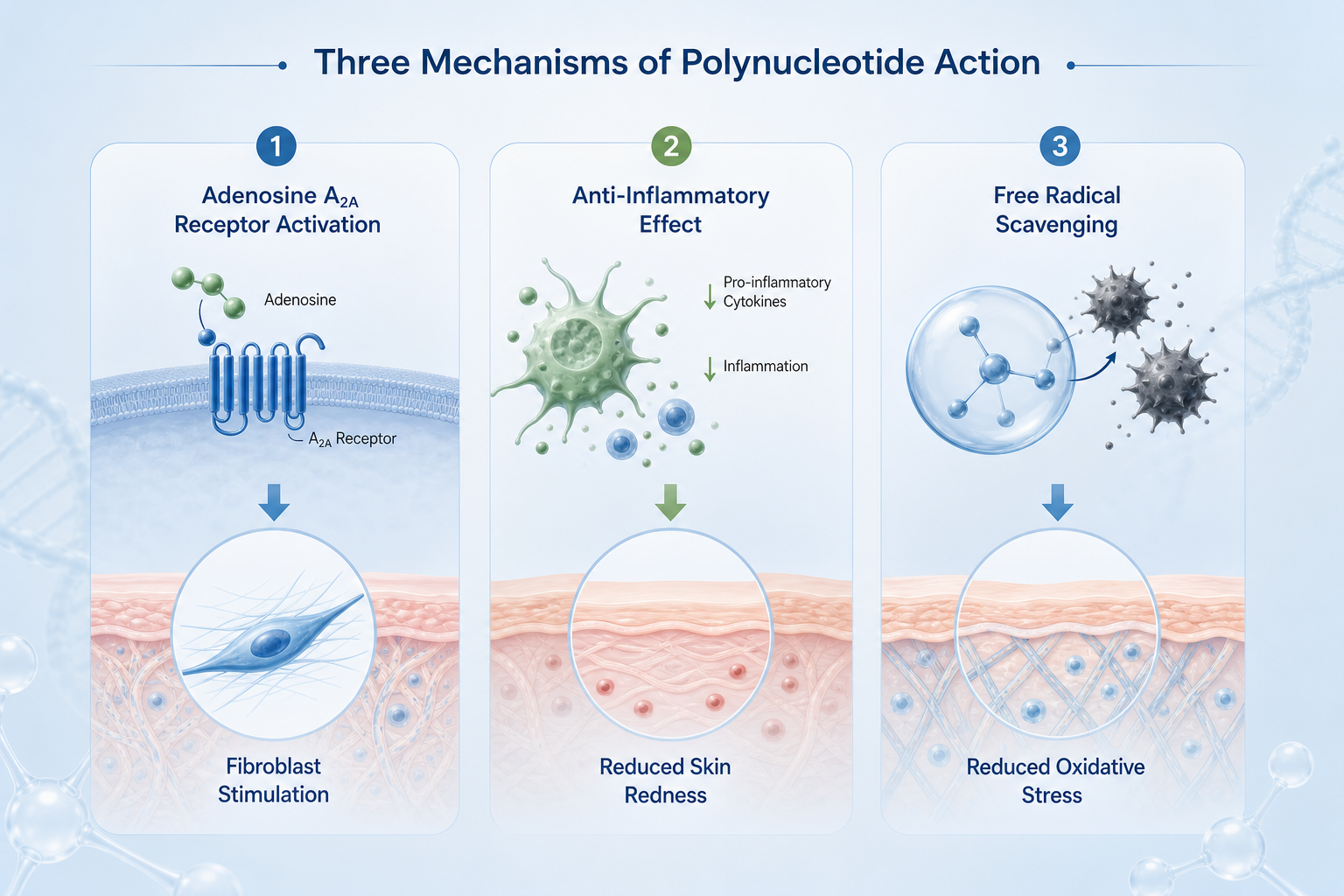
The primary mechanism behind polynucleotide skin repair involves the activation of the adenosine A2A receptor, a cell surface receptor found on fibroblasts — the cells responsible for producing collagen, elastin, and the extracellular matrix that gives skin its structure and resilience. When polynucleotides bind to this receptor, they trigger a cascade of cellular activity that promotes tissue repair and regeneration.
Specifically, fibroblast activity increases, leading to greater synthesis of collagen and elastin — the two structural proteins that decline with age, sun exposure, and environmental damage. At the same time, polynucleotides exert anti-inflammatory properties by modulating inflammatory mediators, and they demonstrate antioxidant effects by scavenging free radicals that contribute to oxidative stress and accelerated skin ageing. This combination of fibroblast stimulation, anti-inflammatory action, and free radical scavenging makes polynucleotides particularly well suited to damaged or compromised skin, not just ageing skin.
Polynucleotides also support skin barrier repair by promoting the restoration of the extracellular matrix — the structural scaffold of proteins and molecules that surrounds skin cells. A healthy extracellular matrix improves the skin’s ability to retain moisture, resist environmental insults, and recover from injury. This is why polynucleotides are increasingly used not only as a standalone anti-ageing treatment but also as a recovery tool following laser resurfacing, microneedling, or other procedures that temporarily compromise the skin barrier.
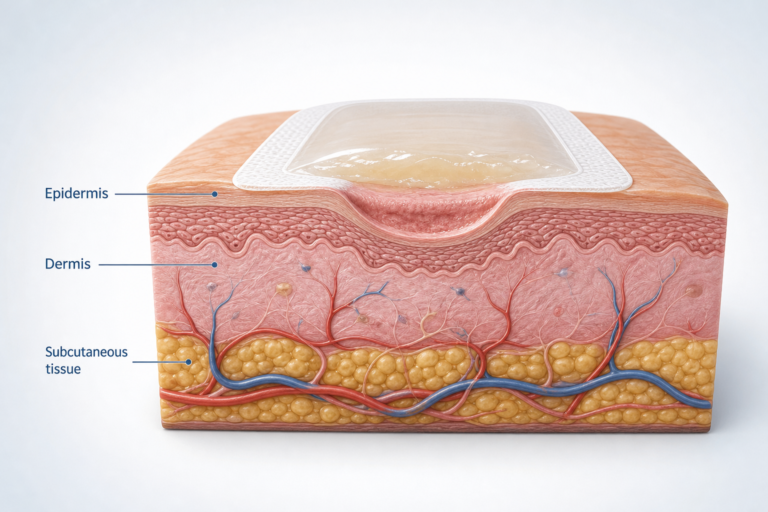
The treatment is delivered via intradermal injections — small amounts of the solution are placed just beneath the skin’s surface across the treatment area. This precise delivery ensures the polynucleotides reach the fibroblast-rich dermis where they can exert their regenerative effects most effectively.
What Skin Conditions Can Polynucleotides Treat?
Polynucleotides have a broader range of clinical applications than many patients initially expect. While they are frequently discussed in the context of anti-ageing, their regenerative and anti-inflammatory properties make them relevant to several distinct skin concerns.
Fine Lines, Skin Laxity, and Loss of Firmness
Increased collagen and elastin production stimulated by polynucleotides can improve the appearance of fine lines and mild to moderate skin laxity over a course of treatment. Results are gradual rather than immediate — the skin becomes progressively firmer and more elastic as new collagen is laid down over weeks to months. This makes polynucleotides a realistic option for patients seeking improvement in skin quality rather than dramatic volumisation.
Dehydrated and Dull Skin
Polynucleotides improve deep skin hydration by supporting the extracellular matrix and enhancing the skin’s capacity to retain water. Patients often notice improved luminosity and a more rested appearance within the first few weeks, even before the structural collagen benefits become fully apparent. This hydration effect is one of the earliest and most consistently reported outcomes across clinical studies.
Photoaging and Sun Damage
Photoaging — the cumulative skin damage caused by ultraviolet radiation — accelerates collagen breakdown, impairs the extracellular matrix, and generates oxidative stress. Polynucleotides address all three of these pathways simultaneously, making them a clinically logical choice for patients with sun-damaged skin presenting with uneven tone, texture irregularities, and early laxity.
Acne Scarring
For patients with acne scarring, particularly atrophic (depressed) scars, polynucleotides may support tissue remodelling and improve scar texture over time. The fibroblast-stimulating effect encourages new collagen deposition within scar tissue, which can soften the appearance of shallow to moderate atrophic scars. Results in this area tend to be more modest than with dedicated resurfacing treatments, and polynucleotides are often used as part of a combination protocol alongside microneedling or laser for more significant scarring.
Under-Eye and Periorbital Concerns
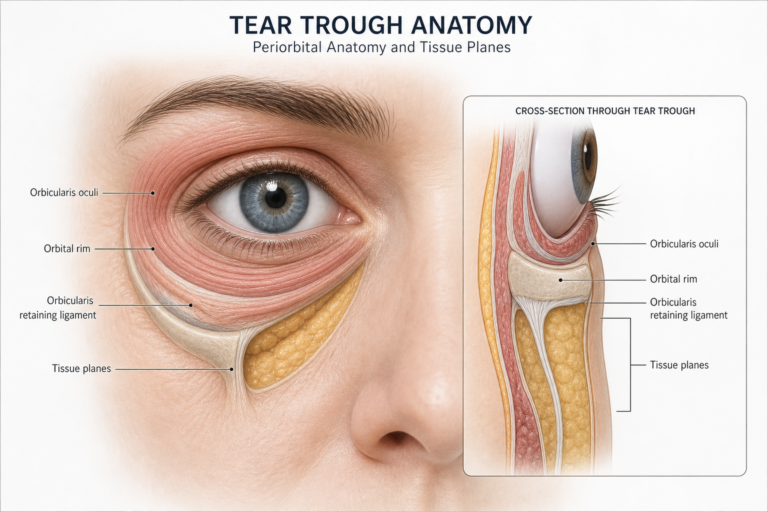
Periorbital rejuvenation is one of the most popular applications for polynucleotides. The under-eye area is particularly challenging to treat because the skin is thin, delicate, and prone to crepiness, fine lines, and dark circles. A 2025 clinical study published in PubMed involving 42 patients assessed polynucleotide injections specifically in the periorbital zone and reported improvements in skin hydration, elasticity, and texture. It is important to note, however, that dark circles have multiple causes — including pigmentation, visible blood vessels, hollowness, and volume loss — and polynucleotides are most likely to benefit those whose dark circles are primarily related to skin quality and thinning rather than deep volume loss or vascular pigmentation.
Facial Redness and Erythema
The anti-inflammatory properties of polynucleotides have led to their use in patients with facial erythema and redness-prone skin. A 2024 study published in PubMed examined the combination of polynucleotides and hyaluronic acid for facial erythema and found improvements in redness and skin quality markers. This application remains an area of active clinical investigation rather than established standard practice.
Polynucleotide Brands: A Practical Overview
Several polynucleotide products are available to practitioners in Europe and the UK, each with slightly different formulations, concentrations, and intended applications. Understanding the key differences can help patients have more informed conversations with their practitioner.
| Brand | Origin | Key Feature | Common Use |
|---|---|---|---|
| Plinest | Trout-derived (Italy, Mastelli) | PN-HPT (Highly Purified Technology); non-cross-linked | Full-face rejuvenation, skin quality |
| Plinest Eye | Trout-derived | Lower concentration for delicate periorbital skin | Under-eye rejuvenation |
| Nucleofill | Salmon-derived (Promoitalia) | Available in Soft, Medium, Strong concentrations | Hydration, laxity, scalp |
| Rejuran | Salmon-derived (South Korea) | Established clinical evidence base; multiple variants | Skin repair, acne scars, under-eye |
| Ameela | Salmon-derived (UK-distributed) | CE-marked; growing UK clinical use | Face, neck, hands |
| Lumi Eyes | Salmon-derived | Specifically formulated for periorbital use | Under-eye skin quality |
The PN-HPT (Highly Purified Technology) designation used by Plinest refers to a manufacturing process designed to remove impurities and standardise the molecular weight of the polynucleotide fragments, which may influence both tolerability and biological activity. A real-life clinical assessment of PN-HPT published in PubMed in 2025 reported improvements in skin elasticity and hydration across a patient cohort, though as with all single-centre studies, results should be interpreted with appropriate caution. Practitioners typically select a product based on the treatment area, the patient’s specific concerns, and their own clinical experience with a given formulation.
What to Expect: The Treatment Experience
Before Treatment
A thorough consultation should precede any polynucleotide treatment. The practitioner will review your medical history, current medications, allergies — particularly any fish allergy, which is a contraindication — and your skin concerns and goals. Photographs are typically taken for comparison. You may be advised to avoid blood-thinning medications such as aspirin or ibuprofen, and alcohol, in the days before treatment to reduce bruising risk, though you should always follow your practitioner’s specific guidance.
During the Appointment
The treatment area is cleansed and a topical anaesthetic cream may be applied to improve comfort. Polynucleotides are administered via a series of small intradermal injections across the treatment area using a fine needle or cannula. The number of injection points varies depending on the area being treated and the product used. Most patients describe the sensation as mild to moderate discomfort — similar to other skin booster treatments. A full-face session typically takes between 20 and 45 minutes.
Immediately After Treatment
Redness, mild swelling, and small temporary bumps or papules at injection sites are common and usually resolve within 24 to 72 hours. Bruising is possible, particularly in the delicate under-eye area. Most patients can return to normal activities the same day, though strenuous exercise, heat exposure (saunas, hot baths), and alcohol are generally advised against for 24 to 48 hours. Makeup is usually best avoided for the first 24 hours to reduce infection risk.
Aftercare
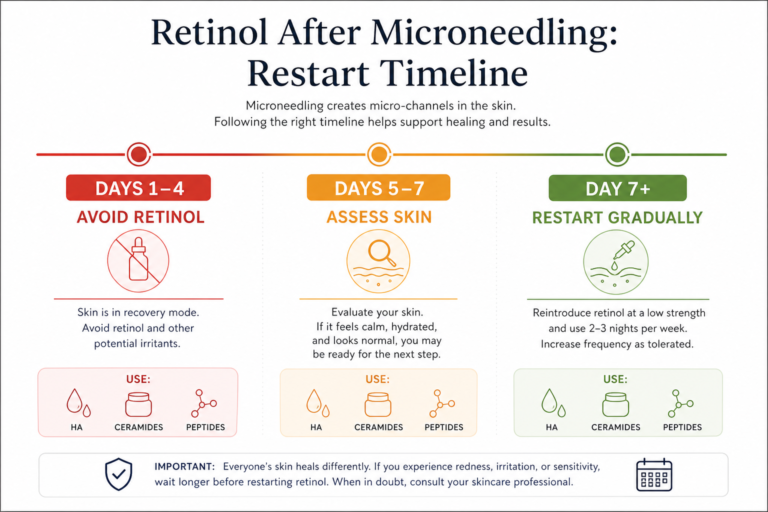
Keeping the skin well hydrated with a gentle, fragrance-free moisturiser supports recovery. High-factor sun protection is important in the weeks following treatment, as the skin may be more sensitive to UV exposure. Retinoids, exfoliating acids, and other active skincare ingredients are typically paused for a few days around the treatment date — your practitioner will advise on the specific timeline based on your routine.
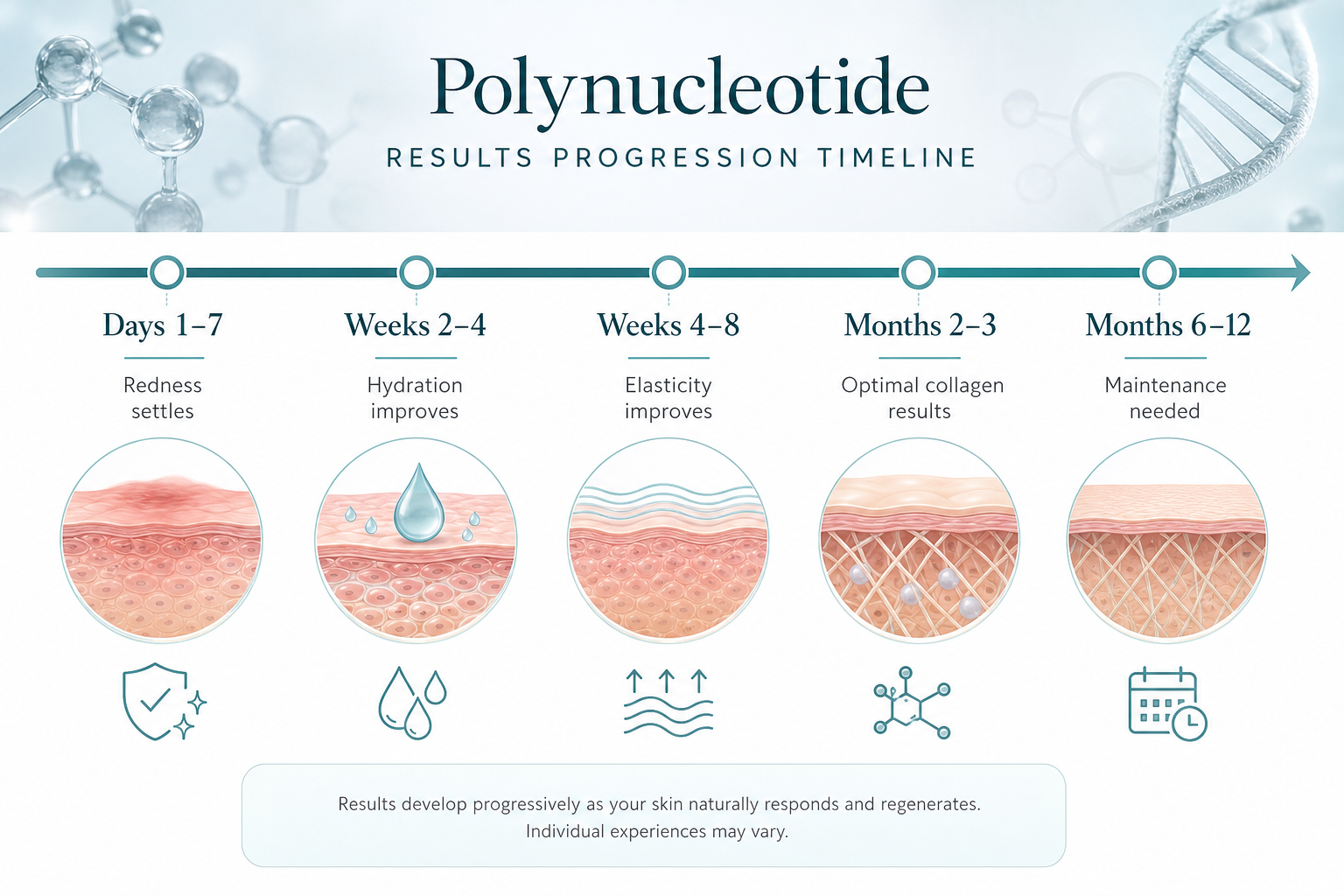
Results Timeline: What to Expect and When
Polynucleotides produce gradual, progressive results rather than the immediate visible change associated with dermal fillers. Understanding this timeline helps patients set realistic expectations and complete the recommended course of treatment.
| Timeframe | What May Be Noticed |
|---|---|
| Days 1–7 | Redness and swelling settle; skin may feel slightly firmer due to initial tissue response |
| Weeks 2–4 | Improved skin hydration and luminosity; skin feels more supple |
| Weeks 4–8 | Gradual improvement in skin elasticity and texture; fine lines may appear softer |
| Months 2–3 | Optimal results as collagen remodelling matures; improved firmness, tone, and overall skin quality |
| Months 6–12 | Results begin to gradually diminish; maintenance session recommended to sustain improvement |
Individual results vary depending on age, skin condition, lifestyle factors such as sun exposure and smoking, and the number of sessions completed. Patients with more significant skin damage or laxity may require additional sessions or combination treatments to achieve their goals.
How Many Sessions Are Needed?
A standard course of treatment for polynucleotides typically involves two to four sessions, spaced two to four weeks apart. This spacing allows each session to build on the cellular activity initiated by the previous one, creating a cumulative regenerative effect. Some practitioners recommend starting with three sessions for patients with more pronounced concerns such as significant photoaging or acne scarring.
Following the initial course, a maintenance session every six to twelve months is generally recommended to sustain the improvements in skin quality. The frequency of maintenance depends on the individual’s rate of collagen turnover, lifestyle, and how well they responded to the initial course. Unlike some treatments where results plateau quickly, polynucleotides can continue to show subtle improvement for several months after the final session in a course as collagen remodelling continues.
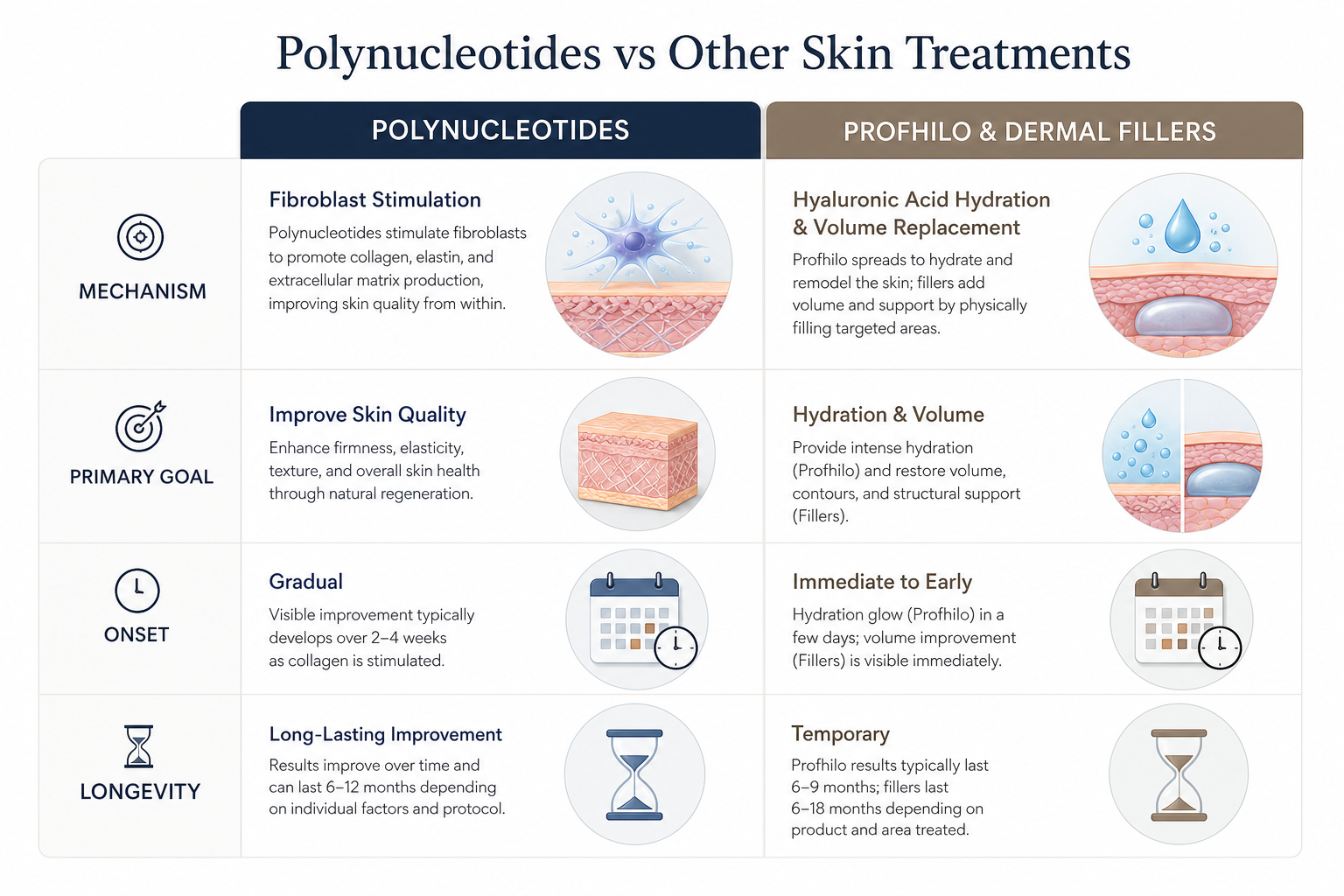
Polynucleotides vs Other Skin Treatments
Understanding how polynucleotides compare to other popular treatments helps clarify when they may be the most appropriate choice and when a different approach — or a combination — might better serve a patient’s goals.
| Treatment | Mechanism | Primary Goal | Onset | Longevity | Key Limitation |
|---|---|---|---|---|---|
| Polynucleotides | Fibroblast stimulation, collagen synthesis | Skin repair, quality, regeneration | 4–8 weeks | 6–12 months | Gradual results; multiple sessions needed |
| Profhilo (HA) | Hyaluronic acid bio-remodelling | Hydration, laxity, skin quality | 2–4 weeks | 6 months | Does not address damaged skin barrier or scarring |
| Dermal Fillers | Volume replacement | Volume, contour, deep lines | Immediate | 6–18 months | Does not improve intrinsic skin quality |
| Anti-Wrinkle Injections | Muscle relaxation | Dynamic lines, brow, jaw | 3–14 days | 3–4 months | No effect on skin texture or repair |
| PRP (Platelet-Rich Plasma) | Growth factor release from patient’s own blood | Skin regeneration, hair | 4–8 weeks | 6–12 months | Variable preparation; requires blood draw |
Polynucleotides and Profhilo are often compared because both are skin boosters that improve skin quality rather than add volume. The key difference is mechanism: Profhilo works through hyaluronic acid’s hydrating and bio-remodelling properties, while polynucleotides work through DNA-fragment-mediated fibroblast stimulation. Some practitioners use both in combination or alternate them to address different aspects of skin ageing. Polynucleotides may be particularly preferable for patients with damaged skin, acne scarring, or post-procedure recovery needs, where the regenerative and anti-inflammatory properties offer additional benefit beyond hydration alone.
Combination Protocols
Polynucleotides are increasingly used alongside other treatments as part of a structured combination protocol. When used after microneedling, for example, the channels created by the needles may enhance the penetration and distribution of the polynucleotide solution, while the polynucleotides in turn support the skin’s recovery from the microneedling-induced micro-injury. Similarly, polynucleotides are used as a preparatory or recovery treatment around laser resurfacing — applied in the weeks before to prime the skin and in the weeks after to support healing and reduce post-inflammatory erythema.
Combining polynucleotides with anti-wrinkle injections or dermal fillers in the same treatment plan is also common in clinical practice, as each addresses a different aspect of skin ageing: polynucleotides improve intrinsic skin quality, fillers restore volume, and anti-wrinkle injections address dynamic movement. Any combination protocol should be planned by a qualified practitioner who can assess the appropriate sequencing and intervals between treatments.
Side Effects and Safety Considerations
Polynucleotides have a well-established safety profile when administered by a trained practitioner using CE-marked products. The most commonly reported side effects are mild and temporary.
- Redness and swelling at injection sites — typically resolving within 24 to 72 hours
- Bruising — more likely in the periorbital area; usually resolves within one to two weeks
- Temporary papules or bumps — small nodules at injection points that generally flatten within a few days
- Itching or mild discomfort — usually brief and self-resolving
Rarer but more significant risks include allergic reaction (particularly relevant for patients with fish allergies), granuloma formation, and infection. Vascular occlusion — a serious complication associated with some injectable treatments — carries a lower risk with polynucleotides than with dermal fillers because the material is not viscous or volumising, but the risk is not entirely absent, particularly in anatomically sensitive areas. Choosing a practitioner with appropriate training and a thorough understanding of facial anatomy significantly reduces procedural risk.
From a regulatory standpoint, polynucleotide products such as Plinest, Nucleofill, Rejuran, and Ameela are CE-marked for use in Europe and the UK. However, as of 2025, polynucleotides are not FDA-approved for injection in the United States, which is an important consideration for patients seeking treatment in a US context.
Who May Be Suitable — and Who Should Avoid Treatment
Potentially Suitable Candidates
- Adults experiencing early to moderate signs of skin ageing, including fine lines, loss of firmness, and dull or dehydrated skin
- Patients with photoaged or sun-damaged skin seeking non-surgical skin repair
- Those with mild to moderate atrophic acne scarring looking to improve skin texture
- Patients seeking periorbital rejuvenation for under-eye crepiness or skin quality concerns
- Individuals wanting to improve skin quality before or after other aesthetic procedures
- Those who prefer a regenerative approach that works with the body’s own biology
Who Should Avoid or Discuss Carefully with a Practitioner
- Fish or seafood allergy — a contraindication given the salmon or trout origin of the polynucleotides
- Active skin infection in the treatment area — treatment should be deferred until resolved
- Autoimmune conditions — the immune-modulating effects of polynucleotides may be unpredictable in patients with active autoimmune disease
- Pregnancy and breastfeeding — polynucleotides are not recommended during pregnancy or while breastfeeding due to insufficient safety data
- Anticoagulant medications — increased bruising risk; discuss with both the prescribing doctor and the aesthetic practitioner
- Active inflammatory skin conditions such as severe eczema or psoriasis in the treatment area
- Known hypersensitivity to any component of the specific product being used
Frequently Asked Questions
How long do polynucleotide results last?
Results from a full course of polynucleotide treatment typically last between six and twelve months, after which a maintenance session is usually recommended. The longevity depends on the individual’s skin condition, age, lifestyle, and how many sessions were completed in the initial course.
Are polynucleotide injections painful?
Most patients describe the treatment as mildly to moderately uncomfortable rather than painful. Topical anaesthetic cream is commonly applied beforehand to improve comfort. The under-eye area tends to be more sensitive than other treatment zones.
Can polynucleotides be used on the body as well as the face?
Yes. While the face — including the under-eye area, full face, and neck — is the most common treatment area, polynucleotides are also used on the décolletage, hands, and scalp. Some formulations are specifically designed for scalp use to support hair follicle health, though this is a separate clinical application with its own evidence base.
How do polynucleotides differ from skin boosters like Profhilo or Juvederm Volite?
Hyaluronic acid skin boosters such as Profhilo primarily improve hydration and trigger some collagen stimulation through mechanical and biological means. Polynucleotides work through a distinct mechanism — activating fibroblasts via the adenosine A2A receptor — and additionally offer anti-inflammatory and antioxidant effects. They may be particularly beneficial for damaged or compromised skin where repair, not just hydration, is the primary goal.
Is there clinical evidence supporting polynucleotide injections?
Yes, though the evidence base is still developing. Published peer-reviewed studies — including a systematic review of 219 patients and a 42-patient periorbital study published in 2025 — report improvements in skin hydration, elasticity, and texture. Most studies are relatively small and short-term, and larger randomised controlled trials would strengthen the evidence further. The treatment has a longer clinical history in wound healing and orthopaedic medicine, where the evidence base is more established.
Can polynucleotides be combined with other treatments?
Yes, and combination protocols are increasingly common in clinical practice. Polynucleotides are frequently used alongside microneedling, laser treatments, anti-wrinkle injections, and dermal fillers as part of a comprehensive skin rejuvenation plan. The sequencing and intervals between treatments should be determined by a qualified practitioner based on your individual skin condition and goals.
Do I need to do anything special to prepare for treatment?
Your practitioner will provide specific pre-treatment instructions, but general advice typically includes avoiding blood-thinning medications and alcohol for several days beforehand, arriving with clean skin free of makeup, and disclosing any relevant medical history or allergies — particularly any fish allergy — at your consultation.
Is Polynucleotide Treatment Worth Considering for Your Skin?
Polynucleotides represent a genuinely distinct approach to non-surgical skin repair — one grounded in cellular biology rather than volume replacement or surface-level correction. For patients whose primary concern is skin quality — whether that means improving texture after years of sun exposure, softening the appearance of acne scarring, restoring hydration and firmness to ageing skin, or supporting recovery after a resurfacing procedure — polynucleotides offer a clinically supported pathway to meaningful, if gradual, improvement.
The treatment is not a quick fix. Results develop over weeks to months, require a course of sessions to achieve, and need periodic maintenance to sustain. Patients who expect the immediate visible change of a dermal filler or the dramatic resurfacing effect of a laser may find the timeline frustrating. But for those who understand and accept the gradual nature of regenerative treatment, the outcomes — improved skin elasticity, better hydration, smoother texture, and a more resilient skin barrier — can be genuinely worthwhile.
Suitability depends on individual factors including skin condition, medical history, and treatment goals. A thorough consultation with a qualified aesthetic practitioner is the appropriate starting point — not only to confirm that polynucleotides are suitable for you, but to determine which product, protocol, and combination approach is most likely to address your specific concerns effectively and safely.