Skin Tag on Nose: Causes, Removal Options, and What to Expect
A skin tag on the nose is a small, soft, benign growth that can appear on the side of the nose, the nostril rim, the bridge, or the tip. Although entirely harmless from a medical standpoint, its position on a prominent facial feature means many people find it noticeable and seek professional removal. This guide explains what a nasal skin tag actually is, how to distinguish it from similar-looking growths, which professional removal methods are available, and what realistic recovery looks like — so you can approach any consultation with a clear understanding of your options.
Key Takeaways
- A skin tag on the nose is a benign, pedunculated growth made of loose connective tissue; it poses no medical risk but is often removed for cosmetic reasons.
- Several other growths — particularly the fibrous papule of the nose — can look similar and require professional assessment before any removal attempt.
- Professional removal methods include cryotherapy, electrocautery, shave excision, radiofrequency ablation, and laser treatment; the best choice depends on the size, location, and the practitioner’s assessment.
- At-home removal is not recommended for nasal skin tags due to the risk of scarring, infection, and incomplete removal on thin facial skin.
- Recovery typically takes 7–14 days; sun protection of the nose is an important and often overlooked part of aftercare.
What Is a Skin Tag on the Nose?
A skin tag — medically termed an acrochordon or fibroepithelial polyp — is a small, soft, flesh-coloured growth attached to the skin by a narrow stalk, known as a peduncle. This pedunculated growth consists of loose collagen fibres, small blood vessels, and connective tissue covered by a thin layer of skin. Most nasal skin tags measure between 1 mm and 5 mm, though they can occasionally grow larger. They are entirely benign, noncancerous, and do not transform into anything harmful over time.
On the nose specifically, skin tags tend to appear where skin folds or rubs against another surface. Common sites include the side of the nose where glasses frames rest, the crease where the nostril meets the cheek, and occasionally the nostril rim. The tip and bridge of the nose are less common locations but are not unheard of. Because the nose sits centrally on the face, even a small growth in this area can feel conspicuous — particularly in photographs, video calls, or close-up interactions, which is an increasingly cited reason people seek removal.
What Causes a Skin Tag on the Nose?
Skin friction is the most widely recognised trigger for skin tag formation. On the nose, one specific and underappreciated cause is the repeated pressure and rubbing of eyeglass frames against the bridge or sides of the nose. People who wear glasses daily may develop acrochordons precisely where the frame rests, making this a nose-specific risk factor that is often overlooked in general skin tag guides.
Beyond friction, several systemic and hormonal factors are associated with skin tag development. Insulin resistance and its related conditions — including type 2 diabetes, prediabetes, and metabolic syndrome — are consistently linked to a higher tendency to develop multiple skin tags. If you notice several new skin tags appearing across your face or body over a short period, it may be worth discussing metabolic health with your GP, as this can occasionally be an early external signal of underlying insulin dysregulation.
Hormonal changes also play a role. Pregnancy, polycystic ovary syndrome (PCOS), and menopause can all increase the likelihood of developing benign skin lesions, including acrochordons. Genetics and family history are relevant too — if close relatives develop skin tags readily, you may be more predisposed. Age is another factor; skin tags become more common from the forties onwards, when skin loses some of its structural integrity and friction-related changes accumulate over time.
Is It Definitely a Skin Tag? Differential Diagnosis
Before pursuing any removal, it is important to confirm that the growth on your nose is actually a skin tag. The nose is a site where several different benign lesions can appear, and they are not always easy to tell apart without professional assessment. Attempting to remove the wrong type of growth — or one that turns out to be something more serious — carries real risks.
| Growth Type | Texture | Shape | Attached By | Cause | Contagious? |
|---|---|---|---|---|---|
| Skin tag (acrochordon) | Soft, fleshy | Hangs or dangles | Narrow stalk (peduncle) | Friction, metabolic factors | No |
| Fibrous papule of the nose | Firm, dome-shaped | Does not dangle; sits flat | Broad base | Benign fibrous overgrowth | No |
| Filiform wart | Rough, finger-like projections | Spiky or thread-like | Narrow base | HPV (human papillomavirus) | Yes |
| Mole (melanocytic naevus) | Smooth or slightly raised | Round, broad-based | Broad base | Melanocyte proliferation | No |
| Sebaceous cyst | Firm, fluctuant | Dome-shaped, enclosed | Broad base, under skin | Blocked sebaceous gland | No |
The fibrous papule of the nose deserves particular attention because it is the growth most commonly confused with a nasal skin tag. A fibrous papule is a firm, dome-shaped, skin-coloured bump that sits flush against the skin — it does not hang or dangle on a stalk. It is most often found on the lower nose or nostril and is entirely benign, but it requires different treatment from a skin tag. A dermatologist can usually distinguish between the two on clinical examination, though a biopsy may occasionally be recommended if there is any uncertainty.
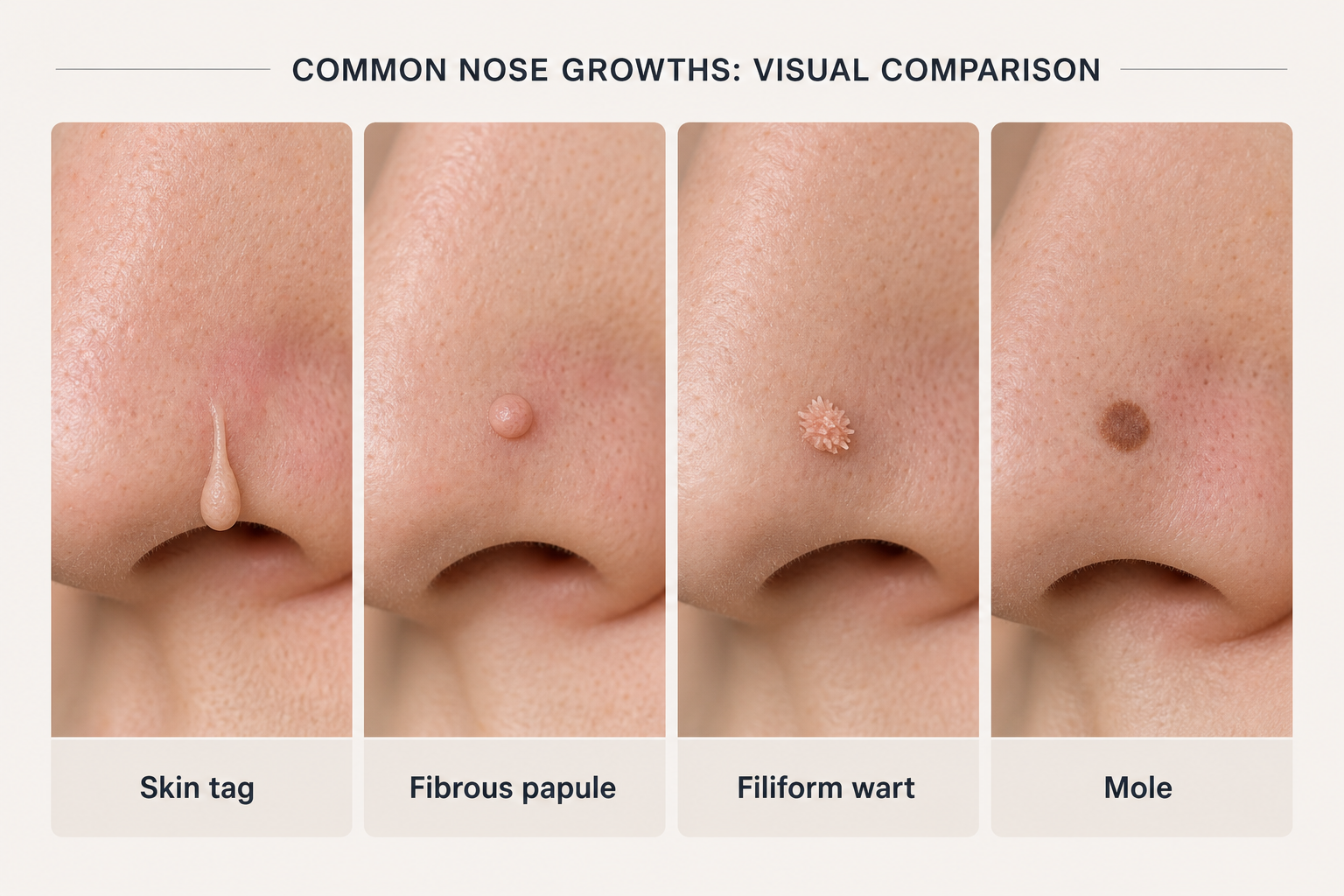
A filiform wart is caused by HPV and can appear thread-like or spiky, which may superficially resemble a pedunculated skin tag. Unlike a skin tag, a filiform wart is contagious and requires antiviral-oriented treatment rather than simple excision. Any growth that bleeds spontaneously, changes colour rapidly, grows quickly, or has irregular borders warrants prompt medical review to exclude a more serious diagnosis such as basal cell carcinoma, which can occasionally present on the nose.
Professional Removal Methods for a Nose Skin Tag
Once a qualified practitioner has confirmed the diagnosis, several in-office removal techniques are available. The most appropriate method depends on the size and exact location of the skin tag, the thickness of the surrounding nasal skin, and the practitioner’s clinical judgement. The nose has relatively thin, sensitive skin, which influences both method selection and the expected healing process.
Shave or Snip Excision
Shave excision — sometimes called snip excision — is one of the most straightforward approaches for small, well-defined skin tags. After applying a local anaesthetic to numb the area, the practitioner uses fine surgical scissors or a scalpel to remove the growth at its base. The procedure takes only a few minutes. Because the skin tag is removed at the stalk rather than cut deeply into the skin, the scarring risk is generally low when performed carefully on appropriate lesions. A small amount of bleeding is normal and is usually controlled with gentle pressure or a mild cauterising agent.
Cryotherapy with Liquid Nitrogen
Cryotherapy with liquid nitrogen involves applying extreme cold directly to the skin tag, which destroys the tissue by freezing it. The treated growth typically darkens, forms a small blister or scab, and falls away over one to two weeks. Cryotherapy is a well-established method for benign skin lesions, but on the thin skin of the nose it requires careful application to avoid affecting the surrounding tissue. There is a small risk of temporary pigmentation changes, particularly in people with darker skin tones, and occasionally a second treatment is needed if the initial freeze was insufficient.
Electrocautery
Electrocautery uses a controlled electrical current to heat and destroy the skin tag tissue. A local anaesthetic is applied beforehand to minimise discomfort. The technique offers good precision and simultaneously seals small blood vessels, which reduces bleeding. On the nose, the practitioner must work carefully given the contoured anatomy and thin skin. Electrocautery leaves a small wound that heals over approximately one to two weeks, and the scarring risk on nasal skin is generally low when the procedure is performed by an experienced clinician.
Radiofrequency Ablation
Radiofrequency ablation uses high-frequency radio waves to precisely ablate the skin tag tissue with minimal heat spread to surrounding structures. This makes it a particularly useful option for delicate facial areas such as the nose, where precision matters. After local anaesthetic is applied, the RF device is used to remove the growth with a high degree of control. Recovery is similar to other methods, with a small scab forming and resolving over one to two weeks.
CO2 Laser Removal
CO2 laser treatment vaporises the skin tag tissue layer by layer with a focused beam of light. It offers excellent precision and is well-suited to small facial lesions. The laser also seals blood vessels as it works, reducing post-procedure bleeding. CO2 laser removal tends to be associated with a slightly higher out-of-pocket cost than simpler excision methods, and it requires the same local anaesthetic and aftercare as other techniques. It may be particularly appropriate for skin tags in awkward nasal locations where a scalpel or cryotherapy probe is difficult to position accurately.
Ligation
Ligation involves tying a fine thread or suture tightly around the base of the skin tag stalk, cutting off its blood supply so that the tissue dies and falls away over several days. While this method is sometimes used on body skin tags, it is generally less favoured for nasal skin tags because the stalk is often very small, the nose is a difficult area to keep a ligature in place, and the risk of incomplete removal or local irritation is higher than with direct excision or energy-based methods.
Removal Method Comparison
| Method | How It Works | Typical Healing Time | Scar Risk on Nose | Notes |
|---|---|---|---|---|
| Shave/snip excision | Scissors or scalpel removes stalk | 7–14 days | Low with good technique | Quick; local anaesthetic used |
| Cryotherapy (liquid nitrogen) | Freezing destroys tissue | 10–14 days | Low–moderate; pigmentation risk | May need repeat treatment |
| Electrocautery | Electrical heat destroys tissue | 7–14 days | Low with precision technique | Seals vessels; good haemostasis |
| Radiofrequency ablation | Radio waves ablate tissue precisely | 7–14 days | Low; minimal heat spread | Good for delicate nasal skin |
| CO2 laser | Laser vaporises tissue layer by layer | 7–14 days | Low with experienced operator | Higher cost; excellent precision |
Why At-Home Removal Is Not Recommended for Nasal Skin Tags
Over-the-counter freeze kits, salicylic acid preparations, ligation bands, and home remedies such as tea tree oil or apple cider vinegar are sometimes marketed or suggested for skin tag removal. For a skin tag on the nose, these approaches carry meaningful risks that outweigh any convenience benefit.
The nose has thin, contoured skin with little margin for error. OTC freeze kits deliver less controlled temperatures than clinical cryotherapy equipment, making it difficult to treat only the intended tissue without affecting the surrounding skin. Chemical agents such as apple cider vinegar or salicylic acid can cause chemical burns, prolonged redness, and post-inflammatory hyperpigmentation on facial skin. Ligation bands are difficult to position accurately on a small nasal stalk and may cause incomplete removal, leaving a residual growth or creating a wound that becomes infected.
There is also the diagnostic risk: attempting to remove a growth at home assumes the diagnosis is correct. If the lesion is actually a filiform wart, a fibrous papule, or — in rare cases — something that warrants biopsy, home treatment delays appropriate care and may complicate subsequent professional assessment. For a cosmetic procedure on a visible facial area, professional in-office removal by a qualified practitioner is the safer and more reliable choice.
What to Expect During a Professional Removal Appointment
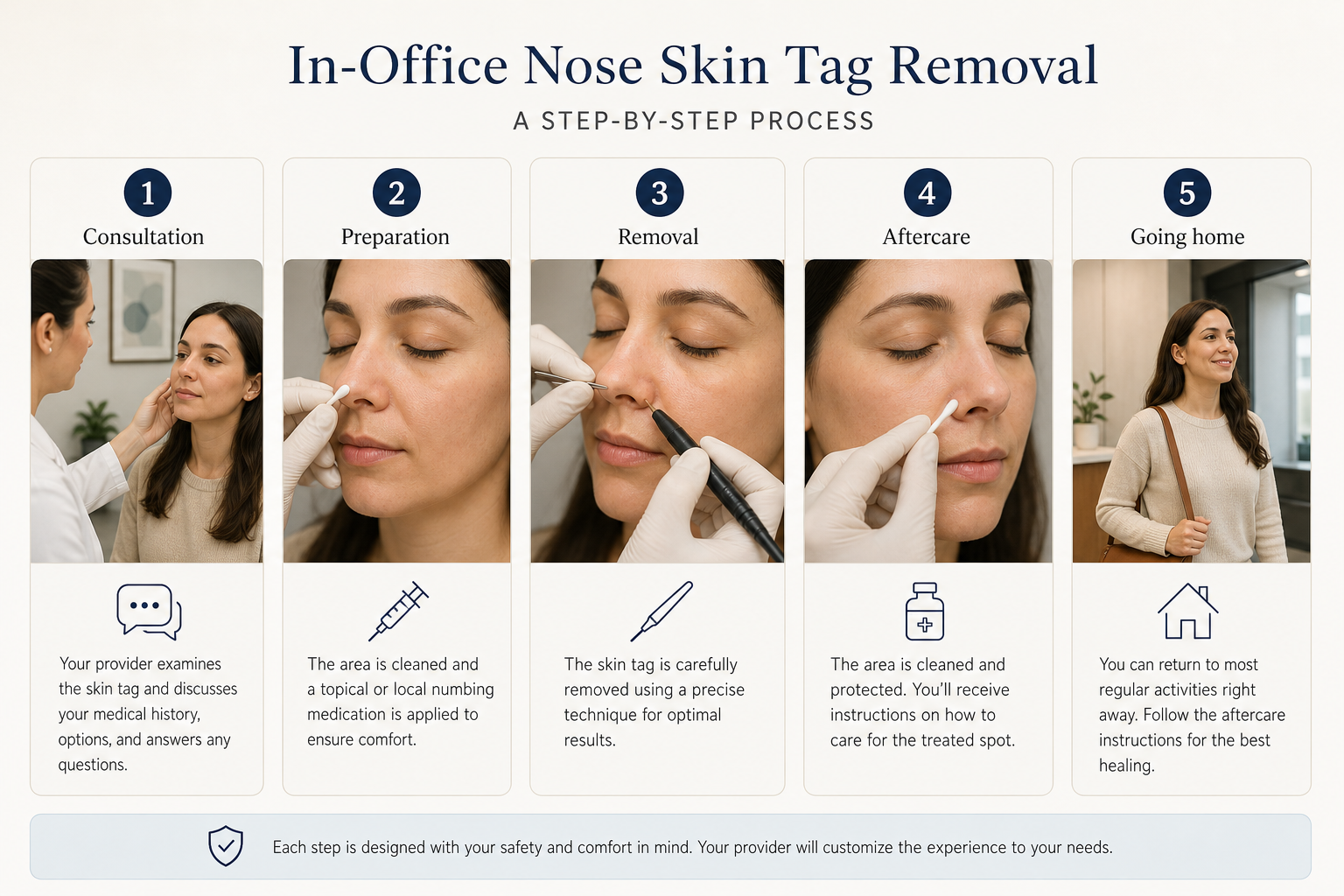
Understanding what happens on the day of treatment can help reduce any anxiety about the process. While the exact steps vary by clinic and method, a typical in-office removal appointment for a nasal skin tag follows a broadly similar sequence.
- Consultation and confirmation: The practitioner examines the growth, confirms the differential diagnosis, and discusses the most appropriate removal method for your specific lesion and skin type.
- Preparation: The area around the nose is cleaned. If a local anaesthetic injection is required, a very fine needle is used to numb the skin; a topical numbing cream may be applied first to reduce the discomfort of the injection itself.
- Removal: The chosen technique — excision, cryotherapy, electrocautery, radiofrequency ablation, or laser — is applied. Most procedures take only a few minutes once the area is numb.
- Immediate aftercare: A small dressing or antiseptic may be applied. The practitioner will explain wound care instructions before you leave.
- Going home: Most patients leave the clinic immediately after treatment. There is no requirement for sedation or a recovery room for this type of cosmetic procedure.
Recovery, Aftercare, and Wound Care
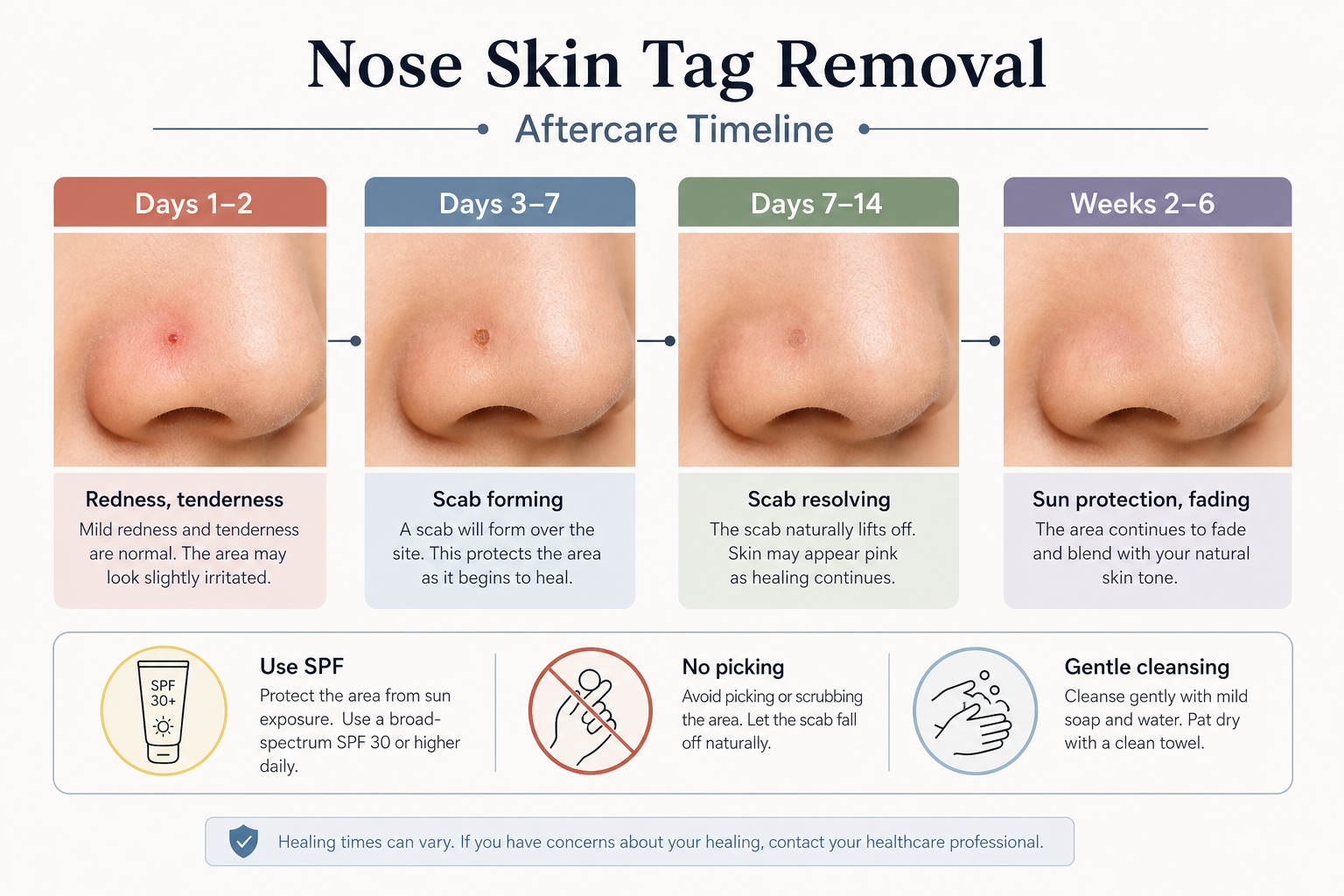
Healing after nose skin tag removal typically takes between 7 and 14 days, depending on the method used and individual healing factors. A small scab or crust forms at the treatment site and should be left to resolve naturally — picking at it increases the risk of scarring and infection. Mild redness and swelling around the treated area are normal in the first few days.
Aftercare and wound care instructions from your practitioner should be followed carefully. In general, keeping the area clean with gentle soap and water, avoiding touching or rubbing the nose unnecessarily, and not applying makeup directly over the healing site until the skin has fully closed are standard recommendations. Most practitioners advise waiting until the scab has fully resolved — usually around 10–14 days — before applying cosmetics to the treated area.
Sun protection deserves particular emphasis for nasal skin tag removal, yet it is one of the most commonly overlooked aspects of aftercare. The nose is one of the most sun-exposed areas of the face, and UV exposure on healing skin can cause post-inflammatory hyperpigmentation and worsen the appearance of any residual mark. Applying a broad-spectrum SPF 30 or higher sunscreen to the nose once the wound has closed — and continuing to do so for several weeks — can meaningfully reduce the risk of lasting discolouration. Wearing a wide-brimmed hat when outdoors during the healing period is also advisable.
People with darker skin tones should discuss hyperpigmentation risk with their practitioner before choosing a removal method, as some techniques carry a higher risk of pigmentation changes on melanin-rich skin. Thin nasal skin in general heals well when the procedure is performed carefully, but the choice of method and the experience of the practitioner both influence the final cosmetic outcome.
Who May Be a Suitable Candidate for Nose Skin Tag Removal?
Most adults with a confirmed benign skin tag on the nose are suitable candidates for professional removal. There are no absolute medical contraindications specific to this cosmetic procedure, but individual factors may influence timing and method selection. People who are pregnant are generally advised to defer elective cosmetic procedures. Those taking blood-thinning medications should inform their practitioner, as this may affect bleeding during excision. Active skin infections or inflammatory skin conditions in the treatment area would typically need to resolve before removal is attempted.
People with a history of keloid scarring should discuss this with their practitioner before proceeding, as any wound on the nose carries a theoretical risk of abnormal scar formation, though keloids on the nose are uncommon. A clinical assessment is always required to determine the most appropriate approach for your individual anatomy, skin type, and the specific characteristics of the growth.
Cost and Insurance Considerations
Nose skin tag removal is classified as a cosmetic procedure in most healthcare systems, which means it is not typically covered by health insurance or the NHS. The out-of-pocket cost varies depending on the method used, the clinic’s location, and whether a separate consultation fee applies. As a general guide, in-office removal of a single skin tag may range from approximately £100 to £400 or more in the UK, with laser and radiofrequency ablation methods tending to sit at the higher end of that range. Some clinics include the consultation in the treatment fee; others charge separately. A pathology or laboratory fee may apply if the removed tissue is sent for histological analysis, which is sometimes recommended when the diagnosis is uncertain.
Choosing the Right Specialist
For a skin tag on the nose — a visible facial location with thin, sensitive skin — the choice of practitioner matters. Dermatologists are trained in the diagnosis and treatment of all skin lesions and are well-placed to confirm the differential diagnosis before removal. Cosmetic surgeons and experienced aesthetic practitioners working in regulated clinical settings can also perform nasal skin tag removal safely. The key factors to look for are clinical experience with facial skin lesion removal, access to appropriate equipment for the chosen method, and a clear consultation process that includes confirming the diagnosis before any treatment is carried out. Avoid practitioners who offer to remove a facial growth without first examining it properly or who cannot explain the differential diagnosis.
Frequently Asked Questions
Does nose skin tag removal hurt?
The removal procedure itself is performed under local anaesthetic, so discomfort during the treatment is minimal. The injection of local anaesthetic may cause a brief stinging sensation. After the anaesthetic wears off, mild soreness or tenderness around the nose is common for a day or two and is usually manageable without prescription pain relief.
Will there be a scar after nose skin tag removal?
Scarring risk on nasal skin is generally low when the procedure is performed by an experienced practitioner using an appropriate technique. A small pink or pale mark may be visible for several weeks as the skin heals, but this typically fades. Following aftercare instructions — particularly avoiding sun exposure and not picking the scab — reduces the risk of a lasting mark.
Can a skin tag on the nose come back after removal?
A skin tag that has been fully removed at its base does not typically regrow at the same site. However, new skin tags can develop elsewhere on the nose or face, particularly if the underlying causes — such as ongoing friction from glasses frames or metabolic factors — remain unchanged. Addressing contributing factors where possible may reduce the likelihood of new growths appearing.
How long does it take to heal after nose skin tag removal?
Most people heal within 7 to 14 days. A small scab forms at the treatment site and resolves naturally within this period. The nose may appear slightly red or pink for a few weeks after the scab has gone, gradually returning to its normal skin tone. Sun protection during this period supports better healing.
Is it safe to remove a nose skin tag at home?
At-home removal is not recommended for skin tags on the nose. The thin, visible skin of the nose is more susceptible to scarring, chemical burns, and infection from uncontrolled home methods. There is also the risk of misdiagnosis — treating a growth that is not actually a skin tag. Professional in-office removal is safer and produces more predictable results for a facial location.
When should I see a doctor about a growth on my nose?
You should seek professional assessment if a growth on your nose changes colour, bleeds without being touched, grows rapidly, has an irregular border, or causes pain. These features are not typical of a benign skin tag and warrant evaluation to exclude other diagnoses. Even if the growth appears straightforward, a professional assessment before any removal attempt is always advisable.
Making an Informed Decision About Nose Skin Tag Removal
A skin tag on the nose is a benign, harmless growth, and removal is entirely elective. The decision to have it removed is personal — driven by how noticeable it feels, its impact on confidence, and whether it causes any physical irritation. What matters most before proceeding is having the growth properly assessed by a qualified practitioner to confirm the diagnosis, understand the most suitable removal method for your specific lesion and skin type, and have realistic expectations about healing and the final cosmetic result.
Professional removal by an experienced clinician — whether through shave excision, cryotherapy, electrocautery, radiofrequency ablation, or laser — is safe, well-tolerated, and typically produces a good cosmetic outcome when appropriate aftercare is followed. The nose’s sun-exposed position makes diligent sun protection during healing particularly important, and this simple step can make a meaningful difference to the final appearance of the treated skin. If you are considering removal, a consultation with a dermatologist or qualified aesthetic practitioner is the appropriate starting point.