Microneedling for Enlarged Pores: How It Works, What to Expect, and Realistic Results
Enlarged pores are one of the most common skin texture concerns, yet they remain stubbornly difficult to address with skincare products alone. Microneedling has become a widely discussed minimally invasive skin treatment for this concern, but the mechanism is often misunderstood. Pores cannot be physically closed or permanently eliminated — they are permanent structures of the skin. What microneedling can do is improve the surrounding skin texture, support the collagen scaffold that keeps pore walls firm, and reduce the visual prominence of enlarged pores over a structured treatment series. This article explains how microneedling works for pores, what the evidence suggests, how many sessions may be needed, and how it compares to other options.
Key Takeaways
- Microneedling does not physically shrink pores, but it can meaningfully reduce their visible appearance by stimulating collagen remodeling and improving surrounding skin texture.
- A treatment series of three to six sessions spaced four to six weeks apart is typically recommended; progressive results continue to develop for several months after the final session.
- RF microneedling (radiofrequency microneedling) may offer enhanced skin tightening compared to standard microneedling, particularly for pores driven by skin laxity and collagen loss.
- Realistic expectations are essential — results vary depending on the underlying cause of enlarged pores, skin type, age, and adherence to post-treatment aftercare.
- Microneedling is generally considered safe across all Fitzpatrick skin types, making it a useful option for patients who may not be suitable candidates for laser resurfacing.
Why Pores Become Enlarged
Understanding why pores enlarge helps clarify what microneedling can and cannot address. Pore size is influenced by several distinct factors, and the most effective treatment approach depends on which factor is dominant for a given patient.
Excess sebum production is one of the most common drivers. When sebaceous glands produce more oil than the skin can clear, sebum accumulates inside the pore, stretching its walls and making it appear larger. This is particularly common in oily and combination skin types and is strongly influenced by genetics. Research published in peer-reviewed dermatology literature confirms that sebum output and pore visibility are closely correlated, especially in the T-zone.
Collagen and elastin loss is the second major driver, and it becomes increasingly relevant with age. The dermis contains a collagen scaffold — a network of structural proteins that keeps the skin firm and supports the walls of each pore. As collagen depletes through natural ageing, UV exposure, and photoaging, this scaffolding weakens. Pore walls lose their structural support and the openings appear wider and more irregular. This is the mechanism that microneedling is most directly designed to address.
Sun damage accelerates both collagen loss and hyperkeratinization — a process where dead skin cells accumulate around the pore opening, making pores appear more prominent. Post-acne inflammation can also permanently alter pore structure, leaving behind post-acne unevenness and irregular texture. Finally, genetics plays a role that no treatment can fully override: some individuals are simply predisposed to larger pores regardless of skincare habits.
How Microneedling Works for Enlarged Pores
Microneedling — also referred to as collagen induction therapy — works by creating controlled micro-injury to the skin using a device fitted with fine needles. These tiny punctures trigger the skin’s natural wound-healing response, stimulating the production of new collagen and elastin in the dermis. The result is gradual skin remodeling: the dermal matrix becomes denser, the skin firmer, and the structural support around pore walls is progressively restored.
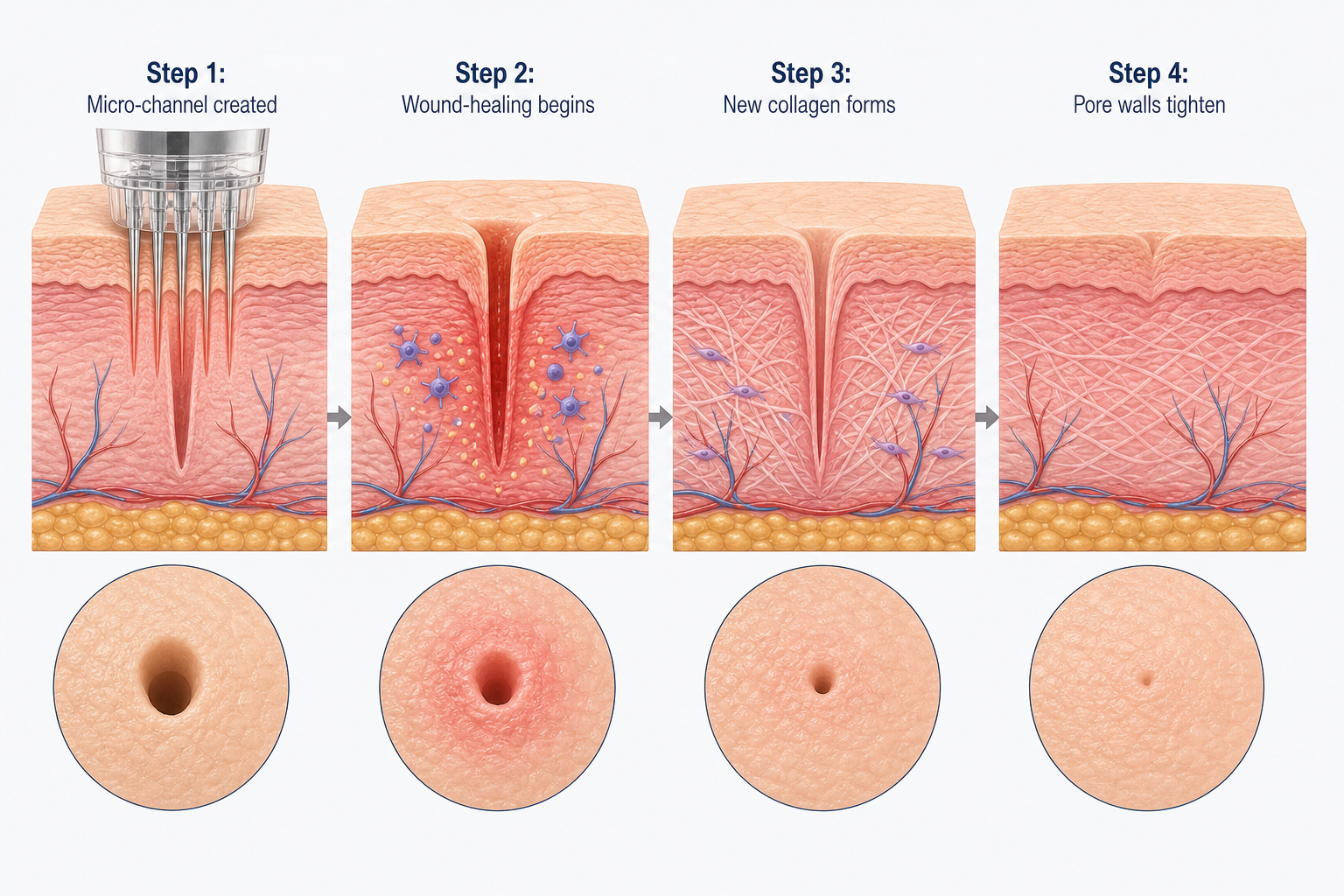
The key mechanism for pore improvement is not the punctures themselves but the downstream collagen synthesis they provoke. As new collagen is laid down around each pore, the surrounding tissue tightens, the pore walls receive better structural support, and the visible opening appears smaller. This is why results are progressive rather than immediate — collagen remodeling takes weeks to months to fully develop.
Needle Depth and Its Role in Pore Treatment
Needle depth is a clinically meaningful variable that is often overlooked in patient-facing information. For surface texture refinement and mild pore improvement, shallower depths in the range of 0.5 mm to 1.0 mm are typically used. These depths create micro-channels in the upper dermis, stimulating collagen production without significant disruption to deeper tissue. For more pronounced pore visibility driven by deeper collagen loss or skin laxity, depths of 1.0 mm to 1.5 mm may be selected to reach the mid-to-deep dermis where structural remodeling has greater impact. Depths above 2.0 mm are generally reserved for deeper concerns such as atrophic acne scarring and are not routinely used for pore treatment alone.
Selecting the appropriate needle depth requires clinical assessment of the patient’s skin thickness, concern severity, and skin type. Deeper is not automatically better — using excessive depth for pore treatment can cause unnecessary trauma without proportionate benefit and may increase recovery time.
How Many Sessions Are Needed?
Most patients require a treatment series of three to six sessions to achieve meaningful improvement in pore appearance. The appropriate number depends on the severity of the concern, the underlying cause, and individual skin response.
| Concern Severity | Suggested Sessions | Session Spacing | When to Expect Visible Change |
|---|---|---|---|
| Mild pore visibility, minor texture irregularity | 3 sessions | 4–6 weeks apart | 2–4 weeks after session 2 |
| Moderate enlarged pores, uneven skin texture | 4–5 sessions | 4–6 weeks apart | After session 3; peak at 3–4 months |
| Significant pore enlargement, post-acne unevenness, skin laxity | 5–6 sessions | 4–6 weeks apart | After session 3–4; peak at 4–6 months |
After the first session, most patients notice some initial improvement in skin radiance and texture within two to three weeks as the early wound-healing response resolves. More meaningful changes in pore appearance typically become visible after the second or third session. Peak collagen remodeling — and therefore peak results — generally occurs three to six months after completing the full treatment series, as new collagen continues to mature and reorganize in the dermis.
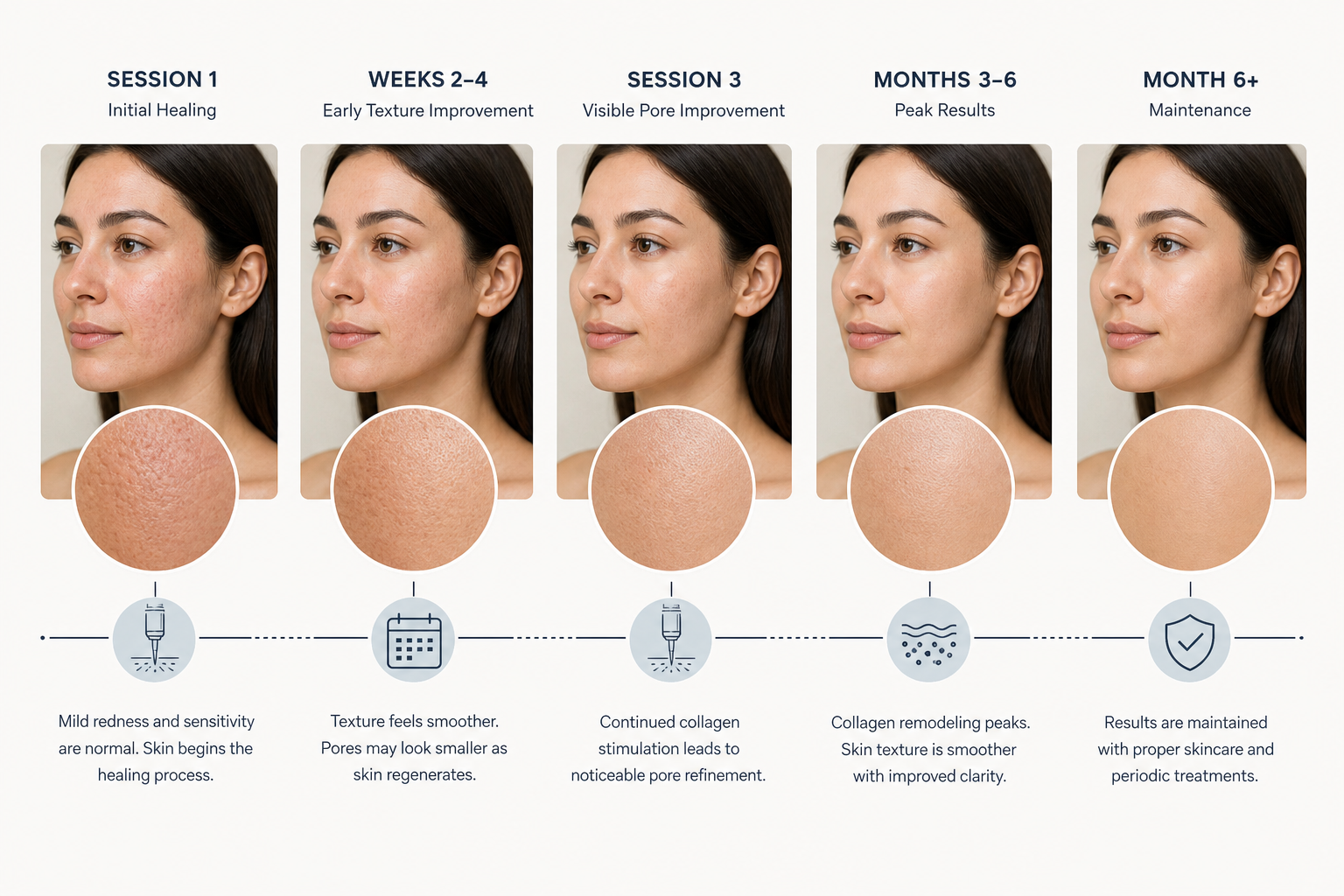
Maintenance sessions are an important part of long-term management. Because collagen continues to deplete naturally with age and UV exposure, periodic maintenance treatments — typically one session every three to six months — help sustain the improvements achieved during the initial series. A practitioner can advise on an appropriate maintenance schedule based on individual skin response and lifestyle factors.
Why Pores May Look Worse Before They Look Better
One of the most common concerns patients raise after their first microneedling session is that their pores appear temporarily more prominent. This is a normal and expected part of the healing process, not a sign that the treatment has failed or caused harm.
Immediately after microneedling, the skin experiences controlled inflammation as part of the wound-healing cascade. This temporary swelling and redness can make pores appear slightly more open or give the skin a rough, uneven texture sometimes described as an orange-peel appearance. This effect typically resolves within 24 to 72 hours as the acute inflammatory phase subsides. The collagen-building phase that follows — which is responsible for the actual improvement — takes several weeks to become visible. Patients who are aware of this sequence are far less likely to be alarmed by early post-treatment appearance and more likely to complete the full treatment series needed for meaningful results.
Standard Microneedling vs. RF Microneedling for Pores
RF microneedling — radiofrequency microneedling — combines the collagen induction mechanism of standard microneedling with the delivery of radiofrequency energy directly into the dermis through the needle tips. This dual mechanism produces both the wound-healing collagen response and additional thermal remodeling of dermal tissue, which can result in more pronounced skin tightening compared to standard microneedling alone.
For patients whose enlarged pores are primarily driven by skin laxity and significant collagen loss — particularly those in their late thirties and beyond — RF microneedling devices such as Morpheus8 may offer a more effective outcome than standard microneedling. Clinical data comparing RF microneedling with platelet-rich plasma (PRP) versus exosome-enhanced protocols suggests that combination approaches can further improve skin quality and texture, though this evidence is still developing and results vary between patients.
| Feature | Standard Microneedling | RF Microneedling |
|---|---|---|
| Mechanism | Controlled micro-injury, collagen induction | Micro-injury plus radiofrequency thermal energy |
| Primary benefit for pores | Collagen remodeling, texture refinement | Collagen remodeling plus enhanced skin tightening |
| Best suited for | Mild to moderate pore visibility, oily skin, younger patients | Moderate to significant pores with skin laxity, collagen loss |
| Downtime | 1–3 days redness and swelling | 2–5 days, potentially longer depending on settings |
| Sessions typically needed | 3–6 | 3–4 (often fewer due to greater per-session effect) |
| Skin tone safety | Safe across all Fitzpatrick types | Generally safe across Fitzpatrick types; settings adjusted for darker tones |
| Cost | Lower per session | Higher per session |
Microneedling vs. Other Treatments for Enlarged Pores
Microneedling is one of several evidence-supported options for improving pore appearance and skin texture. The most appropriate choice depends on the patient’s skin type, concern severity, tolerance for downtime, and budget.
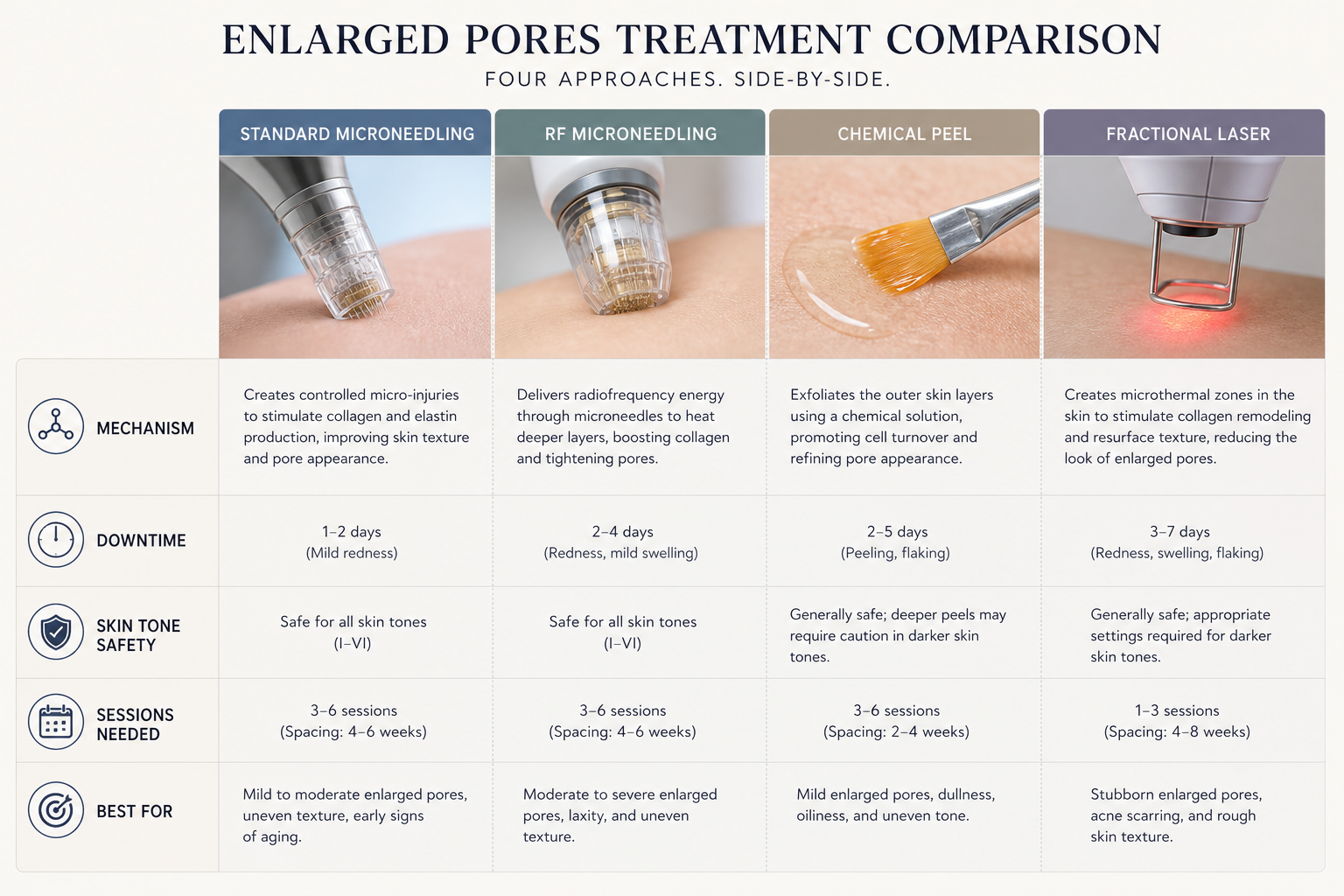
Chemical peels using salicylic acid, mandelic acid, or TCA can improve pore appearance by removing the layer of dead skin cells that accumulates around pore openings and by mildly stimulating collagen production. They are particularly effective for oily, acne-prone skin where sebum-driven pore enlargement is the primary concern. However, chemical peels do not address deeper collagen loss and may require careful selection for darker skin tones to avoid post-inflammatory hyperpigmentation.
Fractional CO2 laser resurfacing can produce significant improvements in skin texture and pore appearance, often with fewer sessions than microneedling. However, laser resurfacing carries a higher risk of post-inflammatory hyperpigmentation in darker skin tones (Fitzpatrick types IV–VI), involves more downtime, and is generally more expensive. Microneedling is frequently preferred for patients with medium to dark skin tones precisely because it does not generate the same thermal energy that can trigger pigmentation changes.
Microdermabrasion and HydraFacial treatments can improve surface texture and temporarily reduce the appearance of congested pores, but they do not stimulate meaningful collagen remodeling in the dermis. They may be useful as maintenance or preparatory treatments but are unlikely to produce the same degree of structural improvement as a full microneedling series.
Microbotox — intradermal injections of diluted botulinum toxin — is an emerging approach for sebum-driven pore enlargement. By reducing sebaceous gland activity and relaxing the arrector pili muscles associated with pores, microbotox may reduce sebum production and temporarily improve pore appearance. A peer-reviewed randomized controlled trial has examined microneedling-assisted botulinum toxin delivery for enlarged facial pores, with promising early results. However, this approach remains less established than standard microneedling and is not yet widely available.
Combination Protocols and Emerging Approaches
Microneedling is increasingly used as part of combination protocols designed to enhance outcomes beyond what the treatment achieves alone. The micro-channels created during microneedling temporarily increase skin permeability, allowing topically applied active ingredients to penetrate more deeply than they would through intact skin.
PRP (platelet-rich plasma) applied during or immediately after microneedling delivers concentrated growth factors directly into the dermis, potentially accelerating collagen synthesis and improving overall skin quality. Clinical evidence for PRP as a microneedling adjunct is growing, though study quality varies and results are not uniform across patients.
Exosomes — extracellular vesicles derived from stem cells — represent a newer addition to combination microneedling protocols. Early clinical data comparing RF microneedling with PRP versus exosome-enhanced protocols suggests that exosomes may offer comparable or superior improvements in skin texture and quality, though this evidence is still at an early stage and longer-term data are limited.
PDLLA (poly-d,l-lactic acid) combinations with microneedling have also been explored for their potential to provide both immediate volumizing effects and longer-term collagen stimulation. These protocols are used in specialist settings and are not yet standard practice.
Niacinamide applied post-treatment may help regulate sebum production and support the skin barrier during recovery, making it a practical addition to the aftercare routine for patients with oily or combination skin. Hyaluronic acid serums are commonly recommended immediately after microneedling to support hydration during the healing phase.
Professional vs. At-Home Microneedling for Pores
At-home dermarollers and microneedling pens are widely available, but they differ meaningfully from professional treatments in ways that matter for pore improvement specifically. At-home devices typically use needle depths of 0.2 mm to 0.3 mm — sufficient to enhance the absorption of topical skincare products but insufficient to reach the dermis where collagen induction occurs. This means at-home microneedling is unlikely to produce the structural skin remodeling needed to meaningfully improve pore appearance.
Professional microneedling uses medical-grade devices with adjustable needle depths, sterile single-use cartridges, and precise motor-controlled penetration. The treatment is performed after application of a topical anesthetic (numbing cream) to minimize discomfort, and the practitioner selects needle depth based on the specific concern and skin assessment. This level of precision and depth is not replicable with consumer devices. At-home rollers may have a role in maintaining skin hydration and supporting product penetration between professional sessions, but they should not be considered a substitute for a professional treatment series when the goal is genuine texture refinement and pore improvement.
Aftercare and Supporting Your Results
Post-treatment aftercare directly influences both recovery comfort and the quality of results. In the 24 to 48 hours following microneedling, the skin is more sensitive and the micro-channels remain temporarily open, making it important to avoid anything that could cause irritation or introduce bacteria.
- Avoid active ingredients including retinol, AHAs, BHAs, and vitamin C for at least 48 to 72 hours post-treatment, as these can cause significant irritation on compromised skin.
- No makeup for 24 hours to reduce the risk of introducing bacteria or irritants into open micro-channels.
- Apply broad-spectrum SPF 30 or higher daily from the day after treatment. Sun protection is non-negotiable during the remodeling phase, as UV exposure can trigger pigmentation changes and undermine collagen synthesis.
- Use non-comedogenic moisturizers and gentle cleansers to support the skin barrier without blocking pores or causing congestion.
- Hyaluronic acid serums are well tolerated immediately post-treatment and help maintain hydration during the healing phase.
For longer-term support of microneedling results, a consistent skincare routine matters. Niacinamide (typically 5–10%) can help regulate sebum production and reduce the appearance of pores between sessions, making it a practical daily addition for oily and combination skin types. Retinoids — used with appropriate timing, generally reintroduced no sooner than one week after treatment — support ongoing collagen production and can complement the remodeling initiated by microneedling. Consistent broad-spectrum SPF use remains the single most important factor in preserving results and preventing further collagen loss from UV exposure.
Who May Be Suitable — and Who May Not
Microneedling for pore improvement may be appropriate for adults with enlarged pores driven by collagen loss, skin laxity, oily skin, post-acne unevenness, or sun damage. It is generally considered safe across all Fitzpatrick skin types, which is a meaningful advantage over laser-based alternatives for patients with medium to dark skin tones.
Microneedling is generally not recommended for patients with:
- Active acne breakouts or active skin infections in the treatment area
- A known tendency to form keloid or hypertrophic scars
- Pregnancy or breastfeeding
- Recent use of isotretinoin (typically within the past six months)
- Certain blood-thinning medications or clotting disorders
- Open wounds, eczema, psoriasis, or rosacea flares in the treatment area
A thorough consultation with a qualified practitioner is essential before beginning any microneedling treatment series. The practitioner should assess the specific cause of enlarged pores, skin type, medical history, and current skincare routine to determine whether microneedling is appropriate and to design a protocol suited to the individual patient.
Frequently Asked Questions
Can microneedling permanently eliminate enlarged pores?
No. Pores are permanent anatomical structures and cannot be permanently removed or closed. Microneedling can significantly reduce their visible appearance by improving the surrounding collagen scaffold and skin texture, but results require maintenance over time as collagen continues to deplete naturally with age and UV exposure.
Is microneedling safe for darker skin tones?
Microneedling is generally considered one of the safer options for patients with darker skin tones (Fitzpatrick types IV–VI) because it does not generate the thermal energy associated with laser treatments that can trigger post-inflammatory hyperpigmentation. Settings should still be selected carefully by an experienced practitioner, and appropriate aftercare including sun protection is essential.
How long do microneedling results for pores last?
Results from a full treatment series typically last six to twelve months before maintenance is needed, though this varies considerably between individuals. Factors such as age, sun exposure, skincare routine, and genetics all influence how long improvements are maintained. Periodic maintenance sessions — usually one every three to six months — help sustain results.
Does microneedling hurt?
A topical anesthetic (numbing cream) is applied before professional microneedling to minimize discomfort. Most patients describe the sensation during treatment as mild pressure or a slight scratching feeling rather than significant pain. Sensitivity varies depending on the area treated and the needle depth used.
Can microneedling make pores worse?
Pores may appear temporarily more prominent in the first 24 to 72 hours after treatment due to post-treatment inflammation and swelling. This is a normal part of the healing process and resolves as the skin recovers. Performed correctly by a qualified practitioner, microneedling should not cause lasting worsening of pore appearance. Overly frequent treatments or inappropriate needle depth can increase the risk of adverse effects.
How does microneedling compare to chemical peels for pores?
Chemical peels work primarily at the surface level, removing dead skin cells and mildly stimulating collagen. They are effective for sebum-driven pore congestion and surface texture but do not address deeper collagen loss. Microneedling reaches the dermis and stimulates more substantial structural remodeling, making it generally more effective for pores driven by collagen depletion and skin laxity. The two approaches can also be used in a complementary programme under practitioner guidance.
Is Microneedling the Right Approach for Your Pore Concerns?
Microneedling is a well-supported, minimally invasive option for improving the visible appearance of enlarged pores, particularly when the underlying cause involves collagen loss, skin laxity, or post-acne unevenness. The treatment works through genuine skin remodeling rather than surface-level exfoliation, and its safety profile across all skin tones makes it accessible to a broad range of patients. However, realistic expectations are essential: results are progressive, not immediate, and a structured treatment series followed by periodic maintenance is needed to sustain improvement.
For patients whose pores are primarily driven by excess sebum production, combining microneedling with sebum-regulating skincare or exploring adjunct options such as chemical peels may produce better outcomes than microneedling alone. For those with significant skin laxity and deeper collagen loss, RF microneedling may offer a more effective result per session. The most important first step is a thorough consultation with a qualified aesthetic practitioner who can assess the specific cause of your enlarged pores, review your skin history, and recommend a protocol tailored to your individual needs and goals.