
Marionette Line Filler Treatments in London
Marionette lines — vertical folds running from the corners of the mouth towards the chin — develop as collagen and subcutaneous fat diminish with age. Independent specialists available through Science Beauty use hyaluronic acid-based dermal fillers to restore lost volume, address structural descent in the lower face, and achieve a more balanced, youthful appearance.
The depth of the lines, facial movement patterns, and individual anatomy each influence the treatment approach. Filler placement along the marionette lines and surrounding support zones — including the pre-jowl sulcus and chin — allows practitioners to smooth the fold itself while addressing its underlying cause, producing natural-looking results that preserve normal expression.

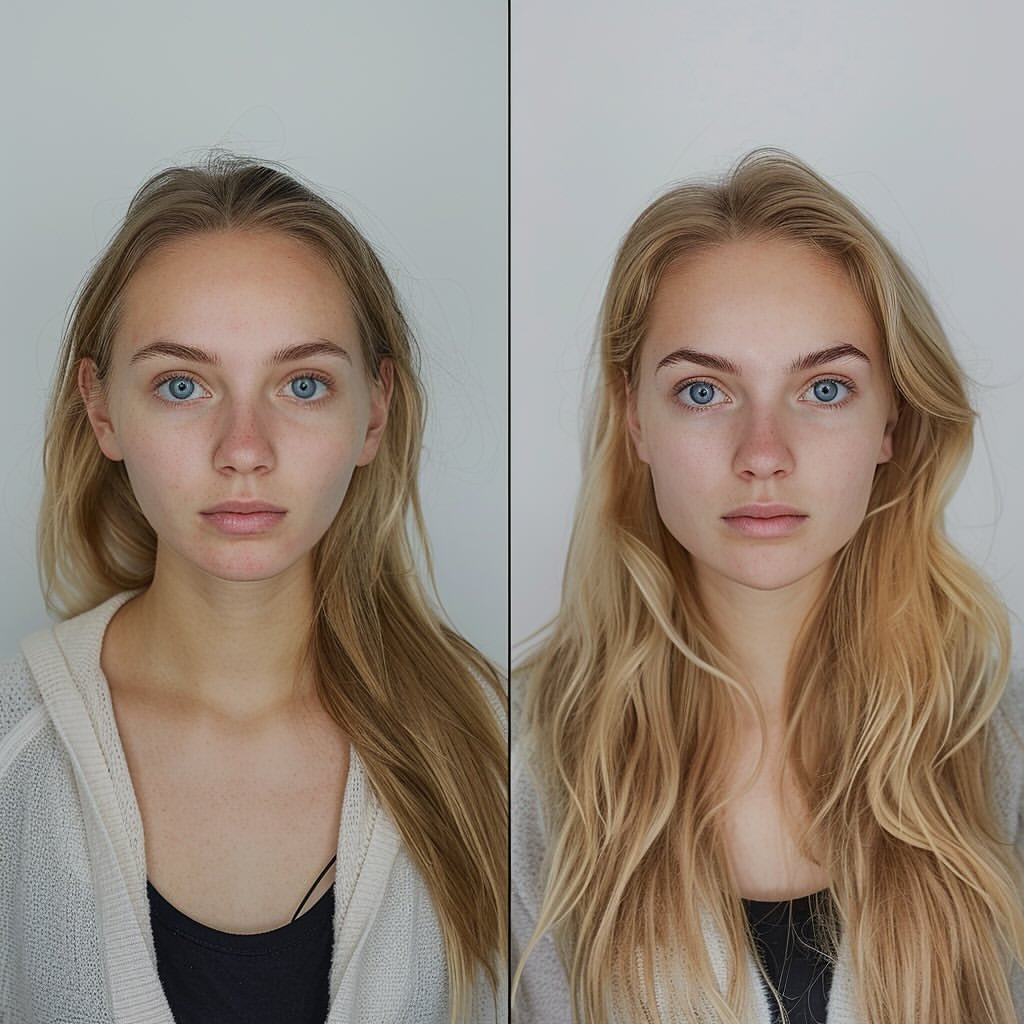
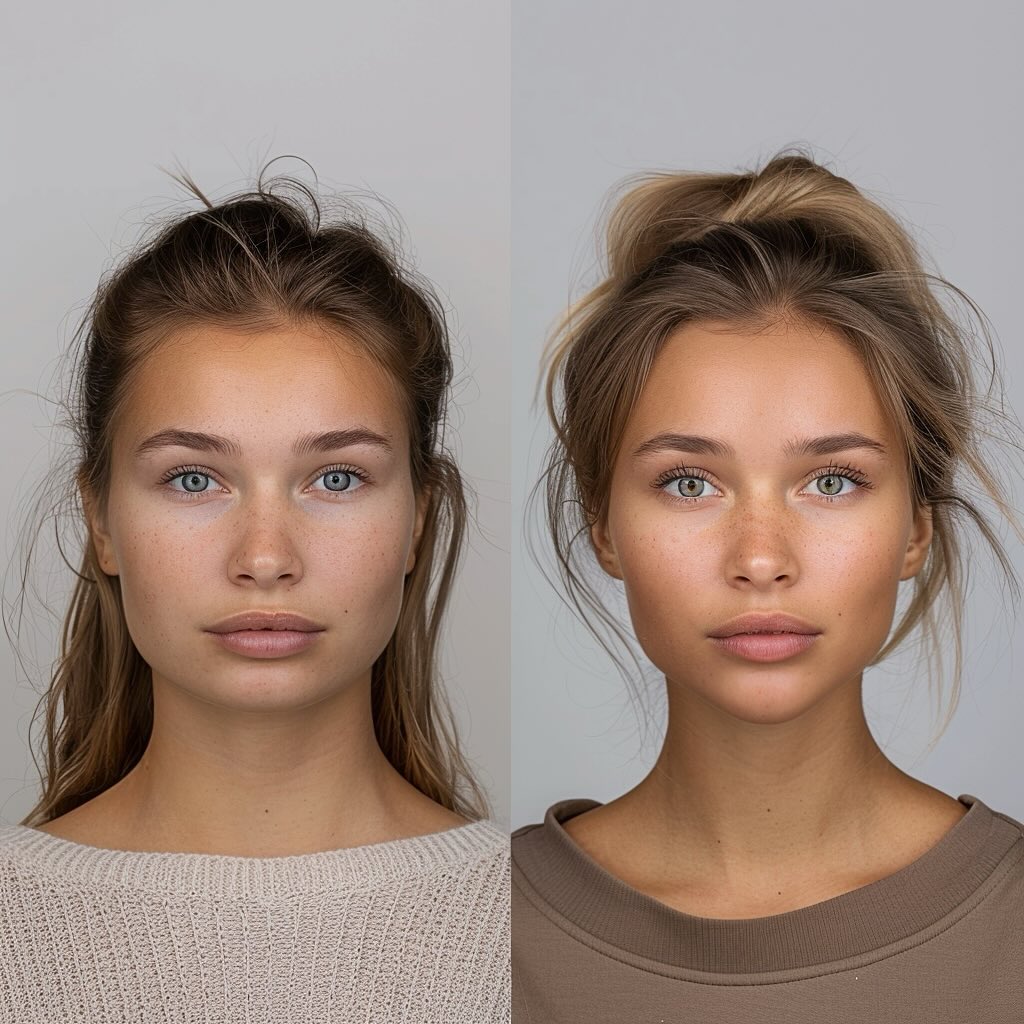
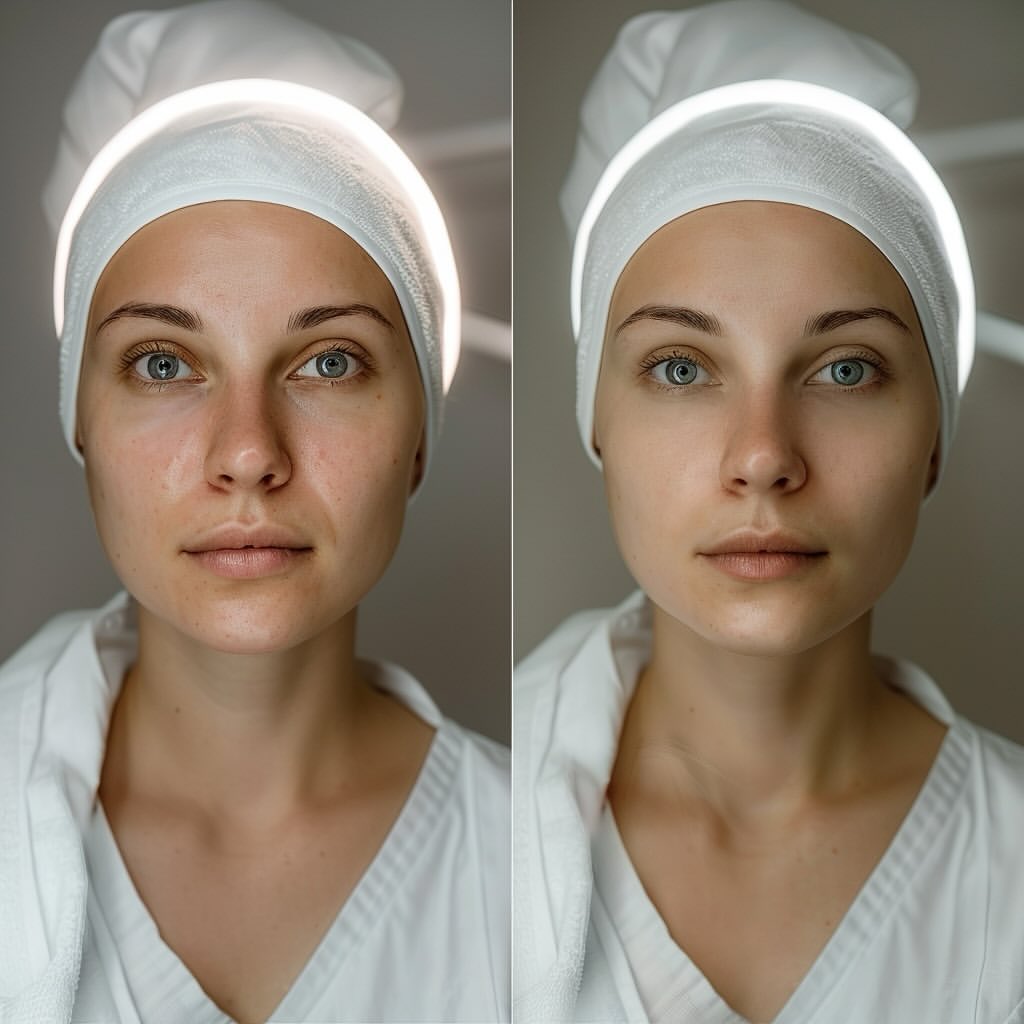
Thousands of satisfied customers
How Much Does Marionette Line Filler Cost in London?
Direct Answer
Marionette line filler in London typically costs between £300 and £500 per 1ml syringe, with an average price of around £375–£400. Prices vary based on the volume required, the practitioner’s qualifications, and clinic location, with entry-level single-area treatments starting around £300–£350. Premium central London and Harley Street clinics often charge £500–£850 or more for comprehensive lower-face treatment.
Typical Marionette Line Filler Prices in London
- Entry-level single syringe: £300–£350
- Standard 1ml syringe: £300–£500
- Two-syringe treatment (deeper folds): £600–£900
- Premium / Harley Street session: £500–£850
- Combined with nasolabial folds or midface support: £450–£900
Key Pricing Factors
- Practitioner qualifications: GMC or NMC-registered practitioners charge more than non-medical injectors, as marionette lines often require structural, deeper-placed filler rather than simple surface correction.
- Clinic location: Harley Street and central London clinics typically charge more than equivalent treatments in outer London, with premium specialist clinics often 40–70% above standard clinics.
- Volume required: Deeper, more established folds typically require 1–2 syringes rather than one, directly increasing the total cost.
- Product type: Premium hyaluronic acid brands with longer-lasting, structural formulations cost more than standard HA products used for finer lines.
- What’s included: Reputable clinics include the procedure and a complimentary follow-up review; some providers charge these separately.
What Should Be Included in the Price
- Consultation with a GMC or NMC registered medical injector to assess the cause (volume loss, jawbone changes, or skin laxity)
- Confirmation of the specific filler product and volume planned, in writing
- Topical or local anaesthetic for comfort
- Guidance on the expected 6–12 month duration of results
- A complimentary 2-week follow-up review to check symmetry and lift
Pricing Red Flags
Marionette line filler advertised below £200 per syringe in London is a warning sign rather than a bargain. Suspiciously low prices usually indicate one of: an unqualified injector, an unverified product, or a non-clinical setting. Correcting a complication — lumps, asymmetry, or an overfilled, unnatural result — costs significantly more than a properly performed treatment in a CQC-regulated clinic.
For a personalised quote based on the volume and product right for your lower face, book a free consultation.
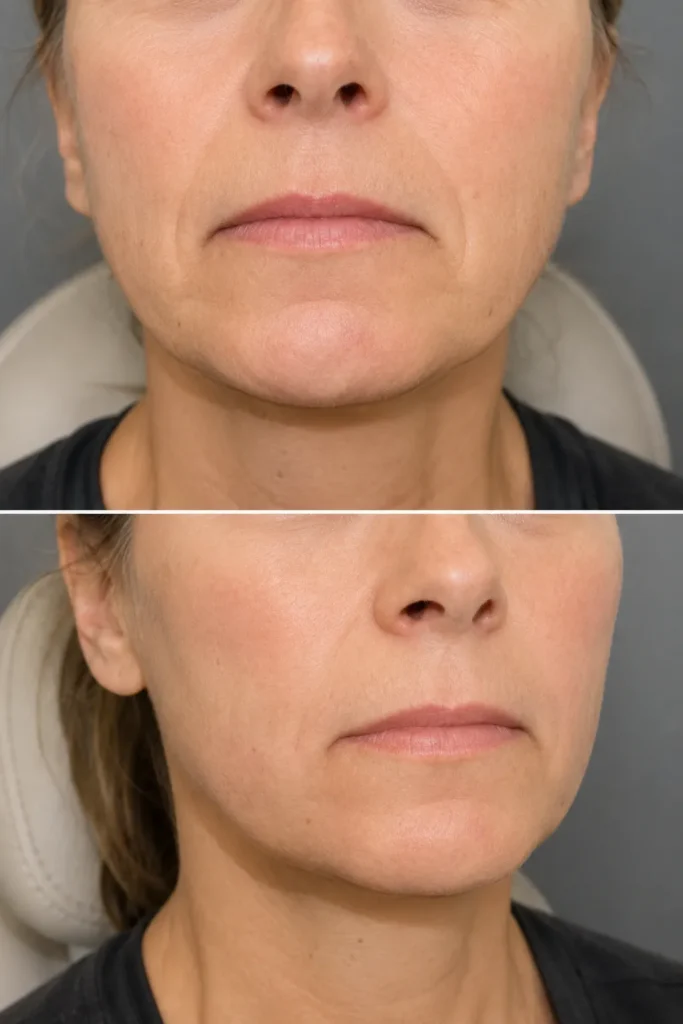
Before and After Marionette Line Filler Treatment
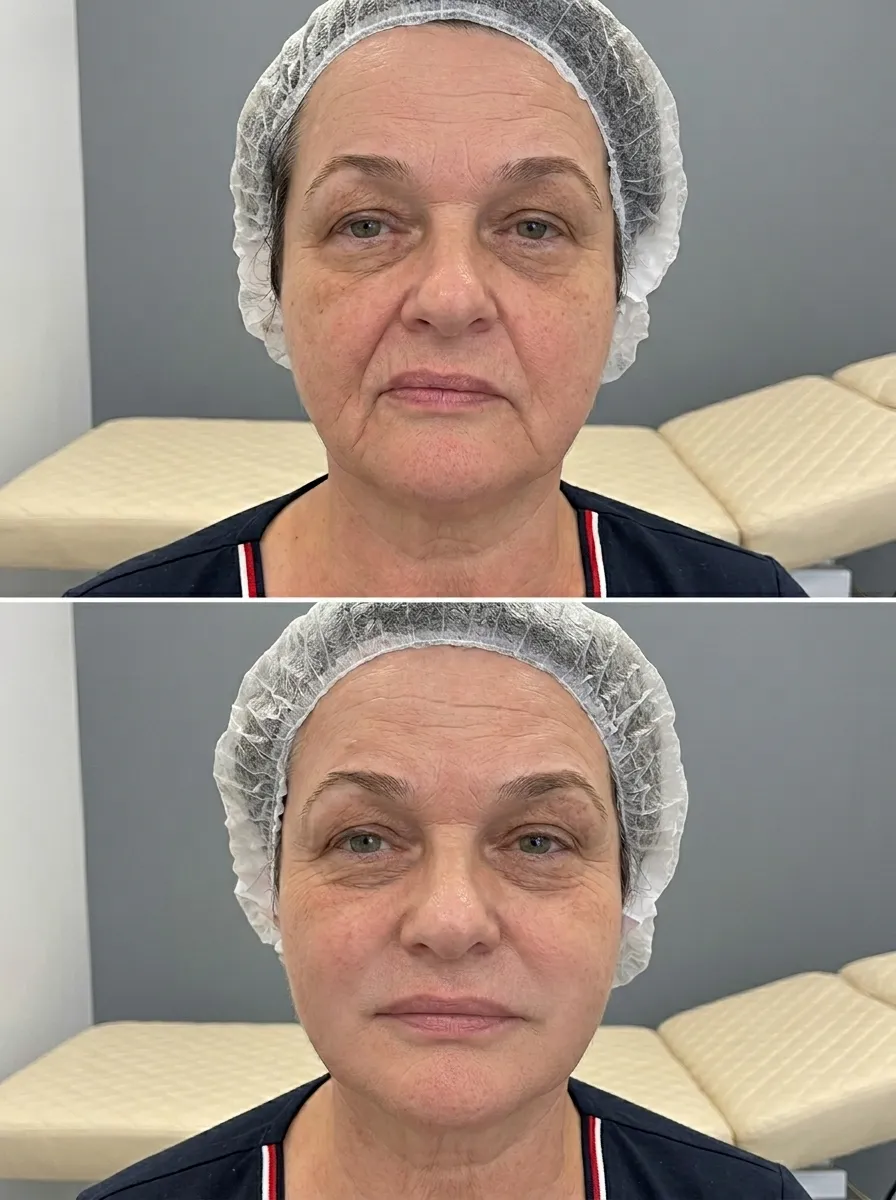
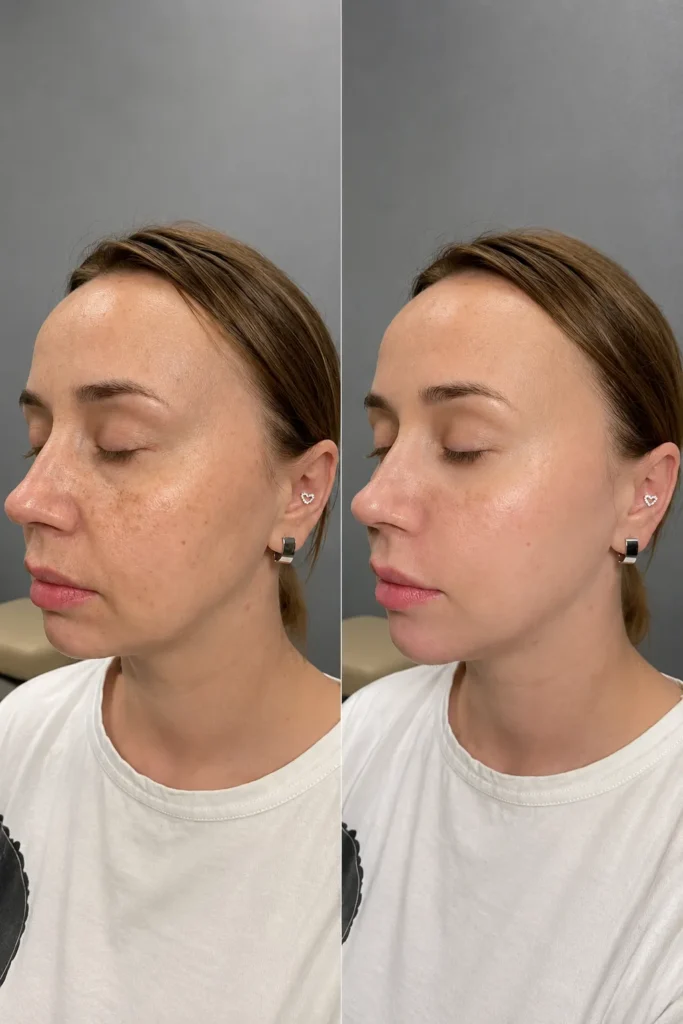
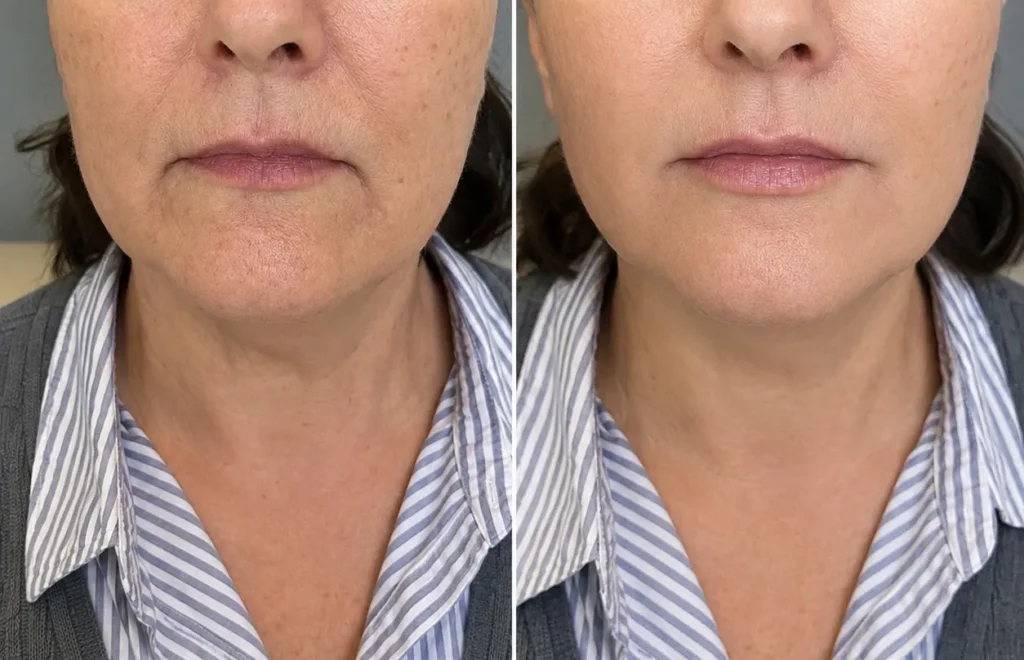
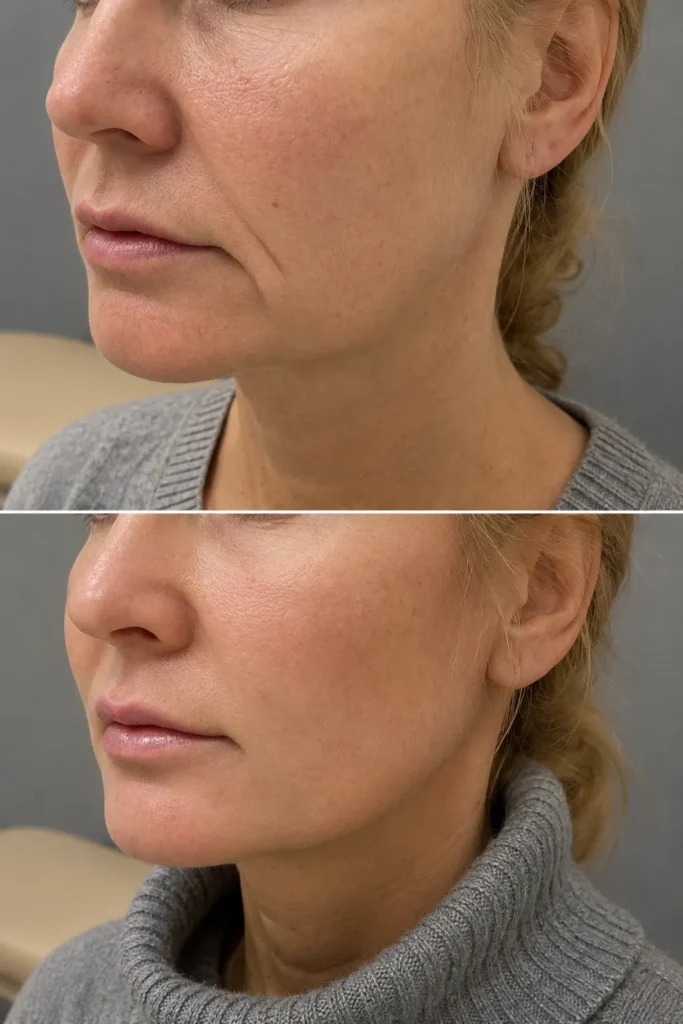
Patients who seek marionette line filler treatment typically present with visible downward creases at the mouth corners, an expression that appears tired or stern at rest, and early jowl shadowing. Independent specialists commonly describe visible reductions in fold depth, a gentle lift at the oral commissures, and improved lower-face contour as reported outcomes — though individual results vary according to anatomy, skin condition, and the treatment plan agreed with the practitioner.
Results are shaped by filler brand, injection depth, volume used, and the technique of the individual injector. Patients with deeper lines may require a staged approach across two sessions to build the product gradually for maximum stability and a natural-looking finish.
Commonly discussed treatment outcomes include:
- Reduced depth of folds from the corners of the mouth towards the chin
- Lifted oral commissures and softened downturned appearance
- Smoother transition between the lower cheek and jawline
- Improved facial symmetry and a refreshed resting expression
What is a Marionette Line Filler?
Marionette line filler is a non-surgical injectable treatment using hyaluronic acid — a molecule naturally present in connective tissue — to restore lost volume along the lower face. These fillers are cross-linked for durability, soft enough to integrate with surrounding tissue, and reversible with hyaluronidase if required.
Hyaluronic acid fillers attract and retain water molecules, providing both structural lift and hydration within the treatment area. Because the substance is biocompatible, the filler integrates smoothly with existing facial structures rather than sitting superficially, giving results that move naturally with facial expression.
As the skin loses elasticity and collagen with age, the ligamentous support along the lower face weakens. Volume depletion on either side of the chin creates the characteristic fold. Filler placement counteracts this by restoring structural scaffolding — directly addressing the anatomical mechanism behind marionette line formation rather than merely filling the surface crease.
The Marionette Line Filler Process: Step by Step
Clinical Assessment
The treating practitioner evaluates lower face anatomy, fold severity, skin condition, and medical history. A treatment plan tailored to the individual’s facial structure is agreed upon before any product is used.
Pre-treatment Protocol
A topical numbing cream is applied to the treatment area, typically for 15–20 minutes. Most hyaluronic acid fillers used in this region also contain lidocaine to further minimise discomfort at the injection site.
Treatment Implementation
Filler is precisely placed along the marionette lines using needle or micro-cannula techniques selected for the individual’s anatomy. Small volumes are deposited at varying depths to restore volume and lift.
Structural Support Zones
Where indicated, filler may also be introduced to adjacent areas — the pre-jowl sulcus or chin — to address the structural cause of the downturn rather than the surface line alone.
Post-procedure Care
Aftercare instructions are provided by the treating practitioner. Minor redness, bruising, or swelling at the injection site typically resolves within 48–72 hours.
Procedure time: 30–45 minutes.
Recovery: Minimal; most patients return to normal activities the same day, with minor swelling or bruising possible for up to 72 hours.
Benefits of Marionette Line Filler
Dermal filler treatment for marionette lines offers immediate volumetric correction with no surgical intervention, general anaesthesia, or extended recovery period. Results are visible from the day of treatment and continue to refine as the filler integrates with surrounding tissue over the following 7–14 days. The reversible nature of hyaluronic acid fillers provides an additional safety margin not available with permanent solutions.
Long-term, restoring structural support to the lower face may reduce the progressive deepening of the fold by counteracting the cycle of volume loss and soft-tissue descent. Collagen stimulation has also been reported with certain filler brands, contributing to incremental improvements in skin quality between sessions.
Key therapeutic and aesthetic advantages include:
- Non-surgical correction of deep lines with no incisions or general anaesthesia
- Immediate, visible improvement in lower face contour
- Reversible with hyaluronidase, should results require adjustment
- Natural-looking results that preserve facial movement
- Minimal downtime, with return to work typically possible the same day
- Longevity of 9–18 months, depending on product and metabolism
Marionette Line Filler Treatment Options
Targeted Marionette Line Restoration
A focused treatment addressing the fold from the corners of the mouth towards the chin using 1 ml of hyaluronic acid filler. Suitable for moderate lines where the surrounding anatomy remains structurally sound. This is typically the starting point for first-time patients exploring marionette lines treatment in London.
Lower Face Contour Protocol
A combined approach addressing marionette lines alongside the pre-jowl sulcus or chin using 1.5–2 ml of filler. Specialists on the platform note this approach better targets the anatomical descent driving lower-face ageing rather than treating the visible line in isolation.
Multi-Zone Rejuvenation
For patients with both marionette lines and mid-face volume loss, some practitioners recommend integrating cheek filler within the same or a staged session. Restoring cheek volume provides structural support that naturally reduces pressure on the lower face, softening both nasolabial folds and marionette lines simultaneously.
Combined Aesthetic Protocols
Available independent specialists may recommend pairing filler with complementary treatments — including skin boosters, PDO threads, or anti-wrinkle injections — to improve skin quality, elasticity, and longevity of results. The specific combination is determined by the practitioner during the consultation based on the individual skin condition and treatment goals.
Why Choose Science Beauty for Marionette Line Filler?
Science Beauty connects patients with independently verified specialists and clinics in central London, selected according to rigorous clinical and professional criteria.
Practitioners featured on the platform are evaluated against defined standards before being listed. Patients can compare profiles, review credentials, and book consultations with confidence.
Specialist selection criteria include:
- Active registration with the GMC, NMC, or GDC
- Verified training in advanced facial anatomy and injection technique
- CQC-compliant clinical environment
- Evidence-based treatment protocols
- Demonstrated experience in marionette line filler and lower face aesthetics
- High and verified patient satisfaction scores
Science Beauty does not perform procedures directly. The platform exists to give patients transparent access to qualified practitioners, removing uncertainty from the process of finding appropriate aesthetic care in London.
Frequently Asked Questions
How long does marionette line filler last?
Results from hyaluronic acid fillers placed along the marionette lines typically last between 9 and 18 months, depending on the specific filler brand, volume used, individual metabolism, and lifestyle factors such as sun exposure and hydration. Practitioners commonly recommend a review appointment at around 12 months to assess whether a small maintenance volume is indicated.
Is marionette line filler safe?
When performed by a qualified medical practitioner with knowledge of facial anatomy, marionette line filler is considered a low-risk procedure. The most common side effects are temporary bruising, redness, and swelling at the injection site. Serious complications — including vascular events — are rare but possible, which is why practitioner selection and clinical environment are critical considerations.
How much filler is needed for marionette lines?
Most patients require between 1 and 2 ml of dermal filler per session. The exact volume depends on the depth of the lines, the degree of structural descent in the lower face, and whether adjacent areas such as the pre-jowl sulcus or chin are included in the treatment plan. This is confirmed during the consultation with the independent specialist.
Is marionette line filler worth it?
For patients with visible lower-face folds affecting their resting expression, filler treatment offers immediate improvement with minimal recovery time and no surgical risk. Results are reversible, making the intervention adjustable. Whether it is appropriate for a given individual depends on their anatomy, skin condition, and goals — factors assessed in full during a consultation with a qualified practitioner.
What are the risks associated with marionette line filler?
Temporary side effects include bruising, swelling, and tenderness at the injection site, which typically resolve within 48–72 hours. Less common risks include asymmetry, lumpiness, or delayed swelling. Rare but serious complications include infection, allergic reaction, and intravascular injection. Choosing a practitioner with documented experience and appropriate emergency protocols significantly reduces these risks.
Can marionette lines be treated without filler?
Yes. Alternative approaches include PDO thread lifts, skin boosters such as Profhilo, collagen-stimulating biostimulators, and energy-based devices such as Ultherapy. These options may suit patients who prefer to avoid direct filler placement or who wish to address the skin quality component alongside structural volume loss. An independent specialist can advise on the most appropriate approach during consultation.
How many sessions are required?
Many patients achieve their desired result in a single session, particularly where lines are moderate. Deeper folds or more pronounced structural descent may benefit from a staged approach, building volume gradually over two sessions spaced 4–6 weeks apart. Maintenance treatments every 12 months help sustain results and manage ongoing signs of ageing in the lower face.
Will I look natural after the marionette line filler?
When filler is placed conservatively and at appropriate depths by an experienced practitioner, results are designed to soften the fold rather than eliminate it entirely, preserving normal facial movement and expression. Over-filling is avoided by practitioners who tailor the volume to individual anatomy. The goal is a refreshed, rested appearance — not a structural change to the face.
How much does marionette line filler cost in London?
Marionette line filler in London typically costs between £300 and £500 per 1ml syringe, with an average price of around £375–£400. Prices vary based on the volume required, the practitioner’s qualifications, and clinic location, with entry-level single-area treatments starting around £300–£350. Premium central London and Harley Street clinics often charge £500–£850 or more for comprehensive lower-face treatment.