Retinol After Microneedling: Your Complete Restart Timing Guide
Retinol and microneedling are two of the most effective tools in a skin-renewal routine, but combining them at the wrong moment can set back your results rather than enhance them. If you have just had a microneedling session — or are planning one — understanding exactly when and how to reintroduce retinol is essential for protecting your healing skin and getting the most from your treatment.
Key Takeaways
- Most practitioners recommend waiting at least 5 to 7 days after standard professional microneedling before restarting retinol, though skin type, treatment depth, and retinoid strength all influence the right window for you.
- Applying retinol too soon after microneedling can worsen irritation, disrupt skin barrier recovery, and potentially prolong redness and peeling.
- The recovery period is a valuable opportunity to use barrier-supportive ingredients — hyaluronic acid, ceramides, and peptides — that actively complement the collagen induction process.
- RF microneedling and PRP microneedling typically require a longer pause than standard microneedling; at-home derma rolling with shallow needles generally allows an earlier restart.
- When you do reintroduce retinol, starting at a lower concentration and increasing gradually reduces the risk of post-treatment sensitivity.
Why Retinol and Microneedling Need Careful Timing
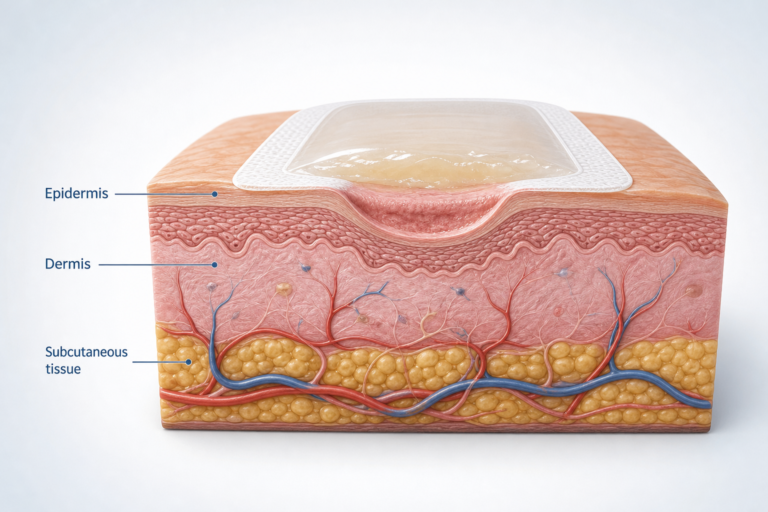
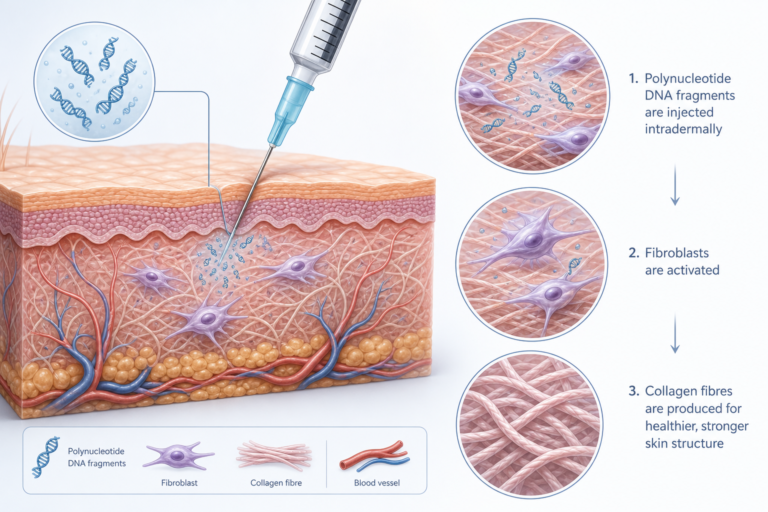
Microneedling — also called collagen induction therapy — works by creating controlled micro-injuries in the skin using fine needles. These microchannels trigger the skin’s natural repair cascade: an inflammatory phase, followed by a proliferation phase in which new collagen and elastin are produced, and finally a maturative phase in which the tissue remodels over weeks. The result, over time, is firmer, smoother skin with improved texture and tone.
Retinol, a vitamin A derivative, accelerates cell turnover and stimulates collagen production through a different mechanism. Under normal circumstances, these effects are desirable. Immediately after microneedling, however, the skin barrier is temporarily disrupted. The microchannels created during treatment increase transepidermal water loss (TEWL) and leave the skin more permeable than usual. Applying retinol onto a compromised skin barrier dramatically increases the risk of irritation, redness, and peeling — not because retinol is harmful in itself, but because the skin simply cannot tolerate active ingredients while it is in an acute healing state.
There is also a practical concern: retinol applied through open microchannels is absorbed more deeply and rapidly than it would be on intact skin. This heightened absorption amplifies the risk of a reaction, particularly for anyone using a higher retinoid strength or prescription tretinoin.
How Long After Microneedling Can You Use Retinol?
The dominant clinical consensus is a minimum wait of 5 to 7 days after a standard professional microneedling session before reintroducing retinol. This window allows the microchannels to close, the acute inflammatory phase to resolve, and the skin barrier to begin meaningful recovery. However, this is a general guideline, not a universal rule. Several factors can shift the appropriate timing.
Treatment Depth and Intensity
Needle depth is one of the most important variables. Shallow professional treatments (around 0.5–1.0 mm) cause less disruption and may allow a retinol restart closer to the 5-day mark for resilient skin types. Standard treatments (1.0–1.5 mm) typically warrant the full 5–7 day pause. Deeper treatments (1.5–2.5 mm or more), which are sometimes used for acne scarring or significant textural concerns, can leave the skin in a more prolonged healing state, and waiting 10–14 days before reintroducing retinol is often more appropriate.
Treatment Type: RF Microneedling, PRP, and Standard
Not all microneedling procedures are equivalent in terms of recovery. Standard microneedling creates mechanical microchannels. RF microneedling (radiofrequency microneedling), such as treatments performed with devices like Morpheus8, adds thermal energy to the needle injury, which increases tissue disruption and extends the inflammatory phase. RF microneedling recovery typically requires a longer pause — often 10 to 14 days — before retinol is appropriate. PRP microneedling, which combines the procedure with platelet-rich plasma applied to the skin, involves growth factors that support healing; introducing retinol before the PRP has had time to act may interfere with this process, so a similar 7–10 day minimum is generally advisable.
At-Home Microneedling vs. Professional Treatment
At-home microneedling devices — often called derma rollers — use much shallower needles, typically 0.25–0.5 mm. At this depth, the skin barrier disruption is considerably less significant than with professional treatment. Many practitioners suggest that a 2–3 day pause is sufficient after at-home derma rolling before resuming retinol, though this still depends on how your skin responds. If you notice any redness, tightness, or sensitivity, extending the pause is the safer choice.
Skin Type and Individual Sensitivity
Oily and resilient skin types tend to recover more quickly and may tolerate retinol restart at the earlier end of the recommended window. Dry, sensitive, or rosacea-prone skin typically needs more time — closer to 7–10 days for standard treatments — because the skin barrier is already less robust at baseline. If you have a history of post-procedure sensitivity or are new to retinol, erring on the side of a longer pause is always the more cautious approach.
Signs Your Skin Is Ready to Restart Retinol
Rather than relying solely on a calendar count, assessing your skin’s actual condition is the most reliable guide. Your skin is likely ready to reintroduce retinol when all of the following are true:
- Redness and visible inflammation have fully resolved
- There is no active peeling, flaking, or dry patches
- The skin feels comfortable and does not sting when you apply water or a plain moisturizer
- There is no tightness or sensation of rawness
- Your skin feels close to its normal baseline texture
If any of these signs are still present, wait another 2–3 days and reassess. Rushing the retinol restart when the skin is still in an active healing state is one of the most common post-microneedling mistakes.
How to Reintroduce Retinol Safely After Microneedling
Even when your skin has returned to baseline, a gradual retinol restart reduces the risk of triggering unnecessary irritation on recently treated skin. Follow a step-down approach based on concentration and frequency.
- Start with a lower concentration. If you normally use a 0.5% or 1% retinol, begin your restart at 0.25% or the lowest available strength. If you use prescription tretinoin (0.05% or 0.1%), consider stepping down to 0.025% tretinoin or an over-the-counter retinol for the first week back.
- Apply every third night initially. Use retinol on one night, then allow two nights of barrier-supportive moisturiser only. This gives the skin time to adjust without cumulative irritation.
- Increase frequency gradually. After one week at every-third-night application with no adverse reaction, move to every other night. After a further week, return to your usual frequency if your skin tolerates it well.
- Buffer if needed. Applying a fragrance-free moisturizer before retinol (the sandwich method) can reduce the intensity of the initial application on recently treated skin.
- Use mineral SPF daily. Retinol increases photosensitivity, and post-microneedling skin is already more vulnerable to UV damage. A broad-spectrum mineral sunscreen is preferable to chemical SPF in the early post-treatment period because mineral filters sit on the skin surface rather than being absorbed, which reduces the risk of irritation on skin that is still recovering.
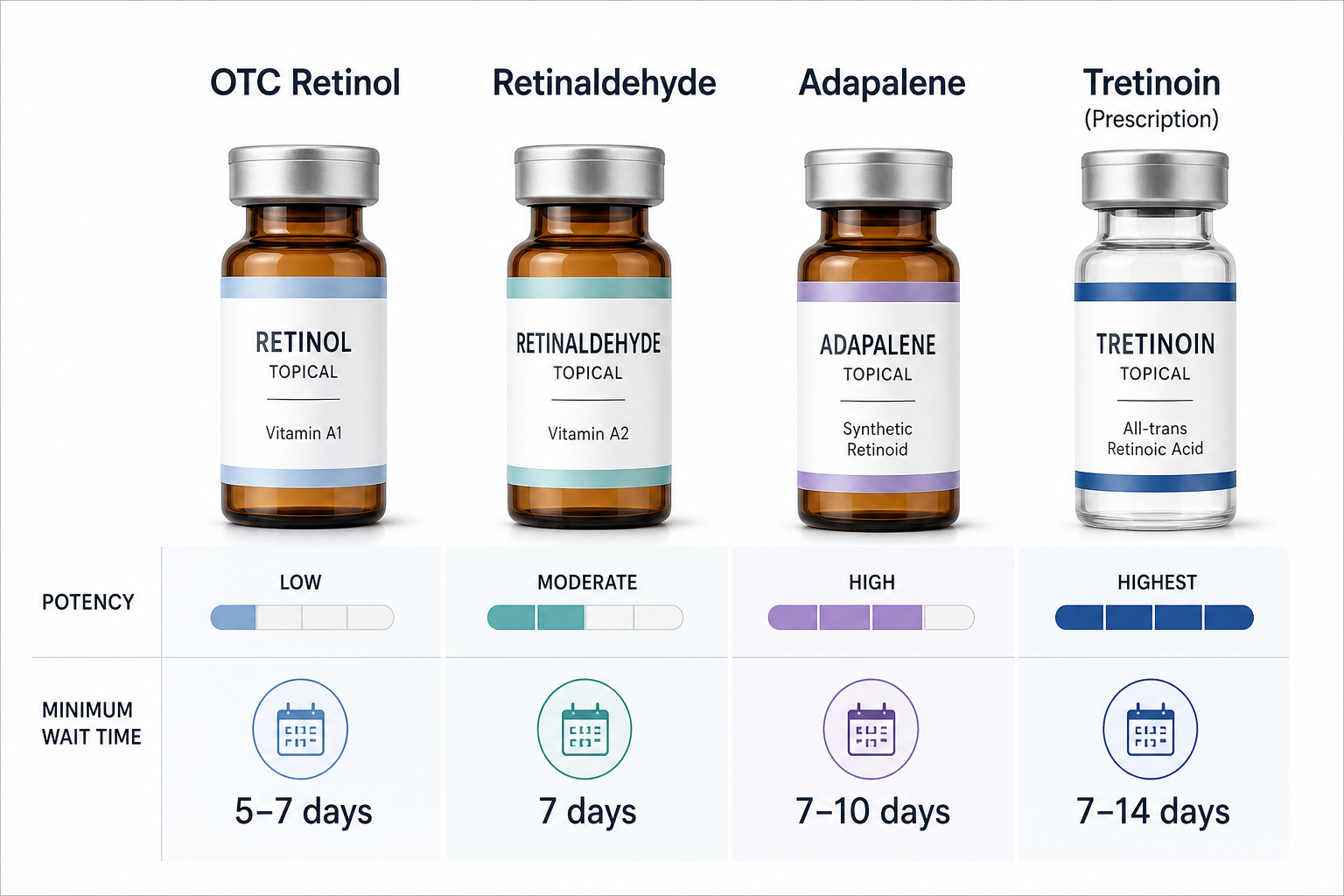
Retinoid Strength Comparison: Restart Timing by Type
Different retinoids carry different potency levels, and this affects how cautiously you should approach the restart after microneedling. The table below provides a general reference; individual responses vary, and your treating practitioner’s guidance takes precedence.
| Retinoid Type | Typical Strength Range | Suggested Minimum Wait (Standard Microneedling) | Restart Approach |
|---|---|---|---|
| OTC Retinol | 0.025% – 0.5% | 5–7 days | Begin at lowest available strength, every 3rd night |
| OTC Retinol (higher strength) | 0.5% – 1% | 7 days | Step down to 0.25% for first week back |
| Retinaldehyde | 0.05% – 0.1% | 7 days | Every 3rd night initially; monitor for sensitivity |
| Adapalene (OTC) | 0.1% | 7–10 days | Every 3rd night; adapalene is less irritating than tretinoin |
| Prescription Tretinoin | 0.025% – 0.1% | 7–14 days | Step down to lower strength or OTC retinol for first 1–2 weeks |
What to Use During the Recovery Window Instead of Retinol
The 5–10 days after microneedling are not simply a waiting period — they are a strategic window during which the right ingredients can actively support and amplify the collagen induction process. The microchannels created during treatment temporarily enhance the skin’s ability to absorb topical actives, which means barrier-supportive and healing-focused ingredients applied during this phase may deliver greater benefit than they would on untreated skin.
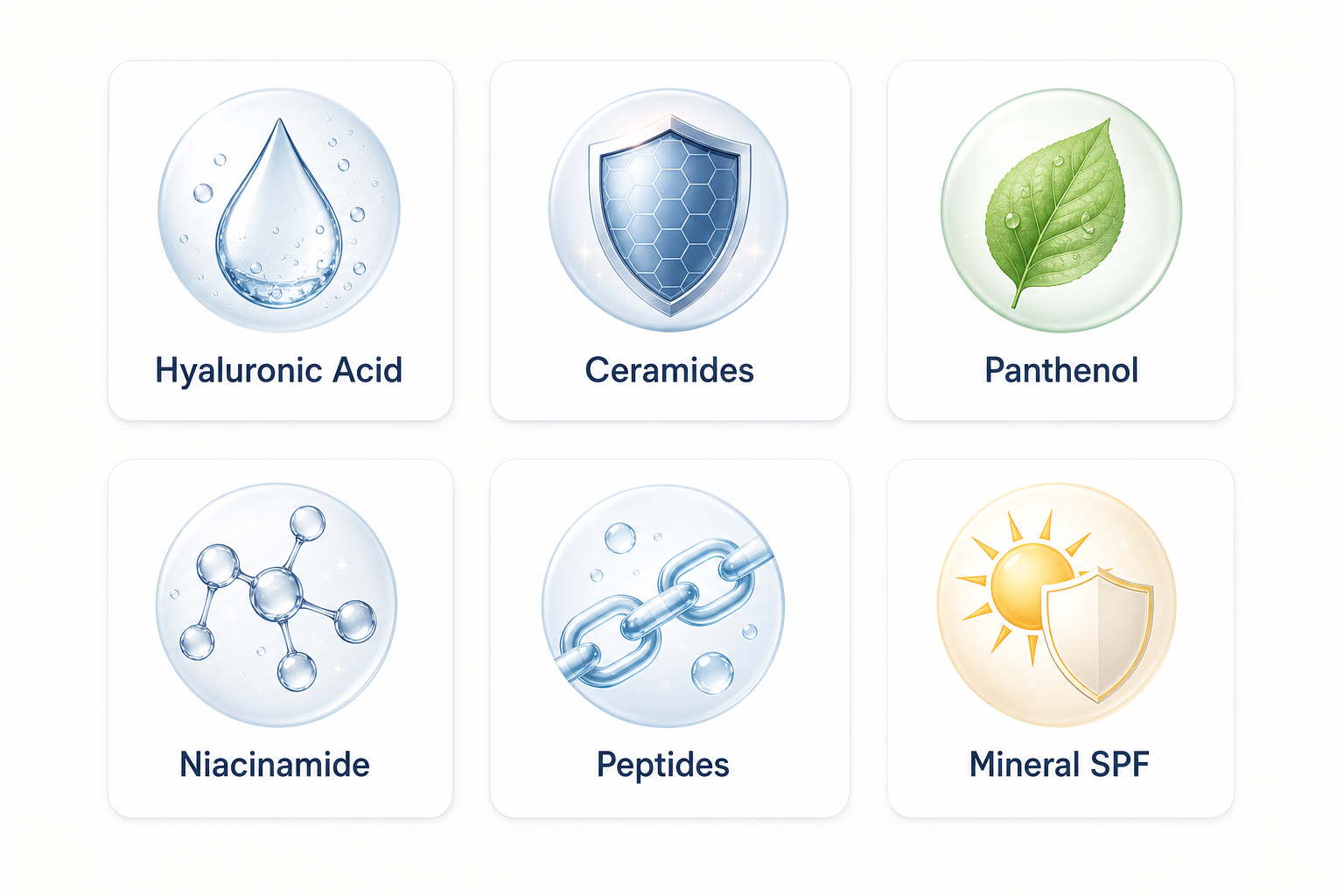
Hyaluronic acid is one of the most appropriate post-microneedling ingredients. It draws moisture into the skin, supports the healing environment, and does not irritate compromised skin. Ceramides help restore the lipid matrix of the skin barrier, reducing TEWL and accelerating barrier recovery. Panthenol (provitamin B5) has soothing and moisturising properties well suited to the inflammatory phase. Niacinamide, at moderate concentrations (around 5%), can support barrier function and reduce redness, though some practitioners prefer to introduce it after the first 48–72 hours rather than immediately post-treatment. Peptides and copper peptides may support collagen synthesis during the proliferation phase and are generally well tolerated on healing skin. Growth factors and exosome-based serums, where available, are increasingly used in professional post-microneedling protocols for their potential to support tissue repair.
Ingredients to Avoid During Recovery
Alongside retinol, several other active ingredients should be paused during the recovery period. AHAs (such as glycolic acid and lactic acid) and BHAs (such as salicylic acid) are exfoliating acids that can further disrupt an already compromised skin barrier. Vitamin C in its ascorbic acid form is acidic and can cause stinging and irritation on healing skin, though gentler derivatives may be tolerated after the first few days. Benzoyl peroxide, alcohol-based toners, fragranced products, and essential oils should all be avoided until the skin has fully recovered. Physical exfoliation — scrubs, cleansing brushes — should also be set aside for at least a week.
Should You Pause Retinol Before Microneedling Too?
Yes. It is equally important to pause retinol before microneedling, not just after. Most practitioners recommend stopping retinol use 3 to 7 days before your appointment. Retinol accelerates cell turnover and can thin the stratum corneum (the outermost layer of the skin), which makes the skin more sensitive and reactive during the procedure. Continuing retinol right up to the day of treatment may increase the risk of excessive irritation, prolonged redness, and a more uncomfortable experience. If you use prescription tretinoin, some practitioners advise stopping 5–7 days before treatment rather than the shorter window sometimes suggested for OTC retinol. Always follow the specific pre-treatment instructions provided by your clinic.
What If You Used Retinol Too Soon After Microneedling?
Accidentally applying retinol before your skin was ready is more common than it might seem, particularly for people who use retinol as a habitual part of their nightly routine. If this happens, the most important step is to stop retinol immediately and switch to a gentle, fragrance-free moisturizer to support barrier recovery. Avoid all other active ingredients. If the skin is red, stinging, or peeling, a plain ceramide-rich moisturizer applied generously and frequently is the most appropriate response. Cool (not cold) water compresses can help soothe acute discomfort. Avoid picking at any peeling skin, as this increases the risk of post-inflammatory hyperpigmentation on recently needled tissue. If redness or irritation is severe, persists beyond 48–72 hours, or is accompanied by swelling or signs of infection, contact your treating practitioner for assessment. In most cases, a brief accidental application will not cause lasting harm, but it may temporarily extend your recovery period.
Planning Your Retinol Calendar Around Regular Microneedling Sessions
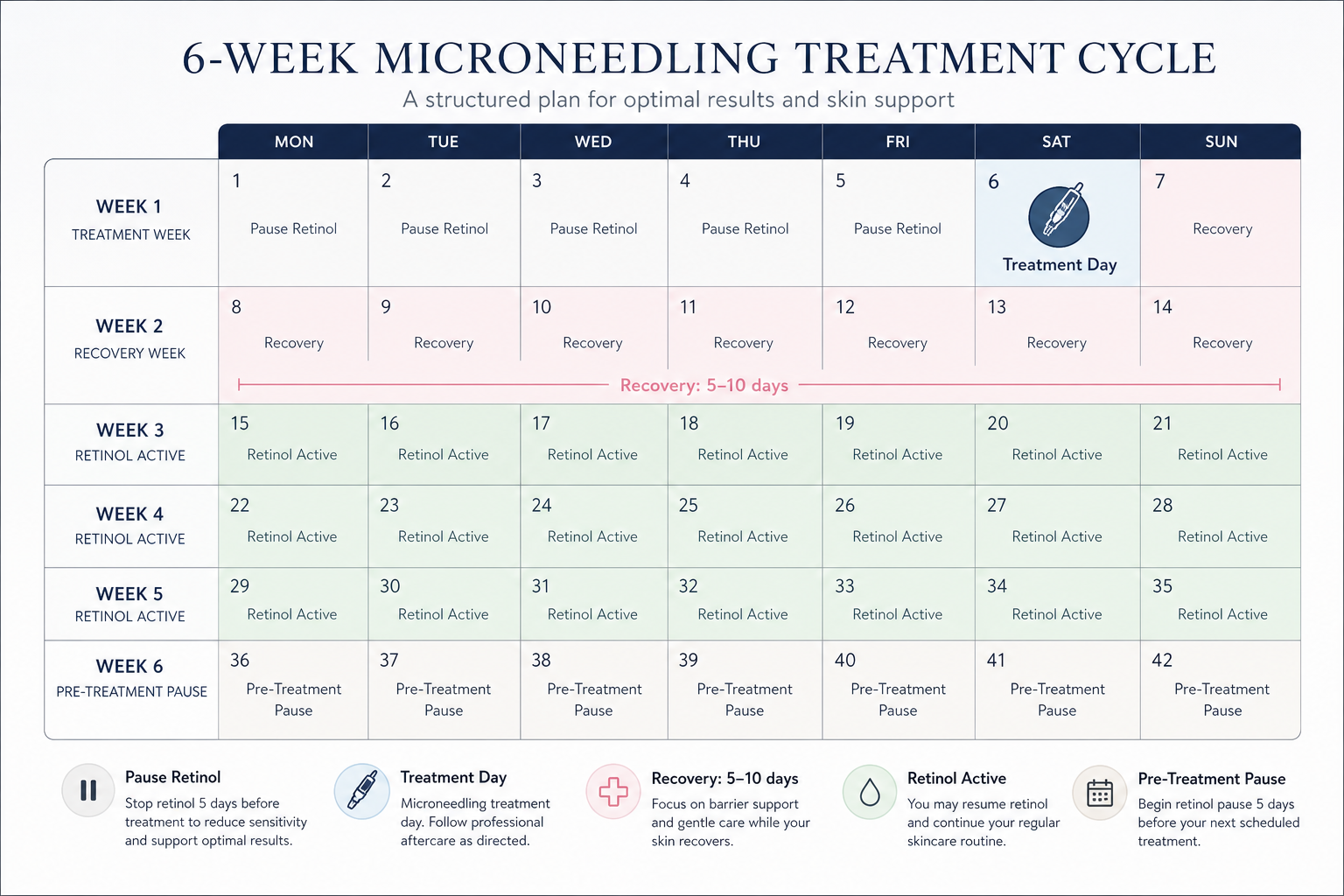
Many people who undergo microneedling do so as a course of treatments, typically spaced 4 to 6 weeks apart. If you are in this situation, planning your retinol use around each session helps you maintain the benefits of both without disrupting either. A practical approach is to pause retinol 5–7 days before each appointment, allow the full post-treatment recovery window of 5–10 days, and then resume retinol gradually for the remaining 2–3 weeks of the interval before the next session. This means you will have approximately 2–3 weeks of active retinol use per treatment cycle, which is sufficient to maintain its cell turnover and collagen-stimulating benefits between sessions.
Frequently Asked Questions
Can I use retinol 3 days after microneedling?
For most people, 3 days is too soon after professional microneedling. The skin barrier is still in the acute inflammatory phase at this point, and the microchannels may not have fully closed. Applying retinol at this stage significantly increases the risk of irritation and may prolong recovery. The minimum recommended wait for standard professional microneedling is 5 to 7 days, and only when the skin shows no remaining signs of redness, peeling, or sensitivity.
Is the wait time different for tretinoin versus regular retinol?
Yes. Prescription tretinoin is considerably more potent than over-the-counter retinol and carries a higher risk of irritation on healing skin. Most practitioners recommend waiting at least 7 to 14 days before restarting tretinoin after professional microneedling, compared to 5 to 7 days for lower-strength OTC retinol. When you do restart tretinoin, stepping down to a lower concentration for the first week or two is a sensible precaution.
Can retinol boost microneedling results if used at the same time?
This is a common misconception. While retinol and microneedling both stimulate collagen production and cell turnover, applying retinol immediately after microneedling does not enhance results — it increases the risk of a significant adverse reaction. The enhanced skin permeability created by microchannels means retinol is absorbed more intensely than intended, which amplifies irritation rather than benefit. The two treatments work well together when properly sequenced, not when combined simultaneously.
How long should I wait after RF microneedling before using retinol?
RF microneedling recovery is more involved than standard microneedling because the radiofrequency energy adds a thermal component to the skin injury. Most practitioners recommend waiting a minimum of 10 to 14 days before reintroducing retinol after RF microneedling. The same principle applies: wait until all redness, peeling, and sensitivity have fully resolved before restarting, and begin with a lower retinoid strength than usual.
Can I use a vitamin C serum instead of retinol during recovery?
Vitamin C in its pure ascorbic acid form is acidic and can cause stinging and irritation on skin that is still healing after microneedling. It is generally better avoided during the first 5–7 days of recovery. Some gentler vitamin C derivatives (such as ascorbyl glucoside) may be tolerated earlier, but hyaluronic acid, ceramides, and peptides are more appropriate choices for the immediate post-treatment period.
Does skin type affect how long I should wait?
Yes. Oily and resilient skin types tend to recover more quickly and may be ready to restart retinol at the earlier end of the recommended window. Dry, sensitive, or rosacea-prone skin typically needs additional time — often 7 to 10 days or more — because the baseline skin barrier is less robust. If you are unsure, waiting an extra few days costs nothing and reduces the risk of an unnecessary setback.
Timing Your Retinol Restart for the Best Microneedling Results
The question of whether you can use retinol after microneedling has a clear answer: yes, but not immediately, and not without a thoughtful approach to timing and concentration. The 5 to 7 day minimum wait for standard professional microneedling is a well-supported guideline, but the right window for you depends on your treatment type, needle depth, skin type, and the retinoid strength you use. RF microneedling and deeper treatments warrant a longer pause; at-home derma rolling with shallow needles allows an earlier restart.
Rather than viewing the recovery period as an inconvenient gap in your skincare routine, consider it a purposeful phase. Using barrier-supportive ingredients — hyaluronic acid, ceramides, peptides — during the healing window actively supports the collagen induction process that microneedling initiates. When you do reintroduce retinol, starting at a lower concentration and building back gradually protects recently treated skin and helps you maintain the benefits of both treatments over time.
If you are unsure about the right timing for your specific situation, your treating practitioner is the best source of personalised guidance. Post-treatment skincare protocols can vary between clinics and between individual patients, and a brief conversation with your provider before or after your appointment can help you plan your retinol restart with confidence.