Sun Exposure After Laser Hair Removal: Sunscreen Rules and Aftercare Guide
Managing sun exposure after laser hair removal is one of the most important — and most overlooked — parts of the treatment process. The skin is temporarily more vulnerable after each session, and even brief, unprotected time outdoors can lead to complications that affect both your comfort and your results. This guide explains why sun protection matters, how long to be cautious, which sunscreen to choose, and how to apply it correctly across different body areas and skin types.
Key Takeaways
- Avoid direct sun exposure for at least two weeks after each laser hair removal session, and apply a broad-spectrum sunscreen daily throughout your full treatment course.
- Mineral sunscreen containing zinc oxide or titanium dioxide is generally the preferred choice for post-laser skin due to its gentle, non-irritating profile.
- Darker skin tones face a higher risk of post-inflammatory hyperpigmentation (PIH) after UV exposure and may benefit from tinted mineral sunscreen, which also blocks visible light.
- Sun protection rules apply before treatment as well — tanned or recently sun-exposed skin increases the risk of burns and reduces laser precision.
- Reapply every two hours when outdoors, and combine sunscreen with physical barriers such as a wide-brimmed hat and protective clothing for the best protection.
Why Sun Exposure Is Particularly Risky After Laser Hair Removal
Laser hair removal works by directing concentrated light energy into the hair follicle, where it is absorbed by melanin — the pigment that gives hair its colour. This process generates heat that damages the follicle and inhibits future hair growth. The same mechanism that makes the treatment effective also explains why the surrounding skin becomes temporarily more sensitive to UV rays in the days and weeks that follow.
After a session, the skin’s barrier function is transiently compromised. The thermal energy delivered during treatment causes a mild inflammatory response, and the outer layers of skin are more permeable and reactive than usual. When UV rays reach this already-sensitised tissue, the skin’s melanin-producing cells (melanocytes) can overreact, producing excess pigment in an uneven pattern. This is the primary mechanism behind post-inflammatory hyperpigmentation (PIH) — one of the most common complications associated with inadequate sun protection after laser procedures.
Photosensitivity is also heightened because the laser temporarily disrupts the skin’s natural defences. Sunburn can occur more quickly and at lower UV intensities than it would on untreated skin. In more severe cases, blistering, prolonged redness, or hypopigmentation — the development of lighter patches where melanin has been depleted — may occur. These outcomes are largely preventable with consistent, correctly applied sun protection.
How Long Should You Avoid Sun After Laser Hair Removal?
The standard clinical recommendation is to avoid direct sun exposure for a minimum of two weeks after each laser hair removal session. This timeline reflects the period during which the skin barrier is most compromised and photosensitivity is at its peak. However, the exact duration can vary depending on the treatment area, the laser system used, your skin tone, and how your skin responds individually.
A Practical Post-Treatment Timeline
| Time After Treatment | Sun Exposure Guidance | Sunscreen Requirement |
|---|---|---|
| First 48 hours | Strict avoidance — stay indoors or fully covered | Avoid applying sunscreen immediately post-session; follow clinic instructions |
| Days 3–7 | Minimise all exposure; avoid peak sun hours (10 a.m.–4 p.m.) | Apply broad-spectrum SPF 30+ to all treated areas before going outside |
| Week 2 | Continue to avoid prolonged or direct sun exposure | Daily SPF 50+ recommended; reapply every two hours outdoors |
| Weeks 3–6 | Gradual return to normal activity; avoid tanning and tanning beds | Daily broad-spectrum sunscreen; physical barriers where possible |
| Between sessions (ongoing) | Avoid tanning; protect treated areas consistently | Daily SPF throughout the full treatment course |
Tanning beds should be avoided for at least four to six weeks after treatment and ideally throughout the entire course of sessions. Artificial UV sources carry the same risks as natural sunlight and can trigger the same inflammatory and pigmentation responses in post-laser skin.
When Can You Apply Sunscreen After a Session?
Many patients are unsure whether to apply sunscreen immediately after their appointment. In most cases, clinics advise waiting until any immediate redness or heat has settled — typically a few hours post-treatment — before applying any topical product to the treated area. Some practitioners recommend a soothing, fragrance-free moisturiser or aloe vera gel first, followed by sunscreen once the skin has calmed. Always follow the specific aftercare instructions provided by your clinic, as protocols can vary depending on the laser system and your individual skin response.
Choosing the Right Sunscreen for Post-Laser Skin
Not all sunscreens are equally suitable for skin that has recently undergone laser hair removal. The two main categories — mineral (physical) and chemical sunscreens — differ in their active ingredients, mechanisms of action, and suitability for sensitised skin.
Mineral vs. Chemical Sunscreen: Which Is Better After Laser?
| Feature | Mineral Sunscreen | Chemical Sunscreen |
|---|---|---|
| Active ingredients | Zinc oxide, titanium dioxide | Avobenzone, octinoxate, oxybenzone, others |
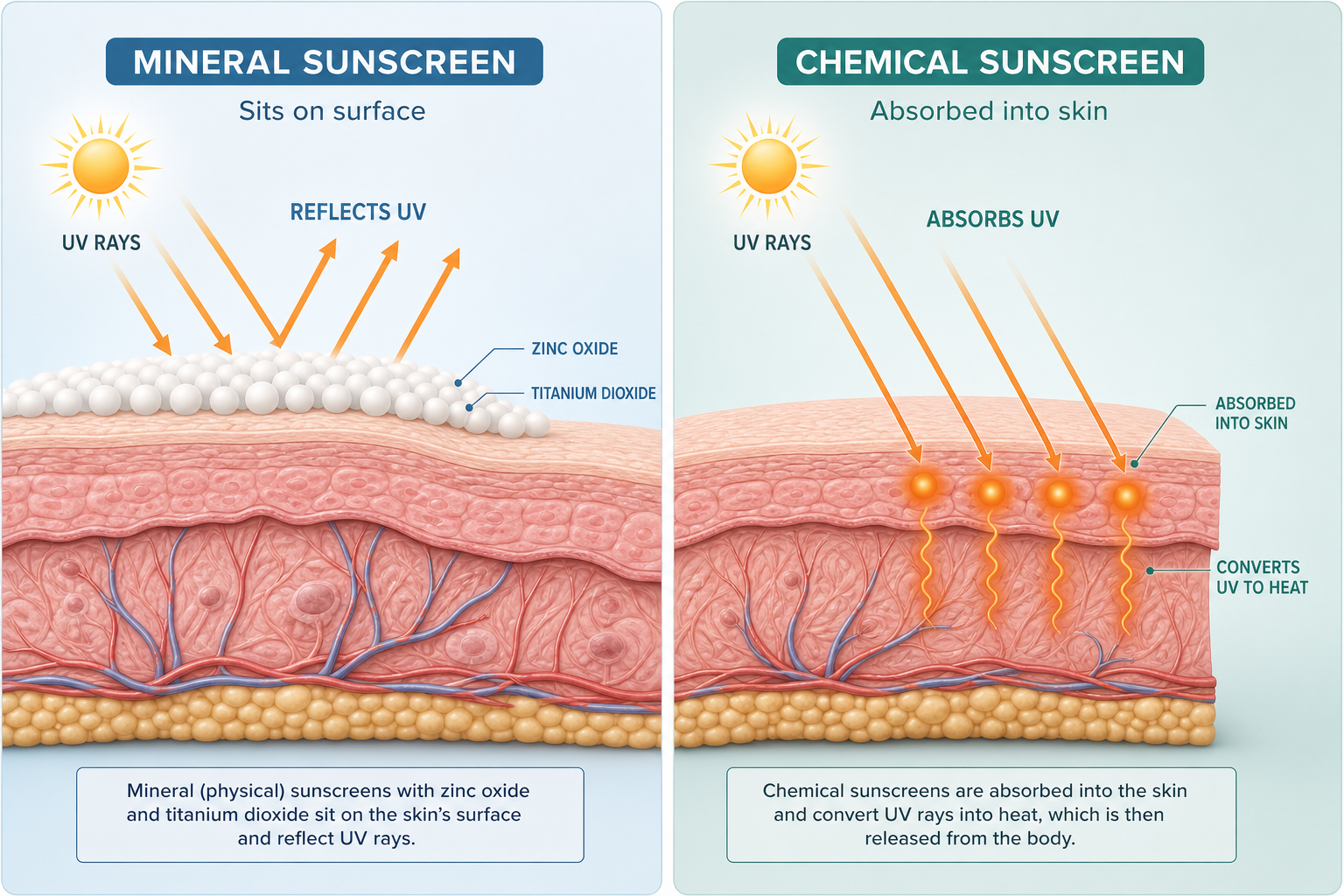
| How it works | Sits on skin surface; reflects and scatters UV rays | Absorbs into skin; converts UV energy to heat |
| Onset of protection | Immediate upon application | Requires 15–30 minutes to activate |
| Suitability for post-laser skin | Generally preferred — less likely to irritate | May cause stinging or irritation on compromised skin |
| Texture | Can leave a white cast; tinted versions available | Usually lighter and more cosmetically elegant |
| Visible light protection | Tinted versions block visible and HEV light | Does not block visible light |
Mineral sunscreen is generally the preferred option for laser hair removal aftercare. Because zinc oxide and titanium dioxide sit on the surface of the skin rather than being absorbed, they are less likely to cause irritation or a stinging sensation on a compromised skin barrier. Chemical sunscreens, while effective under normal circumstances, convert UV energy into heat — a process that may be uncomfortable or counterproductive on skin that is already warm and inflamed after treatment.
For most patients, a fragrance-free, broad-spectrum mineral sunscreen with SPF 50+ is the most appropriate choice in the first two weeks post-treatment. After the skin has fully settled, a chemical sunscreen may be used if preferred, provided it does not cause irritation.
What Does “Broad-Spectrum” Actually Mean?
The term broad-spectrum sunscreen refers to a product that protects against both UVA and UVB rays. UVB rays are primarily responsible for sunburn, while UVA rays penetrate more deeply into the skin and are strongly associated with premature ageing and melanin stimulation. Both types can trigger hyperpigmentation in post-laser skin, which is why broad-spectrum coverage is essential — a sunscreen that only blocks UVB will not provide adequate protection after treatment. In some markets, sunscreens also carry a PA rating (PA+, PA++, PA+++) that indicates the level of UVA protection; a higher PA rating offers greater UVA defence.
Skin-Type-Specific Sunscreen Guidance
Generic SPF advice does not account for the meaningful differences in risk between skin types. The Fitzpatrick skin type scale — which classifies skin from Type I (very fair, always burns) to Type VI (deeply pigmented, rarely burns) — is a useful framework for understanding individual sun sensitivity and the risk of pigmentation complications after laser treatment.
Patients with Fitzpatrick skin types I to III tend to have lower baseline melanin levels and are at greater risk of sunburn and erythema after laser treatment, but their risk of post-inflammatory hyperpigmentation is generally lower. For these patients, SPF 50+ broad-spectrum mineral sunscreen and physical avoidance of peak sun hours are the primary priorities.
Patients with Fitzpatrick skin types IV to VI have higher melanin concentrations and face a significantly elevated risk of PIH following laser treatment and UV exposure. For these patients, tinted mineral sunscreen is particularly valuable. Tinted formulas contain iron oxides that block visible light — including high-energy visible (HEV) light — which can independently stimulate melanin production even in the absence of UV radiation. Standard untinted sunscreens, including mineral formulas, do not provide this protection. If you have a darker skin tone or a history of melasma or uneven pigmentation, discussing tinted sunscreen options with your practitioner is worthwhile.
How to Apply Sunscreen Correctly After Laser Hair Removal
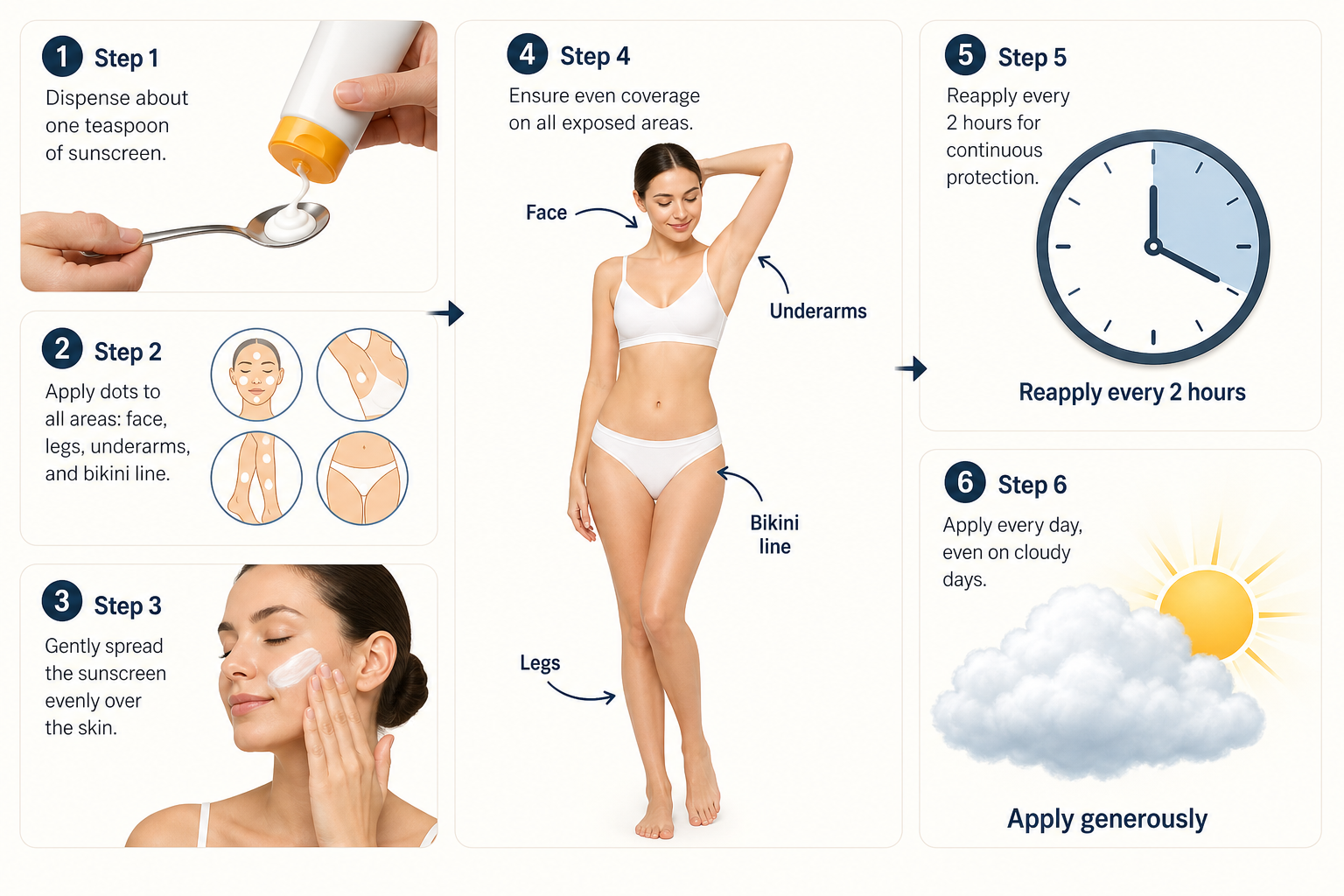
Correct application is as important as choosing the right product. Many patients apply too little sunscreen, skip reapplication, or forget to cover all treated areas — each of which significantly reduces the protection offered.
Step-by-Step Application Guide
- Wait for skin to settle. After your session, allow any redness or warmth to subside before applying sunscreen. Follow your clinic’s specific aftercare instructions regarding timing.
- Apply generously. Use approximately a teaspoon of sunscreen for the face and a similar amount per body area. Most people apply far less than the tested amount, which reduces the effective SPF significantly.
- Cover all treated areas. Apply sunscreen to every part of the body that was treated, not just the face. Legs, underarms, the bikini line, and the back are commonly treated areas that are easy to overlook.
- Apply 15–30 minutes before going outside if using a chemical sunscreen. Mineral sunscreen provides immediate protection upon application.
- Reapply every two hours when outdoors, and immediately after swimming or sweating heavily.
- Apply even on cloudy days. UV rays penetrate cloud cover and can reach the skin even when the sun is not directly visible. This is a common misconception that leads to avoidable complications.
Body-Area-Specific Considerations
Different treatment areas present different sun exposure challenges. The face, décolletage, and forearms are exposed to ambient UV throughout the day, even during routine activities such as driving or walking. These areas require daily sunscreen application as a baseline habit throughout the full treatment course. The legs and bikini line are less continuously exposed but are particularly vulnerable during outdoor activities, exercise, or summer clothing. Underarms are rarely directly sun-exposed but should still be protected if the area will be uncovered. For body areas that are difficult to reach, a spray-format mineral sunscreen can make consistent application more practical.
Layering Sunscreen with Other Post-Laser Products
Many patients use soothing products such as aloe vera gel, fragrance-free moisturisers, or prescribed topical creams alongside sunscreen after laser treatment. As a general principle, apply lighter, water-based soothing products first, allow them to absorb, and then apply sunscreen as the final step before going outside. This layering order ensures the sunscreen sits correctly on the skin surface and is not diluted or displaced by other products.
It is important to avoid using retinoids, AHAs (alpha-hydroxy acids), BHAs (beta-hydroxy acids), or other exfoliating actives on treated areas in the days following a laser session. These ingredients increase photosensitivity independently and can compound the skin’s vulnerability when combined with post-laser sensitivity. If you use any of these products as part of your regular skincare routine, discuss with your practitioner when it is safe to reintroduce them.
Sun Protection Before Your Laser Session
Sun avoidance is not only a post-treatment concern. Arriving at a laser hair removal appointment with recently tanned or sun-exposed skin creates meaningful risks. Tanned skin contains elevated levels of active melanin in the surface layers, which can absorb laser energy that should be directed at the hair follicle. This increases the risk of surface burns, blistering, and uneven treatment outcomes, and may reduce the laser’s precision in targeting the follicle itself.
Most clinics recommend avoiding sun exposure, tanning beds, and self-tanners for at least two weeks before each session. If you have inadvertently tanned before an appointment, inform your practitioner — they may recommend postponing the session until the tan has faded to reduce the risk of adverse effects. Self-tanners and spray tans should also be avoided before treatment, as they alter the surface pigmentation of the skin in ways that can interfere with laser targeting.
Additional Physical Sun Protection Measures
Sunscreen alone may not be sufficient in high-exposure situations, particularly during the first two weeks after treatment. Combining sunscreen with physical barriers provides a more reliable level of protection.
- Wide-brimmed hat: Provides shade for the face, neck, and décolletage — areas that receive significant ambient UV exposure throughout the day.
- UPF-rated clothing: Lightweight, breathable long-sleeve garments with an ultraviolet protection factor (UPF) rating offer consistent coverage for treated body areas without relying on reapplication.
- Sunglasses: Protect the delicate skin around the eyes, which may be treated in some facial laser procedures.
- Shade and timing: Avoiding outdoor activity during peak sun hours — generally 10 a.m. to 4 p.m. — significantly reduces UV exposure, particularly in summer months or at higher altitudes.
In winter, UV intensity is lower but not absent. Snow and ice can reflect UV rays, increasing exposure in outdoor environments. Patients undergoing laser hair removal during winter months should maintain daily sunscreen use on treated areas, even if sun exposure feels minimal.
What to Do If You Accidentally Get Sun Exposure
Despite best intentions, accidental sun exposure does occur. If you notice redness, warmth, or discomfort in a treated area after sun exposure, the following steps may help limit the impact.
- Move out of the sun immediately and seek shade or go indoors.
- Cool the area gently with cool (not ice-cold) water or a cool compress. Avoid rubbing or applying pressure.
- Apply a soothing, fragrance-free product such as aloe vera gel or a gentle after-sun lotion to calm the skin.
- Avoid further sun exposure to the affected area until it has fully recovered.
- Contact your clinic if you develop blistering, significant darkening of the skin, or persistent redness that does not improve within 24–48 hours. These signs may indicate a more significant reaction that warrants professional assessment.
- Inform your practitioner before your next session. If the skin has not fully recovered, your next laser appointment may need to be postponed to avoid compounding the damage.
Post-inflammatory hyperpigmentation that develops after accidental sun exposure can often be managed with appropriate topical treatments, but early intervention and professional guidance are important. Do not attempt to treat significant pigmentation changes with over-the-counter products without first consulting a qualified practitioner.
Common Sunscreen Mistakes to Avoid After Laser Treatment
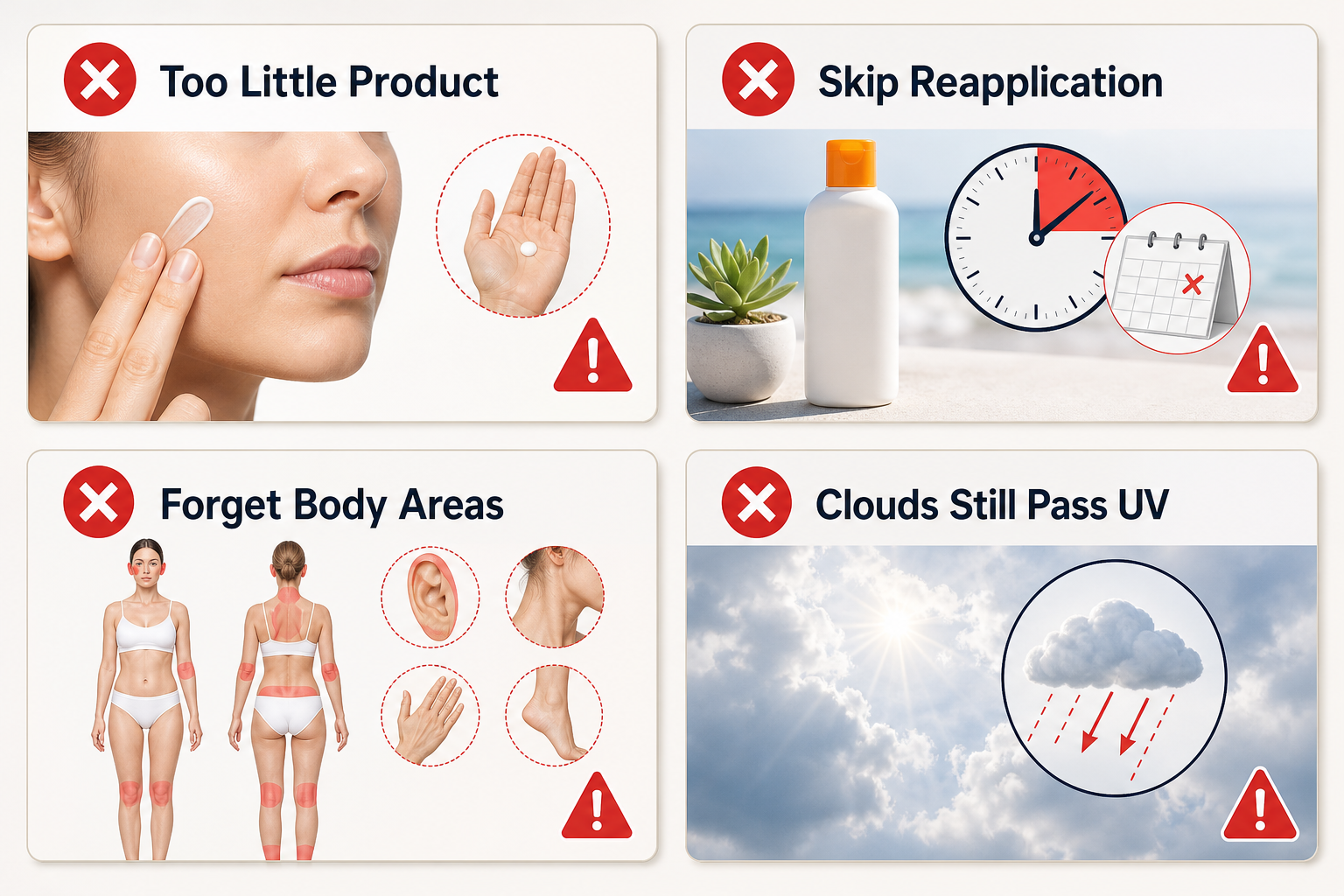
Even patients who understand the importance of sun protection frequently make application errors that reduce its effectiveness. The most common mistakes include applying too little product (the tested SPF is based on a specific quantity per square centimetre of skin), applying sunscreen only to the face while leaving other treated areas unprotected, and skipping reapplication after two hours or after sweating. Using a chemical sunscreen too soon after treatment — before the skin has settled — can cause stinging or irritation on a compromised skin barrier. Assuming that cloudy weather eliminates the need for sunscreen is another frequent error; up to 80% of UV rays can penetrate cloud cover on an overcast day.
Frequently Asked Questions
Can I go outside at all after laser hair removal?
Yes, but with precautions. You do not need to stay indoors entirely, but you should avoid prolonged or direct sun exposure — particularly during peak sun hours — for at least two weeks after each session. When going outside, apply a broad-spectrum SPF 50+ mineral sunscreen to all treated areas and consider wearing protective clothing or a wide-brimmed hat.
Is SPF 30 enough after laser hair removal?
SPF 30 provides a reasonable baseline level of protection and is the minimum recommended for post-laser skin. However, SPF 50+ is generally preferred during the first two weeks after treatment, when photosensitivity is at its highest. In high-exposure situations — such as outdoor activities, beach environments, or summer conditions — SPF 50+ is the more appropriate choice.
Can I use a chemical sunscreen after laser hair removal?
Chemical sunscreens are not ideal in the immediate post-treatment period because their active ingredients are absorbed into the skin and convert UV energy into heat, which may cause discomfort on sensitised tissue. Mineral sunscreen is generally recommended for the first two weeks. Once the skin has fully settled, a chemical sunscreen may be used if it does not cause irritation.
Do I need sunscreen on treated areas that are usually covered by clothing?
If the treated area will be covered by clothing throughout the day, sunscreen is less critical for that specific area. However, if there is any chance the area will be exposed — for example, during exercise, at the beach, or when wearing summer clothing — sunscreen should be applied. UPF-rated clothing provides an alternative to sunscreen for body areas that are consistently covered.
How does sun exposure affect my laser hair removal results?
Unprotected sun exposure between sessions can compromise your overall treatment outcomes. Tanned skin absorbs laser energy less selectively, which can reduce the laser’s effectiveness at targeting the hair follicle and increase the risk of surface skin damage. Consistent sun protection between sessions helps maintain the skin in an optimal condition for each treatment, supporting better long-term results.
Can I use self-tanner or fake tan after laser hair removal?
Self-tanners and spray tans should be avoided for at least one to two weeks after treatment, as they can irritate sensitised skin and may interfere with the assessment of your skin’s condition before the next session. They should also be avoided for two weeks before each appointment, as they alter surface pigmentation in ways that can affect laser targeting.
Making Sun Protection a Consistent Part of Your Laser Aftercare
Sun protection after laser hair removal is not a one-time consideration — it is an ongoing commitment that spans the full course of treatment and the weeks following each individual session. The skin’s heightened photosensitivity after each session creates a window of vulnerability during which UV exposure can cause complications that are largely preventable. A broad-spectrum mineral sunscreen with SPF 50+, applied generously and reapplied every two hours when outdoors, forms the foundation of effective laser hair removal aftercare.
Patients with darker skin tones or a history of pigmentation concerns should pay particular attention to tinted mineral sunscreen options, which offer protection against visible light in addition to UVA and UVB rays. Combining sunscreen with physical barriers — a wide-brimmed hat, UPF clothing, and shade during peak sun hours — provides the most reliable protection, especially in the first two weeks after each session.
If you are unsure which sunscreen is most appropriate for your skin type, or if you have experienced any unexpected skin changes after treatment, speak with your treating practitioner. A qualified clinician can provide personalised aftercare guidance based on your Fitzpatrick skin type, the areas being treated, and your individual response to laser treatment. Consistent, informed sun protection is one of the most effective steps you can take to protect your skin and support the best possible outcome from your laser hair removal course.