How Often to Apply Hyaluronic Acid After Microneedling: A Complete Aftercare Guide
Microneedling creates thousands of controlled micro-injuries in the skin, temporarily opening microchannels that dramatically increase the skin’s ability to absorb topical ingredients. Hyaluronic acid serum is widely regarded as the ideal product to use during this window — but how often you apply it, and when, matters more than most aftercare guides acknowledge. This article explains the recommended frequency at each stage of healing, the science behind why HA works so well post-treatment, how to apply it correctly, and what to avoid so you don’t undo the results of your session.
Key Takeaways
- Apply a pure, fragrance-free HA serum 2–3 times daily during the first 48 hours after microneedling, when the enhanced absorption window is at its peak.
- Use a gentle patting motion rather than rubbing, and always apply to damp skin to maximise the humectant effect of hyaluronic acid.
- Reduce frequency to once or twice daily from days 3–7, then return to your normal routine from around day 7 onwards.
- Avoid retinoids, vitamin C, AHAs, BHAs, and fragranced products until the skin barrier has fully recovered — typically after day 7.
- Multi-weight hyaluronic acid formulas offer both surface hydration and deeper penetration through the open microchannels, making them particularly suitable in the first 48 hours.
Why Hyaluronic Acid Is the Right Choice After Microneedling
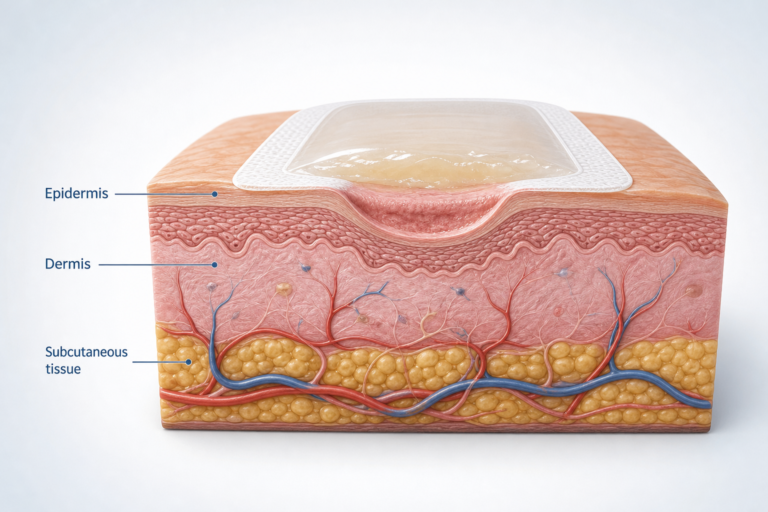
Microneedling — also called collagen induction therapy — works by creating controlled micro-injuries in the dermis. These microchannels trigger the skin’s natural healing response, stimulating collagen production and initiating a cascade of repair processes. The same channels that drive collagen stimulation also make the skin significantly more permeable to topical ingredients for a short period after treatment. This is the enhanced absorption window, and choosing the right product to apply during it is critical.
Hyaluronic acid is an ideal candidate for several reasons. As a humectant, it attracts and binds water molecules — up to 1,000 times its own weight in moisture — helping to hydrate the skin at a time when the compromised skin barrier is losing water more rapidly than usual. Unlike many active ingredients, HA is biocompatible: it occurs naturally in the skin and connective tissue, which means it is unlikely to provoke irritation or an inflammatory response when it contacts open microchannels. It is also non-comedogenic and, in its pure form, free from the acids, alcohols, and fragrances that could cause stinging or damage to freshly needled skin.
The soothing and plumping properties of hyaluronic acid also help to calm the redness and inflammation that are a normal part of the healing process. Keeping the skin well hydrated during the inflammatory phase supports the transition into the proliferation phase, during which new collagen fibres are laid down and skin texture begins to improve.
Understanding HA Molecular Weight: Which Type Is Best Post-Needling?
Not all hyaluronic acid serums behave the same way. The key variable is molecular weight, which determines how deeply the molecule can penetrate the skin. High molecular weight HA sits on the surface of the skin, forming a film that reduces water loss and provides immediate plumping. Low molecular weight HA penetrates more deeply into the epidermis and upper dermis, delivering hydration at a cellular level. Multi-weight hyaluronic acid combines both, offering layered hydration from the surface down.
After microneedling, the open microchannels allow even larger molecules to travel deeper than they normally would. This makes multi-weight hyaluronic acid particularly useful in the first 48 hours: the low molecular weight fraction can reach deeper skin layers through the channels, while the high molecular weight fraction helps seal in hydration at the surface. However, there is one important nuance: very low molecular weight HA fragments (below approximately 10 kDa) have been associated in some research with a pro-inflammatory response. For this reason, a medium-to-broad molecular weight HA serum — rather than an ultra-low molecular weight product — is generally considered the safer and more effective choice for post-needling use.
When selecting a serum, look for a product with a short, clean ingredient list. A pure, fragrance-free HA serum with fewer than five or six ingredients is preferable to a complex formula that includes actives, essential oils, or preservatives that could irritate the temporarily compromised skin barrier.
How Often to Apply Hyaluronic Acid After Microneedling: A Phase-by-Phase Guide
The correct frequency changes as the skin moves through its healing phases. Applying too little HA in the early stages means missing the enhanced absorption window; applying too much of the wrong product later can interfere with the natural repair process. The following timeline reflects the consensus among aesthetic practitioners and is based on the typical healing trajectory after a professional in-clinic microneedling session.
Immediately After Treatment (0–2 Hours)
In most professional settings, a sterile hyaluronic acid serum is applied by the practitioner immediately after the microneedling procedure, while the microchannels are still fully open. If you are managing aftercare at home from this point, you can reapply a pure, fragrance-free HA serum within the first one to two hours. The skin will feel warm, tight, and sensitive; apply the serum gently and do not use any other products at this stage. Some practitioners also recommend a hydrating sheet mask during this first hour as an alternative or complement to serum application, as it delivers sustained moisture contact without requiring repeated handling of the skin.
One point worth addressing: a small number of sources recommend waiting 48 hours before applying any topical product after microneedling, citing concerns about introducing bacteria into open channels. The consensus among most aesthetic practitioners, however, favours early HA application — ideally within one to two hours — using a sterile or medical-grade serum. The rationale is that keeping the skin hydrated from the outset supports healing and reduces transepidermal water loss during the period when the barrier is most compromised. The key is product purity: a sterile, single-ingredient or minimal-ingredient HA serum poses a very different risk profile from a complex multi-active formula.
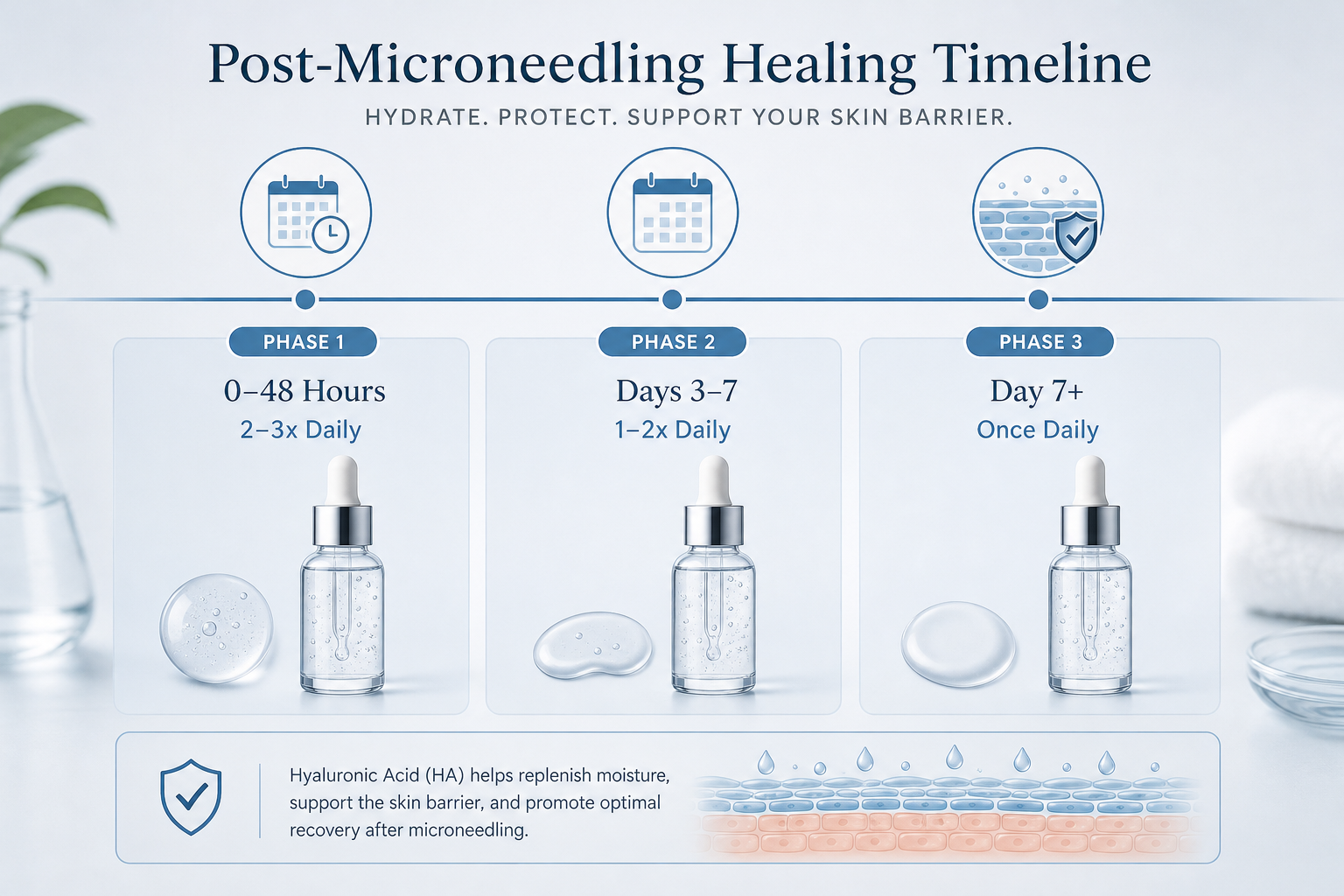
First 48 Hours: Apply 2–3 Times Daily
During the first 48 hours, the skin is in the inflammatory phase of healing. Redness, mild swelling, and sensitivity are normal. The microchannels remain partially open during this period, and the skin’s capacity for absorption remains elevated. Applying a pure HA serum 2–3 times daily during this window helps maintain hydration, supports the healing environment, and takes advantage of the enhanced absorption that microneedling creates.
Each application should follow the same simple sequence: cleanse with a gentle, non-foaming, fragrance-free cleanser, leave the skin slightly damp, apply a thin layer of HA serum using a patting motion, and then seal in hydration with a fragrance-free, non-comedogenic moisturizer. Applying HA to damp skin is important because hyaluronic acid draws moisture from its environment — if the surrounding air is very dry and the skin surface is dry, HA can theoretically draw moisture upward from deeper skin layers rather than from the air, which is counterproductive. Damp skin and a moisturizer applied on top prevent this.
Days 3–7: Reduce to Once or Twice Daily
By day three, the inflammatory phase is typically subsiding and the skin is entering the proliferation phase, during which new collagen fibres begin to form. The microchannels have largely closed, and the skin barrier is progressively recovering. You can reduce HA serum application to once or twice daily during this period. Continue using a gentle cleanser and a barrier-repairing moisturizer containing ceramides, panthenol, or similar barrier-supportive ingredients. From around day three onwards, a broad-spectrum SPF — ideally a mineral sunscreen — should be applied every morning, as the skin remains more sensitive to UV damage during recovery.
Skin may appear slightly flaky or dry during this phase as the outer layer sheds. Do not pick or peel flaking skin, as this can disrupt the healing process and increase the risk of post-inflammatory hyperpigmentation. Continued HA application helps to keep the skin comfortable and hydrated during this shedding phase.
Day 7 Onwards: Return to Normal Routine
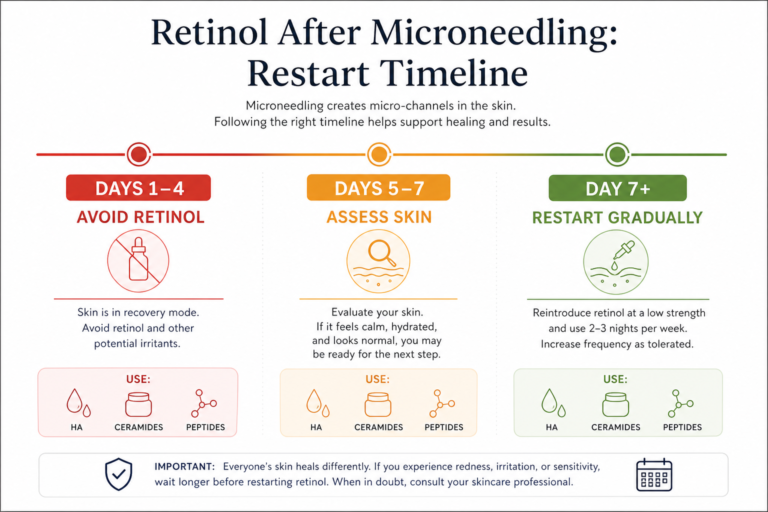
By day seven, most patients have moved through the acute healing phases and the skin barrier has substantially recovered. You can return to applying HA serum once daily as part of your normal routine. From this point, you can also begin to reintroduce actives — but do so gradually and in a considered order. Niacinamide is generally well tolerated and can often be reintroduced first. Peptides and ceramide-rich products are also safe early additions. Retinoids, vitamin C (ascorbic acid), AHAs, and BHAs should be reintroduced last, typically no earlier than day 7–10 and ideally after confirming that the skin feels fully settled. Reintroduce actives one at a time, with several days between each new addition, to identify any sensitivity before layering multiple ingredients.
| Healing Phase | Timeframe | HA Frequency | Key Companions | What to Avoid |
|---|---|---|---|---|
| Immediate / Early Inflammatory | 0–48 hours | 2–3 times daily | Gentle cleanser, barrier moisturizer | All actives, fragrance, makeup, exercise |
| Late Inflammatory / Early Proliferation | Days 3–7 | 1–2 times daily | Ceramide moisturizer, mineral SPF 30+ | Retinoids, AHAs, BHAs, vitamin C, tanning |
| Proliferation / Remodelling | Day 7+ | Once daily (normal routine) | Gradual reintroduction of actives | Introduce one active at a time; avoid sun exposure |
How to Apply Hyaluronic Acid Correctly After Microneedling
Application technique matters as much as frequency. The microchannels created by microneedling are tiny but real pathways through the skin’s surface. Rubbing or dragging a product across the skin can mechanically irritate these channels, potentially increasing inflammation or introducing bacteria from the fingertips more deeply into the tissue. A patting motion — pressing the serum gently into the skin with the fingertips or the palm — avoids this dragging force and is the recommended technique throughout the healing period.
The correct layering order also matters. Hyaluronic acid is a humectant, not an occlusive. It attracts and holds water but does not form a physical barrier against water loss on its own. Applying a moisturizer containing occlusive or emollient ingredients — such as ceramides, shea butter, or squalane — on top of the HA serum helps to seal in hydration and prevents the serum from drawing moisture out of the skin in dry environments. Think of the HA as the water-attracting layer and the moisturizer as the layer that locks it in place.
Step-by-step, the recommended post-needling application routine looks like this:
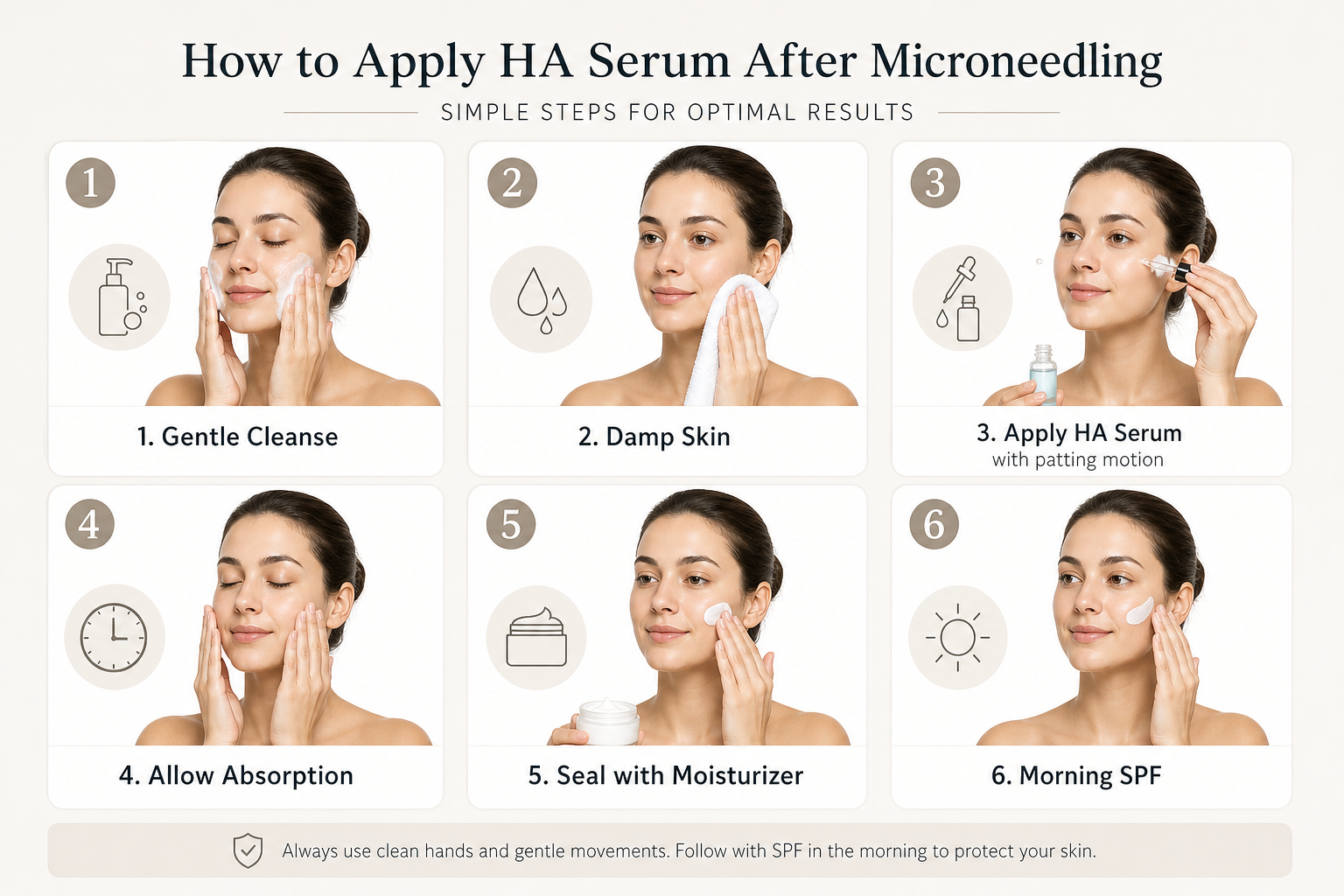
- Cleanse with a gentle, non-foaming, fragrance-free cleanser using cool or lukewarm water.
- Pat the skin lightly with a clean towel, leaving it slightly damp rather than completely dry.
- Apply a thin, even layer of pure, fragrance-free HA serum using a gentle patting motion across the face.
- Allow the serum to absorb for 30–60 seconds.
- Apply a fragrance-free, non-comedogenic moisturizer to seal in hydration.
- In the morning from day three onwards, finish with a broad-spectrum SPF 30 or higher mineral sunscreen.
At-Home vs. Professional Microneedling: Does the Protocol Differ?
The aftercare principles are broadly the same whether you have had a professional in-clinic treatment or used an at-home dermaroller or microneedling pen. However, there are meaningful differences in the depth and extent of the treatment that affect how strictly the protocol needs to be followed.
Professional microneedling typically uses needle depths of 1–3 mm, depending on the treatment area and concern being addressed. This creates a more significant controlled injury, a more pronounced inflammatory response, and a longer recovery period. The enhanced absorption window is more pronounced, and the risk of introducing irritants through the open channels is correspondingly higher. Sterile or medical-grade HA serums are strongly recommended in this context.
At-home microneedling devices typically operate at needle depths of 0.25–0.5 mm, which creates a much more superficial level of micro-injury. The inflammatory response is milder, recovery is faster, and the absorption enhancement is less dramatic. That said, the same principles apply: use a pure, fragrance-free HA serum, avoid actives for at least 24–48 hours, and follow the same layering sequence. The frequency guidance — 2–3 times daily in the first 48 hours — remains appropriate for at-home treatments, though the overall recovery timeline may be shorter.
Can You Apply Too Much Hyaluronic Acid After Microneedling?
Hyaluronic acid is generally very well tolerated, and the risk of a true adverse reaction to a pure HA serum is low. However, applying it excessively or incorrectly can create problems. The most common issue is applying HA to completely dry skin in a low-humidity environment without sealing it with a moisturizer. In this situation, the humectant properties of HA can draw moisture upward from the deeper layers of the skin rather than from the air, potentially leaving the skin feeling tighter or drier than before application. This is why the damp skin and moisturizer-on-top steps are not optional extras — they are essential to the mechanism working correctly.
Applying HA serum more than three times daily in the first 48 hours is unlikely to cause harm in itself, but it offers diminishing returns and increases the number of times you are handling freshly needled skin. Each application involves touching the face, which carries a small risk of introducing bacteria. Sticking to the 2–3 times daily recommendation balances the benefit of sustained hydration against the practical risk of repeated skin contact during the most vulnerable healing window.
If you notice increased redness, stinging, or breakouts after applying your HA serum post-needling, check the ingredient list carefully. Many products labelled as hyaluronic acid serums contain additional actives, fragrances, or preservatives that may be responsible for the reaction. A truly pure, fragrance-free HA serum with a minimal ingredient list is the safest choice during the healing period.
Ingredients and Activities to Avoid After Microneedling
The compromised skin barrier and open microchannels that make HA so effective post-needling also make the skin vulnerable to irritation from ingredients that would normally be well tolerated. The following should be avoided during the initial healing period:
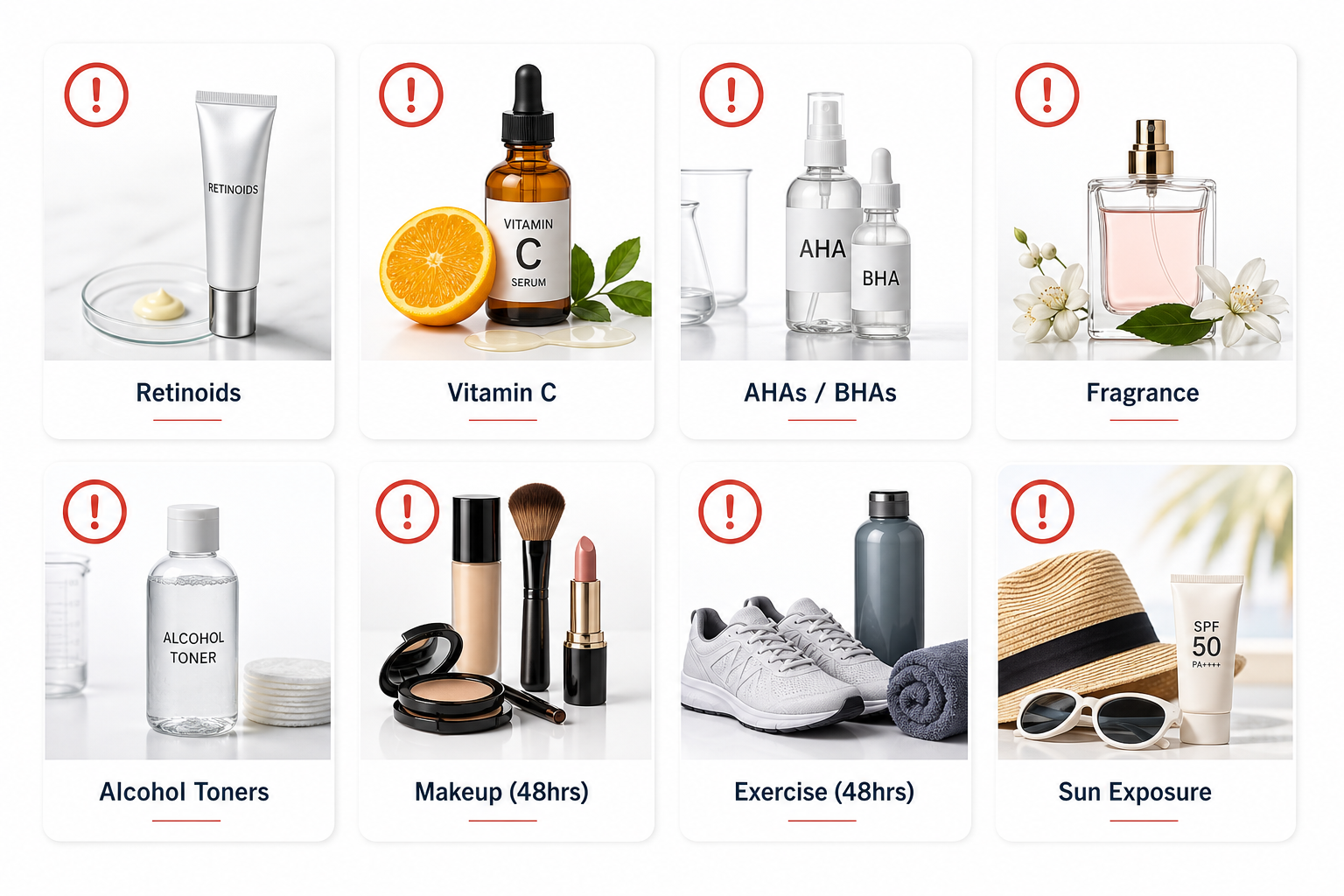
- Retinoids and retinol — highly active and potentially irritating; avoid for at least 7–10 days post-treatment.
- Vitamin C (ascorbic acid) — acidic and potentially stinging on open channels; avoid for at least 5–7 days.
- AHAs and BHAs (glycolic acid, lactic acid, salicylic acid) — exfoliating acids that can over-exfoliate already sensitised skin; avoid for at least 7 days.
- Fragrances and essential oils — common irritants that can provoke inflammation through open microchannels.
- Alcohol-based toners — drying and potentially irritating to the compromised barrier.
- Makeup — avoid for the first 24–48 hours to reduce the risk of introducing bacteria or irritants into open channels.
- Strenuous exercise and sweating — sweat is mildly acidic and can irritate open channels; avoid for 48 hours.
- Direct sun exposure and tanning beds — the skin is significantly more photosensitive after microneedling; avoid direct sun for at least two weeks and use broad-spectrum SPF daily from day three onwards.
- Picking or peeling flaking skin — disrupts the natural shedding process and increases the risk of scarring or pigmentation changes.
Skin-Type Considerations
Most aftercare guides treat all skin types identically, but there are some practical adjustments worth considering. People with dry or dehydrated skin may benefit from applying HA serum at the higher end of the recommended frequency — three times daily in the first 48 hours — and from choosing a richer barrier moisturizer to seal in hydration. Those with oily or acne-prone skin should ensure their HA serum and moisturizer are both non-comedogenic and should be particularly careful to avoid heavy occlusives that could block pores during the healing period. Sensitive skin types should opt for the most minimal HA formulation available and may wish to patch-test any new product on a small area before applying it to the full treatment zone.
People with a history of cold sores (herpes simplex) should discuss antiviral prophylaxis with their practitioner before microneedling, as the treatment can trigger an outbreak. This is a pre-treatment consideration rather than an aftercare one, but it is worth noting for anyone planning a session.
Frequently Asked Questions
Can I apply hyaluronic acid immediately after microneedling?
Yes. Applying a sterile, pure, fragrance-free HA serum within one to two hours of treatment is generally recommended by most aesthetic practitioners. The microchannels are most open immediately after treatment, making this the peak of the enhanced absorption window. The key is using a product that is free from actives, fragrances, and potential irritants.
How many times a day should I apply HA serum in the first 48 hours?
The consensus recommendation is 2–3 times daily during the first 48 hours. This frequency maintains consistent hydration during the inflammatory phase without requiring excessive handling of the skin. Each application should follow the full sequence: cleanse, damp skin, HA serum, moisturizer.
What happens if I accidentally use a serum with fragrance or actives after microneedling?
If you apply a product containing fragrance, essential oils, or active ingredients such as retinol or vitamin C to freshly needled skin, you may experience increased redness, stinging, or irritation. Rinse the area gently with cool water, apply a plain HA serum or a simple barrier moisturizer, and avoid the offending product until the skin has fully healed. If irritation is severe or does not settle within a few hours, contact your practitioner.
When can I return to my full skincare routine after microneedling?
Most people can begin to reintroduce actives from around day 7, starting with the most gentle options such as niacinamide and peptides. Retinoids, vitamin C, AHAs, and BHAs should be reintroduced last, one at a time, with several days between each new addition. If the skin still feels sensitive or reactive at day 7, wait a few more days before reintroducing any actives.
Is a sheet mask a good alternative to serum in the first hour after microneedling?
A hydrating sheet mask containing hyaluronic acid can be a useful option in the first hour after treatment, particularly if applied by the practitioner in-clinic. It delivers sustained moisture contact without repeated handling of the skin. If using one at home, ensure it is free from fragrance, alcohol, and active ingredients, and that it has not been stored in a way that could compromise sterility.
Does the aftercare protocol differ for at-home microneedling devices?
The same principles apply, but at-home devices use shallower needle depths (typically 0.25–0.5 mm versus 1–3 mm in-clinic), so the inflammatory response and recovery period are generally milder. The 2–3 times daily HA frequency in the first 48 hours remains appropriate, but the overall recovery timeline may be shorter and the risk of significant barrier disruption is lower.
Getting the Most from Your Microneedling Recovery
Hyaluronic acid serum is not simply a comfort measure after microneedling — used correctly, it actively supports the healing environment that makes collagen stimulation possible. Applying a pure, fragrance-free HA serum 2–3 times daily in the first 48 hours, reducing to once or twice daily through days 3–7, and returning to a once-daily routine from day 7 onwards gives the skin consistent hydration at each stage of recovery without overwhelming the barrier or introducing unnecessary risk.
The details matter: apply to damp skin, use a patting motion rather than rubbing, seal in hydration with a non-comedogenic moisturizer, and choose a minimal-ingredient formula that contains no fragrances, alcohols, or active ingredients. When you are ready to reintroduce actives, do so gradually and in order of gentleness, allowing the skin to confirm it is ready before adding the next layer of complexity to your routine.
If you are unsure about any aspect of your post-treatment care — particularly if you experience unexpected redness, swelling, or breakouts — contact the practitioner who performed your treatment. A brief conversation can prevent a minor concern from becoming a more significant issue, and a qualified aesthetic practitioner can tailor aftercare guidance to your specific skin type, the depth of treatment you received, and the products you have available.