Non-Surgical Rhinoplasty Aftercare: Recovery Timeline, Do’s & Don’ts
Non-surgical rhinoplasty — sometimes called a liquid rhinoplasty or liquid nose job — uses injectable dermal filler to reshape the nose without surgery. The procedure typically takes 15 to 30 minutes and involves minimal downtime, but what you do in the hours and days afterwards has a direct bearing on your results, your comfort, and your safety. This guide covers everything relevant to nose filler aftercare: what to expect at each stage of recovery, which activities to avoid and for how long, how to recognise normal side effects versus warning signs, and when your final result will be visible.
Key Takeaways
- Most people can resume normal activities the same day, but specific restrictions — particularly around touching the nose, wearing glasses, and strenuous exercise — apply for at least 24 to 48 hours.
- Swelling and bruising are expected and typically resolve within one to two weeks; the final result is generally visible at two weeks once all swelling has settled.
- Filler displacement is a real risk in the early days — avoiding pressure on the nose is the single most important aftercare instruction.
- Vascular occlusion is a rare but serious complication that can appear hours after treatment; knowing the warning signs and acting immediately is essential.
- Hyaluronic acid filler is reversible with hyaluronidase, which provides an important safety advantage over permanent fillers.
What Happens to Your Nose Immediately After Treatment
Immediately after a non-surgical rhinoplasty appointment, the treated area will look and feel different from your final result. The injected hyaluronic acid filler adds volume to specific points along the nasal bridge, nasal tip, or around a dorsal hump, but the surrounding tissue responds to the needles with localised inflammation. Redness, mild swelling, tenderness, and occasional small lumps at the injection sites are all normal in the first few hours. Some patients also notice minor asymmetry or firmness, which typically resolves as the filler begins integrating with the surrounding soft tissue.
Bruising is more likely if you have fragile capillaries, if you took blood-thinning medication or alcohol before treatment, or if the injection required more passes than usual. It is not a sign that something has gone wrong. Itchiness and sensitivity around the nose are also common in the first 24 hours and generally settle without intervention.
Before Your Appointment: Preparation That Affects Recovery
Most aftercare guides begin at the point of leaving the clinic, but preparation before your appointment can meaningfully reduce bruising and swelling afterwards. Stopping aspirin, ibuprofen, and other blood-thinning medications at least 48 to 72 hours before treatment — where medically safe to do so — reduces the likelihood of bruising. Your prescribing doctor should always be consulted before stopping any prescribed medication. Avoiding alcohol for at least 24 hours before the procedure has a similar effect, since alcohol dilates blood vessels and increases bleeding risk at injection sites.
Arriving makeup-free allows the practitioner to assess your skin clearly and reduces the risk of introducing bacteria near the injection sites. Some practitioners apply a topical numbing cream 20 to 30 minutes before treatment to reduce discomfort; if yours does, this is factored into your appointment time. Arnica supplements are sometimes recommended in the days before treatment to reduce bruising, though evidence for their effectiveness is limited and you should discuss this with your practitioner first.
Recovery Timeline: What to Expect Day by Day
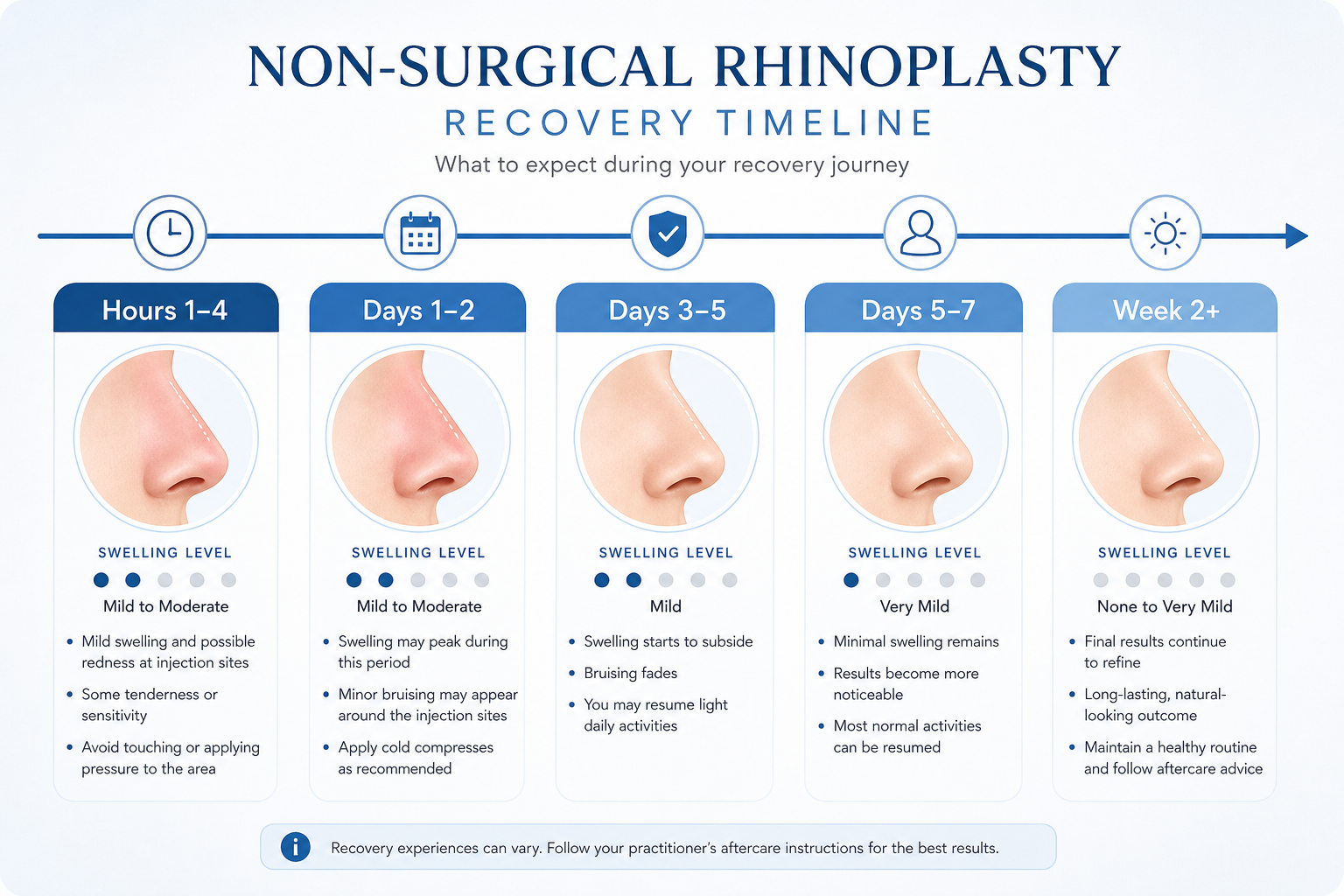
Liquid rhinoplasty recovery does not follow a single fixed pattern, but the general progression is predictable enough to plan around. The table below outlines what most patients experience at each stage.
| Timeframe | Typical Experience | Key Actions |
|---|---|---|
| First 1–4 hours | Redness, mild swelling, tenderness at injection sites; possible small lumps | Apply cold compress gently; avoid touching the nose; keep head elevated |
| 24–48 hours | Swelling peaks; bruising may develop or deepen; nose may appear larger than expected | Continue cold compress; avoid strenuous exercise, alcohol, heat, and pressure on the nose |
| Days 3–5 | Swelling begins to reduce; bruising starts to fade; filler begins settling into tissue | Gentle skincare only; continue avoiding glasses and face-down sleeping |
| Days 5–7 | Most visible swelling resolved; nose contour becomes clearer; minor residual firmness possible | Most normal activities can resume; avoid heavy glasses and facial massage |
| Week 2 onwards | Filler fully integrated; swelling resolved; final result visible | Follow-up appointment if needed; assess results and discuss maintenance |
Understanding the Three Swelling Stages
Swelling after nose filler follows three recognisable phases, and understanding them helps set realistic expectations. The initial phase occurs in the first 24 to 48 hours and is driven by the physical trauma of the needle and the body’s acute inflammatory response. This is when swelling is at its most pronounced and the nose may look quite different from the intended result. The subacute phase runs from roughly day three to day seven, during which the lymphatic system begins clearing excess fluid and the filler starts integrating with the surrounding soft tissue. The nose gradually takes on a more defined shape during this period. The chronic phase covers the second week, when residual micro-swelling resolves and the hyaluronic acid filler fully settles into the tissue. The final result is generally visible at two weeks, and this is the appropriate point at which to assess whether a touch-up is needed.
Aftercare Instructions: What to Do
Following your practitioner’s specific aftercare instructions takes priority over any general guidance. That said, the following measures are widely recommended and supported by clinical practice.
- Apply a cold compress gently to the area for the first 24 hours to reduce swelling and discomfort. Wrap ice in a clean cloth rather than applying it directly to the skin, and avoid pressing firmly on the nose itself.
- Keep your head elevated when resting or sleeping for the first two to three nights. Lying flat allows fluid to pool around the injection sites, which can prolong swelling. Sleeping on your back with an extra pillow is the most practical approach; if you are a habitual side or stomach sleeper, placing a rolled towel alongside your body can help prevent rolling over during the night.
- Stay hydrated and maintain a gentle skincare routine. Hyaluronic acid attracts water, and adequate hydration supports the filler’s integration into tissue.
- Use arnica cream or gel around the nose (not directly on injection sites) if your practitioner recommends it, as it may help reduce bruising more quickly.
- Attend your follow-up appointment as scheduled. This allows your practitioner to assess the result once swelling has resolved and to address any concerns.
Aftercare Restrictions: What to Avoid
The restrictions that follow a non-surgical rhinoplasty exist for specific clinical reasons, not arbitrary caution. Understanding why each restriction applies makes it easier to follow them consistently.
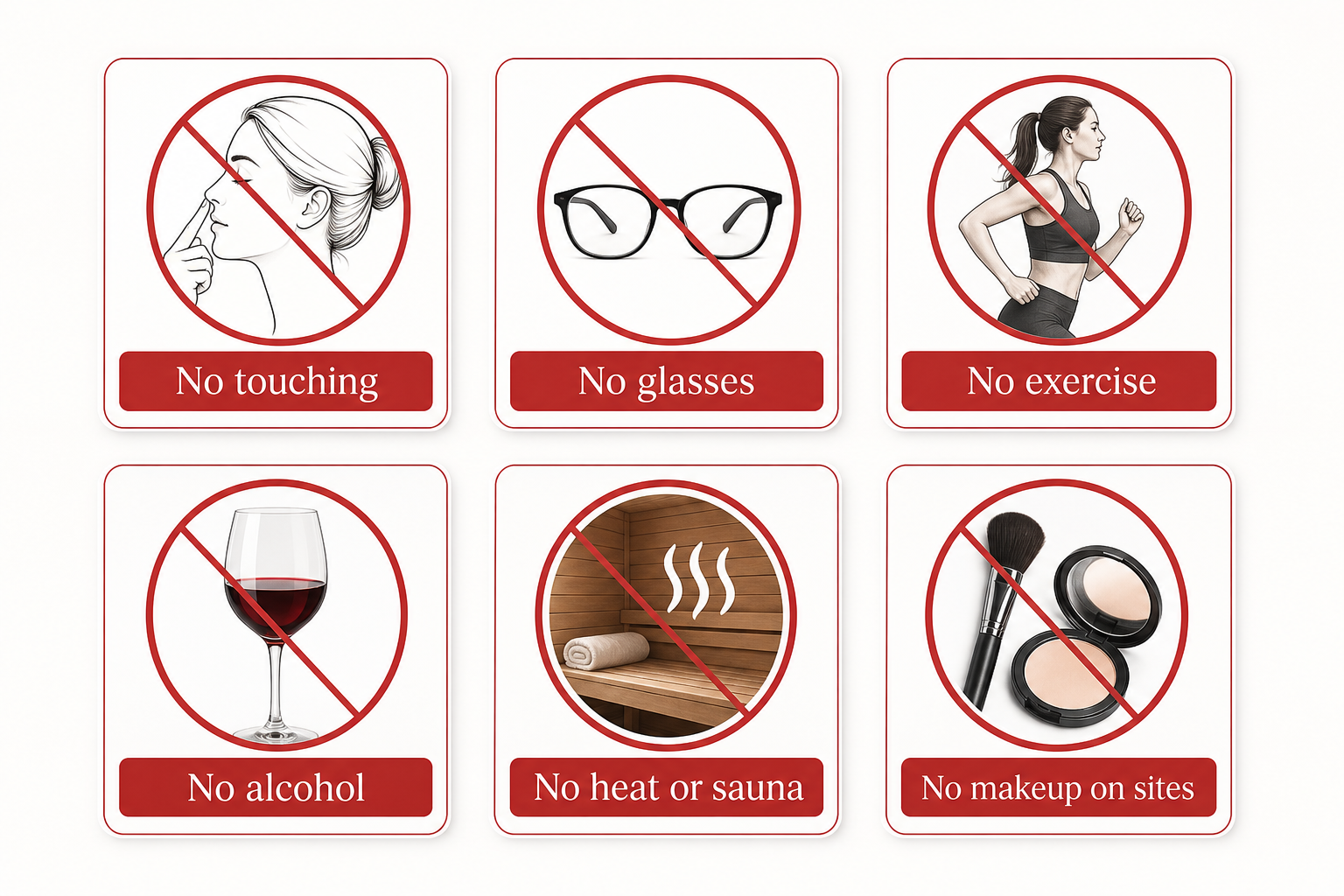
Avoid Touching or Pressing the Nose
The most important instruction in nose filler aftercare is to avoid touching, pressing, or massaging the nose for at least two weeks. Hyaluronic acid filler is a soft, malleable gel in the early days after injection, before it has fully integrated with the surrounding tissue. Applying pressure — even gentle pressure — can cause filler displacement, shifting the product away from the intended area and creating asymmetry or an unnatural contour. This applies to deliberate touching as well as incidental pressure from glasses frames, face masks, or sleeping face-down.
Glasses After Nose Filler
Wearing glasses after nose filler is one of the most frequently asked questions, and the answer requires some practical planning. Standard spectacles and sunglasses rest on the nasal bridge — precisely the area where filler is most commonly placed — and the weight of the frames can cause filler displacement if worn too soon. Most practitioners advise avoiding glasses for two to four weeks after treatment. For patients who cannot manage without corrective lenses, contact lenses are the most straightforward solution during this period. If contacts are not an option, some patients use medical tape to suspend lightweight frames from the forehead, or opt for clip-on lenses that attach to a headband rather than resting on the nose. Discuss this with your practitioner before your appointment so you can plan ahead.
Exercise and Physical Activity
Strenuous exercise should be avoided for at least 24 to 48 hours after treatment. Elevated heart rate and blood pressure increase blood flow to the face, which can worsen swelling and bruising and may increase the risk of filler migration in the very early period. Light walking is generally acceptable from the day of treatment. More vigorous activity — gym sessions, running, cycling, contact sports — should wait until swelling has meaningfully reduced, typically after 48 hours, though some practitioners advise waiting a full week for high-intensity exercise.
Heat, Sun, and Saunas
Heat exposure causes vasodilation, which increases swelling and bruising. Saunas, steam rooms, hot tubs, hot yoga, and prolonged sun exposure should all be avoided for at least 48 to 72 hours after treatment. Direct sun exposure also carries a risk of hyperpigmentation over bruised skin. If you need to go outdoors, a broad-spectrum SPF is advisable once the injection sites have closed.
Alcohol and Blood-Thinning Substances
Alcohol dilates blood vessels and impairs the body’s normal clotting response, which can worsen bruising and prolong swelling. Avoiding alcohol for at least 24 hours after treatment — ideally 48 hours — is standard advice. The same applies to aspirin and non-steroidal anti-inflammatory drugs taken for non-medical reasons; if you take these medications on prescription, do not stop them without speaking to your prescribing doctor.
Makeup and Skincare
Avoid applying makeup directly over the injection sites for at least four hours after treatment, and ideally until any visible puncture marks have closed. Introducing cosmetic products to open injection sites carries a small infection risk. When you do resume your skincare routine, use gentle, non-active products for the first few days and avoid retinoids, exfoliating acids, and microneedling or other facial treatments for at least two weeks, as these can disrupt the filler before it has fully settled.
What Filler Settling Actually Means
The phrase “filler settling” is used widely but rarely explained. After injection, hyaluronic acid filler sits within the soft tissue as a discrete gel deposit. Over the following days, two processes occur simultaneously: the acute inflammatory swelling driven by the injection trauma resolves through lymphatic drainage, and the hyaluronic acid begins to integrate with the surrounding tissue as water molecules bind to the filler matrix. The result is a gradual softening and naturalisation of the filler’s appearance. What may feel like a firm lump on day two often becomes indistinguishable from the surrounding tissue by the end of the second week. This is why practitioners consistently advise against judging results early — the nose you see at 48 hours is not the nose you will have at two weeks.
Warning Signs: When to Contact Your Practitioner Immediately
The vast majority of non-surgical rhinoplasty procedures are uneventful, but patients should be aware of the signs that require urgent attention. The most serious complication associated with nose filler is vascular occlusion — a blockage of a blood vessel by injected filler. The nose has a complex vascular anatomy, and inadvertent injection into or compression of a vessel can restrict blood flow to the skin or, in rare cases, to structures beyond the nose.
Vascular occlusion can present immediately after injection or, in some cases, develop over the hours following treatment — a pattern sometimes called delayed-onset vascular occlusion. This is why monitoring your skin in the hours after leaving the clinic matters, not just in the treatment room. Contact your practitioner or seek emergency medical attention immediately if you notice any of the following:
- Blanching — a sudden white or pale discolouration of the skin around the nose or in adjacent areas
- Skin discolouration that appears dusky, purple, or mottled (a livedo pattern), which may indicate compromised circulation
- Disproportionate pain — pain that is significantly worse than expected or that worsens rather than improves after treatment
- Visual disturbances — any change in vision, including blurring, loss of vision in part of the visual field, or double vision
- Rapidly spreading redness or warmth that suggests infection
If vascular occlusion is suspected, hyaluronidase — an enzyme that dissolves hyaluronic acid filler — can be used as a reversal agent. Prompt treatment is critical; the window for effective intervention is narrow. This is one reason why choosing a qualified, experienced practitioner who carries hyaluronidase and knows how to use it is a fundamental safety consideration, not a secondary one.
How Individual Factors Affect Your Recovery
Recovery timelines and final results vary between patients for reasons that go beyond the procedure itself. Metabolic rate influences how quickly the body processes hyaluronic acid; patients with faster metabolisms may find their filler integrates and also dissipates more quickly than average. Skin thickness affects how visible the filler is and how much swelling is apparent — thinner skin tends to show both results and side effects more readily. The volume of filler injected and the depth of placement also influence how pronounced the initial swelling is and how long it takes to resolve. Patients who bruise easily due to skin type, medication, or vascular fragility should expect a longer visible recovery period even if the underlying filler is settling normally.
For repeat or top-up treatments, aftercare principles remain broadly the same, but patients who have had previous filler in the area may notice less swelling at subsequent sessions as the tissue has already accommodated filler. However, the restrictions around pressure, heat, and exercise still apply, and the risk of vascular occlusion does not diminish with repeat treatments.
Non-Surgical vs. Surgical Rhinoplasty: Recovery Comparison
For patients weighing their options, the difference in recovery between non-surgical and surgical rhinoplasty is substantial.
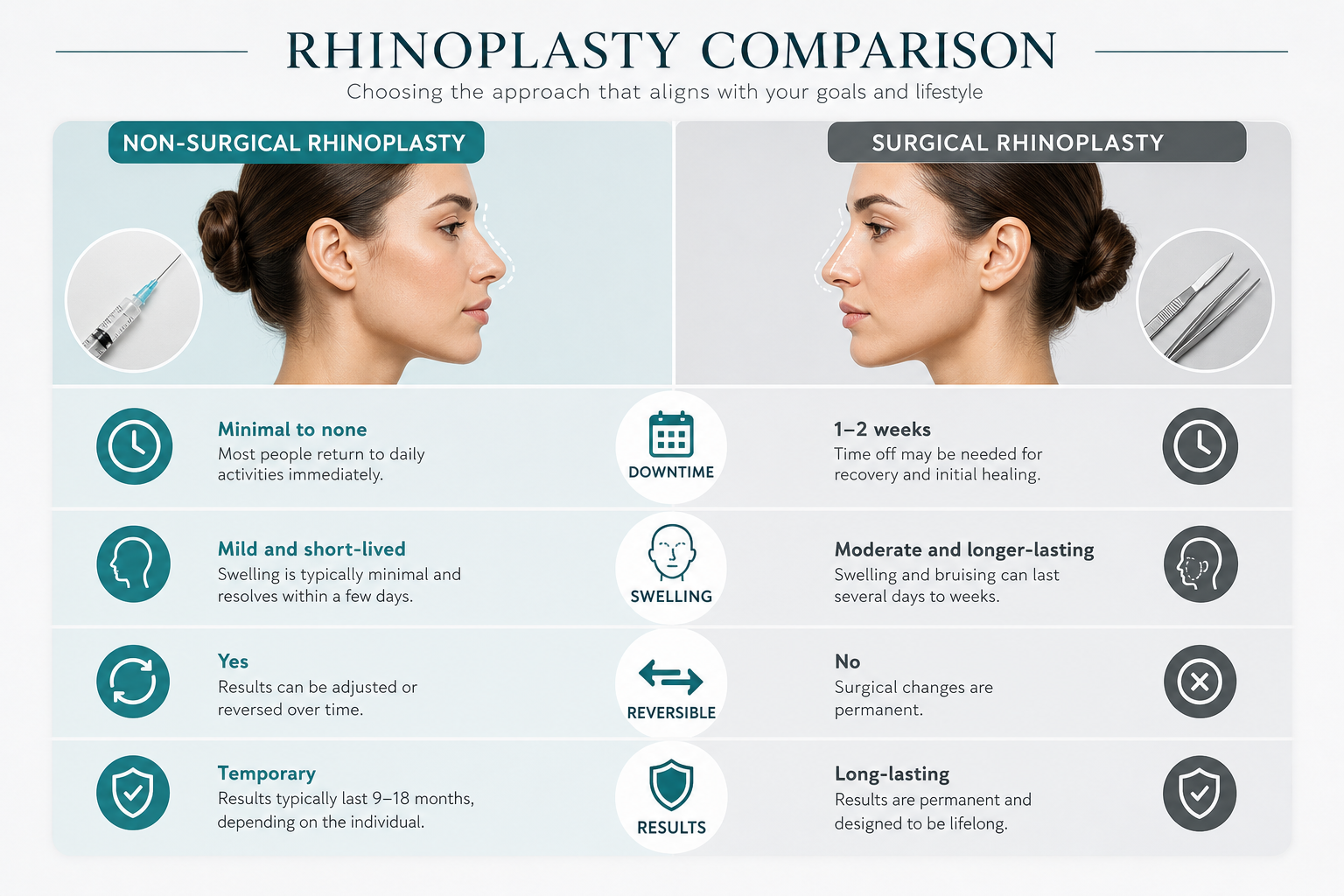
| Factor | Non-Surgical Rhinoplasty | Surgical Rhinoplasty |
|---|---|---|
| Downtime | Minimal; most resume normal activities same day | 1–2 weeks off work; 4–6 weeks restricted activity |
| Swelling duration | Largely resolved within 1–2 weeks | Significant swelling for 2–4 weeks; residual swelling up to 12 months |
| Bruising | Mild to moderate; typically resolves within 1–2 weeks | More extensive; typically 2–3 weeks |
| Pain level | Mild tenderness; managed with over-the-counter analgesia | Moderate to significant; prescription pain relief often required |
| When final result is visible | Approximately 2 weeks | Up to 12 months for full resolution of swelling |
| Results longevity | 6–18 months depending on filler type and metabolism | Permanent (though ageing continues) |
| Reversibility | Reversible with hyaluronic acid filler and hyaluronidase | Not reversible without further surgery |
| Structural change possible | Limited to soft tissue contouring; cannot alter bone or cartilage | Can address bone, cartilage, and soft tissue |
Non-surgical rhinoplasty offers a meaningful advantage in recovery and reversibility, but it cannot replicate the structural changes achievable through surgery. It is most appropriate for patients seeking to smooth a dorsal hump, improve nasal symmetry, or refine the nasal tip through soft tissue contouring — not for those requiring significant size reduction or functional correction.
How Long Results Last and Planning Maintenance
Hyaluronic acid nose filler typically lasts between 6 and 18 months, though this range reflects genuine variation between patients. Factors that influence longevity include the specific filler product used, the volume injected, the depth of placement, and the patient’s individual metabolism. The nose is a relatively mobile area of the face, which can contribute to filler breaking down more quickly than in less dynamic regions.
As results begin to fade, the nose gradually returns to its original shape rather than changing abruptly. Maintenance appointments allow the practitioner to assess the current state of the filler and add volume where needed. Some patients choose to have a small top-up before the filler has fully dissipated, which can help maintain a consistent result over time. Your practitioner will advise on the appropriate interval based on how your filler has settled and how your body has metabolised it.
Frequently Asked Questions
Can I touch my nose after nose filler?
You should avoid touching, pressing, or rubbing your nose for at least two weeks after treatment. The filler is soft and malleable in the early days and can be displaced by pressure before it has fully integrated with the surrounding tissue. Incidental contact — such as blowing your nose gently — is unavoidable, but deliberate manipulation should be avoided.
How long does swelling last after non-surgical rhinoplasty?
The most noticeable swelling typically peaks at 24 to 48 hours and reduces significantly by the end of the first week. Minor residual swelling can persist into the second week. The final result is generally visible at two weeks, once all swelling has fully resolved. Patients who bruise easily or had a larger volume of filler may take slightly longer.
When can I wear glasses after nose filler?
Most practitioners advise avoiding glasses for two to four weeks after treatment, as the frames rest on the nasal bridge where filler is commonly placed and can cause displacement. Contact lenses are the most practical alternative during this period. If you cannot wear contacts, discuss lightweight frame options or tape-suspension methods with your practitioner before your appointment.
When can I exercise after nose filler?
Light activity such as walking is generally acceptable from the day of treatment. Strenuous exercise — anything that significantly raises your heart rate or blood pressure — should be avoided for at least 24 to 48 hours, and some practitioners recommend waiting a full week before returning to high-intensity training.
Is the filler reversible if I am unhappy with the result?
Yes. Hyaluronic acid filler is reversible with hyaluronidase, an enzyme that dissolves the filler. This is one of the key safety advantages of hyaluronic acid over permanent fillers. However, reversal should only be performed by a qualified practitioner, and it is worth waiting until the two-week mark before assessing results, as early swelling can make the nose appear different from the final outcome.
Can I have other facial treatments at the same time as nose filler?
Other facial treatments — including facials, microneedling, chemical peels, and laser procedures — should generally be avoided for at least two weeks after non-surgical rhinoplasty. These treatments can disrupt the filler before it has settled and may increase the risk of displacement or infection. Botulinum toxin injections in other areas of the face are usually acceptable at the same appointment, but discuss the timing of any planned treatments with your practitioner in advance.
What should I do if I notice skin discolouration or blanching after treatment?
Blanching (white discolouration) or a dusky, mottled appearance of the skin around the nose after treatment are potential signs of vascular occlusion and require immediate attention. Contact your practitioner or seek emergency medical care without delay. Do not wait to see if the discolouration resolves on its own — prompt treatment with hyaluronidase is essential if vascular occlusion is confirmed.
Planning Your Recovery: What to Discuss Before Your Appointment
The best non-surgical rhinoplasty aftercare begins before you leave the clinic — ideally before you arrive. A thorough consultation should cover your medical history, any medications that may affect bruising or healing, your lifestyle (including whether you wear glasses, play contact sports, or have upcoming events), and your realistic expectations for the recovery period. Ask your practitioner specifically about the warning signs of vascular occlusion, what to do if you experience them, and how to contact the clinic outside of normal hours. Confirm that hyaluronidase is available at the clinic as a reversal agent.
Understanding that the final result is visible at two weeks — not two days — helps avoid unnecessary concern in the early recovery period. Most patients find that liquid rhinoplasty recovery is straightforward when they follow their aftercare instructions carefully, but the nose is an anatomically complex area and the aftercare is more specific than for filler in other facial regions. Taking it seriously is the most reliable way to protect both your results and your safety.