Maskne: What Causes Mask-Related Acne and How to Treat It
Maskne — the term coined for acne breakouts triggered or worsened by wearing a face mask — became widely recognised during the COVID-19 pandemic, but the underlying skin problem is not new. Anyone who wears a mask regularly, whether for medical, occupational, or personal reasons, can develop this frustrating and sometimes persistent form of acne. Understanding why it happens, how it differs from ordinary acne, and what actually works to treat and prevent it can make a significant difference to your skin and your confidence.
Key Takeaways
- Maskne is a form of acne mechanica driven by friction, occlusion, heat, and humidity beneath a face mask — not simply by bacteria alone.
- The skin microbiome plays a meaningful role: prolonged mask wear shifts the bacterial balance under the mask, promoting conditions that favour breakouts.
- Mask material, hygiene habits, and your skincare routine all directly influence how severe maskne becomes.
- Several skin conditions — including perioral dermatitis, Malassezia folliculitis, and contact dermatitis — can mimic maskne and require different treatments.
- Most mild-to-moderate maskne responds well to targeted skincare adjustments, but persistent or cystic breakouts warrant a dermatologist assessment.
What Is Maskne?
Maskne is a colloquial term for mask-related acne — breakouts that develop in the areas of the face covered by a mask, typically the cheeks, chin, jawline, and the skin around the nose and mouth. Dermatologists classify it as a variant of acne mechanica, a well-established category of acne triggered by physical factors such as friction, pressure, heat, and occlusion rather than by hormonal changes or genetics alone. Acne mechanica has long been documented in athletes who wear helmets or chin straps, musicians who play chin-resting instruments, and healthcare workers who wear tight-fitting respiratory equipment — so while the pandemic brought maskne into mainstream conversation, the mechanism itself is clinically familiar.
What makes maskne distinct from standard acne vulgaris is that its primary drivers are environmental and mechanical. Remove or modify the trigger — the mask — and the skin often begins to improve. However, for people with underlying acne-prone skin, maskne can compound existing breakouts and make them considerably harder to manage.
Why Does Wearing a Mask Cause Acne?
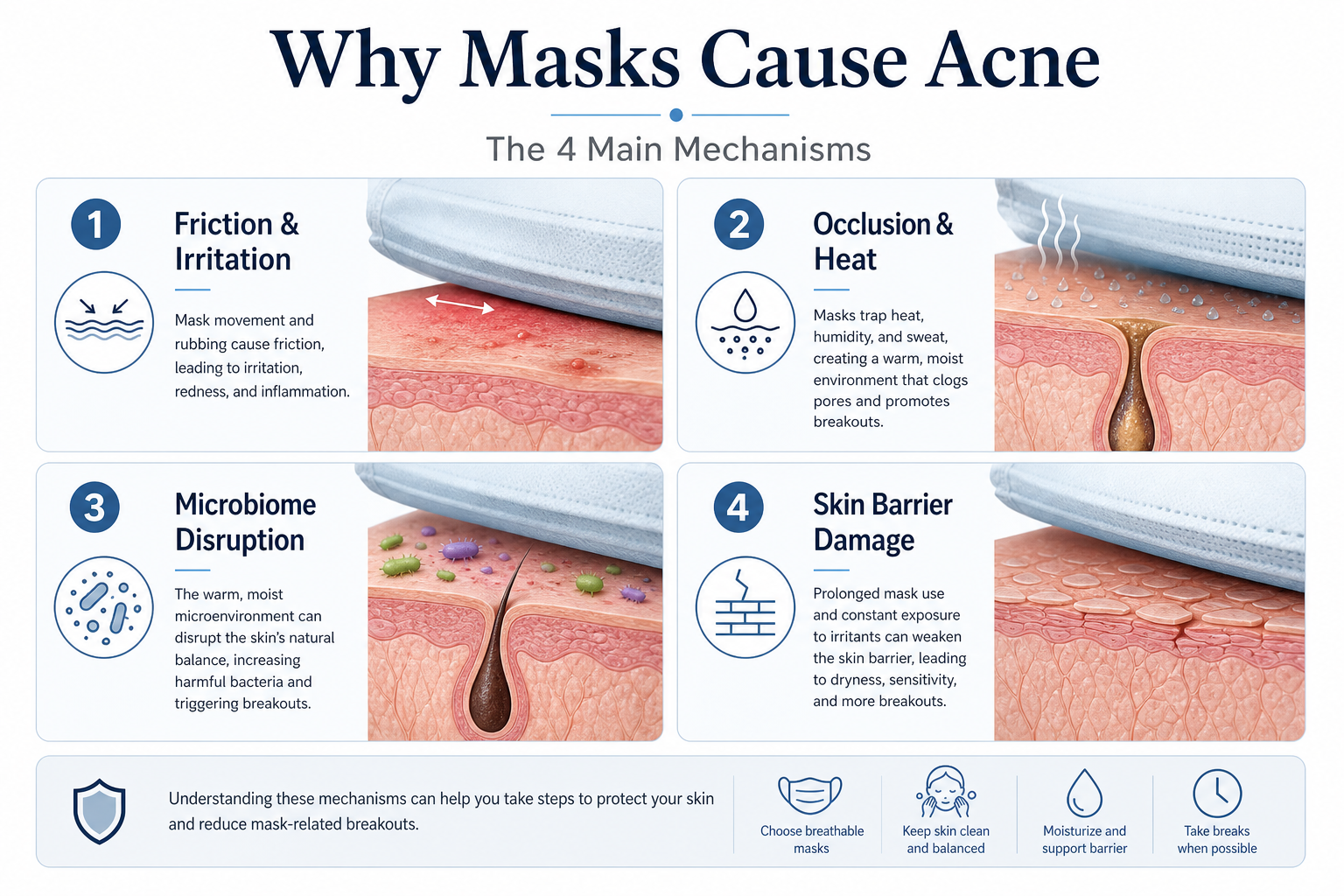
Several overlapping mechanisms explain why a face mask creates such a hostile environment for skin. Understanding each one helps clarify why a single-ingredient fix rarely resolves maskne on its own.
Friction and Mechanical Irritation
Every time you speak, chew, or move your face, the mask fabric rubs against your skin. This repeated friction irritation damages the outermost layer of the skin — the stratum corneum — and triggers an inflammatory response. Inflamed follicles are far more susceptible to blockage and bacterial colonisation. Masks that fit too tightly, or that are made from rough synthetic fabrics such as polyester or nylon, tend to cause the most friction-related damage.
Occlusion, Heat, and Humidity
A mask creates a warm, humid microenvironment against the skin. This occlusion traps exhaled moisture, sweat, and sebum beneath the fabric, raising the local temperature and humidity significantly. Elevated humidity softens the skin barrier and causes the outer skin cells to swell, making it easier for clogged pores to develop. Excess heat also stimulates the sebaceous glands to produce more oil, further increasing the risk of comedone formation — the blocked pores that underlie both blackheads and whiteheads.
Skin Microbiome Disruption
Emerging research, including a 2024 peer-reviewed study published via NCBI, highlights the role of the skin microbiome in maskne. The warm, anaerobic environment beneath a mask alters the balance of microorganisms on the skin surface. Cutibacterium acnes (formerly Propionibacterium acnes), the bacterium most associated with inflammatory acne, thrives in low-oxygen conditions — exactly the environment a sealed mask creates. Simultaneously, opportunistic organisms such as Staphylococcus aureus may proliferate, further disrupting the skin’s natural microbial balance and amplifying inflammation. This microbiome disruption is a meaningful contributor to maskne that most consumer-facing articles overlook.
Trapped Debris and Makeup Residue
Makeup, sunscreen, dead skin cells, and environmental pollutants accumulate on the skin surface throughout the day. Under a mask, these substances are held in close contact with the skin for extended periods rather than being dispersed by air movement. The result is an increased likelihood of pore blockage and irritation, particularly in people who apply foundation or powder to the lower face before masking.
Skin Barrier Disruption
Repeated friction combined with the drying effect of mask removal gradually compromises the skin’s protective barrier. Skin barrier disruption allows irritants and bacteria to penetrate more easily, increases transepidermal water loss, and makes the skin more reactive to products it might otherwise tolerate. This is why some people find that their usual skincare routine suddenly causes stinging or redness once maskne develops — the barrier is no longer intact enough to buffer those products.
Who Is Most at Risk?
Maskne can affect anyone who wears a mask regularly, but certain groups face a higher risk of developing significant breakouts. People with pre-existing acne-prone skin are most vulnerable, as the mechanical and occlusive triggers compound their existing tendency toward blocked pores and inflammation. Healthcare workers, food service staff, and others who wear masks for eight or more hours daily experience a more severe and persistent form of maskne because the cumulative exposure to friction, heat, and humidity is far greater than occasional mask wear.
People with sensitive skin or a compromised skin barrier may develop irritant reactions alongside or instead of true acne. Those with darker skin tones — Fitzpatrick phototypes III through VI — face an additional concern: inflammatory acne lesions in these skin types carry a significantly higher risk of post-inflammatory hyperpigmentation (PIH), the dark marks that persist long after the active breakout has resolved. This makes early and effective management of maskne particularly important for this group, as PIH can be more distressing and slower to fade than the original spots.
Conditions That Can Mimic Maskne
Not every rash or breakout in the mask zone is true maskne. Several skin conditions present in the same area and can be mistaken for mask-related acne, but they respond to different treatments — and some standard acne treatments can actually make them worse. A dermatologist assessment is the most reliable way to distinguish between these conditions.
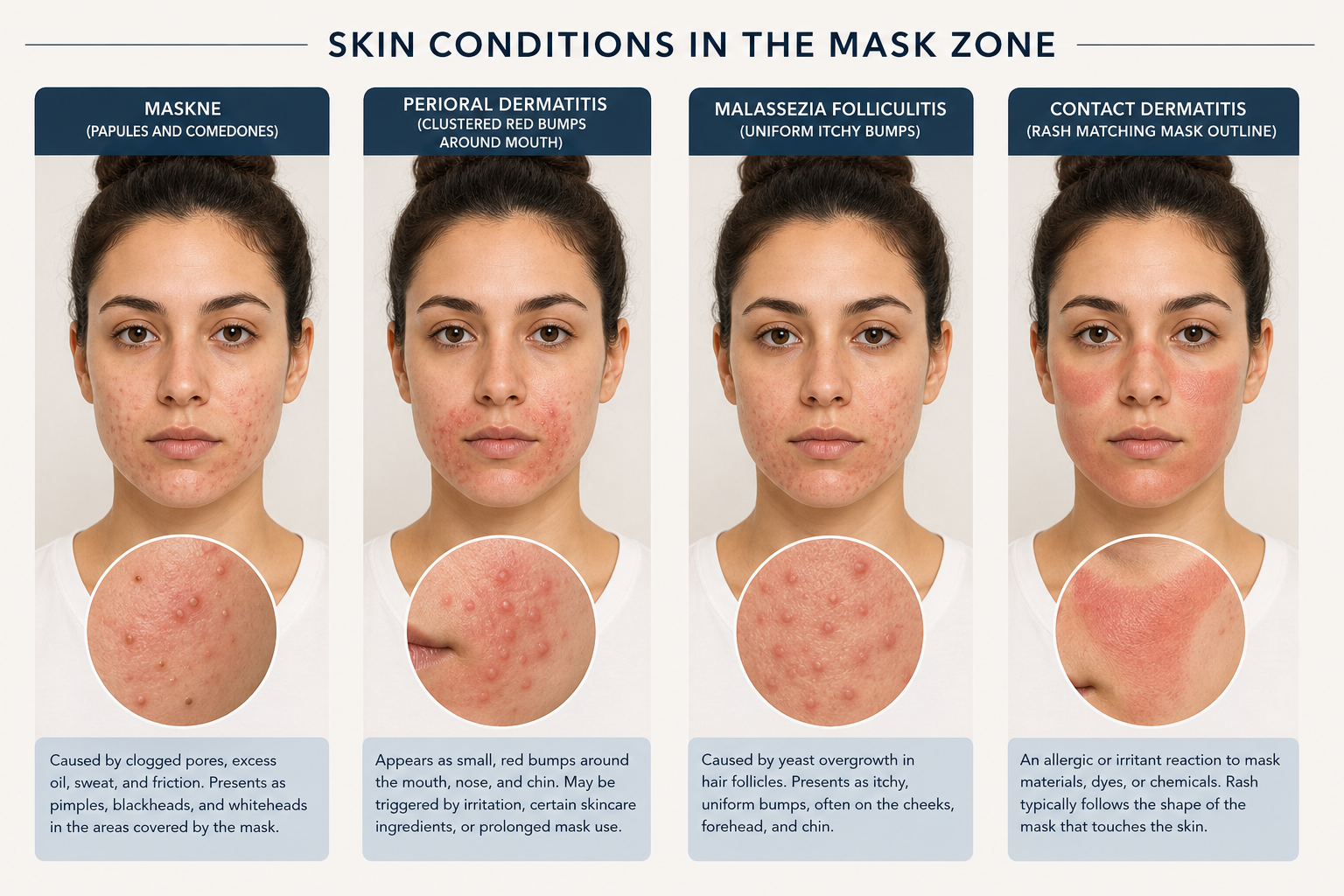
| Condition | Typical Appearance | Key Distinguishing Features | Treatment Difference |
|---|---|---|---|
| Maskne (acne mechanica) | Papules, pustules, comedones on cheeks, chin, jawline | Directly correlates with mask wear; improves with mask breaks | Salicylic acid, benzoyl peroxide, non-comedogenic skincare |
| Perioral dermatitis | Small red papules clustered around the mouth and nose | Worsened by topical steroids; no true comedones | Topical or oral antibiotics; avoid steroids |
| Malassezia folliculitis | Uniform itchy papules and pustules; often on cheeks and forehead | Itching is prominent; worsened by antibiotics; responds to antifungals | Topical or oral antifungal agents |
| Contact/allergic dermatitis | Redness, scaling, or weeping rash matching mask outline exactly | Reaction to mask material, dyes, or detergent residue | Identify and remove allergen; barrier repair; antihistamines if needed |
| Rosacea | Persistent redness, flushing, visible vessels, papules | Triggered by heat and friction; no comedones; central face distribution | Azelaic acid, topical metronidazole, avoid triggers |
Perioral dermatitis deserves particular attention because it is frequently misidentified as acne and treated with topical corticosteroids — which typically make it significantly worse. If you notice small, uniform red bumps clustered tightly around the mouth or nose that do not respond to standard acne treatments, seek a professional assessment before continuing self-treatment.
Similarly, Malassezia folliculitis — sometimes called fungal acne — is caused by an overgrowth of the yeast Malassezia rather than bacteria. It tends to produce itchy, uniform bumps and is worsened rather than improved by antibiotic treatments. Antifungal therapy is required, making accurate diagnosis essential.
How to Treat Maskne
Effective maskne treatment addresses both the active breakouts and the underlying skin barrier damage. The approach depends on severity: mild maskne often responds to skincare adjustments alone, while moderate-to-severe or persistent cases may require prescription treatments.
Cleanse Gently and Consistently
Using a gentle cleanser — ideally fragrance-free and formulated for sensitive or acne-prone skin — twice daily is the foundation of maskne management. Cleansing before putting on a mask removes makeup, sunscreen, and excess oil that would otherwise be trapped against the skin. Cleansing after mask removal clears accumulated sweat, bacteria, and debris. Avoid harsh scrubs or foaming cleansers with sulphates, which can strip the skin barrier and worsen inflammation.
Use Targeted Active Ingredients
Salicylic acid, a beta-hydroxy acid (BHA), is one of the most effective ingredients for maskne because it is oil-soluble and can penetrate into the pore lining to dissolve the sebum and dead skin cell plugs that cause blockages. A concentration of 0.5–2% used once or twice daily is appropriate for most people. Salicylic acid also has mild anti-inflammatory properties, which helps calm redness around active spots.
Benzoyl peroxide is effective against C. acnes and can be used as a spot treatment on active pustules and papules. However, it is important to use benzoyl peroxide with caution under a mask: the occlusive environment amplifies the penetration of active ingredients, which can increase the risk of irritation and dryness. A lower concentration (2.5–5%) applied as a targeted spot treatment rather than a full-face wash is generally better tolerated in maskne-prone skin.
Niacinamide (vitamin B3) is a versatile ingredient that supports barrier repair, reduces sebum production, calms inflammation, and — importantly for those at risk of PIH — helps fade post-inflammatory dark marks. A 5–10% niacinamide serum or moisturiser is well tolerated by most skin types and can be used morning and evening without the irritation risk associated with acids or retinoids.
Azelaic acid (10–20%) is another useful option, particularly for people with sensitive skin or those managing both maskne and PIH. It has antibacterial, anti-inflammatory, and pigment-regulating properties, making it suitable for a range of maskne presentations.
A Note on Retinoids Under Occlusion
Retinoids — including over-the-counter retinol and prescription-strength tretinoin — are effective for acne vulgaris and can help with maskne over time. However, they must be used with care. The occlusive environment created by a mask significantly amplifies the penetration and irritation potential of retinoids. Apply any retinoid at nighttime only, after mask wear has ended for the day, and allow the skin to fully absorb the product before sleeping. Do not apply retinoids immediately before putting on a mask, as this can cause significant irritation, peeling, and barrier damage.
Moisturise to Protect the Barrier
Applying a lightweight, non-comedogenic moisturiser before mask wear creates a protective layer between the skin and the mask fabric, reducing friction and helping to maintain the skin barrier. Look for formulations containing ceramides, hyaluronic acid, or glycerin, which support barrier function without blocking pores. Avoid heavy, occlusive creams or oil-based products under the mask, as these can contribute to pore blockage in acne-prone skin.
When Prescription Treatment Is Needed
Moderate-to-severe maskne — particularly cystic or nodular breakouts — may not respond adequately to over-the-counter products. A dermatologist can prescribe topical antibiotics, combination formulations, oral antibiotics for short-term use, or in appropriate cases, medications such as spironolactone or isotretinoin. If breakouts are leaving persistent dark marks (PIH), prescription-strength azelaic acid, topical retinoids, or in-clinic treatments such as chemical peels may be recommended to accelerate fading.
How to Prevent Maskne
Prevention is considerably easier than treating established breakouts. The following strategies address the main drivers of maskne and are supported by dermatological guidance.
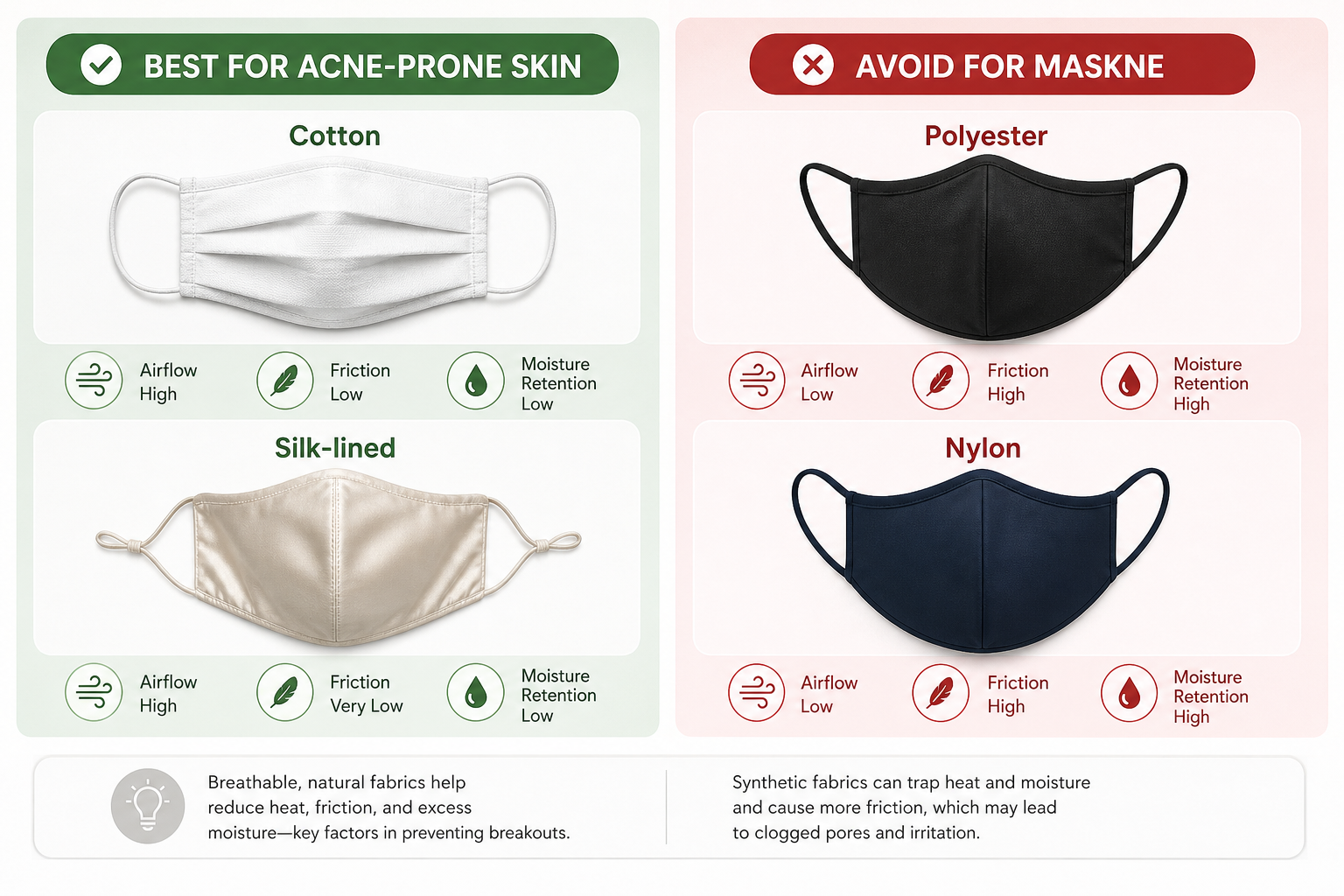
Choose the Right Mask Material
Mask fabric has a direct impact on skin health. A breathable cotton mask — ideally 100% tightly woven cotton or a cotton-silk blend — is generally the best choice for acne-prone skin. Cotton is softer than synthetic alternatives, allows more airflow, and is less likely to cause friction irritation. Synthetic fabrics such as polyester, nylon, and rayon trap more heat and moisture, and some contain dyes or finishing chemicals that can irritate sensitive skin. Silk-lined masks offer a smooth surface that minimises friction, though they may be less practical for daily use.
Practise Consistent Mask Hygiene
Reusable masks accumulate bacteria, dead skin cells, sebum, and makeup residue with every use. Washing a reusable mask after every single wear is essential — not every few days. Use a fragrance-free detergent and avoid fabric softeners, which can leave residues that irritate acne-prone skin. Ensure the mask is completely dry before reuse, as a damp mask creates an even more humid environment against the skin. Disposable masks should not be reused beyond a single session.
Simplify Your Skincare Routine Under the Mask
Skip makeup on the lower face when you know you will be wearing a mask. Foundation, concealer, and powder all contribute to pore blockage when trapped under occlusion. If you use active ingredients such as acids or vitamin C serums in the morning, consider moving them to your evening routine on days when you will be masking for extended periods, to reduce the risk of irritation from amplified penetration.
Take Regular Mask Breaks
Where it is safe and appropriate to do so, removing the mask for a short period every four hours allows the skin to breathe, reduces accumulated humidity, and gives the barrier a chance to recover. Even brief breaks can meaningfully reduce the cumulative occlusive burden on the skin.
Address Stress and Sleep
Stress elevates cortisol levels, which in turn stimulates sebaceous gland activity and promotes inflammation — the same pathways that drive acne vulgaris. For people already managing maskne, chronic stress can compound breakouts and slow recovery. Adequate sleep supports skin barrier repair and immune regulation. While these factors are often overlooked in maskne-specific advice, they are meaningful contributors to overall acne severity and should not be dismissed.
Managing Post-Maskne Pigmentation
Once active maskne has resolved, many people — particularly those with Fitzpatrick skin types III through VI — are left with post-inflammatory hyperpigmentation (PIH): flat, darkened marks at the sites of previous spots. PIH is not scarring in the structural sense, but it can persist for months without targeted treatment.
Niacinamide (5–10%) applied consistently helps inhibit melanin transfer and gradually fades dark marks. Azelaic acid has a dual role here, addressing both residual inflammation and pigmentation. Topical retinoids used at night accelerate cell turnover and can speed the fading of PIH, though they must be introduced gradually to avoid further irritation. Daily broad-spectrum SPF is non-negotiable: UV exposure significantly darkens existing PIH and slows its resolution. In-clinic options such as superficial chemical peels or targeted laser treatments may be appropriate for persistent or deeper pigmentation, and a dermatologist can advise on the most suitable approach for your skin tone and the depth of pigmentation.
Frequently Asked Questions
Is maskne the same as acne mechanica?
Maskne is a specific form of acne mechanica — the broader category of acne triggered by physical factors such as friction, pressure, and occlusion. Acne mechanica has been recognised in athletes and healthcare workers for decades; maskne simply refers to the version caused specifically by face mask wear.
Does maskne go away on its own if I stop wearing a mask?
Mild maskne often improves once the triggering factor is removed or reduced, but it does not always resolve completely without treatment. Existing blocked pores and inflammatory lesions need to be actively addressed, and any post-inflammatory pigmentation will persist without targeted skincare. People with underlying acne-prone skin may continue to experience breakouts even after reducing mask wear.
Can I use benzoyl peroxide under my mask?
Benzoyl peroxide is best used as a targeted spot treatment rather than a full-face application when you are wearing a mask regularly. The occlusive environment amplifies ingredient penetration, which increases the risk of dryness, peeling, and irritation. Apply it to active spots at night rather than before masking.
How do I know if I have maskne or perioral dermatitis?
Perioral dermatitis typically presents as small, uniform red papules clustered tightly around the mouth and nose, without the blackheads or whiteheads associated with acne. It is often worsened by topical steroid use and does not respond to standard acne treatments. If you are unsure, a dermatologist assessment is the most reliable way to distinguish between the two conditions and avoid treatments that could make perioral dermatitis worse.
Are N95 or surgical masks worse for maskne than cloth masks?
N95 respirators and surgical masks tend to create a tighter seal and more occlusion than loose-fitting cloth masks, which can increase the risk of maskne — particularly with prolonged wear. However, mask choice in clinical or high-risk settings must prioritise protection over skin comfort. In those situations, optimising the skincare routine and taking mask breaks where safe to do so are more practical strategies than changing mask type.
Can niacinamide help with maskne?
Niacinamide is a well-tolerated, evidence-supported ingredient that addresses several aspects of maskne simultaneously: it helps regulate sebum production, supports skin barrier repair, reduces redness and inflammation, and helps fade post-inflammatory dark marks. It is suitable for most skin types and can be used alongside other active ingredients without significant interaction risk.
When should I see a dermatologist for maskne?
Seek a dermatologist assessment if your breakouts are severe, cystic, or nodular; if they have not improved after six to eight weeks of consistent skincare adjustments; if you suspect you may have perioral dermatitis, Malassezia folliculitis, or an allergic reaction rather than true maskne; or if post-inflammatory pigmentation is significant and not responding to over-the-counter treatments.
When Maskne Needs Professional Attention
Most mild-to-moderate maskne responds well to the combination of appropriate mask selection, consistent mask hygiene, a simplified and barrier-supportive skincare routine, and targeted active ingredients such as salicylic acid and niacinamide. These adjustments address the root causes — friction, occlusion, microbiome disruption, and barrier damage — rather than simply treating individual spots as they appear.
However, maskne that is persistent, severe, or leaving significant pigmentation behind is worth discussing with a dermatologist. A professional assessment can confirm the diagnosis, rule out conditions that mimic maskne, and provide access to prescription-strength treatments that are not available over the counter. For those with darker skin tones who face a higher risk of PIH, early professional input can prevent months of difficult-to-treat pigmentation. If you are wearing a mask for occupational reasons and cannot reduce your exposure, a dermatologist can help you build a practical, evidence-based protocol that works within those constraints.