Best Hydrating Cleanser for Dry Skin: How to Choose and What to Look For
If your skin feels tight or dry after washing, the problem may not be your moisturiser — it may be your cleanser. Many face washes strip away the natural lipids that keep the skin barrier intact, leaving dry and normal-to-dry skin more vulnerable to irritation, flaking, and moisture loss. Choosing a genuinely hydrating cleanser means understanding which ingredients actively support the skin barrier, which textures suit different levels of dryness, and which formulation habits to avoid. This guide covers all of that in practical terms, without recommending specific brands.
Key Takeaways
- A hydrating cleanser should remove impurities without stripping the skin’s natural oils or disrupting the moisture barrier.
- Ceramides, hyaluronic acid, and glycerin are the most evidence-supported hydrating ingredients to look for in a cleanser for dry skin.
- Cream cleansers and non-foaming formulas are generally better suited to dry and sensitive skin than traditional foaming washes.
- Ingredients such as sulfates, denatured alcohol, and synthetic fragrance can worsen dryness and should be avoided.
- Cleanser choice is only one part of a dry-skin routine; pairing it with an appropriate moisturiser applied while skin is still slightly damp helps retain moisture more effectively.
Dry Skin vs Dehydrated Skin: Why the Distinction Matters
Dry skin and dehydrated skin are often used interchangeably, but they describe different conditions that respond to different approaches. Dry skin is a skin type characterised by a reduced ability to produce sebum — the natural oil that forms part of the skin’s lipid barrier. People with dry skin tend to experience persistent tightness, flaking, and a dull complexion regardless of season or hydration levels. Dehydrated skin, by contrast, is a temporary condition in which the skin lacks water rather than oil. It can affect any skin type, including oily skin, and is often triggered by environmental factors, overcleansing, or a disrupted skin barrier.
The distinction matters when choosing a cleanser because dry skin primarily needs lipid-replenishing ingredients such as ceramides and fatty acids, while dehydrated skin benefits most from humectants such as hyaluronic acid and glycerin that draw water into the skin. Many people with dry skin also experience dehydration simultaneously, so the most effective hydrating cleansers for this group tend to include both lipid-supporting and water-attracting ingredients. If your skin feels tight immediately after washing and remains dull or flaky throughout the day, a combination approach is likely appropriate.
What Makes a Cleanser Genuinely Hydrating?
A hydrating cleanser is not simply a gentle formula — it is one that actively supports the skin’s ability to retain moisture during and after the cleansing step. Conventional foaming cleansers rely on surfactants that are effective at removing oil and debris but can also disrupt the skin’s lipid barrier in the process. A genuinely hydrating facial cleanser uses milder surfactants, incorporates barrier-supporting or moisture-attracting ingredients, and maintains a pH close to the skin’s natural level of around 5.5.
The pH of a cleanser matters more than many people realise. The skin’s surface is naturally slightly acidic, which supports the enzymes that maintain the barrier and discourages the growth of harmful bacteria. Cleansers with a high pH — common in traditional bar soaps — can temporarily disrupt this balance, making the barrier more permeable and the skin more prone to irritation. A pH-balanced cleanser, ideally formulated around 5.5, helps preserve this environment. While pH is rarely listed on packaging, sulfate-free and soap-free formulas tend to sit closer to the skin’s natural range.
Key Ingredients to Look For
Understanding which ingredients to prioritise makes it easier to evaluate any cleanser on the shelf, regardless of brand or price point. The following are the most clinically relevant categories for dry and normal-to-dry skin.
Ceramides
Ceramides are lipid molecules that make up a significant portion of the skin barrier’s structure. They act like the mortar between skin cells, preventing water from escaping and blocking environmental irritants from entering. Dry skin is often associated with a reduced ceramide content in the outer skin layer, which is why cleansers formulated with ceramides can help reinforce the barrier rather than deplete it further. When reading an ingredient label, look for ceramide NP, ceramide AP, or ceramide EOP — these are among the most commonly used forms. Dermatologist-recommended formulas for dry skin frequently include ceramides as a primary active ingredient.
Hyaluronic Acid
Hyaluronic acid is a humectant — a substance that attracts and binds water molecules. In a cleanser, it helps the skin retain moisture during the wash step rather than losing it to rinsing. While the contact time of a rinse-off product is shorter than that of a leave-on serum, hyaluronic acid in a cleanser still contributes to a more comfortable post-wash feel, particularly for very dry skin. It is most effective when the skin is then sealed with a moisturiser before it fully dries.
Glycerin
Glycerin is one of the most well-established humectants in skincare and appears in a wide range of hydrating cleansers. It draws water from the deeper layers of the skin and from the environment into the outer skin layer, helping to maintain surface hydration. Glycerin is also well tolerated by sensitive skin and is unlikely to cause irritation or comedone formation. Its presence near the top of an ingredient list — ideally within the first five to eight ingredients — is a reliable indicator that a formula is genuinely nourishing rather than superficially labelled as hydrating.
Fatty Acids, Plant Oils, and Squalane
Ingredients such as sunflower oil, jojoba oil, shea butter, and squalane contribute to the lipid content of a cleanser, helping to compensate for the natural oil that cleansing removes. Squalane, in particular, is a stable, lightweight oil that closely resembles the skin’s own sebum and is well tolerated by most skin types including sensitive skin. Cleansing balms and oil cleansers rely heavily on these ingredients and are particularly effective for very dry or flaky skin, as well as for removing makeup and SPF without requiring aggressive rubbing.
Soothing Agents
Colloidal oatmeal, aloe vera, allantoin, niacinamide, and oat extract are commonly included in hydrating cleansers aimed at sensitive or eczema-prone skin. These ingredients help calm redness and reduce the risk of irritation during cleansing. Colloidal oatmeal in particular has a well-documented ability to soothe inflamed skin and support barrier function, and it is recognised by regulatory bodies in several countries as an effective skin protectant.
Ingredients to Avoid in a Cleanser for Dry Skin
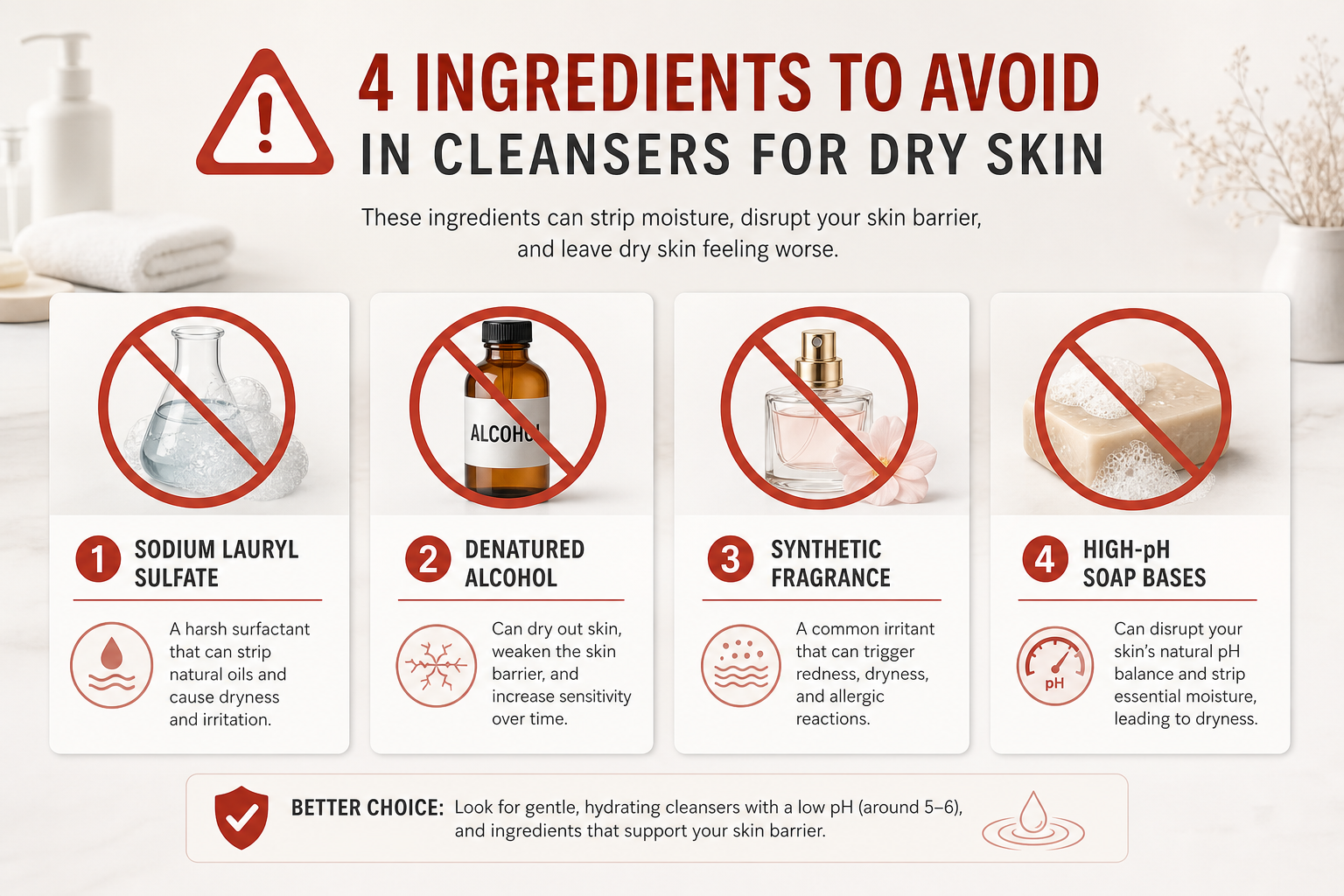
Knowing what to avoid is as important as knowing what to seek out. Several common cleanser ingredients are particularly problematic for dry and sensitive skin.
- Sodium lauryl sulfate (SLS): A harsh surfactant that effectively removes oil but is strongly associated with barrier disruption and irritation. It is one of the most common causes of the squeaky-clean feeling that signals over-cleansing. Sulfate-free formulas avoid SLS and its close relative sodium laureth sulfate.
- Denatured alcohol: Used in some cleansers as an astringent or to improve texture, denatured alcohol is drying and can damage the skin barrier with repeated use. It appears on labels as alcohol denat. or SD alcohol.
- Synthetic fragrance: Fragrance is one of the most common causes of contact dermatitis and skin sensitisation. Fragrance-free formulas are strongly preferred for dry and sensitive skin. Note that “unscented” does not always mean fragrance-free — some unscented products contain masking fragrances.
- High-pH soap bases: Traditional bar soaps and some liquid soaps have a pH well above the skin’s natural range, which can disrupt the acid mantle and worsen dryness. Soap-free formulas are preferable.
Cleanser Textures and Which Suits Dry Skin Best
The texture of a cleanser influences both its cleansing efficacy and its effect on the skin barrier. For dry skin, the choice of texture should reflect the severity of dryness, whether makeup or SPF needs to be removed, and how the skin responds to different formulas.
Cream Cleansers and Milk Cleansers
Cream cleansers are among the most widely recommended options for dry and very dry skin. They typically have a lotion-like consistency, rinse away without leaving a residue, and contain a higher proportion of emollient and humectant ingredients than foaming alternatives. Milk cleansers are similar but slightly lighter in texture, making them suitable for normal-to-dry skin that does not need the full richness of a cream formula. Both types are generally non-foaming and leave the skin feeling soft rather than tight.
Cleansing Balms and Oil Cleansers
Cleansing balms and oil cleansers are particularly effective for removing heavy makeup, waterproof SPF, and long-wear products without stripping moisture. They work on the principle that oil dissolves oil, meaning they lift sebum and product residue without relying on harsh surfactants. Many people with dry skin find that a cleansing balm used as a first cleanse, followed by a lighter cream cleanser, gives the most thorough result without compromising the skin barrier. This approach is sometimes called double cleansing.
Hydrating Gel Cleansers
Some gel cleansers are formulated with mild surfactants and a high concentration of humectants, making them suitable for normal-to-dry skin that prefers a lighter texture. These are not the same as traditional gel cleansers, which often foam heavily and can leave skin feeling tight. A hydrating gel cleanser should rinse away cleanly without producing a dense lather and should not leave the skin feeling stripped. They tend to suit people who find cream cleansers too rich or who live in warmer climates where heavier textures feel uncomfortable.
Micellar Water
Micellar water uses tiny oil droplets suspended in soft water to attract and lift impurities without rinsing. It is a gentle option for sensitive and dry skin, particularly for morning cleansing when there is little to remove beyond overnight skincare residue. However, micellar water is not always sufficient to remove heavy SPF or long-wear makeup, and some formulas contain preservatives that can irritate sensitive skin if not rinsed off. Checking whether a particular formula is designed to be rinsed or left on is worthwhile.
How to Read a Cleanser Ingredient Label
Ingredient lists on cosmetic products are required to be listed in descending order of concentration. This means that ingredients appearing near the top of the list are present in the highest amounts, while those near the bottom are present in trace quantities. For a cleanser to genuinely deliver hydrating benefits, key ingredients such as glycerin, ceramides, or hyaluronic acid should appear within the first half of the ingredient list — ideally within the first eight to ten ingredients. A product that lists hyaluronic acid as its twenty-fifth ingredient is unlikely to deliver meaningful hydration.
Surfactants will almost always appear early in a cleanser’s ingredient list because they are the primary functional component. The type of surfactant matters: mild options such as cocoyl glutamate, cocamidopropyl hydroxysultaine, and PEG-6 caprylic/capric glycerides cleanse effectively without the aggressive stripping associated with sodium lauryl sulfate. If the first surfactant listed is SLS, the formula is unlikely to be well suited to dry skin regardless of what other ingredients follow it.
Morning vs Evening Cleansing for Dry Skin
People with dry skin do not always need to use a full cleanser in the morning. Overnight, the skin produces sebum and may accumulate residue from night creams or serums, but it has not been exposed to pollution, SPF, or makeup. For very dry or sensitive skin, a simple rinse with lukewarm water in the morning — or the use of a gentle micellar water — may be sufficient to prepare the skin for daytime products without unnecessarily removing the lipids that have accumulated overnight.
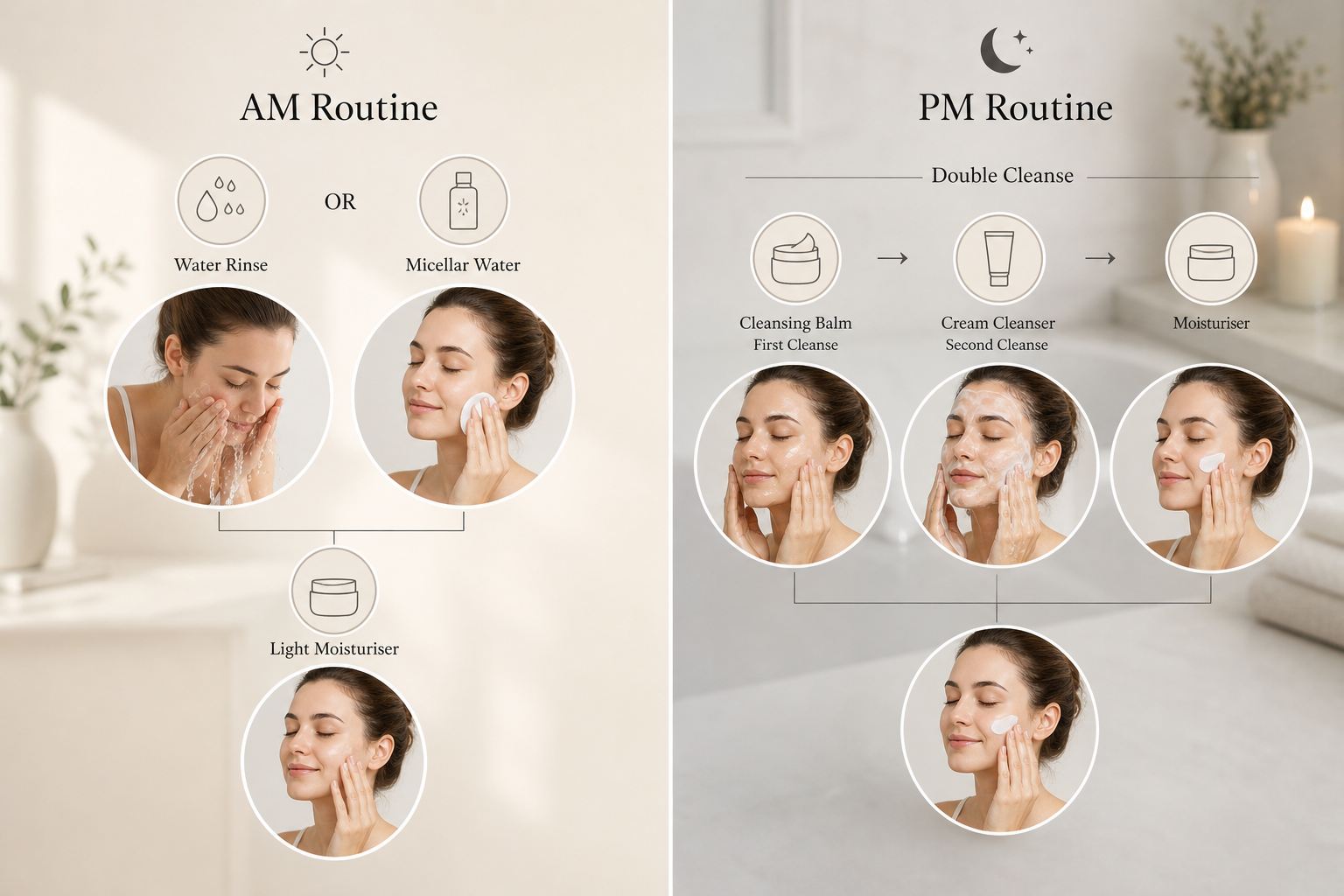
Evening cleansing is more important, particularly if SPF, makeup, or pollution exposure needs to be removed. A cream cleanser or cleansing balm used in the evening provides a thorough clean while supporting the skin barrier ahead of overnight repair. If double cleansing in the evening, the first cleanse with an oil-based formula removes surface products, and the second cleanse with a cream or milk cleanser addresses any remaining residue and prepares the skin for serums and moisturisers.
Overcleansing: A Risk Often Overlooked for Dry Skin
Overcleansing is a meaningful concern for people with dry skin and is rarely discussed in enough depth. Cleansing more than twice daily, using water that is too hot, or using a formula that is too harsh for the skin type can progressively deplete the skin’s natural lipid content and weaken the moisture barrier. Signs of overcleansing include persistent tightness after washing, increased sensitivity, redness, flaking that worsens despite moisturising, and a feeling that the skin never fully recovers between washes.
Reducing cleansing frequency, switching to lukewarm rather than hot water, and choosing a genuinely gentle formula are often enough to allow the barrier to recover over several weeks. If symptoms are severe or persistent, a consultation with a dermatologist is advisable, as barrier dysfunction can sometimes indicate an underlying condition such as eczema or rosacea that benefits from targeted treatment.
Seasonal Adaptation: Adjusting Your Cleanser in Winter
Cold, dry weather can disrupt the skin barrier and accelerate transepidermal water loss — the process by which water evaporates from the skin’s surface into the environment. Central heating further reduces indoor humidity, compounding the effect. Many people find that a cleanser that works well in summer leaves their skin feeling uncomfortably tight or dry during winter months.
Switching to a richer cream cleanser or a cleansing balm during colder months, reducing morning cleansing to a water rinse, and applying moisturiser immediately after patting the skin dry are practical adaptations that can make a significant difference. Conversely, in warmer or more humid conditions, a lighter hydrating gel cleanser may feel more comfortable while still providing adequate moisture support. Treating cleanser choice as a fixed decision rather than a seasonal one is a common reason why dry skin management feels inconsistent throughout the year.
Building a Cleanser-to-Moisturiser Routine for Dry Skin
A hydrating cleanser works best as part of a coordinated routine rather than in isolation. The cleansing step removes impurities and prepares the skin to absorb subsequent products, but it cannot fully replace the role of a moisturiser in sealing hydration into the skin. Applying a moisturiser within one to two minutes of cleansing — while the skin is still slightly damp — helps trap residual water in the outer skin layer and prevents the transepidermal water loss that can occur as the skin dries.
For dry skin, a moisturiser containing ceramides, fatty acids, and a humectant such as glycerin or hyaluronic acid complements a hydrating cleanser well. Heavier occlusive ingredients such as petrolatum or shea butter can be layered on top in the evening to further reduce moisture loss overnight. This layered approach — cleanser, humectant serum if needed, moisturiser, and occlusive at night — addresses the multiple mechanisms of dry skin more comprehensively than any single product can.
Cleanser Texture Selector: Matching Formula to Skin Condition
| Skin Condition | Recommended Texture | Key Ingredients to Prioritise | What to Avoid |
|---|---|---|---|
| Very dry or flaky skin | Cleansing balm or rich cream cleanser | Ceramides, shea butter, squalane, glycerin | Sulfates, alcohol, fragrance |
| Normal to dry skin | Cream cleanser or milk cleanser | Glycerin, hyaluronic acid, ceramides | SLS, high-pH soap bases |
| Dry and sensitive or eczema-prone skin | Non-foaming cream cleanser or micellar water | Colloidal oatmeal, allantoin, ceramides, fragrance-free formula | Fragrance, alcohol, preservatives that irritate |
| Dry skin with makeup or SPF to remove | Oil cleanser or balm as first cleanse, cream cleanser as second | Plant oils, squalane, mild surfactants | Harsh surfactants, foaming formulas |
| Dry skin in cold or winter conditions | Rich cream cleanser or cleansing balm | Ceramides, fatty acids, glycerin, squalane | Foaming formulas, hot water |
Budget vs Splurge: What You Actually Gain
Hydrating cleansers are available across a wide price range, and the difference between a budget and a premium option is not always proportional to cost. Drugstore cleansers from established skincare brands often contain the same clinically relevant ingredients — ceramides, glycerin, hyaluronic acid — as significantly more expensive alternatives. The formulation technology, texture refinement, and additional active ingredients such as prebiotic thermal water, marula oil, or rose hip seed oil tend to account for much of the price difference at the higher end.
For most people with dry skin, a well-formulated fragrance-free, sulfate-free cream cleanser at a modest price point will perform comparably to a luxury equivalent in terms of barrier support and hydration. Where premium products may offer a genuine advantage is in texture elegance, the inclusion of additional soothing or antioxidant ingredients, and packaging that preserves formula stability. If budget is a consideration, prioritising ingredient quality over brand prestige is a sound approach — a cleanser with ceramides and glycerin near the top of the ingredient list at a low price point will generally outperform a more expensive formula that lists these ingredients near the bottom.
Frequently Asked Questions
Can I use a hydrating cleanser every day?
Yes. A well-formulated hydrating cleanser is designed for daily use and should not cause irritation or dryness with regular cleansing. If your skin feels tight or uncomfortable after daily use, the formula may not be well suited to your skin type, or you may be cleansing with water that is too hot.
Is a hydrating cleanser suitable for sensitive skin?
Most hydrating cleansers are well suited to sensitive skin, particularly fragrance-free, sulfate-free formulas with soothing ingredients such as colloidal oatmeal or allantoin. Sensitive skin benefits from the same gentle, non-stripping approach as dry skin, and the two concerns frequently overlap.
Can a hydrating cleanser replace a makeup remover?
A cleansing balm or oil cleanser can effectively remove most makeup and SPF as part of a double-cleanse routine. Lighter cream cleansers may not fully remove waterproof or long-wear products on their own, so a dedicated first-cleanse step is advisable if you wear heavy makeup or high-SPF sunscreen.
Does dry skin need a strong cleanser to remove buildup?
No. Dry skin does not produce excess sebum, so it does not require a powerful cleanser to stay clean. A gentle formula is sufficient to remove daily impurities, and using a stronger cleanser than necessary will worsen dryness and barrier disruption over time.
Should I use the same cleanser morning and evening?
Many people with dry skin use the same cleanser for both AM and PM cleansing, which is perfectly reasonable. Some prefer a lighter option — such as micellar water or a simple water rinse — in the morning and reserve their cream cleanser for the evening when more thorough cleansing is needed.
How long does it take to see improvement after switching to a hydrating cleanser?
Many people notice an immediate improvement in post-wash comfort after switching to a hydrating cleanser. Longer-term improvements in skin barrier function, reduced flaking, and more consistent hydration typically become apparent over two to four weeks of consistent use, particularly when paired with an appropriate moisturiser.
Choosing a Hydrating Cleanser That Works for Your Skin
The best hydrating cleanser for dry skin is one that removes impurities effectively without leaving the skin feeling tight, stripped, or uncomfortable — and that contains meaningful concentrations of barrier-supporting or moisture-attracting ingredients rather than listing them as afterthoughts. Ceramides, hyaluronic acid, and glycerin remain the most evidence-supported choices for dry and normal-to-dry skin, and a fragrance-free, sulfate-free, non-foaming formula is the safest starting point for most people.
Texture matters as much as ingredient list. A cream cleanser or cleansing balm will suit most people with dry skin, while a hydrating gel cleanser may work better for those who find richer textures uncomfortable. Adjusting your cleanser with the seasons, avoiding overcleansing, and pairing your cleanser with a compatible moisturiser will deliver more consistent results than any single product change alone. If persistent dryness, flaking, or sensitivity does not improve with a well-chosen routine, a consultation with a dermatologist can help identify whether an underlying skin condition is contributing and whether a more targeted approach is appropriate.