Niacinamide After Microneedling: When and How to Use It Safely
Niacinamide after microneedling is one of the most commonly asked-about post-treatment ingredients, and for good reason. Niacinamide offers genuine benefits for healing skin — but applying it at the wrong time or in too high a concentration can cause unnecessary irritation when the skin barrier is at its most vulnerable. This guide explains exactly when to introduce niacinamide, why timing matters at a biological level, how concentration affects safety, and how to build a post-microneedling skincare routine that supports recovery rather than disrupting it.
Key Takeaways
- Niacinamide is generally safe to use after microneedling, but most practitioners recommend waiting at least 72 hours before applying it to freshly treated skin.
- A low-concentration niacinamide formula (2–5%) is appropriate for the early post-treatment period; higher concentrations carry a greater risk of irritation on sensitized skin.
- Microneedling temporarily increases skin permeability through controlled micro-injuries, which means ingredients penetrate more deeply than usual — making concentration and timing decisions more important than in a standard routine.
- Niacinamide supports skin barrier repair, reduces redness, and may help prevent post-inflammatory hyperpigmentation (PIH), making it particularly valuable for clients with darker Fitzpatrick skin types.
- Retinoids, AHAs, BHAs, and high-dose vitamin C should be avoided during the early recovery window; niacinamide is one of the first active ingredients that can be safely reintroduced.
What Microneedling Does to Your Skin
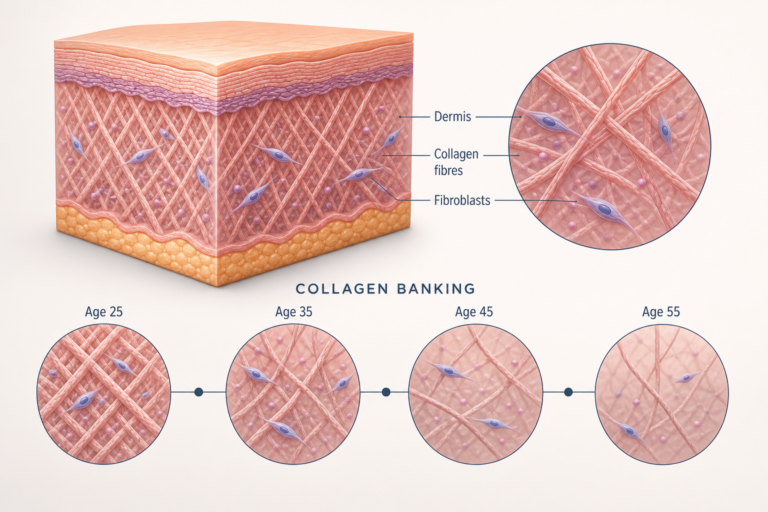
Microneedling — also called collagen induction therapy — uses fine needles to create controlled micro-injuries in the skin’s surface. These microchannels trigger the skin’s natural wound-healing response, stimulating collagen and elastin production over the following weeks. The treatment is used to address fine lines, acne scarring, uneven skin texture, enlarged pores, and general skin quality concerns.
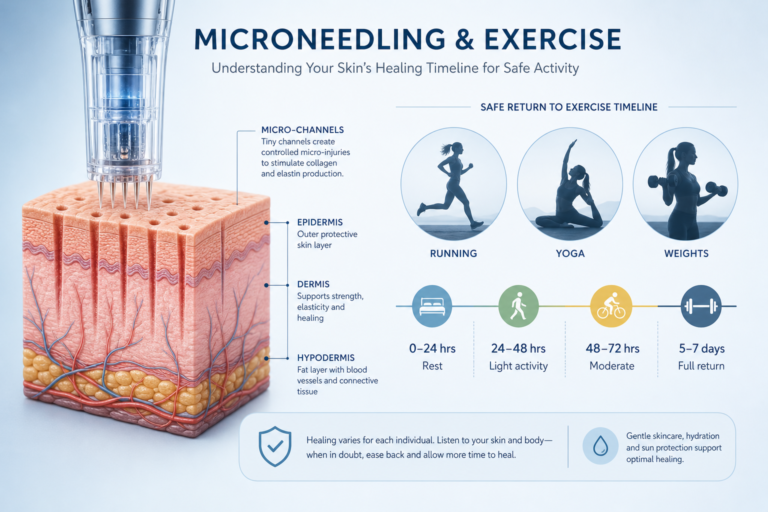
Immediately after treatment, the skin enters an acute inflammatory phase. The micro-channels created during the session temporarily disrupt the stratum corneum — the outermost protective layer of the skin — and significantly increase skin permeability. This is both the mechanism behind microneedling’s effectiveness and the reason post-treatment skincare choices require more care than usual. Ingredients that would sit largely on the surface in a normal routine can now penetrate to deeper skin layers, which amplifies both their benefits and their potential to cause irritation.
The depth of needle penetration matters considerably. Professional microneedling treatments typically use needle depths of 1.0–2.5 mm depending on the treatment area and concern being addressed. At-home dermarollers generally operate at 0.2–0.5 mm. Deeper professional treatments create a more significant barrier disruption and a longer skin sensitivity window, which is why the aftercare guidance from a professional clinic may differ from general advice found online.
Why Timing Matters: The Science of Increased Skin Permeability
Research has demonstrated that microneedling measurably increases the permeability of the skin to topical preparations, including niacinamide formulations. This is not simply a theoretical concern — it means that a serum applied within the first 24–48 hours after treatment will penetrate significantly more deeply and in greater quantities than the same product applied to intact skin. For a gentle, well-tolerated ingredient like hyaluronic acid, this is largely beneficial. For an active ingredient like niacinamide, it means that even a moderate concentration could behave more like a high-dose application on sensitized tissue.
The skin sensitivity window — the period during which the barrier remains compromised and permeability is elevated — typically lasts between 24 and 72 hours after professional microneedling. During this window, the skin is also more reactive to fragrance, alcohol, and any ingredient with even mild exfoliating or acidic properties. Applying niacinamide too early does not guarantee a reaction, but it does meaningfully increase the risk of stinging, flushing, or prolonged redness, particularly at concentrations above 5%.
The commonly cited 72-hour waiting period reflects a conservative but clinically sensible approach for professional-depth treatments. Some practitioners suggest 48 hours may be sufficient for shallower treatments or for patients with robust skin, while others recommend waiting the full 72 hours as a standard precaution. The right answer depends on needle depth, individual skin sensitivity, and how the skin is responding in the hours after treatment. When in doubt, following the specific guidance of the practitioner who performed the treatment is always the most appropriate course of action.
Benefits of Niacinamide After Microneedling
Niacinamide — also known as nicotinamide or vitamin B3 — is a water-soluble ingredient with a well-established evidence base in dermatology. Its relevance in a post-microneedling skincare routine goes beyond general skin health; several of its mechanisms are directly useful during the healing process.
Skin Barrier Repair
One of niacinamide’s most clinically relevant properties is its ability to support ceramide production in the skin. Ceramides are lipid molecules that form a critical part of the skin barrier, helping to retain moisture and protect against environmental irritants. Microneedling temporarily disrupts this barrier, and niacinamide’s role in ceramide synthesis means it can actively support skin barrier repair during recovery rather than simply sitting passively on the surface. This makes it a more purposeful post-treatment ingredient than many general moisturizing agents.
Calming Redness and Inflammation
Niacinamide has well-documented anti-inflammatory properties. After microneedling, some degree of redness and mild swelling is expected and is part of the normal healing cascade. Niacinamide does not suppress this healing response, but it may help moderate excessive or prolonged inflammation once the initial acute phase has passed. For patients who tend to experience extended post-treatment redness, introducing a low-concentration niacinamide serum from around day three onwards may help the skin settle more comfortably.
Post-Inflammatory Hyperpigmentation Prevention
Post-inflammatory hyperpigmentation (PIH) is a significant concern after microneedling, particularly for individuals with medium to darker Fitzpatrick skin types. PIH occurs when inflammation triggers excess melanin production, leaving darker patches in areas where the skin was injured or irritated. Niacinamide helps reduce PIH through a different mechanism than exfoliating brighteners: it inhibits the transfer of melanosomes (melanin-containing structures) from melanocytes to surrounding skin cells, reducing visible pigmentation without relying on exfoliation or acids.
This distinction is clinically important. Exfoliating brighteners such as glycolic acid or high-dose vitamin C can themselves cause irritation on post-treatment skin, potentially worsening inflammation and increasing PIH risk. Because niacinamide does not rely on exfoliation to reduce visible pigmentation, it can be introduced during the early recovery phase without the risk of worsening PIH that exfoliating brighteners can create in higher-melanin clients. For anyone with a history of PIH or a Fitzpatrick skin type of III or above, niacinamide is often one of the most strategically valuable ingredients in the post-microneedling period.
Sebum Regulation and Pore Appearance
Niacinamide has been shown to help regulate sebum production, which can be beneficial for oily or acne-prone skin types recovering from microneedling. Excess sebum during the healing phase can contribute to congestion in the microchannels, so an ingredient that moderates oil production without being harsh or comedogenic is a practical addition to the post-treatment routine once the skin has stabilized.
Collagen Support and Skin Quality
Niacinamide may contribute to collagen support through its role in cellular energy metabolism and its antioxidant activity. While microneedling itself is the primary driver of collagen induction therapy, niacinamide’s complementary role in supporting skin quality over the longer term makes it a sensible ingredient to incorporate into an ongoing post-series routine rather than just the immediate recovery period.
What Concentration of Niacinamide Is Safe After Microneedling?
Concentration is one of the most important variables when using niacinamide after microneedling. Because increased skin permeability means ingredients penetrate more effectively, a product that is well tolerated in a standard routine may behave differently on freshly treated skin.
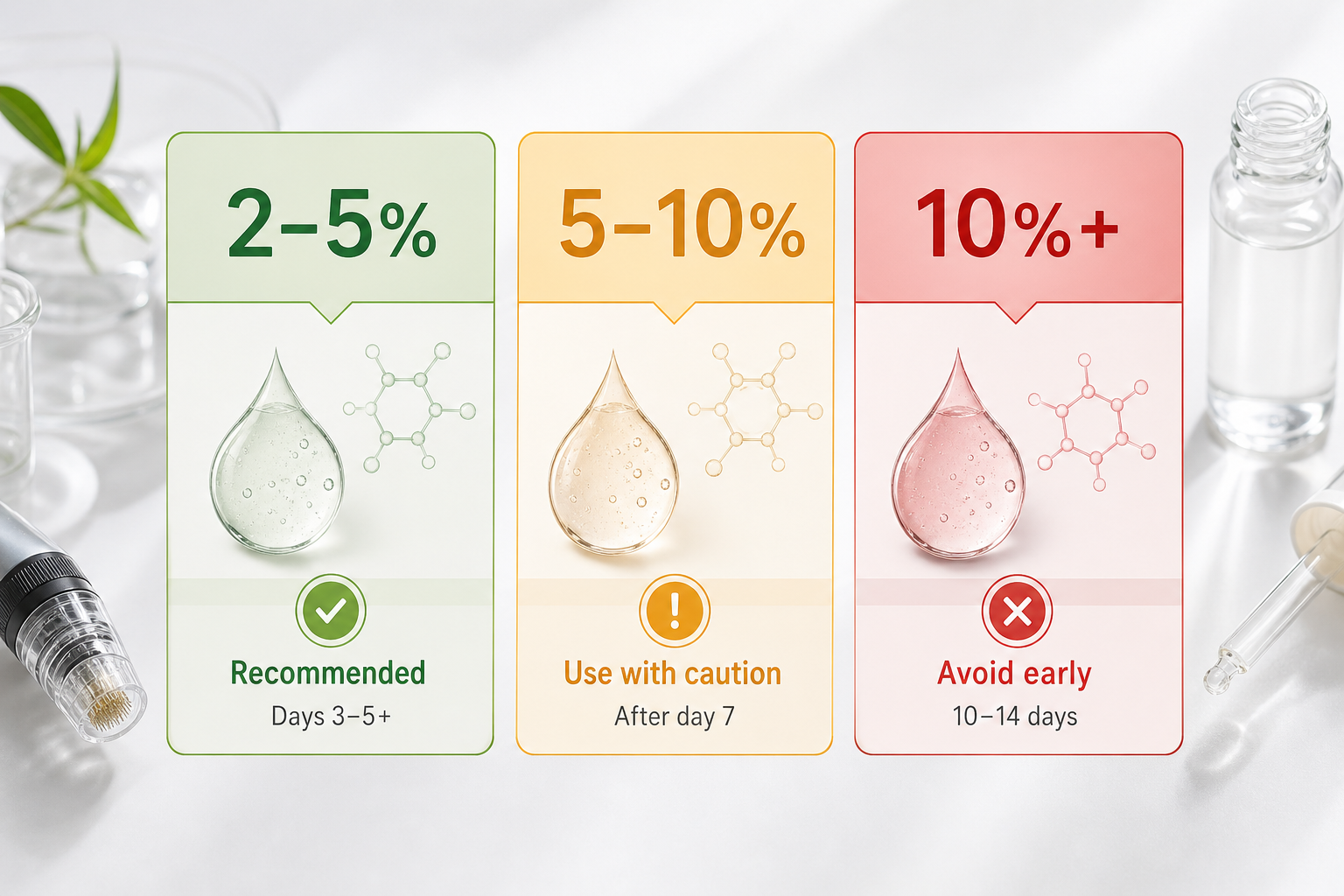
A low-concentration niacinamide formula in the range of 2–5% is generally considered appropriate for the early post-treatment period, typically from around day three onwards. At this concentration, niacinamide delivers meaningful barrier-supporting and anti-inflammatory benefits without the risk of the flushing or stinging that can occur at higher doses on sensitized skin. Formulations at 10% or above are best avoided until the skin has fully recovered — usually after 10–14 days for professional-depth treatments — and even then, reintroducing gradually is advisable.
Some formulations combine niacinamide with zinc, typically zinc PCA or zinc gluconate. This combination may offer additional anti-inflammatory and sebum-regulating benefits, and the zinc component does not appear to increase irritation risk on post-treatment skin. If a niacinamide and zinc formula is part of your regular routine, checking that the niacinamide concentration falls within the 2–5% range before reintroducing it post-treatment is a sensible precaution.
Fragrance-free and alcohol-free formulations are strongly preferable during the recovery period. Both fragrance and alcohol can cause significant irritation on compromised skin, and even products that are normally well tolerated may cause reactions when the skin barrier is disrupted.
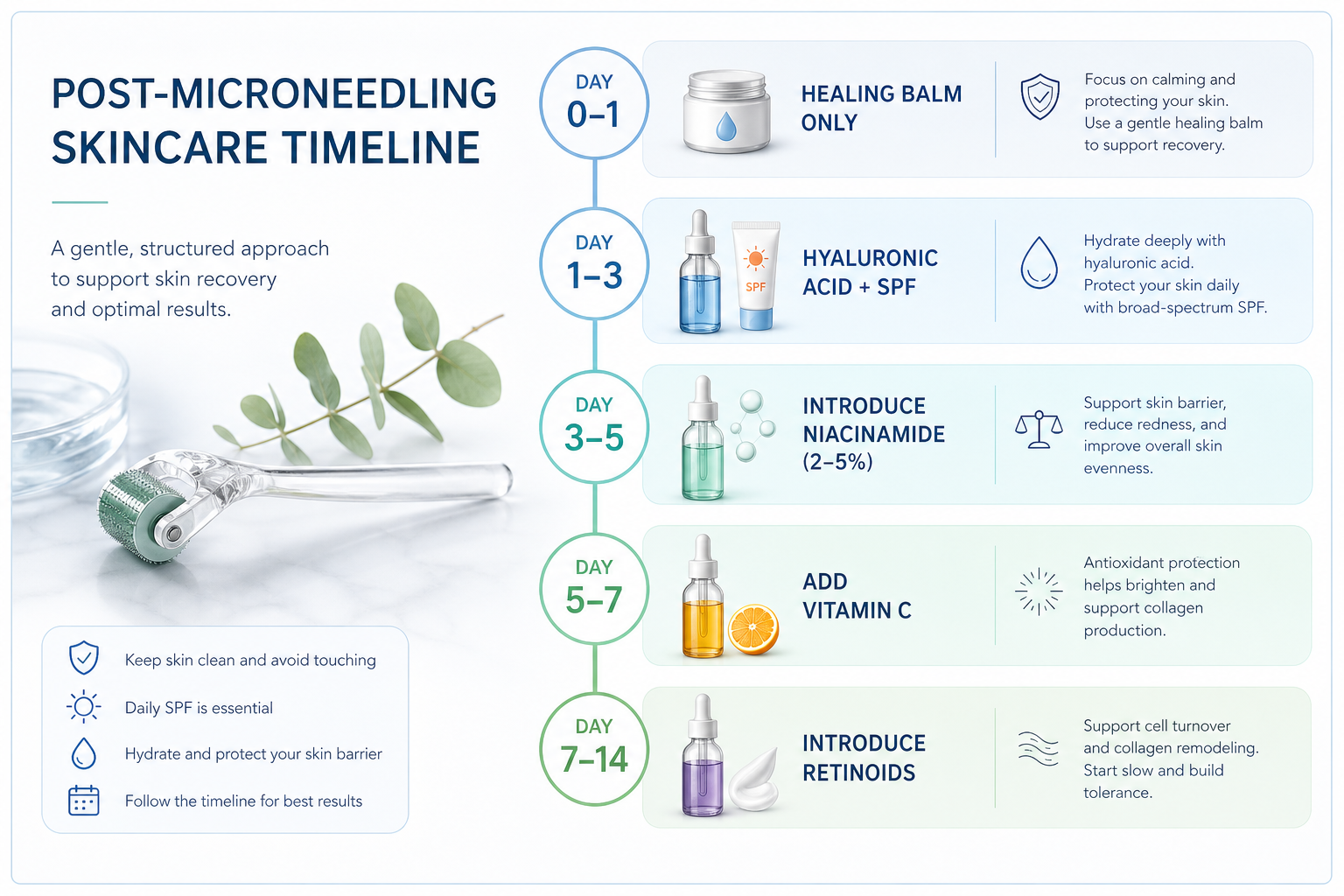
Post-Microneedling Skincare Routine: A Day-by-Day Timeline
The following timeline reflects general guidance for professional microneedling treatments at standard clinical depths. Individual recovery varies, and the specific advice of the treating practitioner should always take precedence.
| Timeframe | Skin Status | Recommended Approach | Ingredients to Avoid |
|---|---|---|---|
| Day 0–1 | Acute inflammation; microchannels open; barrier significantly disrupted | Gentle saline rinse or plain water; practitioner-recommended healing balm or growth factor serum only | All actives, fragrance, alcohol, acids, retinoids, vitamin C, niacinamide |
| Day 1–3 | Early healing; skin sensitivity window still active; redness and mild swelling normal | Hyaluronic acid serum (fragrance-free); gentle ceramide moisturizer; mineral SPF during the day | Retinoids, AHAs, BHAs, vitamin C, niacinamide, fragrance, alcohol |
| Day 3–5 | Barrier beginning to stabilize; redness reducing; skin may feel tight or dry | Introduce low-concentration niacinamide (2–5%); continue hyaluronic acid layering and ceramide moisturizer; mineral SPF | Retinoids, AHAs, BHAs, high-dose vitamin C, fragrance |
| Day 5–7 | Skin largely settled; surface texture may appear slightly uneven as healing continues | Vitamin C (L-ascorbic acid at low concentration, or gentler derivatives such as ascorbyl glucoside) may be cautiously reintroduced | Retinoids, strong AHAs/BHAs |
| Day 7–14 | Surface recovery largely complete; deeper remodelling ongoing | Gradual reintroduction of retinoids at low strength; resume full routine if skin is comfortable | Monitor for sensitivity; patch test before reintroducing stronger actives |
Signs You May Be Introducing Niacinamide Too Soon
Even with a 72-hour waiting period, individual skin responses vary. Knowing what to watch for when reintroducing niacinamide can help you avoid prolonging the recovery period unnecessarily.
- Stinging or burning on application: A brief, mild tingling can occur with many serums on post-treatment skin, but persistent stinging that does not settle within a minute or two suggests the skin is not yet ready for the ingredient.
- Increased redness after application: Some redness is expected in the days after microneedling, but if applying niacinamide causes a noticeable increase in redness or warmth, this is a sign to wait another day or two before trying again.
- Flushing: Niacinamide at higher concentrations can cause a temporary flushing response even on intact skin. On sensitized post-treatment skin, this is more likely and more pronounced. If flushing occurs, switch to a lower-concentration formula or wait until the skin has recovered further.
- Prolonged tightness or discomfort: If the skin feels more uncomfortable after applying niacinamide than before, this is a signal to pause and allow more healing time.
If any of these signs appear, rinsing the product off gently with cool water and returning to a basic hyaluronic acid and moisturizer routine for another 24–48 hours is the appropriate response. There is no clinical benefit to pushing through irritation during the post-microneedling recovery period.
Skin-Type-Specific Considerations
General post-microneedling guidance does not account for the meaningful differences between skin types and conditions. The following considerations may be relevant depending on individual circumstances.
Sensitive Skin, Rosacea, and Eczema
Patients with rosacea, eczema, or chronically sensitive skin may have a more reactive baseline and a longer skin sensitivity window after microneedling. For these individuals, waiting the full 72 hours before introducing niacinamide — and starting at the lower end of the 2–5% concentration range — is particularly advisable. Centella asiatica (cica) and panthenol are complementary calming ingredients that can be used alongside niacinamide in this group, as both have a strong tolerability profile on sensitized skin.
Darker Fitzpatrick Skin Types and PIH Risk
For patients with Fitzpatrick skin types III–VI, the risk of post-inflammatory hyperpigmentation after microneedling is a primary clinical concern. In this context, niacinamide becomes one of the most strategically important post-treatment ingredients available. Its ability to inhibit melanosome transfer means it addresses the PIH pathway directly, without requiring exfoliation or acids that could themselves trigger further inflammation. Introducing niacinamide at day three to four — once the acute inflammatory phase has passed — and maintaining it consistently throughout the post-treatment period and between sessions may help reduce the likelihood of PIH developing.
Oily and Acne-Prone Skin
Niacinamide’s sebum-regulating properties make it a particularly useful post-treatment ingredient for oily or acne-prone skin types. After microneedling, the skin’s oil production may temporarily increase as part of the healing response. A 2–5% niacinamide serum introduced from day three can help moderate this without the risk of clogging microchannels or causing the irritation that salicylic acid or benzoyl peroxide would carry during the recovery window.
At-Home Microneedling vs. Professional Treatment
At-home dermarollers typically operate at needle depths of 0.2–0.5 mm, which creates a significantly shallower level of barrier disruption than professional clinical treatments. For at-home microneedling at these depths, some practitioners suggest that a 24–48 hour waiting period before reintroducing niacinamide may be sufficient, rather than the full 72 hours recommended for professional treatments. However, even at shallower depths, the skin’s permeability is still elevated, and starting with a low-concentration fragrance-free formula remains the appropriate approach.
How to Layer Niacinamide in Your Post-Treatment Routine
Once the 72-hour waiting period has passed and the skin appears ready, niacinamide can be introduced as part of a simple, structured post-microneedling skincare routine. The following layering sequence reflects standard skincare application principles, with product weights applied from lightest to heaviest.
- Gentle fragrance-free cleanser: Use lukewarm water and a mild, non-foaming cleanser. Avoid any cleansers containing AHAs, BHAs, or exfoliating particles.
- Hyaluronic acid serum: Apply to slightly damp skin. Hyaluronic acid layering before niacinamide helps maintain hydration and provides a cushioning effect on the skin surface.
- Low-concentration niacinamide serum (2–5%): Apply a small amount and allow it to absorb fully before the next step. Avoid rubbing or pressing firmly on the skin.
- Ceramide-rich moisturizer: A fragrance-free moisturizer containing ceramides, peptides, or panthenol helps seal in the previous layers and continues to support skin barrier repair.
- Mineral SPF (daytime only): A broad-spectrum mineral sunscreen is non-negotiable during the post-treatment period. Chemical sunscreen filters may cause irritation on sensitized skin; mineral formulations containing zinc oxide or titanium dioxide are generally better tolerated. Sun protection is particularly important for preventing PIH in patients with higher melanin levels.
Ingredients to Avoid After Microneedling
Understanding which ingredients to avoid is as important as knowing which ones to use. The following should be kept out of the post-microneedling skincare routine during the skin sensitivity window.
- Retinol and retinoids: Highly effective for skin renewal but too irritating for freshly treated skin. Reintroduce gradually after 7–14 days.
- AHAs (glycolic acid, lactic acid, mandelic acid): Exfoliating acids increase skin sensitivity and can disrupt the healing process. Avoid for at least 5–7 days.
- BHAs (salicylic acid): Oil-soluble and penetrating; particularly risky on skin with open microchannels. Avoid for at least 5–7 days.
- High-concentration vitamin C (L-ascorbic acid): Acidic pH can cause significant stinging on post-treatment skin. Gentler vitamin C derivatives may be reintroduced from around day five if tolerated.
- Benzoyl peroxide: Strongly oxidizing and potentially irritating; avoid during the recovery window.
- Fragrance and essential oils: Common sensitizers that carry a high risk of reaction on compromised skin.
- Alcohol-based toners or astringents: Drying and irritating; counterproductive during barrier repair.
Niacinamide’s Role in a Long-Term Post-Series Routine
Most microneedling treatment plans involve a series of sessions — commonly three to six treatments spaced four to six weeks apart — rather than a single appointment. Niacinamide is well suited to an ongoing role in this context. Between sessions, it can be used at the patient’s preferred concentration as part of a regular routine. In the days immediately following each subsequent session, the same reintroduction timeline applies: wait approximately 72 hours, begin at 2–5%, and reintroduce gradually.
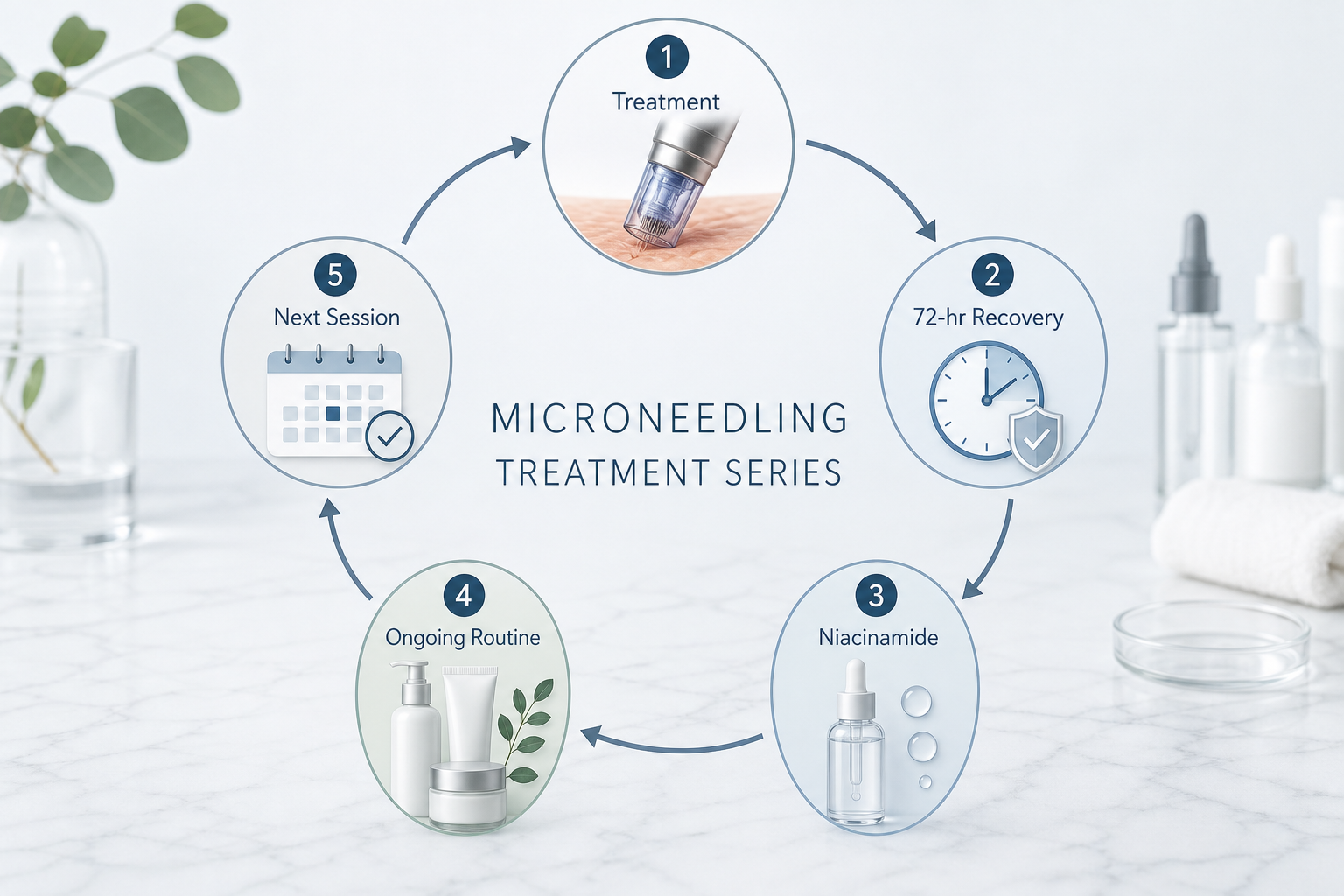
Over the course of a treatment series, consistent niacinamide use between sessions may contribute to cumulative improvements in skin tone, barrier function, and PIH prevention — complementing the collagen induction and skin remodelling effects of the microneedling itself. Discussing how niacinamide fits into the broader treatment plan with the treating practitioner allows the routine to be tailored to individual skin type, treatment depth, and specific concerns.
Frequently Asked Questions
Can I use niacinamide the same day as microneedling?
No. On the day of treatment and for approximately the first 24–72 hours, the skin’s microchannels remain open and permeability is significantly elevated. Applying niacinamide during this window increases the risk of irritation, stinging, and flushing. Stick to practitioner-recommended healing products and plain hyaluronic acid during the first one to three days.
Is 10% niacinamide safe after microneedling?
A 10% concentration is generally not recommended during the early post-treatment period. Because microneedling increases skin permeability, a 10% formula may behave more like a higher-dose application on sensitized skin, increasing the risk of flushing and irritation. A 2–5% formula is more appropriate until the skin has fully recovered, typically after 10–14 days for professional treatments.
Can I use niacinamide and hyaluronic acid together after microneedling?
Yes, and this is one of the most commonly recommended combinations for the post-treatment period. Hyaluronic acid provides immediate hydration and helps maintain moisture in the healing skin, while niacinamide supports barrier repair and reduces inflammation. Apply hyaluronic acid first, allow it to absorb, then apply niacinamide serum on top.
Does niacinamide help with redness after microneedling?
Niacinamide’s anti-inflammatory properties may help moderate redness once the acute post-treatment phase has passed. It is not appropriate to apply immediately after treatment, but from around day three onwards, a low-concentration niacinamide serum may help the skin settle and reduce the appearance of lingering redness.
Is niacinamide safe for darker skin tones after microneedling?
Niacinamide is considered one of the most appropriate post-microneedling ingredients for patients with darker Fitzpatrick skin types, precisely because of its role in inhibiting melanosome transfer and reducing the risk of post-inflammatory hyperpigmentation. Unlike exfoliating brighteners, it does not rely on acids or irritation to address pigmentation, making it safer to use during the inflammatory recovery phase.
What if I accidentally applied niacinamide too soon?
If niacinamide was applied within the first 24–48 hours and the skin reacts with stinging, increased redness, or flushing, rinse the product off gently with cool water and return to a basic routine of hyaluronic acid and a gentle moisturizer. Monitor the skin over the following 24 hours. If irritation persists or worsens, contact the clinic that performed the treatment for guidance.
Building a Post-Microneedling Routine That Works for Your Skin
Niacinamide is one of the most clinically useful ingredients available for the post-microneedling recovery period, but its benefits depend entirely on using it at the right time and in the right concentration. Waiting approximately 72 hours after professional treatment, starting with a 2–5% fragrance-free formula, and layering it over hyaluronic acid within a simple, gentle routine gives niacinamide the best opportunity to support barrier repair, reduce inflammation, and help prevent post-inflammatory hyperpigmentation — without adding unnecessary stress to skin that is already working hard to heal.
The guidance in this article reflects general best practice, but individual factors including treatment depth, skin type, and specific concerns can all influence the most appropriate approach. If you have had a professional microneedling treatment or are planning one, discussing your post-treatment skincare routine — including when and how to reintroduce actives like niacinamide — with your treating practitioner will ensure the advice is tailored to your skin and your treatment plan.