Chemical Peel Aftercare: Your Complete Post-Peel Skin Recovery Guide
A chemical peel works by creating a controlled skin injury that prompts the body to shed damaged surface cells and stimulate fresh cell turnover. What happens in the days that follow — how you cleanse, protect, and hydrate your skin — determines how well you heal and how significant your results will be. This guide covers everything you need to know about chemical peel aftercare, from the first hours post-treatment through the full recovery timeline, including skin-type-specific advice, a phased guide to reintroducing active ingredients, and clear warning signs that warrant a call to your provider.
Key Takeaways
- Post-peel skin recovery varies by peel depth: superficial peels typically resolve in 3–7 days, medium-depth peels in 7–14 days, and deep peels may require several weeks of careful aftercare.
- The three non-negotiable pillars of chemical peel aftercare are gentle cleansing, consistent moisturisation, and daily broad-spectrum SPF 30 or higher — starting from day one.
- Do not pick or pull peeling skin under any circumstances; premature removal of shedding skin increases the risk of scarring and post-inflammatory hyperpigmentation (PIH).
- Active ingredients such as retinoids, AHAs, and BHAs should be avoided until the skin barrier has fully recovered, typically two to four weeks after treatment.
- Certain skin types — particularly those with higher Fitzpatrick skin type ratings (IV–VI) — carry a greater risk of PIH and may benefit from a modified aftercare protocol discussed with their provider before treatment.
What to Expect After a Chemical Peel
Immediately after a chemical peel, most patients notice redness, warmth, and a sensation similar to mild sunburn. The intensity of these reactions depends on the peel depth. A superficial peel using glycolic acid or lactic acid may cause only mild pinkness and light flaking. A medium-depth peel — such as a TCA (trichloroacetic acid) peel or Jessner’s peel — typically produces more pronounced redness, swelling, and visible skin shedding. A deep phenol peel involves significant downtime, potential crusting, and a recovery period that can extend beyond two weeks.
Understanding that peeling and flaking are a normal and expected part of the healing process helps reduce anxiety during recovery. The skin is not damaged in a harmful sense; it is shedding naturally as part of the renewal cycle that the peel was designed to trigger. What looks worse in the first few days often signals that the treatment is working as intended.
Normal vs. Concerning Reactions
Distinguishing between expected post-peel responses and signs that require medical attention is one of the most important aspects of aftercare. The table below outlines what is generally considered normal and what warrants prompt contact with your provider.
| Normal Reaction | Seek Medical Advice If You Notice |
|---|---|
| Redness and warmth for 24–72 hours | Redness that worsens significantly after day 3 |
| Tightness and mild swelling | Severe swelling, especially around the eyes |
| Flaking and skin shedding from day 2 onward | Blistering or open sores |
| Mild itching as skin heals | Pus, yellow or green discharge, or oozing |
| Temporary darkening before peeling begins | Fever or throbbing pain |
| Dry, tight sensation after peeling subsides | Hives or signs of allergic reaction |
| Mild breakouts or skin purging | Cold sore reactivation (herpes simplex) |
If you experience any of the signs in the right-hand column, contact your dermatologist or treating provider promptly. Signs of infection after a chemical peel — particularly pus, fever, or spreading redness — should never be left unmonitored.
Chemical Peel Recovery Timeline
The recovery timeline varies depending on peel depth, the specific acid used, and individual skin characteristics. The following stages apply broadly to medium-depth peels, which represent the most common professional treatment. Superficial peels move through these stages more quickly, while deep peels progress more slowly.
Days 0–2: Immediate Post-Peel Phase
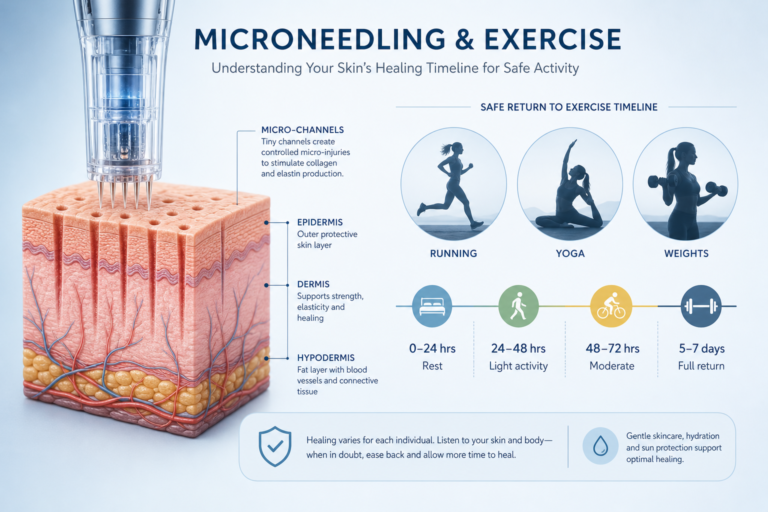
In the first 48 hours, the skin typically feels tight, sensitive, and warm. Visible peeling has not yet begun. The priority during this phase is to keep the skin calm and hydrated. Use only a fragrance-free, gentle cleanser with lukewarm water — never hot water, which can increase inflammation. Apply a bland, fragrance-free moisturiser generously and reapply throughout the day whenever the skin feels dry or tight. Avoid all makeup for at least the first 24 hours; if mineral makeup is permitted by your provider, it may be introduced cautiously after that point. Avoid intense exercise, saunas, steam rooms, and hot showers, as heat and sweating can irritate compromised skin and increase the risk of infection.
Days 2–7: Active Peeling Phase
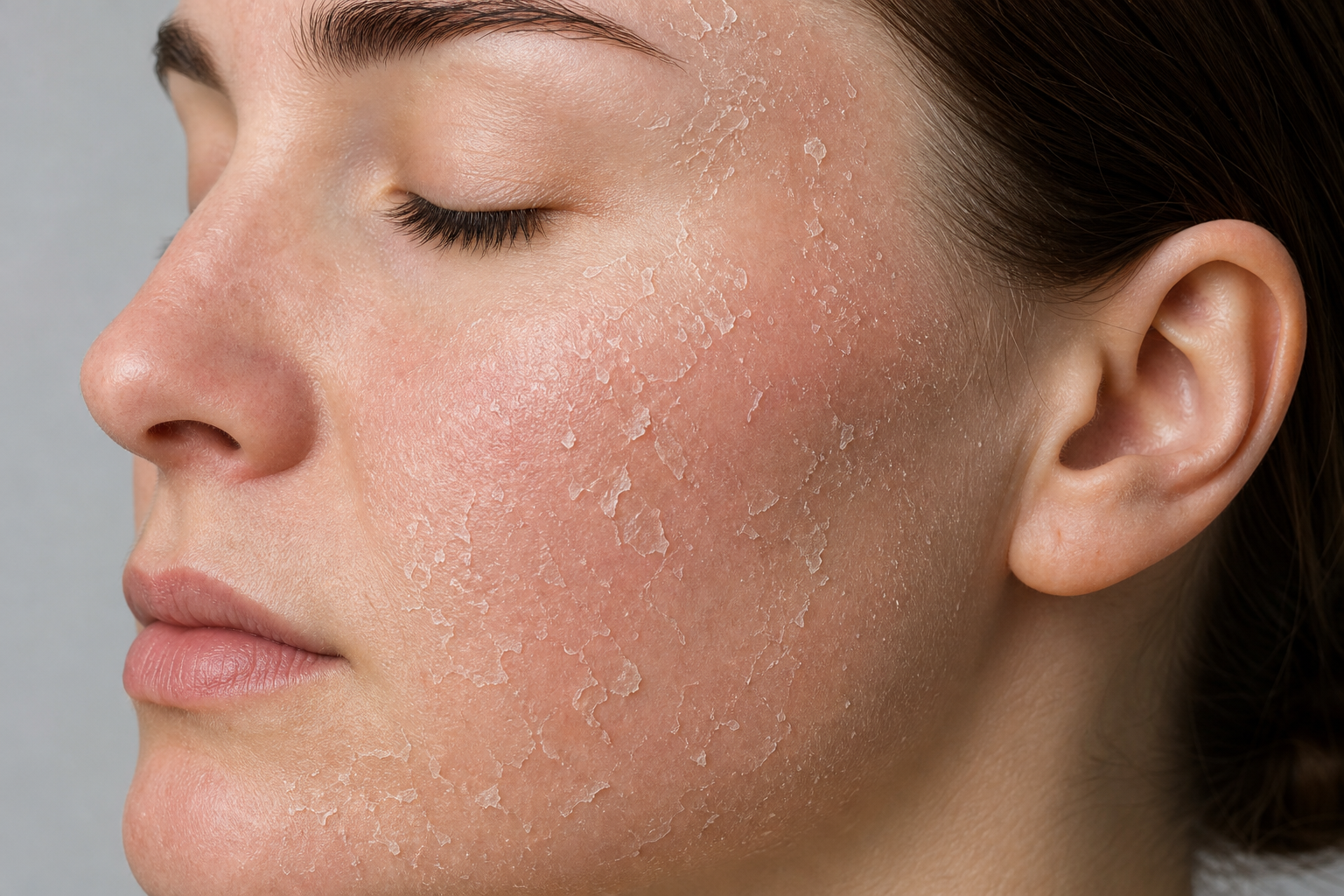
Visible flaking and skin shedding typically begin around day two and peak between days three and five. This is the phase that most patients find challenging, both physically and psychologically. The skin may appear patchy, darker in some areas, and visibly peeling. It is critical during this stage to do not pick or pull peeling skin, regardless of how tempting it may be. Premature removal of shedding skin can disrupt the healing dermis beneath, increasing the risk of scarring and post-inflammatory hyperpigmentation. Continue gentle cleansing twice daily, apply moisturiser liberally, and begin applying a broad-spectrum SPF 30 or higher every morning if you need to go outdoors. Avoid waxing, threading, or any hair removal procedures on treated areas during this phase.
Days 7–14: New Skin Emergence
By the end of the first week, most of the visible peeling has resolved for superficial and lighter medium-depth peels. The new skin underneath is fresh, sensitive, and more vulnerable to UV damage than usual. Redness may persist, particularly in patients with fair skin, but should gradually diminish. Sun protection becomes even more important during this phase because newly revealed skin has reduced melanin protection and is at heightened risk of UV-induced hyperpigmentation. Continue using a mineral sunscreen daily and avoid direct sun exposure where possible. Most patients can return to their regular social activities by this point, though the skin may still appear slightly pink or feel sensitive to touch.
Weeks 2–4 and Beyond: Full Recovery
For medium-depth peels, the skin barrier is generally considered recovered by weeks two to four. Deep peels may require a longer recovery window, and some residual redness can persist for several weeks. Body peels — applied to the chest, hands, back, or legs — often take longer to heal than facial peels, sometimes up to three weeks, because skin cell turnover is slower on the body. During this phase, collagen production continues beneath the surface, and the full aesthetic results of the peel — improved texture, tone, and clarity — typically become visible between four and eight weeks after treatment.
Essential Chemical Peel Aftercare Steps
1. Cleanse Gently and Consistently
Use a pH-balanced, fragrance-free, gentle cleanser twice daily throughout the recovery period. Avoid foaming cleansers with sulphates, exfoliating cleansers, or any product containing active acids. Wash with lukewarm water — not hot — and pat the skin dry with a clean, soft cloth. Do not rub or scrub the skin at any point during recovery.
2. Moisturise Frequently
Keeping the skin consistently hydrated is one of the most effective ways to support skin barrier repair and reduce discomfort during peeling. Choose a bland, fragrance-free moisturiser or a barrier-repair formulation. Ingredients such as hyaluronic acid, panthenol, ceramides, and glycerin are well-tolerated and support healing. A hyaluronic acid serum applied before moisturiser can provide additional hydration, particularly if the skin feels very tight. Reapply moisturiser as often as needed throughout the day — there is no upper limit during active recovery.
3. Apply Broad-Spectrum Sunscreen Every Day
Sun protection is non-negotiable after a chemical peel. Post-peel skin is significantly more sensitive to UV radiation, and unprotected sun exposure during recovery is one of the leading causes of post-inflammatory hyperpigmentation and uneven results. Apply a broad-spectrum SPF 30 or higher every morning, even on overcast days or when spending most of the day indoors near windows. A mineral sunscreen containing zinc oxide or titanium dioxide is often preferred in the immediate post-peel period because it sits on the skin’s surface rather than being absorbed, reducing the risk of irritation. Reapply every two hours if outdoors.
4. Avoid All Active Ingredients Until Healed
Retinoids, glycolic acid, salicylic acid, and other AHAs and BHAs should be completely avoided until the skin has finished peeling and the barrier has recovered. Using these ingredients on compromised post-peel skin can cause significant irritation, prolonged redness, and increased sensitivity. Bleaching or brightening creams containing hydroquinone should also be paused unless specifically directed by your provider. When in doubt, use only the products recommended by your treating clinician during the recovery window.
5. Protect the Skin from Heat and Physical Trauma
Avoid hot showers, saunas, steam rooms, and intense exercise for at least 48 hours after treatment, and longer if the skin is still actively peeling. Heat increases blood flow to the skin surface, which can worsen redness and swelling. Physical trauma — including rubbing, scrubbing, or applying pressure to peeling areas — risks disrupting the healing process. Swimming in chlorinated pools or the sea should also be avoided for at least 24–48 hours, as both chlorine and salt water can irritate post-peel skin.
Reintroducing Active Ingredients: A Phased Schedule
One of the most common questions after a chemical peel is when it is safe to reintroduce active skincare ingredients. Most aftercare guides advise waiting two to four weeks, but a phased approach gives clearer practical guidance. The schedule below is a general framework; always follow your provider’s specific instructions, as the appropriate timeline depends on peel depth and individual healing.
| Week | Recommended Routine |
|---|---|
| Week 1 | Gentle cleanser, fragrance-free moisturiser, and broad-spectrum SPF only. No actives, no serums beyond plain hyaluronic acid if tolerated. |
| Week 2 | Continue the above. If peeling has resolved, a gentle hydrating serum (HA, panthenol, or peptides) may be introduced. Continue to avoid all acids and retinoids. |
| Weeks 3–4 | If the skin feels comfortable and barrier function appears restored, a low-concentration vitamin C serum may be reintroduced cautiously. Continue SPF daily. |
| Week 4 and beyond | Discuss reintroducing retinoids, AHAs, or BHAs with your provider. Start at the lowest concentration and monitor for sensitivity. Avoid waxing and hair dye on treated areas for at least three weeks post-peel. |
Hair dye applied to the face, neck, or scalp area within three weeks of a facial peel can cause significant irritation to skin that has not yet fully recovered. This restriction is often overlooked but is worth planning around if you colour your hair regularly.
Aftercare by Skin Type
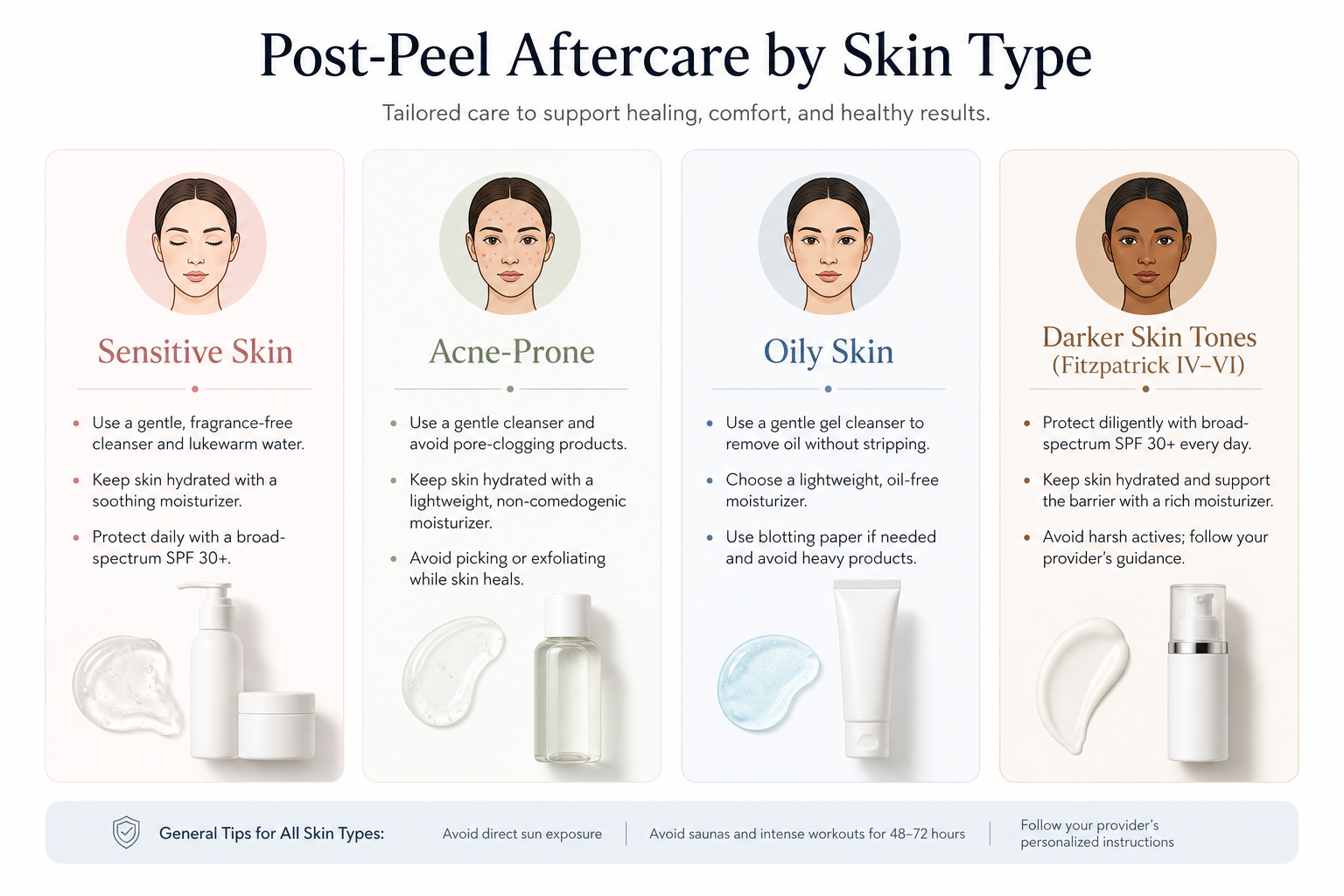
Standard aftercare principles apply to all patients, but certain skin types benefit from additional considerations. The table below outlines key modifications for common skin profiles.
| Skin Type | Key Aftercare Considerations |
|---|---|
| Sensitive skin | Use the most minimal product routine possible. Avoid fragrance, alcohol, and essential oils in all products. Introduce any new product one at a time after recovery. |
| Acne-prone skin | Avoid heavy occlusive moisturisers that may block pores. Choose non-comedogenic, lightweight formulations. Do not use acne treatments (benzoyl peroxide, salicylic acid) until fully healed. |
| Oily skin | Hydration is still essential even if the skin feels oily. Use a lightweight, oil-free moisturiser. Avoid mattifying products with alcohol during recovery. |
| Darker skin tones (Fitzpatrick IV–VI) | PIH risk is significantly higher. Strict sun avoidance and daily mineral SPF are essential. Discuss pre- and post-peel use of tyrosinase inhibitors (e.g., azelaic acid, kojic acid) with your provider. Avoid any heat-based activities that may trigger inflammation. |
Patients with a higher Fitzpatrick skin type should discuss their specific PIH risk with their provider before undergoing any peel. In many cases, a pre-treatment priming protocol and a carefully selected peel depth can significantly reduce this risk, but the aftercare period remains critical for preventing unwanted pigmentation changes.
Nutrition, Hydration, and Lifestyle During Recovery
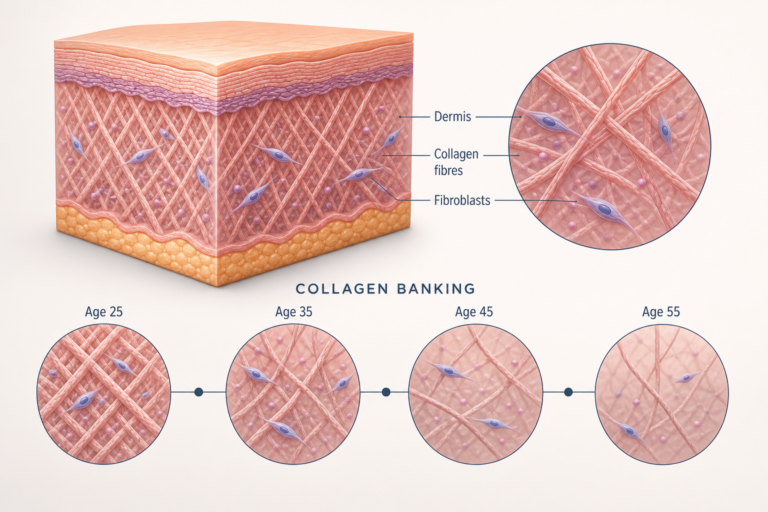
Internal recovery supports external healing. Drinking adequate water throughout the day helps maintain skin hydration from within, which is particularly relevant when the skin barrier is temporarily compromised. An antioxidant-rich diet — including berries, leafy greens, nuts, and oily fish — provides nutrients that support collagen production and tissue repair. Vitamin C from dietary sources supports the collagen synthesis that a chemical peel is designed to stimulate.
Alcohol should be avoided or minimised during the first week of recovery, as it is dehydrating and can dilate blood vessels, potentially worsening post-peel redness. Smoking impairs wound healing and reduces skin oxygenation; avoiding smoking during the recovery period supports better outcomes. These lifestyle factors are rarely discussed in standard aftercare guides but can meaningfully influence how quickly and effectively the skin recovers.
At-Home Peels vs. Professional Peels: Aftercare Differences
At-home chemical peels use lower acid concentrations than professional treatments and generally cause minimal visible peeling. However, the same core aftercare principles apply: gentle cleansing, consistent moisturisation, and daily SPF. Because at-home peels are self-administered without clinical supervision, it is especially important to follow product instructions precisely, avoid layering multiple active ingredients, and discontinue use if significant irritation develops. At-home peels should not be used on broken, sunburned, or recently waxed skin.
Professional peels administered by a qualified clinician involve a pre-treatment assessment, a controlled application process, and post-treatment monitoring. The aftercare instructions provided by your clinician take precedence over general guidance, as they are tailored to the specific peel used, the depth achieved, and your individual skin profile.
Combining Peels with Other Treatments
A common question that most aftercare articles do not address is when it is safe to resume other aesthetic treatments after a chemical peel. As a general guide, microneedling, laser treatments, and IPL (intense pulsed light) should typically be avoided for at least four to six weeks after a medium-depth peel, and longer after a deep peel. Combining treatments too soon can overwhelm the skin’s healing capacity and increase the risk of prolonged redness, PIH, or scarring. Always discuss the timing of combination treatments with your provider, who can assess your skin’s recovery and advise on the safest interval between procedures.
Frequently Asked Questions
How long does skin peel after a chemical peel?
Visible peeling typically begins around day two and lasts between three and seven days for superficial peels. Medium-depth peels may involve peeling that continues for up to ten days. Deep peels can involve a longer shedding phase. The duration depends on peel depth, the specific acid used, and individual skin characteristics.
Is it normal for skin to look worse before it looks better?
Yes. During the active peeling phase, the skin often appears patchy, uneven, and temporarily worse than before treatment. This is a normal part of the healing process. The new skin emerging beneath the shedding layers is the skin that will reflect the peel’s results. Most patients see a meaningful improvement in texture and tone once peeling has fully resolved, typically by the end of week two.
Can I wear makeup after a chemical peel?
Most providers recommend avoiding all makeup for at least 24 hours after a superficial peel and longer after medium or deep peels. When makeup is reintroduced, mineral formulations are generally better tolerated than liquid foundations containing potential irritants. Always check with your provider before applying any cosmetic product to healing skin.
When should I call my dermatologist after a chemical peel?
Contact your provider promptly if you notice signs of infection after a chemical peel — including pus, yellow or green discharge, fever, or throbbing pain — or if you develop blistering, open sores, hives, or a cold sore outbreak. Redness or swelling that worsens significantly after the first 72 hours rather than improving also warrants professional assessment.
Can I exercise after a chemical peel?
Intense exercise that causes significant sweating should be avoided for at least 48 hours after treatment. Sweat on compromised post-peel skin can cause stinging, increase inflammation, and introduce bacteria to areas where the skin barrier is temporarily disrupted. Light walking is generally acceptable, but high-intensity workouts, hot yoga, and similar activities should be postponed until the skin has stabilised.
How do I prevent hyperpigmentation after a chemical peel?
Strict sun protection is the single most important measure for preventing post-inflammatory hyperpigmentation. Apply a broad-spectrum mineral sunscreen every morning, avoid direct sun exposure during peak UV hours, and wear protective clothing or a wide-brimmed hat when outdoors. Patients with darker Fitzpatrick skin types should discuss additional preventive measures — such as a post-peel tyrosinase inhibitor — with their provider before treatment begins.
When can I reintroduce retinol after a chemical peel?
Retinoids should generally be avoided for a minimum of two to four weeks after a chemical peel, and only reintroduced once the skin has fully stopped peeling and feels comfortable. After a deep peel, the waiting period may be longer. When reintroducing retinol, start with the lowest available concentration and use it every two to three nights initially, monitoring for any signs of irritation before increasing frequency.
Making the Most of Your Post-Peel Recovery
Chemical peel aftercare is not a passive process — the choices you make during recovery directly influence your results. Patients who follow a consistent routine of gentle cleansing, thorough moisturisation, and daily broad-spectrum sun protection tend to heal more smoothly and achieve more even outcomes than those who skip steps or reintroduce active ingredients too soon. Equally important is resisting the urge to interfere with skin shedding naturally; allowing the skin to shed on its own timeline protects the delicate new skin forming beneath and significantly reduces the risk of scarring or pigmentation changes.
If you are planning a chemical peel or have recently had one, the most valuable step you can take is to maintain open communication with your treating clinician. Recovery does not always follow a perfectly predictable path, and a qualified provider can reassess your skin, adjust your aftercare protocol if needed, and advise on when it is safe to reintroduce treatments or active ingredients. A well-supported recovery is the foundation of the results a chemical peel is designed to deliver.