Collagen Banking: The Science of Preserving Collagen Long-Term
Collagen banking is one of the most discussed concepts in modern aesthetic medicine — and one of the most misunderstood. The term describes a proactive, long-term approach to preserving and stimulating collagen before visible signs of aging become established, rather than waiting to correct them later. This article explains what the science actually supports, which strategies have meaningful evidence behind them, what the realistic limitations are, and how to build a practical approach suited to your age and skin concerns.
Key Takeaways
- Collagen cannot literally be stored like a bank deposit — but building a stronger collagen baseline through consistent, evidence-based habits is a real and clinically supported goal.
- Collagen decline begins gradually from the mid-20s, accelerates with UV exposure, smoking, glycation, and hormonal changes, and becomes most dramatic in the years following menopause.
- The most evidence-supported strategies combine broad-spectrum SPF daily, topical retinoids, vitamin C, and professional collagen stimulating treatments such as microneedling or RF microneedling.
- Starting earlier produces a stronger baseline, but meaningful improvements in collagen density are achievable at any adult age with the right approach.
- A qualified aesthetic practitioner can help you design a protocol matched to your skin type, concerns, and realistic goals.
What Is Collagen Banking — and Does the Concept Hold Up?
Collagen banking is a term borrowed from financial language to describe the idea of investing in your skin’s collagen reserves early, so that you have more to draw on as natural collagen decline progresses. The metaphor is useful but imprecise: collagen cannot literally be deposited and withdrawn. What the concept actually describes is a strategy of prejuvenation — taking proactive steps to stimulate collagen synthesis, slow its breakdown, and protect the extracellular matrix before significant structural loss has occurred.
The science behind the principle is well established even if the marketing language around it is not. Fibroblasts, the specialised cells in the dermis responsible for producing collagen, become less active with age. The extracellular matrix — the structural scaffolding of the skin made up largely of Type I and Type III collagen fibres — gradually thins and loses organisation. By consistently applying strategies that stimulate fibroblast activity and reduce collagen degradation, it is possible to maintain a higher collagen density over time than would occur without intervention. That is the realistic, evidence-supported version of collagen banking.
The Science of Collagen Decline
Collagen loss is not a sudden event — it is a slow, cumulative process driven by both intrinsic aging and extrinsic factors. Intrinsic aging refers to the genetically programmed decline in fibroblast activity that begins in the mid-20s, with research suggesting a loss of approximately 1–1.5% of dermal collagen per year from that point. Extrinsic aging — driven by UV radiation, pollution, smoking, poor diet, and chronic stress — accelerates this process significantly and accounts for the majority of visible skin aging in most people.
The most dramatic period of collagen decline for women occurs in the years immediately following menopause. Falling oestrogen levels directly impair fibroblast function, and studies suggest that up to 30% of dermal collagen may be lost within the first five years after menopause. This makes the perimenopausal and early postmenopausal period a particularly important window for collagen-focused intervention, though it is rarely given the dedicated attention it deserves in general skincare guidance.
At a cellular level, collagen degradation is driven partly by enzymes called matrix metalloproteinases (MMPs), which are upregulated by UV exposure and oxidative stress. Reactive oxygen species (ROS) generated by UV radiation and environmental pollution damage collagen fibrils directly and impair the fibroblasts that would otherwise repair them. Understanding these mechanisms helps explain why sun protection and antioxidant strategies are not optional extras in a collagen banking approach — they are foundational.
What Destroys Collagen Faster
Before focusing on what builds collagen, it is worth understanding what accelerates its loss. Several modifiable factors significantly increase the rate of collagen degradation beyond normal intrinsic aging:
-
- UV radiation and photoaging: Chronic sun exposure is the single largest driver of extrinsic collagen loss. UVA and UVB radiation both upregulate MMPs and generate oxidative stress that damages the extracellular matrix. Photoaging accounts for the majority of premature skin aging in most adults.
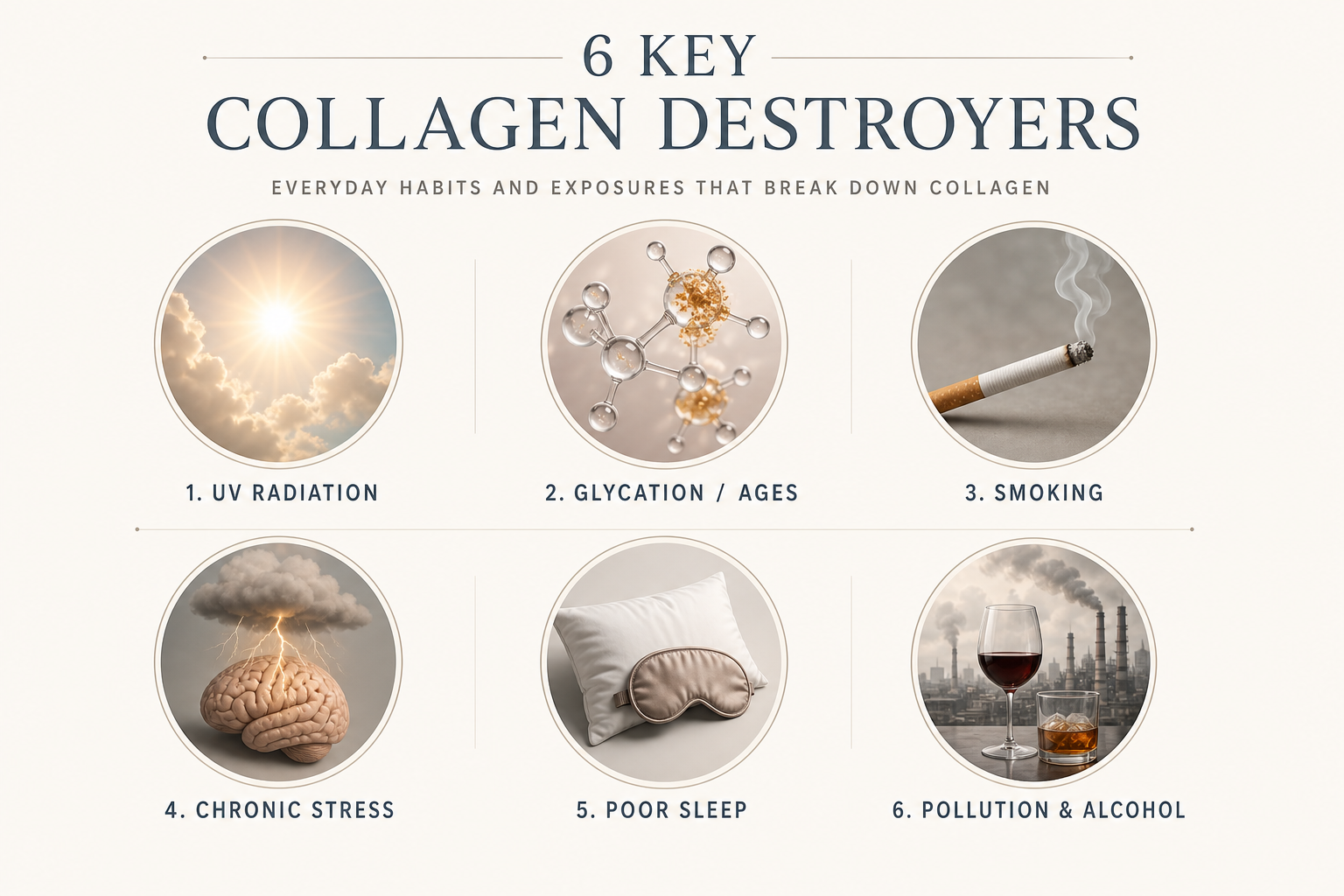
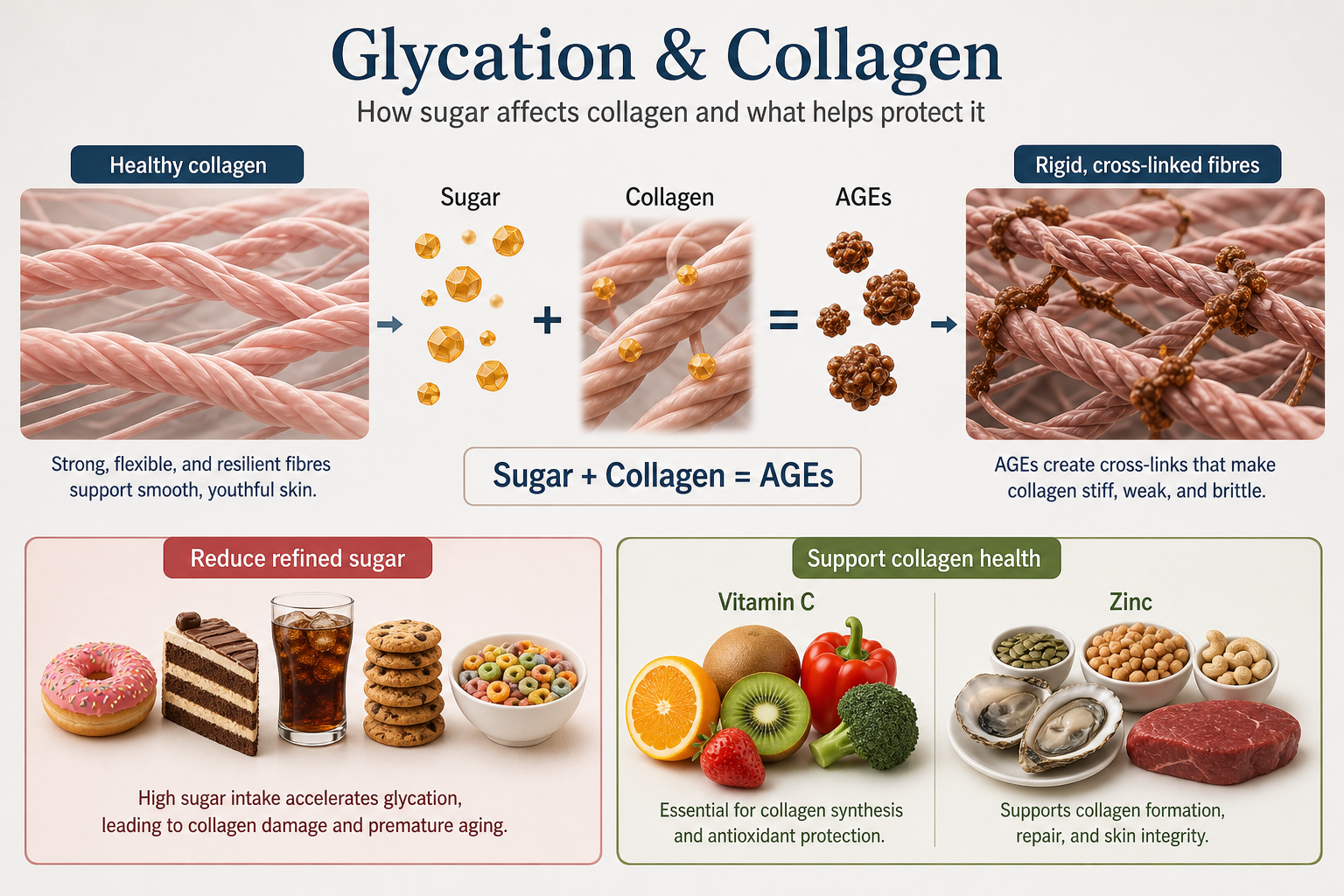
- Glycation and advanced glycation end products (AGEs): When excess glucose in the bloodstream binds to collagen fibres, it creates AGEs — cross-linked, stiffened collagen structures that are resistant to normal remodelling. A high-sugar, high-refined-carbohydrate diet accelerates glycation and contributes to loss of skin elasticity and firmness. This mechanism is underappreciated in most skincare discussions.
- Smoking: Tobacco smoke generates large quantities of free radicals, directly degrades collagen fibres, and impairs the microcirculation that delivers nutrients to fibroblasts. The effect on skin aging is measurable and significant.
- Chronic stress and elevated cortisol: Persistently elevated cortisol suppresses collagen synthesis and increases MMP activity. Chronic psychological stress has a documented negative effect on skin repair and collagen turnover.
- Poor sleep: Collagen synthesis and cellular repair peak during deep sleep. Consistently poor sleep quality disrupts the circadian rhythm of skin repair, reducing the skin’s ability to rebuild collagen overnight — a mechanism that deserves more attention than it typically receives.
- Alcohol and environmental pollution: Both generate oxidative stress that contributes to collagen degradation over time.
Topical Ingredients That Support Collagen Synthesis
Topical skincare cannot replace professional collagen stimulating treatments, but certain well-researched ingredients have meaningful evidence for supporting collagen synthesis and protecting existing collagen from degradation. The key is consistency and appropriate formulation rather than using every available ingredient simultaneously.
Retinoids
Retinoids — including over-the-counter retinol, retinaldehyde, and prescription tretinoin — are among the most extensively studied topical ingredients for collagen support. They work by binding to nuclear receptors in skin cells, upregulating collagen synthesis, stimulating fibroblast activity, and inhibiting the MMP enzymes that break collagen down. Prescription tretinoin has the strongest evidence base; retinol and retinaldehyde are effective but require conversion to the active form in the skin, making them somewhat less potent. Retinoids can cause initial irritation, dryness, and photosensitivity, so gradual introduction and consistent sun protection are essential. They are not suitable during pregnancy.
Vitamin C (L-Ascorbic Acid)
Vitamin C is an essential cofactor in collagen synthesis — without adequate ascorbic acid, fibroblasts cannot produce stable collagen fibres. Topically applied L-ascorbic acid also functions as a direct antioxidant, neutralising reactive oxygen species before they can damage the extracellular matrix. Clinical research supports its role in improving skin firmness and reducing photoaging when used consistently in a stable, appropriately concentrated formulation. Combining vitamin C with ferulic acid improves its stability and may enhance its antioxidant effect. Vitamin C is best applied in the morning, before broad-spectrum SPF.
Peptides
Peptides are short chains of amino acids that can signal fibroblasts to increase collagen production. Matrixyl (palmitoyl pentapeptide) and palmitoyl tripeptide are among the most studied peptide ingredients in cosmetic formulations, with some evidence supporting improvements in skin texture and fine lines. The evidence for topical peptides is less robust than for retinoids or vitamin C, but they are generally well tolerated and may be a useful addition for those who cannot use retinoids.
Broad-Spectrum SPF
Daily broad-spectrum SPF is arguably the single most important collagen banking habit. Preventing UV-induced MMP upregulation and oxidative stress is far more effective than trying to repair the damage afterwards. SPF 30 or higher, applied every morning regardless of weather or season, is the consistent recommendation across dermatological guidance. No topical ingredient or professional treatment can fully compensate for unprotected sun exposure over time.
Hyaluronic Acid and Supporting Ingredients
Hyaluronic acid does not directly stimulate collagen synthesis, but it maintains the hydrated environment in which fibroblasts function optimally. Niacinamide supports the skin barrier and has some evidence for reducing the appearance of fine lines. Bakuchiol, a plant-derived retinol alternative, has emerging evidence for collagen support with lower irritation potential, making it a reasonable option for sensitive skin or those who cannot tolerate retinoids.
Professional Collagen Stimulating Treatments
In-clinic treatments can stimulate collagen remodelling at a depth and intensity that topical skincare cannot reach. They work by creating controlled stimuli — whether mechanical, thermal, or chemical — that trigger the skin’s wound-healing response and activate fibroblasts to produce new collagen. The following treatments have the strongest evidence base for collagen stimulation.
Microneedling
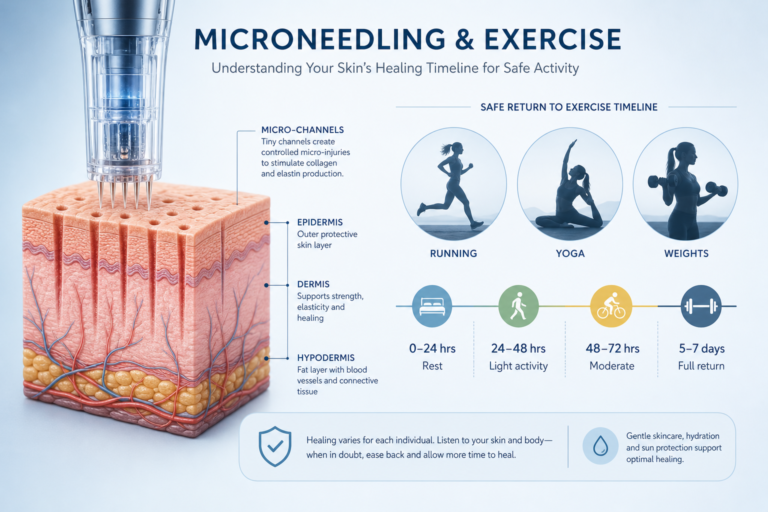
Microneedling uses fine needles to create controlled micro-channels in the dermis, triggering a wound-healing cascade that stimulates collagen and elastin production. Multiple sessions are typically required, and results develop gradually over several months as new collagen matures. Microneedling is suitable for a range of skin tones and concerns, including fine lines, skin texture, and early laxity. Downtime is usually limited to redness and mild swelling for 24–48 hours. Home microneedling devices are available but carry risks of infection and inconsistent depth control; professional treatment in a clinical setting is significantly safer and more effective.
RF Microneedling
RF microneedling combines the micro-channel stimulus of standard microneedling with radiofrequency energy delivered directly into the dermis. The heat generated by radiofrequency causes immediate collagen contraction and triggers a sustained collagen remodelling response over several months. This dual mechanism makes RF microneedling one of the more effective non-surgical options for skin tightening and collagen stimulation, particularly for mild to moderate laxity. It requires more downtime than standard microneedling — typically several days of redness and swelling — and is generally performed in a series of two to four sessions.
Radiofrequency Skin Tightening
Standalone radiofrequency devices deliver heat energy to the dermis without needles, stimulating collagen contraction and new collagen synthesis. Results are generally more gradual and subtle than RF microneedling, but the treatment is well tolerated with minimal downtime, making it a useful maintenance option between more intensive sessions.
Fractional Lasers and Laser Resurfacing
Fractional laser treatments create microscopic columns of thermal injury in the skin, stimulating significant collagen remodelling. They can produce meaningful improvements in skin texture, fine lines, and collagen density, but typically involve more downtime than microneedling or radiofrequency — ranging from a few days to two weeks depending on the device and settings used. Fractional lasers require careful patient selection, particularly for darker skin tones where the risk of post-inflammatory hyperpigmentation is higher.
Biostimulators
Injectable biostimulators such as Sculptra (poly-L-lactic acid) and Radiesse work by stimulating the body’s own fibroblasts to produce new collagen over time, rather than providing immediate volume. Results develop gradually over several months and can last considerably longer than standard dermal fillers. Polynucleotides (PDRN) are an emerging injectable option with evidence for improving skin quality and supporting collagen synthesis, particularly in areas of thin or damaged skin. These treatments require a qualified medical practitioner and a thorough consultation to assess suitability.
Chemical Peels and LED Light Therapy
Medium and deep chemical peels stimulate collagen remodelling through controlled exfoliation and dermal injury, with results depending on peel depth and skin type. LED light therapy — particularly red and near-infrared wavelengths — has some evidence for stimulating fibroblast activity and supporting collagen synthesis, though the effect is generally more modest than microneedling or radiofrequency. LED is well tolerated with no downtime and may be a useful adjunct to other treatments.
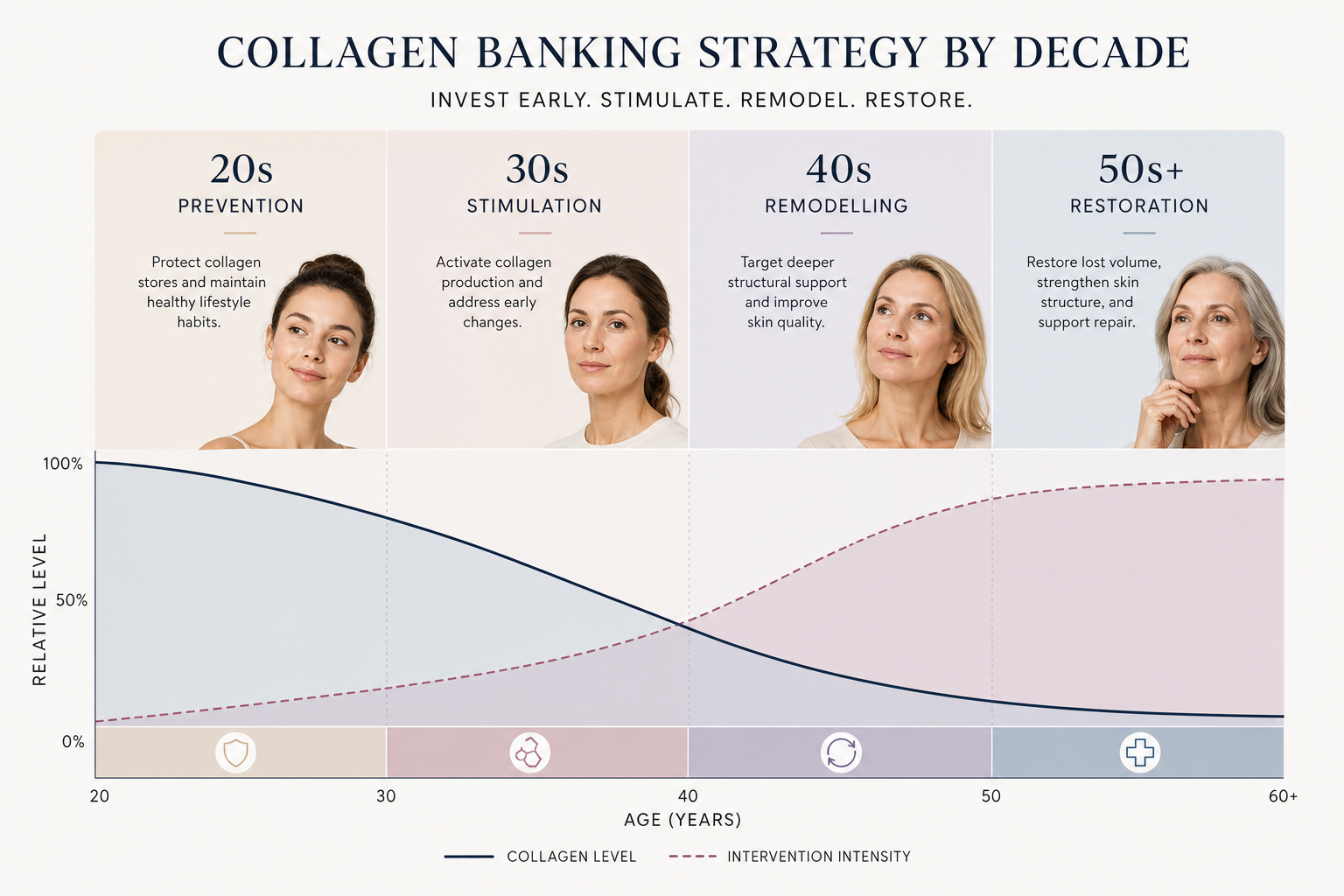
Collagen Banking by Age: A Practical Framework
The appropriate collagen banking strategy depends on your age, existing collagen reserves, skin concerns, and tolerance for different treatments. The following framework reflects general clinical principles rather than a rigid prescription — individual assessment is always necessary.
| Age Range | Collagen Status | Priority Focus | Suggested Strategies |
|---|---|---|---|
| 20s | Peak or early decline beginning | Prevention and protection | Daily broad-spectrum SPF, vitamin C serum, introduce retinol, healthy lifestyle habits, consider preventative microneedling |
| 30s | Gradual decline underway | Stimulation and maintenance | Upgrade to retinaldehyde or tretinoin, consistent peptides, professional microneedling or RF microneedling series, anti-glycation diet |
| 40s | Accelerating loss, early laxity | Active remodelling | RF microneedling, fractional laser, consider biostimulators, optimise sleep and stress management, review hormonal health |
| 50s+ | Significant loss, post-menopause risk | Restoration and ongoing stimulation | Biostimulators, RF microneedling, fractional laser, discuss HRT with GP if appropriate, maintain topical routine, regular professional treatments |
Starting in your 20s produces the strongest long-term baseline, but meaningful collagen stimulation is achievable at any adult age. The key difference is that earlier intervention requires less intensive treatment to maintain results, while later intervention may require a more active remodelling approach to achieve comparable improvements.
The Glycation Factor: An Underappreciated Collagen Threat
Glycation — the process by which sugar molecules bind to collagen fibres and form advanced glycation end products (AGEs) — is one of the most significant and least discussed drivers of collagen degradation. AGEs cause collagen fibres to become cross-linked and rigid, impairing the normal collagen remodelling process and contributing to loss of skin elasticity and firmness. Unlike UV damage, glycation is driven primarily by internal metabolic processes rather than external exposure, which means that diet plays a direct role in collagen preservation.
Reducing refined sugar and processed carbohydrates, prioritising protein and micronutrients that support collagen synthesis (including vitamin C, zinc, and copper), and maintaining stable blood glucose levels are all meaningful dietary contributions to a collagen banking strategy. Bone broth and foods rich in the amino acids glycine and proline provide building blocks for collagen synthesis, though dietary collagen cannot be directly incorporated into skin — it must be broken down and reassembled by fibroblasts. Oral hydrolysed collagen peptide supplements have some emerging clinical evidence for supporting skin hydration and elasticity when combined with vitamin C, but should be considered a supporting measure rather than a primary strategy.
Collagen Banking for Different Skin Types and Concerns
Most collagen banking guidance is written for a generic skin type, but the appropriate strategy varies meaningfully depending on individual skin characteristics. People with sensitive skin or rosacea may not tolerate aggressive retinoid introduction or high-energy laser treatments and may benefit from a gentler approach using bakuchiol, lower-concentration retinol, and LED light therapy before progressing to more intensive options. Those with acne-prone skin should discuss treatment sequencing with a practitioner, as some collagen stimulating treatments are best avoided during active breakouts.
For people with darker skin tones (Fitzpatrick types IV–VI), the risk of post-inflammatory hyperpigmentation following aggressive laser treatments or deep chemical peels is a genuine clinical consideration. RF microneedling and microneedling are generally considered safer options across a wider range of skin tones, but should still be performed by a practitioner experienced in treating diverse skin types. Collagen banking is relevant and achievable for all skin tones — the strategy simply needs to be appropriately tailored.
Realistic Expectations and Honest Limitations
Collagen banking is a long-term strategy, not a rapid transformation. Topical ingredients such as retinoids and vitamin C typically require consistent use over three to six months before meaningful changes in skin texture and firmness become visible. Professional treatments such as microneedling and RF microneedling produce results that develop gradually over two to six months as new collagen matures, and maintenance sessions are usually needed to sustain them.
It is also important to be clear about what collagen banking cannot do. It can slow the rate of collagen decline and improve collagen density relative to doing nothing, but it cannot halt intrinsic aging entirely or reverse significant structural loss without more intensive intervention. The concept of prevention over correction is clinically sound — it is genuinely easier and less costly to maintain collagen than to rebuild it — but this does not mean that starting later makes intervention pointless. Meaningful improvements in skin longevity are achievable at any stage with an appropriately designed protocol.
Safety is also a relevant consideration. Home microneedling devices, unregulated peptide products, and treatments performed outside medical or regulated aesthetic settings carry real risks including infection, scarring, and inconsistent results. Professional assessment before beginning any collagen stimulating treatment programme is strongly advisable.
Frequently Asked Questions
Can you actually bank collagen like a savings account?
Not literally. Collagen cannot be stored and withdrawn on demand. The banking metaphor describes the principle of building a stronger collagen baseline through consistent proactive habits, so that the skin has more structural integrity to draw on as natural collagen decline progresses. The underlying biology is real; the financial analogy is a simplification.
When should I start collagen banking?
The mid-20s is often cited as the ideal starting point, as this is when intrinsic collagen decline begins. However, starting at any adult age produces meaningful benefit. The earlier you begin, the less intensive the intervention required to maintain results — but it is never too late to support collagen synthesis and slow further loss.
Do collagen supplements work?
Oral hydrolysed collagen peptides have some clinical evidence for improving skin hydration and elasticity, particularly when combined with vitamin C. However, dietary collagen is broken down during digestion and cannot be directly incorporated into skin. Supplements may offer a modest supporting benefit but should not be relied upon as a primary collagen banking strategy in place of topical actives and professional treatments.
Is collagen banking relevant for men?
Yes. Men experience collagen loss through the same intrinsic and extrinsic mechanisms as women, though the rate of decline differs somewhat. Men tend to have thicker skin and higher baseline collagen density, but photoaging, glycation, smoking, and lifestyle factors affect collagen in men just as significantly. Collagen banking strategies — particularly sun protection, retinoids, and professional treatments — are equally applicable.
How often do I need professional collagen stimulating treatments?
This depends on the treatment, your age, and your goals. Microneedling is commonly performed in a series of three to six sessions spaced four to six weeks apart, followed by maintenance sessions every three to six months. RF microneedling may require fewer initial sessions but similar maintenance. A qualified practitioner can recommend a schedule based on your individual assessment.
Can I combine retinoids and vitamin C in my routine?
Both ingredients are valuable, but they are generally best used at different times of day to minimise potential irritation and maximise stability. Vitamin C is typically applied in the morning before broad-spectrum SPF, while retinoids are used in the evening. This separation also reduces the risk of pH incompatibility affecting the efficacy of either ingredient.
What is the most important single collagen banking habit?
Daily broad-spectrum SPF is consistently identified as the most impactful single habit for collagen preservation. UV radiation is the largest driver of extrinsic collagen loss, and preventing that damage is more effective than any treatment designed to repair it afterwards. SPF should be applied every morning, year-round, regardless of weather conditions.
Is Collagen Banking Worth Starting — and Where to Begin?
The evidence supporting a proactive, long-term approach to collagen preservation is genuinely strong, even if the term collagen banking is partly a marketing construct. The core principles — protecting existing collagen from UV damage and oxidative stress, stimulating fibroblast activity with evidence-based topical ingredients, and periodically using professional collagen stimulating treatments to drive deeper remodelling — are well supported by clinical research and dermatological practice.
The most practical starting point for most people is a consistent daily routine of broad-spectrum SPF and a vitamin C serum in the morning, a retinoid in the evening, and attention to the lifestyle factors that accelerate collagen loss — particularly diet, sleep, and smoking. From there, professional treatments can be layered in according to your age, skin concerns, budget, and tolerance for downtime.
If you are considering professional collagen stimulating treatments, a consultation with a qualified aesthetic practitioner or dermatologist is the appropriate first step. They can assess your current skin condition, identify the most relevant collagen banking strategies for your skin type and concerns, and help you build a realistic, evidence-based plan for long-term skin longevity.