Can You Exercise After Microneedling? Workout Timing Explained
Microneedling creates thousands of tiny micro-channels in the skin to trigger a wound-healing response, and that same process that drives collagen and elastin production also makes your skin temporarily vulnerable. Exercise — particularly anything that raises body temperature, causes excessive sweating, or increases blood flow — can interfere with healing during this window. The short answer is that most people should avoid strenuous activity for at least 24 to 48 hours after a professional microneedling session, and in some cases longer depending on treatment intensity. This article explains exactly why, gives you a clear phase-by-phase timeline, and covers the nuances that most generic aftercare guides miss.
Key Takeaways
- Avoid all strenuous activity for a minimum of 24–48 hours after microneedling; a full return to intense training typically requires 5–7 days.
- Sweat is the primary concern: it carries bacteria that can enter open micro-channels and increase infection risk.
- Treatment intensity and needle depth directly affect how long you should wait — a professional 1.5–2.5 mm treatment requires more rest than an at-home dermaroller session.
- Outdoor exercise carries an additional risk due to photosensitivity; SPF protection is essential for several weeks post-treatment.
- Resting properly after microneedling is not just a precaution — it actively protects the collagen induction process and your long-term results.
What Microneedling Does to Your Skin
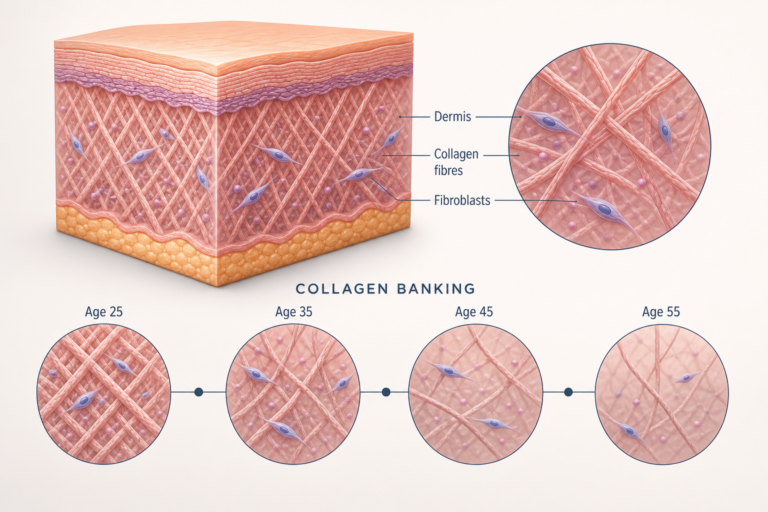
Microneedling — also called collagen induction therapy — uses fine needles to create controlled micro-injuries across the skin’s surface. These micro-channels penetrate the epidermis and reach into the dermis, triggering the body’s natural wound-healing response. That response involves three overlapping phases: inflammation, proliferation, and remodelling. During the proliferation and remodelling phases, fibroblasts produce new collagen and elastin, which gradually improve skin texture, firmness, and tone. This is the mechanism behind microneedling’s use for fine lines, acne scarring, enlarged pores, and general skin rejuvenation.
Immediately after treatment, the skin is visibly red, warm, and sensitive. The micro-channels remain open for several hours, meaning the skin barrier is temporarily compromised. During this period, anything that introduces bacteria, heat, or mechanical friction to the skin surface carries a meaningful risk of disrupting the healing process or causing an adverse reaction.
Why Exercise Is Risky After Microneedling
Exercise creates several conditions that are directly at odds with post-microneedling skin recovery. Understanding each one helps explain why the waiting period is not arbitrary.
Sweat and Infection Risk
Sweat itself is not sterile. It contains bacteria from the skin’s surface, and when it contacts open micro-channels, it can introduce those bacteria into the deeper layers of the skin. This raises the risk of folliculitis, pustules, or more significant infection. Even if the skin looks intact, the micro-channels created during a professional treatment can remain open and permeable for up to 24 hours or longer after the session.
Elevated Body Temperature and Vasodilation
Physical activity raises core body temperature and causes vasodilation — the widening of blood vessels near the skin’s surface. This increases blood flow to the skin, which can prolong redness and inflammation well beyond what would otherwise occur. For people with skin sensitivity or those prone to post-inflammatory hyperpigmentation (PIH), this prolonged inflammatory response is not just uncomfortable — it can contribute to uneven pigmentation that takes weeks or months to resolve. This risk is particularly relevant for individuals with medium to deeper skin tones, where inflammation more readily triggers melanin overproduction.
Friction and Mechanical Irritation
Clothing, gym equipment, towels, and even the act of wiping sweat from the face can cause friction against treated skin. This mechanical irritation can disrupt the early healing process, cause unnecessary redness, and in some cases reopen micro-channels that have begun to close. Activities like heavy weightlifting, where equipment or clothing presses against treated areas, carry a higher friction risk than low-impact alternatives.
Environmental Contamination
Gyms, swimming pools, and outdoor environments introduce additional contamination risks. Gym equipment surfaces harbour bacteria. Pool water contains chlorine, which is a known skin irritant even on healthy skin — on skin with a compromised skin barrier, it can cause significant irritation and delay healing. Open water swimming carries bacterial and microbial risks that make it unsuitable during the healing window.
Exercise Timeline After Microneedling: Phase by Phase
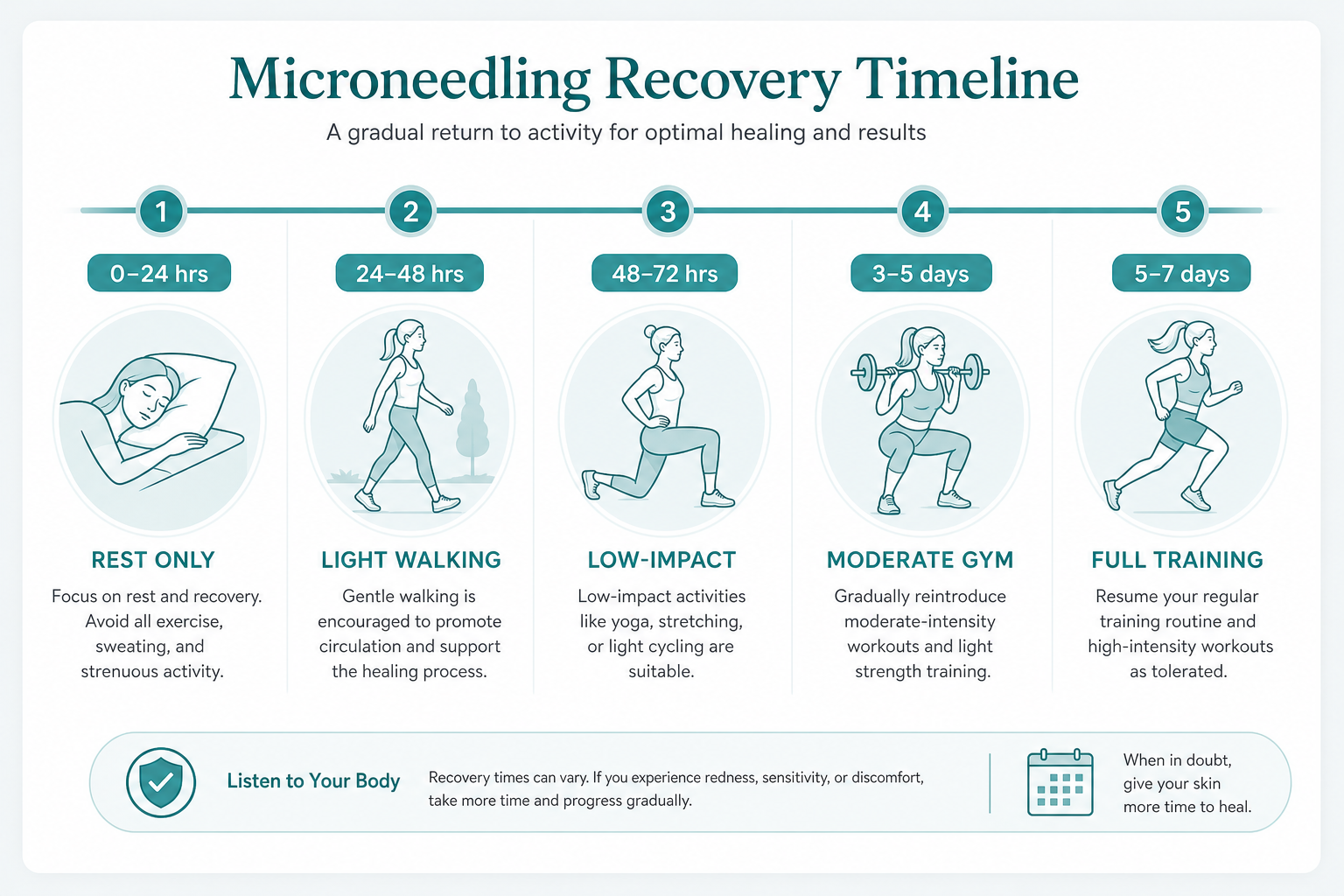
The appropriate waiting period depends on several factors, including the depth of treatment, whether PRP was added, and how your skin responds individually. The timeline below reflects guidance for a standard professional microneedling session and should be adjusted based on your practitioner’s specific aftercare instructions.
| Time After Treatment | Safe Activities | Activities to Avoid | Readiness Check |
|---|---|---|---|
| 0–24 hours | Rest only; gentle walking indoors | All exercise, saunas, steam rooms, swimming | Skin is red, warm, and sensitive — do not exercise |
| 24–48 hours | Light walking, gentle stretching, restorative yoga (cool environment) | HIIT, running, heavy lifting, hot yoga, spin classes, swimming | Redness should be fading; no active swelling or tenderness |
| 48–72 hours | Low-impact exercise at moderate intensity; stationary cycling (low resistance) | Strenuous activity, saunas, steam rooms, outdoor running in direct sun | Skin feels calm and cool; no tightness or itching |
| 3–5 days | Moderate gym sessions, brisk walking, light jogging | High-intensity interval training, hot yoga, swimming pools | Skin sensitivity has largely resolved; no tenderness to touch |
| 5–7 days | Full return to normal training for most people | Avoid pools and open water if any residual sensitivity remains | Skin looks and feels normal; no residual redness |
How Treatment Intensity and Needle Depth Affect the Timeline
Not all microneedling sessions are equal. An at-home dermaroller using 0.25–0.5 mm needles creates superficial micro-channels that typically close within a few hours. For most people, light exercise may be acceptable after 12–24 hours following an at-home session, provided there is no visible redness or irritation. A professional clinical treatment using 1.5–2.5 mm needles penetrates significantly deeper into the dermis, creates a more pronounced wound-healing response, and requires a longer healing window. The 48–72 hour minimum for strenuous activity applies most firmly to professional treatments at higher needle depths.
If your session included platelet-rich plasma (PRP) — where your own blood plasma is applied to the skin immediately after needling to enhance collagen induction — the skin may be more reactive and sensitive than after standard microneedling alone. In this case, extending the rest period by an additional 24–48 hours is a reasonable precaution, and your practitioner may advise accordingly.
Specific Exercise Types: What’s Safe and When
Running and Outdoor Cardio
Running raises body temperature significantly and causes sweating, making it unsuitable for the first 48–72 hours. Outdoor running carries an additional concern: photosensitivity. Microneedling increases the skin’s sensitivity to UV radiation for up to two weeks after treatment. Running or cycling outdoors without adequate SPF protection during this period raises the risk of sunburn, hyperpigmentation, and compromised results. If you return to outdoor cardio within the first two weeks post-treatment, apply a broad-spectrum SPF 30 or higher and avoid peak sun hours.
HIIT and High-Intensity Training
HIIT is one of the highest-risk exercise categories after microneedling. It combines intense sweating, elevated body temperature, and often physical contact with equipment or flooring. Most practitioners recommend waiting a full 5–7 days before returning to HIIT sessions. If your skin still shows any redness, sensitivity, or tightness at that point, wait until those signs have fully resolved.
Weightlifting and Resistance Training
Heavy weightlifting causes significant increases in blood pressure and body temperature, and equipment contact can introduce bacteria to the skin. Light resistance training with minimal sweating may be acceptable from day three or four for some people, but heavy compound lifts are best avoided until day five to seven. Pay attention to any clothing or equipment that presses against treated facial or body areas.
Yoga
Gentle or restorative yoga in a cool environment is one of the safer options from 24–48 hours post-treatment. Hot yoga, however, is in the same risk category as a sauna or steam room — the combination of heat, humidity, and sweating makes it unsuitable for at least five to seven days after microneedling. The elevated ambient temperature in a hot yoga studio can cause vasodilation and prolonged inflammation even without intense physical exertion.
Swimming
Swimming in chlorinated pools should be avoided for at least five to seven days after microneedling. Chlorine is a chemical irritant that can cause significant discomfort and delay healing when it contacts a compromised skin barrier. Open water swimming carries bacterial contamination risks and should also be avoided during the healing window. Even after the skin appears healed externally, the deeper remodelling process continues, and chemical exposure is best minimised during this period.
Saunas and Steam Rooms
Saunas and steam rooms combine heat, humidity, and sweating — three of the main factors that increase risk after microneedling. They should be avoided for a minimum of five to seven days, and some practitioners recommend waiting the full two weeks until the skin’s photosensitivity and heightened sensitivity have fully settled.
Can You Exercise Before Microneedling?
This question is underaddressed in most aftercare guides, but it matters. Exercising intensely immediately before a microneedling appointment is not ideal. Elevated body temperature and increased skin vascularity at the time of treatment can heighten skin sensitivity during the procedure and may increase post-treatment redness and inflammation. If you train regularly, finishing your workout at least two to three hours before your appointment — and showering thoroughly beforehand — is a sensible approach. This allows body temperature to normalise and reduces the bacterial load on the skin surface before needling begins.
Scheduling Strategy for Active People and Athletes
If you train regularly, the timing of your microneedling appointment matters as much as the aftercare itself. A practical approach is to book your session on a rest day or at the end of a training block, so that the 48–72 hour minimum rest period falls naturally within your schedule rather than forcing you to skip planned sessions. For athletes with structured training programmes, booking on a Friday afternoon allows the weekend for recovery and a return to light training by Monday, with full training typically resumable by mid-week.
If you have a competition, race, or high-intensity training event within seven days, it is worth rescheduling your microneedling appointment. Trying to compress the healing window around a performance commitment increases the risk of both skin complications and suboptimal results. Treating the post-microneedling rest period as a planned recovery investment — rather than an inconvenient restriction — tends to produce better outcomes for people who train consistently.
Signs Your Skin Is Ready for Exercise
Time windows are useful guides, but individual skin response varies. Before returning to any moderate or strenuous activity, check the following:
- Redness has faded to your normal skin tone or close to it
- The skin feels cool and comfortable to the touch, not warm or tender
- No tightness, itching, or peeling that suggests active healing is still underway
- Sensitivity to touch has resolved — the skin does not feel raw or reactive
- No active breakouts, pustules, or signs of irritation at the treatment site
If any of these signs are still present, wait another 24 hours and reassess. Pushing back into training by one day is a far smaller cost than disrupting the collagen induction process or triggering a skin reaction that requires additional treatment.
What to Do If You Accidentally Sweat After Microneedling
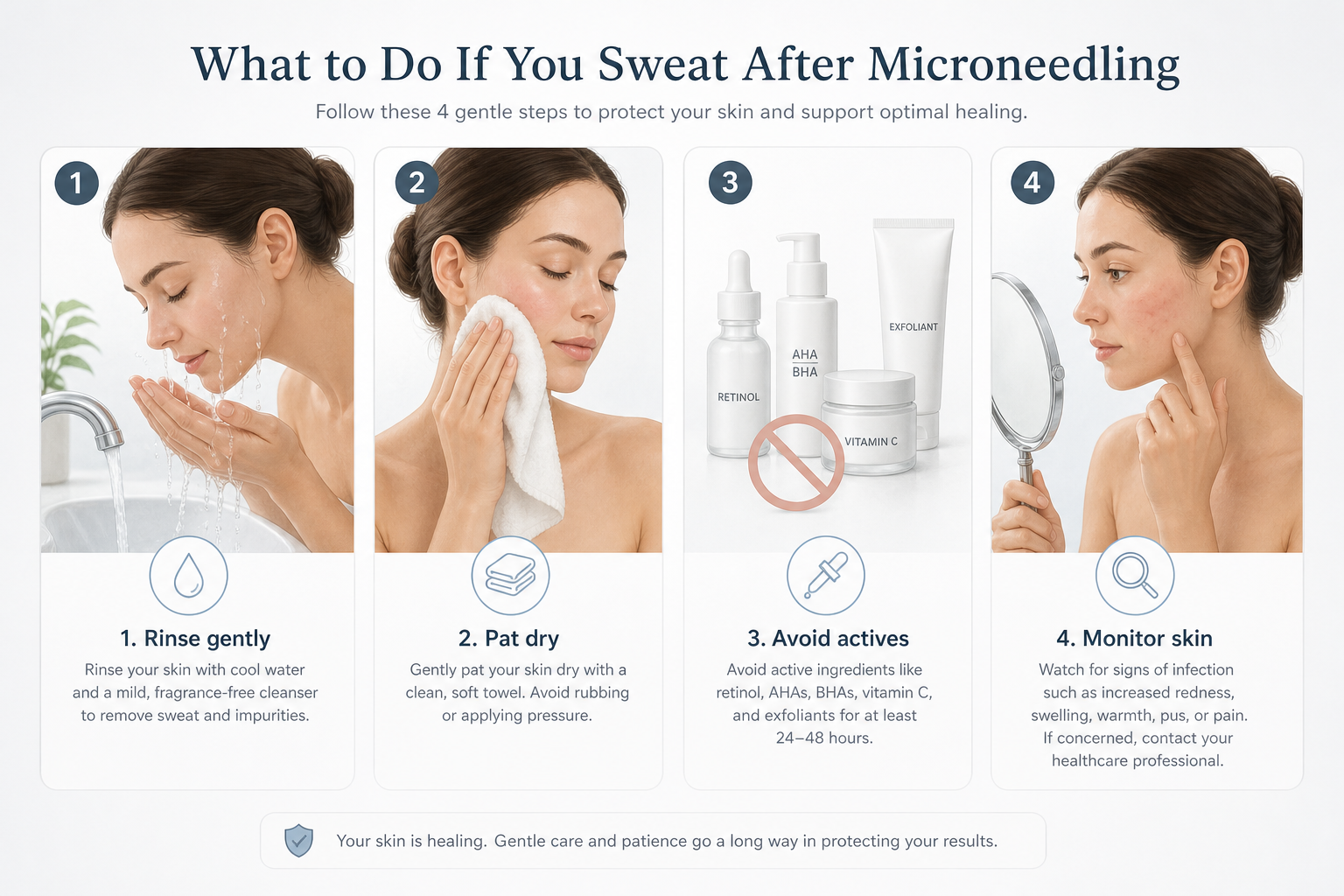
If you exercise or sweat unexpectedly within the first 24–48 hours after microneedling, act promptly but gently. Use a mild, non-foaming cleanser to gently rinse the treated area with cool or lukewarm water — do not rub, scrub, or use a flannel or exfoliating cloth. Pat the skin dry with a clean, soft towel. Avoid applying active skincare ingredients such as retinoids, acids, or vitamin C immediately after, as these can cause irritation on skin that has already been stressed. Monitor the skin over the following 24–48 hours for signs of infection, including increased redness, swelling, warmth, or pustules. If any of these develop, contact your treating practitioner promptly rather than waiting to see if they resolve on their own.
How Rest Protects Your Microneedling Results
It is worth reframing post-treatment rest not as a restriction but as an active part of the treatment itself. The collagen and elastin production triggered by microneedling continues for weeks to months after the session. The most critical phase of the wound-healing response — the inflammatory phase that initiates collagen induction — occurs in the first 24–72 hours. Disrupting this phase with heat, sweat, or physical stress does not just risk infection; it can blunt the stimulus for new collagen formation and reduce the overall effectiveness of the treatment.
Patients who follow aftercare guidelines consistently — including rest, sun protection, and avoiding irritants — tend to see better skin rejuvenation outcomes than those who return to normal activity too quickly. If you are investing in a course of microneedling sessions, protecting each session’s healing window compounds the benefit across the full course.
Frequently Asked Questions
How long after microneedling can I work out?
For most people, light low-impact exercise such as gentle walking is acceptable from 24–48 hours after a professional microneedling session. Moderate exercise can typically resume from 48–72 hours, and a full return to strenuous activity including HIIT, heavy lifting, and running is generally safe from day five to seven, provided the skin shows no residual redness or sensitivity.
Can I do yoga after microneedling?
Gentle restorative yoga in a cool environment is one of the safer options from 24–48 hours post-treatment. Hot yoga should be avoided for at least five to seven days due to the heat, humidity, and sweating involved, which can prolong inflammation and increase infection risk through open micro-channels.
Is sweating after microneedling dangerous?
Excessive sweating in the first 24–48 hours after microneedling carries a meaningful risk because sweat contains bacteria that can enter open micro-channels and increase the chance of infection or irritation. If you sweat accidentally, gently cleanse the area with a mild cleanser and cool water, pat dry, and monitor for any signs of adverse reaction.
Can I swim after microneedling?
Swimming in chlorinated pools should be avoided for at least five to seven days after microneedling. Chlorine can irritate the compromised skin barrier and delay healing. Open water swimming carries bacterial contamination risks and should also be avoided during the healing window.
Does at-home microneedling require the same exercise restrictions?
At-home dermarollers typically use shorter needles (0.25–0.5 mm) that create more superficial micro-channels, which close more quickly than those from a professional treatment. Light exercise may be acceptable sooner — often after 12–24 hours — but the same principles apply: avoid sweating, heat, and friction until any redness or sensitivity has resolved. If you use a longer needle length at home (0.5 mm or above), treat the recovery period similarly to a professional session.
What about outdoor exercise and sun exposure after microneedling?
Microneedling increases photosensitivity for up to two weeks after treatment. If you return to outdoor running, cycling, or any other outdoor exercise during this period, apply a broad-spectrum SPF 30 or higher to all treated areas and avoid exercising during peak UV hours. Failing to protect the skin from UV exposure during this window can increase the risk of post-inflammatory hyperpigmentation and compromise your results.
Can I use a sauna after microneedling?
Saunas and steam rooms should be avoided for a minimum of five to seven days after microneedling. The combination of high heat, humidity, and sweating creates conditions that can prolong inflammation, increase infection risk, and interfere with the healing process. Some practitioners recommend waiting the full two weeks before returning to sauna use.
Planning Your Return to Training After Microneedling
Returning to exercise after microneedling does not require guesswork — it requires a clear understanding of what your skin is going through and a realistic plan that respects the healing window. For most people, a 48-hour pause from strenuous activity is the minimum, with a full return to intense training from day five to seven. Treatment intensity, needle depth, and whether PRP was used all influence how conservative that timeline should be. Active people and athletes benefit most from scheduling their sessions strategically around their training calendar rather than trying to fit recovery around an existing programme.
If you are unsure how your skin is responding or whether it is safe to resume a specific activity, your treating practitioner is the right person to ask. Individual skin response varies, and the aftercare guidelines provided at your appointment should always take precedence over general timelines. Protecting the healing window is one of the most straightforward ways to ensure that your microneedling investment delivers the skin rejuvenation results you are aiming for.