Why Are Your Freckles Getting Darker? Causes, Risks & Treatment Options
Freckles are among the most common pigmentation features on human skin, yet many people notice them becoming noticeably darker at certain times of year, during hormonal changes, or simply as they age. Understanding why dark freckles develop — and distinguishing a harmless pigment response from a lesion that warrants medical attention — is the first step toward managing them confidently and safely.
Key Takeaways
- Freckles darken primarily in response to UV exposure, but hormonal changes, heat, certain medications, and photosensitizing skincare ingredients can also intensify pigment activity.
- Classic freckles (ephelides) tend to fade with age, while solar lentigines — often mistaken for freckles — accumulate over time and are more persistent.
- Very dark or black spots are rarely true freckles; any rapidly changing, asymmetric, or irregularly bordered lesion should be assessed by a dermatologist promptly.
- Broad-spectrum SPF is the single most effective daily measure for preventing freckles from darkening further.
- Topical tyrosinase inhibitors and professional treatments such as IPL and laser therapy may help lighten dark freckles, but results vary and realistic timelines are measured in weeks to months.
What Are Freckles and Why Do They Exist?
Freckles — medically termed ephelides — are small, flat, tan-to-brown spots that result from a localised increase in melanin production rather than an increase in the number of melanocytes. Melanocytes are the pigment-producing cells distributed throughout the basal layer of the epidermis. In freckle-prone skin, individual melanocytes produce and release melanin unevenly, creating concentrated patches of colour. This tendency is strongly hereditary and is closely linked to variants in the MC1R gene, which also influences red or blonde hair, light eyes, and fair skin — all features associated with higher UV sensitivity.
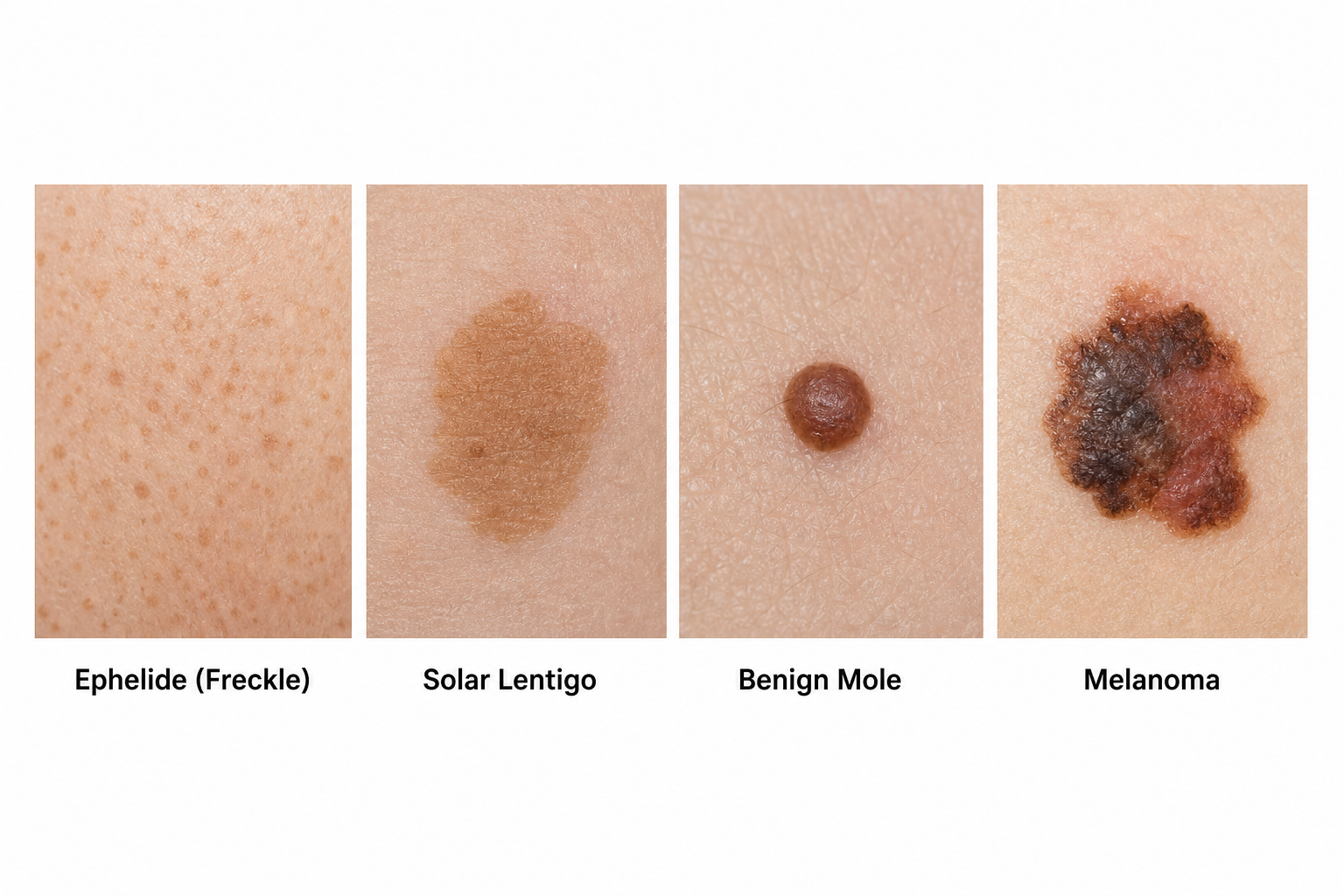
Ephelides are distinct from solar lentigines (commonly called sun spots or age spots). Solar lentigines involve an actual increase in the number of melanocytes in a localised area and are a direct consequence of cumulative UV damage. They are darker, more defined, and do not fade in winter the way classic freckles do. This distinction matters clinically: ephelides are benign and largely cosmetic, while solar lentigines are a marker of cumulative sun damage and, in some cases, warrant monitoring.
What Causes Freckles to Get Darker?
Freckle darkening is driven by an increase in melanogenesis — the biological process by which melanocytes synthesise melanin. Several triggers can accelerate this process in susceptible individuals.
UV Radiation: The Primary Driver
Exposure to UV-B radiation is the most significant cause of freckle darkening. When UV-B reaches the skin, it stimulates melanocytes to produce more melanin as a protective response. In freckle-prone skin, this response is uneven: some melanocytes are far more reactive than others, causing existing freckles to deepen in colour rather than producing an even tan. This is why freckles are typically most prominent in summer and may fade considerably during winter months — a pattern sometimes called seasonal pigmentation. Tanning beds carry the same risk as natural sunlight and can intensify freckle darkening significantly.
Hormonal Changes and Hormonal Pigmentation
Hormones play a meaningful role in regulating pigment activity. Melanocyte-stimulating hormone (MSH), oestrogen, and progesterone can all upregulate melanocyte activity, which is why many people notice their freckles darkening during pregnancy, while taking combined oral contraceptives, or during hormonal replacement therapy. This type of hormonal pigmentation can also manifest as melasma — a broader, patchier form of hyperpigmentation sometimes called the mask of pregnancy — which may overlap with or be confused with darkening freckles. Puberty and perimenopause are additional hormonal windows during which pigment changes are commonly reported.
Heat as an Independent Trigger
Heat exposure — independent of UV radiation — can worsen pigmentation in susceptible skin. Infrared heat from saunas, hot showers, or even cooking over a stove can trigger a low-grade inflammatory response in melanocytes, prompting additional melanin release. This mechanism is less well understood than UV-driven darkening but is clinically recognised, particularly in individuals with a history of melasma or reactive pigmentation. It is worth noting that this means freckles can darken even on overcast days if significant heat exposure occurs.
Photosensitizing Ingredients in Skincare
Certain skincare products can inadvertently make freckles darker by increasing the skin’s sensitivity to UV light. Photosensitizing ingredients include alpha-hydroxy acids (such as glycolic and lactic acid) used without adequate sun protection, certain essential oils (including bergamot, lemon, and lime), retinoids applied during the day, and some fragrance compounds. When these ingredients are used without a broad-spectrum SPF, even brief incidental sun exposure can trigger a disproportionate pigment response. This is a commonly overlooked cause of sudden or unexpected freckle darkening.
Medications That Affect Pigmentation
Several drug classes are associated with increased skin pigmentation. Antimalarial medications, certain psychiatric drugs (including some tricyclic antidepressants and antipsychotics), tetracycline antibiotics, amiodarone, and some chemotherapy agents can all cause or worsen hyperpigmentation. If freckles appear to darken shortly after starting a new medication, this should be discussed with the prescribing clinician rather than attributed solely to sun exposure.
Aging and the Shift from Ephelides to Solar Lentigines
An important and often misunderstood pattern is that classic ephelides tend to fade with age as melanocyte activity naturally declines, while solar lentigines accumulate with decades of cumulative UV exposure. Many adults who believe their freckles are getting darker with age are actually developing new solar lentigines alongside their existing ephelides. These two types of pigmented lesion can look similar but behave differently: ephelides lighten in winter and with sun avoidance, while solar lentigines remain relatively stable year-round and are more resistant to topical treatments.
Freckles, Moles, Sun Spots, and Melanoma: A Practical Comparison
One of the most common concerns among people with dark freckles is distinguishing a harmless pigmented lesion from one that requires medical evaluation. The table below summarises the key characteristics of the most frequently confused lesion types.
| Feature | Ephelides (Freckles) | Solar Lentigines (Sun Spots) | Moles (Nevi) | Melanoma |
|---|---|---|---|---|
| Colour | Light tan to medium brown | Tan to dark brown | Tan, brown, or pink; uniform | Variable; may include black, red, or white areas |
| Border | Slightly irregular but consistent | Well-defined, smooth | Usually smooth and regular | Irregular, notched, or poorly defined |
| Size | 1–5 mm typically | 5–20 mm typically | Variable; most under 6 mm | Often over 6 mm; may grow rapidly |
| Texture | Flat | Flat; occasionally slightly rough | Flat or raised | May be raised, ulcerated, or bleeding |
| Seasonal change | Darkens in summer, fades in winter | Stable year-round | Stable | May change at any time |
| Risk level | Benign | Benign; marker of UV damage | Generally benign; monitor atypical moles | Malignant; requires urgent assessment |
When Should You Be Concerned About a Dark Freckle?
Most freckle darkening is a benign response to UV exposure or hormonal fluctuation. However, certain changes in a pigmented lesion warrant prompt assessment by a dermatologist. The widely used ABCDE warning signs provide a practical framework for self-monitoring.
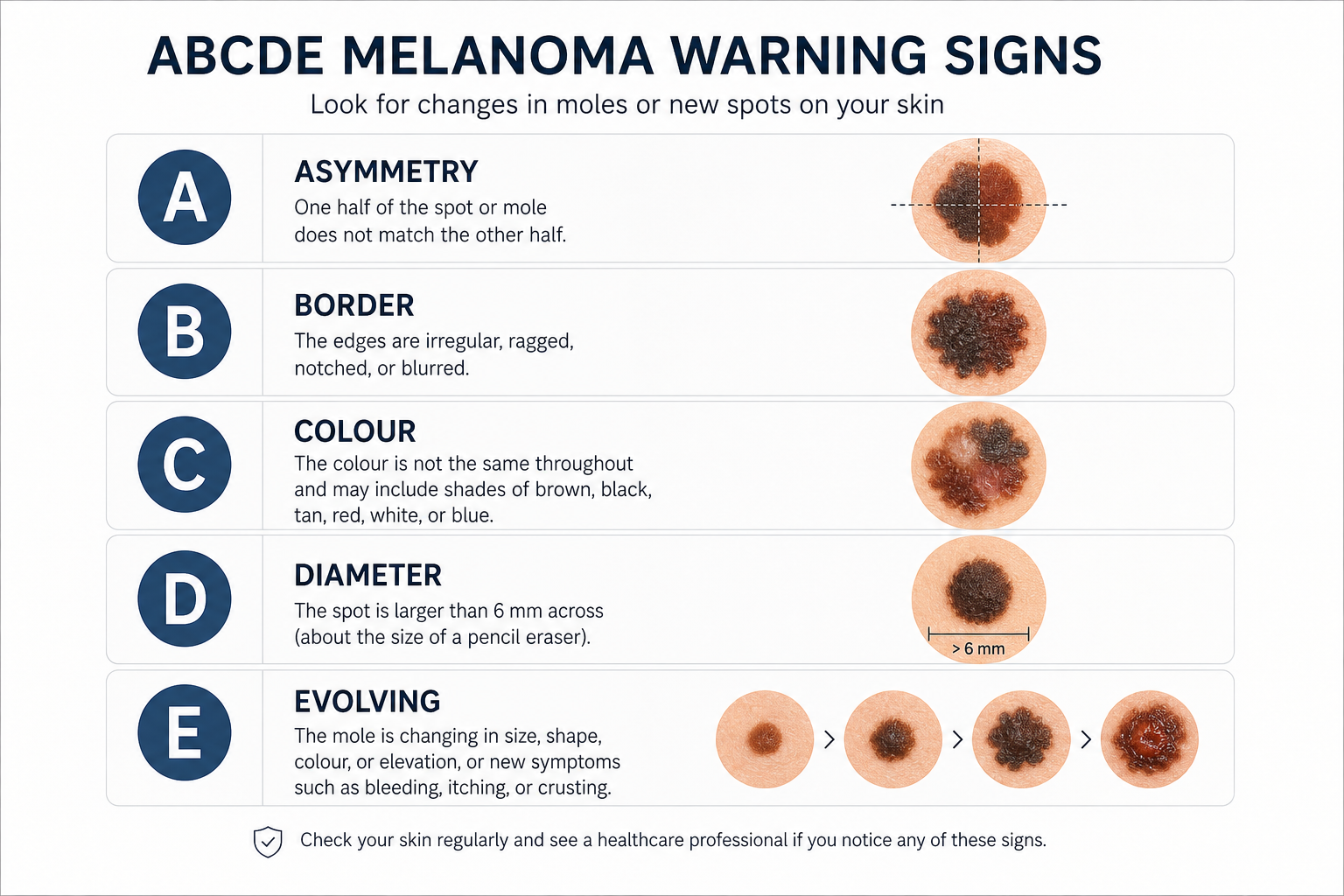
- Asymmetry: One half of the lesion does not match the other.
- Border: The edges are irregular, ragged, notched, or blurred.
- Colour: The lesion contains multiple shades of brown, black, red, white, or blue.
- Diameter: The lesion is larger than 6 mm (approximately the size of a pencil eraser), though melanomas can be smaller.
- Evolving: The lesion is changing in size, shape, colour, or developing new symptoms such as bleeding, itching, or crusting.
A note on very dark or black spots: truly black freckles are uncommon. A lesion that appears black rather than dark brown is rarely a classic ephelide and may represent a dysplastic nevus, lentigo maligna, or another pigmented lesion that requires professional evaluation. If you notice a spot that appears distinctly black, has changed recently, or does not fit the typical pattern of your other freckles, arrange a skin cancer screening appointment rather than waiting to see if it fades.
Dark Freckles on Darker Skin Tones
Most published guidance on freckles defaults to a fair-skin framing, but freckles and pigmented lesions do occur across a range of skin tones. On medium-to-dark skin, freckles may appear darker relative to the surrounding skin and can be more difficult to distinguish from post-inflammatory hyperpigmentation (PIH) — pigmentation that develops after skin inflammation, injury, or irritation. PIH is more common and often more pronounced in darker skin tones. Additionally, certain treatments used to lighten pigmentation — including some laser wavelengths and aggressive chemical peels — carry a higher risk of causing PIH or hypopigmentation in darker skin. Anyone with a medium-to-dark skin tone considering professional pigmentation treatment should seek a practitioner with specific experience in treating diverse skin types.
How to Prevent Freckles from Getting Darker
Prevention is considerably more effective than treatment when it comes to managing dark freckles. The following measures address the most significant triggers.
Daily Broad-Spectrum Sun Protection
Applying a broad-spectrum SPF 30 or higher every morning — regardless of weather or season — is the single most impactful step for freckle-prone skin. Broad-spectrum formulations protect against both UV-A and UV-B radiation. SPF 50+ is preferable for fair or highly reactive skin. Sunscreen should be reapplied every two hours during outdoor activity and after swimming or sweating. Physical (mineral) sunscreens containing zinc oxide or titanium dioxide are generally well tolerated on sensitive or reactive skin.
Protective Clothing and Behaviour
Sun-protective clothing, wide-brimmed hats, and UV-blocking sunglasses provide meaningful additional protection. Avoiding peak UV hours — generally between 10am and 4pm — reduces cumulative UV exposure significantly. These measures are particularly relevant for individuals with fair skin, red or blonde hair, or a strong family history of freckles or skin cancer.
Reviewing Skincare Ingredients
Audit your skincare routine for photosensitizing ingredients. If you use AHAs, retinoids, or certain botanical oils, ensure these are applied only in the evening and that morning sun protection is consistent. Switching to a gentler exfoliant or reducing the frequency of photosensitizing actives during high-UV months can help prevent unexpected darkening.
Topical Treatments for Dark Freckles
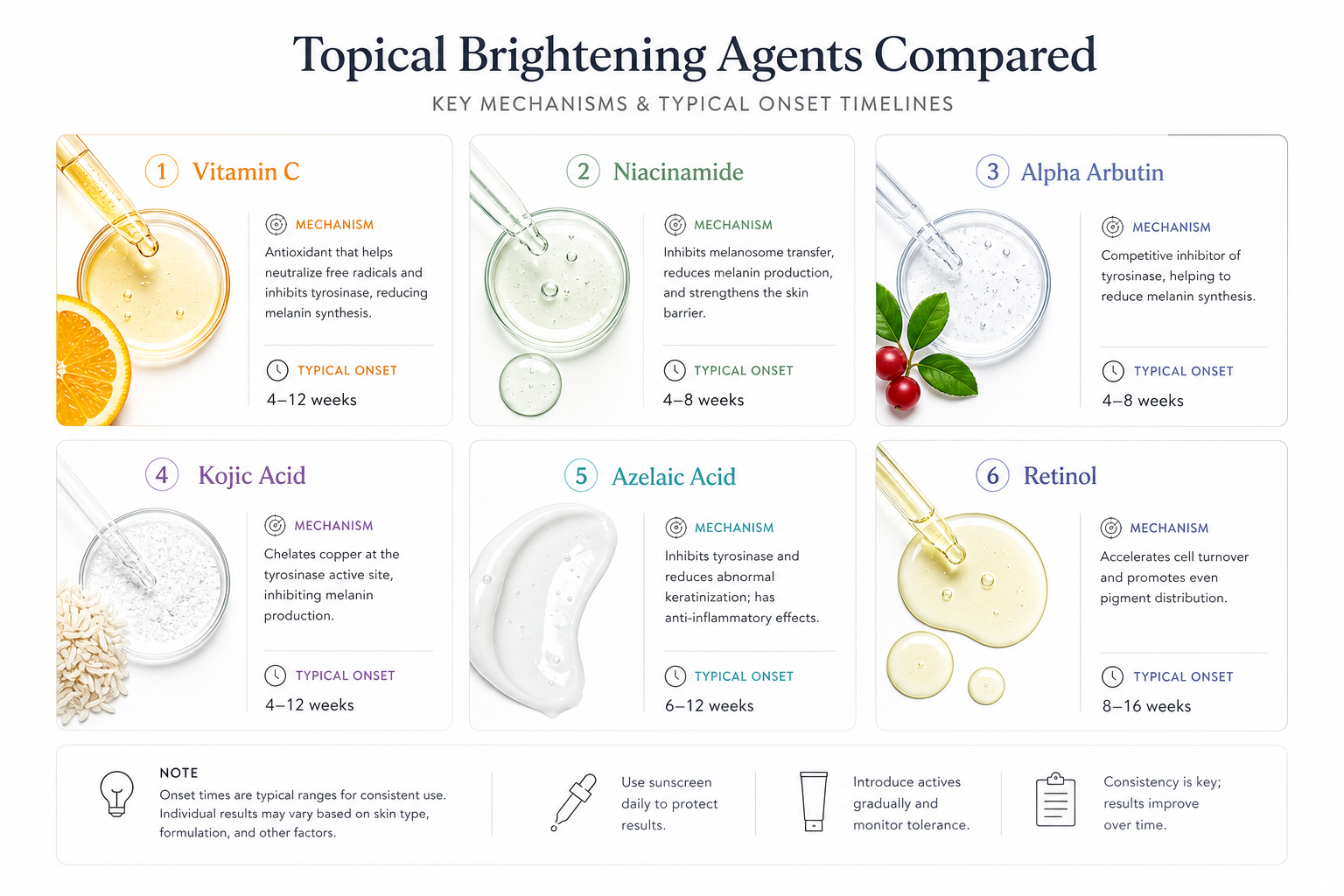
A range of topical agents can help reduce the appearance of dark freckles by inhibiting melanogenesis or accelerating cell turnover. Results are gradual and depend on consistent use, adequate sun protection, and the depth and density of the pigmentation.
| Ingredient | Mechanism | Typical Onset | Notes |
|---|---|---|---|
| Vitamin C (L-ascorbic acid) | Antioxidant; inhibits tyrosinase enzyme | 8–12 weeks | Unstable in some formulations; use stabilised forms |
| Niacinamide (Vitamin B3) | Reduces melanosome transfer to skin cells | 8–12 weeks | Well tolerated; suitable for sensitive skin |
| Alpha arbutin | Tyrosinase inhibitor; gentler than hydroquinone | 8–16 weeks | Good tolerability across skin tones |
| Kojic acid | Tyrosinase inhibitor derived from fungi | 8–12 weeks | May cause irritation; use at lower concentrations initially |
| Azelaic acid | Selectively inhibits hyperactive melanocytes | 12–16 weeks | Also anti-inflammatory; suitable for sensitive and acne-prone skin |
| Retinol / Retinoids | Accelerates cell turnover; disperses melanin | 12–24 weeks | Increases photosensitivity; evening use only |
| Hydroquinone | Potent tyrosinase inhibitor | 8–12 weeks | Prescription-strength in many countries; not for long-term unsupervised use |
Each of these ingredients functions as a tyrosinase inhibitor or works through a related mechanism to reduce melanin synthesis or accelerate the shedding of pigmented skin cells. Realistic expectations are important: most topical treatments require consistent daily use for at least eight to twelve weeks before visible improvement occurs, and results plateau without ongoing sun protection. Discontinuing sun protection will allow freckles to re-darken, often within weeks.
DIY remedies such as lemon juice, apple cider vinegar, and turmeric are widely discussed online but carry meaningful limitations. Lemon juice is acidic and can cause irritation, chemical burns, and — because it contains furanocoumarins — actually increases photosensitivity, potentially worsening pigmentation. Turmeric has some evidence for mild anti-inflammatory effects but limited evidence for meaningful pigment reduction in clinical use. These approaches are not recommended as primary treatments and should not replace evidence-based options.
Professional Treatments for Dark Freckles
When topical treatments provide insufficient improvement, or when pigmentation is dense and longstanding, professional in-clinic treatments may offer more significant results. A qualified practitioner should assess skin type, lesion characteristics, and medical history before recommending any of the following.
Laser Therapy
Laser treatments — including Q-switched Nd:YAG, Alexandrite, and Ruby lasers — target melanin selectively, breaking up pigment deposits without significantly damaging surrounding tissue. These devices are effective for both ephelides and solar lentigines, though the appropriate wavelength and settings depend on the individual’s skin tone and lesion characteristics. Multiple sessions are typically required, and the risk of post-inflammatory hyperpigmentation is higher in darker skin tones. Downtime is usually minimal but may include temporary redness, darkening of treated spots before they shed, and mild crusting.
Intense Pulsed Light (IPL) and BBL
IPL and BroadBand Light (BBL) devices deliver broad-spectrum light energy that targets pigmented lesions across a range of wavelengths. These treatments are well suited to individuals with multiple freckles or diffuse pigmentation across larger areas such as the face, chest, or arms. Results are generally visible after two to four sessions, with treated freckles typically darkening briefly before flaking away. IPL is less precise than laser therapy and is generally more suitable for lighter skin tones.
Chemical Peels
Superficial to medium-depth chemical peels using glycolic acid, lactic acid, or trichloroacetic acid (TCA) accelerate cell turnover and help disperse superficial melanin deposits. Peels are often used in combination with topical brightening agents for enhanced effect. Downtime ranges from minimal peeling with superficial peels to several days of visible shedding with medium-depth options. Sun protection after a chemical peel is critical: the skin is more vulnerable to UV-induced pigmentation during the recovery period, and inadequate protection can cause re-darkening or PIH.
Post-Treatment Care and Preventing Re-Darkening
Post-treatment care is an area that receives insufficient attention in most patient-facing resources. After laser, IPL, or chemical peel treatment, the skin’s barrier is temporarily compromised and melanocytes may be in a reactive state. Strict broad-spectrum sun protection — ideally SPF 50+ applied every two hours — is essential for at least four to six weeks after treatment. Avoiding heat exposure, saunas, and photosensitizing skincare ingredients during this period reduces the risk of rebound pigmentation. A maintenance topical regimen using a tyrosinase inhibitor such as alpha arbutin or azelaic acid can help sustain results between professional sessions.
Freckle Darkening During Pregnancy: What Is Normal?
Pregnancy is a common trigger for noticeable pigment changes. Rising levels of oestrogen, progesterone, and melanocyte-stimulating hormone (MSH) collectively increase melanocyte sensitivity, causing existing freckles to darken and new pigmentation — including melasma — to develop. This is a normal physiological response and typically improves after delivery and the cessation of breastfeeding, though it may not resolve completely without treatment. During pregnancy, many topical brightening agents — including hydroquinone, high-dose retinoids, and certain chemical exfoliants — are not recommended. Niacinamide and azelaic acid are generally considered safer options during pregnancy, but any skincare change during pregnancy should be discussed with a midwife or obstetrician. Any pigmented lesion that changes rapidly, bleeds, or develops irregular features during pregnancy should be assessed by a dermatologist, as pregnancy does not protect against melanoma.
Frequently Asked Questions
Do freckles fade as you get older?
Classic ephelides often fade with age as melanocyte activity naturally declines, particularly after the third or fourth decade. However, solar lentigines — which accumulate with cumulative UV exposure — tend to become more numerous and persistent with age. Many adults find that their skin appears more evenly pigmented in some areas while developing new darker spots in others, reflecting this shift from ephelides to solar lentigines.
Can sunscreen remove existing dark freckles?
Sunscreen prevents freckles from darkening further but does not remove existing pigmentation. With consistent broad-spectrum SPF use and reduced UV exposure, ephelides may gradually fade over several months, particularly in winter. Topical brightening agents or professional treatments are needed if more significant lightening is the goal.
Are dark freckles dangerous?
The vast majority of dark freckles are entirely benign. However, any pigmented lesion that is asymmetric, has irregular borders, contains multiple colours, is larger than 6 mm, or is changing should be assessed by a dermatologist. The ABCDE warning signs provide a useful self-monitoring framework, but they are not a substitute for professional skin cancer screening.
Why did my freckles suddenly get darker?
Sudden darkening is most commonly triggered by increased sun exposure, a change in hormonal status (such as starting a new contraceptive or becoming pregnant), or the introduction of a photosensitizing skincare ingredient without adequate sun protection. Heat exposure and certain medications can also cause rapid pigment changes. If no obvious trigger is identifiable and the change is significant, a dermatology assessment is advisable.
Can freckles be black?
True ephelides are not black — they range from light tan to medium brown. A lesion that appears distinctly black is unlikely to be a classic freckle and may represent a dysplastic nevus, lentigo maligna, or another pigmented lesion. Any black or very dark spot should be evaluated by a dermatologist rather than assumed to be a harmless freckle.
How long does it take to lighten dark freckles with topical treatments?
Most evidence-based topical treatments require consistent daily use for eight to sixteen weeks before visible improvement is apparent. Ingredients such as vitamin C, niacinamide, and alpha arbutin work gradually by reducing melanin synthesis and accelerating cell turnover. Results depend on the depth of pigmentation, skin type, and — critically — whether adequate sun protection is maintained throughout the treatment period.
Is laser treatment for freckles permanent?
Laser treatment can significantly reduce or eliminate existing freckles, but it does not alter the underlying genetic tendency to produce uneven pigmentation in response to UV exposure. Without ongoing sun protection, freckles are likely to return over subsequent summers. Maintenance sessions and a consistent SPF routine are typically recommended to sustain results.
When to See a Dermatologist About Dark Freckles
Most people with dark freckles do not need urgent medical attention, but there are clear situations where professional assessment is the right step. Arrange a dermatology appointment if any pigmented lesion is changing in size, shape, or colour; if a spot bleeds, itches persistently, or develops a crust; if you notice a lesion that appears distinctly black or contains multiple colours; or if you have a personal or family history of melanoma or atypical moles. Annual skin cancer screening is a reasonable precaution for individuals with numerous freckles, a history of significant sun exposure, or fair skin with light eyes and hair. A dermatologist can use dermoscopy — a magnified, illuminated examination of the skin — to assess lesions that are difficult to evaluate with the naked eye and provide reassurance or arrange further investigation where needed.