How Does Microneedling Work? The Science of Collagen Induction Explained
Microneedling works by creating hundreds of precisely controlled micro-injuries in the skin, triggering the body’s own wound-healing cascade and stimulating the production of new collagen and elastin. Also known as collagen induction therapy (CIT) or percutaneous collagen induction, it is a minimally invasive dermatological procedure that improves skin texture, firmness, and tone without removing or replacing skin tissue. This article explains the biological mechanism in plain language, what actually happens in the skin during and after treatment, which conditions it may help, and what realistic results look like.
Key Takeaways
- Microneedling stimulates neocollagenesis — the formation of new collagen — by triggering the skin’s natural wound-healing response through controlled micro-injuries.
- The process unfolds across three biological phases: inflammatory, proliferative, and remodeling, with visible skin improvements typically emerging over weeks to months.
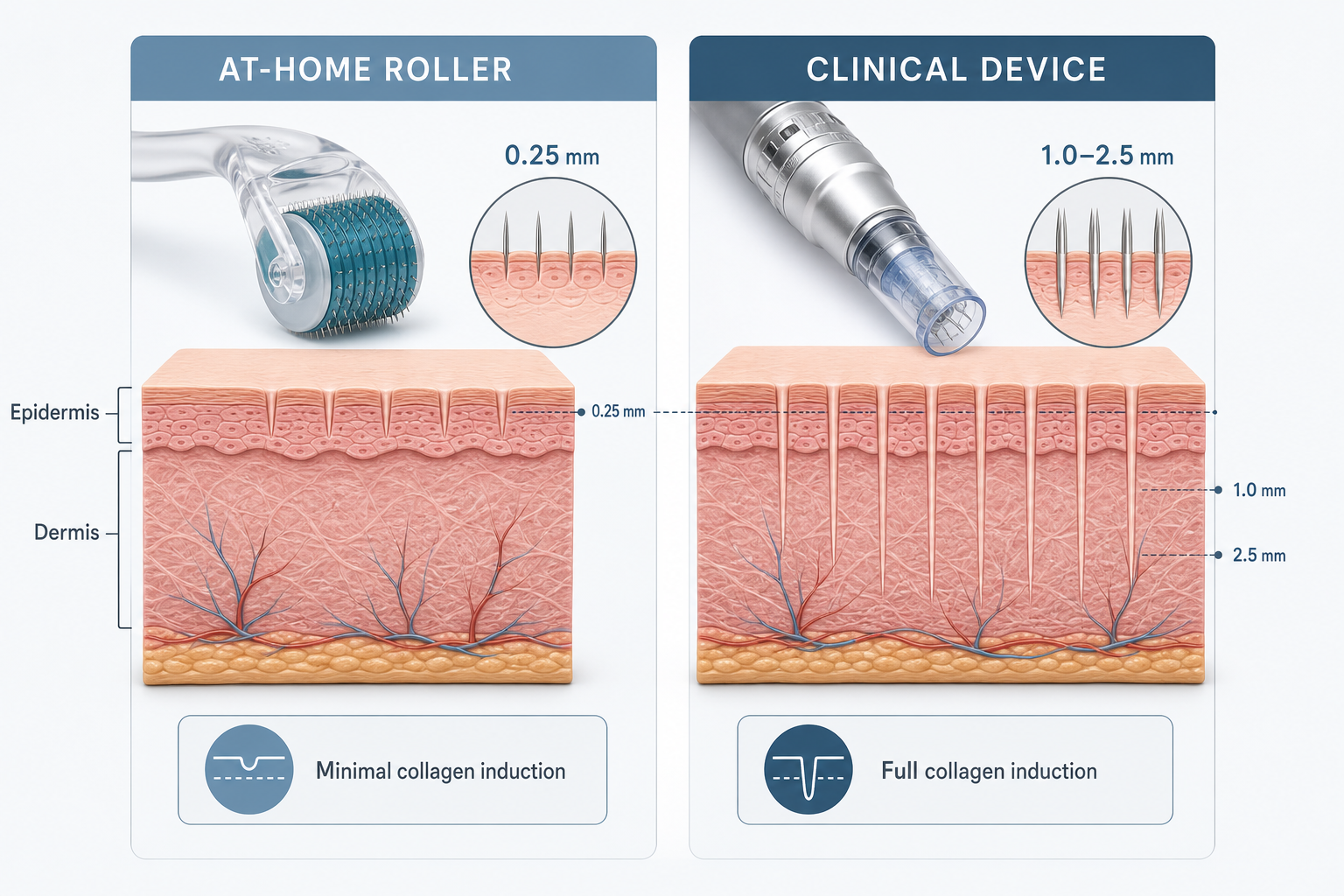
- Clinical needle depths (1.0–2.5 mm) reach the fibroblast-rich dermis and produce meaningful collagen induction; at-home rollers at 0.25 mm generally do not.
- Newly deposited collagen may persist for several years, but results depend on the number of sessions, needle depth, skin condition, and individual healing response.
- Microneedling is not suitable for everyone — active infections, certain medications, and a history of keloid scarring are among the key contraindications.
What Is Microneedling?
Microneedling is a skin treatment in which a device fitted with fine, sterile needles creates thousands of tiny punctures — microchannels — across the surface of the skin. These punctures are shallow enough to avoid permanent damage but deep enough to initiate a controlled healing response in the dermis. The treatment is performed using either a manual dermaroller or, more commonly in clinical settings, an automated microneedling pen with a disposable needle cartridge. The SkinPen was the first device to receive FDA clearance for microneedling, and several other automated pen devices are now widely used in aesthetic practice.
The term collagen induction therapy reflects the primary goal: to use the body’s own repair mechanisms to rebuild the structural proteins — collagen and elastin — that give skin its firmness and resilience. Unlike laser resurfacing or chemical peels, microneedling does not remove the outer skin layer. It works entirely by activating the skin’s internal repair biology, which is why it is sometimes described as a treatment that adds nothing to the skin but prompts the skin to renew itself.
The Biological Mechanism: What Happens Inside the Skin
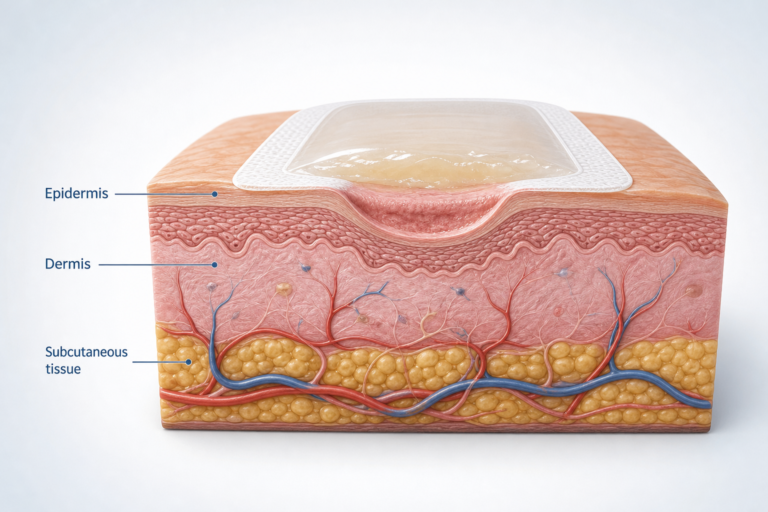
Understanding how microneedling works requires a brief look at the skin’s architecture. The epidermis is the outer protective layer; beneath it lies the dermis, which contains fibroblasts — the cells responsible for producing collagen, elastin, and the extracellular matrix (ECM). The dermal-epidermal junction separates these two layers and plays an important role in skin integrity. As skin ages, fibroblast activity slows, collagen fibres become disorganised, and the ECM loses glycosaminoglycans (GAGs) — the molecules that help retain moisture and structural support. Microneedling targets this deeper dermal environment.
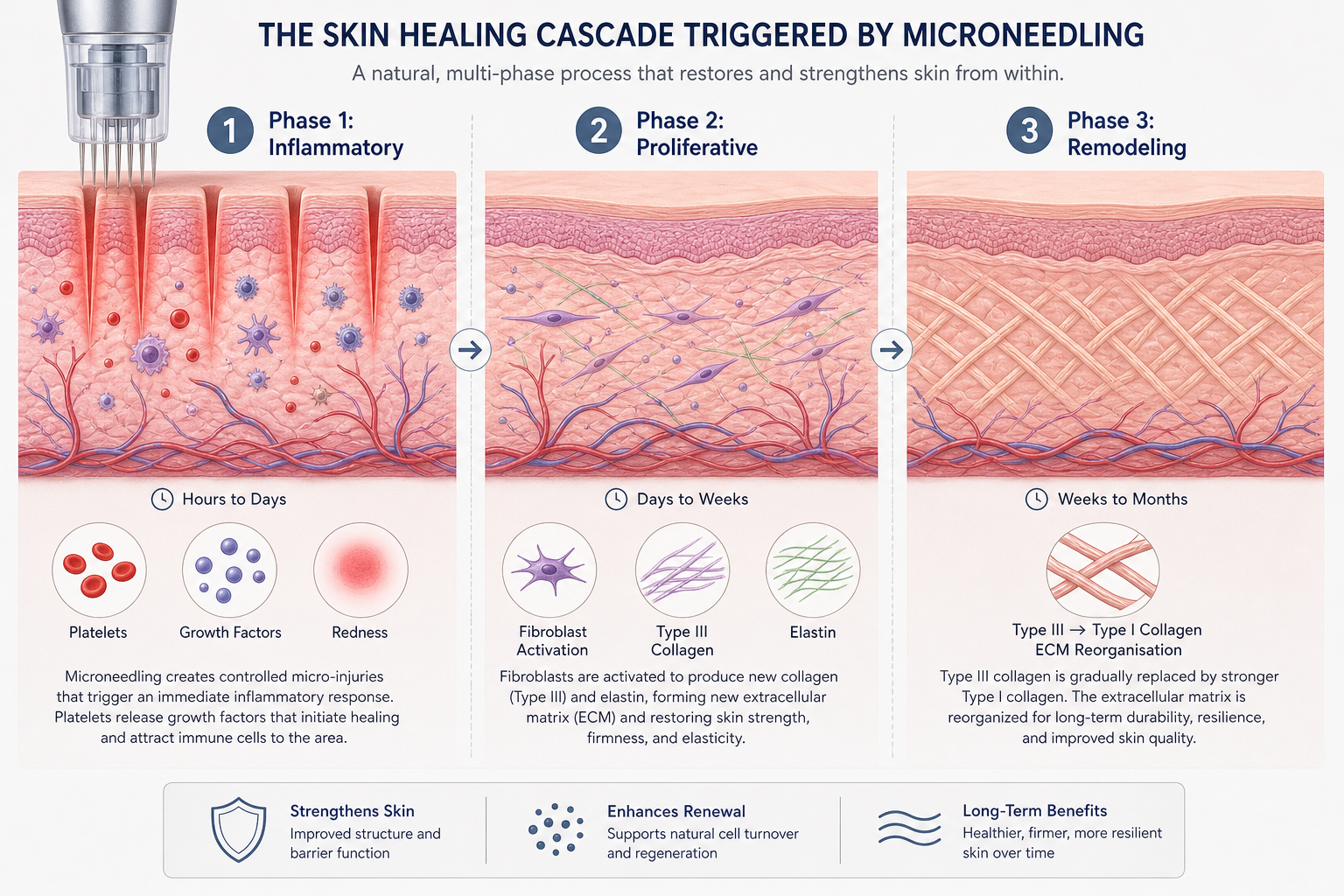
When needles penetrate the skin, they create controlled micro-injuries that are invisible to the naked eye but are sufficient to activate the wound-healing cascade. This cascade proceeds through three overlapping phases, each contributing to the eventual improvement in skin quality.
Phase 1: The Inflammatory Phase
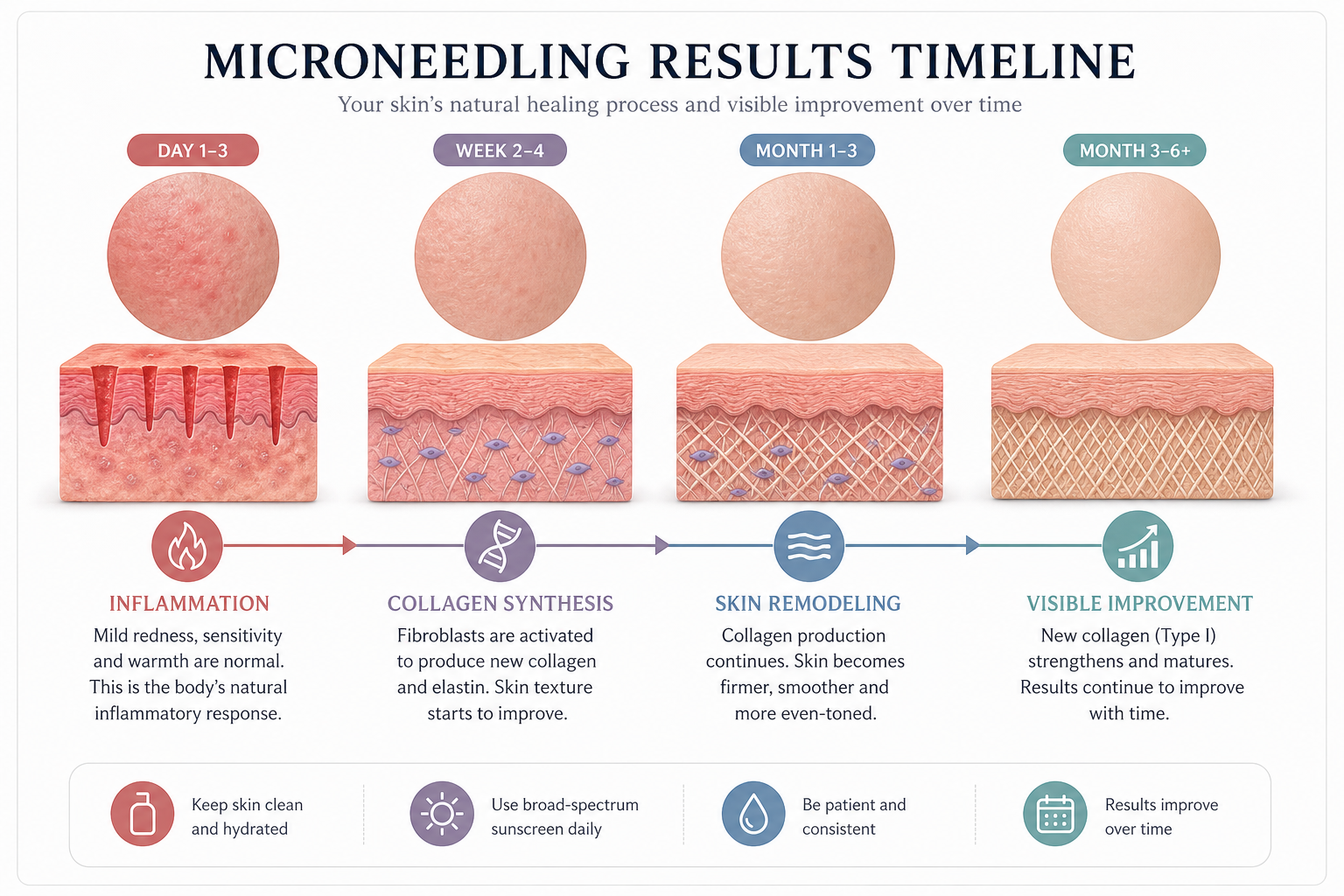
Within minutes of needling, platelets aggregate at the sites of micro-injury and begin to degranulate, releasing a range of growth factors including transforming growth factor-beta (TGF-β) and platelet-derived growth factor (PDGF). These signalling molecules act as chemical messengers, recruiting neutrophils and macrophages to the treatment area. The inflammatory mediators and cytokines released during this phase serve a dual purpose: they initiate tissue repair and they directly stimulate fibroblast activation. The skin appears red and feels warm during this phase, which typically lasts 24 to 72 hours. This early redness is a sign that the healing process has begun, not a sign of damage.
Phase 2: The Proliferative Phase
Over the following days to weeks, activated fibroblasts migrate into the treatment zone and begin producing new structural proteins. The first collagen laid down is Type III collagen — a softer, more flexible form that acts as a scaffold for tissue repair. Fibroblasts also produce elastin fibres, which restore the skin’s ability to spring back after movement, and glycosaminoglycans, which attract water and help restore the plumpness of the extracellular matrix. Angiogenesis — the formation of new small blood vessels — also occurs during this phase, improving local circulation and nutrient delivery to the remodelling tissue.
Phase 3: The Remodeling Phase
The remodeling phase is the longest and arguably the most important for cosmetic outcomes. Over a period of weeks to several months, the initial Type III collagen is gradually converted into Type I collagen — the denser, stronger form that makes up the majority of healthy adult dermis. This Type III to Type I collagen conversion is what produces the firmer, smoother skin texture that patients notice after a course of microneedling. Collagen fibres also reorganise from a disorganised pattern into a more structured lattice, which improves skin firmness and reduces the appearance of scars and fine lines. Histological studies — analyses of skin biopsies — have confirmed measurable increases in collagen and elastin density following microneedling, with some research demonstrating improvements in dermal thickness that persist well beyond the treatment period. Peer-reviewed literature, including reviews published in journals indexed on PubMed, supports the view that newly deposited collagen may remain structurally intact for several years before natural degradation occurs.
Why Needle Depth Determines Results
One of the most clinically important variables in microneedling is needle depth, because it determines which layer of the skin is targeted and therefore how much collagen induction occurs. Fibroblasts — the cells that produce collagen — are concentrated in the papillary and reticular dermis, which begins roughly 0.5 mm below the skin surface and extends to approximately 2.0–2.5 mm in most body areas.
| Needle Depth | Skin Layer Reached | Typical Use | Expected Downtime |
|---|---|---|---|
| 0.25 mm (at-home) | Superficial epidermis | Product absorption enhancement | Minimal to none |
| 0.5 mm | Dermal-epidermal junction | Mild texture refinement, pore size | 24 hours |
| 1.0–1.5 mm | Papillary dermis | Fine lines, early scarring, pigmentation | 24–48 hours |
| 1.5–2.5 mm | Reticular dermis | Atrophic acne scars, stretch marks, skin laxity | 48–72 hours or more |
At-home dermarollers typically use needle depths of 0.25 mm, which penetrate only the superficial epidermis. At this depth, the micro-injuries are too shallow to reach the fibroblast-rich dermis, meaning meaningful collagen induction does not occur. At-home devices may modestly improve the absorption of topical serums through the microchannels they create, but they should not be expected to produce the structural skin changes achievable with clinical treatment. Professional microneedling at 1.0–1.5 mm or deeper reaches the dermis directly, activating fibroblasts and initiating the full wound-healing cascade described above.
What Skin Conditions May Microneedling Help?
Because microneedling stimulates broad dermal remodeling rather than targeting a single chromophore or molecule, it may be useful for a range of skin concerns. The evidence base is strongest for atrophic acne scarring, where multiple randomised controlled trials have demonstrated statistically significant improvements in scar depth and texture. The treatment may also help with:
- Fine lines and wrinkles — particularly superficial lines where increased collagen density can improve skin firmness
- Enlarged pores — remodeling of the surrounding dermis can reduce the appearance of pore size
- Stretch marks (striae distensae) — deeper needling may improve the texture and colour of established stretch marks, though results are variable
- Hyperpigmentation and uneven skin tone — microneedling may help disperse excess melanin and improve overall tone, though it is not a first-line treatment for melasma and carries a risk of worsening pigmentation in some skin types
- Skin laxity — increased collagen and elastin production may improve mild to moderate skin firmness, particularly when combined with radiofrequency (RF microneedling)
- Hair loss — emerging evidence, including meta-analyses examining microneedling combined with minoxidil for androgenetic alopecia, suggests that needling the scalp may enhance minoxidil absorption and independently stimulate follicular activity, though this remains an area of active research
It is important to note that microneedling does not add volume, does not lift significantly lax tissue, and is not a substitute for treatments targeting fat, muscle, or deep structural anatomy. Realistic expectations are essential.
Combination Treatments: Why Timing Matters
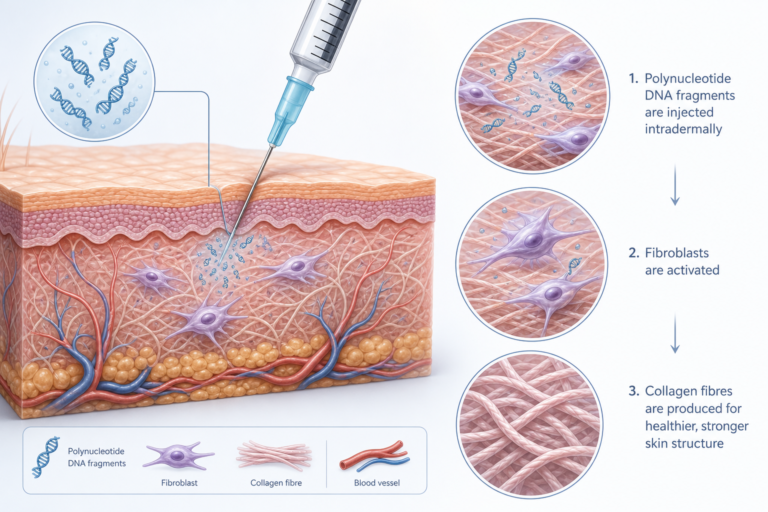
The microchannels created during microneedling remain temporarily open for a short window after treatment — typically one to two hours — during which the skin’s permeability is significantly increased. This is the scientific rationale for applying active serums, platelet-rich plasma (PRP), exosomes, or polynucleotide-rich preparations (PDRN) immediately after needling. These substances can penetrate far more deeply through open microchannels than they would through intact skin, potentially amplifying the biological response.
PRP combined with microneedling is the most studied combination approach. Platelet-rich plasma contains concentrated growth factors that complement and extend the signalling initiated by the wound-healing cascade, potentially accelerating fibroblast proliferation and collagen synthesis. Exosome-enhanced microneedling is a newer approach with a growing evidence base, though long-term clinical data remain limited. When considering any combination treatment, it is important to ensure that only preparations specifically formulated and approved for skin application are used — not all topical products are safe to apply to needled skin.
Skin Type Considerations and the Risk of Post-Inflammatory Hyperpigmentation
Microneedling is generally considered suitable across a broader range of skin tones than many laser-based treatments, because it does not generate heat that selectively targets melanin. However, post-inflammatory hyperpigmentation (PIH) — darkening of the skin in response to inflammation — remains a meaningful risk, particularly in individuals with Fitzpatrick skin types IV to VI (medium-brown to dark skin tones). PIH occurs when melanocytes respond to the inflammatory phase of healing by producing excess melanin.
To reduce PIH risk in darker skin tones, experienced practitioners may use lower needle depths, fewer passes, and a more conservative treatment interval. Pre-treatment skin preparation with topical agents such as vitamin C or azelaic acid, and careful sun avoidance before and after treatment, are also commonly recommended. Any patient with a history of PIH should discuss this risk explicitly with their practitioner before proceeding.
What to Expect: Treatment Experience and Results Timeline
A clinical microneedling session typically begins with the application of a topical anaesthetic cream, which is left on the skin for 20 to 45 minutes to minimise discomfort. The practitioner then passes the microneedling device across the treatment area in multiple directions — horizontal, vertical, and oblique — to ensure even coverage. The sensation is often described as a mild scratching or vibrating pressure. Treatment time for the face is usually 20 to 40 minutes depending on the area covered and the device used.
Immediately after treatment, the skin appears red and may feel warm or tight, similar to mild sunburn. This is the expected inflammatory response. Over the following 24 to 72 hours, redness typically subsides, and some patients experience mild flaking or dryness as the epidermis repairs. Deeper treatments may involve more pronounced redness and up to seven days of visible recovery.
| Timeframe | What Is Happening | What You May Notice |
|---|---|---|
| Day 1–3 | Inflammatory phase; platelet and immune cell activity | Redness, warmth, mild swelling |
| Day 3–7 | Early proliferative phase; fibroblast migration begins | Redness fading, possible dryness or flaking |
| Week 2–4 | Active collagen and elastin synthesis | Skin may feel smoother; subtle glow |
| Month 1–3 | Type III to Type I collagen conversion; ECM remodeling | Visible improvement in texture, tone, scar depth |
| Month 3–6+ | Continued remodeling; collagen reorganisation | Progressive firming; scar improvement continues |
Most practitioners recommend a course of four to six sessions spaced four to six weeks apart for optimal results. A single session initiates the process but is unlikely to produce the cumulative collagen deposition that a full course achieves. Maintenance sessions every six to twelve months may help sustain results over time.
Aftercare: Why the Rules Are Tied to the Mechanism
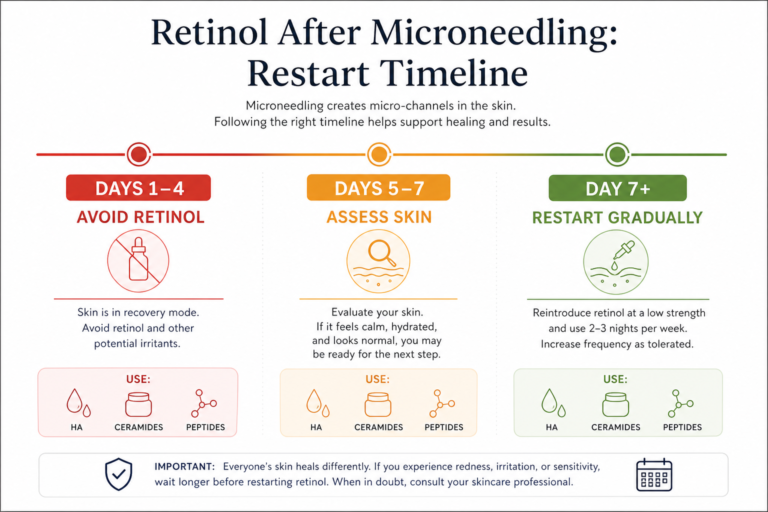
Post-treatment aftercare instructions are directly linked to the biology of the wound-healing cascade, not arbitrary restrictions. During the first 24 to 72 hours, the skin barrier is disrupted and the inflammatory phase is active. Applying retinoids, alpha-hydroxy acids (AHAs), or other exfoliating actives during this window can intensify irritation, compromise barrier recovery, and increase PIH risk — because these ingredients are themselves mildly inflammatory and the skin’s tolerance is temporarily reduced.
Sun exposure should be avoided for at least one week after treatment, as UV radiation can trigger melanocyte activity during the vulnerable inflammatory phase, increasing the risk of pigmentation changes. Gentle, fragrance-free moisturisers and broad-spectrum SPF are the standard recommendations for the recovery period. Strenuous exercise, saunas, and swimming pools are typically avoided for 24 to 48 hours to reduce the risk of infection through open microchannels and to avoid excessive heat during the inflammatory phase.
Radiofrequency Microneedling: An Important Variant
Radiofrequency (RF) microneedling combines the collagen induction mechanism of standard microneedling with the delivery of radiofrequency energy through the needle tips directly into the dermis. The RF energy generates controlled thermal injury at a precise depth, adding a heat-based collagen contraction and remodeling effect to the mechanical stimulus of the needles. Devices such as Morpheus8 and Profound use this approach. RF microneedling is particularly used for skin laxity and deeper structural remodeling, and may produce more pronounced tightening than standard microneedling alone. It also typically involves more downtime and a higher cost per session. The two approaches are not interchangeable — the choice depends on the patient’s skin concern, skin type, and treatment goals.
Who May Not Be Suitable for Microneedling
Microneedling is contraindicated in certain situations where the treatment could cause harm or where healing may be impaired. Key absolute contraindications include:
- Active skin infection — bacterial, viral (including active cold sores), or fungal infections in the treatment area
- Current or recent isotretinoin (Accutane) use — a waiting period of at least six months after completing isotretinoin is generally recommended, as the medication impairs wound healing
- History of keloid or hypertrophic scarring — microneedling may stimulate excessive scar tissue formation in susceptible individuals
- Blood clotting disorders or anticoagulant therapy — increased bleeding risk
- Scleroderma or active autoimmune skin conditions — the inflammatory stimulus may exacerbate these conditions
Relative contraindications — situations requiring careful clinical assessment rather than automatic exclusion — include active rosacea, recent dermal filler treatment in the area, pregnancy, and certain autoimmune conditions. A thorough consultation with a qualified practitioner is essential to assess individual suitability.
Frequently Asked Questions
How many microneedling sessions are typically needed?
Most practitioners recommend a course of four to six sessions for meaningful collagen induction, spaced four to six weeks apart to allow each healing cycle to complete before the next treatment. The exact number depends on the skin concern being addressed — atrophic acne scars generally require more sessions than mild texture concerns.
How long do microneedling results last?
The collagen deposited through microneedling is genuine structural tissue, not a temporary filler. Peer-reviewed research suggests that newly formed collagen may persist for several years before natural degradation occurs. However, the skin continues to age, so maintenance sessions are commonly recommended every six to twelve months to sustain improvements.
Is microneedling painful?
With topical anaesthetic cream applied beforehand, most patients describe the sensation as mild pressure or a light scratching feeling rather than sharp pain. Discomfort varies with needle depth — deeper treatments for scarring or stretch marks may be more uncomfortable than superficial sessions for texture refinement.
Can microneedling be used on all skin tones?
Microneedling can be performed across a wide range of Fitzpatrick skin types, but the risk of post-inflammatory hyperpigmentation (PIH) is higher in medium to dark skin tones. Practitioners experienced in treating diverse skin types will adjust needle depth, pass count, and aftercare accordingly. A thorough pre-treatment assessment is important.
What is the difference between at-home and professional microneedling?
At-home dermarollers use needle depths of approximately 0.25 mm, which reach only the superficial epidermis and do not penetrate the fibroblast-rich dermis. This means they cannot produce meaningful collagen induction. Professional devices operate at 1.0–2.5 mm under controlled, sterile conditions, reaching the dermis and initiating the full wound-healing cascade. The two are not equivalent in mechanism or outcome.
Can microneedling be combined with other treatments?
Yes. Microneedling is frequently combined with PRP, exosomes, or topical growth factor serums applied immediately after treatment, when open microchannels allow deeper penetration of active ingredients. It may also be used alongside other skin treatments in a planned programme, though the timing and sequencing should be guided by a qualified practitioner to avoid over-treating the skin.
Does microneedling help with hair loss?
There is growing clinical interest in scalp microneedling for androgenetic alopecia, particularly when combined with minoxidil. The proposed mechanisms include enhanced minoxidil absorption through microchannels and direct stimulation of growth factors in the scalp dermis. Evidence from recent meta-analyses is encouraging, though this application is still considered an emerging area and results vary between individuals.
Is Microneedling the Right Treatment to Discuss with Your Practitioner?
Microneedling — or collagen induction therapy — is a well-supported, minimally invasive approach to skin remodeling with a clear biological rationale and a growing body of peer-reviewed evidence. It works by activating the skin’s own wound-healing cascade, stimulating fibroblast activation, neocollagenesis, and elastin production in the dermis. The results are gradual and cumulative, reflecting genuine structural changes in the extracellular matrix rather than surface-level effects.
It is not a treatment for everyone. Patients with active infections, a history of keloid scarring, or those currently taking isotretinoin are not suitable candidates. Those with darker skin tones require careful assessment to manage PIH risk. And while the evidence for acne scarring and skin texture is robust, expectations for conditions such as deep skin laxity or severe melasma should be realistic and discussed openly.
If you are considering microneedling for acne scars, fine lines, skin texture, or another concern, a consultation with a qualified aesthetic practitioner or dermatologist is the appropriate starting point. They can assess your skin type, medical history, and goals to determine whether microneedling — alone or as part of a combination approach — is likely to be beneficial for you.