Nasal Lines Filler: Is It Suitable for Bunny Lines?
Bunny lines — the diagonal creases that appear on the upper sides of the nose when you smile, squint, or scrunch your face — are one of the more nuanced concerns in aesthetic medicine. Patients frequently ask whether nasal lines filler can smooth them, and the honest answer is: it depends on the type of line, and in most cases, filler is not the first-line treatment. This article explains why, when filler may be conditionally appropriate, and what the safer and more effective alternatives look like for most people.
Key Takeaways
- Bunny lines are primarily caused by muscle movement, not volume loss — which means botulinum toxin, not filler, is usually the correct treatment.
- Nasal lines filler may be considered in a narrow set of cases where lines are deeply etched and visible at rest, but only after the dynamic component has been addressed and only by practitioners with advanced nasal anatomy training.
- The nasal region carries a high vascular risk; filler placed incorrectly near the angular artery or lateral nasal artery can cause serious complications including tissue damage and, in rare cases, vision loss.
- Compensatory bunny lines — lines that worsen after forehead or glabella treatment — are common and respond well to targeted botulinum toxin.
- For static lines that do not fully resolve with toxin alone, skin-directed treatments such as polynucleotides or fractional laser are often more appropriate than filler.
What Are Bunny Lines?
Bunny lines are diagonal or oblique creases that form on the nasal sidewall — the skin on either side of the nose, just below the nasal bridge. They get their name from the nose-scrunching expression associated with a rabbit, and they typically appear when a person laughs, smiles broadly, or squints. In some people, they are barely noticeable; in others, they become prominent enough to be a cosmetic concern, particularly in photographs or on video calls.
The lines form because the thin nasal skin in this area is pulled and folded by the underlying nasalis muscle and surrounding muscles including the procerus and, in some cases, the levator labii superioris alaeque nasi (LLSAN). Recent anatomical research published in 2025 has identified what is described as the “bunny triangle” — a non-muscular interval on the nasal sidewall where the skin deforms passively as adjacent muscles contract. This finding is clinically significant because it means the crease itself does not sit directly over the nasalis muscle belly, which has implications for where injections should be placed.
Bunny lines are more common in people with expressive faces, those who have had prior treatment to neighbouring areas, and those with naturally thin nasal skin that folds easily under muscular tension.
Dynamic vs. Static Bunny Lines: Why the Distinction Matters
The single most important factor in deciding whether nasal lines filler is appropriate — or whether botulinum toxin should be used instead — is whether the lines are dynamic or static.
Dynamic bunny lines are only visible during facial expression. When the face is at rest, the skin is smooth. These lines exist because the nasalis muscle is actively contracting and folding the skin. Filler cannot address this cause; placing volume into a crease that is created by movement will not prevent the movement from occurring, and the filler may shift or look unnatural when the face is animated. Botulinum toxin, which temporarily reduces muscle activity, is the appropriate treatment for dynamic nasal sidewall wrinkles.
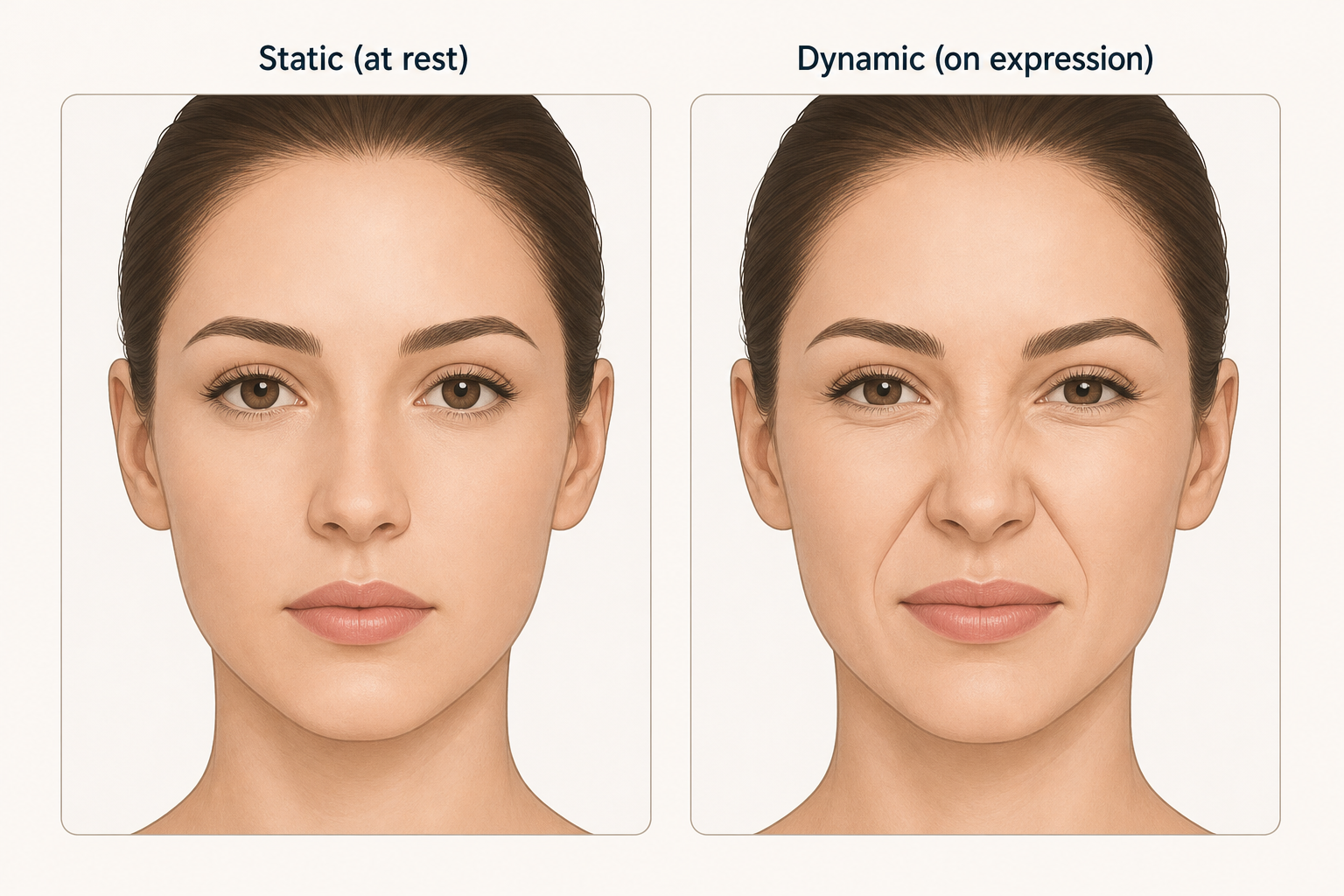
Static (etched) bunny lines are visible even when the face is completely at rest. They represent a more established change in the skin — the repeated folding over time has left a permanent crease. These lines may have both a dynamic component (worsening on expression) and a structural component (present at rest). For static or etched lines, botulinum toxin alone may not fully resolve the appearance, and additional skin-directed treatments or, in selected cases, conservative filler may be considered.
| Line Type | Visible at Rest? | Primary Treatment | Filler Appropriate? |
|---|---|---|---|
| Dynamic bunny lines | No — only on expression | Botulinum toxin | No |
| Mild static lines | Faintly, at rest | Botulinum toxin first; reassess | Rarely, with caution |
| Deep etched static lines | Yes, clearly at rest | Toxin + skin-directed treatment or filler | Conditionally, by experienced practitioner only |
Why Nasal Lines Filler Is Usually Not Appropriate
Most bunny lines are dynamic in nature, which immediately makes filler an unsuitable primary treatment. But even when lines have a static component, there are additional reasons why nasal lines filler requires careful consideration.
The Cause Is Muscular, Not Volumetric
Dermal filler works by adding volume beneath the skin to smooth a depression or restore lost tissue. Bunny lines are not caused by volume loss — they are caused by the nasalis muscle and surrounding muscles repeatedly folding thin nasal skin. Placing hyaluronic acid filler into a crease that is actively created by muscle movement does not address the underlying mechanism. The muscle continues to contract, the skin continues to fold, and the filler may be displaced or may create an uneven appearance during expression.
Thin Nasal Skin Makes Filler Difficult to Conceal
The skin over the nasal sidewall is among the thinnest on the face and is tightly adherent to the underlying structures. This means that even small amounts of filler placed superficially can be visible as a lump or ridge, and deeper placement carries its own risks. Unlike areas such as the cheeks or lips where filler can be placed within more forgiving tissue planes, the nasal region offers very little margin for error in terms of product placement and volume.
Vascular Risk in the Nasal Region
The nasal area is one of the highest-risk zones for vascular complications from filler. The angular artery and lateral nasal artery run close to the nasal sidewall, and inadvertent injection into or near these vessels can cause vascular occlusion — a blockage that cuts off blood supply to surrounding tissue. This can result in skin ischemia, tissue necrosis, and in the most serious cases, retrograde embolism through communicating vessels to the ophthalmic artery, which carries a risk of permanent vision loss. The nasal region has been identified in clinical literature as one of the sites most associated with filler-induced blindness. This does not mean nasal filler is never performed, but it does mean that any filler in this area must be approached with advanced anatomical knowledge, appropriate technique, and the availability of hyaluronidase — the enzyme used to dissolve hyaluronic acid filler in an emergency.
When Nasal Lines Filler May Be Considered
There is a narrow clinical window in which filler may be appropriate for bunny lines. This applies to patients with deep, static (etched) nasal sidewall wrinkles that remain clearly visible at rest after the dynamic component has been treated with botulinum toxin. The recommended approach in these cases is treatment sequencing: administer botulinum toxin first, allow two to four weeks for the full effect to develop, and then reassess whether a residual static line warrants further intervention.
If a static line persists after the dynamic component has been addressed, a very small, superficial, and conservative volume of hyaluronic acid filler may be considered by a practitioner with specific training in nasal anatomy and vascular risk management. The volume used in this context is typically minimal, and the goal is modest improvement rather than complete elimination of the line. Patients should understand that the result may be subtle and that the risks in this area are meaningfully higher than in lower-risk zones such as the nasolabial folds or lips.
This approach is not appropriate for the majority of patients presenting with bunny lines, and it should only be undertaken after a thorough clinical assessment and an honest discussion of the risk-to-benefit ratio.
Botulinum Toxin as the Primary Treatment for Bunny Lines
For most patients with dynamic bunny lines, botulinum toxin — commonly referred to by brand names such as Botox, Dysport, or Xeomin — is the appropriate and effective treatment. The neuromodulator temporarily reduces the activity of the nasalis muscle, which decreases the folding of the nasal sidewall skin during expression.
Based on current anatomical understanding, including the bunny triangle research, injection placement is typically targeted at the borders of the nasalis muscle rather than directly into the crease itself. This is because the crease forms over a passive deformation zone, not directly over the muscle belly, and injecting into the crease rather than the muscle may be less effective and carry a higher risk of spreading to adjacent muscles.
One of the most important adjacent muscle risks is unintended spread to the lip elevator muscles, particularly the LLSAN. If botulinum toxin diffuses to this muscle, it can cause a temporary asymmetric smile or affect the upper lip, which may be particularly noticeable in patients who are concerned about a gummy smile or who have a long upper lip. This is why conservative dosing and precise placement are important, and why patients should disclose any concerns about their smile or lip movement before treatment.
Results from botulinum toxin for bunny lines typically become visible within three to fourteen days and generally last three to four months, after which the treatment can be repeated. Most patients find that with consistent treatment over time, the lines become less deeply etched even when the toxin is not active.
Compensatory Bunny Lines: A Common and Underrecognised Pattern
A significant proportion of patients who seek treatment for bunny lines develop them — or notice them becoming more prominent — after having botulinum toxin injected into the forehead or glabellar lines (frown lines between the brows). This is known as the compensatory bunny lines phenomenon.
When the frontalis muscle (forehead) or corrugator and procerus muscles (glabella) are relaxed by botulinum toxin, the face naturally recruits neighbouring muscles to achieve similar expressions. The nasalis muscle may become more active as a result, causing nasal sidewall wrinkles to appear or worsen. Patients who notice new bunny lines after a forehead or glabella treatment are experiencing this compensatory pattern, and it is entirely addressable with targeted botulinum toxin to the nasal area as part of a broader upper-face treatment plan.
Understanding this mechanism helps explain why bunny line treatment is often discussed as part of a combination upper-face approach rather than as an isolated concern. Treating the glabella and forehead without addressing the nasalis in patients prone to compensation may simply shift the visible lines from one area to another.
Who May Be a Suitable Candidate for Bunny Line Treatment
The following factors generally support suitability for botulinum toxin treatment of bunny lines:
- Prominent dynamic nasal sidewall wrinkles that appear on smiling, laughing, or squinting
- Lines that have developed or worsened after prior forehead or glabella treatment (compensatory pattern)
- A desire for upper-face balance as part of a broader treatment plan
- Mild early static lines faintly visible at rest, where toxin alone may be sufficient
- Good general health with no relevant contraindications
- Realistic expectations about the degree of improvement and the temporary nature of results
Nasal lines filler specifically may be considered in a much narrower group: patients with deep etched static lines that persist after botulinum toxin has been optimised, who have been assessed by a practitioner experienced in nasal anatomy, and who understand and accept the higher vascular risk associated with this area.
Who May Not Be a Suitable Candidate
Certain factors may make bunny line treatment inadvisable or require careful clinical assessment before proceeding:
- Pregnancy or breastfeeding: Botulinum toxin and dermal fillers are generally avoided during pregnancy and breastfeeding.
- Neuromuscular conditions: Conditions such as myasthenia gravis, Lambert-Eaton syndrome, multiple sclerosis, or motor neurone disease may affect how botulinum toxin behaves and are generally considered contraindications.
- Active skin infection or inflammation: Treatment should not be performed over infected or actively inflamed skin.
- Prior rhinoplasty or nose thread: Previous surgical rhinoplasty or nose thread procedures can alter the vascular anatomy and tissue planes of the nose, significantly increasing the risk of complications from any nasal injection. This is a genuine contraindication that is often underappreciated.
- Recent nose filler: Existing filler in the nasal area changes the tissue environment and vascular risk profile; additional filler should only be considered after careful assessment.
- Primary concern is gummy smile or lip movement: If a patient’s main concern involves the upper lip or gummy smile, treating the nasalis with botulinum toxin risks adjacent muscle conflict with the lip elevator, potentially worsening the very concern the patient wants to address.
- Very faint lines only on extreme expression: Patients with minimal lines that are only visible in extreme expressions may find the benefit marginal relative to the cost and any associated risk.
- Allergy to product components: Known allergy to botulinum toxin, hyaluronic acid, or any filler component is a contraindication.
Alternative Treatments for Static Bunny Lines
When botulinum toxin alone does not fully resolve bunny lines — particularly when a static or etched component remains — there are skin-directed alternatives that may be more appropriate than filler for many patients.
Polynucleotides
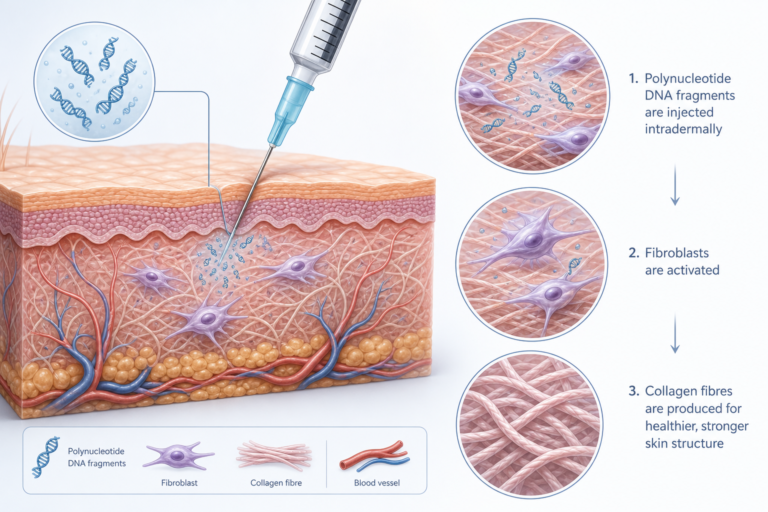
Polynucleotides are injectable treatments derived from purified DNA fragments that stimulate collagen production and improve skin quality over time. When injected superficially into the nasal sidewall skin, they may help improve the texture and resilience of thin nasal skin, gradually reducing the appearance of etched lines. This is a skin-directed treatment rather than a volumising one, which makes it more mechanistically appropriate for lines caused by skin quality changes rather than volume loss.
Fractional Laser and Skin Resurfacing
Fractional laser treatments and other forms of skin resurfacing can improve the appearance of fine static lines by stimulating collagen remodelling in the skin. These treatments work on the skin surface and do not carry the same vascular risks as injectable fillers in the nasal area. They may be particularly useful for patients with multiple fine static lines across the nasal sidewall rather than a single deep crease.
Phenol-Croton Peel
A 2024 published case report described the use of a superlocalized phenol-croton peel for deep static bunny lines, with promising results. This is an emerging approach and evidence remains limited to early case reports, but it represents a skin-directed option for patients with deeply etched nasal lines who are not suitable for filler. This treatment should only be considered by practitioners with specific experience in chemical peeling techniques.
What to Expect at a Consultation and Treatment Appointment
A thorough consultation is essential before any treatment for bunny lines. A qualified practitioner will assess the lines at rest and during expression to determine whether they are dynamic, static, or mixed. They will review your medical history, any previous procedures in the nasal area, your current medications, and your aesthetic goals. They should also discuss the realistic degree of improvement, the treatment options available, and the risks specific to your anatomy.
If botulinum toxin is recommended, the appointment itself is brief. The skin is cleaned and small injections are placed with a fine needle. Most patients describe the discomfort as mild. There is typically no significant downtime, though minor redness or swelling at the injection sites may occur for a short period. Patients are usually advised to avoid rubbing the area and to remain upright for a few hours after treatment. Results develop gradually over the following days and are generally fully visible within two weeks.
If filler is being considered for a residual static line, the consultation should include a specific discussion of the vascular anatomy of the nasal region, the availability of hyaluronidase for emergency reversal, and the practitioner’s experience with nasal injections. Patients should feel comfortable asking about the practitioner’s training and their protocol for managing complications before agreeing to proceed.
Frequently Asked Questions
Can filler completely remove bunny lines?
Filler is unlikely to completely remove bunny lines, and for dynamic lines it is not an appropriate treatment at all. Even for static etched lines where filler may be considered, the goal is modest improvement rather than complete elimination. Botulinum toxin is more effective for the dynamic component, and skin-directed treatments may address residual static lines more safely than filler in most cases.
How long does botulinum toxin last for bunny lines?
Results from botulinum toxin for nasal sidewall wrinkles typically last approximately three to four months, after which muscle activity gradually returns and the lines may reappear. With consistent repeat treatments, some patients find that the lines become less pronounced over time even between sessions, as the skin has less opportunity to fold repeatedly.
Will treating my bunny lines affect my smile?
There is a small risk that botulinum toxin placed near the nasalis muscle could spread to the adjacent lip elevator muscles, causing a temporary asymmetric smile or affecting upper lip movement. This risk is minimised by conservative dosing and precise placement by an experienced practitioner. Patients should discuss any concerns about their smile or lip movement before treatment.
I developed bunny lines after my forehead Botox — is this normal?
Yes, this is a recognised pattern known as compensatory bunny lines. When the forehead or glabella muscles are relaxed by botulinum toxin, the nasalis muscle may become more active as the face compensates. This is entirely treatable with targeted botulinum toxin to the nasal area, and many practitioners now include this as part of a routine upper-face treatment plan for patients prone to this pattern.
Is nasal lines filler safe?
Filler in the nasal region carries a higher vascular risk than many other facial areas due to the proximity of the angular artery and lateral nasal artery. Vascular occlusion in this area can have serious consequences. This does not mean nasal filler is never performed, but it does mean it should only be undertaken by practitioners with advanced training in nasal anatomy and vascular risk management, with hyaluronidase immediately available.
Can men have bunny line treatment?
Yes, bunny lines affect men as well as women, and botulinum toxin treatment is appropriate for male patients. Dosing and placement considerations may differ slightly, as male facial muscles tend to be stronger and the desired aesthetic outcome — preserving natural expression while reducing prominent lines — may require a tailored approach. A practitioner experienced in treating male patients will adjust the treatment plan accordingly.
What if I have had a nose job or nose thread — can I still have treatment?
Prior rhinoplasty or nose thread procedures are important factors that must be disclosed at consultation. These procedures can alter the vascular anatomy and tissue structure of the nose, which increases the risk associated with any nasal injection. A practitioner will need to assess your specific situation carefully before recommending any treatment in the nasal area.
Is Nasal Lines Filler the Right Choice for Your Bunny Lines?
For the majority of people with bunny lines, nasal lines filler is not the most appropriate treatment. Dynamic nasal sidewall wrinkles — the kind that appear on expression and are absent at rest — are caused by muscle movement, and botulinum toxin addresses that cause directly and safely. Filler does not resolve the muscular mechanism and introduces meaningful vascular risk in an anatomically complex area.
Where filler may have a limited role is in the management of deep, static etched lines that persist after botulinum toxin has been optimised — and even then, skin-directed treatments such as polynucleotides or fractional laser are often a more appropriate first step. Any decision to use filler in the nasal region should involve a practitioner with specific training in nasal anatomy, a clear discussion of the risks, and the availability of hyaluronidase for reversal if needed.
If you are concerned about bunny lines, the most useful starting point is a consultation with a qualified aesthetic practitioner who can assess whether your lines are dynamic or static, identify any compensatory pattern from prior treatment, and recommend a treatment plan matched to your specific anatomy and goals. A well-considered approach — beginning with the least invasive, most appropriate option — will generally deliver the safest and most satisfying outcome.