Rosacea and Alcohol: Why It Triggers Flares and How to Manage It
Alcohol is one of the most commonly reported triggers for rosacea, yet the relationship between the two is more nuanced than most people realise. Understanding exactly why alcohol provokes a rosacea flare-up — and which drinks are most likely to cause problems — can help you make informed choices rather than simply avoiding every social occasion. This article explains the science behind alcohol and rosacea, ranks drinks by their likely impact, and offers practical strategies for managing your skin.
Key Takeaways
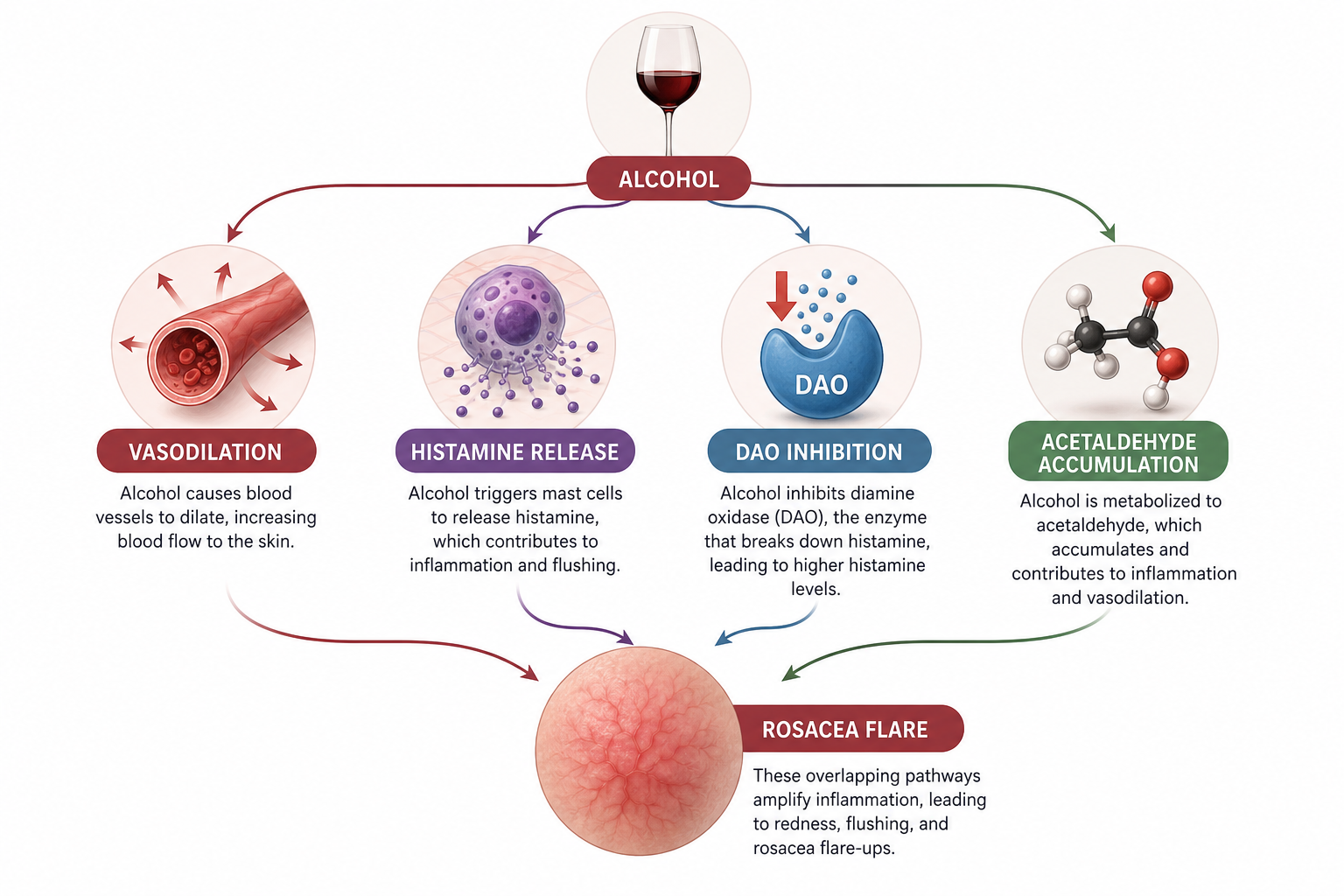
- Alcohol triggers rosacea through several overlapping mechanisms, including vasodilation, histamine release, DAO inhibition, and acetaldehyde accumulation — red wine activates all of these simultaneously.
- A large cohort study published in the Journal of the American Academy of Dermatology (2017) found a dose-dependent association between alcohol consumption and the risk of developing rosacea in women, with white wine and liquor showing the strongest statistical link to new diagnoses.
- Alcohol does not cause rosacea, but it can worsen persistent facial redness and accelerate visible blood vessel development in those who already have the condition.
- Trigger stacking — combining alcohol with spicy food, heat, or sun exposure — significantly amplifies the inflammatory response and should be avoided where possible.
- Low-histamine spirits and alcohol-free alternatives offer practical options for people who want to reduce flare frequency without eliminating social drinking entirely.
Does Alcohol Cause Rosacea?
Alcohol does not cause rosacea. Rosacea is a chronic inflammatory skin condition with a complex origin involving genetic predisposition, vascular reactivity, immune dysregulation, and environmental triggers. The historical association between rosacea and heavy drinking — famously linked to the red-nosed appearance of figures like W.C. Fields — created a damaging stigma that still affects patients today. Many people with rosacea do not drink at all, and many heavy drinkers never develop the condition.
That said, alcohol is a well-established trigger that can provoke and worsen rosacea in people who already have it. A National Rosacea Society survey found that approximately 76% of rosacea patients reported that alcohol triggered their symptoms, making it one of the most frequently cited dietary triggers alongside sun exposure and spicy food. Separately, the JAAD 2017 Nurses’ Health Study II — which followed 82,737 women over 14 years — found a dose-dependent association between alcohol intake and the risk of being newly diagnosed with rosacea, suggesting that long-term alcohol consumption may also contribute to the condition developing in susceptible individuals. It is important to note that this study was conducted exclusively in women, so its findings cannot be automatically applied to men.
Why Does Alcohol Trigger Rosacea? The Mechanisms Explained
Alcohol provokes rosacea through several distinct but overlapping biological pathways. Understanding these mechanisms helps explain why some drinks are far more problematic than others, and why combining alcohol with other triggers can produce a disproportionately severe response.
Vasodilation and Facial Flushing
Ethanol is a potent vasodilator. When alcohol enters the bloodstream, it causes blood vessels throughout the body — including the fine capillaries in the face — to widen. In people with erythematotelangiectatic rosacea, the subtype characterised by persistent facial redness and visible blood vessels, these capillaries are already hypersensitive and prone to dilation. Repeated episodes of vasodilation can gradually worsen telangiectasia (permanently dilated surface vessels) and deepen the background redness that defines this rosacea subtype. The facial flushing that many people experience after drinking is essentially an exaggerated version of this normal vascular response.
Histamine Content and DAO Inhibition
Many alcoholic drinks — particularly fermented ones such as red wine and beer — contain significant amounts of histamine. Histamine is a chemical mediator that triggers inflammation, promotes vasodilation, and activates mast cells in the skin. In people with rosacea, mast cell activation is already a feature of the inflammatory process, so additional histamine from dietary sources can amplify the response considerably.
What makes red wine particularly problematic is a mechanism that goes beyond its histamine content alone. Alcohol inhibits diamine oxidase (DAO), the primary enzyme responsible for breaking down histamine in the gut. This DAO inhibition means that histamine from food and drink is absorbed into the bloodstream rather than being neutralised before it reaches systemic circulation. Red wine therefore delivers a double burden: it introduces histamine directly while simultaneously impairing the body’s ability to clear it. This is why red wine consistently ranks as the most reported alcohol trigger in rosacea surveys.
Acetaldehyde Accumulation
When the body metabolises alcohol, it first converts ethanol into acetaldehyde — a toxic intermediate compound — before breaking it down further into harmless acetic acid. Acetaldehyde itself is a potent vasodilator and inflammatory mediator. In people with reduced activity of the enzyme ALDH2 (aldehyde dehydrogenase 2), acetaldehyde accumulates more rapidly, producing the intense facial flushing known as the alcohol flush reaction. Even in people without ALDH2 deficiency, acetaldehyde contributes to the inflammatory cascade that drives a rosacea flare-up.
Tannins, Tyramine, and Additional Irritants
Red wine also contains tannins — polyphenolic compounds that can trigger histamine release independently of the wine’s direct histamine content — as well as tyramine, another biogenic amine associated with vascular reactivity. These compounds add further layers to red wine’s trigger potential, making it a particularly complex drink for rosacea-prone skin. White wine contains fewer tannins but still carries histamine and DAO-inhibiting properties, which explains why it also features prominently in trigger reports despite being perceived as a lighter option.
Dehydration and Oxidative Stress
Alcohol is a diuretic, meaning it promotes fluid loss and can lead to skin dehydration. Dehydrated skin has a compromised barrier function, making it more reactive to other triggers. Alcohol also generates oxidative stress — an imbalance between free radicals and the body’s antioxidant defences — which contributes to the broader inflammatory environment that sustains rosacea. Long-term alcohol use has been linked to gut dysbiosis (disruption of the gut microbiome), and emerging research suggests that the skin-gut axis may play a role in rosacea pathophysiology, though this area of investigation is still developing and firm clinical conclusions cannot yet be drawn.
Which Alcoholic Drinks Are Worst for Rosacea?
Not all alcoholic drinks carry the same risk. The table below ranks common drinks by their likely trigger potential based on histamine content, tannin levels, fermentation by-products, and reported patient experience. Individual responses vary, and keeping a personal rosacea diary remains the most reliable way to identify your specific triggers.
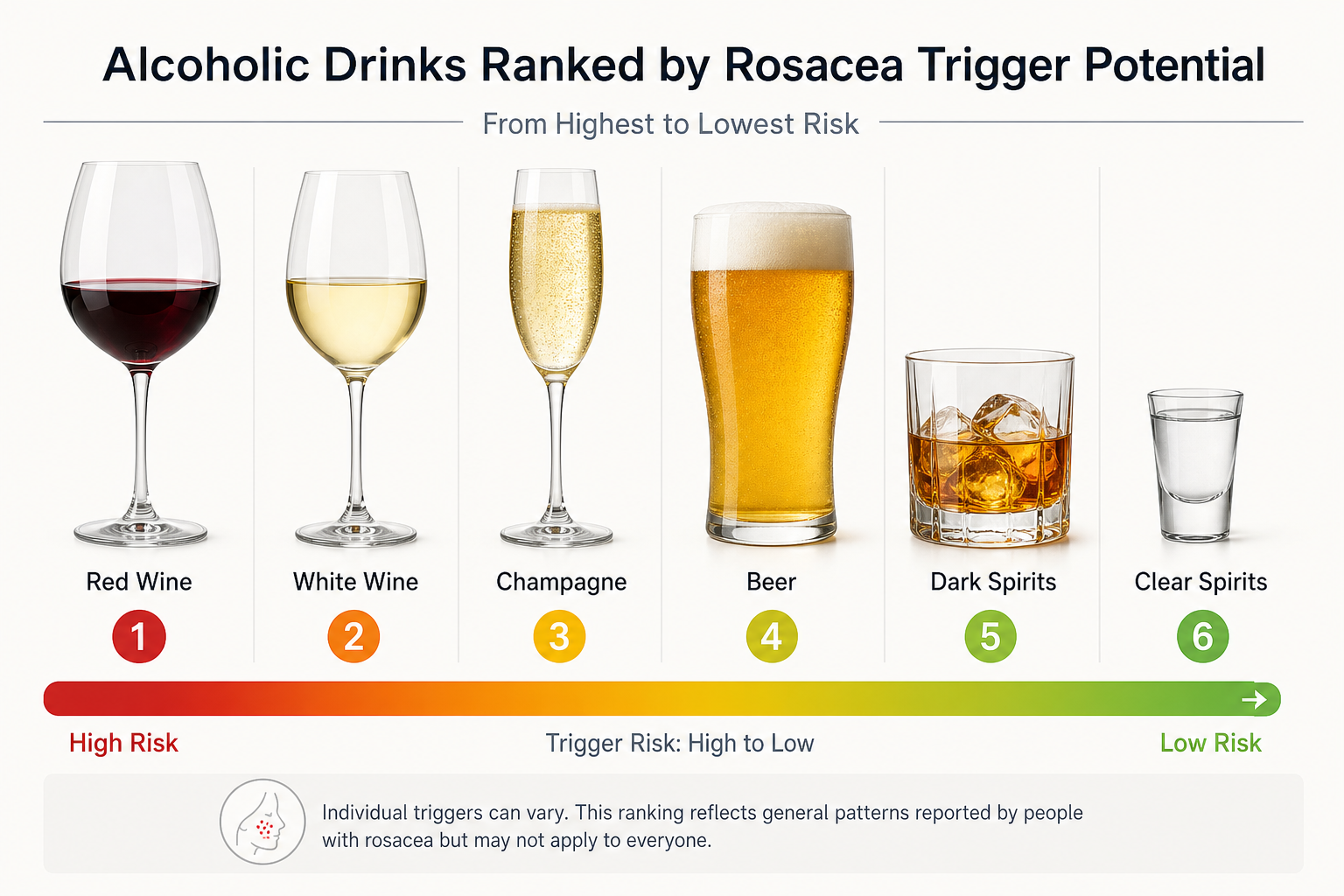
| Drink | Trigger Potential | Primary Reasons |
|---|---|---|
| Red wine | Very high | High histamine content, tannins, tyramine, DAO inhibition, vasodilation |
| White wine | High | Histamine, DAO inhibition, sulphites; lower tannins than red wine |
| Champagne / sparkling wine | High | Histamine, carbonation may accelerate absorption, sulphites |
| Beer / ale | Moderate–high | Fermented grains, histamine, yeast by-products; varies by style |
| Bourbon / whiskey / rum | Moderate | Congeners from barrel ageing, acetaldehyde; lower histamine than wine |
| Gin / vodka / tequila | Lower (but not zero) | Fewer congeners and lower histamine; vasodilation still occurs with any ethanol |
Clear, distilled spirits such as vodka and gin are generally considered lower-histamine spirits compared with fermented drinks, but they are not risk-free. Any alcohol causes vasodilation through the ethanol itself, and the quantity consumed matters as much as the type. The JAAD 2017 study found that white wine and liquor — not red wine — showed the strongest statistical association with developing rosacea over time, which may reflect consumption patterns or unmeasured confounders. This counterintuitive finding highlights the distinction between what triggers an existing flare and what may contribute to the condition developing in the first place.
Trigger Stacking: Why Combining Alcohol with Other Triggers Is Particularly Harmful
One of the most clinically important — yet underappreciated — concepts in rosacea management is trigger stacking. Each individual rosacea trigger produces a degree of vascular and inflammatory response. When multiple triggers occur simultaneously, their effects do not simply add together; they can compound, producing a flare-up that is disproportionately severe compared with any single trigger alone.
A common real-world example is drinking red wine at a warm restaurant while eating a spicy meal. Red wine contributes histamine, DAO inhibition, tannins, and vasodilation. Spicy food activates TRPV1 receptors and releases neuropeptides that further dilate facial blood vessels. Ambient heat adds additional vasodilation. The combined result can be a prolonged, intense flare that takes days to settle, whereas any one of those triggers in isolation might have produced only a mild, transient response. Being aware of trigger stacking — and choosing to moderate one trigger when others cannot be avoided — is a practical and effective management strategy.
Topical Alcohol in Skincare: A Separate but Related Concern
The conversation about rosacea and alcohol should not be limited to what you drink. Topical alcohol in skincare products is a distinct but equally relevant concern for people with rosacea. A National Rosacea Society survey found that approximately 66% of rosacea patients reported that skincare products containing alcohol irritated their skin.
Short-chain alcohols such as ethanol, denatured alcohol (alcohol denat.), and isopropyl alcohol are commonly used in toners, astringents, and some serums as solvents and preservatives. In rosacea-prone skin, these ingredients can disrupt the skin barrier, increase transepidermal water loss, and provoke inflammatory reactions. Witch hazel — often marketed as a natural toner — contains tannins and can act as a co-irritant for sensitive skin despite its botanical origin.
Not all alcohols in skincare are problematic. Fatty alcohols such as cetyl alcohol and cetearyl alcohol are structurally different from short-chain alcohols; they function as emollients and thickeners and are generally well tolerated by rosacea-prone skin. When reviewing ingredient lists, the distinction between these two categories matters considerably. If you have rosacea, checking skincare labels for ethanol, alcohol denat., or isopropyl alcohol is as worthwhile as monitoring your dietary triggers.
Practical Strategies for Managing Alcohol with Rosacea
Completely eliminating alcohol is the most effective way to remove it as a trigger, but it is not the only option. Many people with rosacea choose to manage their consumption thoughtfully rather than abstain entirely. The following strategies can help reduce flare frequency and severity.
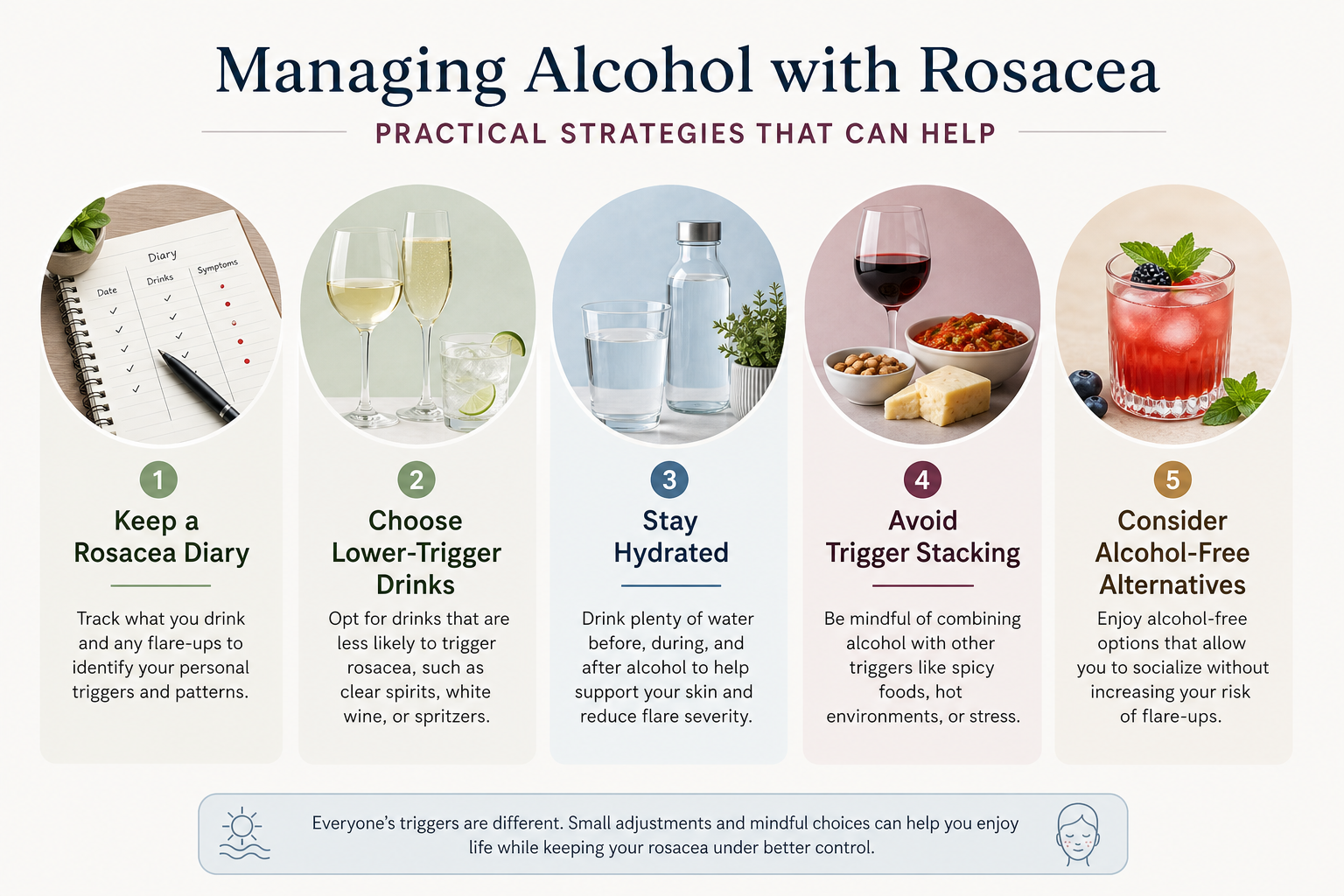
Keep a Rosacea Diary
A rosacea diary is one of the most useful tools for identifying personal triggers, because individual responses vary considerably. To use one effectively, record the following after each potential trigger exposure: the date and time, the specific drink consumed (type, quantity, and approximate alcohol content), any food eaten alongside it, environmental conditions (temperature, sun exposure), physical activity, and the severity and timing of any skin response. Reviewing entries over four to six weeks usually reveals clear patterns. Note that a flare-up may not appear immediately — some responses are delayed by several hours — so logging the full day’s exposures rather than just the most recent meal or drink is important.
Choose Lower-Trigger Drinks
If you choose to drink, opting for low-histamine spirits such as vodka or gin over red wine or beer may reduce — though not eliminate — the likelihood of a flare. Drinking chilled rather than warm drinks may also help, as warmth itself is a vasodilatory stimulus. Mixing spirits with non-citrus, non-spicy mixers avoids adding further triggers through the beverage itself.
Stay Hydrated
Alternating alcoholic drinks with water helps counteract alcohol’s diuretic effect and reduces the degree of skin dehydration. Staying well hydrated supports barrier function and may modestly reduce the intensity of a vascular response, though it will not prevent flushing entirely.
Avoid Trigger Stacking
If you plan to drink, try to minimise other simultaneous triggers. Choose a cool environment over a warm one, avoid spicy food on the same occasion, and limit sun exposure earlier in the day. Reducing the total trigger burden on any given occasion gives your skin the best chance of tolerating a small amount of alcohol without a significant flare.
Consider Alcohol-Free Alternatives
The market for alcohol-free alternatives has expanded considerably in recent years. Non-alcoholic wines, beers, and spirits — as well as thoughtfully constructed mocktails — allow participation in social occasions without the vascular and histamine-related consequences of ethanol. Non-alcoholic wines still contain some histamine from fermentation, so they are not universally safe for all rosacea patients, but they eliminate the vasodilatory effect of ethanol itself. Trying a small amount and monitoring your response in your rosacea diary is a sensible approach.
Will Rosacea Improve If You Stop Drinking?
Reducing or eliminating alcohol is likely to reduce the frequency and severity of alcohol-triggered flare-ups, but it will not cure rosacea. Rosacea is a chronic condition with multiple contributing factors, and alcohol is just one of many potential triggers. Patients who stop drinking often report a noticeable improvement in baseline redness and a reduction in flare frequency, particularly if alcohol was a significant trigger for them. However, other triggers — sun exposure, heat, spicy food, stress, certain skincare ingredients — will continue to provoke symptoms unless they are also addressed.
Trigger avoidance is considered a first-line management strategy by dermatologists, but it works best alongside appropriate medical treatment. Topical treatments such as metronidazole, azelaic acid, and ivermectin address the inflammatory component of rosacea. Topical vasoconstrictors such as brimonidine and oxymetazoline can reduce background redness. Vascular laser and intense pulsed light (IPL) treatments may help with persistent telangiectasia. A dermatologist can assess your rosacea subtype and recommend a treatment plan that combines trigger management with targeted therapy.
Frequently Asked Questions
Does alcohol cause rosacea?
No. Alcohol does not cause rosacea, but it is a well-established trigger that can worsen symptoms in people who already have the condition. Long-term heavy alcohol consumption may increase the risk of developing rosacea in genetically susceptible individuals, based on cohort data, but the condition has multiple causes and many people with rosacea have never consumed alcohol.
What is the best alcohol to drink if you have rosacea?
No alcohol is completely safe for rosacea-prone skin, because ethanol itself causes vasodilation regardless of the drink type. If you choose to drink, clear distilled spirits such as vodka or gin tend to have lower histamine content and fewer congeners than red wine, beer, or dark spirits, making them less likely — though not guaranteed — to trigger a flare. Quantity matters as much as type.
Why does red wine trigger rosacea more than other drinks?
Red wine is particularly problematic because it combines several trigger mechanisms simultaneously: it contains high levels of histamine, tannins, and tyramine; it inhibits the DAO enzyme that normally breaks down histamine in the gut; and the ethanol it contains causes vasodilation. This combination makes red wine the most frequently reported alcohol trigger in rosacea patient surveys.
Can I drink alcohol if I have rosacea?
Many people with rosacea choose to drink in moderation rather than abstain entirely. The key is understanding your personal triggers through a rosacea diary, choosing lower-trigger drinks where possible, avoiding trigger stacking, and staying hydrated. Some individuals find that even small amounts of alcohol reliably provoke a flare, in which case abstaining is the most effective approach. A dermatologist can help you develop a personalised management plan.
Does topical alcohol in skincare affect rosacea?
Yes. Short-chain alcohols such as ethanol, denatured alcohol, and isopropyl alcohol in skincare products can irritate rosacea-prone skin, disrupt the skin barrier, and trigger inflammatory reactions. National Rosacea Society data suggests the majority of rosacea patients are sensitive to topical alcohol. Fatty alcohols (cetyl alcohol, cetearyl alcohol) are structurally different and are generally well tolerated.
How long after drinking does a rosacea flare-up appear?
Facial flushing often begins within minutes of consuming alcohol due to rapid vasodilation. A more sustained inflammatory flare-up — involving redness, papules, or pustules — may develop over several hours or even the following day. This delayed response is one reason why keeping a detailed rosacea diary, logging all exposures throughout the day, is more reliable than trying to identify triggers from memory.
Is the gut microbiome connected to rosacea and alcohol?
Emerging research suggests a link between gut health and rosacea through what is sometimes called the skin-gut axis. Long-term alcohol use can contribute to gut dysbiosis — an imbalance in the gut microbiome — which may influence systemic inflammation and potentially worsen rosacea. This area of research is still developing, and clinical recommendations based on it are not yet established. Maintaining a balanced diet and limiting alcohol remain sensible general health measures.
Managing Rosacea and Alcohol: What to Consider Next
Alcohol is one of the most impactful and modifiable triggers for rosacea, but managing it effectively requires understanding your individual response rather than applying blanket rules. Red wine and other fermented drinks carry the highest trigger potential due to their combined effects on histamine load, DAO inhibition, and vasodilation. Clear spirits carry lower — but not zero — risk. Trigger stacking, topical alcohol in skincare, and the quantity consumed all influence how significantly alcohol affects your skin.
If alcohol consistently provokes a rosacea flare-up despite moderation and trigger management, or if your rosacea is causing persistent facial redness, visible blood vessels, or papules that are affecting your quality of life, a consultation with a dermatologist is worthwhile. Effective treatments exist for all rosacea subtypes, and combining appropriate medical therapy with informed lifestyle choices — including a thoughtful approach to alcohol — offers the best chance of keeping symptoms well controlled.