Vampire Microneedling: How PRP and Microneedling Work Together
Vampire microneedling — also widely known as the vampire facial — combines two established skin rejuvenation techniques: microneedling and platelet-rich plasma (PRP). The idea is that creating controlled micro-injuries in the skin while simultaneously applying your own concentrated plasma may amplify the body’s natural repair response, producing more noticeable improvements in skin texture, tone, and scarring than either treatment alone. This guide explains how the combination works, what the evidence actually shows, who may benefit, and what to realistically expect before booking a consultation.
Key Takeaways
- Vampire microneedling pairs standard microneedling with platelet-rich plasma derived from your own blood, aiming to enhance collagen induction beyond what needling alone achieves.
- Clinical evidence — including split-face study data — suggests meaningful improvement in atrophic acne scars and skin texture, though results vary and the added benefit of topical PRP over injected PRP is still debated.
- The procedure is minimally invasive and uses an autologous treatment (your own blood), which eliminates allergy risk, but it is not without side effects or contraindications.
- A series of three to four sessions spaced four to six weeks apart is typically recommended; results from a full series may last twelve to eighteen months with appropriate maintenance.
- Choosing a licensed, medically qualified provider working in a sterile clinical environment is essential for both safety and outcome quality.
What Is Vampire Microneedling?
Vampire microneedling is a two-part procedure that combines collagen induction therapy (microneedling) with the topical application of platelet-rich plasma prepared from the patient’s own blood. The colloquial name — vampire facial — refers to the blood draw involved and the reddish appearance of PRP when applied to the skin. Despite the dramatic nickname, the procedure is performed in a clinical setting using sterile equipment and follows a straightforward, well-established protocol.
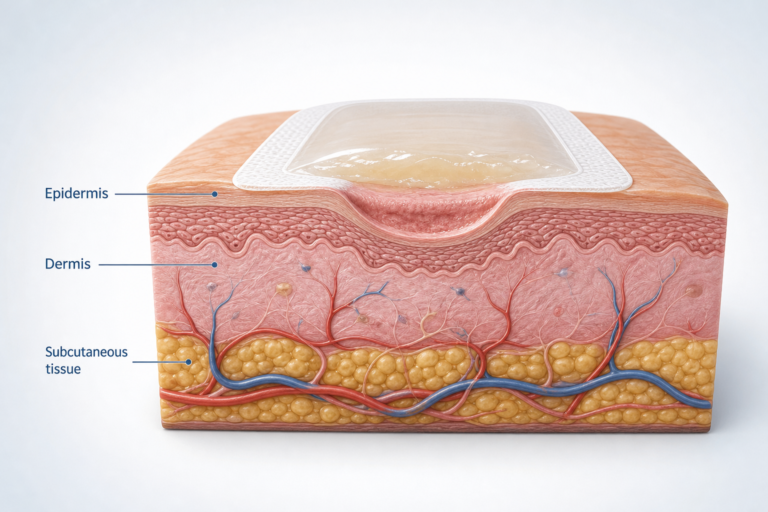
Microneedling on its own uses a handheld device fitted with fine needles — devices such as the SkinPen or DermaPen are commonly used — to create thousands of controlled micropunctures across the treatment area. These micro-injuries trigger the skin’s wound-healing response, stimulating fibroblasts to produce new collagen and elastin. PRP is then applied to the skin during and after the needling pass, allowing the growth factors concentrated in the plasma to penetrate through the open micro-channels and interact directly with the deeper layers of the dermis.
It is worth distinguishing the vampire facial from the vampire facelift, which is a separate and more invasive procedure. The vampire facelift involves injecting PRP alongside dermal filler — typically hyaluronic acid — to restore facial volume and contour. The vampire facial does not use filler and does not address significant volume loss or structural sagging; it targets skin quality, texture, and superficial scarring.
The Science Behind the Combination
Platelet-rich plasma is produced by drawing a small volume of the patient’s blood — usually one to two vials — and spinning it in a centrifuge. The centrifuge separates the blood into its components: red blood cells settle at the bottom, a thin layer of white blood cells sits above them, and the platelet-rich plasma rises to the top. This upper layer is collected and contains a concentration of platelets significantly higher than whole blood, along with a range of growth factors including platelet-derived growth factor (PDGF), transforming growth factor (TGF), vascular endothelial growth factor (VEGF), and epidermal growth factor (EGF).
These growth factors play a central role in tissue repair. When PRP is applied to skin that has been prepared with microneedling, the micro-channels created by the needles allow the plasma to reach the dermis rather than simply sitting on the surface. Once absorbed, the growth factors are thought to accelerate fibroblast activity, support collagen remodeling, and promote cellular turnover — processes that underpin improvements in skin texture, firmness, and scar appearance.
One clinically important variable that is rarely discussed is PRP quality. The platelet concentration in the final product depends on the centrifuge protocol, the number of spins, and the collection technique used by the provider. Higher platelet concentrations are generally associated with greater growth factor release, but there is no universal standard across clinics. This means that outcomes can vary not only between patients but between providers using different preparation methods — a meaningful consideration when comparing results or prices.
Split-face studies — where one side of the face receives microneedling with PRP and the other receives microneedling alone — have shown that the combination can produce greater improvement in atrophic acne scars compared to microneedling alone, with some studies reporting approximately two to three times greater scar score improvement on the PRP-treated side. However, results across studies are not entirely consistent, and the added benefit appears more pronounced for scarring than for fine lines or general photoaging. The evidence base is still developing, and most studies involve relatively small patient numbers.
What Conditions Can Vampire Microneedling Address?
Vampire microneedling is most commonly used for skin concerns that respond to collagen remodeling and improved cellular turnover. The conditions where clinical evidence and clinical experience are strongest include:
- Atrophic acne scars — particularly rolling and boxcar scars, which respond to the combination of collagen induction and growth factor stimulation
- Fine lines and early wrinkles — periorbital lines, perioral lines, and forehead lines may improve with a series of treatments, though deeper wrinkles or significant skin laxity are less likely to respond adequately
- Uneven skin texture and enlarged pores — collagen remodeling can improve surface irregularity and reduce the appearance of pore size over time
- Dull complexion and uneven skin tone — improved cellular turnover and increased blood flow contribute to a brighter, more even appearance
- Hyperpigmentation and sun damage — photoaging and mild post-inflammatory hyperpigmentation may improve, though results are variable and darker skin tones require careful technique to avoid triggering further pigmentation changes
- Stretch marks and surgical scars — some improvement is possible, though these are generally more resistant than facial acne scars
Vampire microneedling is not a treatment for significant skin laxity, jowling, or sagging of the neck and lower face. It will not lift structural tissue, replace lost facial volume, or produce results comparable to surgical intervention. Being clear about these limitations before treatment helps set realistic expectations and avoids disappointment.
Who May Be a Suitable Candidate?
Vampire microneedling is generally suitable for adults across a wide range of skin tones who are concerned about skin texture, mild to moderate acne scarring, fine lines, or dull complexion. Because PRP is an autologous treatment — derived entirely from the patient’s own blood — there is no risk of allergic reaction to the plasma itself, which makes it accessible to patients who may be cautious about synthetic injectables.
Patients with darker skin tones (Fitzpatrick skin types IV–VI) can be treated, but the procedure requires careful adjustment of needle depth and technique to minimize the risk of post-inflammatory hyperpigmentation (PIH). This is an area where provider experience and clinical judgment are particularly important. Patients in this group should specifically ask their practitioner about their experience treating darker skin tones and what precautions they take.
A clinical assessment is required before treatment to confirm suitability. Contraindications that would typically exclude a patient from vampire microneedling include:
- Pregnancy or breastfeeding
- Active acne breakouts, skin infection, or open wounds in the treatment area
- Blood disorders or platelet dysfunction
- Current use of anticoagulant medications (blood thinners)
- Active herpes simplex infection (cold sores) — prophylactic antiviral medication may be considered for patients with a history of cold sores
- Current or recent use of isotretinoin (typically a six-month waiting period is advised)
- Certain autoimmune conditions or immunosuppressive therapies
- Skin cancer or precancerous lesions in the treatment area
- Hepatitis C or HIV (due to blood handling protocols)
What Happens During the Procedure?
A vampire microneedling appointment typically takes between 45 and 90 minutes from start to finish. Understanding the sequence of steps helps patients know what to expect and why each stage matters.
- Consultation and consent: The practitioner reviews medical history, confirms suitability, and discusses goals and realistic outcomes.
- Topical anaesthetic: A numbing cream is applied to the treatment area and left for approximately 30 to 45 minutes to minimize discomfort during needling.
- Blood draw: One or two vials of blood are drawn from the arm, similar to a standard blood test.
- Centrifuge spin: The blood is placed in a centrifuge and spun for approximately 10 to 15 minutes to separate and concentrate the platelet-rich plasma.
- Microneedling pass: The practitioner uses a handheld microneedling device to create controlled micro-injuries across the treatment area. Needle depth is adjusted according to the area being treated and the patient’s skin concern — typically between 0.5mm and 2.5mm.
- PRP application: The prepared PRP is applied to the skin during and immediately after the microneedling pass, allowing it to penetrate through the open micro-channels into the dermis.
- Post-treatment care: The skin is gently cleansed and a soothing serum or barrier product is applied. SPF is applied if the patient is leaving during daylight hours.
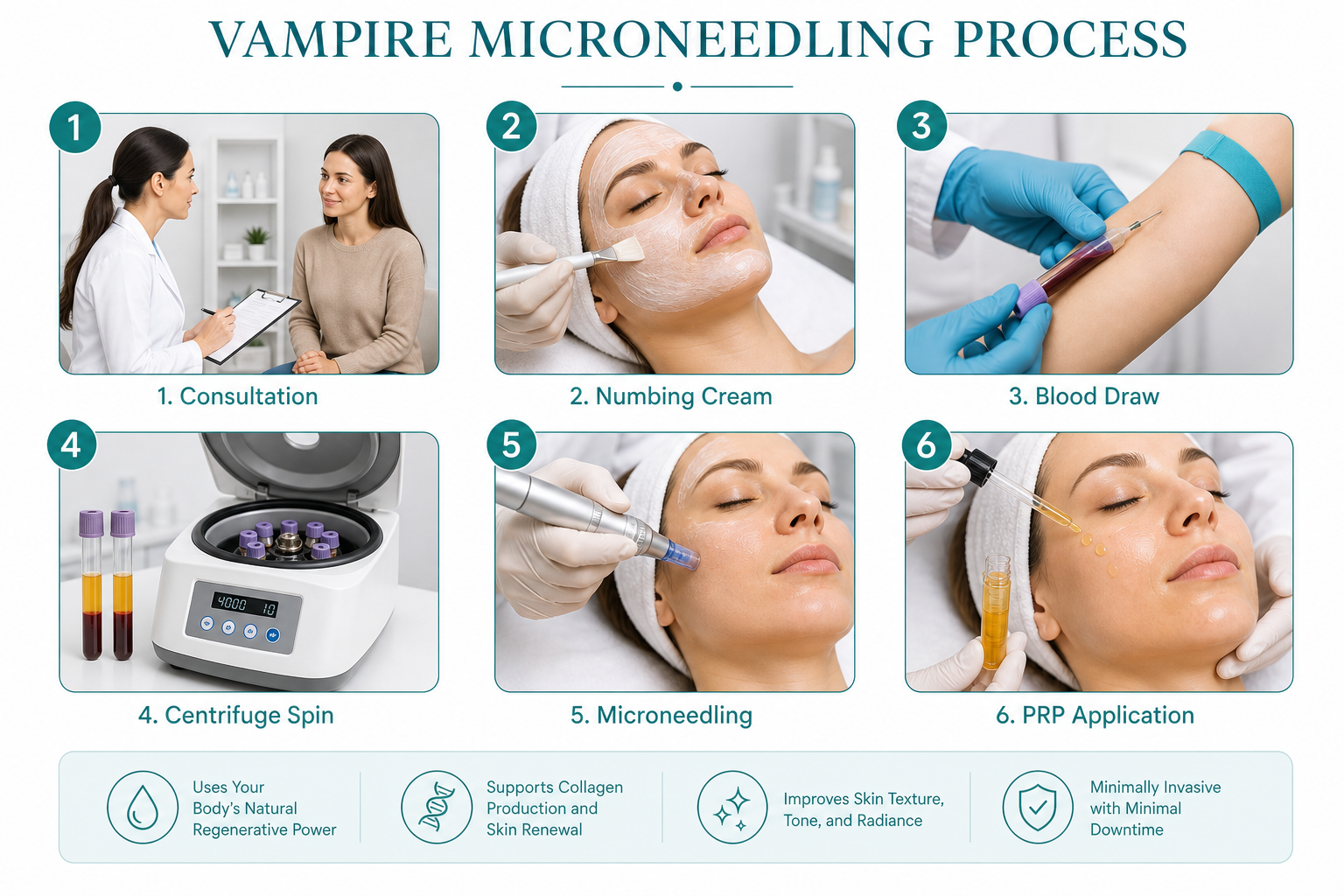
Most patients describe the sensation during microneedling as mild discomfort rather than significant pain, particularly after adequate numbing. Immediately after treatment, the skin typically appears red and may show pinpoint bleeding — this is expected and resolves within 24 to 72 hours for most patients.
Recovery, Downtime, and Aftercare
Vampire microneedling involves a short recovery period that most patients can manage around normal commitments, though the first 24 to 48 hours require some practical adjustments.
Days 1–2: Redness, mild swelling, and a sensation similar to mild sunburn are typical. Pinpoint bleeding or a flushed appearance may be visible immediately after treatment. Makeup should be avoided for at least 12 to 24 hours to reduce infection risk and allow the micro-channels to close.
Days 3–5: Redness fades and the skin may feel tight or slightly dry. Some patients experience mild flaking as the skin begins to renew. Gentle cleansing and a hydrating serum — hyaluronic acid is commonly recommended — support recovery during this phase.
Week 2 onwards: The skin typically returns to its normal appearance, and early improvements in brightness and texture may become noticeable.
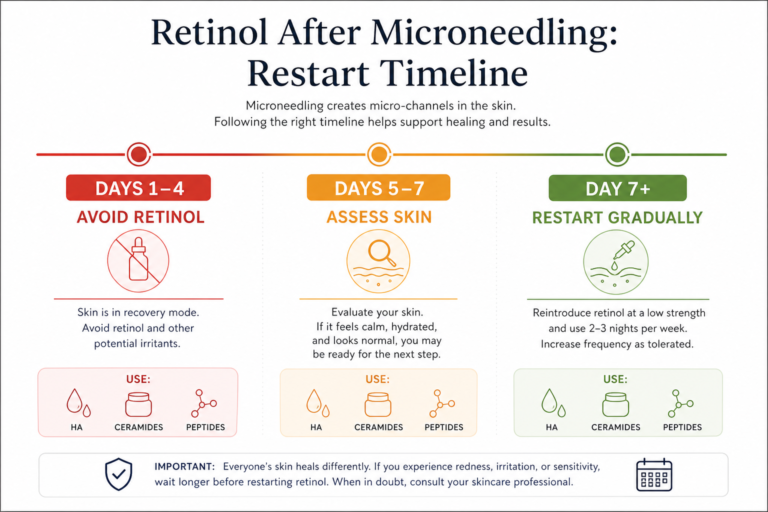
Key aftercare instructions generally include: avoiding retinoids, vitamin C serums, and exfoliating acids for three to five days post-treatment; applying broad-spectrum SPF daily and avoiding direct sun exposure; avoiding alcohol for 24 hours before and after treatment; and avoiding strenuous exercise for 24 to 48 hours. Patients with a history of herpes simplex should discuss antiviral prophylaxis with their practitioner before treatment.
Results Timeline and How Long They Last
Vampire microneedling results develop gradually as collagen remodeling progresses — this is not a treatment that produces dramatic immediate change. Understanding the timeline helps patients assess whether the improvement they see at two weeks represents the full result (it does not).
| Timeframe | What to Expect |
|---|---|
| Immediately after | Redness, mild swelling, heightened skin sensitivity; a subtle glow may be visible once redness settles |
| 1–2 weeks | Redness resolves; early improvements in skin brightness and hydration may be noticeable |
| 4–6 weeks | Texture improvements begin to emerge as new collagen forms; acne scar appearance may start to soften |
| 3 months | Peak collagen remodeling results; most significant improvement in texture, tone, and scar appearance |
| 6–12 months | Results from a single session begin to gradually diminish; a series of sessions extends longevity significantly |
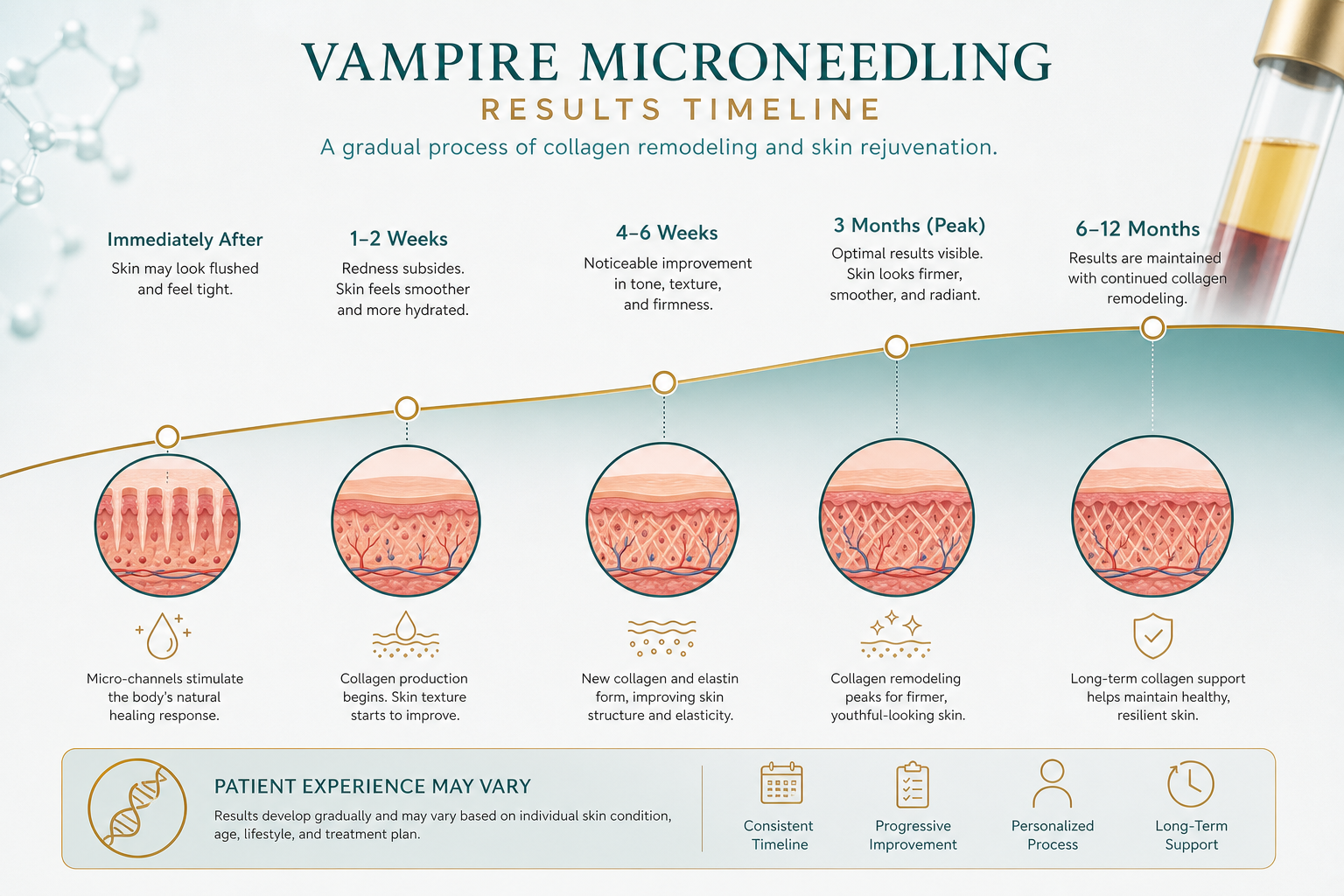
A single session may produce results lasting three to six months. A series of three to four sessions, spaced four to six weeks apart, typically produces results lasting twelve to eighteen months. Annual or biannual maintenance sessions are commonly recommended to sustain collagen remodeling over the longer term. Between sessions, consistent use of SPF, a retinoid (once the skin has fully recovered), and a hydrating serum can help extend and support results.
Vampire Microneedling vs. Standard Microneedling: Is PRP Worth the Upgrade?
This is one of the most common questions patients ask, and the honest answer is: it depends on what you are treating and what your budget allows.
| Feature | Standard Microneedling | Vampire Microneedling (PRP) | RF Microneedling |
|---|---|---|---|
| Mechanism | Collagen induction via micro-injury | Collagen induction + growth factor stimulation | Collagen induction + radiofrequency heat energy |
| Best for | Texture, pores, mild scarring, fine lines | Acne scars, texture, dull skin, photoaging | Skin laxity, deeper wrinkles, significant scarring |
| Downtime | 1–3 days | 2–4 days | 3–5 days |
| Results onset | 4–8 weeks | 4–12 weeks | 4–12 weeks |
| Longevity (series) | 6–12 months | 12–18 months | 12–24 months |
| Approximate cost (per session) | £150–£400 / $200–$700 | £267–£550 / $500–$1,500 | £400–£900 / $600–$2,400 |
| Allergy risk from treatment agent | None | None (autologous) | None |
| Blood draw required | No | Yes | No |
For patients primarily concerned with atrophic acne scars, the split-face study evidence suggests that adding PRP to microneedling may produce meaningfully better scar improvement than needling alone. For patients whose main concern is general skin texture, mild photoaging, or fine lines, the additional benefit of PRP over standard microneedling is less clearly established, and the cost difference may not always be justified.
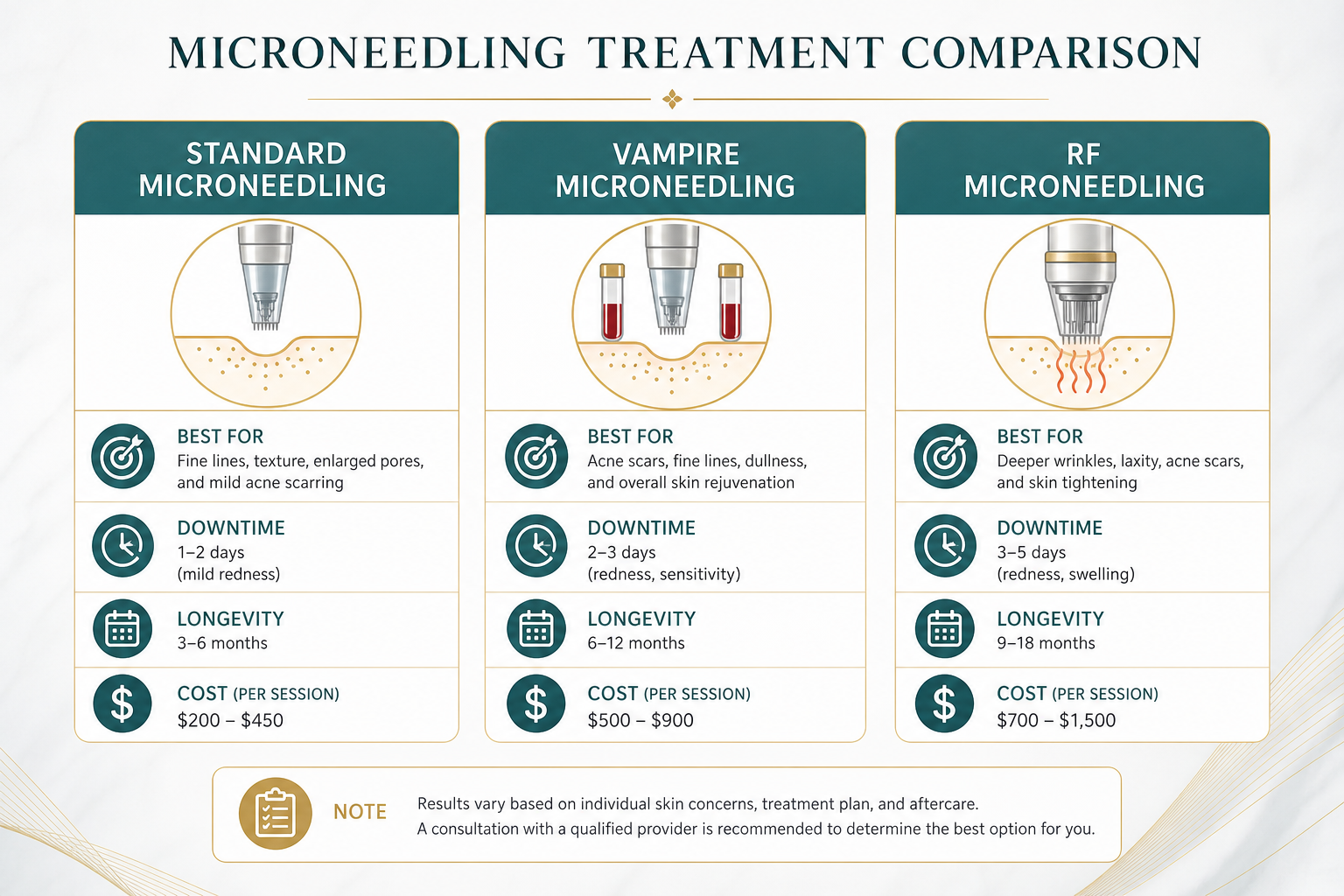
Radiofrequency (RF) microneedling delivers heat energy through the needles in addition to creating micro-injuries, which can produce greater skin tightening and is often preferred for patients with more pronounced skin laxity or deeper textural concerns. RF microneedling can also be combined with PRP, though this is a less standardized protocol and tends to be more expensive.
A qualified practitioner can help assess which approach is most appropriate for your specific skin concern, skin type, and budget — there is no universally correct answer.
Topical PRP vs. Injected PRP: An Important Distinction
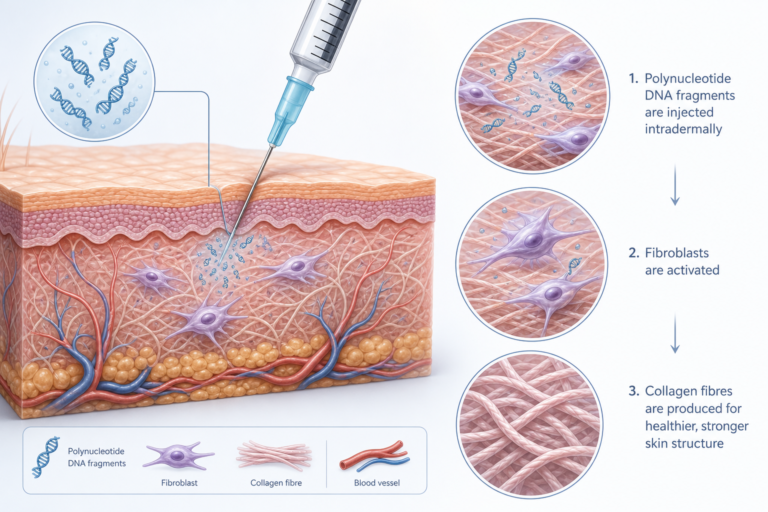
Most vampire facial treatments involve applying PRP topically to the skin surface immediately after microneedling, relying on the micro-channels to carry the plasma into the dermis. This is the standard vampire facial protocol. However, some practitioners offer intradermal PRP injection — where PRP is injected directly into the dermis using fine needles — either instead of or in addition to topical application.
Injected PRP delivers growth factors more precisely to the target tissue depth and may produce a stronger biological response in some cases. The two approaches are not interchangeable, and the evidence base for each is somewhat different. Patients comparing clinics or treatment quotes should clarify which PRP delivery method is being offered, as this affects both the likely outcome and the procedure experience.
Risks, Side Effects, and Safety Considerations
Vampire microneedling has a well-established safety profile when performed by a qualified practitioner in a sterile clinical environment. Common side effects are temporary and expected as part of the wound-healing response:
- Redness and mild swelling (resolves within 24–72 hours for most patients)
- Pinpoint bleeding during the procedure
- Temporary skin tightness or dryness
- Mild bruising, particularly around more sensitive areas
Less common side effects include acne flare-ups in the days following treatment, milia (small white cysts), petechiae (tiny red spots from capillary damage), and reactivation of herpes simplex in susceptible patients. Post-inflammatory hyperpigmentation is an uncommon but meaningful risk, particularly in patients with darker skin tones who do not follow sun protection guidance diligently after treatment.
Serious complications are rare but have occurred in non-clinical settings. A widely reported case in New Mexico involved HIV transmission linked to a vampire facial performed at an unlicensed spa using inadequately sterilized equipment. This case underscores a critical point: because vampire microneedling involves blood handling, the risk of bloodborne pathogen transmission exists if aseptic technique and proper sterilization protocols are not followed. Patients should only receive this treatment from a licensed medical or aesthetic professional working in a regulated clinical environment, using single-use needle cartridges and appropriate infection control procedures.
When selecting a provider, it is reasonable to ask about their qualifications, their PRP preparation protocol, the microneedling device they use, and their sterilization procedures. A reputable practitioner will answer these questions without hesitation.
Pre-Treatment Preparation
Preparing appropriately before a vampire microneedling session can reduce the risk of side effects and support a smoother recovery. General pre-treatment guidance typically includes:
- Avoid retinoids, exfoliating acids (AHAs, BHAs), and vitamin C serums for five to seven days before treatment
- Avoid aspirin, ibuprofen, and other non-steroidal anti-inflammatory drugs (NSAIDs) for several days before treatment, unless medically necessary — these can increase bruising and may affect platelet function
- Avoid alcohol for at least 24 hours before treatment
- Stay well hydrated in the days leading up to the appointment, as this supports blood draw and overall skin condition
- Avoid prolonged sun exposure and tanning in the two weeks before treatment
- Inform your practitioner of all medications and supplements, including fish oil, vitamin E, and herbal supplements, which may affect bleeding or platelet function
Patients with a history of cold sores should discuss antiviral prophylaxis with their practitioner before the appointment, as microneedling can trigger reactivation in susceptible individuals.
Frequently Asked Questions
How many sessions of vampire microneedling are typically needed?
Most practitioners recommend a series of three to four sessions spaced four to six weeks apart for optimal results. A single session can produce noticeable improvement, but a full series produces more significant and longer-lasting collagen remodeling. Maintenance sessions — typically one to two per year — help sustain results over time.
Is vampire microneedling painful?
A topical anaesthetic (numbing cream) is applied before the procedure and left for 30 to 45 minutes, which significantly reduces discomfort. Most patients describe the sensation during treatment as mild pressure or a light scratching feeling rather than significant pain. Sensitivity varies by treatment area — thinner skin around the eyes or lips tends to be more sensitive.
Can vampire microneedling be used on all skin tones?
Yes, but patients with darker skin tones (Fitzpatrick types IV–VI) require careful technique adjustment to minimize the risk of post-inflammatory hyperpigmentation. Needle depth, pass speed, and post-treatment sun protection are particularly important considerations. Choosing a practitioner with documented experience treating darker skin tones is advisable.
How does vampire microneedling differ from the vampire facelift?
The vampire facial (microneedling with PRP) targets skin quality — texture, tone, fine lines, and scarring — through topical PRP application after needling. The vampire facelift is a different procedure that combines PRP injections with dermal filler to restore facial volume and contour. The two procedures address different concerns and are not interchangeable.
Is the PRP used in vampire microneedling safe?
Because PRP is derived from the patient’s own blood, it is an autologous treatment with no risk of allergic reaction to the plasma itself. The primary safety considerations relate to the blood handling and needling process — specifically, the importance of sterile equipment, single-use needle cartridges, and a qualified provider. Receiving treatment in an unlicensed or non-clinical setting carries meaningful infection risk.
What skincare should be avoided after vampire microneedling?
For three to five days after treatment, avoid retinoids, vitamin C serums, exfoliating acids (AHAs and BHAs), and any active or potentially irritating skincare ingredients. Gentle cleansing, a hydrating serum (hyaluronic acid is well tolerated), and broad-spectrum SPF are the priorities during recovery. Makeup should be avoided for at least 12 to 24 hours.
Is Vampire Microneedling Worth Considering for Your Skin Concerns?
Vampire microneedling is a well-established, minimally invasive procedure with a reasonable evidence base — particularly for atrophic acne scars and skin texture improvement. The combination of collagen induction therapy with autologous growth factors addresses skin quality concerns that are difficult to improve with topical skincare alone, and the absence of synthetic injectables makes it accessible to patients who prefer a more natural approach.
The treatment is not suitable for everyone, and it is not a solution for significant skin laxity, deep structural aging, or volume loss. Realistic expectations are important: results develop gradually over three months, require a series of sessions to achieve their full potential, and need maintenance to sustain. The added benefit of PRP over standard microneedling is most clearly supported for acne scarring; for other concerns, the evidence is more variable.
Cost, provider qualifications, and the clinical environment are all meaningful factors in the decision. If you are considering vampire microneedling, a consultation with a licensed medical or aesthetic professional who can assess your skin, discuss your goals, and recommend an appropriate treatment protocol is the right starting point.