Non-Surgical BBL: Options, Results, Costs and What to Realistically Expect
A non-surgical Brazilian butt lift refers to a range of minimally invasive or non-invasive treatments designed to add volume, improve shape, and enhance the contour of the buttocks — without the fat transfer surgery, general anaesthesia, or recovery period associated with a traditional surgical BBL. Interest in these alternatives has grown considerably as injectable technology has improved and patients seek subtler, lower-risk options. This guide covers every credible non-surgical approach, explains what each can and cannot achieve, and gives you the honest information you need before booking a consultation.
Key Takeaways
- Non-surgical BBL is an umbrella term covering injectable biostimulatory fillers, device-based muscle stimulation, PDO thread lifts, and vacuum therapy — each with different mechanisms, results, and limitations.
- Injectable options such as Sculptra (poly-L-lactic acid) and Radiesse (calcium hydroxylapatite) offer the most clinically supported results for adding modest volume and improving contour, but results are temporary and require maintenance.
- No non-surgical method can replicate the volume increase or longevity of a surgical BBL with fat transfer; these treatments are best suited to subtle to moderate enhancement goals.
- Costs vary widely — typically £2,000–£8,000+ per treatment course in the UK — and repeat sessions over several years can approach the one-time cost of surgery.
- Safety depends heavily on provider credentials; unlicensed injections and unregulated fillers carry serious risks that far outweigh any cosmetic benefit.
What Is a Non-Surgical BBL?
The term “non-surgical BBL” does not describe a single procedure. It is a marketing shorthand for several different treatments that share a common goal: improving the appearance of the buttocks without surgery. The most clinically established approaches use injectable biostimulatory fillers — products that stimulate the body’s own collagen production rather than simply adding volume directly. Others use electromagnetic muscle stimulation, dissolvable threads, or suction-based devices. Understanding what each category actually does is essential before deciding whether any of them is appropriate for your goals.
The surgical Brazilian butt lift involves harvesting fat from areas such as the abdomen or flanks via liposuction, purifying it, and injecting it into the gluteal region. It can produce significant, long-lasting volume changes but carries real surgical risks including fat embolism, infection, and the complications of general anaesthesia. Non-surgical alternatives eliminate those specific risks but introduce their own limitations — primarily around the degree of change achievable and the need for ongoing maintenance.
Non-Surgical BBL Treatment Options Compared
| Treatment | Mechanism | Volume Added | Onset | Longevity | Downtime |
|---|---|---|---|---|---|
| Sculptra (PLLA) | Collagen stimulation | Gradual, moderate | 4–12 weeks | Up to 2–3 years | Minimal |
| Radiesse (CaHA) | Immediate volume + collagen stimulation | Immediate + gradual | Immediate, improves over weeks | 12–18 months | Minimal |
| Hyaluronic acid fillers | Direct volume replacement | Immediate, moderate | Immediate | 12–18 months | Minimal |
| Emsculpt / HIFEM | Electromagnetic muscle stimulation | None (muscle tone) | 2–4 weeks post-course | 6–12 months with maintenance | None |
| PDO thread butt lift | Mechanical lift + collagen induction | Minimal | Immediate lift, improves over weeks | 12–18 months | Mild, 1–3 days |
| Vacuum therapy | Suction / temporary fluid shift | None lasting | Temporary | Hours to days | None |
Injectable Fillers: The Liquid BBL Explained
The liquid BBL — sometimes called a liquid butt lift — refers specifically to the use of injectable fillers to add volume and reshape the gluteal area. This is the most clinically established non-surgical approach and the one most practitioners mean when they use the term “non-surgical BBL.” The two most commonly used products are Sculptra and Radiesse, both of which are classified as biostimulatory fillers because they work primarily by triggering the body’s own collagen production rather than simply occupying space.
Sculptra (Poly-L-Lactic Acid)
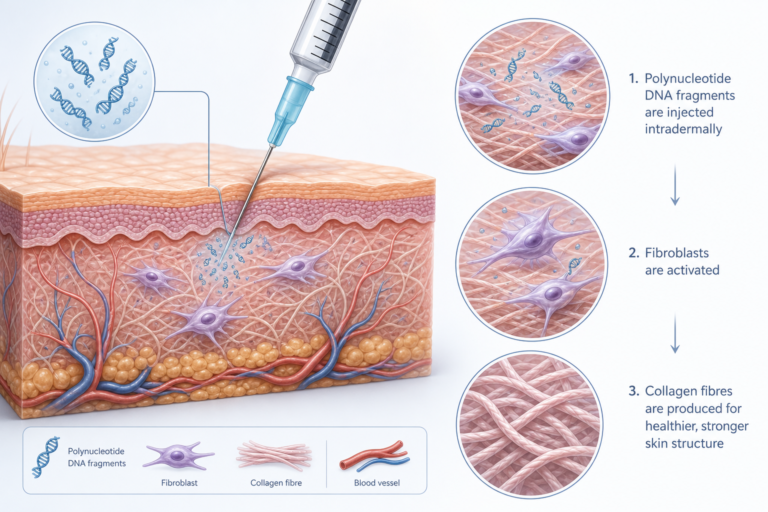
Sculptra contains poly-L-lactic acid (PLLA), a synthetic but biocompatible material that has been used in dissolvable sutures for decades. When injected into the deep tissue of the buttocks using a blunt-tipped cannula technique, PLLA particles stimulate fibroblasts — the cells responsible for producing collagen — over a period of weeks to months. The result is a gradual increase in volume and improved skin quality in the treated area. Most patients require two to four treatment sessions spaced four to six weeks apart, and visible improvement typically becomes apparent four to twelve weeks after the first session. Results from a full Sculptra course can last up to two to three years, making it one of the longer-lasting non-surgical options. In the UK and EU, a similar PLLA product called Lanluma is licensed specifically for gluteal augmentation and is increasingly used as an alternative.
Radiesse (Calcium Hydroxylapatite)
Radiesse uses calcium hydroxylapatite (CaHA) microspheres suspended in a gel carrier. Unlike Sculptra, Radiesse provides some immediate volumising effect from the gel itself, while the CaHA particles stimulate collagen production over subsequent weeks. This dual action means patients may notice an improvement sooner than with Sculptra alone. Results typically last twelve to eighteen months. Radiesse is sometimes used in combination with Sculptra to provide an earlier visible result while the longer-acting collagen stimulation develops.
Hyaluronic Acid Fillers
Hyaluronic acid (HA) fillers are widely used in facial aesthetics and can technically be injected into the buttocks to add volume. HA fillers provide immediate results and are reversible with hyaluronidase enzyme if needed. However, the volumes required for meaningful gluteal augmentation are large — often ten or more syringes — making treatment expensive and the risk of complications proportionally higher. Most experienced practitioners prefer biostimulatory fillers for this area because they work with the body’s own tissue rather than depositing large quantities of foreign material. HA fillers may be more appropriate for targeted corrections such as hip dip correction rather than overall volume enhancement.
Device-Based Options: Emsculpt and Muscle Stimulation
Emsculpt and similar devices use HIFEM technology — High-Intensity Focused Electromagnetic energy — to induce supramaximal muscle contractions in the gluteal muscles that cannot be achieved through voluntary exercise. A single thirty-minute session is reported to produce thousands of muscle contractions, which over a course of four sessions may improve muscle tone, firmness, and definition. CoolTone uses a related technology called Magnetic Muscle Stimulation (MMS) with a similar intended effect.
It is important to understand what HIFEM technology does and does not do. These devices build and tone muscle; they do not add volume in the way that injectable fillers do. The improvement in shape comes from increased muscle density and reduced fat in the treated area, not from added tissue. For patients whose primary goal is a rounder, fuller appearance, Emsculpt alone is unlikely to deliver the result they are imagining. However, for patients who want improved firmness and definition — or who want to complement injectable treatment — device-based muscle stimulation can be a useful part of a combination protocol. Results typically require a maintenance course every six to twelve months.
PDO Thread Butt Lift
A PDO thread butt lift uses dissolvable polydioxanone threads inserted beneath the skin to create a mechanical lifting effect and stimulate collagen production around the threads as they dissolve. The immediate lift is modest, and the collagen response develops over several weeks. PDO threads are better suited to improving mild skin laxity and subtle repositioning than to adding meaningful volume. Results typically last twelve to eighteen months before the threads fully dissolve and the collagen response fades. This option may appeal to patients who want a small lift without injectables, but it is not appropriate for patients seeking significant volume increase or those with substantial skin laxity.
Vacuum Therapy: What the Evidence Actually Shows
Vacuum therapy — sometimes called cupping or suction therapy — uses mechanical suction cups applied to the buttocks to temporarily increase blood flow and cause a short-term swelling effect. It is widely promoted on social media and offered in some beauty salons. The honest assessment is that vacuum therapy does not produce lasting structural changes to the gluteal tissue. Any visible effect is temporary, typically lasting hours to a few days, and there is no credible clinical evidence that repeated sessions produce meaningful or durable gluteal augmentation. Patients should be cautious of providers who claim otherwise, and should be aware that this treatment is not equivalent to medically supervised injectable or device-based options.
The Skinny BBL: Non-Surgical Options for Lean Patients
One of the most common reasons patients explore non-surgical alternatives is that they do not have enough donor fat for a surgical BBL with fat transfer. Lean patients — sometimes referred to in the context of a “skinny BBL” — may be told they are not suitable for surgery because liposuction cannot harvest sufficient fat for meaningful augmentation. For these patients, biostimulatory fillers such as Sculptra or Radiesse may offer a realistic path to modest improvement. The collagen stimulation these products trigger works independently of the patient’s body fat percentage, making them genuinely useful for lean individuals who want subtle to moderate enhancement without surgery. Realistic expectations remain important: even with injectable treatment, very lean patients may achieve less volume than patients with more subcutaneous tissue.
Who May Be a Suitable Candidate?
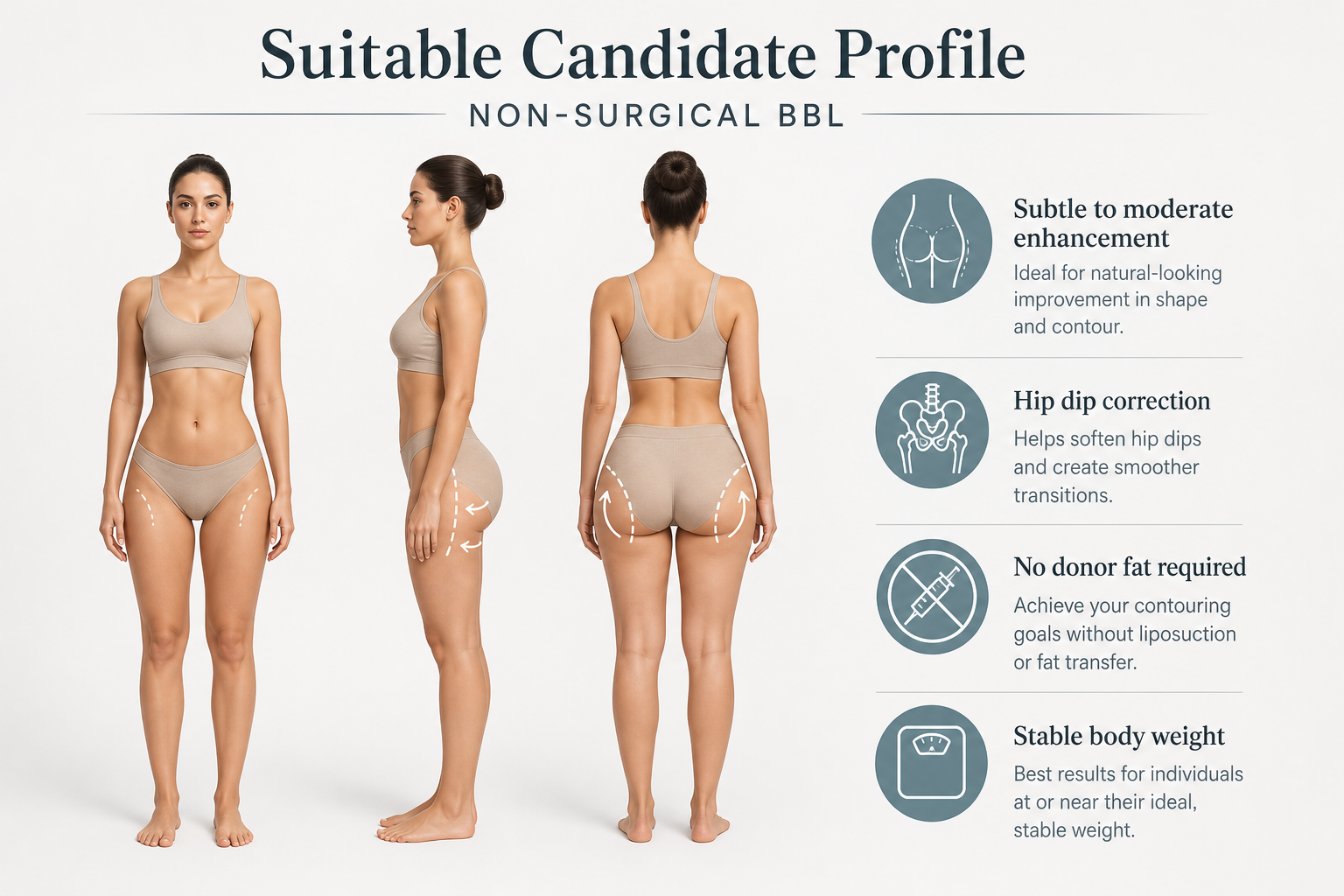
Non-surgical BBL treatments may be worth discussing with a qualified practitioner if you:
- Want subtle to moderate enhancement rather than a dramatic size increase
- Do not have enough donor fat for a surgical BBL
- Want to avoid general anaesthesia and surgical recovery
- Have mild hip dips or asymmetry you would like to address
- Have realistic expectations about the degree of change achievable
- Are in good general health with no active skin infection in the treatment area
- Maintain a relatively stable body weight
Who May Not Be Suitable?
Non-surgical BBL options are not appropriate for everyone. A thorough consultation with a board-certified provider is essential to assess individual suitability. You may not be a suitable candidate if you:
- Want a significant, dramatic increase in buttock size — no non-surgical treatment can match the volume achievable with surgical fat transfer
- Have significant skin laxity in the gluteal area, which injectable fillers cannot adequately address
- Have an autoimmune condition that may affect collagen synthesis or healing
- Are pregnant or breastfeeding
- Have a known allergy to any component of the intended filler product
- Have active infection, inflammation, or skin disease in the treatment area
- Have unrealistic expectations about permanence — no non-surgical option produces permanent results
What Happens During Treatment?
For injectable treatments such as a Sculptra or Radiesse liquid BBL, the appointment typically begins with a topical anaesthetic applied to the skin to reduce discomfort. The practitioner will mark the treatment areas and use a blunt-tipped cannula to deposit the product at the appropriate depth within the gluteal tissue. The cannula technique reduces the risk of vascular injury compared with sharp needles and allows the product to be distributed evenly. A typical session takes thirty to sixty minutes. Patients can usually return to normal daily activities the same day, though strenuous exercise and prolonged sitting on hard surfaces are generally advised against for a short period after treatment.
For Emsculpt, the device applicators are placed against the skin over the gluteal muscles and the session runs for approximately thirty minutes. There is no injection involved and no downtime. Patients typically complete four sessions over two weeks as an initial course.
Results Timeline: What to Expect and When
Results timelines differ significantly between treatment types, and understanding this helps set realistic expectations.
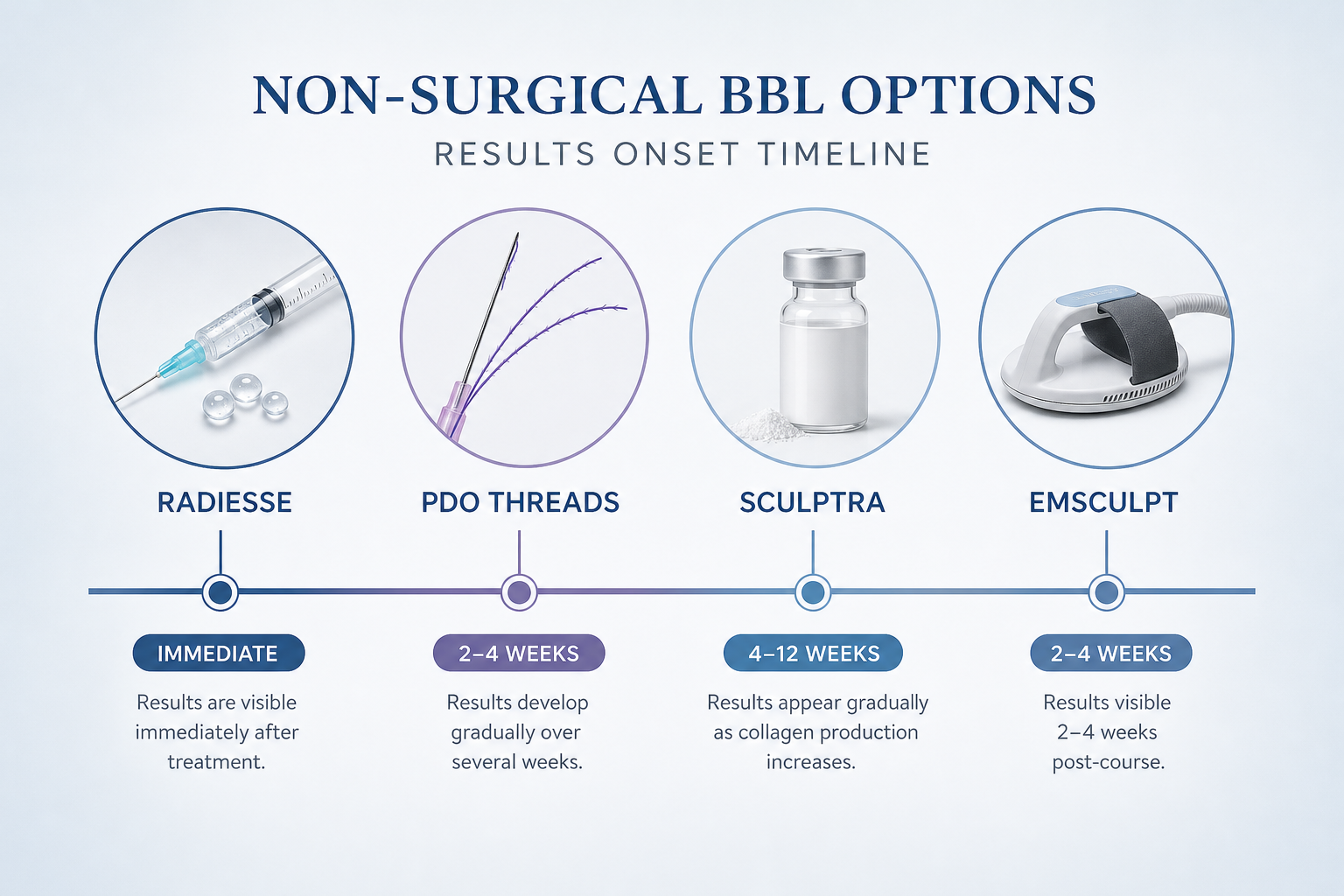
- Radiesse and HA fillers: Some volume improvement is visible immediately after treatment, though initial swelling may temporarily exaggerate results. The collagen response from Radiesse develops over four to eight weeks.
- Sculptra (PLLA): No significant immediate volume change. Gradual improvement becomes visible four to twelve weeks after the first session, with continued development after subsequent sessions. The full result is typically appreciated three to six months after completing the treatment course.
- Emsculpt / HIFEM: Muscle tone improvements become noticeable two to four weeks after completing the initial four-session course, as the muscle remodelling process completes.
- PDO threads: A modest immediate lift is visible, with collagen-related improvement developing over six to twelve weeks.
How Long Do Results Last?
Results longevity varies by treatment type and individual factors including metabolism, weight stability, and lifestyle. As a general guide: hyaluronic acid fillers typically last twelve to eighteen months; Radiesse lasts approximately twelve to eighteen months; Sculptra results can persist for up to two to three years; PDO thread results last twelve to eighteen months; and Emsculpt results require maintenance sessions every six to twelve months to sustain. None of these options is permanent. Touch-up sessions are a routine part of maintaining results, and patients should factor this into their long-term planning.
Honest Cost Analysis: Short-Term and Long-Term
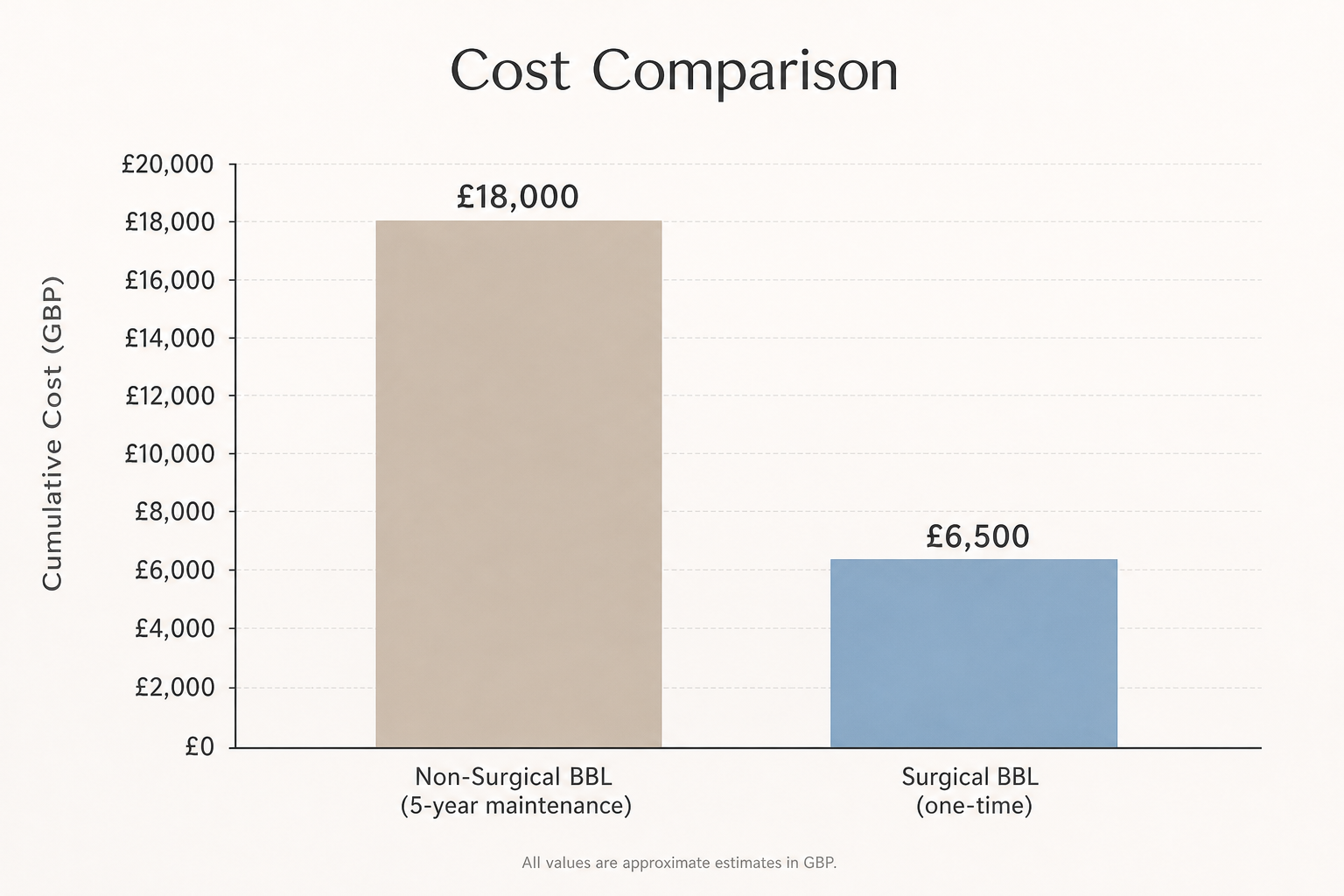
Non-surgical BBL costs vary considerably depending on the product used, the number of vials or sessions required, the practitioner’s experience, and the clinic’s location. In the UK, a typical Sculptra course for gluteal augmentation may involve eight to twelve vials across two to four sessions, with per-vial costs ranging from approximately £300 to £600. A full initial course commonly costs between £3,000 and £8,000. Radiesse treatments fall in a similar range. Emsculpt courses typically cost £1,500 to £3,000 for an initial four-session course.
The long-term cost picture is important and rarely discussed honestly. Because non-surgical results are temporary, patients who maintain their results with touch-up sessions every twelve to twenty-four months will spend considerably more over a five-year period than the initial treatment cost suggests. Over five years, the cumulative cost of injectable maintenance can approach or exceed the one-time cost of a surgical BBL, which in the UK typically ranges from £6,000 to £15,000 and produces longer-lasting results. This does not mean non-surgical treatment is the wrong choice — for many patients the avoidance of surgery and anaesthesia is worth the ongoing investment — but it is a factor that deserves honest consideration before committing to a treatment plan.
Risks, Side Effects, and Safety Considerations
Injectable non-surgical BBL treatments carry a different risk profile from surgical procedures. The absence of general anaesthesia and the fat embolism risk associated with surgical BBL are genuine safety advantages. However, non-surgical options are not without risk.
Common side effects of injectable treatments include bruising, swelling, and tenderness at the injection sites, which typically resolve within a few days to two weeks. Rare but more serious complications include nodule formation, granulomas (a localised inflammatory reaction to the filler material), and infection. The risk of vascular complications — while lower with a cannula technique than with sharp needles — is not zero, and the gluteal region contains significant blood vessels that require careful anatomical knowledge to avoid.
The most significant safety concern in this area is not the treatments themselves but the context in which they are delivered. Unlicensed practitioners, black-market fillers, and unregulated products have caused serious harm including tissue necrosis, systemic infection, and permanent disfigurement. Patients should only receive injectable treatments from a medically qualified, board-certified provider working in a regulated clinical environment. Asking to see the product packaging, confirming the practitioner’s credentials, and avoiding unusually low-cost offers are basic but important precautions.
Combination Treatment Protocols
Some practitioners offer combination approaches that pair different non-surgical modalities to address multiple aspects of gluteal appearance simultaneously. A common example is combining Sculptra injections for gradual volume and collagen stimulation with an Emsculpt course for improved muscle tone and firmness. This approach may produce a more comprehensive result than either treatment alone — the filler addresses volume and shape while the HIFEM technology improves the underlying muscle structure. PDO threads may be added where mild skin laxity is also a concern. Combination protocols typically involve higher overall costs and require careful sequencing by an experienced practitioner, but they represent a more tailored approach for patients with multiple goals.
Choosing a Provider: What to Look For
Provider selection is one of the most important decisions in any injectable treatment. For non-surgical BBL specifically, the gluteal anatomy is complex and the consequences of poor technique can be serious. When evaluating a provider, consider the following:
- Confirm the practitioner holds a recognised medical qualification (doctor, nurse prescriber, or equivalent) and is registered with the relevant regulatory body
- Ask specifically about their experience with gluteal injectable treatments and how many procedures they have performed
- Request to see before-and-after photographs of their own patients, not stock images
- Confirm that the products used are licensed, CE-marked or equivalent, and sourced through legitimate medical supply channels
- Ensure a thorough consultation and medical history review takes place before any treatment is agreed
- Be cautious of providers who offer unusually low prices, guarantee specific results, or discourage questions
Maintaining Your Results
Extending the longevity of non-surgical BBL results involves both clinical and lifestyle factors. Maintaining a stable body weight is particularly important — significant weight fluctuation can alter the distribution of filler and affect the appearance of results. Staying well hydrated supports skin quality and may help sustain the collagen response from biostimulatory fillers. Avoiding prolonged pressure on the treated area in the weeks immediately after injectable treatment is generally recommended. Scheduling touch-up sessions before results have fully faded — rather than waiting until they have disappeared entirely — typically requires less product and lower cost to restore the desired appearance.
Frequently Asked Questions
Is a non-surgical BBL permanent?
No. All currently available non-surgical BBL treatments produce temporary results. Biostimulatory fillers such as Sculptra may last up to two to three years, but the collagen they stimulate gradually breaks down over time and the effect diminishes without maintenance. No injectable or device-based treatment currently available offers permanent gluteal augmentation.
How many sessions will I need?
This depends on the treatment chosen and your individual goals. A Sculptra course for gluteal augmentation typically involves two to four sessions spaced four to six weeks apart. Emsculpt requires four sessions over approximately two weeks as an initial course. A single Radiesse session may be sufficient for some patients, while others benefit from two sessions. Your practitioner should provide a personalised treatment plan at consultation.
Can a non-surgical BBL fix hip dips?
Hip dip correction is one of the more achievable goals for injectable non-surgical BBL treatments. The lateral indentation of the hip — caused by the anatomy of the iliotibial band and underlying bone structure — can be softened with targeted filler placement in that specific area. Results are typically more predictable for hip dips than for overall volume enhancement, as smaller, more precise volumes are required.
Is the treatment painful?
Most patients describe injectable BBL treatments as uncomfortable rather than painful. Topical anaesthetic is applied before treatment, and the cannula technique used for filler placement is generally less painful than sharp needle injection. Emsculpt and similar devices produce an intense muscle contraction sensation that some patients find uncomfortable but not painful. Individual pain tolerance varies.
What is the difference between Sculptra and Radiesse for a non-surgical BBL?
Both are biostimulatory fillers that stimulate collagen production, but they differ in composition and onset. Sculptra (PLLA) produces gradual results over weeks to months and may last up to two to three years. Radiesse (CaHA) provides some immediate volume from its gel carrier alongside collagen stimulation, so results appear sooner, though longevity is typically twelve to eighteen months. Some practitioners use both in combination to balance early visible improvement with longer-term collagen development.
Can I sit normally after a non-surgical BBL?
After injectable treatments, most practitioners advise avoiding prolonged pressure on the treated area — such as extended sitting on hard surfaces — for a short period, typically a few days to a week. Normal daily activities including sitting are generally possible, but patients should follow their specific practitioner’s aftercare instructions.
Is vacuum therapy a legitimate non-surgical BBL option?
Vacuum therapy produces only temporary effects through suction-induced fluid shifts and increased blood flow. There is no credible clinical evidence that it produces lasting structural changes to gluteal tissue. It should not be considered equivalent to medically supervised injectable or device-based treatments.
Is a Non-Surgical BBL the Right Choice for Your Goals?
A non-surgical Brazilian butt lift can be a genuinely useful option for the right patient — someone seeking subtle to moderate enhancement, hip dip correction, or improved contour without the commitment of surgery. Biostimulatory fillers such as Sculptra and Radiesse have the strongest clinical basis among the available options, and when performed by a qualified, experienced board-certified provider using a proper cannula technique, they carry a manageable risk profile. Device-based treatments like Emsculpt add value for patients who want improved muscle tone alongside shape, and combination protocols can address multiple concerns simultaneously.
However, non-surgical BBL is not a substitute for surgery in patients who want significant volume increase, and the cumulative cost of maintenance over several years deserves honest consideration. The absence of general anaesthesia and fat embolism risk are real advantages, but they do not make these treatments risk-free — provider selection remains critical. If you are considering any non-surgical BBL option, a thorough consultation with a medically qualified practitioner who can assess your anatomy, discuss realistic outcomes, and recommend an appropriate treatment plan is the essential first step.