Ice Pick Scars: Causes, Identification, and Treatment Options
Ice pick scars are among the most challenging forms of atrophic acne scarring to treat. Their narrow, deep structure means that surface-level resurfacing treatments that work well for other scar types often produce limited results when used alone. Understanding what makes an ice pick scar distinct — and why certain treatments are better matched to its anatomy than others — is the first step toward making an informed decision about care.
Key Takeaways
- Ice pick scars are deep, narrow, V-shaped pits that extend into the reticular dermis or subcutaneous tissue, making them the most structurally difficult atrophic scar subtype to treat.
- TCA CROSS (chemical reconstruction of skin scars) and punch excision are the most evidence-supported focal treatments specifically matched to the ice pick scar’s anatomy.
- Broad resurfacing treatments such as fractional laser and microneedling can improve overall skin texture but are unlikely to significantly reduce ice pick scar depth when used alone.
- Ice pick scars do not resolve on their own; meaningful improvement typically requires multiple professional treatment sessions and often a combination protocol.
- Active acne control should be established before starting scar treatment to prevent new scarring from forming during the process.
What Is an Ice Pick Scar?
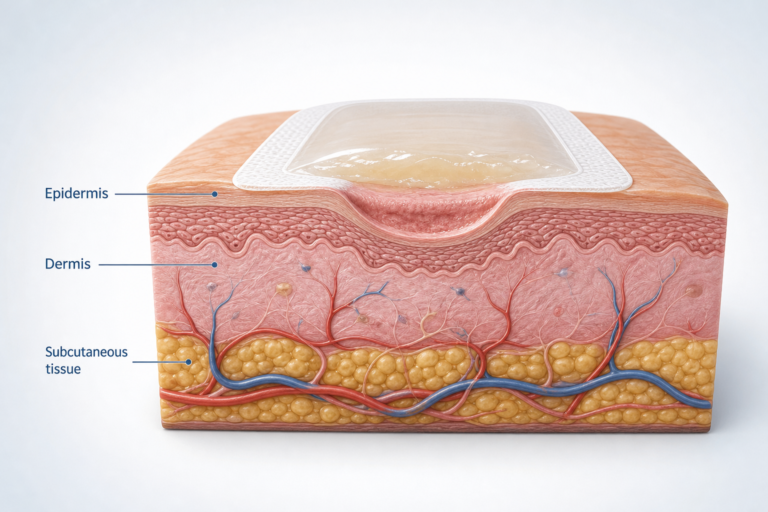
An ice pick scar is a type of atrophic acne scar characterised by a narrow, sharply defined pit that descends steeply into the skin. The name reflects the appearance: a small puncture wound, as though the skin has been pierced with a pointed tool. At the surface, the opening is typically less than 2 mm wide, but the scar tract extends downward through the dermis — often reaching the reticular dermis or deeper — giving it a V-shaped cross-section that narrows as it descends.
According to the widely cited Jacob, Dover and Kaminer classification published in 2001, ice pick scars represent approximately 60–70% of all atrophic acne scars, making them the most common subtype. Despite their prevalence, they are also the subtype least responsive to broad resurfacing approaches, because the problem lies in the depth and structure of the scar tract rather than in surface texture alone.
How Ice Pick Scars Form
Ice pick scars develop as a consequence of severe inflammatory acne — particularly cystic acne and nodular acne — that damages the follicular infundibulum, the upper portion of the hair follicle where it meets the skin surface. When deep inflammation destroys follicular tissue, the body attempts to heal the wound by re-epithelialising the damaged channel. Rather than filling the defect with new collagen, the healing process produces a narrow, epithelialized scar tract that persists as a permanent pit.
The underlying mechanism involves collagen destruction during the acute inflammatory phase, followed by insufficient collagen production during repair. The result is a net loss of dermal volume along a very narrow, deep channel. Picking or squeezing acne lesions worsens the inflammatory response and increases the likelihood of this type of scarring. Genetic factors also influence how an individual’s skin heals after inflammation, which is why some people develop significant ice pick scarring from moderate acne while others with more severe breakouts scar less.
Identifying Ice Pick Scars: How to Tell Them Apart
Correctly identifying an ice pick scar matters because treatment selection depends on scar type. The three main atrophic scar subtypes — ice pick, boxcar, and rolling — look and behave differently, and treatments that work well for one type may underperform for another.
Ice Pick vs. Boxcar vs. Rolling Scars
| Scar Type | Shape | Width | Depth | Edges | Stretch Test |
|---|---|---|---|---|---|
| Ice pick | V-shaped, narrow pit | Under 2 mm | Deep (reticular dermis or below) | Sharp, well-defined | Remains visible |
| Boxcar | Round or oval depression | 1.5–4 mm | Shallow to medium | Sharply defined, vertical walls | Remains visible |
| Rolling | Broad, undulating depression | 4–5 mm or wider | Shallow, tethered base | Soft, sloping edges | Flattens significantly |
The stretch test is a useful self-assessment tool: gently stretch the skin around a suspected scar between two fingers. Rolling scars, which involve tethered scarring beneath the surface, tend to flatten noticeably when the skin is stretched. Ice pick and boxcar scars remain largely unchanged because their structure is a fixed tract or pit rather than a tethered band.
Ice Pick Scars vs. Enlarged Pores
Ice pick scars are frequently confused with enlarged pores, particularly on the nose and cheeks. The key difference is tactile and structural: an enlarged pore has a soft, open follicular opening that may compress slightly under pressure, while an ice pick scar feels like a firm, sharp-edged pit that does not compress. Under magnification or in raking light, the steep walls and pointed base of an ice pick scar are usually distinguishable from the rounder, shallower appearance of a dilated pore.
Why Standard Resurfacing Treatments Often Disappoint
Many patients arrive at consultations having already tried fractional laser treatments or microneedling with limited improvement to their ice pick scars. This is not a failure of the treatments themselves — it reflects a mismatch between the treatment mechanism and the scar’s anatomy.
Fractional ablative laser treatments and microneedling work by stimulating collagen induction across a broad area of skin, improving overall texture, tone, and the appearance of shallow scars. However, the scar tract of an ice pick scar extends far deeper than these modalities reliably reach. Clinical data supports this limitation: one study examining fractional non-ablative laser at 1540 nm found approximately 26% improvement in ice pick scars compared with around 53% improvement in boxcar scars treated with the same protocol. Similarly, subcision — a technique that releases tethered scarring by cutting fibrous bands beneath the skin — is well-suited to rolling scars but is largely ineffective for ice pick scars because the ice pick scar’s problem is a deep epithelialized tract, not tethered scarring at the base.
Dermal fillers, including hyaluronic acid filler and collagen stimulators, are useful for distensible scars — those that flatten when the skin is stretched — which is why they perform better for rolling scars. Because ice pick scars are not distensible, fillers cannot adequately fill the narrow, deep tract and are generally not a primary treatment for this scar type.
Treatments That Are Specifically Matched to Ice Pick Scars
TCA CROSS
TCA CROSS — an acronym for chemical reconstruction of skin scars — is widely regarded as the most evidence-supported focal treatment for ice pick scars. The technique involves applying a high concentration of trichloroacetic acid (TCA), typically at 70% or 100%, to the base of each individual scar using a fine applicator such as a sharpened toothpick or a narrow-tipped instrument. The acid is applied only within the scar pit, not to the surrounding skin.
The mechanism relies on coagulative necrosis: the concentrated acid causes controlled protein precipitation within the scar tract, triggering an intense localised inflammatory response. As the skin heals over the following weeks, collagen remodeling occurs within the tract, gradually filling the pit from the base upward. The clinical endpoint during the procedure is the appearance of a white frost — a whitening of the treated tissue that indicates adequate acid penetration.
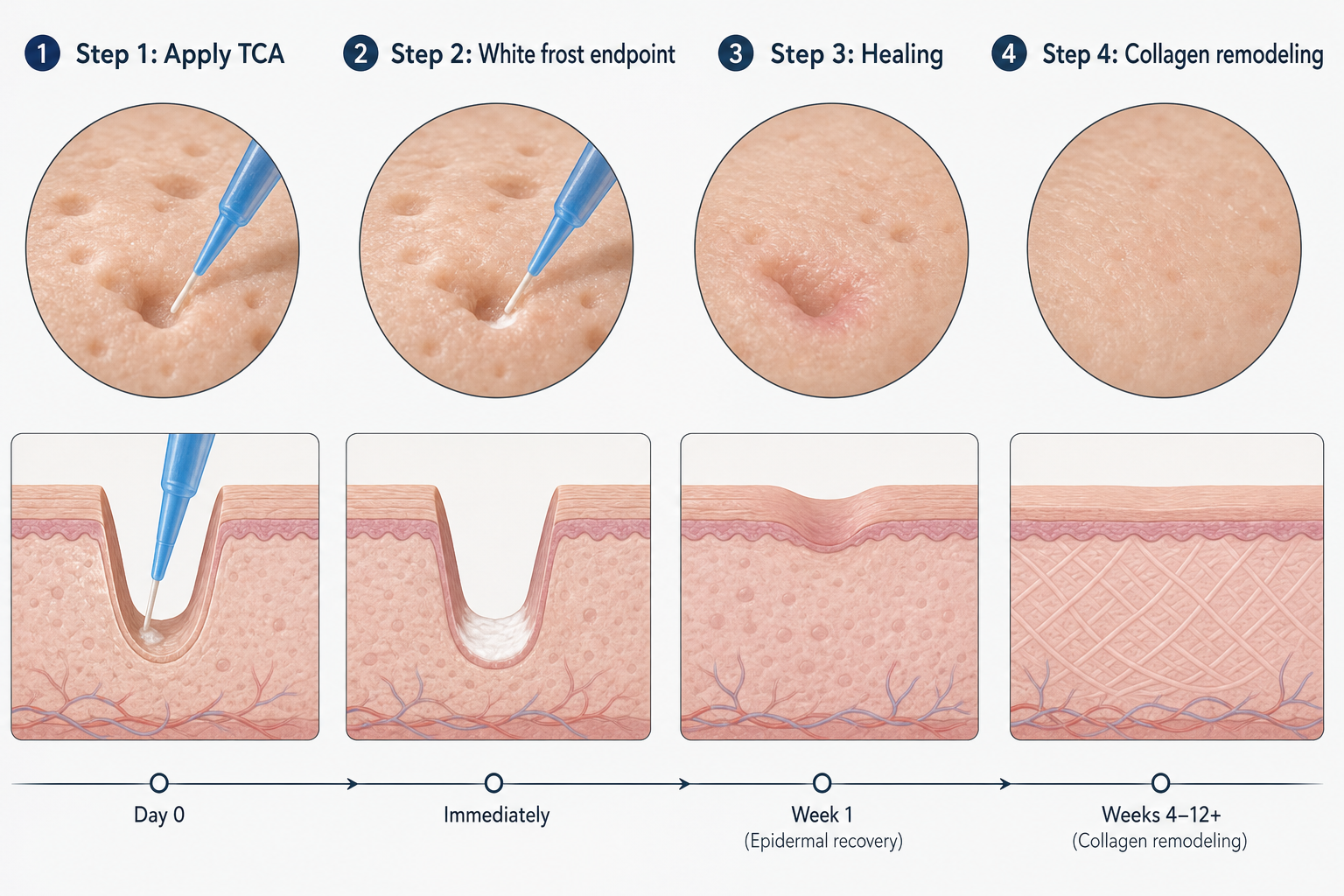
Most patients require between three and six sessions spaced four to six weeks apart to achieve meaningful improvement. After each session, the treated scars typically form small crusts that resolve within one to two weeks. Improvement is gradual and cumulative; the most significant changes are usually visible after the third or fourth session rather than immediately. TCA CROSS has been studied in randomised controlled trials and consistently demonstrates meaningful reduction in ice pick scar depth, though complete elimination of the scar is not a realistic expectation.
For patients with darker Fitzpatrick skin types (III–VI), post-inflammatory hyperpigmentation (PIH) is a meaningful risk with high-concentration TCA. Some practitioners use lower concentrations (50–70%) with more frequent sessions to reduce this risk, and mandatory daily sun protection is essential throughout the treatment course.
Punch Excision
Punch excision is a minor surgical procedure in which a circular cutting tool — matched precisely to the diameter of the scar — is used to remove the entire scar tract under local anaesthesia. The resulting wound is closed with a single suture or skin closure strip, converting the ice pick scar into a small linear scar that is far less visible and more amenable to subsequent resurfacing.
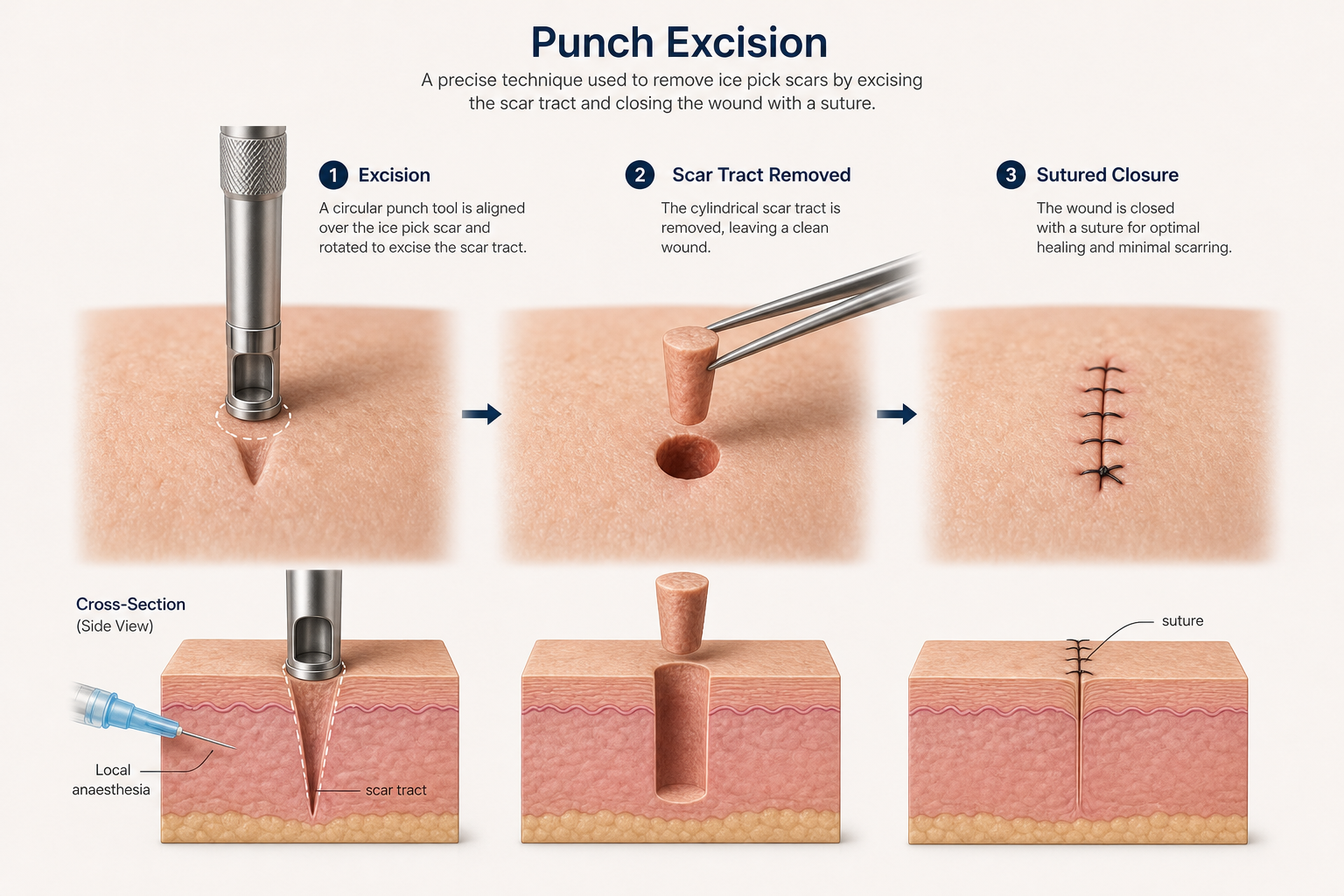
Punch excision is particularly useful for deep, wide ice pick scars that are unlikely to respond adequately to TCA CROSS alone, and for scars with a fibrotic base that resists chemical treatment. The procedure requires a skilled practitioner to match the punch diameter accurately and to close the wound with minimal tension. The resulting linear scar typically fades significantly over three to six months and can be further improved with fractional laser or microneedling once fully healed.
A related technique, punch grafting, involves removing the scar and replacing it with a small skin graft taken from behind the ear. This approach is less commonly used but may be considered for very deep or wide scars where simple excision and closure would leave an unacceptable defect.
Phenol CROSS
Phenol CROSS uses the same focal application principle as TCA CROSS but substitutes phenol as the caustic agent. Some clinicians prefer phenol for particularly deep or resistant scars, as it may penetrate more deeply than TCA. However, phenol carries a higher risk of systemic absorption and pigmentary change, and its use requires careful patient selection and practitioner experience. Evidence for phenol CROSS is less extensive than for TCA CROSS.
Energy-Based and Adjunct Treatments
While broad resurfacing treatments are insufficient as standalone therapies for ice pick scars, they play an important role within a combination protocol — particularly after focal treatments have reduced scar depth.
Fractional ablative CO2 laser can improve the overall texture of the skin surrounding treated scars and may provide modest additional improvement in scar depth when used after TCA CROSS has already reduced the tract. RF microneedling (radiofrequency microneedling) delivers energy deeper into the dermis than standard microneedling and may offer more meaningful collagen remodeling at depth, though evidence specifically for ice pick scars remains limited compared with its performance in rolling and boxcar scars.
Picosecond 1064 nm laser technology, which works through laser-induced optical breakdown (LIOB) to create micro-cavitations within the dermis, is an emerging option with early promising data for atrophic scars including ice pick scars, particularly in patients with darker skin types where ablative approaches carry higher PIH risk. Evidence is still developing and this modality is not yet as well-established as TCA CROSS or punch excision for ice pick scars specifically.
Platelet-rich plasma (PRP) is sometimes used as an adjunct to reduce recovery time between sessions and to support collagen induction, though it is not considered a primary treatment for ice pick scars on its own. Topical tretinoin (a retinoid) is commonly recommended as a priming and maintenance agent: it supports skin cell turnover, may modestly improve early or mild atrophic changes, and helps manage PIH between treatment sessions.
Why Treatment Sequencing Matters
The order in which treatments are applied is not arbitrary. The most effective approach for ice pick scars typically follows a depth-first logic: address the scar tract itself before attempting to resurface the surrounding skin. Applying a broad resurfacing treatment before focal depth treatments can temporarily alter the skin’s surface without improving the underlying tract, and may make subsequent focal treatments more difficult to perform accurately.
A typical combination protocol might begin with two to four sessions of TCA CROSS to reduce scar depth, followed by punch excision for any scars that have not responded adequately, and then fractional ablative laser or RF microneedling to refine overall skin texture once the deepest scars have been addressed. This sequencing allows each modality to work on the problem it is best suited to solve, rather than asking a single treatment to address the full complexity of the scar.
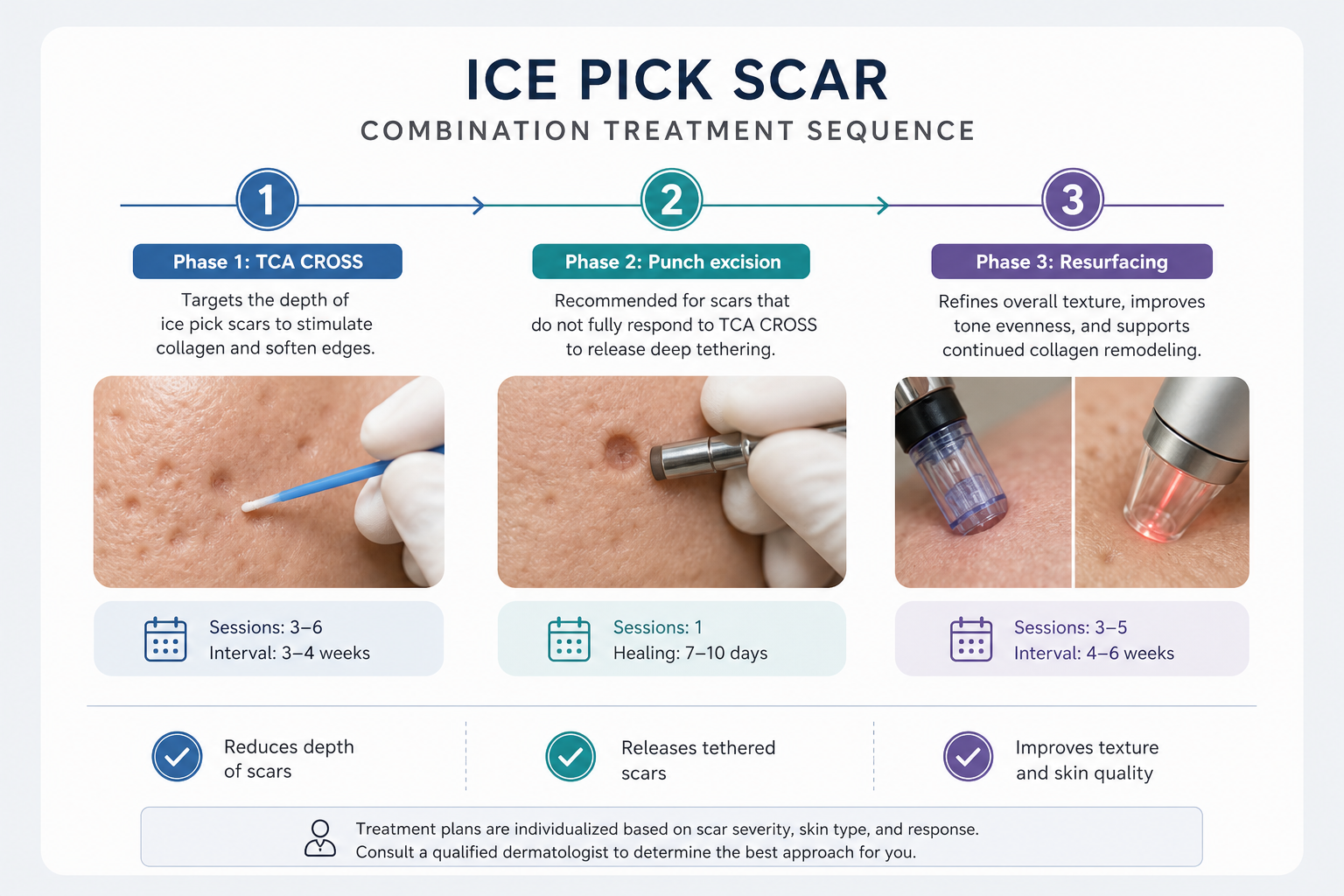
The interval between sessions also matters. Collagen remodeling after TCA CROSS continues for several weeks after each treatment, and assessing response before the next session helps the practitioner determine whether to continue with the same approach or adjust the protocol.
Ice Pick Scars and Skin Type Considerations
Fitzpatrick skin type significantly influences treatment selection and risk management for ice pick scars. Patients with Fitzpatrick skin types III–VI have a higher baseline risk of post-inflammatory hyperpigmentation (PIH) following any procedure that induces controlled inflammation — including TCA CROSS, punch excision, and ablative laser treatments.
For darker skin types, practitioners may use lower TCA concentrations (50–70% rather than 100%) with more frequent sessions to achieve gradual improvement while minimising PIH risk. Microneedling and RF microneedling are generally preferred over ablative laser resurfacing in Fitzpatrick IV–VI patients because they carry a lower risk of pigmentary change. Mandatory daily broad-spectrum sun protection is essential throughout any treatment course, as UV exposure significantly increases PIH risk in treated skin. Temporary darkening around treated scars is common and usually resolves, but patients should be counselled about this possibility before treatment begins.
Active Acne Control Before Scar Treatment
Active acne control is a prerequisite for scar treatment, not an optional preliminary step. Treating ice pick scars while active inflammatory acne is still present risks creating new scars during the treatment course, undermining the results of each session. Most dermatologists recommend that acne be well-controlled — ideally with no active inflammatory lesions — for at least two to three months before beginning scar treatment.
For patients who have recently completed a course of isotretinoin (a systemic retinoid used for severe acne), most practitioners advise waiting six to twelve months after completing treatment before starting ablative or invasive scar procedures, as isotretinoin can affect wound healing. Non-ablative treatments and TCA CROSS at lower concentrations may be considered earlier in some cases, but this decision should be made by a qualified practitioner based on individual assessment.
Non-comedogenic skincare and daily SPF are recommended throughout the treatment process to support skin health and reduce the risk of new breakouts and PIH.
At-Home Skincare: What Helps and What Doesn’t
No topical product can structurally alter a deep ice pick scar tract. However, certain ingredients play a supporting role in managing the skin between professional treatments. Topical retinoids such as tretinoin support collagen remodeling and cell turnover, and may modestly improve very early or superficial atrophic changes; they are most useful as a priming and maintenance agent rather than a primary treatment. Vitamin C (ascorbic acid) does not reduce scar depth but can help manage post-inflammatory hyperpigmentation and support overall skin quality. Salicylic acid helps control active acne and reduce the risk of new breakouts, but does not affect established scar depth.
Products marketed as scar-reducing creams or serums are unlikely to produce meaningful improvement in established ice pick scars. The structural problem — a deep, epithelialized tract with collagen loss — requires professional intervention to address.
Realistic Expectations and Prognosis
Ice pick scars do not resolve spontaneously. Without treatment, they tend to remain stable or become more visible over time as the surrounding skin loses collagen with age, making the contrast between the scar and the surrounding skin more pronounced.
With appropriate treatment, meaningful reduction in scar depth and visibility is achievable for most patients, but complete elimination of ice pick scars is not a realistic expectation. The goal of treatment is significant improvement — scars that are less deep, less visible in different lighting conditions, and less prominent in photographs — rather than a return to completely unscarred skin. Most patients who complete a full course of TCA CROSS, with or without adjunct treatments, report noticeable improvement that continues to develop for several months after the final session as collagen remodeling progresses.
Frequently Asked Questions
Do ice pick scars go away on their own?
No. Ice pick scars are permanent structural changes in the dermis. They do not resolve without treatment and may become more noticeable over time as natural collagen loss with ageing increases the contrast between the scar and surrounding skin.
How many TCA CROSS sessions are typically needed?
Most patients require between three and six sessions, spaced four to six weeks apart. The number depends on scar depth, the number of scars being treated, and how well individual scars respond. Some scars show significant improvement after two or three sessions; others require more. A practitioner will assess response after each session before recommending continuation.
Can ice pick scars be treated at home?
No home treatment can safely or effectively address the depth of an ice pick scar. High-concentration TCA and punch excision require clinical training and controlled conditions. Attempting high-concentration acid application at home carries serious risks of scarring, burns, and permanent skin damage. Topical retinoids and vitamin C can support skin health between professional sessions but cannot replace clinical treatment.
Is TCA CROSS safe for darker skin tones?
TCA CROSS can be used in patients with darker Fitzpatrick skin types, but requires careful protocol adjustment. Lower concentrations, longer intervals between sessions, and mandatory sun protection reduce the risk of post-inflammatory hyperpigmentation. A practitioner experienced in treating diverse skin tones should assess suitability and tailor the approach accordingly.
Why didn’t laser treatment improve my ice pick scars?
Fractional laser treatments improve overall skin texture and work well for shallow atrophic scars, but the deep, narrow scar tract of an ice pick scar typically extends beyond the effective depth of most resurfacing lasers. This is why focal treatments like TCA CROSS, which target the tract directly, are recommended as the primary approach for ice pick scars, with laser used as an adjunct to refine surrounding texture afterward.
How much does ice pick scar treatment cost?
Costs vary significantly by clinic, location, and the number of scars being treated. TCA CROSS is generally less expensive per session than laser treatments, but multiple sessions are required. Punch excision costs depend on the number of scars and the complexity of the procedure. A consultation with a board-certified dermatologist or qualified aesthetic practitioner will provide a realistic cost estimate based on individual assessment. Cosmetic scar treatments are not typically covered by health insurance.
Planning Ice Pick Scar Treatment: What to Consider Next
Ice pick scars are a well-defined clinical problem with well-matched treatment options — but the right approach depends on scar depth, number, location, skin type, and individual healing response. TCA CROSS remains the most evidence-supported starting point for most patients, with punch excision reserved for deeper or non-responding scars and broader resurfacing treatments used to refine results once focal treatment has addressed the scar tract. A combination protocol, sequenced correctly and tailored to your skin type, consistently outperforms any single modality used alone.
If you are considering treatment, a consultation with a board-certified dermatologist or experienced aesthetic practitioner is the appropriate first step. A clinical assessment will confirm scar type, grade severity, identify any active acne that needs to be controlled first, and allow a realistic treatment plan to be discussed — including the number of sessions likely needed, expected improvement, and the risks relevant to your skin type. Approaching ice pick scar treatment with accurate expectations and a structured plan gives the best chance of meaningful, lasting improvement.