Under Eye Filler Swelling Stages: A Day-by-Day Recovery Timeline
Swelling after under eye filler is one of the most common concerns patients have in the days following treatment. Because the periorbital area has uniquely thin skin, delicate blood vessels, and limited lymphatic circulation, it responds to injection differently from almost any other filler zone. Understanding the under eye filler swelling stages — what is happening beneath the skin at each point, and what you should and should not be concerned about — can make the recovery period significantly less stressful and help you judge your results accurately.
Key Takeaways
- Swelling after tear trough filler typically peaks between 48 and 72 hours and improves noticeably by the end of the first week.
- The filler settling period continues for up to two to four weeks; final results should not be judged before this point.
- Morning swelling is normal and is caused by gravity-driven fluid pooling during sleep, not by filler displacement.
- Malar edema and late-onset swelling are distinct complications that can appear weeks or months after treatment and require clinical assessment.
- Persistent swelling, vision changes, skin colour changes, or signs of infection are red flags that require prompt medical attention.
Why the Under-Eye Area Swells More Than Other Filler Zones
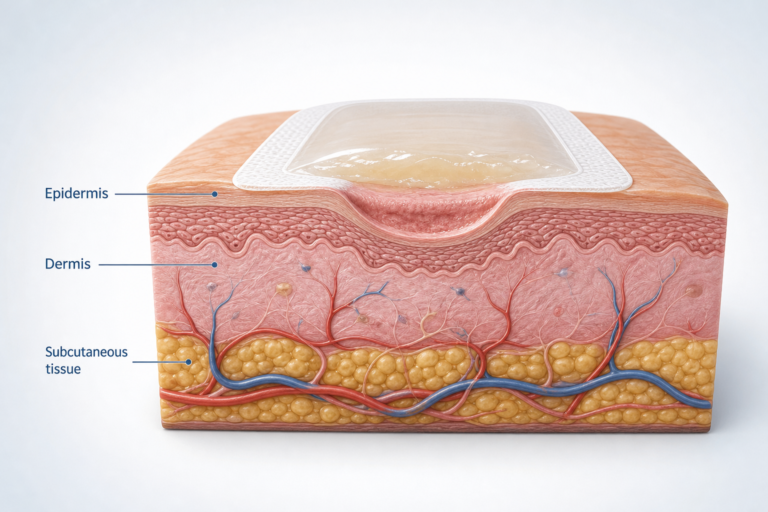
The tear trough and periorbital area are anatomically predisposed to swelling after any injection. The skin beneath the lower eyelid is among the thinnest on the face — often less than one millimetre — which means even a small amount of fluid becomes immediately visible. Beneath this skin lies a network of fine capillaries and lymphatic vessels that are easily disrupted by needle or cannula passage, triggering a localised inflammatory response that draws fluid into the surrounding tissue.
Hyaluronic acid (HA) filler compounds this effect through its hydrophilic nature. Hyaluronic acid is a water-binding molecule that can attract and hold many times its own weight in water. Once injected into the tear trough, the filler draws additional fluid from surrounding tissues through osmotic pressure, temporarily increasing the apparent volume in the area. This is not a sign that something has gone wrong; it is a predictable consequence of the material’s chemistry and is one reason why the under-eye area swells more than, for example, the lips or cheeks after comparable volumes of filler.
Limited lymphatic drainage in the periorbital region also slows the clearance of this excess fluid. The lymphatic system acts as the body’s drainage network, removing interstitial fluid and cellular debris. Around the lower eyelid, lymphatic circulation is relatively sparse, which means fluid that accumulates after injection takes longer to clear than it would in areas with richer lymphatic supply. Patients with pre-existing conditions such as festoons, chronic fluid retention, or a history of lower blepharoplasty may experience more pronounced or prolonged swelling for this reason.
The Under Eye Filler Swelling Stages: A Day-by-Day Breakdown
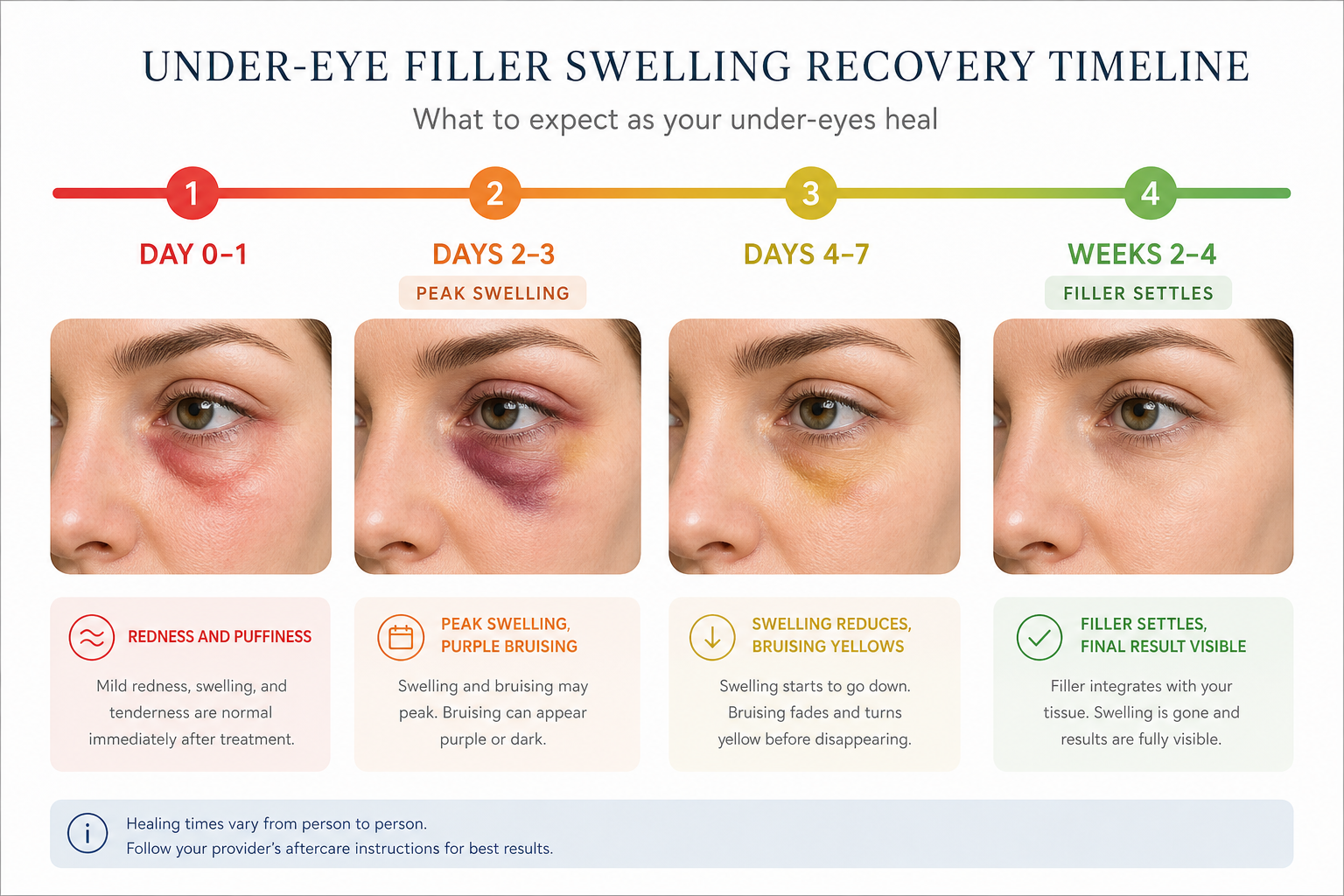
Recovery from tear trough filler follows a broadly predictable pattern, though individual variation is significant. The timeline below reflects what most patients experience under normal healing conditions.
Stage 1: Immediate Reaction (Day 0 to Day 1)
Swelling begins within minutes of injection as the body mounts its initial inflammatory response to the needle or cannula passing through tissue. The area may appear puffy, slightly red, and tender to the touch. Any bruising that occurs will typically appear within the first few hours as a reddish or purplish discolouration at the injection site. At this stage, the swelling reflects acute tissue trauma rather than the filler volume itself, and the result you see immediately after treatment is not representative of your final outcome.
Cold compress application — a clean gel pack or cold cloth wrapped in a thin cloth, applied gently for ten to fifteen minutes at a time — can help reduce initial swelling by causing local vasoconstriction. Head elevation is important from the first night; sleeping with your head raised on an extra pillow reduces the gravitational pooling of fluid in the periorbital area overnight. Avoiding alcohol, vigorous exercise, saunas, and salty foods during this stage supports a smoother recovery.
Stage 2: Peak Swelling Window (Days 2 to 3)
The peak swelling window typically falls between 48 and 72 hours after treatment. During this period, the inflammatory response is at its most active, and the hydrophilic nature of hyaluronic acid means the filler continues to attract water from surrounding tissue. The under-eye area may look noticeably fuller than intended, and any bruising will often deepen in colour — moving from red toward purple or blue — as blood pigments break down beneath the skin.
This is the stage that causes the most patient anxiety, and it is important to understand that what you are seeing is largely swelling and bruising rather than the filler itself. Social downtime is most significant during days two and three; many patients prefer to work from home or take leave during this window if their professional or social commitments require them to look their best. Continuing cold compress use, maintaining head elevation during sleep, and avoiding heat exposure remain the most effective self-care measures at this stage.
Stage 3: Visible Improvement (Days 4 to 7)
From around day four, most patients notice a meaningful reduction in swelling as the acute inflammatory response subsides and lymphatic drainage begins to clear accumulated fluid. Bruising typically transitions from blue or purple toward green and then yellow as haemoglobin breaks down — a normal and expected colour progression. The under-eye area will look closer to the intended result, though residual puffiness is still common, particularly in the mornings.
By the end of the first week, most patients feel comfortable returning to normal social activities. Makeup can generally be applied carefully from around 24 to 48 hours post-treatment, though this should be confirmed with your treating practitioner. Strenuous exercise is usually best avoided for the first week to prevent increased blood flow to the face, which can prolong swelling.
Stage 4: Filler Settling Period (Weeks 2 to 4)
The filler settling period extends from approximately two weeks to four weeks after treatment. During this phase, residual swelling continues to resolve, the hyaluronic acid integrates into the surrounding tissue, and the final contour of the treated area becomes apparent. Minor asymmetry that was visible in the first week often corrects itself as swelling resolves unevenly — this is a normal part of healing and does not necessarily indicate a placement error.
The two-week mark is the earliest point at which a meaningful before and after assessment can be made, and most experienced practitioners recommend waiting the full four weeks before considering any touch-up appointment. Judging results before swelling has fully resolved risks unnecessary intervention. If asymmetry, residual puffiness, or other concerns persist beyond four weeks, a follow-up consultation is appropriate.
| Timeframe | What You May See | What Is Happening | Recommended Actions |
|---|---|---|---|
| Day 0–1 | Redness, puffiness, early bruising | Acute inflammatory response, capillary disruption | Cold compress, head elevation, avoid alcohol and exercise |
| Days 2–3 | Peak swelling, bruising deepens (purple/blue) | Peak inflammation, HA water-binding at maximum | Continue cold compress, rest, social downtime |
| Days 4–7 | Swelling reduces, bruising turns green/yellow | Inflammation subsiding, lymphatic drainage active | Gentle activity, avoid heat and strenuous exercise |
| Weeks 2–4 | Residual puffiness clears, result becomes visible | Filler integrates into tissue, fluid fully reabsorbed | Assess results, book touch-up if needed after week 4 |
Why Swelling Is Worse in the Morning
Many patients notice that under-eye puffiness is most pronounced when they first wake up and improves as the day progresses. This pattern is driven by gravity and the relative inactivity of the lymphatic system during sleep. When you lie flat, fluid that would normally drain downward and away from the periorbital area instead pools in the loose tissue beneath the lower eyelid. The lymphatic system, which relies partly on muscle movement and body activity to pump fluid through its vessels, is also less active during sleep, reducing overnight drainage.
Once you are upright and moving, gravity assists drainage and lymphatic circulation resumes, which is why morning swelling typically reduces within one to two hours of waking. Sleeping with your head elevated — ideally at a thirty-degree angle or higher — can meaningfully reduce overnight fluid accumulation during the first week of recovery. This morning swelling pattern is a normal healing trajectory and does not indicate that the filler has moved or that something has gone wrong.
Factors That Influence How Much You Swell
The degree of swelling after tear trough filler varies considerably between patients and is influenced by several factors beyond the practitioner’s control.
- Injection technique: The cannula technique — using a blunt-tipped flexible cannula rather than a sharp needle — generally causes less tissue trauma and bruising, which can reduce the severity of the initial inflammatory response. Needle injection may be preferred in certain anatomical situations but carries a slightly higher risk of bruising.
- Volume of filler used: Larger volumes introduce more hyaluronic acid into the tissue, increasing the osmotic water-binding effect and the degree of initial swelling.
- Individual anatomy: Patients with naturally thin under-eye skin, prominent tear troughs, or pre-existing periorbital edema tend to show swelling more visibly than those with thicker skin or less pronounced hollowing.
- Prior procedures: A history of lower blepharoplasty (surgical eyelid reduction) can alter lymphatic drainage pathways in the periorbital area, increasing the risk of prolonged swelling. Prior filler accumulation from previous treatments can also contribute.
- Concurrent treatments: Botulinum toxin injections around the eye area can temporarily reduce the pumping action of the orbicularis oculi muscle, which contributes to lymphatic circulation in the periorbital region. This may modestly prolong swelling in some patients.
- Lifestyle factors: High salt intake, alcohol consumption, poor sleep, and dehydration all promote fluid retention and can worsen or prolong swelling during recovery.
Normal vs. Abnormal Swelling: What to Watch For
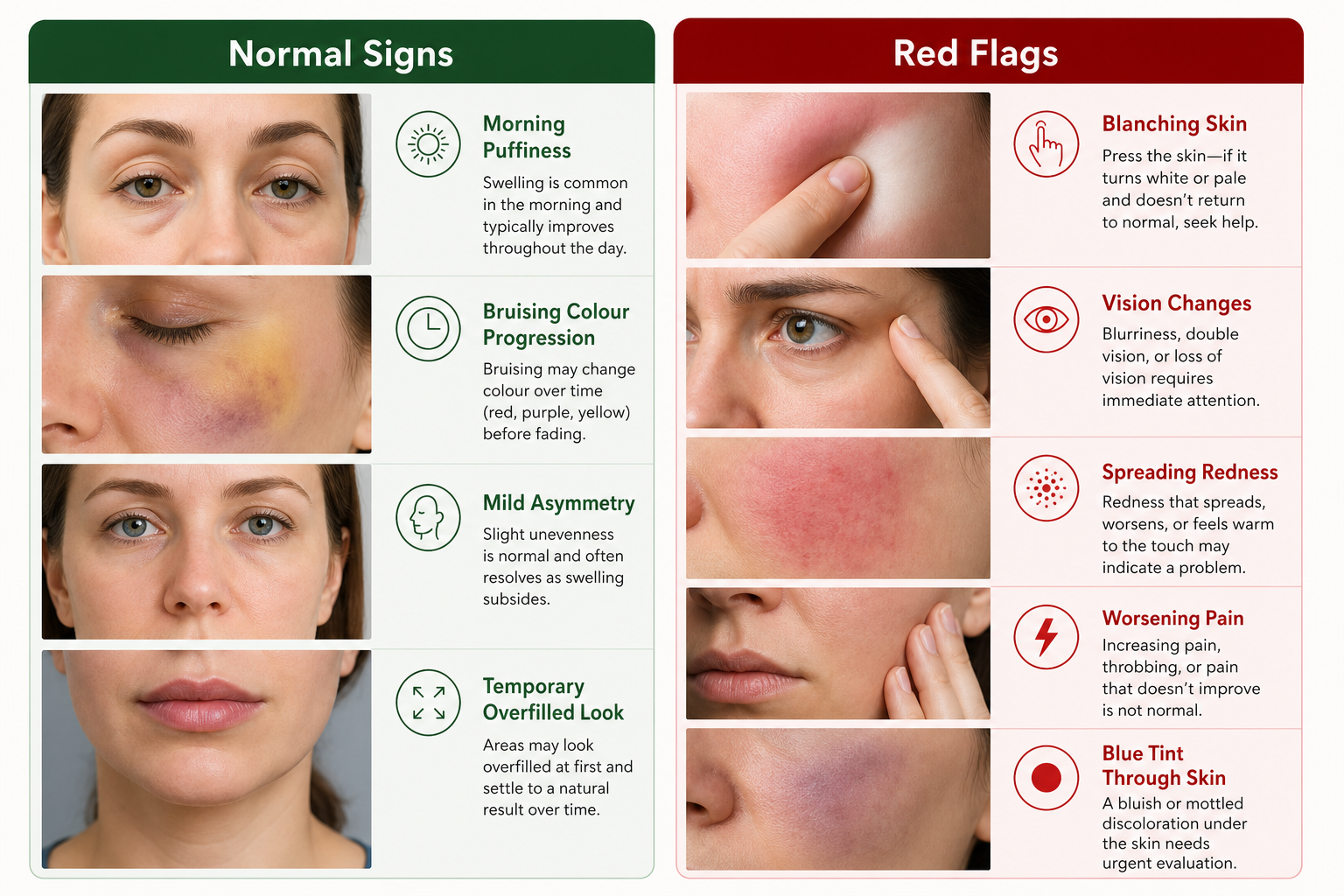
Most swelling after under eye filler is a normal part of the healing process, but certain signs fall outside the normal healing trajectory and require prompt clinical assessment.
Signs That Are Typically Normal
- Puffiness and firmness in the treated area for the first one to two weeks
- Bruising that progresses through red, purple, blue, green, and yellow over seven to fourteen days
- Swelling that is worse in the morning and improves throughout the day
- Mild asymmetry during the first two weeks that gradually resolves
- A slightly overfilled appearance during peak swelling that settles by week two to four
Red Flags That Require Prompt Medical Attention
- Vascular occlusion: Blanching (white patches), mottled or dusky skin discolouration, or severe pain immediately after injection may indicate that filler has compressed or entered a blood vessel. This is a medical emergency requiring immediate treatment, potentially with hyaluronidase to dissolve the filler.
- Vision changes: Any sudden change in vision, including blurring, double vision, or loss of vision, after periorbital filler requires emergency medical assessment without delay.
- Signs of infection: Increasing warmth, spreading redness, pus, or fever developing more than 48 hours after treatment may indicate infection and should be assessed by a medical professional promptly.
- Tyndall effect: A bluish tint visible through the skin — caused by light scattering through superficially placed filler — is not a swelling issue but a placement complication. The Tyndall effect does not resolve on its own and typically requires hyaluronidase treatment to correct.
- Lumps, nodules, or ridges that persist beyond four weeks and do not soften with gentle massage may indicate filler migration or granuloma formation and warrant clinical review.
- Swelling that worsens after the first week rather than improving, or that returns after initially resolving, should be assessed by your treating practitioner.
Late-Onset and Delayed Swelling: Malar Edema and PHAREE
A subset of patients experience late-onset swelling that appears weeks or even months after tear trough filler, well beyond the expected recovery window. This delayed swelling is distinct from normal post-injection edema and has specific causes that are important to understand.
Malar edema refers to persistent or recurrent puffiness in the mid-cheek and lower eyelid area. It can be triggered or worsened by hyaluronic acid filler in the tear trough because the filler’s water-binding capacity continues to attract fluid over time, particularly in patients who are predisposed to fluid retention in this region. Triggers for malar edema episodes include high salt intake, alcohol consumption, sleeping flat, allergies, and hormonal fluctuations.
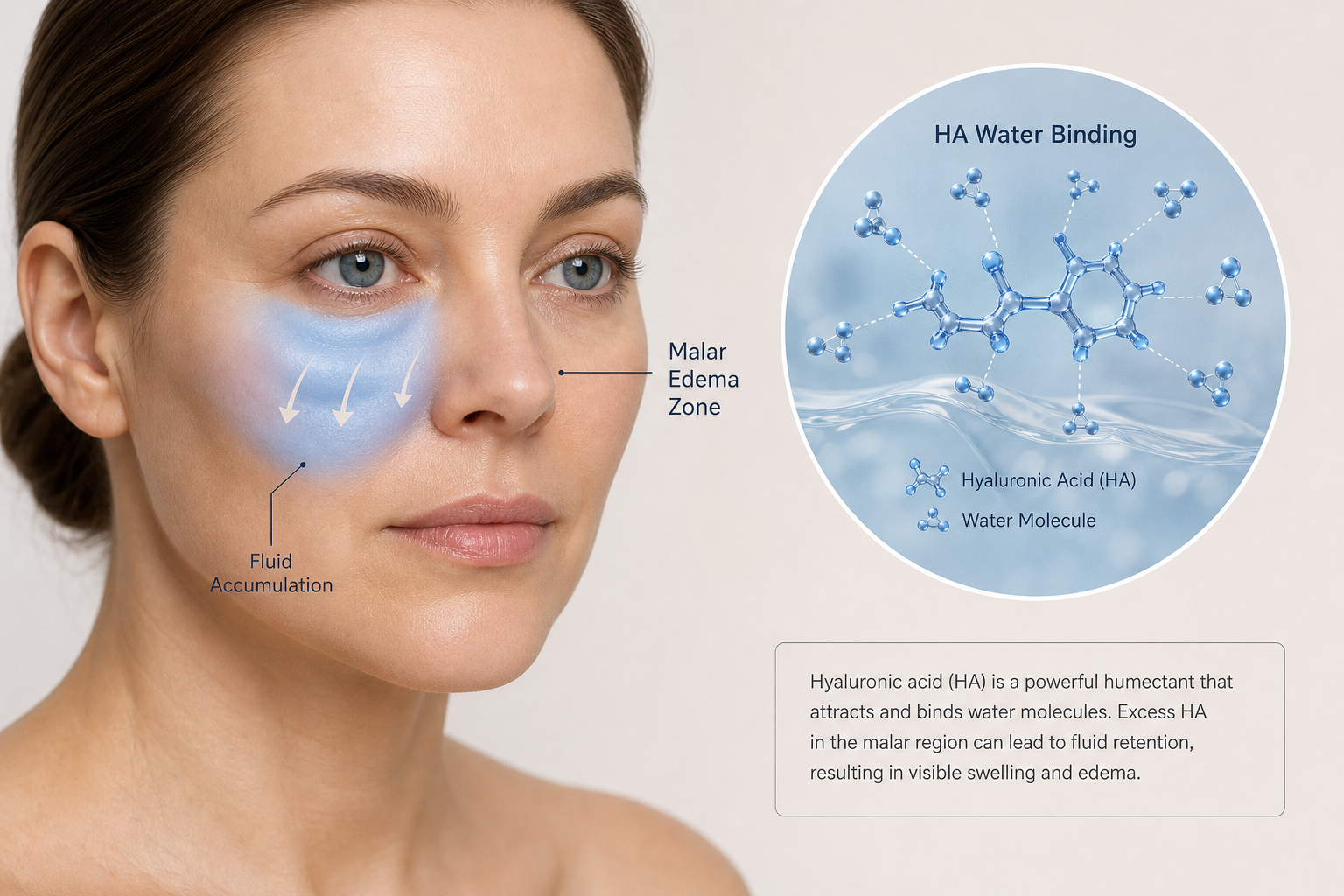
A more specific condition, PHAREE (post-hyaluronic acid recurrent eyelid edema), describes a pattern of recurrent swelling episodes in the eyelid area following HA filler treatment. PHAREE is thought to involve an immune-mediated response to the filler material and tends to occur in patients who have received multiple rounds of filler in the periorbital area. Episodes may be triggered by the same lifestyle factors as malar edema and can be difficult to distinguish from normal swelling without clinical assessment.
Both malar edema and PHAREE may respond to hyaluronidase treatment to dissolve the underlying filler, though this does not guarantee resolution in all cases. Patients who experience recurrent or delayed swelling after tear trough filler should discuss this with their practitioner rather than assuming it will resolve independently.
Aftercare Tips to Support Recovery
Practical aftercare during the first week can meaningfully reduce the severity and duration of swelling after under eye filler.
- Apply cold compresses gently for ten to fifteen minutes several times daily during the first 48 hours. Do not apply ice directly to the skin.
- Sleep with your head elevated on an extra pillow or wedge pillow for the first five to seven nights to reduce overnight fluid pooling.
- Avoid alcohol for at least 48 hours, as alcohol promotes vasodilation and fluid retention.
- Avoid vigorous exercise, saunas, steam rooms, and hot baths for at least one week, as heat and increased blood flow can worsen swelling.
- Reduce salt intake during recovery to minimise fluid retention.
- Stay well hydrated with water, which supports lymphatic drainage and overall tissue health.
- Avoid touching, pressing, or massaging the treated area unless specifically instructed to do so by your practitioner, as pressure can potentially displace filler during the early settling period.
- Protect the area from sun exposure and avoid tanning beds during recovery, as UV exposure can worsen bruising and inflammation.
Some practitioners recommend arnica supplements or arnica cream to reduce bruising, though the evidence for arnica’s effectiveness in this context is limited and its use should be discussed with your treating clinician before starting.
Tracking Your Recovery Accurately
One practical step that is rarely discussed but genuinely useful is consistent photography during recovery. Swelling fluctuates significantly from morning to evening and from day to day, which can make it difficult to assess whether you are improving. Taking photographs at the same time each day — ideally mid-morning after morning swelling has reduced — in the same lighting and from the same angle gives you a reliable record of your progress. This is particularly helpful if you are concerned about asymmetry or the pace of improvement, as it allows both you and your practitioner to compare accurately rather than relying on memory.
Avoid judging your results from photographs taken first thing in the morning or immediately after exercise, as these will show the area at its most swollen and are not representative of the settled result.
When Filler Is Dissolved: Swelling After Hyaluronidase
Patients who choose to have their tear trough filler dissolved with hyaluronidase — whether due to complications, unsatisfactory results, or malar edema — should be aware that the dissolution process itself causes a temporary inflammatory response. Hyaluronidase breaks down hyaluronic acid rapidly, but the surrounding tissue responds with localised swelling that can last several days to one to two weeks. This post-dissolution swelling can temporarily make the under-eye area look hollow or uneven before the tissue settles into its natural state. Assessing the outcome of filler dissolution should therefore be delayed by at least two weeks, and in some cases longer, before deciding whether re-treatment is appropriate.
Frequently Asked Questions
How long does under eye filler swelling last?
Most of the visible swelling resolves within one to two weeks. The filler settling period — during which residual puffiness clears and the final result becomes apparent — typically takes two to four weeks. Some patients with thinner skin or larger volumes of filler may notice minor residual puffiness for slightly longer.
Is it normal for one eye to be more swollen than the other?
Yes. Asymmetric swelling during the first two weeks is common and does not necessarily mean the filler was placed unevenly. Bruising and fluid accumulation rarely resolve at exactly the same rate on both sides. If significant asymmetry persists beyond four weeks, a follow-up consultation is appropriate.
When can I judge my final results?
Most practitioners recommend waiting at least two weeks before forming an opinion on your results, and ideally four weeks for a full before and after assessment. Swelling during the first two weeks can make the area appear overfilled, uneven, or puffy in ways that do not reflect the settled outcome.
Why does my under-eye area look worse in the morning?
Morning swelling is caused by fluid pooling in the periorbital area during sleep, when gravity is not assisting drainage and lymphatic circulation is reduced. This is a normal part of the healing trajectory and typically improves within one to two hours of being upright. Sleeping with your head elevated reduces this effect.
Can swelling return months after treatment?
Yes. Late-onset swelling, including malar edema and PHAREE, can occur weeks or months after tear trough filler. These conditions are distinct from normal post-injection swelling and may be triggered by lifestyle factors such as alcohol, salt, or allergies. If you experience recurrent or delayed swelling, discuss it with your practitioner rather than waiting for it to resolve on its own.
What should I do if I think I have a complication?
Contact your treating practitioner promptly if you experience blanching or mottled skin discolouration, worsening pain, signs of infection, vision changes, or swelling that is increasing rather than improving after the first 48 hours. Vascular occlusion in particular requires urgent treatment and should not be managed with a wait-and-see approach.
Does the cannula technique reduce swelling?
The cannula technique generally causes less tissue trauma than sharp needle injection, which can reduce bruising and the severity of the initial inflammatory response. However, swelling is influenced by multiple factors including filler volume, individual anatomy, and aftercare, so the technique alone does not eliminate swelling entirely.
Knowing When Your Recovery Is on Track
Understanding the under eye filler swelling stages helps set realistic expectations and reduces the anxiety that often accompanies the first week of recovery. For most patients, swelling peaks between 48 and 72 hours, improves meaningfully by the end of the first week, and resolves fully over two to four weeks as the filler settles and integrates into the tissue. Morning puffiness, temporary asymmetry, and a briefly overfilled appearance are all part of the normal healing trajectory rather than signs of a problem.
The most important practical steps are to follow your practitioner’s aftercare guidance, avoid judging your results before the four-week mark, and photograph your recovery consistently so that progress can be tracked accurately. If anything falls outside the expected pattern — particularly worsening swelling, skin colour changes, vision disturbance, or signs of infection — contact your treating practitioner without delay rather than waiting to see if it resolves. A qualified and experienced injector will be able to distinguish normal recovery from a complication that requires intervention, and early assessment is always preferable to delayed action.