Pedunculated Skin Tag: Causes, Treatment Options & What to Expect
A pedunculated skin tag is a soft, benign growth attached to the skin by a narrow stalk, and while it is entirely harmless in most cases, it can catch on clothing, cause irritation, or simply be a cosmetic concern. Understanding what causes these growths, which removal methods are available, and what recovery looks like can help you have a more informed conversation with a dermatologist before deciding on treatment.
Key Takeaways
- A pedunculated skin tag hangs from the skin on a thin stalk called a pedicle, distinguishing it from flatter, sessile skin tags that sit directly on the surface.
- Skin friction in intertriginous areas — such as the neck, armpits, and groin — is the most common trigger, and metabolic factors like insulin resistance and obesity increase the likelihood of developing them.
- Professional removal by a dermatologist is safe, quick, and typically performed under local anesthetic; common methods include snip excision, cryotherapy, electrocautery, and ligation.
- At-home removal carries real risks including infection, bleeding, and scarring, and is not recommended by dermatologists.
- Skin tag removal is usually considered a cosmetic procedure and is not covered by most insurance plans unless a medical necessity can be documented.
What Is a Pedunculated Skin Tag?
A pedunculated skin tag — medically known as an acrochordon, fibroepithelial polyp, or soft fibroma — is a small, benign outgrowth of skin that hangs from a narrow stalk or pedicle. The word “pedunculated” simply means “attached by a stalk,” which distinguishes these growths from sessile skin tags that sit flat against the skin surface without a defined neck. Pedunculated tags tend to be more mobile and more prone to catching on clothing or jewelry precisely because of this hanging structure.
Histologically, a pedunculated skin tag consists of a core of loose collagen fibers and dilated capillaries covered by hyperplastic epithelium — essentially a small outpouching of normal skin components. They are not cancerous and do not carry a risk of becoming cancerous. Most are flesh-colored or slightly hyperpigmented, soft to the touch, and range from a few millimetres to over a centimetre in diameter. Larger tags, sometimes called giant acrochordons, are less common but can reach several centimetres and may be more prone to complications.
The term acrochordon is used interchangeably with skin tag in clinical settings, and you may also encounter the terms squamous cell papilloma, fibroma molle, or fibrovascular papilloma in medical literature — all referring to the same type of benign lesion.
Pedunculated vs. Sessile Skin Tags: What Is the Difference?
The distinction between pedunculated and sessile skin tags matters more than it might initially seem, particularly when it comes to treatment. A sessile skin tag has a broad base and sits flush with the surrounding skin, making it slightly more challenging to remove cleanly without affecting the surrounding tissue. A pedunculated skin tag, by contrast, has a clearly defined narrow stalk that separates the tag from the skin, which often makes removal more straightforward — the stalk provides a natural point of intervention.
In practice, pedunculated tags are more likely to cause mechanical symptoms. The stalk can twist spontaneously, a process called torsion, which cuts off the tag’s blood supply and causes sudden pain, darkening, and eventual necrosis of the tag. While torsion can technically resolve the tag on its own, it is painful and carries a risk of infection, which is why professional assessment is advisable if a skin tag suddenly becomes dark, tender, or swollen.
Where Do Pedunculated Skin Tags Appear?
Pedunculated skin tags form most commonly in areas where skin rubs against skin or clothing repeatedly. The most frequently affected sites include:
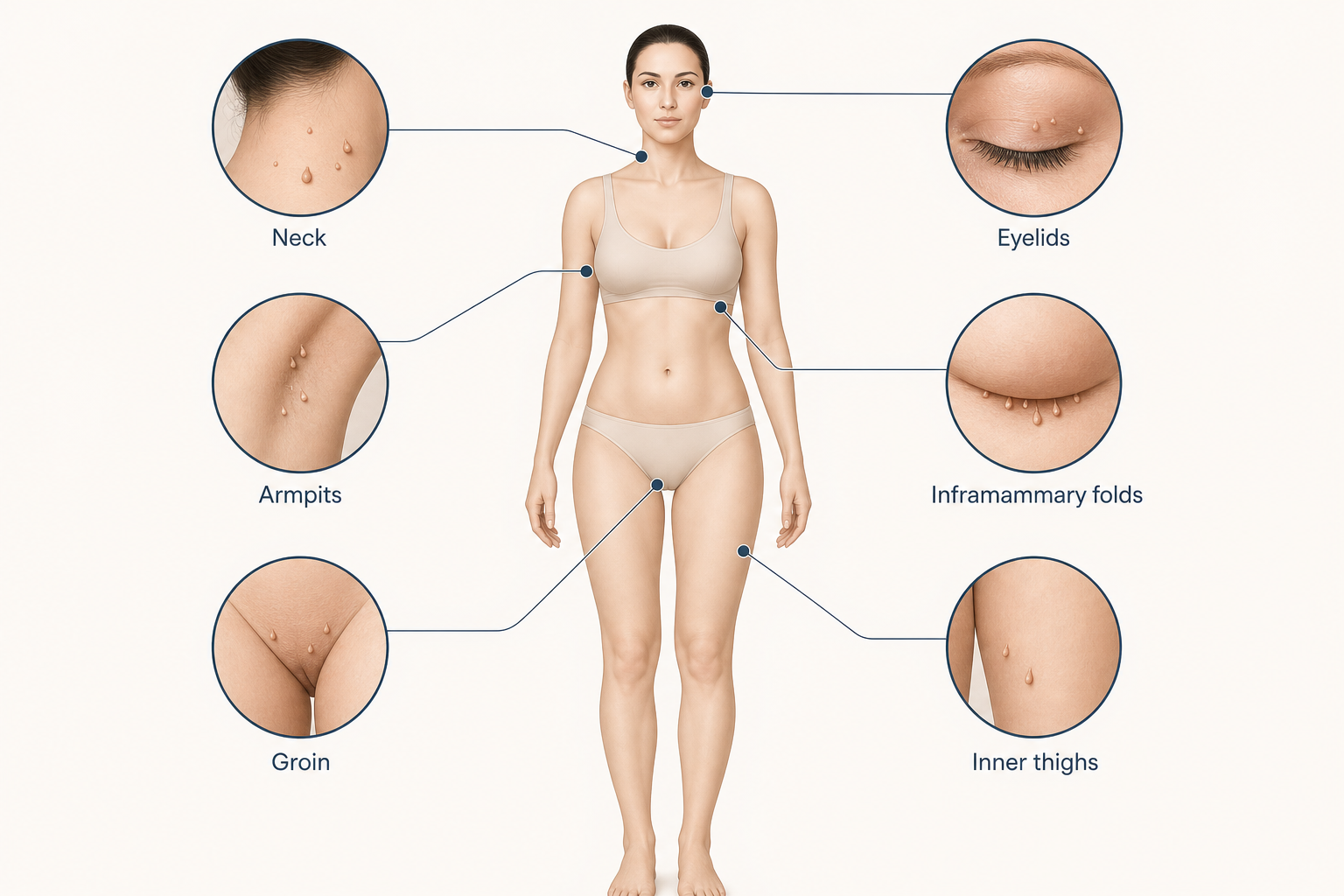
- Neck — particularly along the sides and back, where collars and necklaces create friction
- Axilla (armpits) — a classic intertriginous area with constant skin-on-skin contact
- Groin and inguinal area — another high-friction zone, especially in people who are overweight
- Inframammary folds — beneath the breasts, where moisture and friction combine
- Eyelids — a sensitive location requiring specialist involvement (see below)
- Upper chest and inner thighs — common in people with higher body weight
Eyelid skin tags deserve particular mention. Because the eyelid skin is extremely thin and the proximity to the eye introduces additional risk, removal of periocular tags is generally best performed by an ophthalmologist or a dermatologist with specific experience in this area. Standard removal techniques used elsewhere on the body may not be appropriate near the eye margin, and the assessment process differs accordingly.
What Causes Pedunculated Skin Tags?
The precise mechanism behind skin tag formation is not fully understood, but chronic skin friction is widely accepted as the primary physical trigger. This explains why intertriginous areas — regions where skin surfaces meet and rub — are so commonly affected. Repeated mechanical irritation appears to stimulate localised overgrowth of skin tissue, producing the characteristic stalk-and-bulb structure of a pedunculated tag.
Beyond friction, several systemic and hormonal factors are associated with a higher likelihood of developing acrochordons:
- Insulin resistance and type 2 diabetes — multiple studies have found a significant association between acrochordons and impaired glucose metabolism. Elevated insulin levels may stimulate epidermal growth factor receptors, promoting localised skin proliferation.
- Obesity and metabolic syndrome — excess body weight increases skin fold depth and friction, and is independently associated with higher tag counts.
- Pregnancy and hormonal changes — skin tags often appear or multiply during pregnancy, likely due to hormonal shifts including elevated oestrogen and progesterone levels.
- Polycystic ovary syndrome (PCOS) — associated with insulin resistance and androgen excess, both of which may contribute to tag formation.
- Advancing age — acrochordons become more common with age, with peak prevalence typically seen in middle-aged and older adults.
- Dyslipidaemia and cardiovascular risk factors — some research suggests an association, though the relationship is less clearly established than with insulin resistance.
The presence of multiple skin tags, particularly alongside acanthosis nigricans (darkened, velvety skin in body folds), may warrant investigation for underlying metabolic conditions. A dermatologist or GP can advise on whether further assessment is appropriate.
How Are Pedunculated Skin Tags Treated?
Professional removal of a pedunculated skin tag is a straightforward in-office procedure in most cases. Several well-established methods are available, and the most appropriate choice depends on the tag’s size, location, the patient’s skin type, and the practitioner’s assessment. All standard methods are performed under local anesthetic to minimise discomfort.
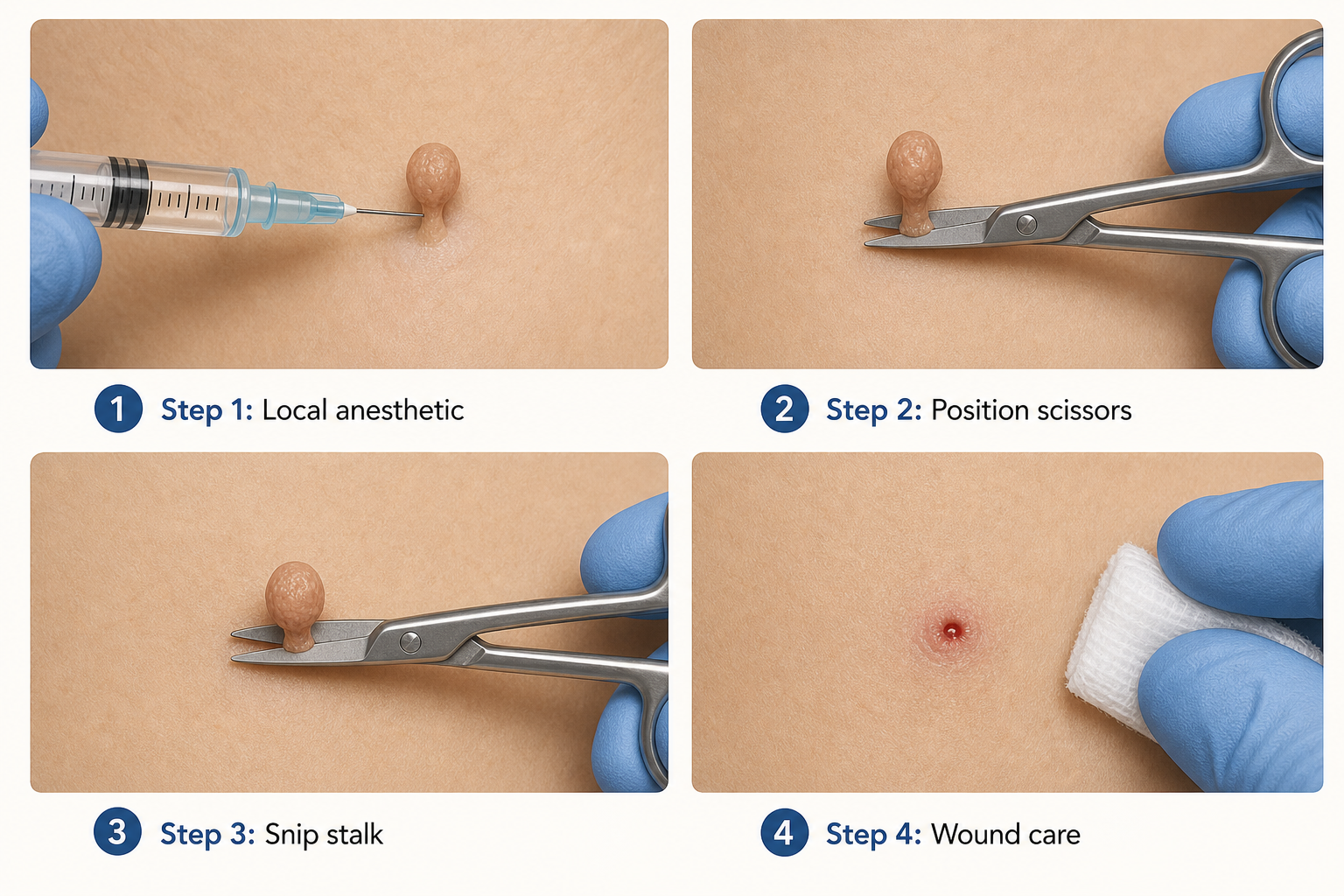
Snip Excision
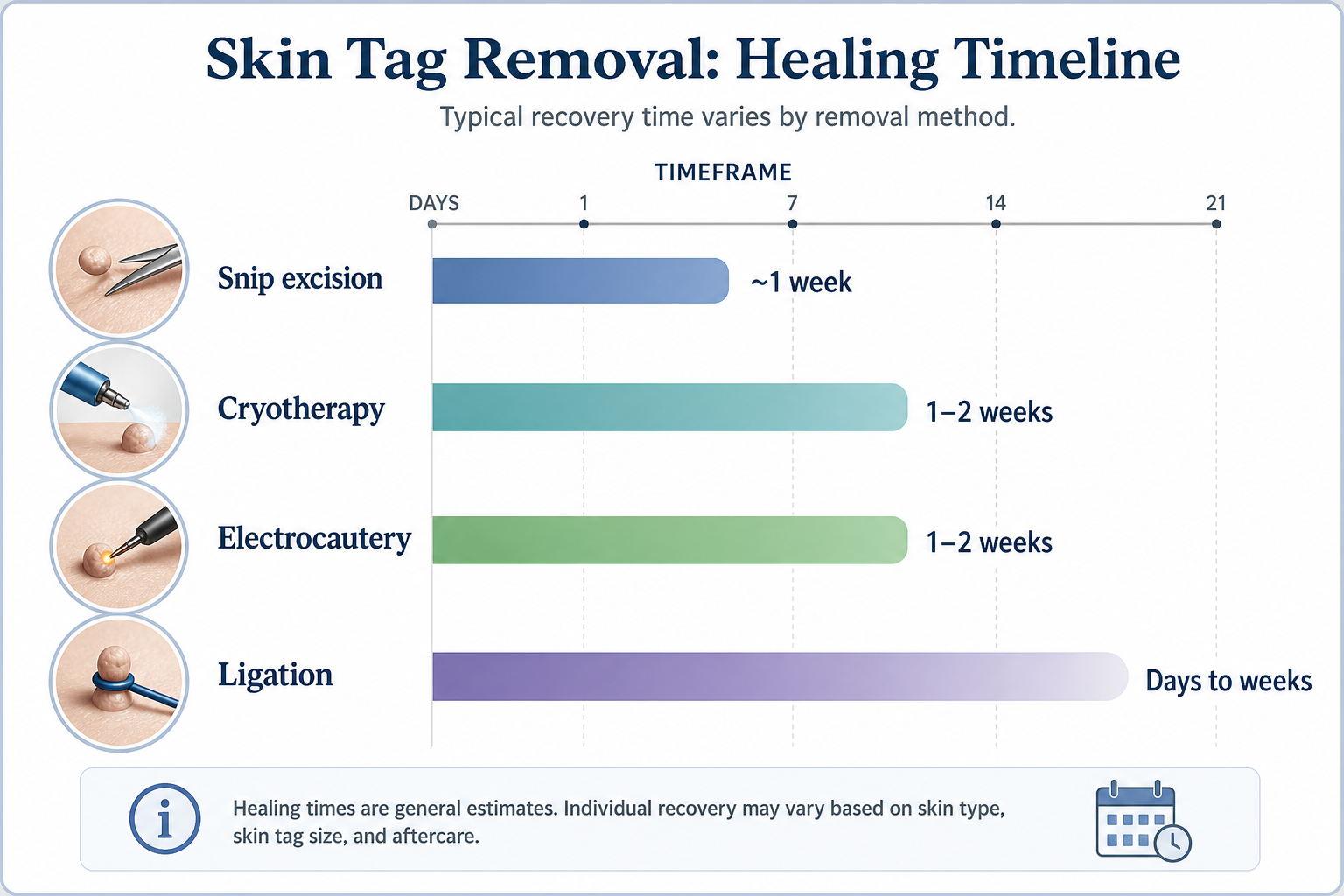
Snip excision — sometimes called scissors excision — is one of the most commonly used methods for pedunculated skin tags. The dermatologist uses sterile iris scissors or a scalpel to cut cleanly through the narrow stalk at its base. Because the stalk provides a natural separation point, the procedure is typically quick and precise. Small tags may not require any anesthetic at all, while larger ones are numbed with a small injection of local anesthetic beforehand. Bleeding is usually minimal and can be controlled with pressure or a topical haemostatic agent. Healing time is generally around one week for small tags.
Cryotherapy (Liquid Nitrogen)
Cryotherapy uses liquid nitrogen applied directly to the skin tag to freeze and destroy the tissue. The extreme cold causes cellular damage, and the tag typically falls off within one to two weeks as the treated tissue dies and separates. Cryotherapy is effective for small to medium pedunculated tags and does not usually require a local anesthetic, though the freezing sensation can be briefly uncomfortable. An important consideration for patients with darker skin tones is that cryotherapy carries a meaningful risk of hypopigmentation — a lightening of the treated area — which may be permanent. This risk should be discussed with the treating practitioner before choosing this method.
Electrocautery and Electrodesiccation
Electrocautery uses a controlled electrical current to heat and destroy the skin tag tissue, while electrodesiccation uses a similar principle to dehydrate and ablate the lesion. Both methods are effective for a range of tag sizes and offer the advantage of simultaneous haemostasis — the heat seals small blood vessels as it works. Local anesthetic is typically applied beforehand. Healing time is comparable to snip excision, usually around one to two weeks, and there is a small risk of scarring or dyschromic changes at the treatment site.
Ligation (Tying Off)
Ligation involves placing a fine suture or a small band tightly around the base of the stalk, cutting off the blood supply to the tag. Without circulation, the tissue gradually undergoes necrosis and the tag falls away over several days to a few weeks. Ligation is particularly useful for larger pedunculated tags where excision might cause more bleeding. It can also be performed without a local anesthetic in some cases, as the procedure itself is minimally invasive. The main limitation is the waiting period before the tag detaches, during which the area should be kept clean to avoid infection.
Laser Removal
CO2 laser removal is an option available at some specialist clinics. The laser precisely ablates the tag tissue with minimal effect on surrounding skin. Laser removal may be particularly useful for tags in sensitive locations or for patients who prefer a method with very precise tissue targeting. It typically requires local anesthetic and may involve a slightly longer healing period than snip excision. Cost is generally higher than other methods, and availability varies by clinic.
Treatment Method Comparison
| Method | Best For | Anesthetic Needed | Typical Healing Time | Key Consideration |
|---|---|---|---|---|
| Snip excision | Most sizes; clear stalk | Usually yes (small injection) | ~1 week | Quick, precise, minimal scarring risk |
| Cryotherapy | Small to medium tags | Usually not required | 1–2 weeks | Hypopigmentation risk in darker skin tones |
| Electrocautery | Small to medium tags | Yes | 1–2 weeks | Simultaneous haemostasis; small scarring risk |
| Ligation | Larger pedunculated tags | Often not required | Days to weeks (tag falls off) | Waiting period; infection vigilance needed |
| CO2 laser | Sensitive locations; precision | Yes | 1–2 weeks | Higher cost; specialist availability |
What About At-Home Removal?
A range of over-the-counter skin tag removal kits are available, typically using a small band or chemical solution to attempt ligation or chemical destruction at home. While these products are widely marketed, dermatologists generally advise against self-removal for several reasons. Without proper diagnosis, there is a risk of attempting to remove a growth that is not a skin tag — a mole, wart, neurofibroma, or in rare cases a more significant lesion could be mistaken for a benign acrochordon. Attempting removal with nail clippers, scissors, or dental floss at home introduces a real risk of infection, uncontrolled bleeding, and scarring, particularly if the stalk is not cleanly severed or if the area is not properly sterilised. Professional removal is quick, low-risk, and performed under controlled conditions — the practical advantage of a clinic visit significantly outweighs the convenience of an at-home kit.
Differential Diagnosis: Could It Be Something Else?
Not every hanging or raised skin growth is a pedunculated skin tag, and professional assessment before removal is important. Several other lesions can resemble an acrochordon closely enough to cause confusion:
- Intradermal naevus (mole) — can be raised and soft, but typically has a different colour, texture, or pigmentation pattern
- Seborrhoeic keratosis — a common benign growth that can appear warty or raised, often with a stuck-on appearance
- Neurofibroma — a soft, flesh-coloured growth that may resemble a skin tag but has a different tissue origin and clinical significance
- Wart (verruca) — caused by human papillomavirus; may appear similar but has a rougher surface and different treatment approach
- Pyogenic granuloma — a vascular growth that bleeds easily and requires different management
- Eccrine poroma — a rare sweat gland tumour that can mimic a pedunculated tag
A dermatologist can usually distinguish between these possibilities through clinical examination. If there is any uncertainty, a small biopsy may be recommended before or at the time of removal. This is particularly relevant if a growth has changed in size, colour, or shape, bleeds spontaneously, or has an irregular border.
Aftercare and Healing
Recovery after professional skin tag removal is generally straightforward. The specific aftercare instructions will depend on the removal method used, but some principles apply broadly:
- Keep the treated area clean and dry for the first 24–48 hours
- Apply any prescribed antiseptic or wound dressing as directed
- Avoid picking at any scab that forms — this is the skin’s natural healing process and picking increases scarring risk
- Use a fragrance-free moisturiser once the wound has closed, if recommended by your practitioner
- Protect the area from sun exposure during healing, as UV light can worsen post-inflammatory pigmentation changes
- Avoid tight clothing or jewellery that could rub the healing site
For snip excision and electrocautery, most small sites heal within approximately one week. Cryotherapy sites may take one to two weeks as the treated tissue gradually separates. Ligation sites vary depending on tag size — smaller tags may detach within a few days, while larger ones can take two to three weeks. If a site becomes increasingly red, swollen, warm, or begins to discharge, this may indicate infection and should be assessed promptly.
Does Insurance Cover Skin Tag Removal?
In most cases, skin tag removal is classified as a cosmetic procedure and is not covered by standard health insurance, NHS treatment in the UK (outside exceptional circumstances), or Medicare and Medicaid in the United States. The rationale is that acrochordons are benign and do not pose a medical risk in the majority of cases.
Coverage may be considered in limited circumstances where a medical necessity argument can be supported — for example, if a tag is in a location where it causes repeated trauma, bleeding, or infection, or if it interferes with a medical device or wound care. In these situations, documentation from a clinician describing the functional impact of the lesion may support a coverage request, though approval is not guaranteed and varies significantly by insurer and jurisdiction. It is worth contacting your insurer directly before the appointment to understand your specific policy.
Can Skin Tags Be Prevented?
There is no guaranteed way to prevent pedunculated skin tags from forming, but addressing the underlying risk factors may reduce their frequency. Practical steps include:
- Managing body weight — reducing excess weight decreases skin fold depth and friction in intertriginous areas
- Addressing insulin resistance and metabolic syndrome — working with a GP or endocrinologist to manage blood glucose and metabolic health may reduce the hormonal drivers of tag formation
- Reducing friction — moisture-wicking clothing, anti-chafe products, and avoiding tight jewellery in prone areas can help minimise mechanical irritation
- Keeping skin folds dry — moisture combined with friction accelerates skin irritation in intertriginous zones
It is worth noting that removing existing skin tags does not cause new ones to grow — this is a common concern but is not supported by clinical evidence. New tags may appear over time in the same areas due to ongoing friction and metabolic factors, but this is not a consequence of the removal itself.
Frequently Asked Questions
Is a pedunculated skin tag dangerous?
No. A pedunculated skin tag is a benign growth with no malignant potential. The main concerns are mechanical — irritation from clothing, torsion of the stalk, or cosmetic appearance. If a growth changes rapidly, bleeds without cause, or has an irregular appearance, professional assessment is advisable to rule out other diagnoses.
Does skin tag removal hurt?
Most in-office removal methods involve minimal discomfort. Snip excision and electrocautery are performed under local anesthetic, so the procedure itself is generally painless after the initial numbing injection. Cryotherapy causes a brief cold stinging sensation. Ligation is usually well tolerated. Post-procedure soreness is typically mild and short-lived.
Will a skin tag grow back after removal?
A correctly removed skin tag — where the entire stalk and base are treated — should not regrow at the same site. However, new skin tags may develop in the same general area over time due to ongoing friction and metabolic factors. This is not a recurrence of the original tag but the formation of new ones.
What happens if a skin tag twists on its stalk?
Torsion — spontaneous twisting of the pedicle — cuts off the blood supply to the tag, causing sudden pain, darkening, and eventual tissue death. While the tag may eventually fall off on its own, the process is uncomfortable and carries an infection risk. A dermatologist can remove a twisted tag quickly and safely, which is preferable to waiting for natural resolution.
Can I remove a skin tag at home with dental floss or nail clippers?
Dermatologists advise against this. Home removal risks infection, uncontrolled bleeding, incomplete removal, and scarring. There is also a risk of attempting to remove a growth that is not a skin tag. Professional removal is quick, low-cost relative to the risks of complications, and performed under sterile conditions.
How many skin tags can be removed in one appointment?
Multiple skin tags can often be removed in a single session, depending on their number, size, and location. Your dermatologist will advise on what is practical and comfortable in one visit. Larger or more complex tags may be addressed individually.
Are skin tags linked to diabetes?
There is a well-documented association between acrochordons and insulin resistance, including type 2 diabetes and metabolic syndrome. Multiple skin tags — particularly when accompanied by acanthosis nigricans — may prompt a clinician to recommend blood glucose testing. However, many people with skin tags have no underlying metabolic condition, and the presence of a tag alone is not diagnostic of diabetes.
When to Seek Professional Assessment for a Skin Tag
Most pedunculated skin tags can be monitored without urgency, but certain situations warrant prompt professional review. Consider seeing a dermatologist or GP if a skin tag or similar growth bleeds spontaneously or after minimal contact, changes in size, shape, or colour over a short period, becomes painful without an obvious cause such as torsion, has an irregular border or uneven pigmentation, or appears in a location where you cannot clearly see or assess it, such as the eyelid margin or genital area. These features do not necessarily indicate anything serious, but they are reasons to obtain a professional differential diagnosis before any removal is attempted. A dermatologist can examine the lesion, confirm it is a benign acrochordon, and recommend the most appropriate removal method for your specific situation.