Vitamin C After Microneedling: When to Use It and How to Get It Right
Vitamin C is one of the most effective topical antioxidants available, and microneedling is one of the most widely used collagen-stimulating treatments in aesthetic medicine — so it makes sense to want to combine them. The challenge is timing. Applied too soon after treatment, vitamin C can irritate freshly treated skin and potentially compromise healing. Applied at the right moment and in the right form, it may meaningfully support collagen synthesis and long-term results. This article explains the science behind the wait, how to choose the safest vitamin C form for post-treatment skin, and what a practical reintroduction looks like day by day.
Key Takeaways
- Most practitioners recommend waiting 48 to 72 hours after professional microneedling before applying any vitamin C product, though the exact window depends on needle depth, skin sensitivity, and the form of vitamin C used.
- L-ascorbic acid — the most potent form — requires a longer wait because its low pH can sting and irritate skin with open microchannels; stable vitamin C derivatives such as magnesium ascorbyl phosphate (MAP) and sodium ascorbyl phosphate (SAP) are gentler options for earlier reintroduction.
- During the first 48 to 72 hours, hyaluronic acid, ceramides, and peptides are safer choices that support skin barrier recovery without the risk of irritation.
- At-home microneedling with shorter needle depths generally carries a lower barrier disruption, but the same caution around acidic products still applies.
- Oral vitamin C supplementation is safe immediately after treatment and may support the healing process from within.
Why You Cannot Apply Vitamin C Immediately After Microneedling
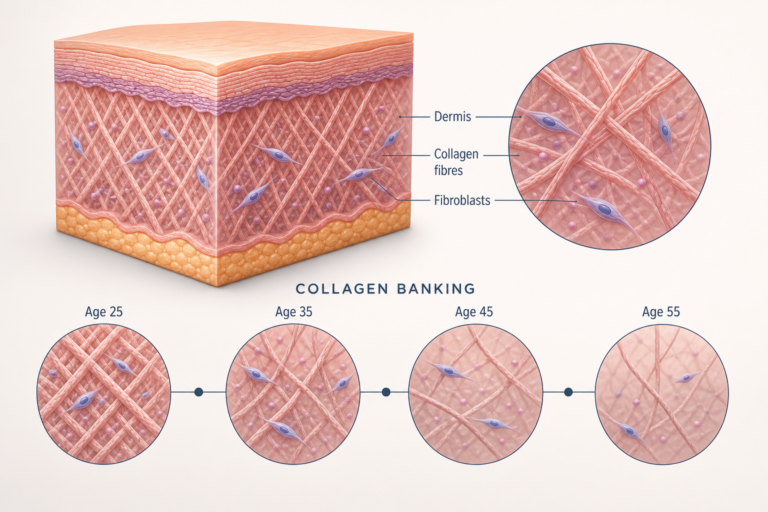
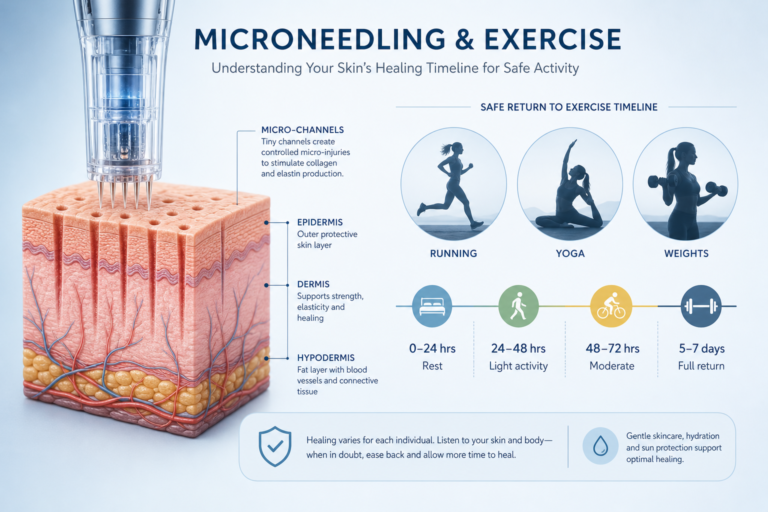
Microneedling works by creating controlled micro-injuries in the skin using fine needles. These punctures — sometimes called open microchannels — temporarily disrupt the stratum corneum, the outermost protective layer of the skin. The immediate result is a wound healing response that moves through a predictable sequence: first the inflammatory phase, which typically lasts from the moment of treatment through roughly the first 48 hours, followed by the proliferation phase beginning around day four, during which fibroblasts lay down new collagen and the skin barrier begins to rebuild.
During the inflammatory phase, the skin is red, sensitive, and structurally compromised. The open microchannels that make microneedling so effective at driving active ingredients deeper into the dermis also make the skin far more vulnerable to irritation. L-ascorbic acid — the biologically active form of vitamin C — has a naturally low pH, typically between 2.5 and 3.5. On intact skin, this acidity is manageable for most people. On skin with open microchannels and an active inflammatory response, the same low pH can cause stinging, burning, prolonged redness, and in rare cases, a more serious inflammatory reaction. There is also a theoretical risk, cited in dermatology literature, that introducing certain vitamin C formulations into disrupted skin before the barrier has recovered could contribute to granuloma formation — a rare but serious complication involving localized inflammatory nodules. This risk is uncommon, but it underscores why the timing and formulation of post-microneedling skincare genuinely matters.
The practical conclusion is straightforward: the same enhanced absorption that makes microneedling a useful delivery mechanism for beneficial ingredients also amplifies the potential for irritation from acidic or reactive compounds. Waiting for the inflammatory phase to resolve before reintroducing vitamin C is not overcaution — it is sound post-microneedling aftercare.
The Healing Timeline: What Is Happening to Your Skin
Understanding the skin’s healing sequence helps explain why different products are appropriate at different stages. The timeline below reflects professional microneedling at moderate needle depths; at-home microneedling with shorter needles typically produces a milder and faster recovery.
| Time After Treatment | Healing Phase | Skin Status | Appropriate Products | What to Avoid |
|---|---|---|---|---|
| 0–24 hours | Inflammatory phase (early) | Redness, swelling, open microchannels, high sensitivity | Gentle cleanser, hyaluronic acid, mineral sunscreen (if going outdoors) | All active ingredients including vitamin C, retinoids, AHAs, BHAs, alcohol-based products, fragranced products |
| 24–48 hours | Inflammatory phase (late) | Redness fading, skin still sensitive, barrier partially disrupted | Hyaluronic acid, ceramides, peptides, gentle moisturiser | L-ascorbic acid, retinol, glycolic acid, salicylic acid, benzoyl peroxide |
| 48–72 hours | Transition to proliferation | Redness largely resolved, barrier beginning to recover | Stable vitamin C derivatives (MAP, SAP) may be introduced cautiously; continue barrier-support products | High-concentration L-ascorbic acid, physical exfoliants |
| Days 4–7 | Proliferation phase (early) | Barrier largely intact, collagen remodelling underway | Low-concentration L-ascorbic acid (10% or less) if skin is comfortable; niacinamide, SPF 30+ | Aggressive exfoliation, high-strength retinoids |
| Days 7–14 | Proliferation phase (active) | Skin remodelling window; collagen synthesis active | Full vitamin C routine may be resumed; ferulic acid combinations appropriate | Unnecessary; resume normal routine guided by skin response |
This timeline is a general guide. Individual recovery varies depending on needle depth, the number of passes performed, skin type, and how the skin responds to treatment. Always follow the specific aftercare instructions provided by your treating practitioner, as their guidance takes precedence over general timelines.
Why the Wait Time Varies: Reconciling Conflicting Advice
If you have searched for guidance on this topic, you may have encountered recommendations ranging from 24 hours to a full week. This variation is not simply inconsistency — it reflects genuinely different clinical scenarios. Understanding the factors that influence the appropriate wait time helps you apply the right guidance to your own situation.
Needle Depth
Professional microneedling devices can reach depths of 0.5 mm to 2.5 mm or more depending on the treatment area and indication. Deeper needle depths create more significant disruption to the dermis and a more pronounced inflammatory response, which means a longer wait before reintroducing acidic actives. Superficial treatments targeting fine texture may recover more quickly than deeper treatments targeting atrophic acne scars or significant skin laxity.
Professional vs. At-Home Microneedling
At-home microneedling devices — derma rollers and dermapen-style tools — typically use needle depths of 0.2 mm to 0.5 mm, which is considerably shallower than professional treatments. The degree of barrier disruption is proportionally lower, and recovery is generally faster. That said, the same principle applies: acidic products should not be applied to skin that is visibly red, sensitive, or still showing signs of active inflammation, regardless of the device used.
Vitamin C Form and Concentration
L-ascorbic acid at 20% concentration requires a longer wait than a 10% sodium ascorbyl phosphate formulation. The form and concentration of the product are as important as the timing. This is discussed in detail in the next section.
Individual Skin Sensitivity
People with sensitive skin, rosacea-prone skin, or a history of reactive skin may need to wait longer and start with lower concentrations regardless of the general timeline. A patch test on a small area before full application is always a sensible precaution when reintroducing any active ingredient after treatment.
Choosing the Right Vitamin C Form After Microneedling
Not all vitamin C products behave the same way on post-treatment skin. The key distinction is between L-ascorbic acid and stable vitamin C derivatives, and understanding this difference makes it much easier to choose the right product at the right time.
L-Ascorbic Acid (LAA)
L-ascorbic acid is the direct, biologically active form of vitamin C. It is the most extensively studied form and is effective at supporting collagen synthesis, providing antioxidant protection, and inhibiting tyrosinase — the enzyme involved in melanin production. Its limitation in the post-microneedling context is its low pH. For L-ascorbic acid to remain stable and penetrate the skin effectively, it needs to be formulated at a pH of around 2.5 to 3.5. This acidity is well tolerated on intact skin but can cause significant stinging and irritation on skin with open microchannels. Most practitioners recommend waiting until at least day four to seven before reintroducing L-ascorbic acid after professional microneedling, and starting at a low-concentration vitamin C product of 10% or less rather than jumping straight to a 15–20% formulation.
Stable Vitamin C Derivatives
Stable vitamin C derivatives are modified forms of ascorbic acid that are formulated at a higher, more skin-compatible pH. They are gentler on sensitive or compromised skin and can generally be introduced earlier in the recovery period — often from around 48 to 72 hours after treatment, once visible redness has resolved. The trade-off is that derivatives must be enzymatically converted to ascorbic acid within the skin before becoming active, which means they may be somewhat less potent than L-ascorbic acid in direct comparisons. For post-microneedling use, this is often an acceptable trade-off.
| Vitamin C Form | pH | Potency | Skin Compatibility | Earliest Typical Reintroduction |
|---|---|---|---|---|
| L-Ascorbic Acid (LAA) | 2.5–3.5 | High (direct activity) | Can irritate compromised skin | Day 4–7 (start at 10% or less) |
| Magnesium Ascorbyl Phosphate (MAP) | 6–7 | Moderate (requires conversion) | Gentle; suitable for sensitive skin | 48–72 hours post-treatment |
| Sodium Ascorbyl Phosphate (SAP) | 6–7 | Moderate (requires conversion) | Gentle; well tolerated | 48–72 hours post-treatment |
| Ascorbyl Glucoside (AA2G) | 5–7 | Moderate (requires conversion) | Stable and gentle | 48–72 hours post-treatment |
| THD Ascorbate | Near neutral | Moderate–high (oil-soluble) | Very gentle; good for dry skin types | 48–72 hours post-treatment |
Magnesium ascorbyl phosphate and sodium ascorbyl phosphate are among the most commonly recommended derivatives for post-treatment use because they are well-studied, widely available, and consistently gentle on reactive skin. If you are unsure which form is in your current vitamin C product, check the ingredient list: L-ascorbic acid or ascorbic acid indicates the direct form, while names ending in phosphate, glucoside, or palmitate indicate a derivative.
What to Use Instead During the First 48 to 72 Hours
The early healing period does not mean abandoning your skincare routine entirely — it means choosing ingredients that actively support skin barrier recovery without introducing unnecessary chemical stress. Several ingredients are well suited to this window.
- Hyaluronic acid: A humectant that draws moisture into the skin and supports hydration without any risk of irritation. It is the most universally recommended ingredient for the immediate post-microneedling period and is often applied during the treatment itself.
- Ceramides: Lipid molecules that are natural components of the skin barrier. Ceramide-containing moisturisers help restore barrier integrity during the proliferation phase and reduce transepidermal water loss.
- Peptides: Short chains of amino acids that can signal fibroblasts to produce collagen. Peptide serums are generally well tolerated on post-treatment skin and complement the collagen induction therapy mechanism of microneedling.
- Niacinamide: A form of vitamin B3 with anti-inflammatory and barrier-supporting properties. It is generally well tolerated after the first 24 hours and can help calm residual redness.
- Mineral sunscreen: Post-microneedling skin is significantly more vulnerable to UV damage. A broad-spectrum mineral sunscreen with SPF 30 or higher should be applied whenever the skin is exposed to daylight, even during the early recovery period. Chemical sunscreen filters may be irritating on compromised skin; mineral formulations containing zinc oxide or titanium dioxide are generally better tolerated.
Oral Vitamin C: A Safe Immediate Alternative
One option that is frequently overlooked in post-microneedling aftercare discussions is oral vitamin C supplementation. Unlike topical L-ascorbic acid, oral vitamin C does not contact the skin surface and carries no risk of irritating open microchannels. Vitamin C is an essential cofactor in collagen synthesis — the body requires it to hydroxylate proline and lysine residues during collagen formation — and ensuring adequate systemic levels during the healing period may support the skin’s natural repair process. Oral supplementation is safe to begin immediately after treatment and can be continued throughout the recovery period. Standard supplementation doses are typically in the range of 500 mg to 1000 mg daily, though individual needs vary and it is worth discussing with a healthcare professional if you have any relevant medical history. Oral vitamin C is not a substitute for topical application once the skin has recovered, but it is a practical way to maintain antioxidant support during the window when topical use is not yet appropriate.
How Vitamin C Supports Microneedling Results Long-Term
Once the skin has recovered and vitamin C has been safely reintroduced, the combination of regular topical vitamin C and periodic microneedling treatments may offer meaningful synergistic benefits. Microneedling initiates a skin remodelling window during the proliferation phase, during which fibroblasts are actively producing new collagen. Vitamin C supports this process directly: as a cofactor in collagen synthesis, it is required for the enzymatic reactions that stabilise the collagen triple helix structure. Without adequate vitamin C, newly synthesised collagen is structurally weaker.
Beyond collagen support, vitamin C provides antioxidant protection against free radical damage — particularly relevant in the post-treatment period when the skin’s own antioxidant defences may be temporarily reduced. Vitamin C also inhibits tyrosinase activity, which may help prevent post-inflammatory hyperpigmentation — a concern for some patients, particularly those with darker skin tones or a history of melasma. Clinical research has examined the combination of microneedling with topical vitamin C for conditions including melasma and acne scars, with some studies reporting improvements in pigmentation and skin texture, though results vary and the evidence base continues to develop.
The combination of vitamin C with vitamin E and ferulic acid is well established in cosmetic dermatology as a more stable and potent antioxidant system than vitamin C alone. Ferulic acid stabilises L-ascorbic acid and may enhance its photoprotective effects. This combination is appropriate once the skin has fully recovered from microneedling — typically from around day seven onwards — and may be particularly useful for patients focused on photoaging, pigmentation, or overall skin quality improvement.
Signs Your Skin Is Ready for Vitamin C
Rather than relying solely on a fixed number of days, it is useful to assess your skin’s actual condition before reintroducing any active ingredient. The following signs suggest the skin is ready for a cautious reintroduction of vitamin C:
-
- No visible redness or only very mild residual pinkness
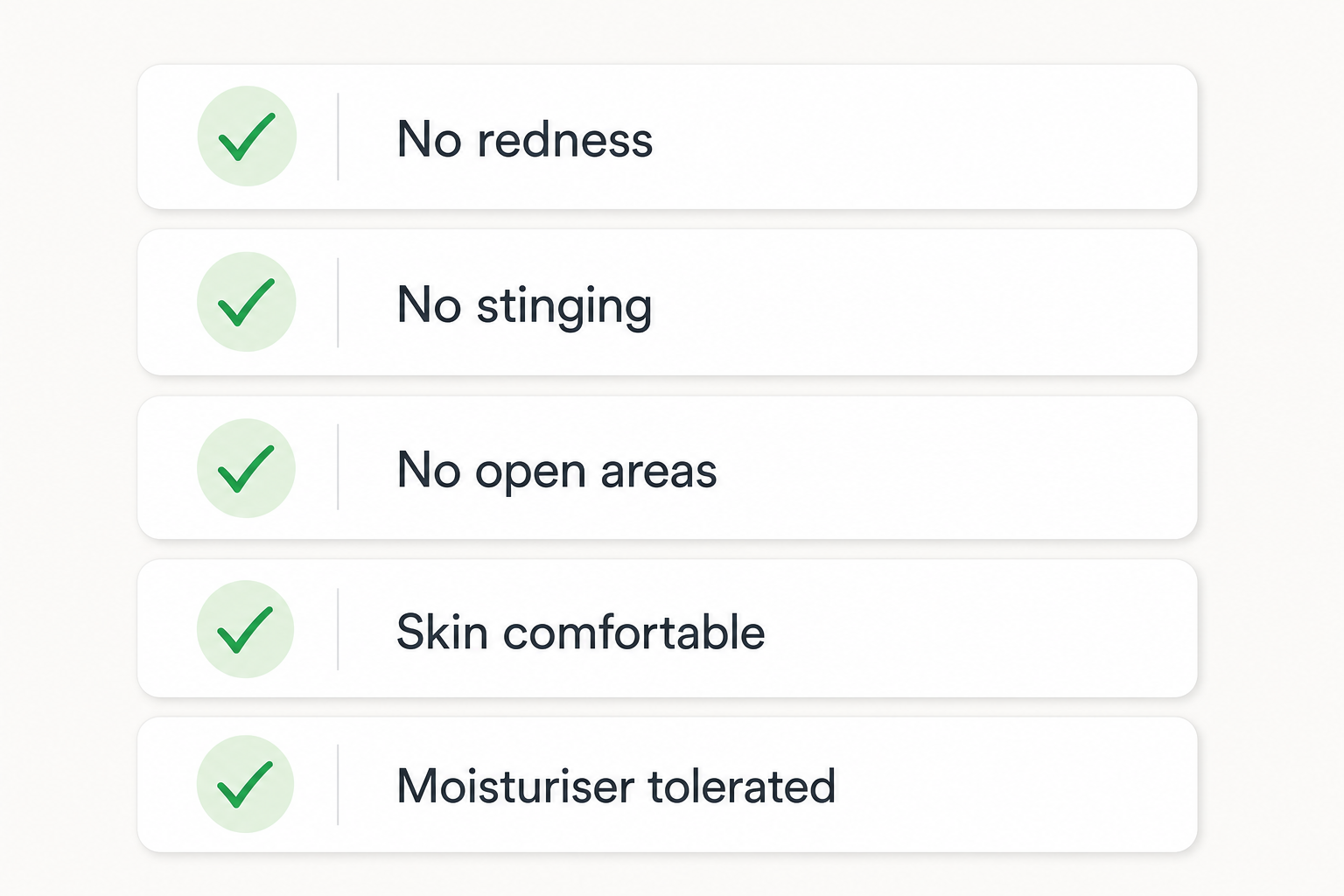
- No sensation of tightness, stinging, or burning at rest
- No open areas, scabbing, or visible disruption to the skin surface
- Skin feels comfortable when touched gently
- Normal moisturiser is being tolerated without any reaction
If any of these conditions are not met, wait another 24 hours and reassess. When you do reintroduce vitamin C, start with a stable derivative at a low concentration, apply it to a small area first as a patch test, and observe for 24 hours before applying more widely. If there is no redness, stinging, or irritation, you can proceed with regular use.
What to Do If You Applied Vitamin C Too Soon
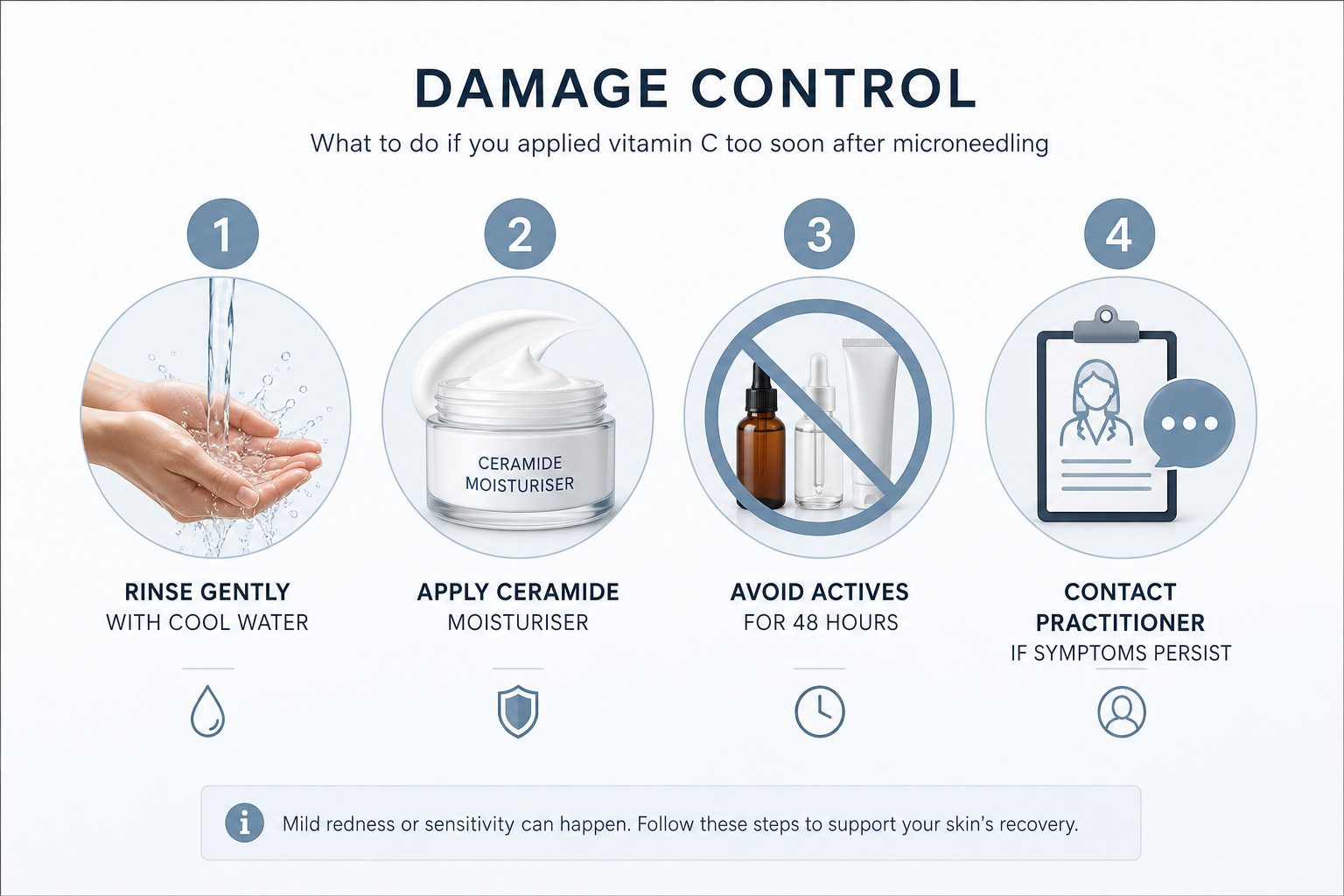
If you applied a vitamin C product before the skin had adequately recovered and experienced stinging, burning, or increased redness, the first step is to rinse the product off gently with cool water and a mild cleanser. Do not rub or scrub the skin. Apply a gentle, fragrance-free moisturiser or a product containing ceramides to help calm the skin, and avoid all active ingredients for at least another 48 hours. In most cases, the reaction will settle within a few hours to a day. If redness, swelling, or discomfort persists beyond 48 hours, or if you notice any unusual skin changes such as blistering, crusting, or nodule formation, contact your treating practitioner for assessment. Persistent or worsening reactions should always be evaluated by a professional rather than managed at home.
Concentration Guidance: Starting Low and Building Up
Even after the skin has recovered sufficiently to tolerate vitamin C, starting at a lower concentration is a sensible approach. A low-concentration vitamin C product of 10% or less is appropriate for the first week of reintroduction. This applies to both L-ascorbic acid and derivatives. If the skin tolerates this well with no redness or sensitivity, the concentration can be gradually increased over subsequent weeks. Most people find that a concentration of 10–15% is effective for maintenance and antioxidant protection, while concentrations of 15–20% may be appropriate for specific concerns such as hyperpigmentation or photoaging once the skin is fully recovered and accustomed to the ingredient. There is no clinical benefit to using the highest available concentration immediately after treatment, and doing so increases the risk of unnecessary irritation.
Frequently Asked Questions
Can I use vitamin C the day after microneedling?
For most people, the day after professional microneedling is too soon for vitamin C — particularly L-ascorbic acid. The skin is still in the inflammatory phase, and open microchannels make it highly susceptible to irritation from acidic products. Gentle, barrier-supporting ingredients such as hyaluronic acid and ceramides are more appropriate at this stage. If you had a very superficial at-home microneedling session with short needles and your skin has already settled, a gentle vitamin C derivative might be considered cautiously, but it is generally safer to wait.
Will vitamin C sting after microneedling?
L-ascorbic acid applied too soon after microneedling is very likely to sting or burn because of its low pH and the presence of open microchannels. Stable vitamin C derivatives formulated at a higher pH are considerably less likely to cause this reaction, which is one of the main reasons they are preferred for earlier reintroduction. If any vitamin C product stings on application after microneedling, remove it immediately and wait longer before trying again.
Is it safe to use vitamin C during microneedling (applied during the session)?
Some practitioners apply specific vitamin C formulations — typically stable derivatives rather than L-ascorbic acid — during a microneedling session as part of a combined treatment protocol. This is a clinical decision made by the treating practitioner based on the formulation used, the treatment parameters, and the patient’s skin. It is not the same as a patient self-applying a standard retail vitamin C serum during or immediately after treatment. Do not apply your own vitamin C products during or immediately after a professional session unless your practitioner has specifically instructed you to do so.
Does vitamin C improve microneedling results?
There is clinical evidence suggesting that combining microneedling with topical vitamin C may improve outcomes for conditions such as melasma and acne scarring compared to microneedling alone, though the evidence base is still developing and results vary between individuals. The theoretical rationale is strong: vitamin C supports collagen synthesis during the active remodelling window and provides antioxidant protection during recovery. Consistent use of vitamin C as part of a post-treatment maintenance routine is likely more beneficial than a single application.
Can I take vitamin C supplements after microneedling?
Yes. Oral vitamin C supplementation is safe immediately after microneedling and does not carry any of the irritation risks associated with topical application. It may support the healing process by ensuring adequate systemic levels of this essential collagen cofactor. If you are already taking vitamin C supplements, there is no need to stop after treatment.
How long after microneedling can I use my normal skincare routine?
Most people can return to their full normal skincare routine, including vitamin C serums, retinoids, and exfoliating acids, within seven to fourteen days of professional microneedling, depending on how their skin has recovered. Reintroduce actives one at a time rather than all at once, and pay attention to how your skin responds. Your practitioner’s specific aftercare guidance should always take precedence over general timelines.
Getting the Timing Right for the Best Outcome
Vitamin C and microneedling are genuinely complementary — but only when vitamin C is introduced at the right time and in the right form. Applying L-ascorbic acid to skin that is still in the inflammatory phase, with open microchannels and an active healing response, risks irritation and may interfere with recovery. Waiting 48 to 72 hours and choosing a stable vitamin C derivative such as magnesium ascorbyl phosphate or sodium ascorbyl phosphate for early reintroduction is a practical, evidence-informed approach that balances the benefits of vitamin C with the skin’s need to heal. Once the skin has fully recovered — typically by day seven to fourteen after professional treatment — a full vitamin C routine, including L-ascorbic acid formulations and combinations with ferulic acid and vitamin E, can be resumed and may meaningfully support the collagen remodelling process that microneedling initiates.
If you are unsure about the right post-microneedling aftercare for your skin type, treatment depth, or specific concerns such as hyperpigmentation or acne scarring, a consultation with your treating practitioner is the most reliable way to get personalised guidance. Post-microneedling aftercare is not one-size-fits-all, and the right approach for your skin may differ from general recommendations.