Pain Free Laser Hair Removal: Tips for a More Comfortable Experience
Laser hair removal is one of the most popular aesthetic treatments available, yet concern about discomfort remains one of the most common reasons people hesitate to book. The reality is that modern technology and straightforward preparation strategies have made pain free laser hair removal a realistic goal for most patients. This guide explains what to expect, which factors influence how a session feels, and what you can do at every stage to make the experience as comfortable as possible.
Key Takeaways
- Most patients describe the sensation as a brief rubber band snap rather than sustained pain, and discomfort typically decreases with each successive session.
- Preparation steps such as shaving 24 hours before your appointment, staying hydrated, and avoiding caffeine can meaningfully reduce sensitivity.
- Built-in cooling technology in modern laser devices is the single most effective in-session comfort measure, and topical numbing cream can be added for sensitive treatment areas.
- Post-treatment aftercare — including cool compresses, fragrance-free moisturiser, and loose-fitting clothing — helps manage any residual redness or warmth quickly.
- Communicating openly with your technician about discomfort allows settings to be adjusted in real time, making the session safer and more tolerable.
What Does Laser Hair Removal Actually Feel Like?
The most widely reported sensation during laser hair removal is a brief, sharp snap — often compared to a rubber band snap against the skin — followed by a mild warmth in the treated area. The feeling lasts only a fraction of a second per pulse, and most patients find it entirely manageable, particularly on larger body areas such as the legs or back. Sensitive treatment areas like the bikini line, upper lip, and underarms tend to produce a sharper sensation because the skin is thinner, nerve density is higher, and hair follicles are often coarser.
It is worth distinguishing between discomfort and pain. Clinical practitioners generally use the term discomfort because the sensation, while noticeable, is short-lived and does not persist between pulses. Individual pain tolerance varies considerably, and what one person finds mildly uncomfortable another may find more intense. Factors including skin tone, hair thickness, the body area being treated, and the laser technology used all influence how a session feels.
Factors That Influence Discomfort Levels
Understanding what drives discomfort helps you make informed decisions about preparation and technology. The laser works through selective photothermolysis — targeting the pigment (melanin) in the hair follicle with concentrated light energy, which converts to heat and disrupts the follicle’s ability to regrow hair. The more pigment present and the denser the hair, the more energy is absorbed, which can increase the sensation felt at the skin surface.
Hair and Skin Characteristics
Coarse, dark hair absorbs more laser energy than fine or light hair, which can intensify the sensation during early sessions. As treatment progresses and hair thins, less energy is absorbed per pulse, which is one reason pain decreases over sessions. Your Fitzpatrick skin type also matters: patients with darker skin tones (Fitzpatrick types IV–VI) are typically treated with longer-wavelength lasers such as the Nd:YAG (1064 nm), which penetrates deeper and is less absorbed by surface melanin, reducing the risk of skin reaction and often feeling gentler on the skin surface.
Body Area
The table below provides a general guide to discomfort by body area. These ratings reflect typical patient experience and will vary based on individual pain tolerance and the technology used.
| Body Area | Typical Discomfort (1–10) | Why It Tends to Feel More Intense |
|---|---|---|
| Upper lip | 7–9 | Thin skin, high nerve density, proximity to bone |
| Bikini / Brazilian | 7–9 | Sensitive skin, coarse hair, high nerve density |
| Underarms | 6–8 | Thin skin, dense coarse hair, confined area |
| Chest / abdomen | 4–6 | Moderate skin thickness, variable hair density |
| Back / shoulders | 3–5 | Thicker skin, lower nerve density |
| Shins | 4–6 | Proximity to bone, thinner skin over tibia |
| Thighs / full legs | 2–4 | Thicker skin, lower nerve density |
| Arms | 2–4 | Finer hair, moderate skin thickness |
| Cheeks / sideburns | 2–4 | Fine hair, good skin thickness on cheeks |
Hormonal and Lifestyle Factors
Pain perception is not purely physical. Hormonal fluctuations during the days immediately before and during menstruation can heighten skin sensitivity, which is why many practitioners recommend scheduling around your menstrual cycle — ideally in the week or two following your period. Dehydration, poor sleep, and elevated stress can also lower your pain threshold on the day of treatment. Caffeine is a stimulant that increases nerve sensitivity and can make the skin feel more reactive; avoiding caffeine before laser hair removal for at least 12–24 hours is a simple step that many patients overlook.
Before Your Session: Preparation Tips That Make a Real Difference
The steps you take in the days and hours before your appointment have a direct impact on how comfortable the session feels. These are not optional extras — they are clinically relevant preparation measures.
Shave, Don’t Wax or Pluck
Shave 24 hours before your appointment rather than waxing, threading, or plucking. Laser hair removal works by targeting the pigment inside the hair follicle; if the follicle has been removed by waxing or plucking, there is no target for the laser to act on. Shaving removes the hair above the skin surface while leaving the follicle intact. Shaving the day before (rather than on the day) also allows any minor skin irritation from the razor to settle before the laser is applied.
Avoid Sun Exposure and Tanning
Tanned or recently sun-exposed skin contains elevated surface melanin, which increases the risk of the laser energy being absorbed by the skin rather than the hair follicle. This raises the likelihood of discomfort, blistering, and pigmentation changes. Avoid direct sun exposure and self-tanning products for at least two to four weeks before treatment, and apply a broad-spectrum SPF 30 or higher to exposed areas in the weeks leading up to your session.
Hydrate and Avoid Caffeine and Alcohol
Well-hydrated skin conducts laser energy more evenly and tends to respond more predictably. Aim to drink adequate water in the 24 hours before your appointment. Alcohol thins the blood and can increase skin sensitivity and flushing, so avoiding alcohol for 24 hours before treatment is advisable. Caffeine stimulates the nervous system and can heighten pain perception — avoid caffeine before laser hair removal on the morning of your appointment at minimum.
Consider a Topical Numbing Cream
For sensitive treatment areas such as the bikini line, upper lip, or underarms, applying a topical numbing cream 30–60 minutes before your appointment can significantly reduce discomfort. Most over-the-counter options contain lidocaine at concentrations of 4–5%. For highly sensitive areas or patients with a lower pain threshold, a practitioner may be able to prescribe or recommend a stronger formulation. If you plan to use a numbing cream, discuss this with your clinic in advance — some clinics apply it for you, and the timing of application matters for effectiveness. Always follow the instructions provided and avoid applying numbing cream to broken or irritated skin.
Take an Over-the-Counter Pain Reliever if Appropriate
Taking an over-the-counter pain reliever such as acetaminophen (paracetamol) approximately 30–60 minutes before your session may help reduce discomfort, particularly for sensitive areas. Ibuprofen is sometimes suggested but should be used with caution as it has mild blood-thinning properties; discuss this with your practitioner if you are unsure. Avoid aspirin for the same reason. Never take any medication without checking it is appropriate for your individual health situation.
Moisturise, But Avoid Products on the Day
Keeping skin well moisturised in the days before treatment supports skin health and can improve how the skin responds to laser energy. However, on the day of your appointment, arrive with clean, product-free skin on the treatment area. Avoid applying deodorant, perfume, lotion, or any skincare product to the area being treated, as residue can interfere with the laser and increase the risk of skin reaction.
During Your Session: In-Session Comfort Strategies
What happens during the appointment itself is where technology and communication play the largest role in making laser hair removal comfortable.
Built-In Cooling Technology
The most significant advance in making laser hair removal more comfortable is built-in cooling technology integrated directly into the laser handpiece. Modern devices use several cooling mechanisms: a cryogen spray that delivers a burst of cold immediately before each laser pulse, a sapphire cooling tip that maintains continuous contact cooling, or a cold air blower (such as the Zimmer Cryo system) directed at the treatment area throughout the session. These systems cool the surface of the skin before, during, and after each pulse, protecting the outer skin layer and dramatically reducing the heat sensation felt by the patient. When evaluating clinics, it is worth asking specifically what cooling system their device uses.
The In-Motion Laser Technique
Traditional laser hair removal delivers individual pulses at stationary points, which can create a more intense, concentrated sensation at each spot. The in-motion laser technique — used by devices such as the Alma Soprano Titanium and similar diode platforms — moves the handpiece continuously across the skin in a gliding motion, delivering lower-energy pulses at a higher repetition rate. This distributes heat more gradually across the treatment area rather than concentrating it in one spot, which most patients find significantly more comfortable. If you have a low pain threshold, asking your clinic whether they offer an in-motion diode system is worthwhile.
Communicate With Your Technician
One of the most underused comfort strategies is simply speaking up. Communicate with your technician throughout the session — if a particular area feels more intense than expected, a qualified practitioner can adjust the laser settings, including the energy level (fluence) and pulse duration, to reduce discomfort while maintaining effectiveness. You should never feel that you have to endure severe pain silently. If the sensation becomes genuinely painful rather than uncomfortable, say so immediately. A good technician will pause, reassess, and adapt the approach.
Breathing and Distraction Techniques
Controlled breathing is a simple but effective way to manage discomfort during treatment. Slow, deep breaths during each pulse can help regulate the nervous system’s response to the sensation. Some patients find it helpful to focus on an exhale timed with each laser pulse. Distraction — listening to music, a podcast, or simply engaging in conversation with your technician — can also reduce perceived discomfort by redirecting attention away from the treatment area. These techniques are particularly useful for shorter sessions on sensitive areas like the upper lip, where the total treatment time is brief but the sensation can be sharp.
Post-Treatment Aftercare: Managing Discomfort After Your Session
Some degree of redness, warmth, and mild swelling in the treated area is normal immediately after a laser hair removal session. This typically resembles mild sunburn and usually resolves within a few hours to 24 hours. Proper post-treatment aftercare helps manage these effects and supports skin recovery.
Cool Compresses and Soothing Products
Applying a cool compress or ice pack wrapped in a clean cloth to the treated area for 10–15 minutes can provide immediate relief from warmth and reduce any swelling. Avoid placing ice directly on the skin. Pure aloe vera gel is widely used after laser treatment for its soothing and anti-inflammatory properties. A fragrance-free, alcohol-free moisturiser can also help restore comfort to the skin surface. Avoid any product containing retinoids, acids, or active ingredients for at least 48–72 hours after treatment.
Clothing and Activity
Wear loose-fitting clothing after treatment to avoid friction on the treated area, particularly after sessions on the legs, bikini line, or underarms. Tight synthetic fabrics can trap heat and increase irritation. Avoid exercise, hot showers, saunas, and steam rooms for 24–48 hours, as heat and sweat can aggravate the skin and increase the risk of folliculitis (inflammation of the hair follicles).
Sun Protection After Treatment
Treated skin is temporarily more sensitive to UV radiation. Apply a broad-spectrum SPF 30 or higher to any treated area that will be exposed to sunlight, and avoid prolonged sun exposure for at least two weeks after each session. This is particularly important for patients with darker skin tones, where post-inflammatory pigmentation changes are a greater risk.
What to Do If Discomfort Is Severe
Mild redness and warmth are expected. However, if you experience blistering, significant swelling, intense burning that does not settle within a few hours, or any sign of skin damage after your session, contact your clinic promptly. These reactions are uncommon when treatment is performed correctly on suitable skin, but they require professional assessment. Do not apply any home remedies other than cool compresses and fragrance-free moisturiser without guidance from your practitioner.
How Pain Changes Across Multiple Sessions
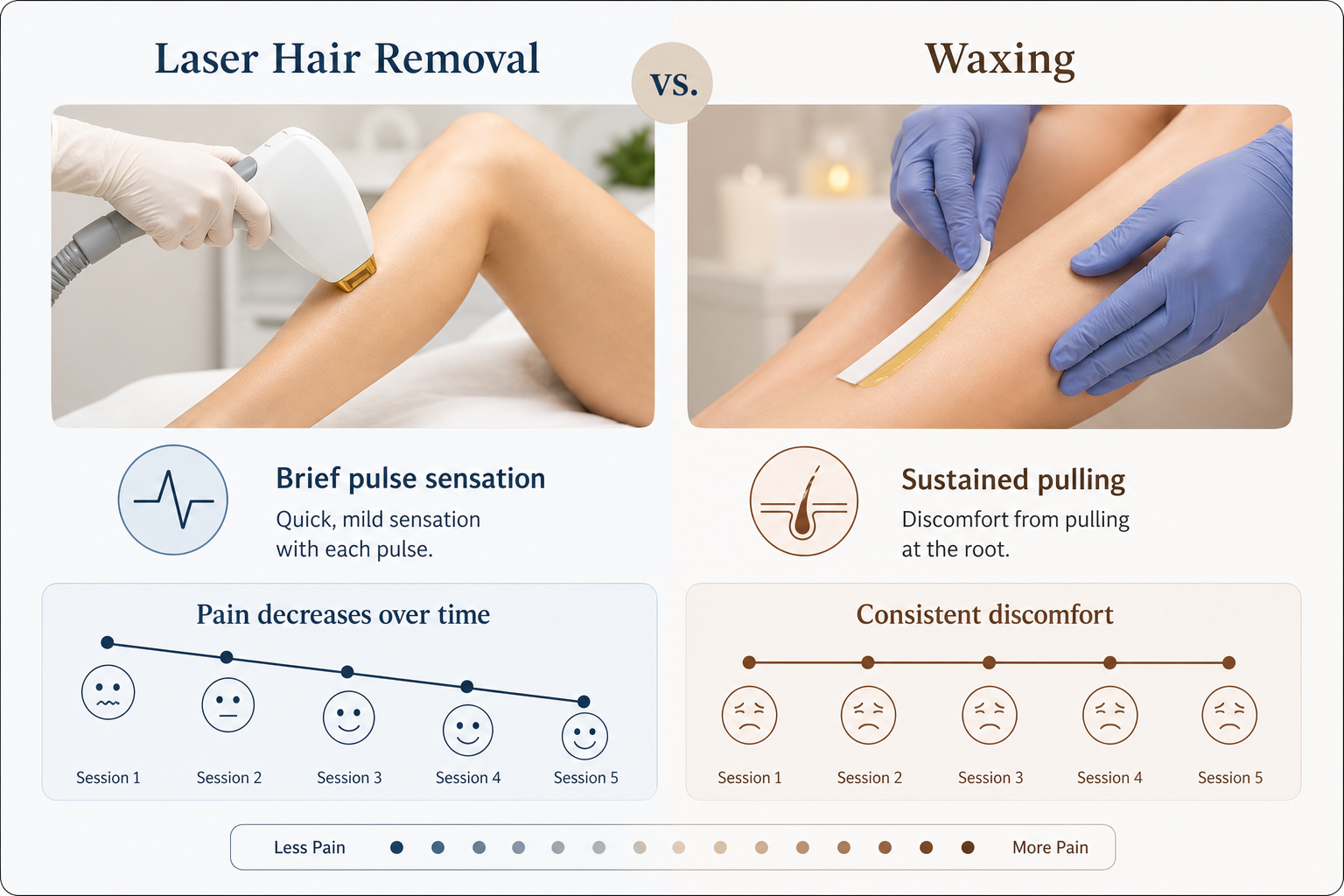
One of the most reassuring aspects of laser hair removal is that pain decreases over sessions for most patients. This happens for a straightforward biological reason: laser hair removal targets hair in the active growth phase (anagen phase). With each session, a proportion of follicles are successfully disabled and no longer produce hair. As the total number of active follicles in the treatment area decreases, there are fewer targets absorbing laser energy per pulse, which means less heat is generated in the skin and the sensation becomes progressively milder.
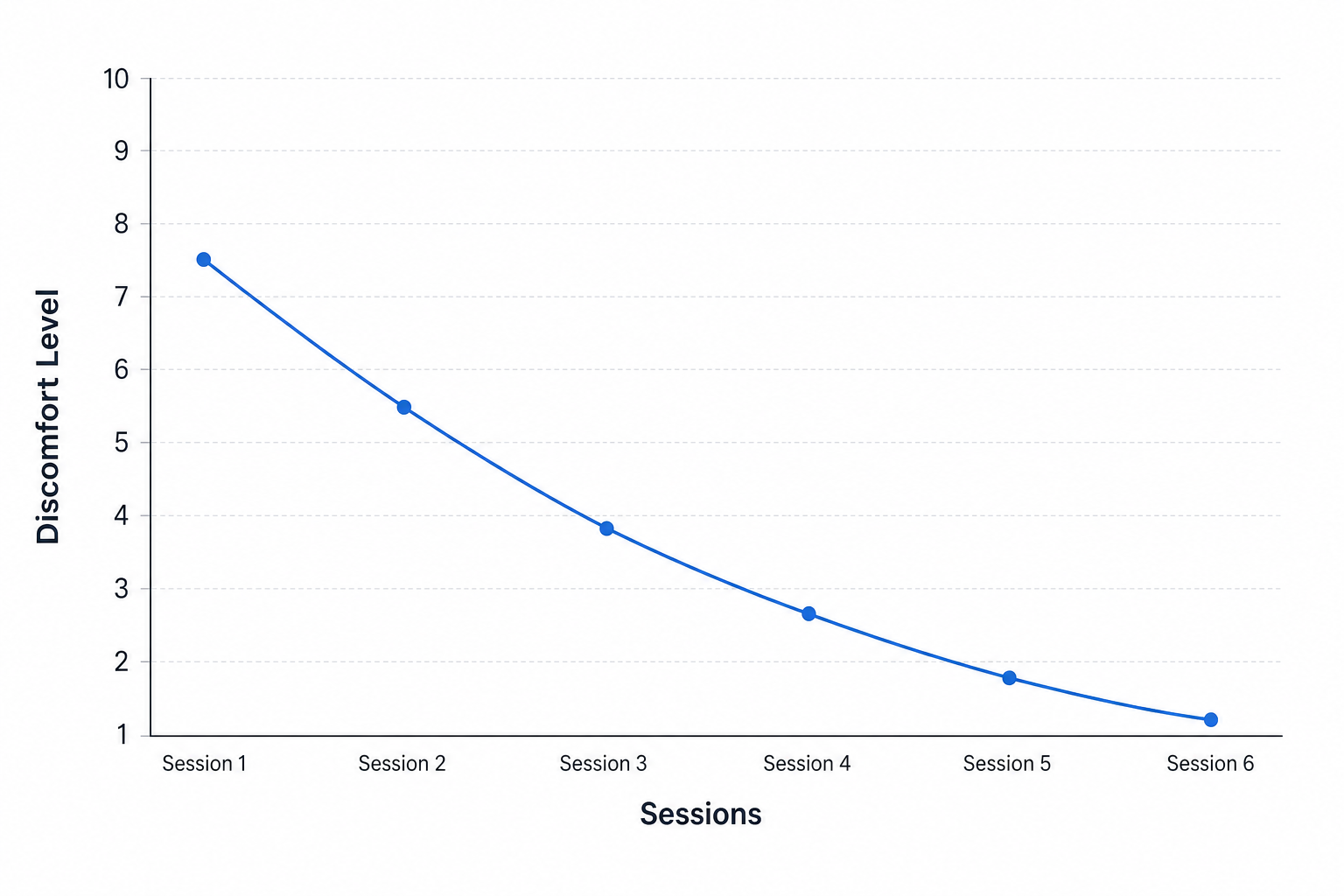
Patients typically notice a meaningful reduction in discomfort by the third or fourth session, and by the fifth or sixth session many describe the sensation as barely noticeable in areas that were initially quite sensitive. This progressive improvement is one reason that completing a full course of sessions — usually six to eight, spaced four to eight weeks apart depending on the body area — is important both for achieving permanent hair reduction and for experiencing the full comfort benefit of the treatment.
Laser Hair Removal vs. Waxing: A Pain Comparison
| Factor | Laser Hair Removal | Waxing |
|---|---|---|
| Sensation | Brief pulse sensation (rubber band snap); fades immediately | Sustained pulling and tearing sensation with each strip |
| Duration of discomfort | Fraction of a second per pulse | Continuous throughout session |
| Post-treatment skin reaction | Mild redness, warmth; resolves in hours | Redness, irritation, possible ingrown hairs |
| Long-term outcome | Permanent hair reduction after full course | Temporary; regrowth within 3–6 weeks |
| Pain trend over time | Decreases with each session | Remains consistent or worsens with coarser regrowth |
| Ingrown hair risk | Reduces ingrown hairs over time | Can increase ingrown hair frequency |
Most patients who have experienced both treatments report that laser hair removal is less painful than waxing overall, particularly when modern cooling technology is used. The key difference is that waxing involves a sustained mechanical pulling sensation repeated across the entire treatment area, whereas laser pulses are brief and localized. The cumulative discomfort of a waxing session on a large area typically exceeds that of a laser session on the same area, especially from the third laser session onward when hair density has already reduced.
Skin-Type-Specific Comfort Considerations
Comfort and safety during laser hair removal are closely linked to Fitzpatrick skin type, and this is an area where personalised advice from a qualified practitioner matters significantly. Patients with lighter skin tones (Fitzpatrick types I–III) are typically treated with alexandrite (755 nm) or diode (810 nm) lasers, which are highly effective at targeting the contrast between dark hair and light skin. These wavelengths are well-tolerated with appropriate cooling.
Patients with medium to darker skin tones (Fitzpatrick types IV–VI) require careful wavelength selection to avoid the laser energy being absorbed by surface melanin rather than the hair follicle. The Nd:YAG laser at 1064 nm is the standard recommendation for darker skin because its longer wavelength bypasses surface pigment and targets the follicle more selectively. This also tends to produce a different sensation — often described as a deeper warmth rather than a surface sting — and may require different numbing or cooling strategies. If you have a darker skin tone, ensure your clinic has specific experience and appropriate technology for your Fitzpatrick type before booking.
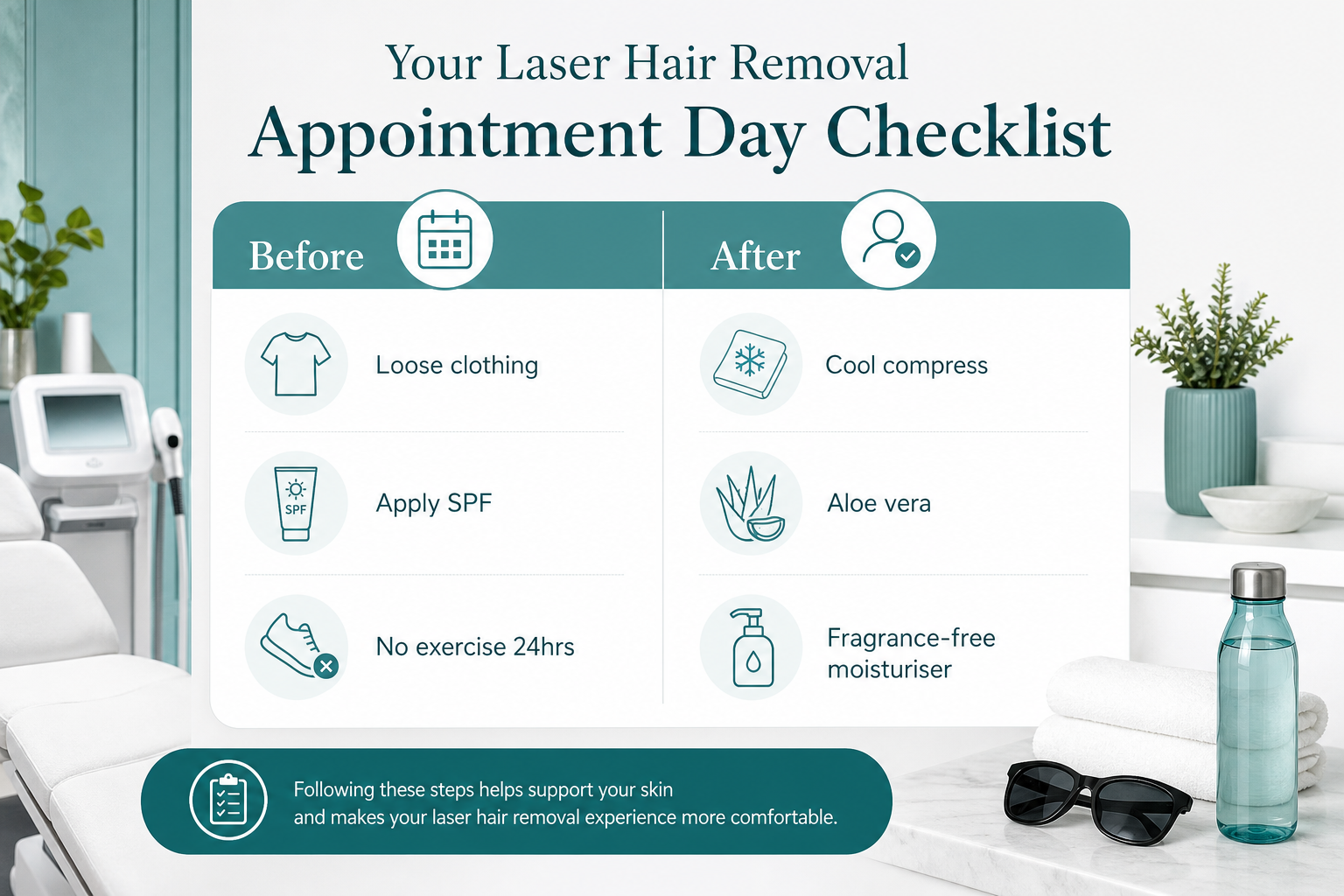
Appointment Day Checklist
- 24 hours before: Shave the treatment area; avoid waxing, threading, or plucking
- 24 hours before: Avoid alcohol and limit caffeine intake
- Day of appointment: Arrive with clean, product-free skin (no deodorant, perfume, or lotion on the treatment area)
- Day of appointment: Apply topical numbing cream 30–60 minutes before if agreed with your clinic
- Day of appointment: Take acetaminophen 30–60 minutes before if appropriate and discussed with your practitioner
- Wear: Loose, comfortable clothing that allows easy access to the treatment area
- Bring: Any prescribed or recommended numbing cream if applying at home first
- Avoid: Scheduling during or immediately before your menstrual period if you find sensitivity is higher at that time
- After: Bring or plan to apply SPF 30+ if the treated area will be exposed to sunlight
Frequently Asked Questions
Does laser hair removal hurt more than waxing?
Most patients find laser hair removal less uncomfortable than waxing overall. Waxing involves a sustained pulling sensation repeated across the whole area, while laser pulses last a fraction of a second each. With modern cooling technology, the difference becomes even more pronounced. Discomfort from laser treatment also decreases with each session as hair density reduces, whereas waxing discomfort remains consistent.
Can numbing cream completely eliminate the sensation?
A topical numbing cream containing lidocaine can significantly reduce discomfort, particularly in sensitive areas, but it is unlikely to eliminate all sensation entirely. It works by temporarily blocking nerve signals in the surface skin layers. Its effectiveness depends on the concentration used, how long it is left on before treatment, and the depth of the hair follicle being targeted. For most patients, numbing cream makes sensitive-area treatments very manageable.
Does laser hair removal get less painful over time?
Yes, for most patients. As each session disables a proportion of active hair follicles, there are fewer follicles absorbing laser energy in subsequent sessions. This means less heat is generated per pulse and the sensation becomes progressively milder. Many patients notice a significant reduction in discomfort by their third or fourth session.
How long does discomfort last after a session?
The treated area typically feels warm and may appear red for a few hours after treatment, similar to mild sunburn. This usually resolves within 24 hours. Applying a cool compress and a fragrance-free moisturiser immediately after the session helps manage this. If redness or discomfort persists beyond 48 hours or worsens, contact your clinic.
Which body area hurts the most during laser hair removal?
The upper lip, bikini line, and underarms are consistently reported as the most sensitive areas. This is due to thinner skin, higher nerve density, coarser hair, and in the case of the upper lip, proximity to bone. These areas benefit most from numbing cream and advanced cooling technology. Legs, arms, and cheeks are generally among the least uncomfortable areas to treat.
Is it safe to take pain medication before laser hair removal?
Acetaminophen (paracetamol) taken 30–60 minutes before a session is generally considered safe for most people and may help reduce discomfort. Ibuprofen and aspirin have mild blood-thinning effects and should be discussed with your practitioner before use. Always check with your clinic and consider your own medical history before taking any medication in preparation for treatment.
What should I do if the pain feels severe during a session?
Tell your technician immediately. A qualified practitioner can pause the treatment, reduce the energy settings, apply additional cooling, or adjust the technique. You should never feel obligated to continue through severe pain. Severe pain during laser treatment can also be a signal that the settings are not appropriate for your skin type, which is a safety concern as well as a comfort issue.
Making an Informed Decision About Comfortable Laser Hair Removal
Achieving a genuinely comfortable laser hair removal experience is not a matter of luck — it depends on choosing a clinic with appropriate technology, preparing correctly, and communicating openly throughout your sessions. The combination of built-in cooling technology, the in-motion laser technique, and straightforward pre-treatment steps such as shaving 24 hours before your appointment, staying hydrated, and avoiding caffeine before laser hair removal addresses the majority of discomfort concerns before they arise.
For sensitive treatment areas, topical numbing cream and careful scheduling around your menstrual cycle can make a meaningful additional difference. Post-treatment aftercare with cool compresses, loose-fitting clothing after treatment, and diligent sun protection supports recovery and reduces the likelihood of prolonged skin reaction. Importantly, the goal of permanent hair reduction becomes progressively easier to achieve as sessions continue — and progressively more comfortable as hair density decreases.
If you are considering laser hair removal and have concerns about discomfort, a consultation with a qualified practitioner is the most useful next step. A thorough assessment of your Fitzpatrick skin type, hair characteristics, and treatment goals will allow the practitioner to recommend the most appropriate laser technology and a personalised comfort plan for your specific situation.