Non-Surgical Thigh Tightening: Treatments, Results & What to Expect
Loose thigh skin is one of the most common aesthetic concerns among adults, yet it remains one of the least discussed. Whether the cause is gradual ageing, significant weight loss, or changes in body composition, skin laxity along the inner and outer thighs can be difficult to address through exercise alone. Non-surgical thigh tightening treatments have expanded considerably in recent years, offering options that range from energy-based skin tightening devices to injectable biostimulators — all without the scars, anaesthesia, or extended recovery associated with a surgical thigh lift. This guide explains how these treatments work, who they are realistically suited to, what results you can expect, and where their limitations lie.
Key Takeaways
- Non-surgical thigh tightening works best for mild to moderate skin laxity; it cannot remove significant excess skin the way a surgical thigh lift (thighplasty) can.
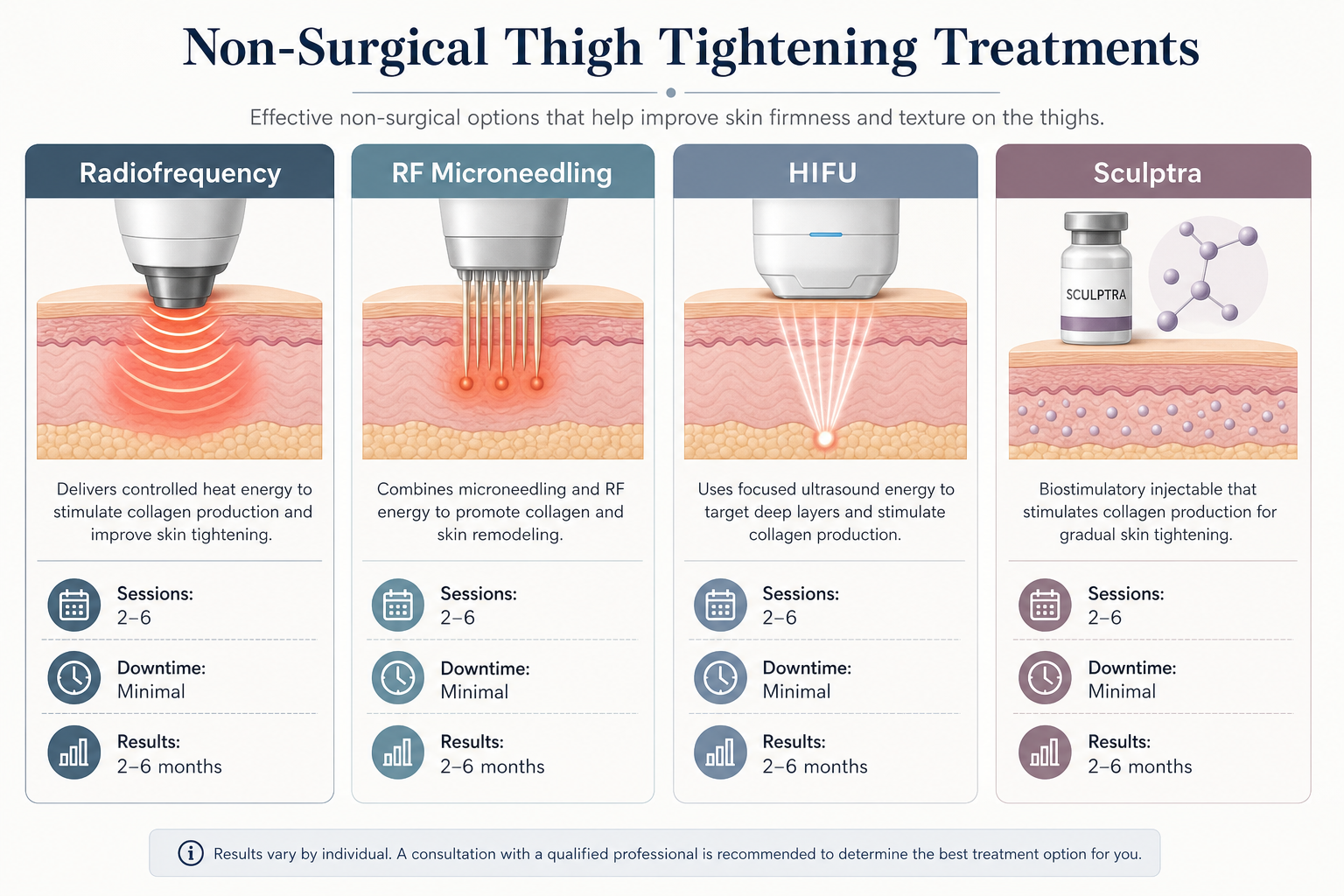
- Radiofrequency (RF) treatments, HIFU, RF microneedling, and injectable biostimulators such as Sculptra are among the most clinically supported non-surgical options for improving skin firmness and elasticity on the thighs.
- Most patients require a course of two to six sessions, with gradual, natural-looking results developing over two to six months as collagen remodeling progresses.
- Results typically last one to two years; maintenance sessions every twelve to twenty-four months are usually recommended to sustain improvement.
- A qualified practitioner assessment is essential to determine which treatment — or combination of treatments — is appropriate for your specific skin laxity, anatomy, and goals.
What Causes Loose Thigh Skin?
Understanding why thigh skin loses firmness helps set realistic expectations for any treatment. The thighs are particularly susceptible to skin laxity for several overlapping reasons. From the mid-twenties onwards, the body produces progressively less collagen and elastin — the structural proteins responsible for skin firmness and elasticity. As these proteins diminish, skin becomes thinner, less resilient, and more prone to sagging. Gravity compounds this effect over time, particularly along the inner thigh where skin is naturally thinner and less supported by underlying muscle.
Significant weight loss — whether through diet, exercise, or bariatric surgery — is another major contributor. When fat volume decreases rapidly, the overlying skin does not always contract at the same rate, leaving loose, sometimes crepey skin behind. Post-weight-loss laxity and age-related laxity are not identical problems: post-weight-loss skin often involves a greater degree of excess tissue and may respond differently to treatment than skin that has gradually loosened through ageing alone. Pregnancy, reduced physical activity leading to muscle loss, sun exposure, smoking, and genetic predisposition all play additional roles.
Recognising the underlying cause matters because it influences which non-surgical approach is most likely to be effective. A practitioner will assess the degree of laxity, skin quality, and the presence of excess fat before recommending a treatment plan.
Am I a Candidate for Non-Surgical Thigh Tightening?
Non-surgical options are most effective for adults with mild to moderate laxity — skin that has lost some firmness and elasticity but has not stretched to the point where there is a significant excess of tissue. A simple self-assessment can help you gauge where you might fall on this spectrum. Gently pinch the skin on your inner thigh: if the skin snaps back relatively quickly and the fold is modest, you are likely in the mild-to-moderate range where non-surgical treatments can produce meaningful improvement. If the skin remains folded, feels very thin, or there is a visible overhang of tissue, the degree of laxity may be more significant, and a surgical consultation may be worth considering alongside non-surgical options.
Good candidates for a non-surgical thigh lift approach are generally at or near their goal weight, in good overall health, and have realistic expectations about the degree of improvement achievable without surgery. Non-surgical treatments are not appropriate as a substitute for thighplasty in patients with severe excess skin — for example, following major bariatric weight loss — where the volume of redundant tissue exceeds what energy-based or injectable treatments can address.
Certain medical factors may affect suitability for specific treatments, including active skin infections, implanted electronic devices (relevant for radiofrequency treatments), pregnancy, breastfeeding, and some autoimmune conditions. A thorough consultation with a qualified practitioner is the only reliable way to determine which treatment is appropriate for you.
Non-Surgical Treatment Options: How They Work
Several distinct technologies are used for non-surgical thigh tightening, each working through a different mechanism. The right choice depends on the primary concern — whether that is skin laxity, crepey skin texture, stubborn fat deposits, or a combination — as well as the degree of laxity and the specific area of the thigh being treated.
Radiofrequency (RF) Skin Tightening
Radiofrequency treatment delivers controlled thermal energy into the deeper layers of the skin and subcutaneous tissue. The heat causes immediate collagen contraction and, over the following weeks and months, stimulates new collagen production through the body’s natural wound-healing response. Devices such as Thermage and Exilis deliver RF energy through the skin surface, while others such as BodyTite use minimally invasive probes placed just beneath the skin for more targeted heating. RF treatment is one of the most widely used approaches for thigh skin tightening and has a reasonable body of clinical evidence supporting its use for mild to moderate laxity. Patients typically experience a warming or mild heat sensation during treatment. Downtime is generally minimal, though some temporary redness or swelling may occur.
RF Microneedling
RF microneedling combines the collagen-stimulating effects of microneedling with the thermal energy of radiofrequency. Fine needles create controlled micro-injuries in the skin while simultaneously delivering RF energy at a precise depth. Devices such as Morpheus8 and Genius RF are commonly used for this purpose. The combination approach can address both skin texture — including crepey skin — and deeper structural laxity. RF microneedling tends to produce more pronounced collagen remodeling than surface-only RF devices, and it is particularly useful for the inner thigh where skin is often thinner and more delicate. A short period of redness and mild swelling following treatment is typical, usually resolving within a few days.
High-Intensity Focused Ultrasound (HIFU)
HIFU technology, used in devices such as Ultherapy and Sofwave, delivers focused ultrasound energy to precise depths within the skin and underlying tissue. This creates small thermal injury zones that trigger collagen remodeling without affecting the skin surface. HIFU is well established for facial lifting and has been applied to body areas including the thighs, though the evidence base for body applications is less extensive than for facial use. Treatment can be uncomfortable, and results develop gradually over two to three months as new collagen forms. HIFU is generally better suited to skin laxity than to fat reduction.
Injectable Biostimulators: Sculptra
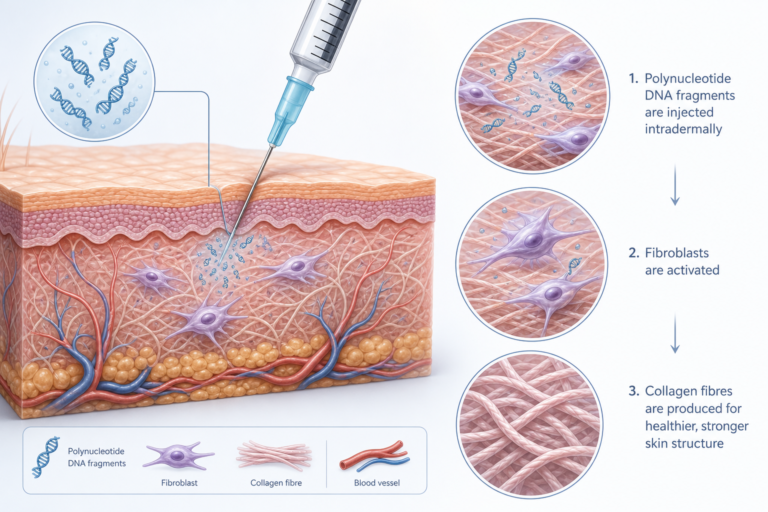
Sculptra (poly-L-lactic acid) is an injectable biostimulator that works differently from energy-based devices. When injected into the thigh area, Sculptra particles stimulate the body’s own fibroblasts to produce new collagen over time. The result is a gradual improvement in skin thickness, firmness, and texture rather than an immediate volumising effect. Sculptra for thigh skin tightening is an off-label use in many countries, meaning it is used outside its formally approved indications, and patients should be informed of this. Results develop slowly — typically over three to six months — and may last up to two years. Multiple treatment sessions are usually required. Sculptra is particularly useful for patients whose primary concern is crepey skin texture and diffuse laxity rather than focal sagging.
Thread Lifts
Dissolvable PDO (polydioxanone) threads can be inserted beneath the skin to provide a mechanical lifting effect and to stimulate collagen production along the thread tract. Thread lifts for the thighs are a minimally invasive option that sits between non-surgical and surgical approaches. Results are typically more modest than surgical thigh lifting and are temporary, lasting roughly twelve to eighteen months as the threads dissolve. Thread lifts carry a small risk of thread migration, puckering, or infection, and outcomes are highly technique-dependent. They may be most useful as part of a combination protocol rather than as a standalone treatment for significant laxity.
Laser Skin Tightening and Body Contouring Lasers
Laser-based treatments such as SculpSure use laser energy to heat and disrupt subcutaneous fat cells, which are then gradually cleared by the body’s lymphatic system. SculpSure is primarily a body contouring treatment for stubborn fat deposits rather than a dedicated skin tightening device, though some improvement in skin quality may accompany fat reduction. Other laser platforms focus more directly on skin texture and collagen stimulation. Laser treatments generally involve minimal downtime but may require multiple sessions to achieve visible results.
Inner Thigh, Outer Thigh, and Front Thigh: Does the Area Matter?
Most discussions of thigh tightening treat the thigh as a single zone, but the inner, outer, and front thigh have meaningfully different characteristics that influence treatment selection. The inner thigh has thinner, more delicate skin with less underlying muscle support, making it the area most prone to laxity and the most challenging to treat. RF microneedling devices such as Morpheus8 are well suited to the inner thigh because they can be calibrated to shallower depths appropriate for thinner skin. Injectable biostimulators such as Sculptra are also commonly used in this area for diffuse crepey skin.
The outer thigh and lateral hip area tend to have thicker skin and more subcutaneous fat, making them more amenable to energy-based treatments targeting both fat and skin. The front of the thigh (quadriceps area) is less commonly the primary concern but may benefit from RF or HIFU treatments when laxity is present. A practitioner experienced in body contouring will assess each zone individually and may recommend different treatments or settings for different areas of the same thigh.
Combination Treatment Protocols
A single treatment modality may not address all aspects of thigh laxity simultaneously. Combining treatments can produce more comprehensive results than any single approach alone, and this is increasingly how experienced practitioners approach complex cases. For example, pairing a fat-reduction treatment such as cryolipolysis (fat freezing) with a subsequent course of RF microneedling addresses both the underlying fat volume and the overlying skin quality — reducing the risk that fat reduction alone will worsen the appearance of loose skin. Similarly, combining Sculptra injections with RF treatment may accelerate collagen production through two complementary pathways: thermal stimulation and biostimulation.
Combination protocols require careful sequencing. Fat reduction treatments are typically performed first, followed by skin tightening treatments once the body has begun to process the treated fat cells. The rationale for combining treatments should be explained clearly during consultation, along with the realistic additional cost and time commitment involved. Not every patient requires a combination approach; those with primarily skin laxity and minimal excess fat may achieve satisfactory results with a single modality.
Non-Surgical vs. Surgical Thigh Tightening: How Do They Compare?
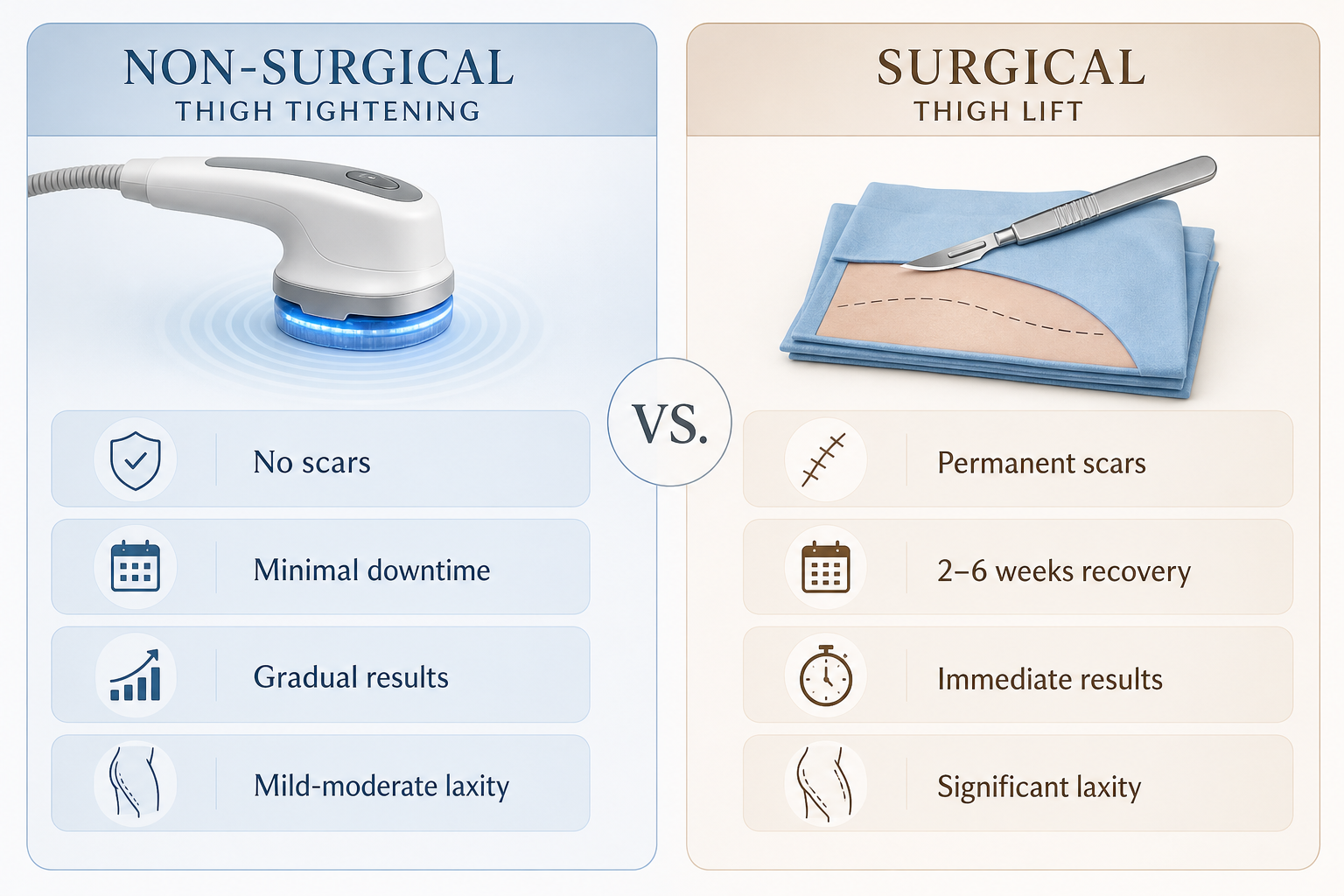
| Factor | Non-Surgical | Surgical Thigh Lift (Thighplasty) |
|---|---|---|
| Mechanism | Collagen stimulation, thermal tightening, biostimulation | Surgical removal of excess skin and tissue |
| Scarring | None (scarless approach) | Permanent scars, typically in the groin crease or inner thigh |
| Anaesthesia | Topical or none (some devices use local anaesthetic) | General or regional anaesthesia |
| Downtime | Minimal to a few days | Two to six weeks |
| Results | Gradual improvement; subtle to moderate | Immediate and more dramatic |
| Longevity | One to two years; maintenance required | Long-lasting, though ageing continues |
| Best for | Mild to moderate laxity; near goal weight | Significant excess skin; post-bariatric patients |
| Cost per treatment | Approximately £500–£3,000 per session | Higher upfront; single procedure |
| Risk profile | Low; temporary side effects typical | Surgical risks including infection, scarring, asymmetry |
The most important distinction is that non-surgical treatments stimulate the skin to tighten from within, while surgery physically removes excess tissue. For patients with significant loose thigh skin — particularly following major weight loss — non-surgical options are unlikely to produce the degree of improvement that surgery can achieve. Stating this clearly and early is important: a non-surgical thigh lift approach is not a lesser version of thighplasty; it is a fundamentally different intervention suited to a different degree of laxity.
What Results Can You Realistically Expect?
Gradual, natural-looking results are the hallmark of non-surgical thigh tightening. Unlike surgery, where changes are visible almost immediately, non-surgical treatments work by stimulating the body’s own collagen production — a process that unfolds over weeks and months. Most patients begin to notice improvement in skin firmness and texture around six to eight weeks after their first session, with more significant changes becoming apparent at three to six months as collagen remodeling progresses.
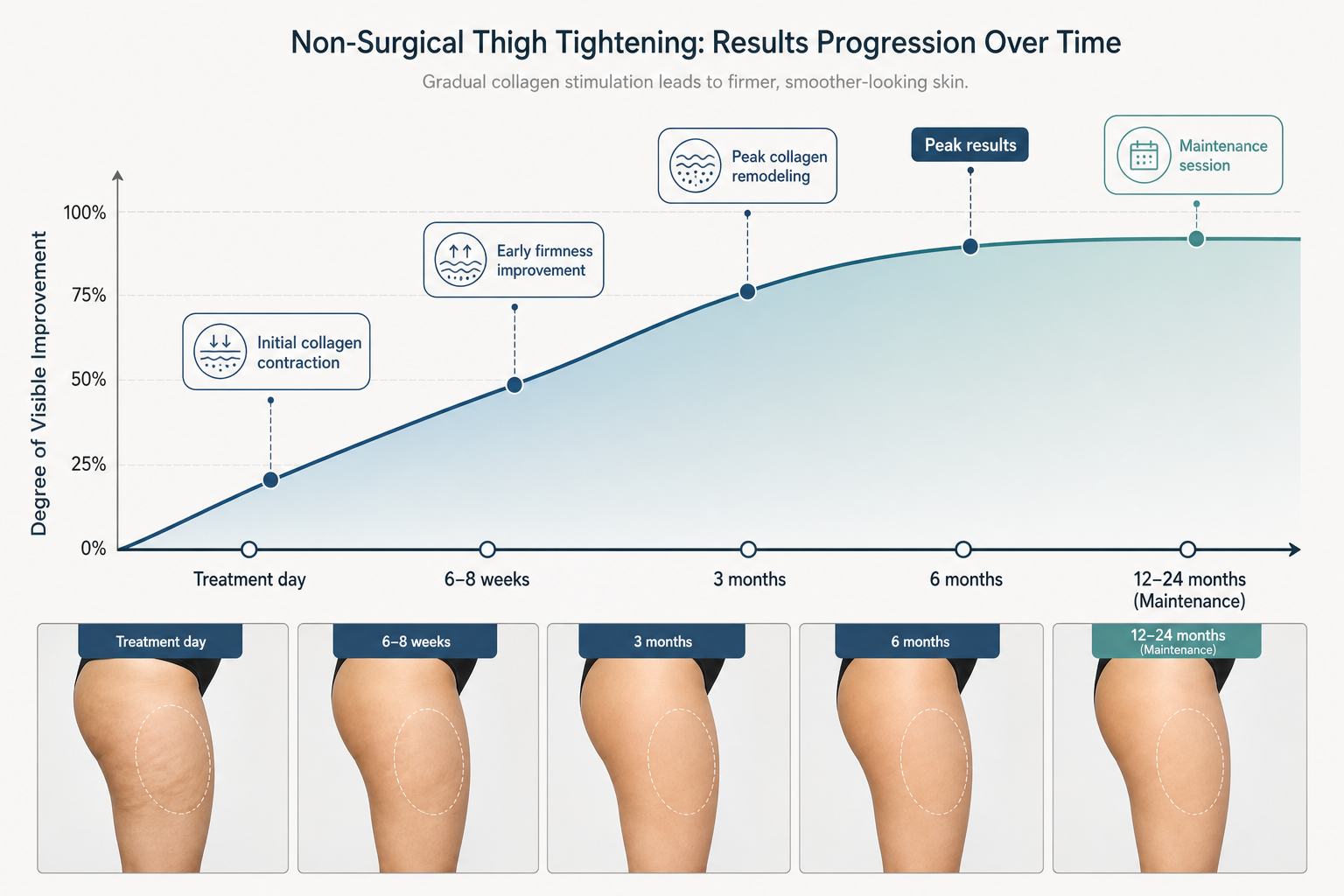
The degree of improvement varies considerably between individuals and depends on the severity of laxity, the treatment chosen, the number of sessions completed, and individual biological factors such as age and skin quality. Patients with mild laxity and good baseline skin quality tend to see the most satisfying outcomes. Those with more advanced laxity may see meaningful improvement in skin texture and firmness without achieving the degree of tightening they might hope for. Managing expectations honestly before treatment begins is essential to patient satisfaction.
Results from most non-surgical treatments last approximately one to two years. Ageing continues after treatment, and the collagen stimulated by energy-based treatments will gradually break down over time. Maintenance sessions — typically one session every twelve to twenty-four months — are usually recommended to sustain results. Some patients choose to repeat a full course of treatment every one to two years rather than relying on single maintenance sessions.
Post-Weight-Loss vs. Age-Related Thigh Laxity: Different Problems, Different Approaches
Age-related skin laxity develops gradually as collagen and elastin production decline. The skin thins and loses resilience, but the total surface area of skin generally remains proportionate to the body. Energy-based treatments and biostimulators work well in this context because the skin retains the capacity to respond to collagen stimulation, and the degree of excess tissue is usually modest.
Post-weight-loss laxity presents a different challenge. When body weight decreases significantly — particularly over a short period — the skin that previously covered a larger volume of fat does not always contract sufficiently. The result can be a greater absolute amount of loose skin, sometimes with reduced skin quality due to prolonged stretching. In these cases, non-surgical treatments may improve skin texture and provide some degree of tightening, but they are less likely to address the full extent of the laxity. Patients who have lost more than approximately fifteen to twenty kilograms, or who have undergone bariatric surgery, should discuss both surgical and non-surgical options with a practitioner experienced in post-weight-loss body contouring before deciding on an approach.
Lifestyle Factors That Support and Preserve Results
Non-surgical thigh tightening treatments work by stimulating the body’s natural collagen production, which means that lifestyle factors influencing collagen synthesis and skin health can meaningfully affect both the quality of results and how long they last. Adequate protein intake provides the amino acids — particularly glycine, proline, and hydroxyproline — that the body uses to build collagen. Vitamin C is an essential cofactor in collagen synthesis and is found in citrus fruits, berries, and leafy vegetables. Staying well hydrated supports overall skin quality and elasticity.
Sun exposure accelerates collagen breakdown through UV-induced oxidative damage. Applying broad-spectrum SPF to exposed thigh skin — particularly relevant in warmer months or for those who wear shorts or swimwear regularly — helps preserve both natural collagen and the collagen stimulated by treatment. Smoking significantly impairs collagen production and skin healing; patients who smoke are likely to see reduced and shorter-lasting results from any collagen-stimulating treatment. Maintaining a stable body weight after treatment is also important: significant weight fluctuations can stretch the skin again and diminish the benefits achieved.
Understanding the Cost of Non-Surgical Thigh Tightening
The cost of non-surgical thigh tightening varies considerably depending on the technology used, the size of the treatment area, the number of sessions required, and the clinic’s location and pricing structure. As a general guide, individual sessions for energy-based treatments such as RF or RF microneedling typically range from approximately £500 to £2,500 per session in the UK, with HIFU and laser treatments in a similar range. Injectable biostimulator treatments such as Sculptra are priced per vial, and multiple vials per session are often required for the thigh area, making the total cost per session comparable to or higher than device-based treatments.
Because most patients require a course of two to six sessions, the total investment for a full treatment course can range from approximately £1,500 to £10,000 or more depending on the approach. Combination protocols involving multiple technologies will increase the overall cost further. Some clinics offer package pricing for a predetermined number of sessions, which can represent better value than paying per session. When evaluating cost, it is worth considering the longevity of results and the likely need for maintenance sessions over time, rather than comparing only the upfront price of a single session.
Frequently Asked Questions
Can loose thigh skin be tightened without surgery?
Non-surgical treatments can produce meaningful improvement in skin firmness and texture for patients with mild to moderate laxity. However, they cannot remove excess skin the way surgery can. The degree of improvement achievable without surgery depends on the severity of laxity, the treatment chosen, and individual skin quality. A clinical assessment is the most reliable way to determine whether non-surgical options are likely to meet your expectations.
How many sessions will I need?
Most non-surgical thigh tightening treatments require a course of two to six sessions, spaced approximately two to eight weeks apart depending on the technology. Some treatments, such as Sculptra injections, are typically administered in three sessions spaced four to six weeks apart. Your practitioner will recommend a course based on the degree of laxity and the treatment selected.
Is radiofrequency or HIFU better for thigh tightening?
Both radiofrequency and HIFU stimulate collagen production through thermal energy, but they deliver that energy at different depths and through different mechanisms. RF treatments — particularly RF microneedling — are generally well suited to the thinner skin of the inner thigh and can address both surface texture and deeper laxity. HIFU reaches deeper tissue planes and may be more appropriate for patients with laxity involving the deeper structural layers. The better option depends on individual anatomy and the specific concern; many patients benefit from a combination of both approaches.
Are the results permanent?
Non-surgical thigh tightening results are not permanent. Most treatments produce results lasting approximately one to two years, after which maintenance sessions are typically recommended. Ageing continues after treatment, and the collagen stimulated by energy-based treatments gradually breaks down over time. Lifestyle factors such as sun protection, stable body weight, and not smoking can help extend the duration of results.
What is the difference between thigh tightening and a thigh lift?
Non-surgical thigh tightening stimulates the skin to produce more collagen and contract gradually, improving firmness and texture without removing tissue. A surgical thigh lift (thighplasty or medial thighplasty) physically removes excess skin and tissue, producing more dramatic and immediate results but leaving permanent scars and requiring a recovery period of several weeks. Surgery is generally reserved for patients with significant excess skin that non-surgical treatments cannot adequately address.
Can I combine thigh tightening treatments with exercise?
Strength training exercises targeting the thigh muscles — such as squats, lunges, and adductor exercises — can improve muscle tone and support the overlying skin, complementing the results of non-surgical treatments. Exercise does not directly tighten loose skin, but maintaining or building muscle mass beneath the skin can improve the overall appearance of the thigh area. Your practitioner may advise avoiding strenuous exercise for a short period immediately after certain treatments.
Is Non-Surgical Thigh Tightening the Right Approach for You?
Non-surgical thigh tightening offers a genuinely useful set of options for adults with mild to moderate skin laxity who want to improve skin firmness and texture without surgery, scarring, or significant downtime. Energy-based treatments such as radiofrequency and RF microneedling, HIFU, and injectable biostimulators such as Sculptra each work through distinct mechanisms and suit different patient profiles. For many people, a combination of treatments tailored to their specific degree of laxity and the particular zones of the thigh produces better results than any single modality alone.
The most important factor in achieving a satisfying outcome is honest expectation-setting from the outset. Non-surgical treatments cannot replicate the results of thighplasty for patients with significant excess skin, and results develop gradually over months rather than appearing immediately. For patients who are good candidates — near their goal weight, with mild to moderate laxity and realistic expectations — a well-planned non-surgical protocol can produce meaningful, natural-looking improvement in skin firmness and elasticity that is maintained with periodic touch-up sessions.
If you are considering non-surgical thigh tightening, a consultation with a practitioner experienced in body contouring and energy-based treatments is the appropriate starting point. A thorough assessment of your skin laxity, anatomy, and goals will determine which treatment or combination of treatments is most likely to deliver results that are worth the investment for you specifically.