When to Wash Your Face After Microneedling: Timing, Technique & Aftercare
Knowing when to wash your face after microneedling is one of the most important parts of post-treatment care. Washing too soon can introduce bacteria into freshly created microchannels, disrupt the healing environment, and potentially slow the collagen induction process your treatment was designed to trigger. Washing too late, or with the wrong product, can cause unnecessary discomfort. This guide explains the recommended timing, the reasoning behind it, how needle depth and treatment type affect the window, and exactly how to cleanse safely during each phase of recovery.
Key Takeaways
- Most professional microneedling providers recommend waiting at least 4–6 hours before rinsing with water, and a full 24 hours before using any cleanser.
- The correct timing depends on needle depth, whether the treatment was professional or at-home, and individual skin sensitivity.
- Use only a gentle, fragrance-free, sulfate-free, non-foaming cleanser with lukewarm water during the first week of recovery.
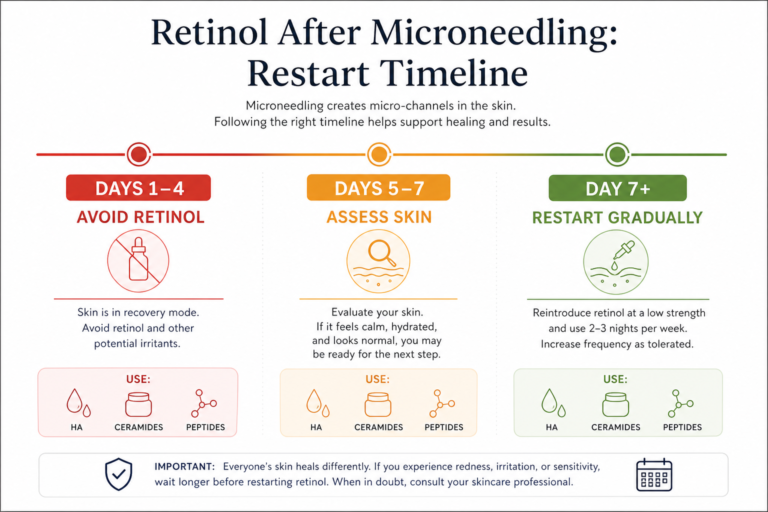
- Avoid active ingredients such as retinol, AHAs, BHAs, and vitamin C for at least 5–7 days after treatment.
- Proper cleansing technique — fingertips only, light pressure, pat dry with a clean disposable face towel — matters as much as timing.
Why Timing Matters: What Microneedling Does to Your Skin
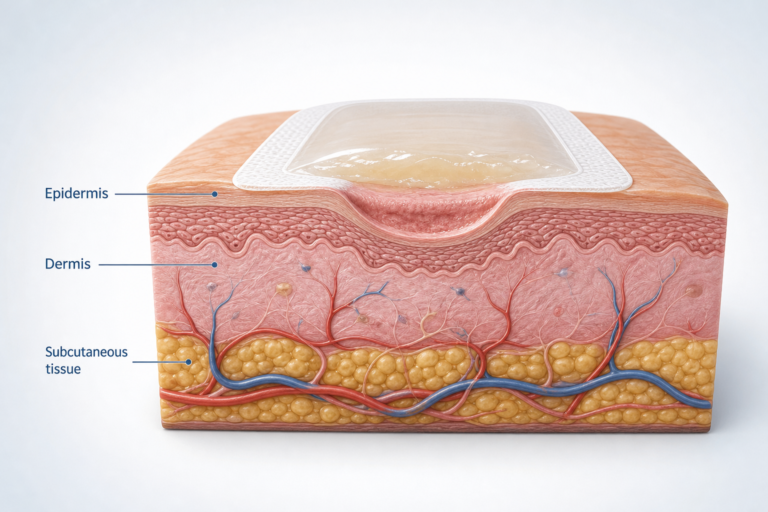
Microneedling works by creating thousands of controlled micro-injuries in the skin using fine needles. These punctures — commonly called microchannels — trigger the skin’s natural repair cycle, stimulating collagen induction and elastin production. Immediately after treatment, these microchannels remain open for several hours, leaving the skin temporarily more permeable and vulnerable than usual.
During this open period, anything applied to or rinsed across the skin can penetrate far more deeply than it normally would. That includes beneficial serums applied by your practitioner, but also potential irritants such as tap water minerals, surfactants in cleansers, fragrance molecules, and environmental bacteria. Washing the face before the microchannels have begun to close can wash away the post-treatment serum your provider applied, introduce contaminants, and disrupt the early inflammatory signals that initiate proper healing. This is why the timing of your first face wash is not a minor detail — it directly affects how well your skin recovers and how effectively collagen production proceeds.
The Recommended Timing: A Phase-by-Phase Breakdown
There is some variation in aftercare guidance across clinics, and this can be confusing. The differences usually come down to needle depth, treatment intensity, and whether the procedure was performed professionally or with an at-home device. The timeline below reflects general best practice for professional microneedling at standard treatment depths.
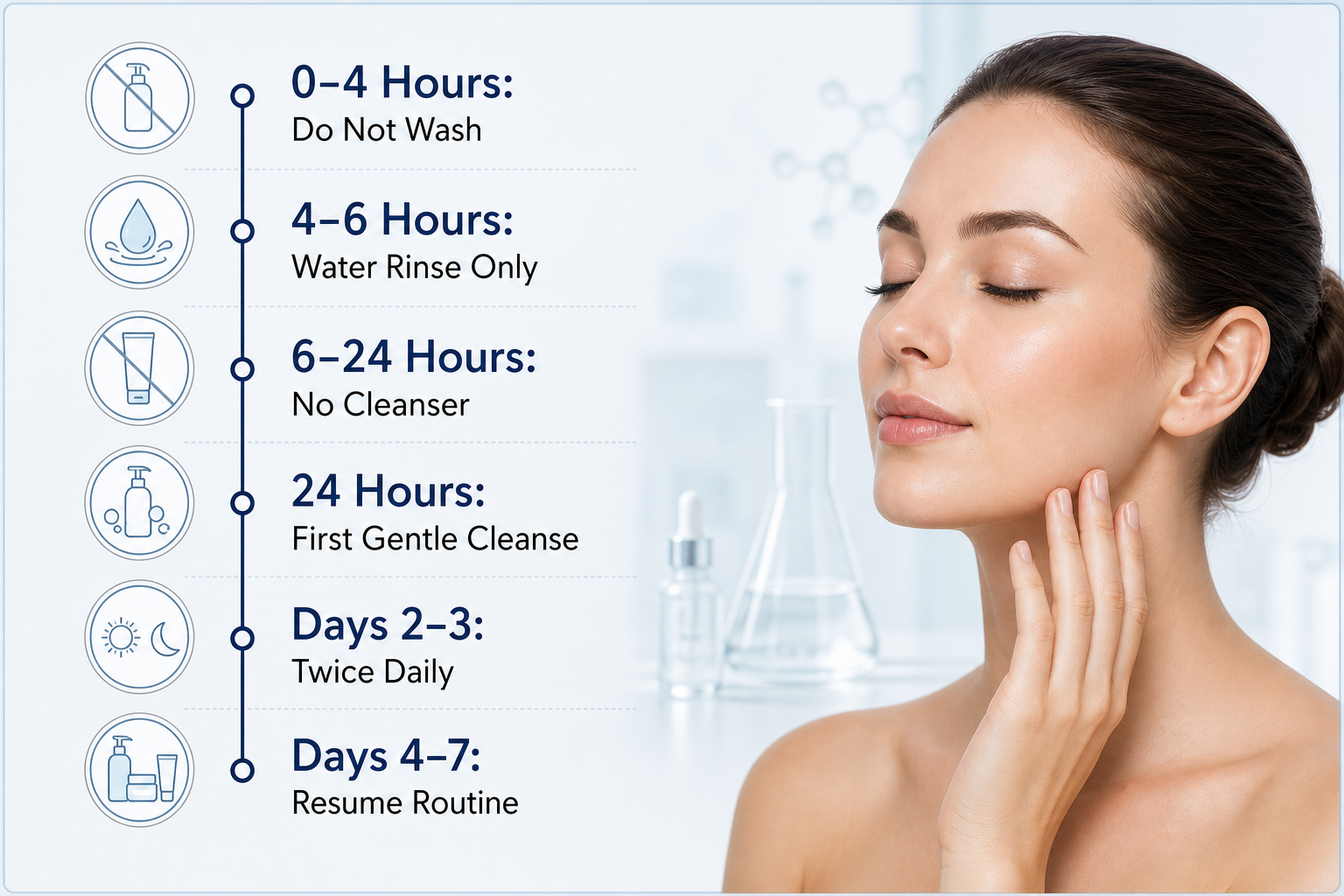
0–4 Hours: Do Not Wash or Rinse
In the first four hours after microneedling, the microchannels are at their most open. During this phase, avoid all contact with water on the treated area. Do not rinse, splash, or apply any products other than what your practitioner has already placed on your skin. If your provider applied a hyaluronic acid serum or growth factor product immediately after treatment, leaving it undisturbed during this window allows it to absorb effectively while the channels are still permeable. Touching your face unnecessarily also introduces bacteria from your hands, so keep contact to a minimum.
4–6 Hours: Water Rinse Only (If Needed)
Between four and six hours post-treatment, some providers permit a gentle rinse with plain lukewarm water if the skin feels uncomfortably tight or if there is visible dried serum. This is not a full cleanse — no cleanser should be used at this stage. Use clean fingertips only, apply lukewarm water with the lightest possible pressure, and pat dry immediately with a clean, disposable face towel. Many practitioners advise skipping even this step and waiting the full 24 hours if tolerable.
6–24 Hours: Continue to Avoid Cleansers
The healing window between six and twenty-four hours is a critical phase. The skin will typically appear red or flushed, similar to mild sunburn, and may feel warm and tight. Microchannels are gradually closing during this period, but the skin barrier remains compromised. Avoid all cleansers, toners, mists, and skincare products during this phase unless your provider has specifically instructed otherwise. If you had your treatment in the afternoon or evening, this phase will largely pass overnight — one practical reason why scheduling a session later in the day can be helpful, as you sleep through much of the no-wash window.
24 Hours: First Gentle Cleanse
At the 24-hour mark, most people who have had professional microneedling at standard depths can perform their first proper cleanse using a gentle, fragrance-free cleanser. Use lukewarm — not hot — water, apply the cleanser with clean fingertips using light circular motions, rinse thoroughly, and pat dry with a clean or disposable face towel. Avoid rubbing, scrubbing, or using any cleansing brush or washcloth. Air drying is also a safe option if you prefer to avoid towel contact entirely.
Days 2–3: Gentle Cleansing Twice Daily
During the second and third days, the skin may begin to feel tight, and some people notice mild flaking or peeling as the surface layer sheds. Continue cleansing twice daily with the same gentle, non-foaming cleanser and lukewarm water. Avoid any temptation to exfoliate or pick at flaking skin, as this can disrupt the healing process and increase the risk of post-inflammatory hyperpigmentation, particularly in people with medium to deeper skin tones. A fragrance-free moisturiser containing ceramides, hyaluronic acid, or panthenol can be applied after cleansing to support the skin barrier.
Days 4–7: Gradual Return to Normal Routine
By day four, most people can begin transitioning back toward their regular skincare routine, though active ingredients should still be reintroduced cautiously. Continue with the gentle cleanser until any residual sensitivity has resolved. From around day five to seven, most practitioners consider it safe to reintroduce retinol, vitamin C, AHAs, and BHAs — but only once the skin feels fully settled and shows no signs of ongoing irritation. Mineral SPF should be applied daily from the morning after treatment onward, as post-treatment skin is more susceptible to UV damage.
How Needle Depth and Treatment Type Affect the Timing
One reason aftercare guidance varies between sources is that microneedling is not a single standardised procedure. Needle depth is the most important variable. Shallower treatments — typically 0.5 mm, common in at-home microneedling devices — create less disruption to the skin and generally allow a shorter healing window. Redness may resolve within a few hours, and some providers of at-home devices suggest a gentler aftercare protocol with a shorter no-wash period.
Professional microneedling typically uses needle depths of 1.0 mm to 2.5 mm or more depending on the treatment area and concern being addressed. Deeper needle depth means more significant disruption to the skin, a longer period of open microchannels, and a stricter aftercare requirement. The 24-hour cleanser-free window is most relevant for professional treatments at moderate to deeper depths.
Certain microneedling variants also warrant specific consideration. RF microneedling — which combines radiofrequency energy with the needling process — generates additional thermal injury and may require an extended recovery period. Microneedling combined with PRP (platelet-rich plasma) involves applying a biological serum to the skin immediately after needling, and washing this away prematurely would reduce its effectiveness. If you have had either of these treatments, follow your provider’s specific aftercare instructions rather than general guidance, as the timing may differ.
How to Wash Your Face Correctly After Microneedling
Technique matters as much as timing. Even using the right cleanser at the right time can cause problems if applied with too much pressure or rinsed with water that is too hot.
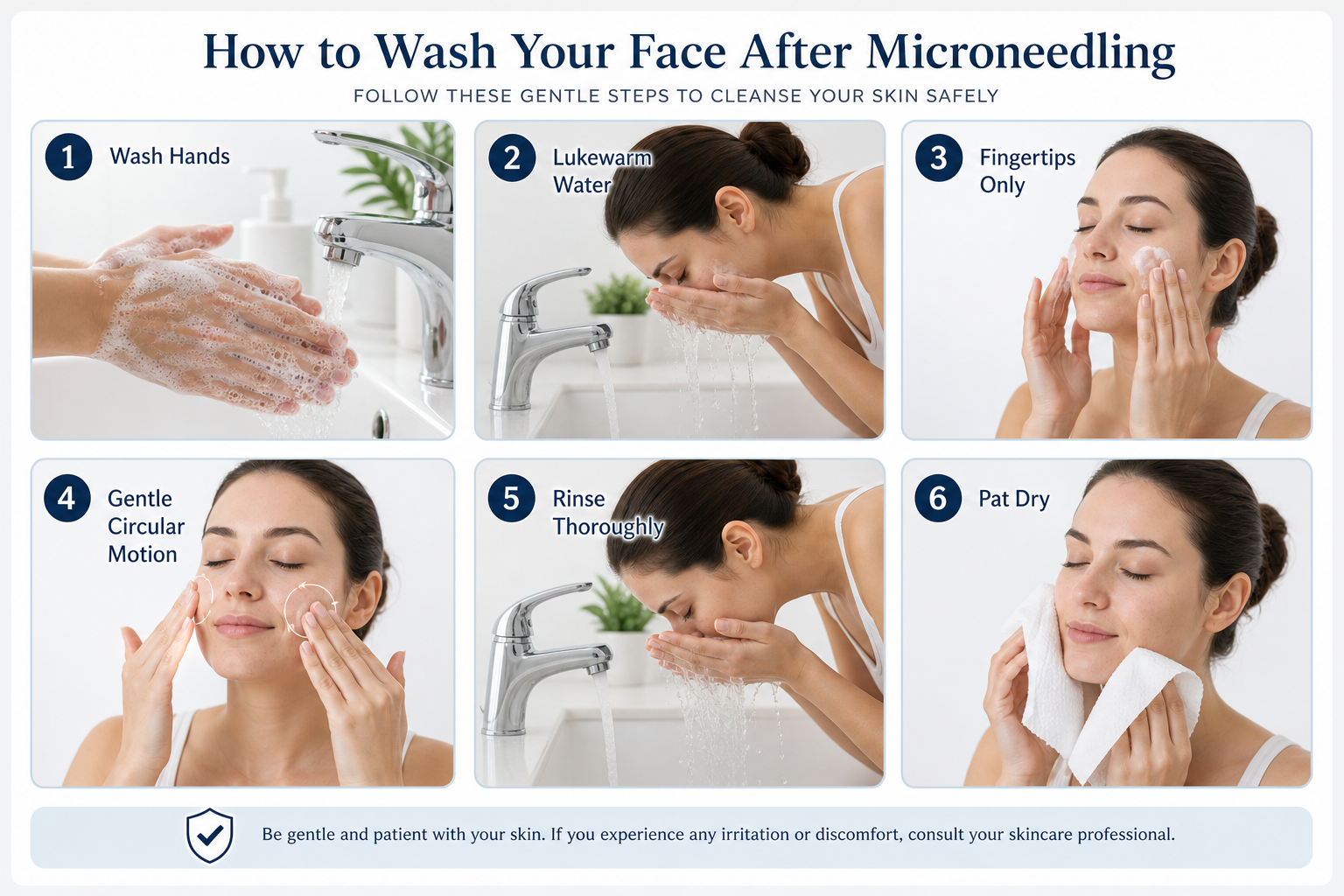
- Wash your hands thoroughly before touching your face. Bacteria transferred from unwashed hands to open microchannels is a genuine infection risk.
- Use lukewarm water only. Hot water increases blood flow to the skin surface, worsens redness, and can aggravate post-treatment inflammation. Cold water is less harmful but may cause discomfort on sensitized skin.
- Apply a small amount of cleanser to damp fingertips and work it gently across the skin using light, circular motions. Do not press firmly or drag the skin.
- Rinse thoroughly with lukewarm water, ensuring no cleanser residue remains on the skin.
- Pat dry — do not rub — using a clean, single-use paper towel or a freshly laundered face cloth. Reused towels can harbour bacteria that pose a risk to compromised skin.
- Apply any recommended post-treatment products immediately after cleansing while the skin is still slightly damp, to support hydration and barrier recovery.
Choosing the Right Cleanser After Microneedling
The cleanser you use during the first week of recovery should be as simple and inert as possible. The goal is to remove surface debris without stripping the skin barrier, introducing irritants, or triggering inflammation in sensitized skin.
Look for a cleanser that is fragrance-free, sulfate-free, non-foaming, and pH-balanced. Foaming cleansers typically contain sulfates or other surfactants that can be too stripping for a compromised skin barrier. Fragrance — including essential oils — is one of the most common causes of contact irritation and should be avoided entirely during the healing window. A pH-balanced formula helps preserve the skin’s natural acid mantle, which plays a role in barrier function and microbial defence.
Commonly recommended options include simple hydrating cleansers containing ceramides or glycerin, which cleanse without disrupting the barrier. Micellar water is sometimes raised as an alternative for the early post-treatment period. While micellar water can be gentle, some formulations contain fragrance or alcohol, and the wiping motion required to use it may be too abrasive on freshly treated skin. If you prefer micellar water, choose a fragrance-free, alcohol-free formula and apply it by gently pressing a soaked cotton pad against the skin rather than wiping.
A saline rinse — sterile saline solution applied with clean fingertips — is another option some clinics recommend for the very first rinse after treatment, as it is isotonic and unlikely to cause irritation. Ask your provider whether this is appropriate for your specific treatment.
Ingredients to Avoid in Your Cleanser and Skincare
During the first five to seven days after microneedling, certain ingredients should be avoided in both your cleanser and any other skincare products you apply. The open or recently closed microchannels allow deeper penetration of topical ingredients, which means that substances that are normally well-tolerated can cause significant irritation or damage when used too soon after treatment.
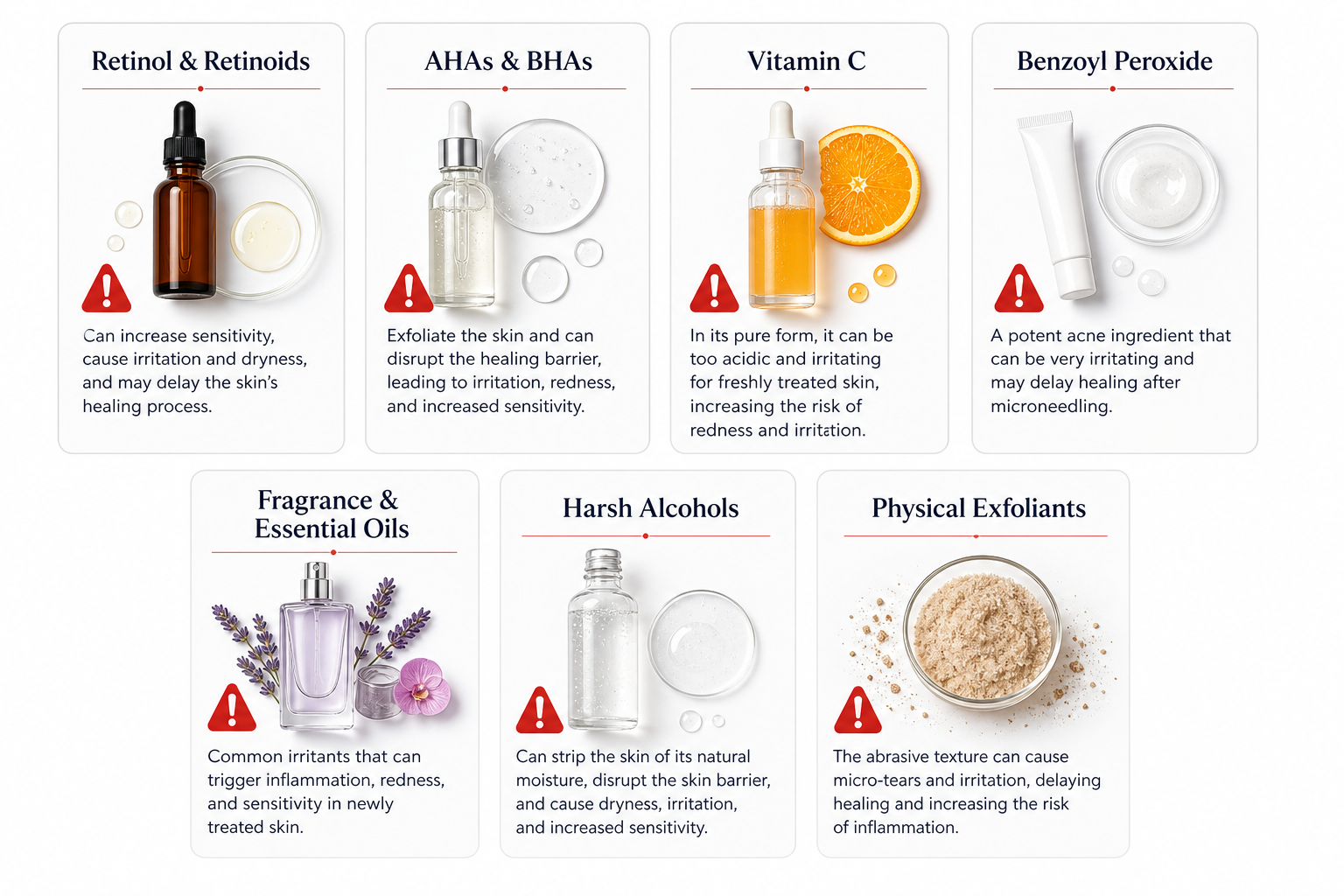
- Retinol and retinoids (including tretinoin): Avoid for at least 5–7 days. These are potent active ingredients that can cause significant irritation on post-treatment skin.
- AHAs (glycolic acid, lactic acid) and BHAs (salicylic acid): Chemical exfoliants are inappropriate while the skin is still in active recovery and the barrier is compromised.
- Vitamin C (ascorbic acid): In its active acid form, vitamin C can sting and irritate sensitized skin. Wait until the skin has fully settled before reintroducing it.
- Benzoyl peroxide: Avoid during the healing window, particularly if you use it for acne management.
- Fragrance and essential oils: Common sensitizers that should be avoided in all products applied to the face during recovery.
- Harsh alcohols: Denatured alcohol and similar drying agents can strip the skin barrier and delay healing.
- Physical exfoliants and micro-beads: Any scrubbing action on post-treatment skin risks damaging the healing surface and introducing bacteria.
Safe ingredients during the healing window include hyaluronic acid, ceramides, peptides, panthenol, and squalane. These support hydration and barrier repair without risking irritation. Growth factor serums may be appropriate from a few days post-treatment, depending on your provider’s guidance.
What Happens If You Wash Too Soon
Washing the face before the microchannels have adequately closed carries several risks. The most immediate concern is the introduction of bacteria or other contaminants into the skin, which can increase the risk of infection or folliculitis. Even tap water is not sterile and contains minerals and microorganisms that may be problematic when the skin barrier is open.
Washing too soon also risks removing the post-treatment serum applied by your practitioner, which is typically timed to absorb during the early healing window when skin permeability is highest. Losing this serum reduces the benefit of the treatment.
Friction from washing — even gentle friction — can also trigger post-inflammatory hyperpigmentation in people with medium to deeper skin tones. This is a clinically important consideration that is often underemphasised in general aftercare guidance. If you have a skin tone that is prone to pigmentation changes, being especially careful about both timing and technique during the first wash is particularly important.
If you accidentally wash your face too soon, do not panic. Rinse away any cleanser thoroughly with lukewarm water, pat the skin dry gently, and apply a fragrance-free, barrier-supporting moisturiser. Avoid applying any active ingredients and monitor the skin for signs of unusual irritation, prolonged redness, or swelling. Contact your provider if you are concerned.
Showering, Exercise, and Other Hygiene Considerations
Face washing is not the only hygiene consideration after microneedling. Hot showers, steam rooms, and saunas should be avoided for at least 48–72 hours, as heat and steam can worsen inflammation, increase redness, and potentially introduce bacteria through the open microchannels. When showering during the first 24–48 hours, keep your face out of the direct stream of water and avoid steam build-up in the bathroom where possible.
Strenuous exercise that causes significant sweating should also be avoided for at least 24–48 hours. Sweat is not sterile and can introduce bacteria to the skin surface. The increased body temperature and blood flow associated with exercise can also prolong post-treatment redness and inflammation.
Two often-overlooked hygiene factors are pillowcases and mobile phones. Both regularly come into contact with the face and can carry significant bacterial loads. Changing your pillowcase before sleeping on the night of your treatment — and again the following night — reduces the risk of bacterial transfer to healing skin. Similarly, avoid pressing your phone against your treated skin during calls for the first 24–48 hours, or use a hands-free option.
Shaving and waxing the treated area should be avoided for at least three to five days, as both can cause mechanical trauma and introduce bacteria to skin that is still in recovery.
Skin-Type Considerations for Post-Microneedling Cleansing
General aftercare guidance applies broadly, but individual skin type can influence how the skin responds during recovery and which products are most appropriate.
People with dry or sensitive skin may find that even a gentle cleanser feels stripping during the first few days. A minimal approach — lukewarm water rinse with fingertips, followed by a ceramide-rich moisturiser — may be preferable to using any cleanser until the skin feels more settled, typically from day two onward.
People with oily or acne-prone skin may be tempted to use their usual acne-targeting cleanser, but this is not appropriate during the healing window. Salicylic acid, benzoyl peroxide, and similar active ingredients should be avoided. A simple, non-foaming, fragrance-free cleanser is the correct choice regardless of skin type during the first week.
People with medium to deeper skin tones should be particularly attentive to avoiding heat, friction, and irritation during washing, as these factors can trigger post-inflammatory hyperpigmentation. Using the lightest possible touch, avoiding hot water, and patting rather than rubbing dry are especially important considerations for this group.
When to Contact Your Provider
Some redness, warmth, tightness, and mild swelling are expected after microneedling and typically resolve within 24–72 hours for most professional treatments. However, certain signs warrant prompt contact with your provider:
- Redness or swelling that worsens significantly after the first 24 hours rather than improving
- Pus, discharge, or crusting that appears infected rather than part of normal healing
- Severe pain or burning that is disproportionate to the treatment received
- Blistering or skin breakdown beyond minor surface flaking
- Fever or systemic symptoms following treatment
- Pigmentation changes that appear rapidly and seem unusual
These signs are not typical of normal microneedling recovery and should be assessed by a qualified practitioner rather than managed with home remedies.
Frequently Asked Questions
Can I wash my face 6 hours after microneedling?
A gentle rinse with plain lukewarm water at the six-hour mark is generally considered acceptable by many providers, but using a cleanser at this stage is not recommended. The safest approach is to wait the full 24 hours before introducing any cleanser, particularly after professional microneedling at moderate to deeper needle depths.
What cleanser is safe to use after microneedling?
Choose a gentle, fragrance-free, sulfate-free, non-foaming cleanser that is pH-balanced. Simple hydrating formulas containing ceramides or glycerin are well-suited to post-treatment skin. Avoid any cleanser containing exfoliating acids, fragrance, essential oils, or harsh surfactants during the first week of recovery.
Can I use micellar water after microneedling?
Micellar water can be an option if it is fragrance-free and alcohol-free, but the wiping motion typically used to apply it may be too abrasive on freshly treated skin. If you use micellar water, press a soaked cotton pad gently against the skin rather than wiping, and only do so after the initial 24-hour window has passed.
Is at-home microneedling aftercare the same as professional aftercare?
At-home microneedling devices use shallower needle depths than professional treatments, which generally means less disruption to the skin and a shorter, less strict aftercare window. Redness may resolve more quickly, and the no-wash period may be shorter. However, the same principles apply: avoid harsh cleansers, active ingredients, and friction during the recovery period, and follow the guidance provided with your specific device.
When can I wear makeup after microneedling?
Most providers recommend avoiding makeup for at least 24–48 hours after professional microneedling, until the microchannels have closed sufficiently. Applying makeup too soon risks introducing bacteria and pigments into open channels. When you do resume makeup, choose mineral-based, fragrance-free formulas and apply with clean tools or fingertips.
When can I use retinol or vitamin C again after microneedling?
Most practitioners recommend waiting five to seven days before reintroducing active ingredients such as retinol, vitamin C, AHAs, and BHAs. Reintroduce them gradually and only once the skin feels fully settled, with no residual sensitivity or visible healing activity.
Does RF microneedling require different aftercare?
RF microneedling combines radiofrequency energy with the needling process, which can create additional thermal effects in the skin. Recovery may take longer than standard microneedling, and your provider may recommend a more conservative aftercare timeline. Always follow the specific instructions given by your treating practitioner for RF microneedling or any combined treatment.
Getting Your Aftercare Right for the Best Possible Results
The effort you put into microneedling aftercare — including something as straightforward as when and how you wash your face — has a direct bearing on how well your skin heals and how effectively collagen induction proceeds. The core principle is simple: protect the skin’s natural repair cycle during the healing window by keeping the skin clean, calm, and free from unnecessary irritants.
Wait at least 24 hours before using a cleanser after professional microneedling. When you do cleanse, use a gentle, fragrance-free, non-foaming, sulfate-free formula with lukewarm water and clean fingertips, and pat dry with a disposable face towel. Avoid active ingredients for five to seven days, apply mineral SPF daily, and resist the urge to exfoliate or pick at flaking skin. If your treatment involved deeper needle depths, RF energy, or PRP, follow your provider’s specific guidance rather than general timelines.
If you are unsure about any aspect of your post-treatment care, contact your treating practitioner directly. Good aftercare is part of the treatment itself, and your provider is the best source of guidance tailored to your specific procedure, skin type, and recovery progress.