
Lip Filler Ingredients: What Is Lip Filler Made Of?
Lip filler is one of the most commonly requested non-surgical aesthetic treatments, yet many people considering it have little idea what is actually being injected. Understanding the ingredients in lip filler — what they are, how they work, and why certain formulations are used — can help you approach a consultation with realistic expectations and better questions for your practitioner.
Key Takeaways
- The vast majority of lip fillers used in professional aesthetic clinics today are made from hyaluronic acid, a substance that occurs naturally in the human body.
- Different hyaluronic acid filler products vary in their formulation, gel consistency, and cross-linking technology, which affects how they behave in the lips and how long results may last.
- Older filler materials such as collagen and permanent synthetic substances are rarely used in modern lip augmentation due to safety and longevity concerns.
- Hyaluronic acid lip fillers can be dissolved with an enzyme called hyaluronidase, which provides a meaningful safety advantage over non-reversible alternatives.
- Suitability, product choice, and technique should always be assessed by a qualified medical practitioner at a thorough consultation.
What Is Lip Filler Made Of?
Modern lip fillers are almost universally formulated from hyaluronic acid (HA), a naturally occurring polysaccharide — a type of long-chain sugar molecule — found throughout the human body, particularly in connective tissue, skin, and the fluid surrounding joints. In its natural state, hyaluronic acid breaks down within the body within hours to days. To make it suitable for use as a dermal filler, manufacturers chemically stabilise the molecule through a process called cross-linking, which creates a gel-like structure that resists rapid degradation and holds its shape within tissue. The result is a smooth, cohesive gel that can be injected into or around the lips to add volume, define the lip border, or improve overall lip shape.
Hyaluronic acid is well tolerated by most people because it is biocompatible — the body does not typically recognise it as a foreign substance. This reduces the likelihood of immune reactions compared with some older filler materials. However, biocompatibility does not mean the treatment is without risk, and adverse events can still occur regardless of the ingredient used.
How Hyaluronic Acid Lip Fillers Work
When hyaluronic acid gel is injected into the lips, it physically occupies space within the tissue, creating an immediate increase in volume. Hyaluronic acid also has a strong affinity for water molecules — it can attract and retain many times its own weight in water — which contributes to the soft, hydrated feel of treated lips. This water-binding property is one reason why results can appear slightly more pronounced in the days immediately following treatment, as the gel settles and interacts with surrounding tissue fluid.
The cross-linking process used during manufacturing determines how firm or soft the resulting gel is, how well it integrates with surrounding tissue, and how long it resists enzymatic breakdown. Manufacturers adjust the degree of cross-linking and the concentration of hyaluronic acid to produce products with different rheological properties — meaning different levels of firmness, elasticity, and flow. Products intended for fine lip definition tend to be softer and more fluid, while those designed for significant volume addition are typically firmer and more cohesive. Practitioners select a product based on the treatment goal, the patient’s existing lip anatomy, and their own clinical experience.
Cross-Linking Technology and Why It Matters
The cross-linking agent most commonly used in hyaluronic acid fillers is butanediol diglycidyl ether, often abbreviated as BDDE. During manufacturing, BDDE creates chemical bonds between individual hyaluronic acid chains, transforming a liquid into a stable gel. The proportion of cross-linked to non-cross-linked hyaluronic acid, along with the overall concentration of HA in the product, influences how the filler behaves once injected.
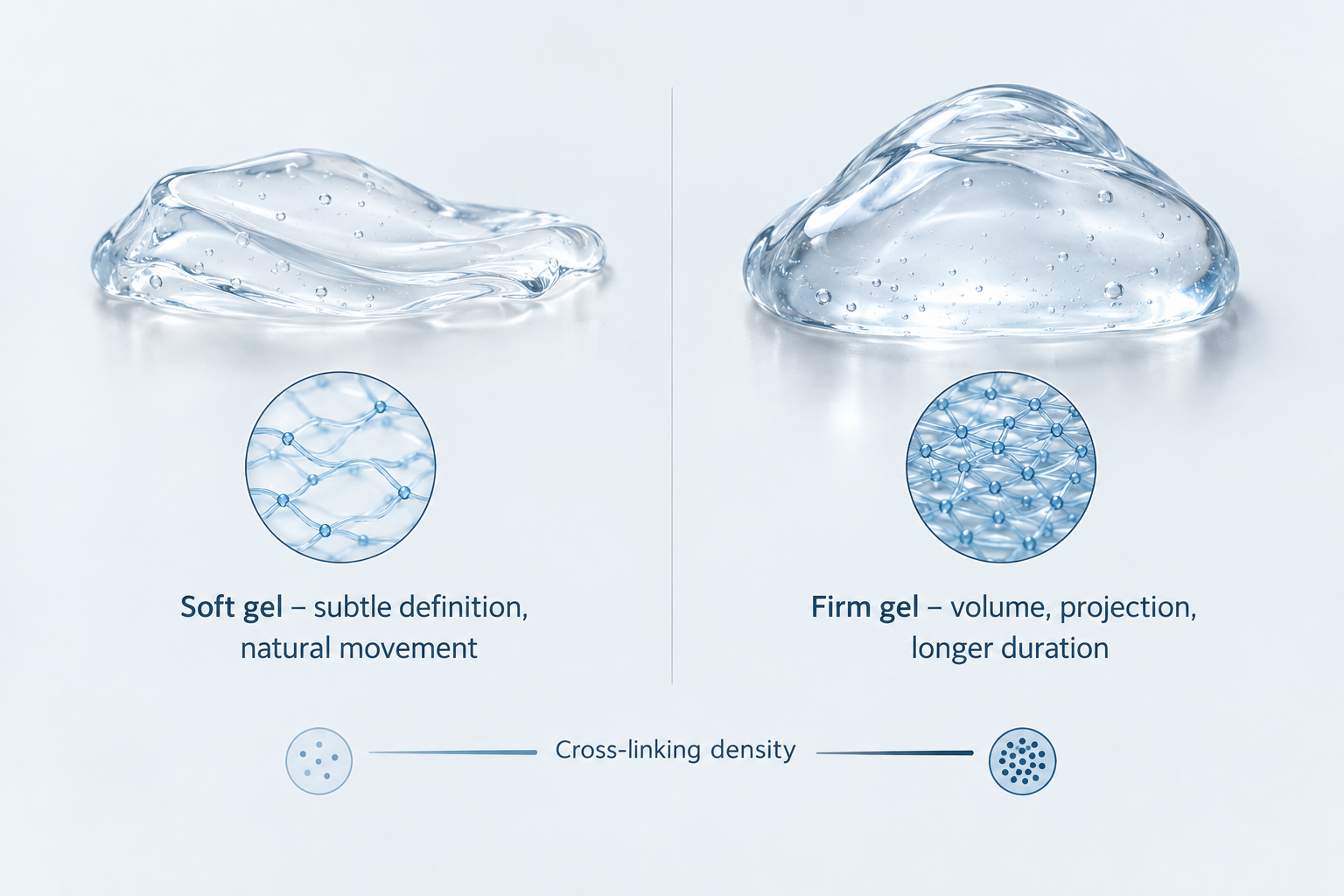
A higher degree of cross-linking generally produces a firmer gel with greater lifting capacity and longer duration, but it may also feel less natural in a highly mobile area like the lips. A softer, less cross-linked gel integrates more naturally with lip tissue and tends to move with facial expression, but may not provide the same degree of projection or longevity. This is why practitioners often use different products for different lip concerns — a soft filler for hydration and subtle definition, and a more structured product for volume or border enhancement.
Residual BDDE levels in commercially available fillers are regulated and must fall below established safety thresholds. Reputable manufacturers provide data on residual cross-linker content as part of their product documentation.
Well-Known Hyaluronic Acid Lip Filler Brands
Several established brands produce hyaluronic acid fillers that are commonly used in lip treatments. These include Juvederm (manufactured by Allergan Aesthetics), Restylane (manufactured by Galderma), Belotero (manufactured by Merz Aesthetics), and Teosyal (manufactured by Teoxane). Each brand uses its own proprietary cross-linking technology and formulation approach, resulting in products with distinct gel characteristics. For example, Juvederm uses a technology called Vycross, which combines high and low molecular weight hyaluronic acid chains to produce a smooth, cohesive gel. Restylane uses NASHA (Non-Animal Stabilised Hyaluronic Acid) technology, which produces a more particulate gel structure.
These differences in manufacturing technology mean that products from different brands — even when both are hyaluronic acid fillers — may behave differently in the lips, integrate differently with tissue, and last for different durations. Practitioners who are familiar with multiple products are generally better placed to select the most appropriate option for a given patient’s anatomy and goals. It is worth noting that regulatory approval status and licensed indications for specific products vary by country, so availability may differ depending on where you are treated.
Lidocaine in Lip Fillers
Many modern lip filler formulations contain a small amount of lidocaine, a local anaesthetic, incorporated directly into the gel. The inclusion of lidocaine is intended to reduce discomfort during and immediately after injection. Products containing lidocaine are often labelled with a suffix such as “XC” or “Plus” depending on the brand. The lidocaine concentration in these products is low — typically around 0.3% — and its primary purpose is comfort rather than full anaesthesia. Practitioners may also apply a topical numbing cream to the lips before treatment, use a dental nerve block, or use both approaches in combination, depending on the patient’s sensitivity and the extent of treatment planned.
Older and Alternative Filler Materials
Before hyaluronic acid fillers became the dominant option, several other materials were used for lip augmentation. Understanding these alternatives provides useful context for why HA fillers are now the standard of care in most professional settings.
Collagen-Based Fillers
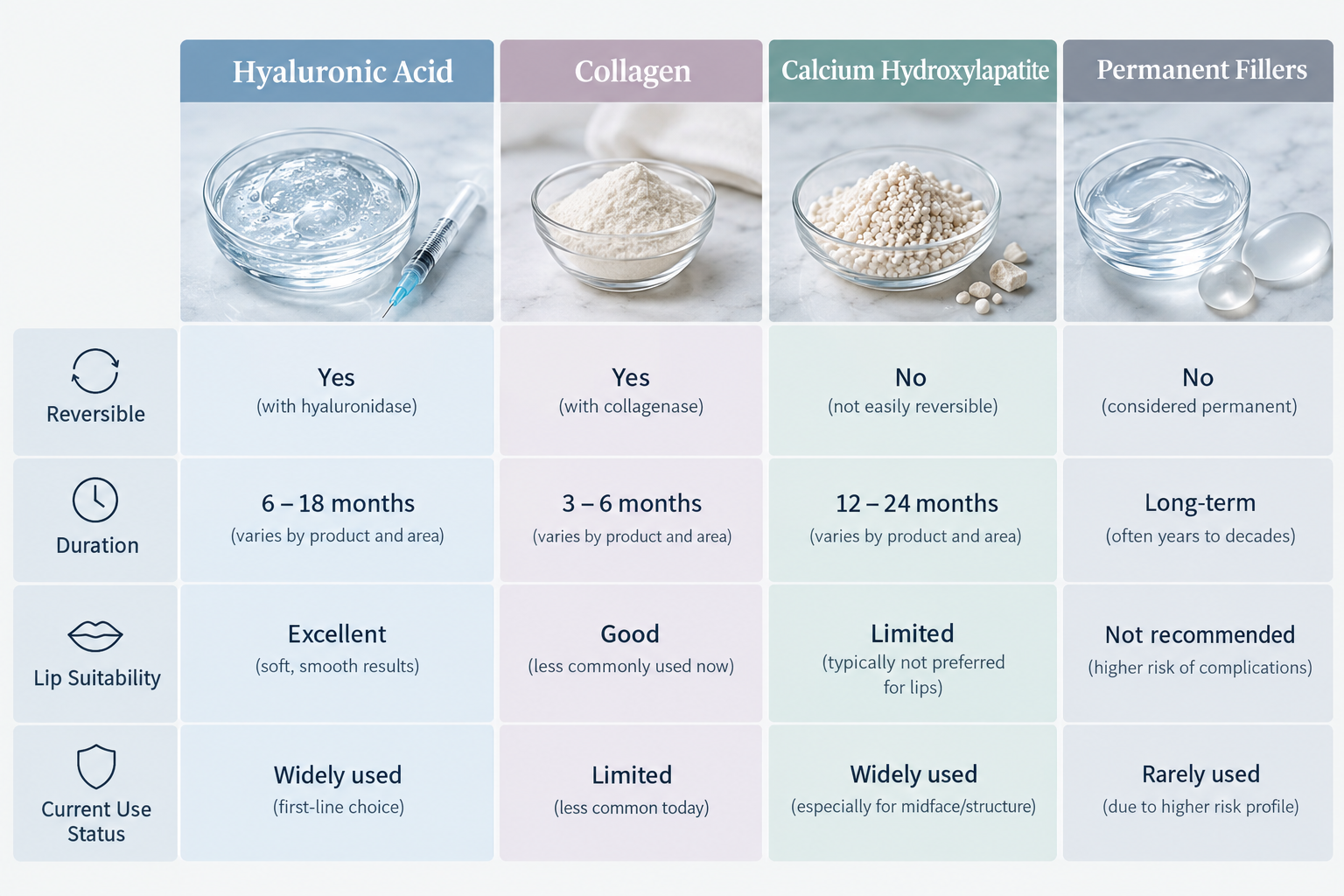
Collagen fillers, derived from bovine (cow) or human sources, were among the earliest injectable lip augmentation options. They produced natural-looking results but had significant limitations: bovine collagen required allergy testing before use, results typically lasted only two to four months, and the products have largely been discontinued or replaced by longer-lasting alternatives. Collagen-based fillers are rarely used in contemporary lip augmentation practice.
Calcium Hydroxylapatite
Calcium hydroxylapatite (CaHA) is a mineral compound found naturally in bone. It is used in some dermal filler products, most notably Radiesse, for areas such as the cheeks, jawline, and hands. Calcium hydroxylapatite is generally not recommended for lip augmentation because its firmer consistency and the risk of visible nodule formation make it poorly suited to the highly mobile lip tissue. Most practitioners avoid using CaHA in the lips.
Poly-L-Lactic Acid
Poly-L-lactic acid (PLLA) is a biodegradable synthetic polymer that works as a biostimulator rather than a traditional filler — it stimulates the body’s own collagen production rather than directly adding volume. Products such as Sculptra use PLLA and are used for gradual facial volume restoration. PLLA is not typically used for direct lip augmentation because its mechanism of action does not produce the immediate, precise volume control that lip treatment requires.
Permanent and Semi-Permanent Fillers
Permanent fillers such as polyacrylamide gel (PAAG) and polymethylmethacrylate (PMMA) microsuspensions have been used historically for lip augmentation. These materials are not absorbed by the body and are intended to produce lasting results. However, permanent fillers carry significant long-term risks including chronic inflammation, granuloma formation (the body’s attempt to wall off a foreign material), migration, and extreme difficulty of removal if complications arise. Most aesthetic medicine guidelines advise against the use of permanent fillers in the lips, and many practitioners will not treat patients who have previously received permanent filler without careful assessment.
Is Hyaluronic Acid Lip Filler Safe?
Hyaluronic acid lip fillers have a well-established safety profile when administered by trained and qualified practitioners using appropriate technique and licensed products. The most important safety advantage of HA fillers over non-reversible alternatives is that hyaluronic acid can be dissolved using an enzyme called hyaluronidase. If a complication arises — such as vascular occlusion, where filler inadvertently enters or compresses a blood vessel — hyaluronidase can be injected to rapidly break down the HA gel. This reversibility is a clinically significant safety feature and one of the primary reasons HA fillers are the preferred choice for lip augmentation in evidence-informed practice.
That said, lip filler treatment is not without risk. Common side effects include swelling, bruising, tenderness, and redness at the injection sites, most of which resolve within one to two weeks. Less common but more serious complications include vascular occlusion, infection, allergic reaction, filler migration, and the formation of lumps or nodules. Rare but severe complications such as skin necrosis or vision changes have been reported in the medical literature, most often associated with inadvertent intravascular injection. These serious complications are uncommon but underscore the importance of choosing a qualified, medically trained practitioner who understands facial anatomy and is equipped to manage adverse events.
How Long Does Lip Filler Last?
The duration of hyaluronic acid lip filler results varies depending on the specific product used, the volume injected, the patient’s individual metabolism, and lifestyle factors. In general, most HA lip fillers last between six and twelve months, though some patients report results persisting longer and others find their filler breaks down more quickly. The lips are a highly mobile area of the face — they move constantly during speaking, eating, and facial expression — which tends to accelerate the breakdown of filler compared with less mobile areas such as the cheeks.
Repeat treatments are typically required to maintain results. Some practitioners suggest that repeated treatments over time may lead to a degree of cumulative effect, though the evidence for this is not conclusive and individual responses vary considerably. Patients should not assume that filler accumulates indefinitely; the body continues to break down hyaluronic acid over time regardless of treatment history.
What Happens During a Lip Filler Appointment?
A lip filler appointment typically begins with a consultation to discuss the patient’s goals, review their medical history, and assess their lip anatomy. The practitioner should explain which product they intend to use, the volume planned, the technique they will employ, and the realistic outcomes and risks. Photographs are often taken before treatment for clinical records.
Before injection, a topical anaesthetic cream is commonly applied to the lips and surrounding area and left for a period of time to reduce discomfort. Some practitioners use a dental nerve block for greater comfort, particularly when treating larger volumes. The filler is then injected using a fine needle or a blunt-tipped cannula, depending on the technique and area being treated. The appointment itself typically takes between thirty minutes and one hour, including preparation time. Patients can usually return to most normal activities the same day, though strenuous exercise, alcohol, and significant heat exposure are often advised against for the first twenty-four to forty-eight hours.
Who May Not Be Suitable for Lip Filler
Lip filler treatment may not be appropriate for everyone. A qualified practitioner will assess individual suitability at consultation. Factors that may affect suitability include:
- Pregnancy or breastfeeding — injectable aesthetic treatments are generally avoided during these periods.
- Active infection, cold sores, or inflammation in or around the lips — treatment should be postponed until the area has fully resolved.
- Known allergy to hyaluronic acid, lidocaine, or any filler component.
- Certain autoimmune conditions or medications that affect healing or immune response.
- Previous use of permanent or semi-permanent filler in the lips — this requires careful assessment before additional treatment.
- Unrealistic expectations about the degree of change achievable with filler alone.
- Being under the age of legal consent for aesthetic treatment in the relevant jurisdiction.
Alternatives to Hyaluronic Acid Lip Filler
For patients who want to improve the appearance of their lips without injectable filler, or who are not suitable candidates, several alternatives exist. Lip flip treatment using botulinum toxin involves injecting a small amount of muscle-relaxing toxin into the orbicularis oris muscle around the upper lip, causing it to relax and roll slightly outward, creating the appearance of a fuller upper lip without adding volume. Results are subtle and temporary, typically lasting two to three months.
Lip blushing is a semi-permanent cosmetic tattooing technique that adds colour and definition to the lips without adding volume. It can improve the appearance of lip symmetry and definition but does not address volume loss. Surgical lip augmentation using fat transfer or implants is available for patients seeking more permanent results, though these procedures carry greater risks and recovery time than injectable treatments. Skincare approaches including topical retinoids and peptide-based products may support overall lip skin quality but cannot replicate the volumising effect of filler.
Frequently Asked Questions
Is hyaluronic acid in lip filler the same as the hyaluronic acid in skincare products?
The hyaluronic acid used in injectable lip fillers is chemically similar to that found in topical skincare products, but it is processed very differently. Filler-grade HA is cross-linked to form a stable gel that holds its structure within tissue. Topical HA in serums and moisturisers is not cross-linked and sits on or near the skin surface, where it helps attract moisture. The two forms are not interchangeable and have very different effects.
Can lip filler cause an allergic reaction?
Allergic reactions to hyaluronic acid fillers are uncommon but possible. Most modern HA fillers are produced through bacterial fermentation rather than animal extraction, which has reduced the risk of animal-derived protein reactions compared with older collagen fillers. However, reactions to other filler components — including lidocaine or residual manufacturing materials — can occur. A thorough medical history review before treatment helps identify patients at higher risk.
Does lip filler dissolve on its own?
Yes. Hyaluronic acid lip filler is gradually broken down by naturally occurring enzymes in the body over a period of months. The rate of breakdown varies between individuals and depends on the specific product used. If faster dissolution is needed — for example, to address a complication or an unsatisfactory result — a practitioner can inject hyaluronidase to accelerate the process.
What is the difference between lip filler brands?
Different lip filler brands use distinct cross-linking technologies and hyaluronic acid concentrations, resulting in gels with different firmness, cohesivity, and longevity. These differences affect how the product integrates with lip tissue, how natural it feels, and how long results last. The choice of product should be made by a qualified practitioner based on the patient’s anatomy, goals, and the specific treatment area.
Can lip filler migrate?
Filler migration — where the injected material moves away from the intended treatment area — can occur, particularly with repeated treatments over time or when excessive volumes are used. Migration around the lip border can create a blurred or unnatural appearance sometimes described as a “duck lip” or “shelf” effect. Careful technique, appropriate product selection, and conservative volumes help reduce this risk. Dissolved filler with hyaluronidase can address migration if it occurs.
How do I know if a clinic is using a safe, legitimate filler product?
Patients should ask their practitioner which specific product will be used, confirm it is a licensed and regulated filler, and check that the clinic is operating within the relevant regulatory framework for their country. In the UK, for example, regulations around who can administer injectable fillers have been strengthened in recent years. Reputable practitioners will be transparent about the products they use and should be able to show the product packaging on request.
Making an Informed Decision About Lip Filler
Understanding what lip filler is made of — primarily cross-linked hyaluronic acid, often with lidocaine included for comfort — gives prospective patients a meaningful foundation for evaluating their options. Hyaluronic acid fillers are the current standard in professional lip augmentation because they are biocompatible, produce predictable results in experienced hands, and can be dissolved if needed. They are not permanent, they are not without risk, and results vary between individuals depending on anatomy, product choice, technique, and metabolism.
The most important factor in a safe and satisfying outcome is not the filler ingredient itself but the skill, training, and clinical judgement of the practitioner administering it. Before proceeding with any lip filler treatment, a thorough consultation with a qualified medical professional is essential. This is the appropriate setting to discuss your goals, review your medical history, understand the specific product being proposed, and ask any questions about the procedure, risks, and realistic outcomes. A practitioner who takes time to answer these questions carefully and honestly is a meaningful indicator of a responsible clinical environment.


