Microneedling with Polynucleotides: Skin Repair Combination Therapy Explained
Microneedling with polynucleotides is an increasingly popular skin repair combination therapy that pairs two established aesthetic treatments to address skin quality, texture, and regeneration. By combining the controlled micro-injury of microneedling with the tissue-repairing properties of polynucleotide (PDRN) injections or topical application, practitioners aim to enhance the skin’s natural healing response beyond what either treatment may achieve alone. This article explains how the combination works, what the evidence suggests, what patients can realistically expect, and who may or may not be suitable.
Key Takeaways
- Microneedling with polynucleotides combines two skin regeneration approaches: mechanical stimulation through microneedling and biological repair signalling through polynucleotide (PDRN) molecules.
- The combination may improve skin texture, hydration, fine lines, and overall skin quality, though individual results vary and multiple sessions are typically required.
- Evidence for the combination specifically is still developing; polynucleotides and microneedling each have a growing body of clinical research when used independently.
- Downtime is generally mild to moderate, with redness and sensitivity lasting one to several days depending on needle depth and individual skin response.
- A thorough consultation with a qualified practitioner is essential to assess suitability, as certain medical conditions, medications, and skin concerns may affect candidacy.
What Are Polynucleotides and How Do They Work?
Polynucleotides, often abbreviated as PDRN (polydeoxyribonucleotide), are long-chain DNA fragments derived from purified salmon or trout sperm DNA. Despite the biological origin, the purification process removes proteins that could trigger immune reactions, leaving only the nucleotide chains. These molecules interact with adenosine A2A receptors in human tissue, which are involved in regulating inflammation, cell proliferation, and tissue repair. The result is a cascade of biological activity that may support fibroblast stimulation, collagen synthesis, and improved local blood supply to treated tissue.
In aesthetic medicine, polynucleotides are most commonly delivered by injection directly into the dermis or superficial subcutaneous layer. They are used to address skin laxity, fine lines, dehydration, and overall skin quality in areas such as the face, neck, décolletage, and under-eye region. Polynucleotide injections are not dermal fillers; they do not add volume in the same way hyaluronic acid fillers do. Their primary action is biological stimulation of the skin’s own repair mechanisms rather than mechanical volumisation.
What Is Microneedling and How Does It Work?
Microneedling, also called collagen induction therapy, uses a device fitted with fine needles to create thousands of controlled micro-channels in the skin’s surface. These micro-injuries trigger the skin’s wound-healing response, stimulating fibroblasts to produce new collagen and elastin. The depth of needle penetration can be adjusted depending on the treatment area and the concern being addressed, typically ranging from 0.5 mm to 2.5 mm in clinical settings.
Microneedling has an established evidence base for improving acne scarring, fine lines, skin texture, and pore appearance. It also temporarily increases the permeability of the skin barrier, which is relevant to combination therapy because active ingredients applied immediately after needling may penetrate more deeply than they would through intact skin. This enhanced absorption window is one of the key rationales for combining microneedling with topical or injected polynucleotides.
How the Combination Therapy Works
When microneedling is combined with polynucleotides, the two treatments are intended to work synergistically. Microneedling initiates the skin’s wound-healing cascade and, depending on the protocol, may be performed before or alongside polynucleotide delivery. In some clinical protocols, polynucleotides are injected into the dermis either before or after the microneedling pass. In others, a polynucleotide serum or solution is applied topically and driven into the skin through the micro-channels created by the needling device.
The rationale is that microneedling amplifies the skin’s receptivity to the polynucleotide molecules while simultaneously triggering its own collagen-stimulating response. The polynucleotides then provide additional biological signalling to support tissue repair, potentially prolonging or deepening the regenerative effect. Practitioners may refer to this approach as biorevitalisation combined with collagen induction therapy, or simply as a regenerative skin repair protocol.
It is important to note that the specific protocols used vary between clinics and practitioners. There is currently no single universally standardised method for combining these two treatments, and the evidence base for the combination specifically is still emerging. Patients should ask their practitioner about the protocol being used and the rationale behind it.
What Skin Concerns May This Combination Address?
Microneedling with polynucleotides is most commonly discussed in the context of the following skin concerns:
- Fine lines and early skin laxity: Both treatments may support collagen remodelling, which can improve the appearance of fine lines and mildly lax skin over a course of sessions.
- Skin texture and tone: Microneedling is well-established for improving uneven texture, enlarged pores, and superficial scarring. Polynucleotides may complement this by supporting the quality of newly formed tissue.
- Skin hydration and radiance: Polynucleotides have a documented hydrating effect related to their interaction with the extracellular matrix, which may improve skin luminosity and moisture retention.
- Acne scarring: Microneedling has reasonable clinical evidence for atrophic acne scars. Adding polynucleotides to the protocol may support tissue repair, though evidence specific to this combination for scarring is limited.
- Dull or fatigued-looking skin: The combination is sometimes used as a general skin quality treatment for patients whose skin appears tired, dehydrated, or lacking in vitality.
- Photo-ageing: Sun-damaged skin showing fine lines, uneven pigmentation, and reduced elasticity may respond to a course of combination treatments, though results depend on the degree of damage and individual skin response.
It is worth noting that polynucleotides are not a treatment for all types of pigmentation, and microneedling alone is not appropriate for active inflammatory acne. A practitioner should assess the specific concern before recommending this combination.
What Does a Treatment Session Involve?
A typical session begins with a consultation or pre-treatment review to confirm suitability and discuss the protocol. A topical anaesthetic cream is usually applied to the treatment area and left for approximately 20 to 45 minutes to reduce discomfort during the procedure. The skin is then cleansed thoroughly before treatment begins.
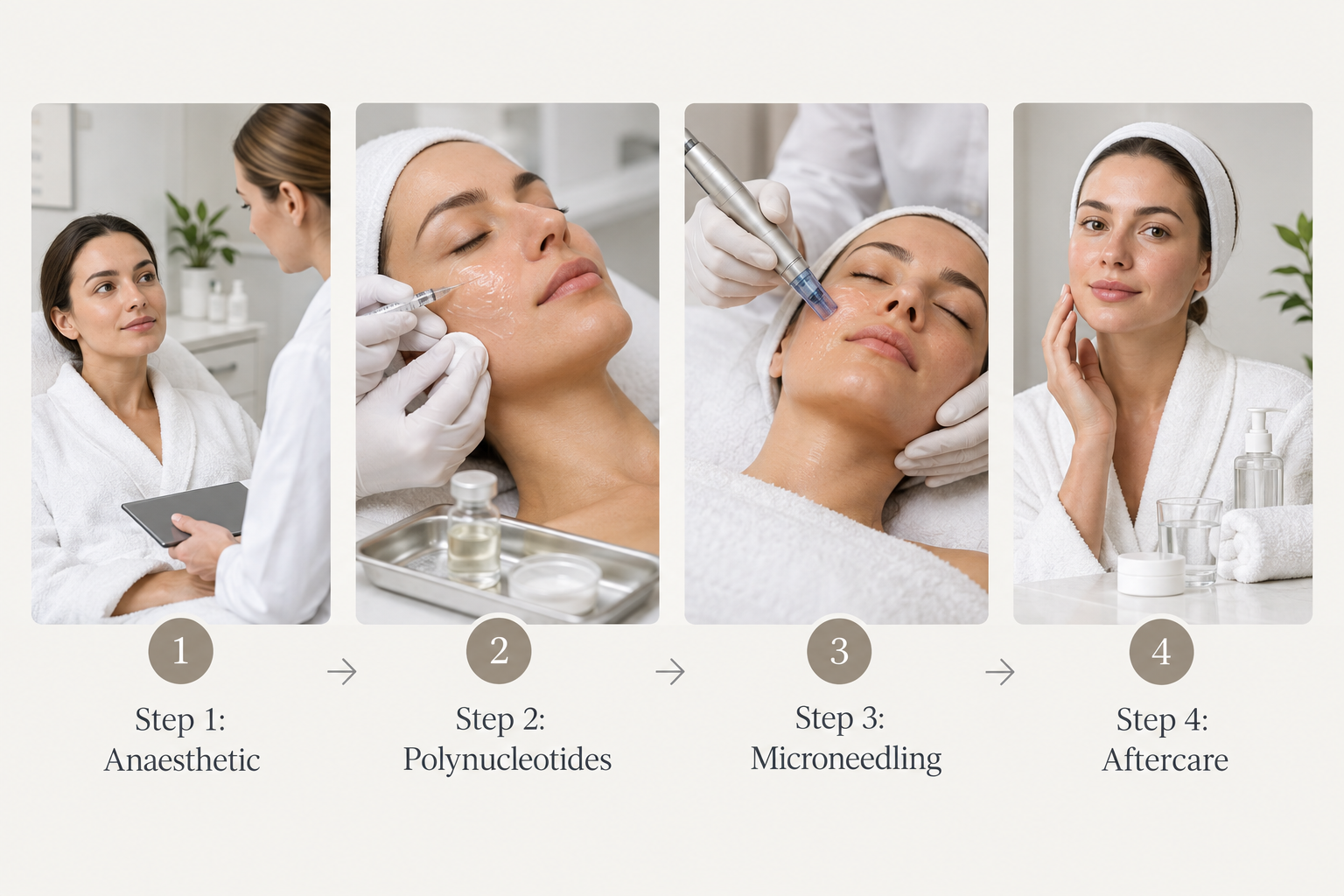
Depending on the protocol, polynucleotides may be injected into the dermis using fine needles before the microneedling device is applied, or a polynucleotide solution may be applied to the skin surface and worked in during the microneedling pass. Some practitioners use both approaches within the same session. The microneedling device is passed over the treatment area in a controlled pattern, with the depth adjusted according to the area being treated and the patient’s skin type and tolerance.
The full appointment typically takes between 60 and 90 minutes, including preparation time. Patients usually notice immediate redness and mild swelling, similar in appearance to moderate sunburn. The skin may feel warm, tight, or sensitive immediately after treatment.
Downtime and Recovery
Downtime following microneedling with polynucleotides is generally described as mild to moderate. Most patients experience redness and skin sensitivity for 24 to 72 hours after treatment, though this varies depending on needle depth, the number of passes, individual skin sensitivity, and the specific polynucleotide product used. Some patients may notice minor pinpoint bleeding, bruising at injection sites, or temporary swelling, particularly around the eyes or cheeks.
During the recovery period, practitioners typically advise avoiding direct sun exposure, heavy exercise, swimming, saunas, and the use of active skincare ingredients such as retinoids, AHAs, BHAs, and vitamin C until the skin barrier has recovered, usually around three to five days. A gentle cleanser, a fragrance-free moisturiser, and a broad-spectrum SPF are generally recommended as the core post-treatment skincare routine.
Makeup is usually best avoided for at least 24 hours after treatment to reduce the risk of introducing bacteria through the open micro-channels. Patients should follow their practitioner’s specific aftercare instructions, as protocols may differ between clinics.
When May Results Appear and How Long Might They Last?
Skin repair and collagen remodelling are gradual biological processes. Most patients notice an initial improvement in skin radiance and hydration within the first one to two weeks after treatment, partly due to the polynucleotide hydrating effect and partly due to the early inflammatory response resolving. Deeper improvements in skin texture, fine lines, and firmness typically develop over four to twelve weeks as new collagen matures.
A single session is unlikely to produce the full extent of possible improvement. Most practitioners recommend a course of three to four sessions spaced approximately four to six weeks apart, followed by maintenance treatments every three to six months depending on the patient’s skin condition and goals. Results are not permanent; the skin continues to age naturally, and the effects of collagen stimulation diminish over time without maintenance.
Individual results vary considerably depending on age, skin condition, lifestyle factors such as sun exposure and smoking, the specific protocol used, and the number of sessions completed. Patients with more advanced skin ageing or significant scarring may see more modest improvements than those with earlier-stage concerns.
Potential Risks and Side Effects
Microneedling with polynucleotides is generally considered to have a manageable safety profile when performed by a trained and qualified practitioner using appropriate equipment and sterile technique. However, as with any skin treatment, risks and side effects exist and should be understood before proceeding.
Common side effects include temporary redness, swelling, skin sensitivity, and minor bruising at injection sites. These typically resolve within a few days. Less common but possible adverse effects include:
- Infection: Micro-channels in the skin create a temporary entry point for bacteria. Strict sterile technique and appropriate aftercare significantly reduce this risk, but it cannot be eliminated entirely.
- Post-inflammatory hyperpigmentation (PIH): Patients with darker skin tones or a history of PIH may be at higher risk of temporary darkening of the treated area following microneedling. This risk should be discussed during consultation.
- Prolonged redness or sensitivity: Some patients experience sensitivity lasting longer than expected, particularly if the skin barrier is compromised or if aftercare instructions are not followed.
- Allergic or hypersensitivity reaction: Although polynucleotide products are highly purified, a reaction to the product or its excipients is possible. Patients with known fish or seafood allergies should inform their practitioner, as some polynucleotide products are derived from fish DNA.
- Herpes simplex reactivation: Microneedling can trigger cold sore outbreaks in patients with a history of oral or facial herpes simplex virus. Prophylactic antiviral medication may be recommended in such cases.
- Scarring: Rare but possible, particularly if the skin is treated aggressively or if aftercare is inadequate.
Patients should report any unusual symptoms, signs of infection, or prolonged adverse reactions to their practitioner promptly.
Who May Be Suitable for This Combination?
Microneedling with polynucleotides may be worth discussing with a qualified practitioner if you are experiencing concerns related to skin quality, texture, fine lines, or early skin laxity and are looking for a regenerative approach rather than a volumising or muscle-relaxing treatment. The combination may be particularly relevant for patients who want to address overall skin health rather than a single isolated concern.
Patients who may be considered suitable candidates generally include those who:
- have realistic expectations about gradual, progressive improvement rather than immediate dramatic change;
- are in good general health with no active skin infections or inflammatory skin conditions in the treatment area;
- are not pregnant or breastfeeding;
- are not taking medications that significantly impair wound healing or increase bleeding risk, such as certain anticoagulants;
- have discussed their full medical history, including any history of keloid scarring, autoimmune conditions, or blood disorders, with their practitioner.
Who May Not Be Suitable?
Certain factors may make this combination therapy unsuitable or require modification of the approach. A clinical assessment is essential to identify individual contraindications. Patients who may not be suitable include those with:
- active acne, rosacea flares, eczema, or psoriasis in the treatment area;
- a history of keloid or hypertrophic scarring;
- active skin infections, including cold sores, in or near the treatment area;
- known allergy to fish or seafood (relevant to fish-derived polynucleotide products);
- pregnancy or breastfeeding;
- certain blood-thinning medications or clotting disorders;
- recent use of isotretinoin (typically a waiting period of six to twelve months is advised before microneedling, though guidance varies);
- implanted electronic devices such as pacemakers in or near the treatment area if radiofrequency microneedling is being considered.
This list is not exhaustive. A qualified practitioner will conduct a thorough assessment before recommending treatment.
Alternatives to Consider
Microneedling with polynucleotides is one of several approaches to skin repair and regeneration. Depending on the specific concern and patient goals, a practitioner may discuss alternatives or complementary treatments such as:
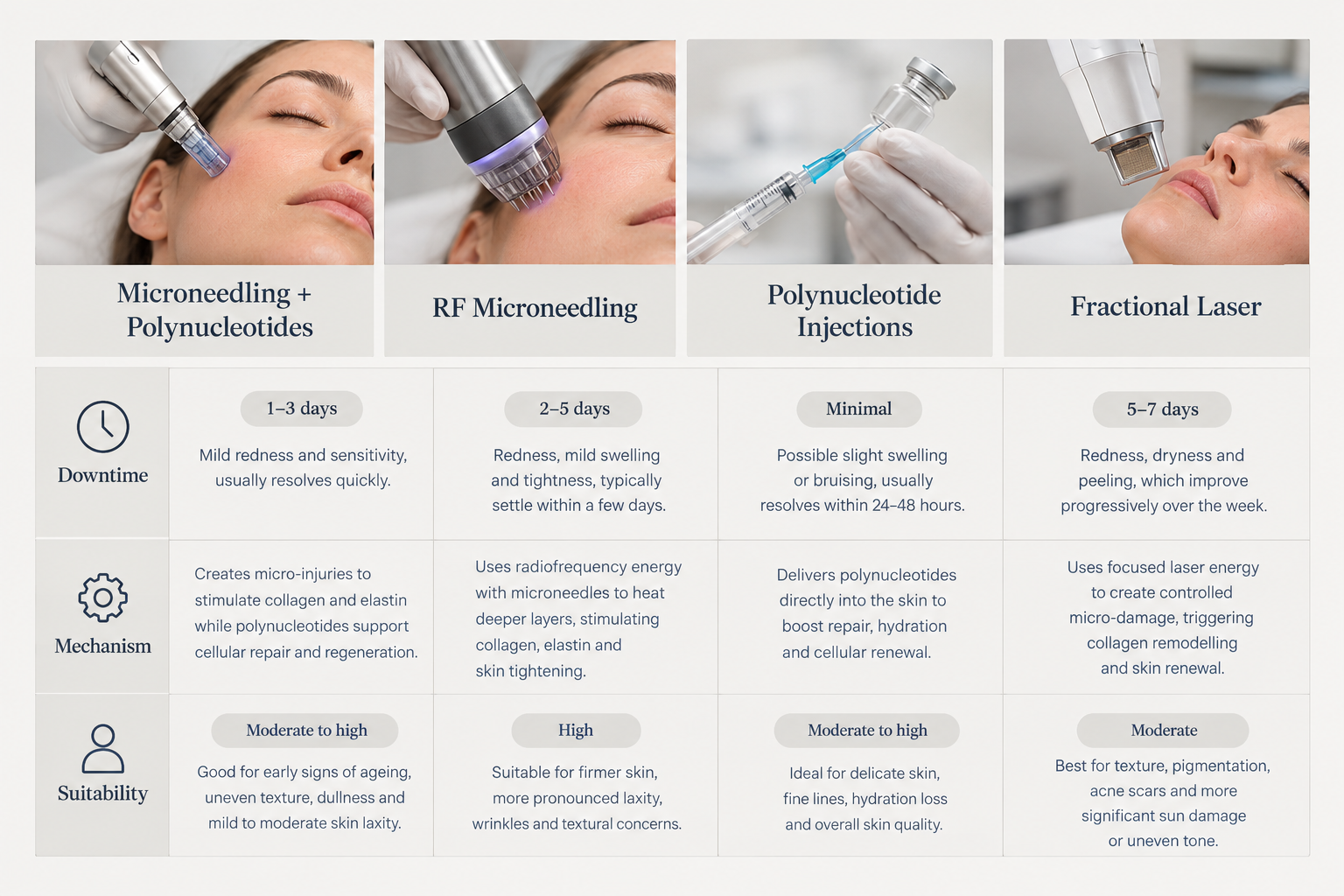
- Polynucleotide injections alone: For patients who want the biorevitalisation benefits of polynucleotides without the additional stimulation of microneedling, standalone PDRN injections may be appropriate.
- Microneedling with hyaluronic acid or growth factor serums: Some clinics use hyaluronic acid or platelet-rich plasma (PRP) in combination with microneedling as an alternative to polynucleotides.
- Radiofrequency microneedling: Devices that combine microneedling with radiofrequency energy deliver heat to the deeper dermis, which may produce more pronounced skin tightening effects. This approach has a different risk profile and is generally more suitable for skin laxity than for superficial texture concerns.
- Chemical peels: Medium-depth chemical peels can address skin texture, pigmentation, and fine lines through controlled exfoliation and stimulation of skin renewal. They may be used as an alternative or in sequence with microneedling.
- Laser skin resurfacing: Fractional laser treatments can address similar concerns to microneedling, often with more pronounced results for certain indications such as deeper scarring, but typically with longer downtime and a different risk profile.
- Profhilo or skin booster injections: Injectable hyaluronic acid skin boosters such as Profhilo work differently from polynucleotides but also aim to improve skin hydration, laxity, and quality through a series of injections.
The most appropriate treatment depends on the individual’s skin concerns, skin type, medical history, lifestyle, and goals. A practitioner experienced in multiple modalities is best placed to recommend a tailored approach.
The Evidence Base: What Does Research Currently Show?
Polynucleotides have been studied in wound healing, orthopaedics, and ophthalmology for several decades, and their use in aesthetic medicine has grown substantially over the past ten to fifteen years. Clinical studies on polynucleotide injections for facial skin quality, hydration, and fine lines show generally positive outcomes, with improvements in skin elasticity, hydration, and patient satisfaction reported across multiple small to medium-sized trials. However, many of these studies are limited by small sample sizes, short follow-up periods, and the absence of placebo controls.
Microneedling has a more established evidence base in aesthetic dermatology, particularly for acne scarring and skin texture. Systematic reviews and meta-analyses support its effectiveness for atrophic acne scars, and there is reasonable evidence for improvements in fine lines and skin quality with repeated sessions.
Evidence specifically for the combination of microneedling with polynucleotides is still developing. Early clinical observations and small studies suggest that the combination may produce additive or synergistic benefits compared with either treatment alone, but larger, well-controlled trials are needed before definitive conclusions can be drawn. Patients should approach claims about the combination with appropriate scepticism and discuss the current state of evidence with their practitioner.
Frequently Asked Questions
How many sessions of microneedling with polynucleotides are typically needed?
Most practitioners recommend an initial course of three to four sessions spaced four to six weeks apart. The exact number depends on the skin concern being addressed, the patient’s starting skin condition, and the response to initial treatments. Maintenance sessions every three to six months are often suggested to sustain results.
Is the treatment painful?
Topical anaesthetic cream is applied before treatment to reduce discomfort. Most patients describe the sensation during microneedling as mild pressure or a scratching feeling rather than sharp pain. Polynucleotide injections may cause brief stinging at the injection site. Discomfort levels vary between individuals and depend on needle depth and treatment area.
Can microneedling with polynucleotides be used on the body as well as the face?
Yes, both microneedling and polynucleotide treatments can be applied to body areas such as the neck, décolletage, hands, and scalp, depending on the concern. The combination may be used off-face, though protocols and expected outcomes may differ from facial treatment. A practitioner should assess suitability for each specific area.
How soon after treatment can I wear makeup?
Most practitioners advise waiting at least 24 hours before applying makeup to allow the micro-channels to close and reduce the risk of introducing bacteria or irritants into the skin. Some practitioners recommend waiting 48 hours. Follow the specific aftercare guidance provided by your clinic.
Is there a risk of the polynucleotide product causing an allergic reaction?
Polynucleotide products are highly purified, but a hypersensitivity reaction is possible. Patients with a known allergy to fish or seafood should inform their practitioner before treatment, as many polynucleotide products are derived from salmon or trout DNA. A patch test or allergy history review may be appropriate in some cases.
Can this combination be used alongside other aesthetic treatments?
Microneedling with polynucleotides can often be incorporated into a broader treatment plan that includes other aesthetic procedures, but timing and sequencing matter. For example, it is generally advisable to allow adequate recovery time between microneedling and treatments such as laser resurfacing or chemical peels. A practitioner can advise on appropriate intervals and combinations based on individual circumstances.
Will I see results after just one session?
Some patients notice improved skin radiance and hydration within one to two weeks of a single session, largely due to the polynucleotide hydrating effect. However, meaningful improvements in skin texture, fine lines, and firmness typically require a full course of treatments and develop gradually over several weeks to months as collagen remodelling progresses.
Is Microneedling with Polynucleotides the Right Skin Repair Approach for You?
Microneedling with polynucleotides represents a thoughtful combination of mechanical skin stimulation and biological tissue repair signalling. For patients seeking to improve skin quality, texture, hydration, and early signs of ageing through a regenerative rather than volumising approach, this combination therapy may be worth exploring. The treatments complement each other in mechanism, and early clinical observations are encouraging, though the evidence base for the specific combination continues to develop.
Realistic expectations are important. This is not a single-session transformation; it is a progressive skin repair protocol that requires commitment to a course of treatments and appropriate aftercare. Results vary between individuals, and the degree of improvement depends on factors including age, skin condition, lifestyle, and the number of sessions completed. The treatment is not suitable for everyone, and a thorough consultation with a qualified and experienced practitioner is the essential first step.
If you are considering microneedling with polynucleotides, look for a practitioner who can explain the specific protocol they use, discuss the current evidence honestly, assess your individual suitability, and provide clear aftercare guidance. A well-informed decision made in partnership with a qualified professional gives you the best foundation for a safe and satisfying outcome.