
What Causes Dark Circles Under Eyes: A Complete Guide to Periorbital Darkness
Dark circles under the eyes are one of the most common aesthetic concerns seen in clinical practice, yet they are frequently misunderstood. The term covers several distinct conditions that look similar but arise from very different mechanisms. Understanding what actually causes periorbital darkness in your specific case is the essential first step before considering any treatment, because an approach that works well for one cause may have little effect on another.
Key Takeaways
- Dark circles under the eyes have multiple distinct causes, including pigmentation, visible blood vessels, volume loss, and structural shadows — and these often overlap in the same person.
- Genetics, skin tone, age, lifestyle habits, and anatomy all contribute to periorbital darkness, meaning there is rarely a single simple explanation.
- Effective treatment depends on correctly identifying the underlying cause; a qualified practitioner should assess your specific situation before any intervention is recommended.
- Lifestyle modifications can reduce the appearance of dark circles in some cases, but structural or genetic causes typically require clinical assessment and targeted treatment.
- No single treatment corrects every type of dark circle, and results vary considerably between individuals.
Why Dark Circles Are More Complicated Than They Look
The under-eye area is one of the most anatomically complex regions of the face. The skin here is significantly thinner than elsewhere on the body, the underlying fat compartments are small and prone to age-related changes, and a dense network of blood vessels sits close to the surface. This combination means that multiple different processes can produce a similar darkened appearance, and in many patients more than one cause is present simultaneously. Clinicians often classify periorbital dark circles into subtypes — pigmented, vascular, structural, and mixed — because this distinction directly guides treatment selection. Recognising which subtype or combination applies to you is far more useful than simply searching for a universal remedy.
Pigmentation as a Cause of Under-Eye Darkness
Excess melanin — the pigment that gives skin its colour — deposited in the skin beneath the eyes is one of the most frequently identified causes of dark circles, particularly in people with medium to deeper skin tones. This type of periorbital hyperpigmentation can appear as a brown or greyish-brown discolouration and tends to be most visible in natural daylight. The darkness in this case sits within the skin itself rather than beneath it.
Several factors drive periorbital pigmentation. Post-inflammatory hyperpigmentation following repeated rubbing of the eyes, allergic reactions, or eczema can deposit excess melanin in the delicate periorbital skin. Sun exposure stimulates melanin production across the face, and the under-eye area is not exempt. Certain individuals also have a constitutional tendency toward periorbital melanosis — a genetically determined excess of pigment in this region that is present from early adulthood or even childhood and is particularly common in South Asian, Middle Eastern, and African skin types. In these cases, the darkness is not caused by lifestyle factors and does not respond meaningfully to sleep or hydration alone.
Pigmented dark circles can sometimes be distinguished from vascular ones using a simple clinical test: pressing gently on the skin with a finger. If the darkness does not blanch or lighten significantly under pressure, pigmentation is likely the dominant cause. If the colour fades noticeably, blood vessel visibility is more likely to be contributing.
Vascular Visibility and the Role of Blood Vessels
Because the skin beneath the eyes is exceptionally thin — often less than half a millimetre in some areas — the underlying blood vessels can show through and create a bluish, purplish, or reddish tint. This vascular component is a very common contributor to dark circles, particularly in people with fair or thin skin where the contrast between the vessel colour and the overlying skin is most pronounced.
The periorbital region has a rich venous network, and when blood pools or circulation is sluggish, the vessels become more prominent. This is why dark circles often appear worse after a poor night of sleep, during periods of fatigue, or when nasal congestion causes venous back-pressure around the eyes. Alcohol consumption and dehydration can also dilate blood vessels and worsen the appearance temporarily. Seasonal allergies are a well-recognised contributor: chronic nasal congestion impairs venous drainage from the periorbital area, and repeated eye rubbing causes local inflammation and vessel dilation.
Ageing compounds the vascular component because the skin progressively loses collagen and becomes thinner over time, making underlying vessels increasingly visible even without any change in the vessels themselves. Reduced skin thickness is therefore both an independent cause and an amplifier of vascular dark circles.
Volume Loss, Hollowness, and Structural Shadows
A significant proportion of what people perceive as dark circles is not actually a change in skin colour at all, but rather a shadow cast by a structural change in the face. The tear trough — the groove that runs from the inner corner of the eye toward the cheek — deepens as the fat pads beneath the eye diminish and descend with age. This creates a concavity that catches shadow, producing the appearance of darkness even when the skin itself has normal pigmentation and the blood vessels are not unusually prominent.
Volume-related periorbital darkness tends to worsen progressively with age and is often accompanied by a tired or hollowed appearance rather than a purely discoloured one. It is typically most noticeable in certain lighting conditions — particularly overhead or directional light — because the shadow effect depends on the angle of illumination. Patients with a naturally deep-set tear trough may notice this type of darkness from a relatively young age, as the structural predisposition is partly anatomical and partly genetic.
Distinguishing shadow-based darkness from true pigmentation or vascular discolouration is clinically important because the treatments differ substantially. Topical brightening agents or laser treatments aimed at pigmentation will not address a structural hollow, and filling a hollow will not correct genuine melanin excess in the skin.
Genetic and Hereditary Factors
Genetics play a meaningful role in periorbital darkness, and this is one reason why dark circles can appear in young, healthy, well-rested individuals who have no obvious lifestyle triggers. Inherited traits that contribute include skin thickness, the depth of the tear trough, the distribution of periorbital fat, the tendency toward periorbital melanosis, and the prominence of the underlying vasculature. If dark circles run in your family, it is likely that at least some of the structural or pigmentary factors described above have a hereditary basis.
Ethnicity also influences the pattern and severity of periorbital darkness. Constitutional periorbital melanosis is more prevalent in individuals with Fitzpatrick skin types III to VI, and the pigmentation in these cases can be deep within the dermis as well as at the surface, which affects how well it responds to topical treatments. Vascular dark circles, by contrast, tend to be more visible in lighter skin types where the contrast between vessel colour and skin tone is greater.
Lifestyle Factors That Worsen Dark Circles
While lifestyle alone rarely causes dark circles in the absence of an underlying structural or genetic predisposition, several habits can significantly worsen their appearance. Sleep deprivation is the most widely recognised trigger: insufficient sleep increases fluid retention around the eyes, reduces skin pallor, and may increase vascular congestion, all of which make periorbital darkness more visible. However, it is worth noting that sleep deprivation does not create dark circles where none exist — it amplifies existing ones.
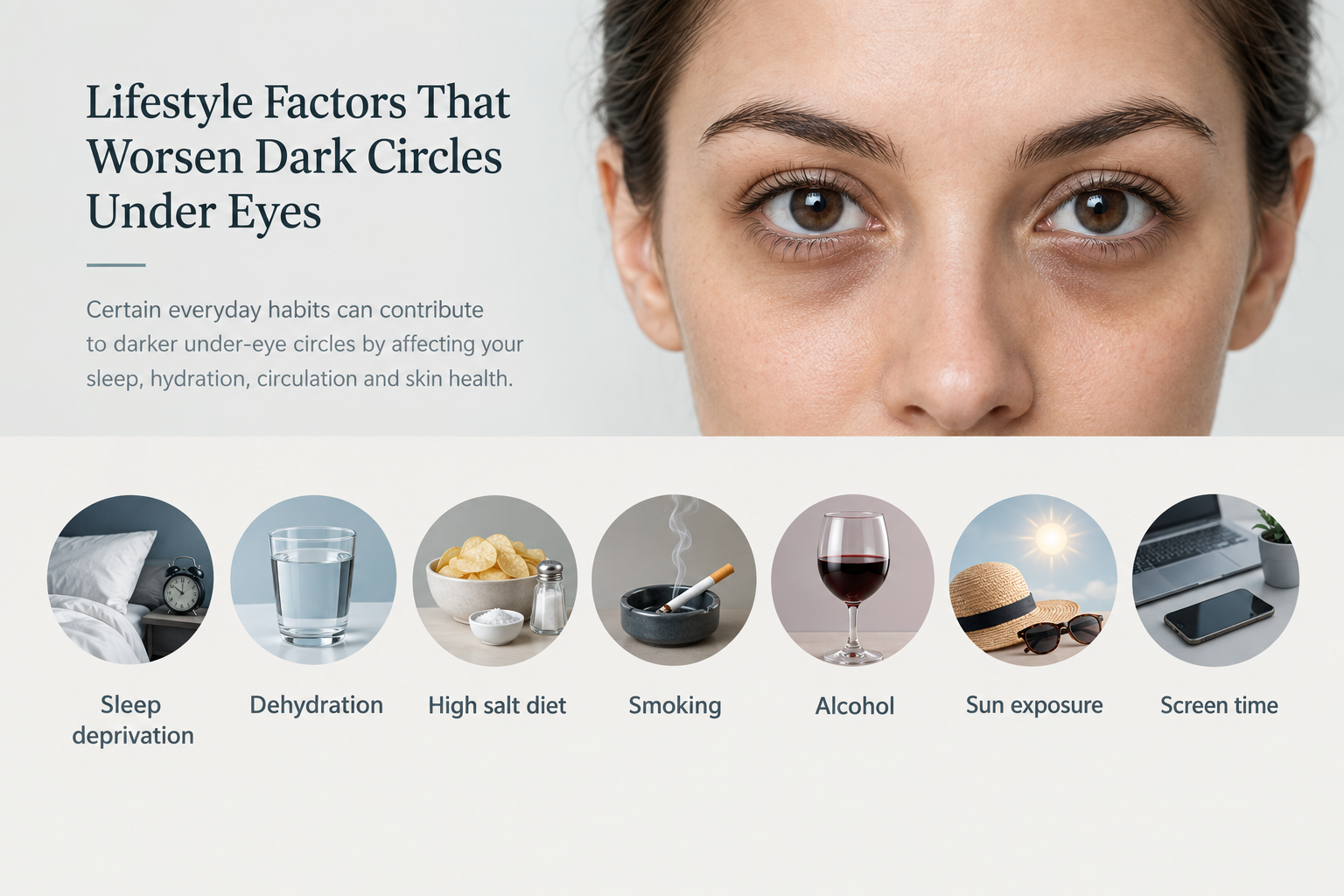
Chronic dehydration reduces skin plumpness and can make the under-eye area appear more sunken and shadowed. A diet high in salt promotes fluid retention, which can cause puffiness that paradoxically makes the dark area beneath the swelling appear more pronounced by contrast. Smoking accelerates collagen breakdown and impairs microcirculation, both of which worsen the appearance of the periorbital skin over time. Excessive alcohol consumption causes vasodilation and dehydration simultaneously, producing a temporary but noticeable worsening of vascular dark circles.
Prolonged screen time and eye strain can cause repeated squinting and rubbing, which may contribute to local inflammation and pigmentation over time. Sun exposure without adequate eye area protection stimulates melanin production and accelerates skin thinning in the periorbital region. Addressing these modifiable factors is a reasonable first step and may produce a meaningful improvement in some individuals, though it is unlikely to resolve dark circles that have a significant structural or genetic component.
Skin Thinning and the Effects of Ageing
Age-related changes in the periorbital area affect multiple tissue layers simultaneously and tend to worsen dark circles through several mechanisms at once. The skin loses collagen and elastin, becoming thinner and less able to conceal the underlying vasculature. The fat compartments beneath the eye reduce in volume and shift position, deepening the tear trough and creating structural shadows. Bone remodelling in the orbital rim can further alter the contour of the eye socket, changing the way light falls across the under-eye area.
These changes mean that dark circles which were mild or intermittent in younger years often become more persistent and pronounced from the mid-thirties onward. The mixed nature of age-related periorbital darkness — involving skin quality, volume, pigmentation, and vascularity together — is one reason why a single treatment approach is rarely sufficient for older patients and why a thorough clinical assessment is particularly important in this group.
Medical and Dermatological Conditions
In some cases, periorbital darkness is associated with an underlying medical or dermatological condition rather than being a purely cosmetic concern. Allergic rhinitis and perennial allergies are among the most common medical contributors: chronic nasal congestion impairs venous drainage from the periorbital region, and the resulting venous pooling creates a bluish discolouration sometimes called allergic shiners. Repeated eye rubbing in response to allergic itching also causes post-inflammatory pigmentation over time.
Atopic dermatitis and contact dermatitis affecting the eyelid skin can cause both acute inflammation and chronic post-inflammatory hyperpigmentation. Thyroid disorders, anaemia, and certain nutritional deficiencies — including iron and vitamin B12 — have been associated with periorbital darkness in some patients, though the evidence for these associations varies in quality. If dark circles appear suddenly, worsen rapidly, or are accompanied by other symptoms, a medical assessment is appropriate to exclude an underlying systemic cause before pursuing cosmetic treatment.
Puffiness, Fluid Retention, and the Relationship to Dark Circles
Under-eye puffiness and dark circles are distinct concerns that frequently coexist and can each make the other appear worse. Fluid accumulation beneath the eyes — whether from sleep position, salt intake, allergies, or lymphatic sluggishness — creates a raised area that casts a shadow immediately below it, mimicking or amplifying the appearance of dark circles. True fat prolapse, where the orbital fat herniates forward through a weakened orbital septum, creates a more permanent form of puffiness that does not resolve with lifestyle changes and may require surgical or non-surgical intervention.
Understanding whether puffiness is contributing to the appearance of darkness is clinically relevant because treatments targeting pigmentation or volume loss will not address fat prolapse, and vice versa. A practitioner assessing the under-eye area will typically evaluate both the presence and cause of puffiness alongside the nature of any discolouration.
Treatment Options Based on Cause
Because dark circles arise from different mechanisms, treatment selection should follow a careful assessment of the dominant cause or causes in each individual. No single treatment is universally effective, and realistic expectations are important.
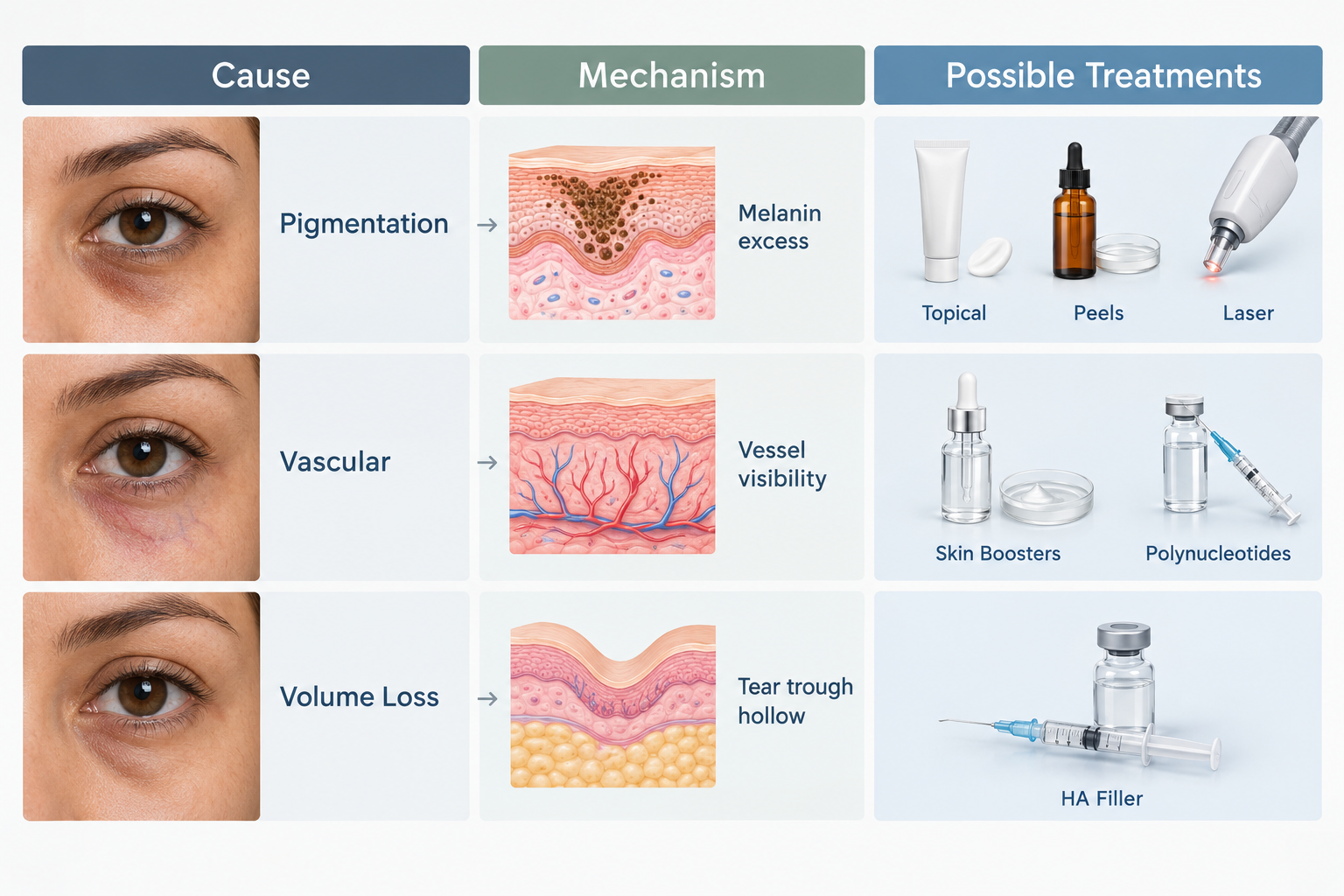
For pigmentation-dominant dark circles, options that may be considered include topical agents such as vitamin C, niacinamide, kojic acid, and retinoids, which can gradually reduce melanin production with consistent use over several months. Chemical peels and certain laser or light-based treatments may be appropriate for some patients, though the risk of post-inflammatory hyperpigmentation means that these approaches require careful patient selection, particularly in darker skin tones. Clinicians experienced in treating periorbital pigmentation in diverse skin types will typically take a cautious, staged approach.
For vascular dark circles, improving skin thickness and quality may help reduce the visibility of underlying vessels. Polynucleotide treatments and certain skin-boosting injectables have been used with the aim of improving periorbital skin quality and hydration, though evidence for their specific effect on vascular dark circles is still developing. Topical ingredients that support collagen production and strengthen the skin barrier may also offer modest benefit over time.
For volume-related darkness and tear trough hollowing, hyaluronic acid filler placed carefully in the tear trough region can reduce the shadow effect by restoring contour. This approach requires considerable technical skill and an understanding of periorbital anatomy, as the under-eye area carries specific risks including vascular complications and the Tyndall effect — a bluish discolouration that can occur if filler is placed too superficially. Not every patient is a suitable candidate, and a thorough assessment is essential before this treatment is considered.
For mixed-cause dark circles, a combination approach addressing more than one contributing factor may be appropriate, and this is often the situation in patients over forty. The sequence and combination of treatments should be guided by a qualified practitioner with experience in periorbital aesthetics.
Frequently Asked Questions
Can dark circles be permanently removed?
Permanent removal is not a realistic expectation for most people. Treatments can meaningfully reduce the appearance of dark circles, but because many of the underlying causes — including genetics, skin ageing, and structural anatomy — are ongoing processes, maintenance is usually required. Some pigmentation treatments may produce long-lasting improvement if sun protection is maintained consistently, but results vary between individuals.
Do eye creams actually work for dark circles?
Topical eye creams can offer modest improvement for certain types of dark circles, particularly those with a pigmentation or skin quality component. Ingredients such as vitamin C, retinol, caffeine, niacinamide, and peptides have evidence supporting their use, though the concentration of active ingredients in over-the-counter products is often limited. Eye creams are unlikely to correct structural hollowing or significant vascular visibility on their own.
Why are my dark circles worse in the morning?
Dark circles often appear more pronounced in the morning due to a combination of factors: fluid redistribution during sleep can cause puffiness that creates shadow, venous congestion may be greater after lying flat for several hours, and skin pallor from sleep can make underlying vessels more visible. For most people, the appearance improves somewhat within an hour or two of waking as circulation normalises.
Are dark circles a sign of a health problem?
In the majority of cases, dark circles are a cosmetic concern rather than a sign of illness. However, if they appear suddenly, worsen rapidly, or are accompanied by other symptoms such as fatigue, breathlessness, or changes in skin texture, it is worth discussing them with a doctor to exclude conditions such as anaemia, thyroid dysfunction, or allergic disease.
Can children have dark circles?
Yes. Dark circles in children are most commonly caused by allergic rhinitis, constitutional periorbital melanosis, or a naturally thin and translucent periorbital skin. They are rarely a sign of serious illness in otherwise healthy children, but persistent or worsening dark circles in a child should be assessed by a paediatrician or GP to identify any contributing medical cause.
Does diet affect dark circles?
Diet can influence the appearance of dark circles to a limited degree. High salt intake promotes fluid retention and puffiness, which can worsen the shadowed appearance. Adequate hydration supports skin plumpness. Iron and vitamin B12 deficiency have been associated with periorbital darkness in some studies, though the evidence is not conclusive. A balanced diet supports overall skin health but is unlikely to resolve dark circles that have a significant structural or genetic basis.
Understanding Your Dark Circles Before Seeking Treatment
Dark circles under the eyes are rarely caused by a single factor, and the most important step before pursuing any treatment — whether topical, injectable, or procedural — is understanding which mechanism or combination of mechanisms is responsible in your specific case. Pigmentation, vascular visibility, structural hollowing, skin thinning, and lifestyle factors each require a different approach, and a treatment well-suited to one cause may offer little benefit for another.
A consultation with a qualified aesthetic practitioner or dermatologist who has experience in periorbital assessment can help identify the dominant cause and discuss which options may be realistic for your situation. Expectations should be grounded in what is achievable: meaningful improvement is possible for many people, but complete elimination of dark circles is not a realistic goal for most. Addressing modifiable lifestyle factors — sleep, hydration, sun protection, and allergy management — is a sensible starting point that costs nothing and may reduce the severity of the concern before any clinical intervention is considered.


