
Natural-Looking Lip Filler: What to Expect, How It Works, and Whether It’s Right for You
Lip filler has a reputation problem. Many people associate it with overfilled, unnatural results — yet the majority of patients who seek lip enhancement are specifically looking for the opposite: a subtle improvement that looks like their own lips, just better. Achieving that outcome depends less on the product itself and more on the practitioner’s technique, the amount of filler used, and how well the treatment is tailored to the individual’s anatomy and goals. This article explains how natural-looking lip filler works, what influences the result, what the treatment involves, and what realistic expectations look like.
Key Takeaways
- Natural-looking lip filler results depend primarily on practitioner technique, product selection, and the volume of filler used — not simply on choosing a particular brand.
- Hyaluronic acid fillers are the most commonly used products for lip enhancement and are reversible with an enzyme called hyaluronidase.
- Small, staged treatments generally produce more natural outcomes than attempting significant volume change in a single session.
- Swelling after lip filler is normal and temporary; final results typically become visible within one to two weeks.
- Risks exist with any injectable treatment and should be discussed thoroughly with a qualified practitioner before proceeding.
What Is Lip Filler and How Does It Work?
Lip filler refers to injectable treatments used to add volume, improve shape, define the lip border, or restore lost fullness to the lips. The most widely used products contain hyaluronic acid (HA), a naturally occurring substance found in skin and connective tissue. When injected into the lips, hyaluronic acid attracts and binds water molecules, creating a soft, cushioned effect that can add subtle volume or more noticeable fullness depending on the amount used and where it is placed.
Hyaluronic acid lip fillers are available in different formulations with varying thicknesses, or rheological properties. Thinner, more fluid formulations are generally preferred for delicate areas such as the lip border and fine lines around the mouth, while slightly firmer products may be used to add body to the body of the lip. The choice of formulation is one of several factors a practitioner considers when planning a treatment aimed at natural-looking results.
Unlike permanent fillers, hyaluronic acid is gradually broken down by the body over time. This temporary nature is considered an advantage for most patients, as it allows results to be adjusted and, if necessary, reversed. Hyaluronidase is an enzyme that can dissolve hyaluronic acid filler relatively quickly, which provides a meaningful safety option that is not available with permanent or semi-permanent alternatives.
What Makes Lip Filler Look Natural?
The appearance of lip filler results is shaped by several interconnected factors. Understanding these helps explain why two patients receiving the same product can end up with very different outcomes.
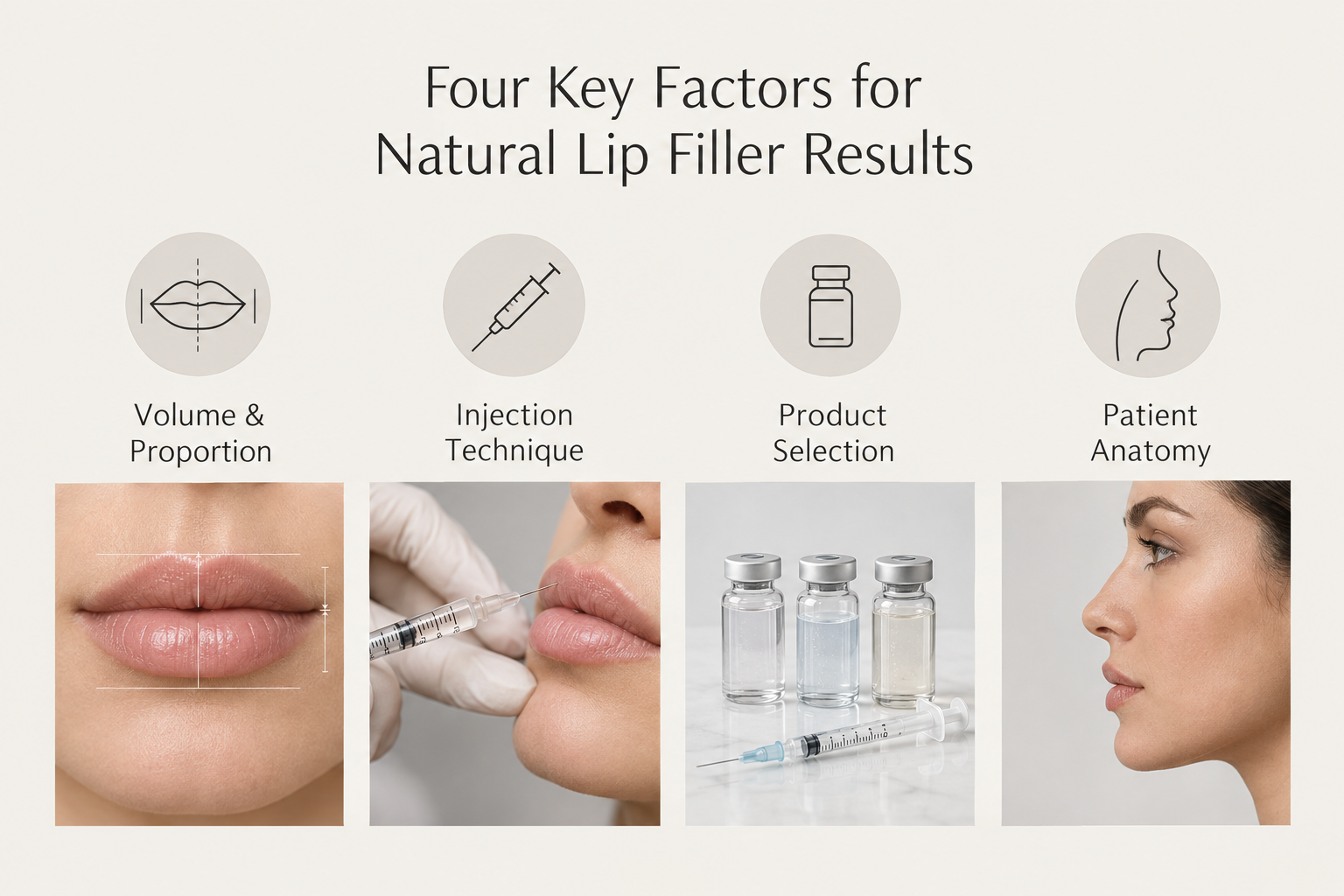
Volume and Proportion
One of the most common reasons lip filler looks unnatural is the use of too much product. The lips exist in proportion to the rest of the face, and results that respect the individual’s facial structure tend to look more harmonious. A practitioner focused on natural enhancement will typically assess the ratio between the upper and lower lip, the relationship of the lips to the nose and chin, and the patient’s baseline anatomy before deciding how much filler to use. For many patients, 0.5 ml to 1 ml of filler per session is sufficient for a subtle improvement, though individual needs vary.
Injection Technique
Where and how filler is placed has a significant influence on the final result. Techniques vary and may include linear threading along the lip border to define the vermilion edge, small bolus injections to add volume to specific areas, or a combination of approaches. Experienced practitioners adapt their technique to the patient’s anatomy rather than applying a single method to every case. Placement that respects the natural anatomy of the lip — including the Cupid’s bow, the philtrum columns, and the natural fullness of the central lip — tends to produce results that look like an enhancement of the patient’s own features rather than an addition to them.
Product Selection
Different hyaluronic acid filler formulations behave differently in tissue. Products designed specifically for lip use are generally softer and more pliable than those used for deeper facial volume or structural support. Using a product that is too firm for the lips can create an unnatural texture or stiffness. A practitioner familiar with the range of available products will select one appropriate for the specific goal — whether that is subtle hydration, border definition, or modest volume addition.
Patient Anatomy and Starting Point
Natural-looking results are easier to achieve in patients who are starting with lips that have reasonable symmetry and proportion. Patients with significant asymmetry, previous filler that has not fully dissolved, or structural concerns may require more careful planning. In some cases, dissolving existing filler before retreating allows a practitioner to work with a cleaner baseline, which can improve the final outcome.
What the Treatment Involves
A lip filler appointment typically begins with a consultation, either at the same visit or separately, during which the practitioner assesses the patient’s lips, discusses their goals, reviews their medical history, and explains what is and is not achievable. Photographs are often taken before treatment for reference and comparison.
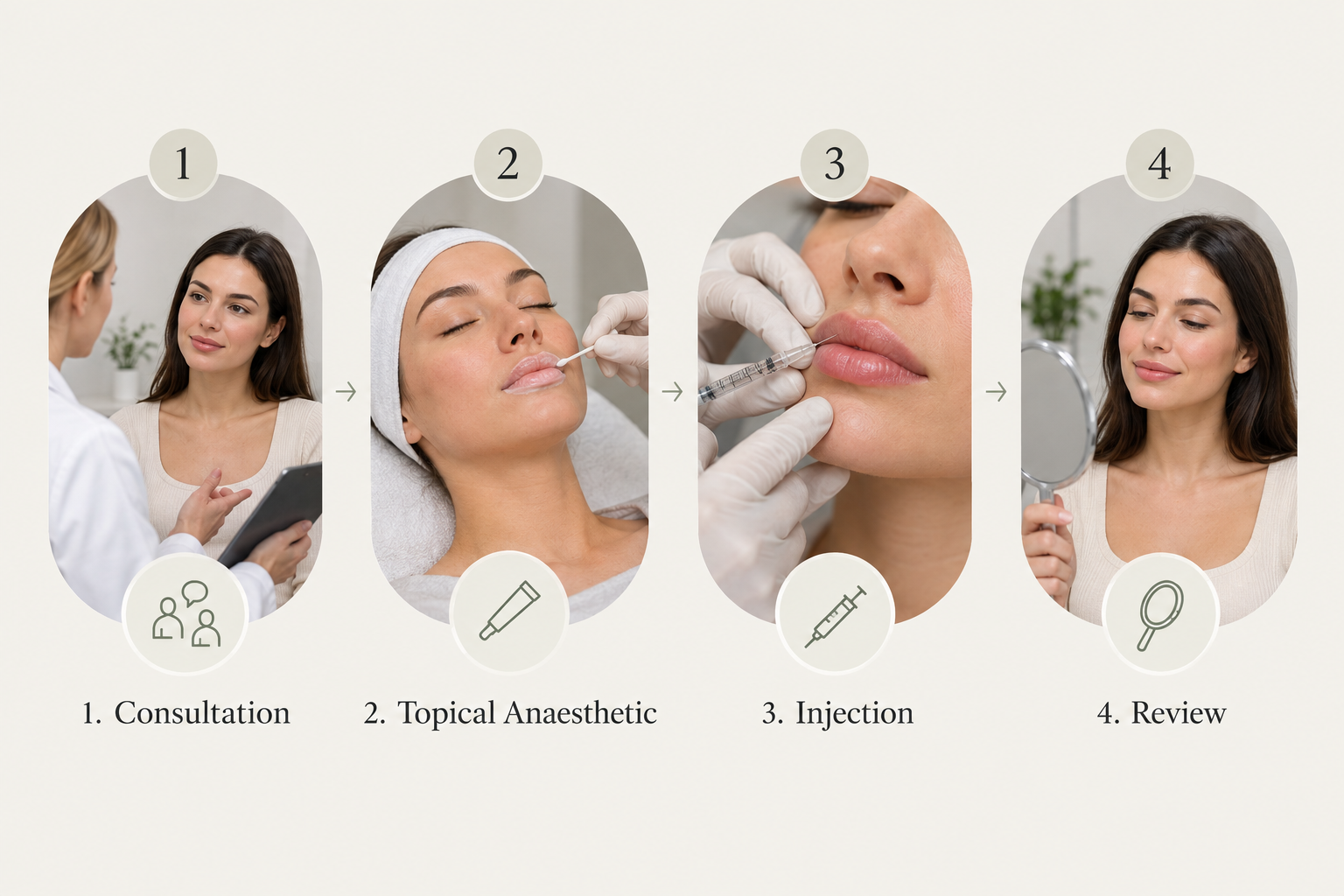
Before injecting, most practitioners apply a topical anaesthetic cream to the lips and surrounding area. This is left in place for around 15 to 20 minutes to reduce discomfort. Many hyaluronic acid lip fillers also contain lidocaine, a local anaesthetic, within the product itself, which further reduces discomfort during injection. Despite these measures, some patients find lip injections moderately uncomfortable, particularly along the lip border. The injections themselves typically take between 15 and 30 minutes.
After the filler is placed, the practitioner will usually gently massage the area to distribute the product evenly and check the result. Patients are generally able to see an immediate change, though the appearance at this stage is not representative of the final result due to swelling.
Recovery, Swelling, and When Results Appear
Swelling after lip filler is normal and expected. The lips are a highly vascular area with a rich blood supply, which makes them particularly prone to swelling and bruising after injection. Most patients experience noticeable swelling for the first two to three days, with significant improvement by the end of the first week. Final results, once swelling has fully resolved, are typically visible at around ten to fourteen days after treatment.
Bruising is also common and may appear at injection sites. It usually resolves within one to two weeks. Tenderness and firmness in the lips during the first few days are normal as the filler settles. Patients are generally advised to avoid strenuous exercise, excessive heat such as saunas or hot baths, alcohol, and pressure on the lips for at least 24 to 48 hours after treatment. Sleeping with the head slightly elevated during the first night may help reduce swelling.
Because swelling can temporarily make results appear more dramatic than intended, patients are encouraged not to judge the outcome until the two-week mark. If at that point the result does not meet expectations, a review appointment allows the practitioner to assess whether a small additional amount of filler would be appropriate, or whether any adjustment is needed.
How Long Does Lip Filler Last?
Hyaluronic acid lip filler is temporary. Results typically last between six and twelve months, though this varies between individuals. The lips are a highly mobile area — they move constantly during speaking, eating, and facial expression — which means filler in this location tends to break down more quickly than filler placed in less mobile areas of the face.
Factors that influence longevity include the specific product used, the amount injected, the individual’s metabolism, and lifestyle factors such as sun exposure and smoking. Some patients find their results last closer to six months; others may retain noticeable results for up to a year or slightly longer. Maintenance treatments are typically needed to sustain the effect over time.
It is worth noting that repeated treatments over time do not necessarily require the same volume of filler each time. Some patients find that after several sessions, their lips retain a degree of improvement even as the filler gradually dissolves, though this varies and should not be assumed.
Risks and Side Effects
Lip filler is a medical procedure and carries risks that should be understood before treatment. Common side effects include swelling, bruising, tenderness, and temporary asymmetry. These are generally expected and resolve without intervention.
Less common but more significant risks include:
- Lumps or irregularities: Filler that is not evenly distributed can create visible or palpable lumps. These may resolve on their own or may require massage or, in some cases, dissolution with hyaluronidase.
- Infection: Any injectable procedure carries a small risk of infection. Signs include increasing redness, warmth, pain, or discharge and should be assessed promptly by a medical professional.
- Allergic reaction: True allergy to hyaluronic acid is rare, but reactions to other components of the product, including lidocaine, are possible.
- Tyndall effect: Superficial placement of filler can cause a bluish discolouration of the skin, known as the Tyndall effect. This is more common in thin-skinned areas and can usually be treated with hyaluronidase.
- Vascular occlusion: This is a rare but serious complication in which filler is inadvertently injected into or compresses a blood vessel, potentially restricting blood flow to surrounding tissue. Symptoms include sudden blanching, pain, or skin colour changes and require immediate medical attention. Experienced practitioners are trained to recognise and manage this complication, and the reversibility of hyaluronic acid filler with hyaluronidase is an important safety factor in this context.
- Herpes reactivation: Patients with a history of cold sores (herpes simplex) may experience a flare-up following lip injections. Practitioners may recommend antiviral medication before treatment for patients with a relevant history.
The risk profile of lip filler is influenced by the practitioner’s training, experience, and knowledge of facial anatomy. Choosing a qualified and experienced injector — ideally a medical professional with specific training in facial aesthetics — is one of the most important steps a patient can take to reduce risk.
Who May Be Suitable for Natural Lip Filler
Lip filler may be appropriate for adults who want to enhance the appearance of their lips in a way that looks natural and proportionate. Common goals include adding modest volume to thin lips, improving definition along the lip border, correcting mild asymmetry, or restoring volume that has been lost with age. Patients who approach treatment with realistic expectations and a clear understanding of what filler can and cannot achieve tend to be the most satisfied with their results.
A clinical assessment is required before treatment to determine individual suitability. Patients who may not be suitable, or who may need additional consideration, include those who:
- are pregnant or breastfeeding;
- have active infection, cold sores, or inflammation in or around the lips;
- have a known allergy to hyaluronic acid or lidocaine;
- have certain autoimmune conditions or are taking medications that affect bleeding or immune function;
- have unrealistic expectations about the degree of change achievable;
- have had previous lip procedures that may affect how new filler behaves.
Age is also a relevant consideration. Most reputable practitioners will not treat patients under 18 years of age, and some will only treat patients over 21. Regulatory requirements and professional guidelines vary by country.
Alternatives to Lip Filler
For patients who want to improve the appearance of their lips without injectable filler, or who want to explore other options alongside filler, several alternatives exist.
Lip Flip with Botulinum Toxin
A lip flip involves injecting a small amount of botulinum toxin into the orbicularis oris muscle around the upper lip. This relaxes the muscle slightly, allowing the upper lip to roll outward and appear slightly fuller without adding volume. The effect is subtle and temporary, typically lasting two to three months. A lip flip does not add volume and is not suitable for patients who want a significant size increase, but it can be a useful option for those who want a more natural-looking upper lip or who are hesitant about filler.
Skin Boosters and Lip Hydration Treatments
Skin booster injections, which use highly diluted hyaluronic acid, can improve the texture, hydration, and fine lines of the lip area without adding noticeable volume. These treatments are sometimes used in combination with lip filler or as a standalone option for patients whose primary concern is lip quality rather than size.
Polynucleotide Treatments
Polynucleotide (PDRN) injections are an emerging option for improving skin quality and hydration in the perioral area. Evidence for their use specifically in the lips is still developing, and they are not a direct substitute for volume-adding filler, but they may be relevant for patients focused on skin quality improvement.
Permanent and Semi-Permanent Options
Permanent lip augmentation options exist, including surgical implants and fat transfer. These carry different risk profiles and are generally considered more appropriate for patients with specific structural concerns rather than those seeking subtle enhancement. Semi-permanent fillers are available but are generally approached with more caution due to the reduced ability to reverse or adjust results.
Choosing a Practitioner for Natural Results
The single most important factor in achieving natural-looking lip filler results is the skill and judgment of the practitioner performing the treatment. Patients are encouraged to research practitioners carefully, looking for evidence of relevant medical qualifications, specific training in facial aesthetics, and a portfolio of results that reflects the aesthetic they are seeking.
During a consultation, a practitioner focused on natural outcomes should listen carefully to the patient’s goals, assess the individual’s anatomy, explain what is realistically achievable, and be willing to recommend a conservative approach — including starting with less filler than the patient might initially request. A practitioner who encourages a staged approach, offers a review appointment, and is transparent about risks is generally a more reliable choice than one who promises dramatic transformation in a single session.
Patients should also feel comfortable asking questions. A qualified practitioner will welcome discussion about the products being used, the technique planned, the expected recovery, and what to do if a complication arises.
Frequently Asked Questions
How much filler is needed for a natural look?
This depends on the individual’s starting point and goals. Many patients achieve a natural enhancement with 0.5 ml to 1 ml of hyaluronic acid filler per session. Starting with a smaller amount and reviewing the result before adding more is a common approach for patients who want subtle results. The appropriate volume should be determined by a practitioner after assessing the individual’s anatomy.
Will lip filler look obvious straight after treatment?
Immediately after treatment, the lips will appear swollen and may look more dramatic than the intended final result. This is due to normal post-injection swelling rather than the filler itself. Most swelling resolves within one to two weeks, after which the true result becomes visible. Patients should avoid judging the outcome during the first week.
Can lip filler be dissolved if I don’t like the result?
Yes. Hyaluronic acid filler can be dissolved using an enzyme called hyaluronidase. This is one of the key advantages of HA-based products over permanent alternatives. Dissolution is generally effective but may require more than one treatment session depending on the amount of filler present. It is important to have this procedure performed by a qualified practitioner.
Does lip filler hurt?
Most patients experience some discomfort during lip filler injections. Topical anaesthetic cream applied before treatment and lidocaine within the filler product itself help to reduce pain. The level of discomfort varies between individuals. The lips are a sensitive area, and some patients find the injections more uncomfortable than others. The procedure is typically brief, which limits the duration of any discomfort.
How long after lip filler can I wear lipstick?
Most practitioners advise avoiding lipstick and other lip products for at least 24 hours after treatment to reduce the risk of introducing bacteria to the injection sites. Specific aftercare guidance should be provided by the treating practitioner.
What is the difference between lip filler and a lip flip?
Lip filler uses hyaluronic acid to add volume and shape to the lips. A lip flip uses botulinum toxin to relax the muscle around the upper lip, causing it to roll slightly outward and appear fuller without adding volume. The two treatments have different mechanisms, different results, and different durations. They can sometimes be used together, but this should be discussed with a practitioner based on individual goals.
Is there a risk of looking overdone over time with repeated treatments?
Repeated filler treatments can lead to accumulation of product if filler is added before previous filler has fully dissolved. This is one reason why some practitioners recommend dissolving existing filler periodically and starting fresh, rather than adding to previous treatments indefinitely. Discussing a long-term maintenance plan with a practitioner helps manage this risk.
Is Natural Lip Filler the Right Choice for You?
Natural-looking lip filler is achievable for many patients, but the outcome depends heavily on the practitioner’s skill, the technique used, the product selected, and the volume injected. Filler itself is a tool — the result it produces reflects the judgment and expertise of the person using it as much as the product’s properties.
For patients who want a subtle enhancement — more definition, a touch of added fullness, or a gentle restoration of volume lost with age — hyaluronic acid lip filler can be a well-suited option when performed conservatively by a qualified practitioner. The reversibility of HA filler provides a meaningful safety net, and a staged approach allows results to be built gradually rather than risking an outcome that is difficult to correct.
Patients who are uncertain, who have had unsatisfactory results previously, or who want to explore less invasive options first may find that alternatives such as a lip flip or skin booster treatment are worth discussing. A thorough consultation with a qualified aesthetic practitioner is the most reliable starting point for understanding which approach, if any, is appropriate for your individual anatomy, goals, and medical history.


