
How Long Do Hair Transplants Last? Longevity, Results & What to Expect
Hair transplant surgery is one of the most significant investments a person can make in their appearance, so understanding how long the results may last is a reasonable and important question before committing to the procedure. The short answer is that transplanted hair follicles are generally considered permanent, but the full picture is more nuanced than that single word suggests. Factors including the surgical technique used, the progression of underlying hair loss, and individual biology all influence how satisfying and durable the outcome will be over time.
Key Takeaways
- Transplanted hair follicles taken from the donor area are generally resistant to the hormone DHT, which means they tend to retain their growth characteristics long-term and are not expected to fall out in the same way as hair lost to androgenetic alopecia.
- The longevity of a hair transplant depends heavily on the continued progression of native hair loss, the quality of the donor supply, the surgical technique, and how well aftercare is followed.
- Most patients see mature, stable results within 12 to 18 months after surgery, though individual timelines vary.
- A hair transplant does not stop ongoing hair loss in non-transplanted areas, so additional procedures or medical treatments such as finasteride or minoxidil may be needed to maintain overall density over time.
- Realistic expectations, thorough pre-operative assessment, and choosing a qualified surgeon are among the most important factors in achieving a durable outcome.
What Is a Hair Transplant and How Does It Work?
A hair transplant is a surgical procedure in which hair follicles are harvested from a donor area, typically the back and sides of the scalp where hair is genetically resistant to loss, and relocated to areas of thinning or baldness. The two most widely used techniques are Follicular Unit Transplantation (FUT) and Follicular Unit Extraction (FUE). In FUT, a strip of scalp is removed and dissected into individual follicular units under magnification. In FUE, individual follicular units are extracted one by one using a small circular punch tool, leaving tiny circular scars rather than a linear one.
Both techniques rely on the same biological principle: donor follicles from the permanent zone at the back and sides of the scalp carry a genetic resistance to dihydrotestosterone (DHT), the androgen primarily responsible for pattern hair loss. When these follicles are transplanted to a thinning area, they are expected to retain their DHT-resistant characteristics and continue producing hair in their new location. This principle, known as donor dominance, is the scientific foundation for why hair transplant results are generally described as long-lasting.
Are Hair Transplant Results Truly Permanent?
The transplanted follicles themselves are generally considered permanent in the sense that they are not expected to miniaturise and fall out due to androgenetic alopecia, provided they were correctly harvested from the true permanent donor zone. Clinical evidence and long-term patient follow-up consistently support the durability of well-placed grafts over many years. However, calling a hair transplant result simply “permanent” can be misleading without important context.
First, the transplanted follicles still age normally. Hair density, texture, and calibre can change gradually over decades, just as they do in any area of the scalp. Second, the surrounding native hair that was not transplanted continues to be subject to ongoing genetic hair loss. This means that even if the transplanted area remains stable, the overall appearance of the scalp can change as neighbouring hair thins. A hairline that looks natural at age 35 may appear less natural at age 55 if the surrounding hair has continued to recede significantly. Third, a small percentage of transplanted grafts may not survive the procedure, typically due to poor handling, inadequate blood supply, or technical factors during surgery.
For these reasons, most experienced hair restoration surgeons prefer to describe results as long-lasting rather than unconditionally permanent, and they emphasise the importance of planning for future hair loss at the time of the initial procedure.
What Affects How Long a Hair Transplant Lasts?
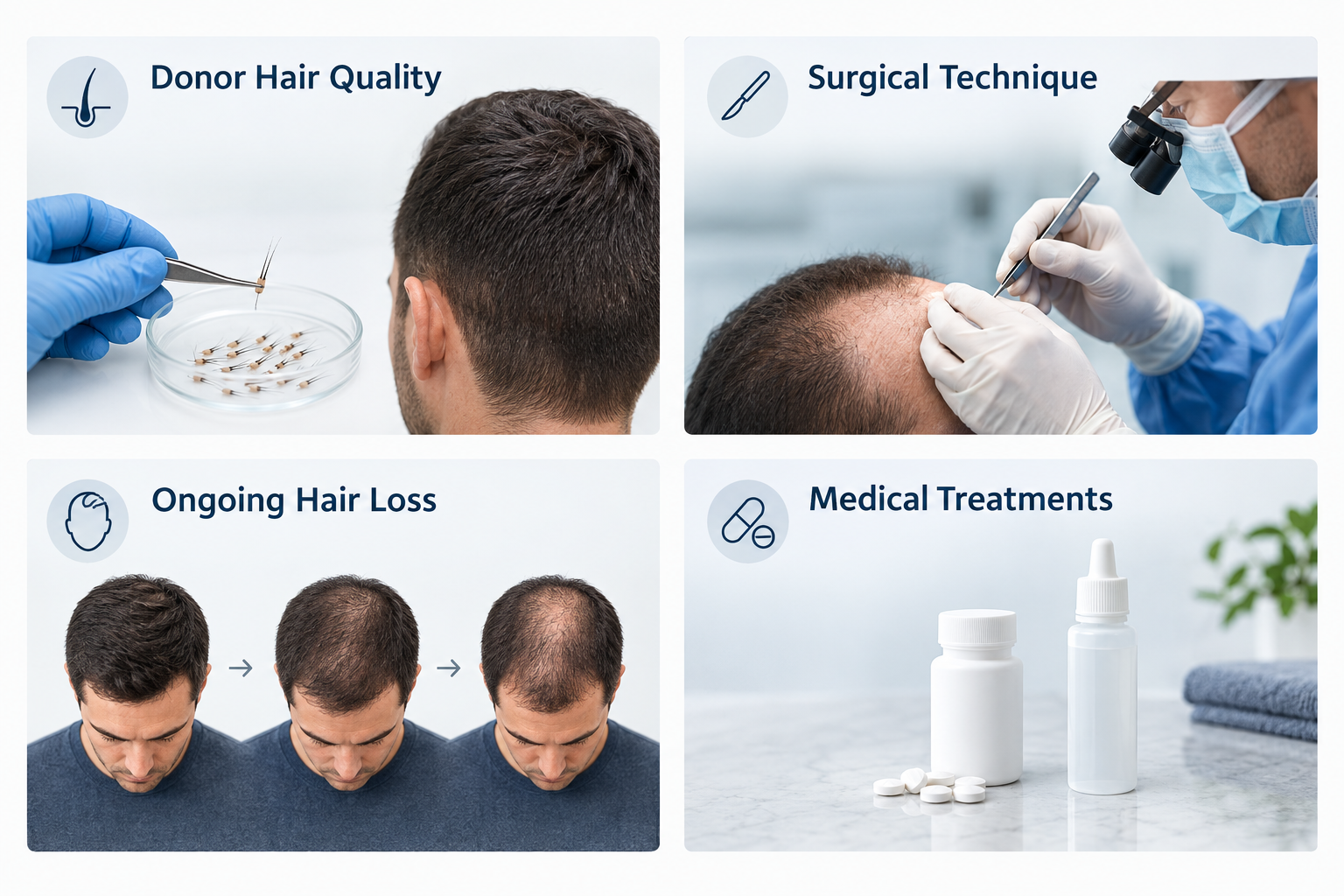
Several interconnected factors influence the durability and overall satisfaction with hair transplant results over time. Understanding these factors helps set realistic expectations before surgery.
Donor Hair Quality and Supply
The density, calibre, and total number of available donor follicles are among the most important determinants of long-term outcome. Patients with a dense, stable donor area have more grafts available for redistribution and may achieve better coverage. Patients with a limited donor supply face a finite resource: once follicles are harvested, they cannot be replaced. Over-harvesting the donor zone can compromise both the appearance of the donor area and the availability of grafts for future procedures.
Surgical Technique and Graft Handling
The survival rate of transplanted grafts depends significantly on how carefully follicles are harvested, stored, and implanted. Follicles are sensitive to temperature, desiccation, and mechanical trauma during the procedure. Clinics that use experienced surgical teams, appropriate storage solutions, and minimise the time grafts spend outside the body tend to achieve higher graft survival rates. The angle, depth, and density of implantation also affect how naturally the transplanted hair grows and how well it integrates with existing hair.
The Extent and Pattern of Ongoing Hair Loss
Androgenetic alopecia is a progressive condition. A hair transplant addresses the hair loss that has already occurred but does not halt the loss of non-transplanted follicles. Patients who undergo surgery at a young age, particularly before their hair loss pattern has stabilised, face a higher risk of the overall result looking unnatural or insufficient as surrounding hair continues to thin. Surgeons typically recommend waiting until hair loss has stabilised or using medical treatments to slow progression before or after surgery.
Post-Operative Care and Lifestyle
Following aftercare instructions in the weeks after surgery is important for graft survival. Activities that increase scalp trauma, excessive sun exposure, smoking, and poor nutrition can all negatively affect healing and follicle survival. Smoking in particular is associated with reduced blood flow to the scalp, which may impair graft take. Long-term scalp health, including managing conditions such as seborrhoeic dermatitis or scalp inflammation, also plays a role in maintaining results.
Use of Adjunctive Medical Treatments
Medications such as finasteride (an oral DHT-blocking medication) and minoxidil (a topical or oral treatment that prolongs the hair growth cycle) are commonly used alongside hair transplant surgery. These treatments do not affect the transplanted follicles directly but can help preserve the remaining native hair, which significantly influences how the overall result looks over time. Patients who use these treatments consistently after surgery may maintain a more satisfying overall appearance for longer than those who do not.
What to Expect: The Hair Transplant Timeline
Understanding the typical recovery and growth timeline helps patients interpret what they are seeing in the months after surgery and avoid unnecessary concern during the normal healing process.
Immediately After Surgery
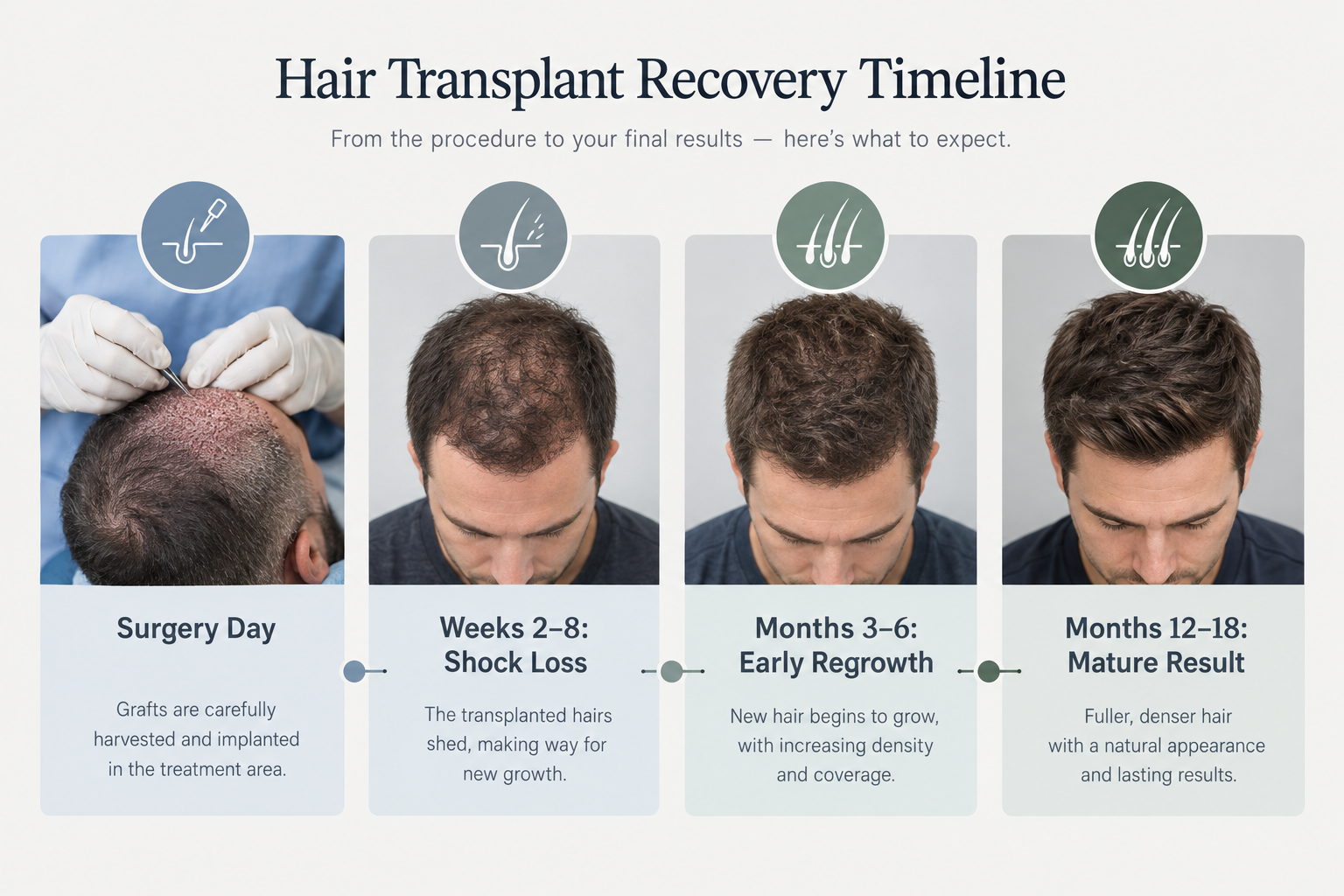
The scalp will be tender, swollen, and may show small scabs around each graft site. Redness and mild swelling of the forehead are common in the first few days. Most patients are advised to sleep with their head elevated and to avoid touching or washing the scalp aggressively for the first week or two. Downtime varies but many patients feel comfortable returning to desk-based work within a few days, while strenuous physical activity is typically restricted for two to four weeks.
Shock Loss: Weeks Two to Eight
Between two and eight weeks after surgery, most patients experience a phase called shock loss, in which the transplanted hairs shed. This is a normal and expected part of the process. The hair shaft falls out, but the follicle itself remains in place beneath the scalp and will begin producing a new hair shaft during the growth phase. Shock loss can also temporarily affect some of the existing native hair near the transplanted area. Understanding that this shedding is temporary is important for managing expectations during this phase.
Early Regrowth: Months Three to Six
New hair growth from the transplanted follicles typically begins to emerge between three and four months after surgery. At this stage the new hairs are often fine and may appear slightly different in texture compared to the final result. Visible improvement becomes more noticeable from around month four or five, though the density and coverage are still developing.
Mature Results: Months Twelve to Eighteen
Most patients reach a mature, representative result between 12 and 18 months after surgery. By this point the transplanted hairs have typically completed their initial growth cycles and the texture, density, and overall appearance are closer to the final outcome. Some patients, particularly those with coarser or curlier hair, may see continued improvement beyond 12 months. Assessing the result before this timeframe has elapsed can lead to premature conclusions about the success of the procedure.
Risks and Limitations of Hair Transplant Surgery
Hair transplant surgery is a surgical procedure and carries associated risks that should be discussed thoroughly with a qualified surgeon before proceeding. Common side effects include temporary swelling, redness, itching, and scabbing at both the donor and recipient sites. Infection is uncommon but possible and is typically managed with antibiotics. Folliculitis, an inflammation of the hair follicles, can occur during the growth phase and usually resolves with appropriate treatment.
More significant concerns include poor graft survival, unnatural-looking results if the hairline design is inappropriate for the patient’s age and likely future hair loss, visible scarring at the donor site (particularly with FUT), and numbness or altered sensation in the scalp. Keloid scarring is a risk for patients with a predisposition to this type of healing. In rare cases, patients experience persistent shock loss affecting native hair that does not fully recover.
The risk of an unsatisfactory aesthetic outcome is not trivial and is closely linked to surgeon experience, clinic standards, and the appropriateness of the procedure for the individual patient. Patients should be cautious of clinics that offer very high graft numbers at unusually low prices, as this may reflect compromised graft handling or inadequate surgical oversight.
Who May Be a Suitable Candidate?
Hair transplant surgery may be appropriate for adults who have experienced significant hair thinning or loss due to androgenetic alopecia (male or female pattern hair loss), traction alopecia, or scarring from previous procedures or injury. Suitable candidates generally have a stable donor area with sufficient follicle density, realistic expectations about what surgery can achieve, and hair loss that has either stabilised or is being managed medically.
Patients who may not be suitable include those with active autoimmune hair loss conditions such as alopecia areata, those with insufficient donor hair, individuals with certain bleeding disorders or conditions that impair wound healing, and those who are very young with an unpredictable hair loss trajectory. A thorough pre-operative assessment by a qualified hair restoration surgeon is essential to determine individual suitability.
Alternatives to Hair Transplant Surgery
Hair transplant surgery is not the only option for addressing hair loss, and for some patients non-surgical approaches may be more appropriate, either as a standalone treatment or in combination with surgery.
- Finasteride: An oral prescription medication that reduces DHT levels and can slow or halt androgenetic hair loss in men. Evidence supports its effectiveness in preserving existing hair and, in some cases, promoting modest regrowth. It is not typically licensed for use in women of childbearing age.
- Minoxidil: Available as a topical solution, foam, or oral tablet, minoxidil prolongs the anagen (growth) phase of the hair cycle and is used in both men and women. It requires consistent ongoing use to maintain any benefit.
- Platelet-Rich Plasma (PRP) therapy: PRP involves injecting concentrated growth factors derived from the patient’s own blood into the scalp. Some evidence suggests it may support hair follicle health and complement surgical results, though the evidence base is still developing and results vary.
- Low-level laser therapy (LLLT): Devices using low-level laser or light energy are used to stimulate follicle activity. Evidence is mixed and results are generally modest.
- Scalp micropigmentation: A non-surgical cosmetic tattooing technique that creates the appearance of a shaved head or adds the illusion of density. It does not produce real hair growth but can be effective for certain presentations of hair loss.
- Hair systems and wigs: Non-surgical options that can provide immediate cosmetic coverage without surgery or medication.
Frequently Asked Questions
Do transplanted hairs fall out over time?
Transplanted hairs shed in the weeks immediately after surgery as part of the normal healing process, but the follicles remain in place and produce new hairs. Because donor follicles are taken from DHT-resistant areas of the scalp, they are not expected to miniaturise and fall out due to pattern hair loss. However, transplanted hair does age normally and may change in texture or density over many decades.
Can a hair transplant be repeated if results are not sufficient?
A second hair transplant procedure is possible for some patients, provided there is sufficient donor hair remaining. The availability of donor follicles is a finite resource, so the feasibility of a repeat procedure depends on how much was used in the first surgery and the overall density of the donor area. A qualified surgeon can assess whether further grafts are available and whether a second procedure is appropriate.
How soon after a hair transplant can I exercise?
Light walking is generally acceptable within a few days of surgery, but strenuous exercise, heavy lifting, and activities that significantly raise blood pressure or cause sweating are typically restricted for two to four weeks. Increased blood flow to the scalp during intense exercise can dislodge grafts in the early healing phase. Specific guidance should come from the treating surgeon based on individual circumstances.
Will I need to take medication after a hair transplant?
Medication is not mandatory after a hair transplant, but many surgeons recommend finasteride and/or minoxidil to help preserve native hair and maintain the overall appearance of the result over time. The decision to use these medications should be made in consultation with a qualified practitioner, taking into account the patient’s medical history, hair loss pattern, and personal preferences.
Does the type of hair transplant technique affect how long results last?
Both FUT and FUE techniques transplant follicles from the same DHT-resistant donor zone, so the longevity of the grafts themselves is not fundamentally different between the two methods. The choice of technique affects the type of scarring, the recovery experience, and the suitability for certain hair types and lifestyles. Graft survival rates depend more on the skill of the surgical team and the handling of follicles than on the extraction method alone.
At what age is a hair transplant most appropriate?
There is no single correct age, but most experienced surgeons are cautious about performing hair transplants on patients in their early twenties whose hair loss pattern has not yet stabilised. Operating too early risks creating a result that looks unnatural as surrounding hair continues to thin. Many surgeons prefer to wait until the hair loss pattern is more predictable, often from the late twenties onwards, and recommend medical treatments in the interim.
Making an Informed Decision About Hair Transplant Longevity
A hair transplant can offer genuinely long-lasting improvement for patients who are well-selected, operated on by a skilled and experienced surgeon, and who have realistic expectations about what the procedure can and cannot achieve. The transplanted follicles themselves are expected to remain productive for many years, but the overall appearance of the result is influenced by the continued progression of native hair loss, the finite nature of the donor supply, and the ageing of the scalp over time.
Patients who approach hair transplant surgery as one component of a broader, long-term hair management strategy, rather than a single definitive solution, tend to achieve the most satisfying outcomes. This may involve combining surgery with medical treatments such as finasteride or minoxidil, planning for potential future procedures, and having an honest discussion with a qualified surgeon about the likely trajectory of their hair loss before committing to surgery.
If you are considering a hair transplant, a consultation with a qualified hair restoration surgeon who can assess your donor supply, hair loss pattern, and overall suitability is an important first step. The quality of that assessment, and the honesty of the information provided, is often as important as the surgical technique itself in determining whether the outcome will meet your expectations over the long term.


