
PRP Under Eyes: What to Expect, How It Works, and Whether It May Help
Platelet-rich plasma (PRP) therapy has gained considerable attention as a treatment option for the delicate under-eye area. Patients seeking improvement in dark circles, fine lines, hollowness, or skin texture around the eyes are increasingly asking about PRP as a potentially more natural alternative to fillers or other injectable treatments. This article explains how PRP under-eye treatment works, what the evidence suggests, what a realistic treatment experience looks like, and how to weigh it against other available options.
Key Takeaways
- PRP under-eye treatment uses growth factors derived from your own blood to stimulate collagen production and improve skin quality in the periorbital area.
- Results are gradual and typically require multiple sessions; PRP is not a quick fix and is unlikely to correct all types of under-eye concerns.
- The treatment may be most beneficial for fine lines, skin texture, and mild volume loss, but is less effective for structural hollowness or pigmentation caused by vascular or melanin factors.
- Side effects are generally mild and temporary, though bruising in the under-eye area can be more pronounced than in other treatment zones.
- A thorough clinical assessment is essential before treatment, as under-eye concerns have multiple causes and not all respond equally to PRP.
What Is PRP and How Is It Used Around the Eyes?
Platelet-rich plasma is a concentration of platelets derived from a small sample of the patient’s own blood. Blood is drawn, placed in a centrifuge, and spun to separate its components. The resulting plasma layer, which contains a higher-than-normal concentration of platelets, is then collected for use. Platelets are best known for their role in wound healing, but they also release a range of growth factors — including platelet-derived growth factor (PDGF), vascular endothelial growth factor (VEGF), and transforming growth factor-beta (TGF-β) — that can stimulate cellular repair, collagen synthesis, and tissue regeneration.
When applied to the under-eye area, PRP is typically administered through microinjections into the superficial layers of the skin, sometimes combined with microneedling to enhance absorption. The periorbital region — the skin surrounding the eye socket — is one of the thinnest and most delicate areas of the face, which makes it both a common site of visible ageing and a technically demanding area to treat. Practitioners who offer PRP under-eye treatment generally aim to use the growth factors in PRP to improve skin quality, stimulate collagen remodelling, and address mild volume changes over a course of sessions.
What Under-Eye Concerns Might PRP Address?
Under-eye concerns are not a single condition. The appearance of the under-eye area is influenced by several distinct factors, and understanding which factor is most prominent in an individual case is important for selecting the right treatment approach.
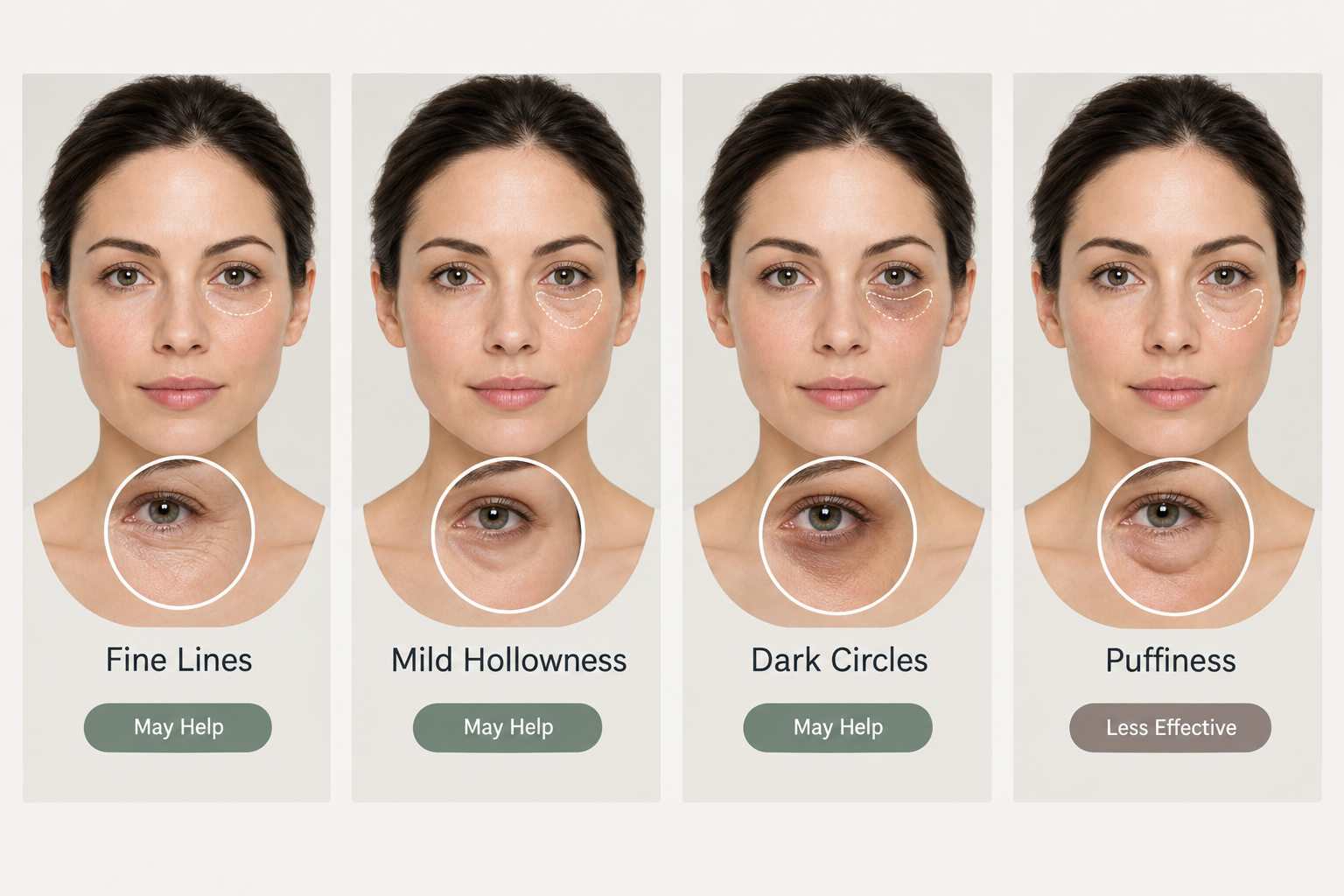
- Fine lines and crepey skin texture: Thinning of the dermis and reduced collagen density contribute to fine lines and a papery texture under the eyes. PRP’s collagen-stimulating properties may help improve skin thickness and surface quality in this context.
- Mild volume loss or hollowness: As the fat pads beneath the eye diminish with age, a hollow or sunken appearance can develop. PRP may offer some mild volumising effect through tissue regeneration, though significant structural hollowness is generally better addressed with hyaluronic acid filler or other volumising treatments.
- Dark circles related to skin quality: Dark circles have multiple causes. When they result from skin thinning that allows underlying blood vessels to show through, improving skin thickness with PRP may reduce their visibility over time. However, dark circles caused by hyperpigmentation (excess melanin), prominent vascularity, or anatomical shadowing from hollowness may respond differently or not at all to PRP alone.
- Puffiness: Under-eye puffiness caused by fluid retention or fat prolapse is unlikely to be meaningfully improved by PRP, and this should be discussed clearly during consultation.
- Overall skin quality and radiance: Some patients report an improvement in the general quality and luminosity of the periorbital skin following a course of PRP treatment, which may be related to improved hydration and collagen density.
It is important to understand that PRP is not a universal solution for all under-eye concerns. A qualified practitioner should assess the specific cause of each patient’s concerns before recommending PRP as an appropriate option.
What Does the Evidence Say?
The clinical evidence supporting PRP for under-eye rejuvenation is still developing. A number of small studies and case series have reported improvements in skin texture, fine lines, and the appearance of dark circles following PRP treatment in the periorbital area. Some research has compared PRP with other treatments such as carboxytherapy or chemical peels for dark circles, with mixed results depending on the underlying cause of the discolouration.
Systematic reviews of PRP for facial rejuvenation more broadly suggest that PRP can stimulate collagen production and improve skin quality, but note that study quality is variable, sample sizes are often small, and standardised protocols for preparation and injection technique differ between studies. This makes it difficult to draw firm conclusions about optimal treatment parameters or to predict outcomes with precision for individual patients.
PRP is not currently approved by regulatory bodies specifically for cosmetic under-eye treatment as a licensed indication in most countries; it is used in this context as part of broader aesthetic medicine practice. Patients should be aware that the evidence base, while promising in some areas, does not yet support strong claims about guaranteed outcomes, and that results vary considerably between individuals.
What Happens During a PRP Under-Eye Treatment?
A typical PRP under-eye appointment begins with a consultation or review of the treatment plan, followed by a blood draw — usually from the arm — of a small volume, commonly between 10 and 20 millilitres depending on the protocol. The blood is then centrifuged to isolate the platelet-rich plasma fraction. While the blood is being processed, a topical anaesthetic cream is usually applied to the under-eye area to reduce discomfort during injection.
The PRP is then administered using fine needles or cannulas into the periorbital skin. Some practitioners combine PRP injection with microneedling, where a device creates controlled micro-channels in the skin to allow the PRP to penetrate more effectively and to provide an additional stimulus for collagen production. The entire appointment typically takes between 45 minutes and 90 minutes, depending on whether microneedling is included and how many areas are being treated.
Discomfort during PRP under-eye treatment is generally described as mild to moderate. The under-eye area is sensitive, and some patients find the injections more uncomfortable here than in other facial areas even with topical anaesthetic. Practitioners experienced in periorbital treatment will use appropriate technique to minimise discomfort and reduce the risk of bruising.
Recovery and Downtime After PRP Under Eyes
The under-eye area is particularly prone to bruising and swelling following any injectable treatment, and PRP is no exception. Patients should expect the possibility of noticeable bruising and mild swelling for several days after treatment, with some cases lasting up to one to two weeks. This is one of the more significant practical considerations for patients planning PRP under-eye treatment, as the periorbital skin is thin and highly vascular.
Redness and minor swelling at the injection sites are common in the first 24 to 48 hours. Most patients are advised to avoid strenuous exercise, alcohol, and direct sun exposure for at least 24 to 48 hours after treatment. Makeup can usually be applied after 24 hours, though this should be confirmed with the treating practitioner. There is no significant structural downtime in the sense of restricted activity, but the visible bruising means many patients prefer to schedule treatment when they have a few days of social flexibility.
Because PRP uses the patient’s own blood, the risk of allergic reaction is very low. However, infection, though rare, remains a possibility with any injectable procedure, and patients should follow aftercare instructions carefully and contact their practitioner if they notice signs of infection such as increasing redness, warmth, or discharge.
When Do Results Appear and How Long Do They Last?
PRP under-eye results are gradual rather than immediate. Unlike hyaluronic acid filler, which provides visible volume immediately after injection, PRP works by stimulating the body’s own regenerative processes. Initial improvements in skin quality and texture may begin to become noticeable within four to six weeks of the first treatment, as collagen remodelling takes time to produce visible changes at the surface.
Most practitioners recommend a course of two to three sessions spaced four to six weeks apart to achieve meaningful results. Some patients may see further improvement in the months following their final session as collagen continues to mature. Maintenance treatments, typically once or twice a year, are often suggested to sustain results, though the optimal maintenance schedule varies between individuals and depends on factors such as age, skin condition, and lifestyle.
The longevity of PRP under-eye results is not permanent. Results generally last in the range of six to eighteen months, though this varies considerably. Factors such as sun exposure, smoking, general skin health, and the natural ageing process all influence how long improvements are maintained. Patients with realistic expectations about the gradual and variable nature of results tend to be more satisfied with the treatment experience.
Risks and Side Effects
PRP under-eye treatment carries a generally favourable safety profile when performed by a qualified and experienced practitioner, but it is not without risks. Patients should be informed of the following before proceeding:
- Bruising: The most common side effect in the under-eye area. The thin skin and proximity to blood vessels make bruising more likely here than in other facial zones.
- Swelling: Mild to moderate swelling is expected and usually resolves within a few days, though it can occasionally persist longer.
- Temporary worsening of appearance: In the days immediately following treatment, the under-eye area may look worse before it improves due to bruising and swelling.
- Infection: Rare but possible with any injectable procedure. Sterile technique and proper aftercare reduce this risk.
- Asymmetry: Minor asymmetry in the distribution of PRP or in the healing response can occur.
- Insufficient response: Not all patients respond to PRP treatment, and some may see minimal or no visible improvement despite completing a full course.
- Tyndall effect: This is a bluish discolouration that can occur if certain substances are injected too superficially in the under-eye area. While more commonly associated with hyaluronic acid filler, practitioners should be aware of injection depth when working in this region.
Serious complications such as vascular occlusion are a risk with any periorbital injection and underscore the importance of treatment by a practitioner with appropriate anatomical knowledge and experience in the under-eye area.
Who May Be Suitable for PRP Under-Eye Treatment?
PRP under-eye treatment may be worth discussing with a qualified practitioner if you have concerns about fine lines, mild skin laxity, crepey texture, or early volume loss in the periorbital area. Patients who prefer treatments derived from their own biology, or who have had reactions to synthetic fillers in the past, sometimes find PRP an appealing option to explore.
Candidates who tend to respond well generally have realistic expectations, are in good general health, and have concerns that are consistent with what PRP can plausibly address — primarily skin quality and mild regenerative improvement rather than significant structural correction.
PRP under-eye treatment may not be suitable for patients who:
- have active skin infections, inflammation, or eczema in the treatment area;
- have blood disorders or are taking anticoagulant medications that affect platelet function;
- are pregnant or breastfeeding;
- have certain autoimmune conditions or are undergoing immunosuppressive therapy;
- have very low platelet counts or anaemia;
- have unrealistic expectations about the degree of correction achievable.
A thorough medical history and clinical assessment are essential before any PRP treatment. The practitioner should also assess whether the specific cause of the patient’s under-eye concern is likely to respond to PRP, or whether a different treatment approach would be more appropriate.
Alternatives to PRP Under Eyes
PRP is one of several options available for under-eye rejuvenation, and the most appropriate choice depends on the individual’s specific concerns, anatomy, and goals.
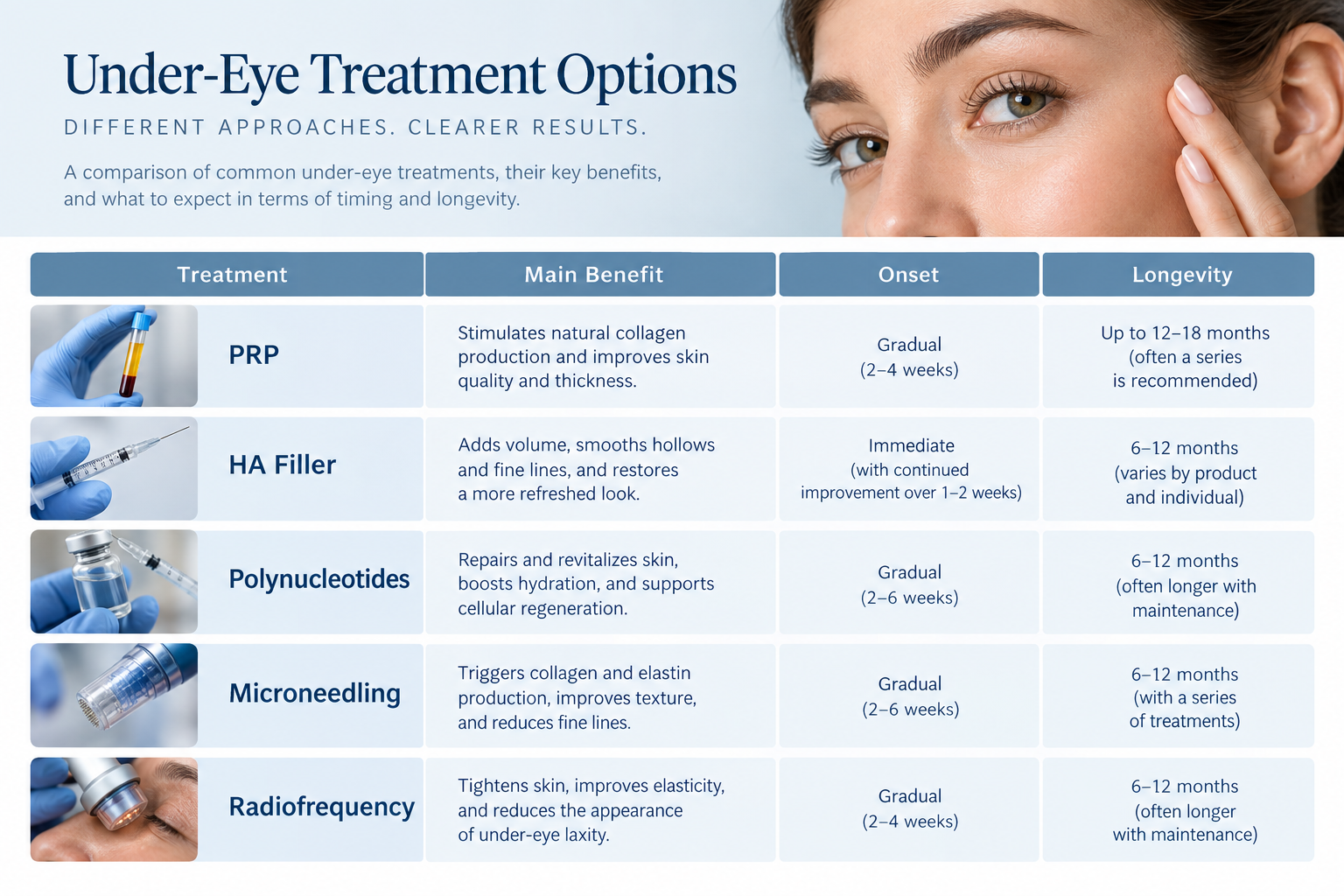
- Hyaluronic acid tear trough filler: Provides immediate volumisation and is well-suited to structural hollowness and the tear trough depression. Results are visible immediately and can last twelve to eighteen months or longer. However, filler in this area carries its own risks, including the Tyndall effect, migration, and vascular complications, and requires careful patient selection.
- Polynucleotides (PDRN): Polynucleotide injections, such as those used in products like Lumi Eyes, work by stimulating fibroblast activity and improving skin hydration and quality. They are increasingly used as an alternative or complement to PRP for under-eye skin quality concerns, with a growing evidence base in aesthetic medicine.
- Microneedling: Collagen induction therapy using microneedling alone can improve skin texture and fine lines around the eyes. It is sometimes combined with PRP to enhance results.
- Radiofrequency treatments: Devices that deliver radiofrequency energy can stimulate collagen and tighten skin in the periorbital area, and may be suitable for patients with mild skin laxity.
- Topical retinoids and skincare: For mild concerns, a well-structured skincare routine including retinoids, peptides, and broad-spectrum sun protection can improve skin quality over time and may complement in-clinic treatments.
- Surgical options: For significant fat prolapse, excess skin, or structural changes that cannot be meaningfully addressed with non-surgical treatments, blepharoplasty (eyelid surgery) may be a more appropriate consideration and should be discussed with a qualified surgeon.
No single treatment is universally superior for under-eye concerns. The right approach depends on an honest assessment of what is causing the concern and what degree of improvement is realistically achievable with each option.
Frequently Asked Questions
How many PRP sessions are typically needed for the under-eye area?
Most practitioners recommend a course of two to three sessions spaced approximately four to six weeks apart as a starting point. The number of sessions required varies depending on the individual’s skin condition, age, and the specific concerns being addressed. Some patients may benefit from additional sessions or periodic maintenance treatments.
Can PRP completely remove dark circles under the eyes?
PRP is unlikely to completely eliminate dark circles, and it is important to understand that dark circles have multiple causes. PRP may help reduce the appearance of dark circles related to skin thinning or poor skin quality, but it is generally less effective for dark circles caused by hyperpigmentation, prominent blood vessels, or anatomical shadowing from hollowness. A clinical assessment is needed to determine the likely cause and the most appropriate treatment.
Is PRP under-eye treatment painful?
Topical anaesthetic cream is applied before treatment to reduce discomfort. Most patients describe the sensation as mild to moderate. The under-eye area is more sensitive than some other facial zones, so some patients find it more uncomfortable here than in other areas. Discomfort is generally brief and manageable.
How soon after PRP under-eye treatment can I return to work?
There is no strict medical restriction on returning to work, but bruising and swelling in the under-eye area can be visible for several days to two weeks. Many patients prefer to schedule treatment when they have some flexibility in their social or professional commitments. Makeup can usually be applied after 24 hours to help conceal bruising.
Can PRP be combined with other under-eye treatments?
PRP is sometimes combined with microneedling to enhance penetration and collagen stimulation. It may also be used alongside other treatments such as polynucleotides or skincare as part of a broader treatment plan. Whether combination treatment is appropriate depends on individual assessment, and treatments should not be combined without guidance from a qualified practitioner.
Is PRP under-eye treatment safe for all skin tones?
Because PRP uses the patient’s own blood and does not involve synthetic pigment-affecting agents, it is generally considered suitable across a range of skin tones. However, any injectable treatment in the periorbital area carries risks regardless of skin tone, and individual assessment remains important. Patients with darker skin tones who are concerned about post-inflammatory hyperpigmentation should discuss this with their practitioner.
Is PRP Under-Eye Treatment Worth Considering?
PRP under-eye treatment occupies a specific and reasonably well-defined role in aesthetic medicine. It is not a dramatic or immediate transformation, and it is not the right choice for every type of under-eye concern. However, for patients with realistic expectations who are seeking gradual improvement in periorbital skin quality, fine lines, or mild volume changes, PRP may be a worthwhile option to explore with a qualified practitioner.
The treatment’s main strengths are its use of the patient’s own biological material, its relatively low risk of allergic reaction, and its potential to stimulate genuine tissue improvement rather than simply masking concerns. Its main limitations are the gradual and variable nature of results, the likelihood of bruising in the under-eye area, the need for multiple sessions, and the fact that it cannot address all causes of under-eye ageing.
Patients considering PRP under eyes should seek a practitioner with specific experience in periorbital treatment, who can assess the underlying cause of their concerns and advise honestly on whether PRP, an alternative treatment, or a combination approach is most likely to be beneficial. A thorough consultation that includes a discussion of realistic outcomes, risks, and alternatives is the most important first step before committing to any treatment in this sensitive area.


