Platysmal Neck Bands: What Causes Vertical Neck Cords to Form
Platysmal neck bands — those vertical cords or ridges that run down the front of the neck — are one of the most common concerns among adults noticing age-related neck changes. They can appear as faint lines during facial expressions or as prominent ropes visible even at rest, and understanding why they form is the first step toward making an informed decision about whether and how to address them.
Key Takeaways
- Platysmal neck bands are caused by changes in the platysma muscle itself, not simply by loose skin — muscle activity and structural changes in the muscle are the primary drivers.
- Multiple factors contribute, including intrinsic aging, collagen and elastin loss, subcutaneous fat depletion, genetics, UV exposure, significant weight loss, and certain lifestyle habits.
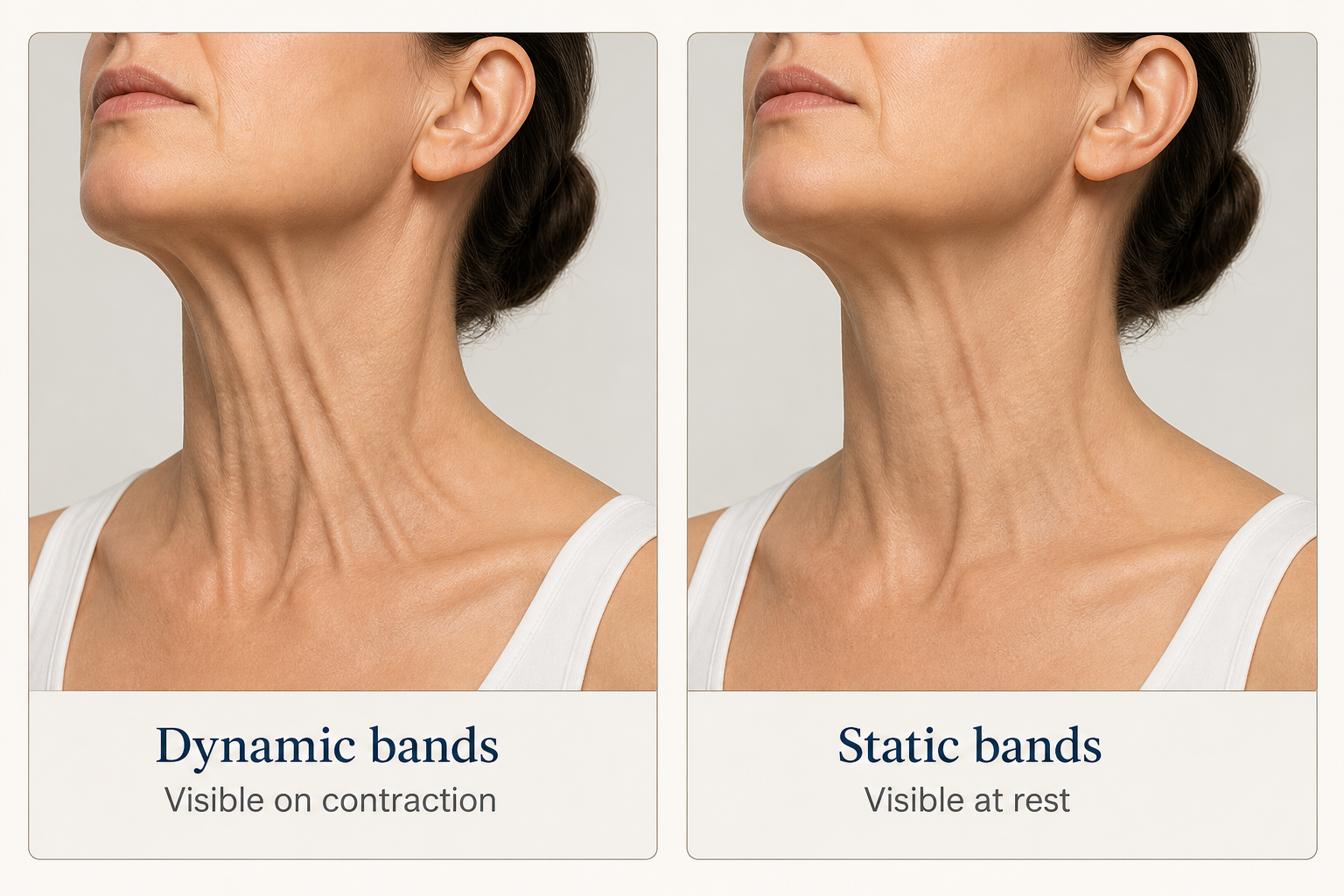
- Bands are classified as dynamic (visible on contraction) or static (visible at rest) — a distinction that matters for treatment planning.
- The neck is uniquely vulnerable to these changes because its skin is thinner, less protected, and rarely included in skincare routines.
- Some contributing factors can be slowed with preventive measures; others require clinical intervention to address once established.
What Is the Platysma Muscle and Why Does It Matter?
The platysma is a broad, thin sheet of muscle that lies just beneath the skin of the neck. It originates from the fascia overlying the upper chest and shoulder area, travels upward across the collarbone, and fans out to connect with the lower face, jawline, and the corners of the mouth. Unlike most facial muscles, the platysma is not firmly anchored to underlying bone or ligaments along its inner edges — the two sides of the muscle meet loosely near the midline of the neck, held together primarily by connective tissue rather than a rigid attachment point.
This free-floating anatomy is clinically significant. Because the inner borders of the platysma lack firm ligamentous anchoring, they are prone to forward displacement and separation over time. As the connective tissue between the two muscle edges weakens with age, the medial borders can drift apart, creating the visible ridges known as platysmal neck bands or vertical neck cords. This anatomical vulnerability distinguishes the neck from other areas of the face, where muscles are more securely tethered to underlying structures.
The platysma also serves a depressor function — it pulls the corners of the mouth and lower face downward and tenses the neck skin during exertion, swallowing, and strong facial expressions. Every contraction of the muscle reinforces the visible outline of its edges, which is why platysma prominence tends to worsen progressively with repeated use over decades.
Dynamic vs. Static Platysmal Bands
Clinicians distinguish between two types of platysmal bands, and this classification has direct implications for how they are assessed and managed.
| Feature | Dynamic Platysmal Bands | Static Platysmal Bands |
|---|---|---|
| When visible | Only during muscle contraction or facial expression | Visible at rest, without any movement |
| Primary driver | Active muscle contraction | Muscle separation, skin laxity, and structural changes |
| Typical age of onset | Can appear from the 30s onward | More common from the mid-40s onward |
| Severity | Generally earlier stage | Generally more advanced |
| Treatment considerations | Often respond well to neuromodulator treatment | May require combined or surgical approaches |
Dynamic platysmal bands appear when the muscle contracts — during speaking, straining, or strong expressions — and disappear when the face is relaxed. Static bands are present even when the neck is completely at rest, indicating that structural changes in the muscle and overlying skin have become established. Most patients progress from dynamic to static bands over time, though the rate of progression varies considerably between individuals.
The Primary Cause: Muscle Activity and Structural Change
An important shift in clinical understanding over recent years is the recognition that platysmal neck bands are driven primarily by changes within the platysma muscle itself — not simply by overlying skin becoming loose. Emerging research, including studies examining the neural distribution and contractile behaviour of the platysma, supports the view that repeated, forceful muscle contraction over many years causes the inner edges of the muscle to become more defined and prominent. Skin laxity then compounds the problem by reducing the soft-tissue cushion that previously concealed the muscle borders.
This distinction matters practically. Treating only the skin — with tightening devices or topical products — without addressing the underlying muscle activity is unlikely to produce meaningful improvement in established platysmal bands. It also explains why younger patients with strong, active platysma muscles can develop visible dynamic bands even before significant skin aging has occurred.
How Aging Causes Platysmal Neck Bands
Intrinsic aging — the biological process of growing older — affects the neck through several interconnected mechanisms, each of which contributes to platysmal band formation and visibility.
Collagen and Elastin Loss
Collagen provides structural support to the skin, while elastin allows it to recoil after stretching. Both proteins decline progressively from the mid-20s onward, with the rate of loss accelerating after the age of 40. As collagen and elastin loss reduces the skin’s ability to maintain tension and bounce back, the overlying neck skin becomes thinner and less capable of concealing the underlying muscle edges. The result is that platysmal bands that were previously hidden beneath a firm skin envelope become increasingly visible.
Subcutaneous Fat Depletion
A layer of subcutaneous fat sits between the skin and the platysma muscle, acting as a natural buffer that softens the appearance of the muscle’s edges. With age, this fat layer thins — a process called subcutaneous fat depletion — reducing the cushioning effect and allowing the platysma borders to become more prominent. This is distinct from the fat accumulation that can occur beneath the chin (submental fat), which is a separate concern.
Soft-Tissue Descent and Lower Facial Changes
Gravity and the progressive weakening of facial ligaments cause soft tissue in the lower face to descend over time. Lower facial descent places additional downward traction on the platysma, which is connected to the lower face and jawline. This traction can accentuate the separation of the muscle’s medial borders and contribute to the appearance of vertical cords. Jowl formation and jawline blurring often accompany platysmal band development for this reason.
Muscle Separation at the Midline
As connective tissue between the two platysma muscles weakens with age, muscle separation at the midline becomes more pronounced. The inner borders of the muscle drift apart, and the gap between them — combined with the forward displacement of each edge — creates the characteristic paired vertical ridges seen in more advanced cases. This midline separation is a key anatomical feature that distinguishes platysmal bands from other forms of neck skin change.
Why the Neck Is Uniquely Vulnerable
The neck ages differently from the face, and several factors make it particularly susceptible to platysmal band formation and visible age-related neck changes.
Neck skin is inherently thinner than facial skin and contains fewer sebaceous glands, which means it produces less natural oil and is more prone to dryness and early structural breakdown. Despite being exposed to the same environmental stressors as the face, the neck is rarely included in daily skincare routines — most people apply SPF and active ingredients such as retinoids only to the face, leaving the neck unprotected. The neck also receives significant cumulative UV exposure from daily activities, particularly when driving or spending time outdoors without neck-specific sun protection.
The combination of thinner baseline skin, lower sebaceous activity, reduced skincare attention, and high UV exposure creates a uniquely vulnerable environment in which collagen breakdown accelerates and the overlying skin loses its ability to conceal the platysma muscle edges earlier than might otherwise be expected.
Genetic Predisposition
Genetic predisposition plays a meaningful role in determining when platysmal neck bands appear and how prominent they become. Individuals with a family history of early or pronounced neck banding are more likely to develop the same pattern, often at a younger age than the population average. Genetic factors influence baseline skin thickness, the rate of collagen production and degradation, the structural characteristics of the platysma muscle itself, and the degree of midline separation that develops over time.
Genetic predisposition does not mean that bands are inevitable at a young age, but it does mean that preventive measures — particularly consistent sun protection and avoiding habits that accelerate collagen loss — may be especially worthwhile for those with a strong family history.
Sex Differences: Why Bands Often Appear Earlier in Women
Clinical observation consistently shows that platysmal neck bands tend to appear earlier and become more prominent in female patients compared to male patients of the same age. Several biological factors contribute to this pattern. Women have a thinner baseline skin thickness than men, providing less natural concealment of the underlying muscle. Women also have lower overall muscle mass, which means the platysma itself may be less bulky and its edges more sharply defined.
Hormonal changes — particularly the decline in oestrogen that accompanies perimenopause and menopause — accelerate collagen loss significantly. Research suggests that skin loses approximately 30% of its collagen in the first five years after menopause, with continued decline thereafter. This rapid reduction in structural support can cause platysmal bands that were previously subtle to become noticeably more visible within a relatively short period. The hormonal dimension of neck aging is frequently underappreciated in patient education, yet it represents one of the most clinically relevant triggers for accelerated band development in women in their late 40s and 50s.
UV Exposure and Sun Damage
UV-accelerated skin aging is a well-established contributor to the visibility of platysmal neck bands. Ultraviolet radiation damages collagen and elastin fibres directly, accelerating the structural breakdown that makes the overlying skin thinner and less supportive. Chronic UV exposure also impairs the skin’s ability to produce new collagen, compounding the deficit created by intrinsic aging.
Because the neck is frequently exposed to the sun without adequate protection — particularly the anterior (front) neck, which faces upward when the head is tilted back — cumulative UV damage in this area can be substantial. Patients who have spent significant time outdoors without neck-specific sun protection often show more advanced skin laxity and earlier platysma prominence than their chronological age would suggest.
Significant Weight Loss and GLP-1 Medications
Significant weight loss — whether achieved through dietary changes, bariatric surgery, or medication — can accelerate the appearance of platysmal neck bands. When the body loses a substantial amount of fat, the subcutaneous fat layer beneath the neck skin diminishes rapidly, removing the cushioning that previously softened the appearance of the platysma edges. If the skin does not contract sufficiently to accommodate the reduced volume beneath it, the result is increased skin laxity and more visible vertical neck cords.
The growing use of GLP-1 receptor agonist medications — including semaglutide (Ozempic, Wegovy) and tirzepatide (Mounjaro) — has brought this mechanism into sharper clinical focus. Patients using these medications can experience rapid and significant weight loss, sometimes losing facial and neck volume faster than the skin can adapt. The resulting combination of subcutaneous fat depletion and skin laxity can cause platysmal bands to become noticeably more prominent, even in patients who had not previously been concerned about neck aging. This phenomenon has been informally described in aesthetic medicine circles as part of a broader pattern of accelerated facial and neck aging associated with rapid GLP-1-mediated weight loss.
Lifestyle Factors That Can Worsen Platysmal Bands
Tech Neck and Forward Head Posture
Tech neck — the habitual forward flexion of the head associated with prolonged use of smartphones, tablets, and computers — places the neck in a position that creates repeated skin folding and sustained muscle tension. Over time, this posture may contribute to horizontal neck lines and, through chronic platysma activation, reinforce the definition of vertical neck cords. While tech neck is unlikely to be a primary cause of platysmal band formation on its own, it may accelerate progression in individuals who are already predisposed.
Strenuous Exercise and Weightlifting
Heavy resistance training and strenuous exercise that involves breath-holding, straining, or forceful exertion can cause repeated, powerful platysma contractions. During maximal effort — such as heavy deadlifts, overhead pressing, or intense cardiovascular exertion — the platysma activates strongly as part of the body’s overall tension response. Over many years of training, this repeated forceful contraction may reinforce the definition of the muscle’s edges and contribute to earlier or more prominent dynamic platysmal bands. This mechanism is rarely discussed in patient-facing resources but represents a plausible contributing factor for individuals who train intensively over long periods.
Smoking
Smoking accelerates collagen breakdown through multiple mechanisms, including the generation of free radicals, impaired microcirculation, and direct toxic effects on fibroblasts — the cells responsible for collagen production. Smokers typically show earlier and more pronounced skin thinning and laxity than non-smokers of the same age, which translates to reduced concealment of the underlying platysma and earlier platysma prominence. Smoking cessation is one of the few lifestyle changes with meaningful evidence for slowing skin aging progression.
Stress and Habitual Neck Tension
Chronic psychological stress is associated with habitual muscle tension, including in the neck and jaw region. Individuals who habitually tense the neck — whether during stress, concentration, or anxiety — may experience more frequent and sustained platysma activation than those who do not. While the evidence base for this specific mechanism is limited, chronic low-grade muscle contraction over years is a plausible contributor to band reinforcement, consistent with the broader understanding that repeated platysma activity drives band formation.
When Neck Changes May Warrant Medical Evaluation
The vast majority of platysmal neck bands are a cosmetic concern with no underlying medical significance. However, certain neck changes warrant prompt medical assessment rather than aesthetic consultation. A new or rapidly changing neck cord that affects only one side of the neck, difficulty swallowing, hoarseness, unexplained weight loss, or a palpable lump in the neck are all features that should be evaluated by a doctor before any aesthetic treatment is considered. Platysmal bands are typically bilateral (affecting both sides), symmetrical, and change predictably with muscle contraction — asymmetric or rapidly progressive changes that do not fit this pattern deserve clinical investigation.
Prevention vs. Reversal: Understanding the Difference
A common source of confusion in patient education is the conflation of prevention and reversal. Certain measures can slow the rate at which platysmal bands develop or become more visible, but they cannot reverse structural changes that have already occurred.
Measures with a reasonable evidence base for slowing progression include: consistent broad-spectrum sun protection applied to the neck as well as the face; maintaining a stable body weight to avoid repeated cycles of fat gain and loss; avoiding smoking; and incorporating neck-specific skincare — including retinoids and peptides — that may support collagen production. These steps are most valuable when started early, before significant structural change has occurred.
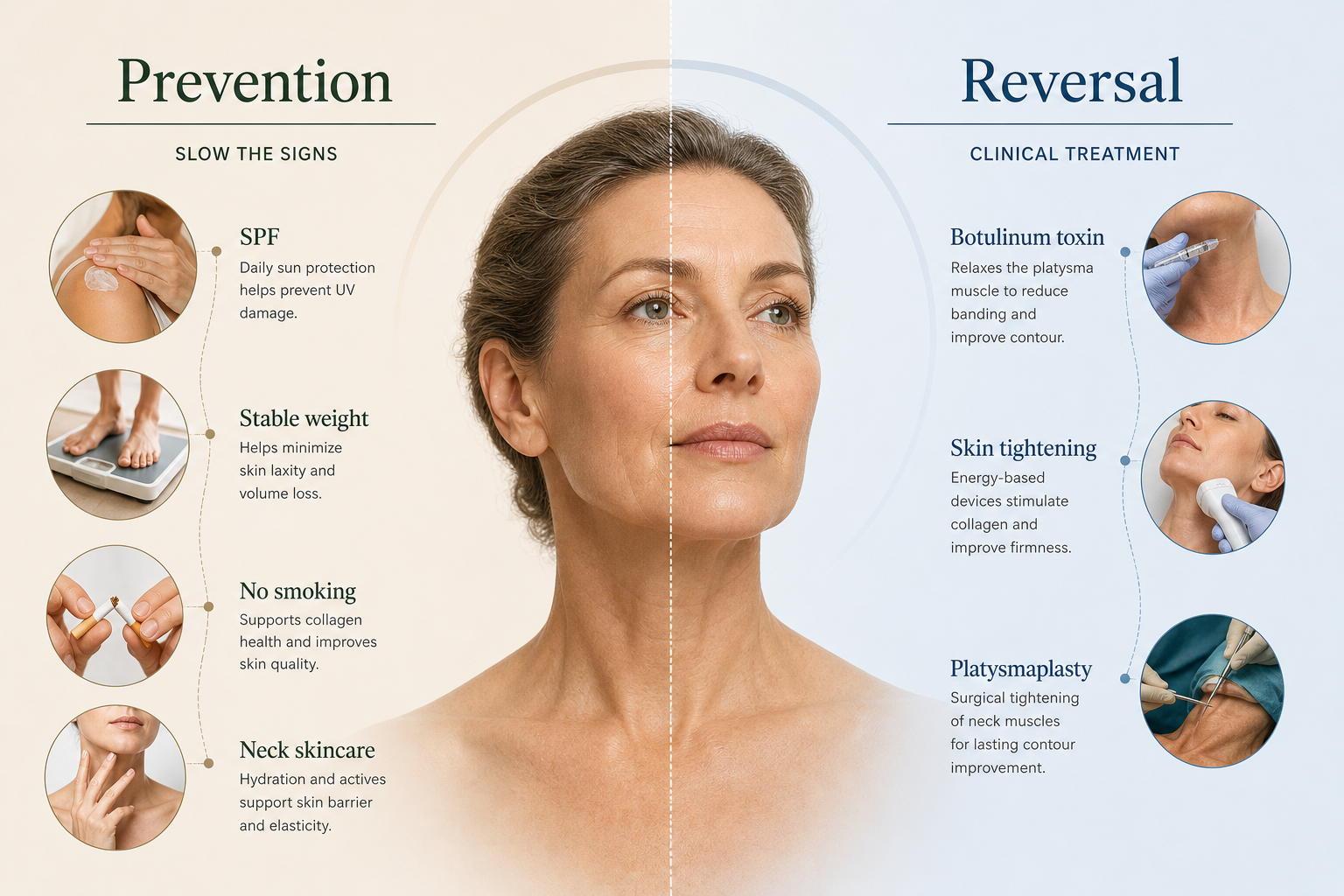
Once static platysmal bands are established — visible at rest and present regardless of muscle activity — preventive measures alone are unlikely to produce visible improvement. At that stage, clinical options such as botulinum toxin injections (to reduce muscle activity and soften dynamic components), energy-based skin tightening devices, or surgical approaches such as platysmaplasty may be discussed with a qualified practitioner as part of a broader neck rejuvenation plan. The appropriate option depends on the severity of the bands, the degree of skin laxity, and individual anatomy — factors that require in-person clinical assessment.
Frequently Asked Questions
At what age do platysmal neck bands typically appear?
Dynamic platysmal bands — visible only during muscle contraction — can appear from the early 30s onward, particularly in individuals with a genetic predisposition or a lean build. Static bands, visible at rest, are more commonly noticed from the mid-40s onward. Significant weight loss, menopause, or heavy sun exposure can cause bands to become apparent earlier than this typical range.
Are platysmal bands the same as loose neck skin or a turkey neck?
Not exactly. Turkey neck is a lay term that broadly describes the appearance of an aging neck, encompassing loose skin, horizontal lines, and vertical cords. Platysmal neck bands specifically refer to the vertical ridges created by the edges of the platysma muscle becoming prominent. Loose skin and platysmal bands often coexist and reinforce each other’s appearance, but they have different underlying causes and may respond differently to treatment.
Can exercise or posture make platysmal bands worse?
Habitual forward head posture (tech neck) and strenuous exercise involving forceful straining may contribute to earlier or more prominent band formation over time, though neither is likely to be a primary cause on its own. Maintaining good posture and being mindful of neck tension during exercise are reasonable habits, but they are unlikely to prevent bands entirely in individuals with other significant contributing factors.
Does losing weight cause platysmal bands?
Significant weight loss can accelerate the visibility of platysmal bands by reducing the subcutaneous fat layer that previously cushioned the muscle edges. This is particularly relevant for rapid weight loss, including that associated with GLP-1 medications. The bands themselves are not created by weight loss, but the loss of volume beneath the skin can make pre-existing or developing bands considerably more apparent.
Can skincare products treat platysmal neck bands?
Topical skincare — including retinoids, peptides, and SPF — can support skin quality and may slow the rate of collagen loss, but it cannot address the underlying muscle changes that drive platysmal band formation. Products that improve skin thickness and elasticity may reduce the visibility of very early or subtle bands, but established static bands are unlikely to respond meaningfully to topical treatment alone.
Is there a way to prevent platysmal bands entirely?
There is no guaranteed way to prevent platysmal bands entirely, as intrinsic aging and genetic predisposition are not modifiable. However, consistent sun protection, stable body weight, avoiding smoking, and early attention to neck skincare can slow progression. For individuals with a strong family history, early consultation with an aesthetic practitioner may help identify the most appropriate preventive or early-intervention strategies.
Understanding Your Neck: What to Do With This Information
Platysmal neck bands develop through a combination of factors — muscle anatomy, decades of repeated contraction, progressive collagen and elastin loss, subcutaneous fat depletion, and individual variables such as genetics, hormonal changes, and lifestyle. No single cause acts in isolation, and the relative contribution of each factor varies between individuals, which is why two people of the same age can have very different degrees of platysma prominence.
If you are noticing early vertical neck cords, the most useful first step is to understand whether they are dynamic or static — that is, whether they appear only during movement or are present at rest. This distinction, along with an assessment of your skin quality, degree of neck laxity, and overall lower facial anatomy, forms the basis of any meaningful treatment discussion. A qualified aesthetic practitioner or plastic surgeon can evaluate these factors in person and explain which options — from neuromodulator injections to skin tightening to surgical neck rejuvenation — may be appropriate for your specific presentation. Arriving at that consultation with a clear understanding of why platysmal bands form puts you in a much stronger position to ask the right questions and set realistic expectations.