How to Get Rid of Open Pores on Your Face: Causes, Treatments and Realistic Results
Enlarged pores are one of the most common skin concerns raised in aesthetic consultations, yet they are also one of the most misunderstood. Pores cannot be permanently closed or eliminated — they are a normal, functional part of your skin — but their visible size can be meaningfully reduced with the right approach. This guide explains what causes open pores, which ingredients and treatments have the strongest evidence, and what realistic results look like across different timelines and skin types.
Key Takeaways
- Pore size is influenced by genetics, excess sebum production, age-related collagen and elastin loss, and UV damage — not just how well you cleanse.
- Salicylic acid, niacinamide, and retinoids are the best-evidenced topical ingredients for reducing the visible appearance of enlarged pores over time.
- A consistent skincare routine with a broad-spectrum SPF is the single most important long-term strategy for maintaining pore appearance.
- Professional treatments such as microneedling, chemical peels, and fractional laser can produce more significant improvements, particularly for age-related or post-acne pore enlargement.
- Most topical improvements take four to twelve weeks; professional treatment results develop over several months and may require more than one session.
What Are Open Pores and Why Do They Appear?
Pores are the surface openings of hair follicles, each associated with a sebaceous gland that produces sebum — the skin’s natural oil. Every person has pores; they are not a flaw but a functional structure that allows sebum and sweat to reach the skin surface. The term “open pores” simply describes pores that appear visibly enlarged, most commonly across the nose, cheeks, and T-zone. Their appearance is determined by the diameter of the follicle opening and how much the surrounding skin supports and frames that opening.
Several factors influence how prominent pores look. When sebaceous glands produce excess sebum, the follicle stretches to accommodate the volume. When dead skin cells accumulate around the pore opening, they create a raised rim that makes the pore appear wider. As skin ages and loses collagen and elastin, the structural support around each follicle weakens, causing pores to look more slack and elongated. UV exposure accelerates this process by degrading collagen fibres and thickening the outer skin layer, both of which worsen pore visibility. Genetics also play a significant role: if your parents had visibly enlarged pores, you are more likely to as well, regardless of your skincare habits.
The Main Causes of Enlarged Pores
Understanding the cause of your enlarged pores matters because different causes respond to different treatments. The most common contributing factors include:
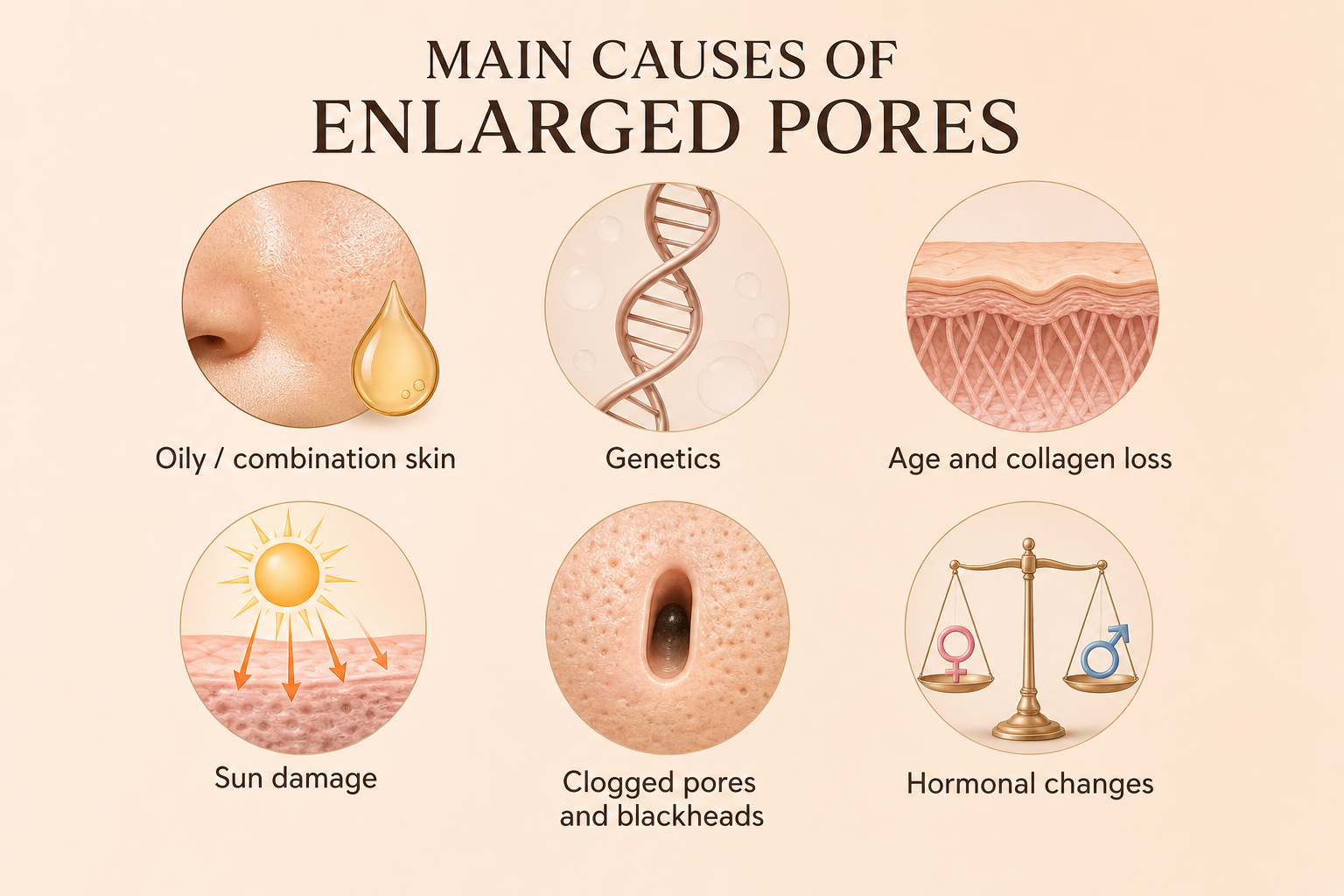
- Oily or combination skin: Higher sebum output from overactive sebaceous glands stretches follicle walls over time. The T-zone — forehead, nose, and chin — is typically most affected.
- Genetics: Hereditary pore size is a real and significant factor. Skin type, follicle diameter, and sebum production levels are all partly genetically determined.
- Age and collagen loss: From the mid-twenties onward, the skin produces less collagen and elastin. Without this structural scaffolding, pores lose their tight framing and appear larger, particularly on the cheeks and around the nose.
- Sun damage: Chronic UV exposure thickens the outer skin layer and breaks down collagen, both of which make pores more visible. This is one of the strongest arguments for daily broad-spectrum SPF use as a pore-management strategy.
- Clogged pores and blackheads: Pore-clogging debris — a mixture of sebum, dead skin cells, and environmental particles — can stretch the follicle opening and create the appearance of a dark, enlarged pore. Blackheads (open comedones) are a visible form of this.
- Hormonal changes: Androgens — male hormones present in both men and women — stimulate sebum production. This is why pores often become more visible during puberty, around menstruation, during pregnancy, or when hormonal conditions such as polycystic ovary syndrome are present. Men generally have larger pores than women partly because of higher androgen levels and greater sebum output.
- Comedogenic products: Heavy or pore-clogging ingredients in skincare and makeup can block follicles and worsen the appearance of pores over time.
- Picking and squeezing: Repeatedly squeezing pimples or attempting to extract pores manually can damage the follicle wall, leading to permanent widening and, in some cases, post-inflammatory scarring.
Skincare Ingredients That Can Minimise the Appearance of Pores
Several well-researched topical ingredients can meaningfully reduce pore visibility when used consistently. The key is matching the right ingredient to your skin type and concern.
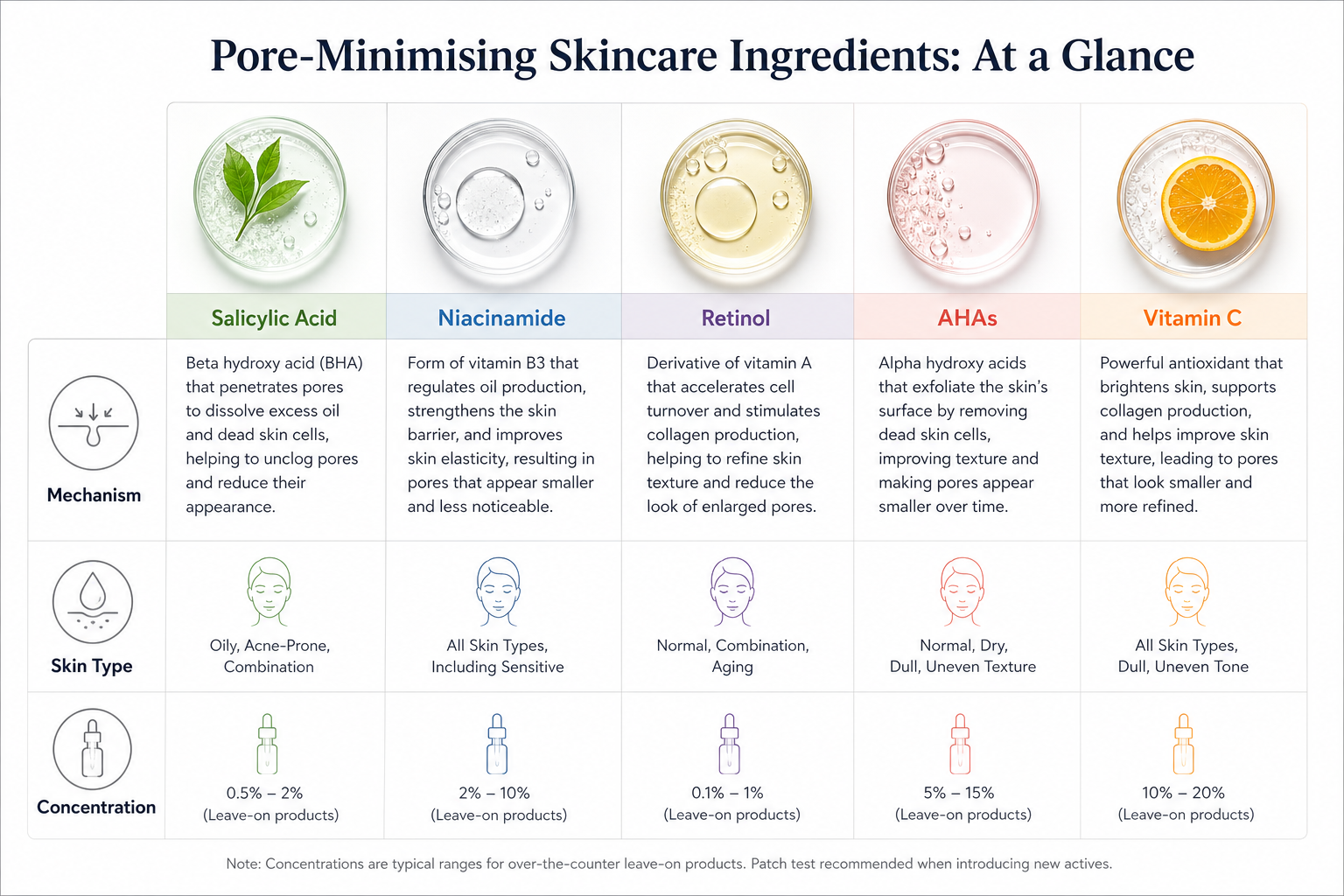
Salicylic Acid (BHA)
Salicylic acid is a beta hydroxy acid (BHA) that is oil-soluble, meaning it can penetrate into the follicle rather than working only on the skin surface. Inside the pore, it dissolves the mixture of sebum and dead skin cells that causes blockages and stretches the follicle opening. Concentrations of 0.5–2% used two to three times per week are appropriate for most oily and acne-prone skin types. Salicylic acid is one of the most effective ingredients for blackhead-related pore enlargement and is a core component of any pore-refining routine. It can be drying if overused, so starting slowly and monitoring skin barrier response is advisable.
Niacinamide (Vitamin B3)
Niacinamide is a versatile, well-tolerated ingredient with good evidence for reducing sebum production, improving skin texture and tone, and visibly tightening the appearance of pores. It works partly by regulating sebaceous gland activity and partly by strengthening the skin barrier, which reduces the inflammatory response that can worsen pore visibility. Concentrations of 5–10% are commonly used; 10% formulations may produce more noticeable sebum-regulating effects. Niacinamide is suitable for most skin types, including sensitive skin, and can be used morning and evening. Visible improvements in pore appearance typically develop over four to eight weeks of consistent use.
Retinoids and Retinol
Retinoids — including prescription-strength tretinoin and over-the-counter retinol — are among the most evidence-backed ingredients for long-term pore reduction. They work by accelerating cell turnover, which prevents dead skin cells from accumulating around follicle openings, and by stimulating collagen production, which restores the structural support that keeps pores looking tight. Retinoids are particularly effective for age-related pore enlargement. Results typically require eight to twelve weeks of consistent use, and initial adjustment — including dryness, flaking, and temporary sensitivity — is common. Retinoids should be introduced gradually, used at night, and always followed by a broad-spectrum SPF the following morning. They are not suitable during pregnancy.
AHAs: Glycolic and Lactic Acid
Alpha hydroxy acids (AHAs) such as glycolic acid and lactic acid work on the skin surface, dissolving the bonds between dead skin cells and promoting cell turnover. This surface-level chemical exfoliation reduces the buildup that makes pores appear wider and improves overall skin texture. AHAs are particularly useful for dry or sensitive skin types that may not tolerate salicylic acid well. They are best used two to three times per week in the evening, and sun protection the following day is essential as AHAs increase photosensitivity.
Vitamin C and Hyaluronic Acid
Vitamin C serum supports collagen synthesis and provides antioxidant protection against UV-related collagen degradation — making it a useful addition to a pore-focused routine, particularly for mature or sun-damaged skin. Hyaluronic acid does not directly reduce pore size, but by drawing moisture into the skin and plumping the surrounding tissue, it can temporarily reduce the visual contrast of pores. Both ingredients are generally well tolerated and suitable for morning use under SPF.
Clay Masks
Kaolin and bentonite clay masks absorb excess sebum from the skin surface and help draw pore-clogging debris toward the surface. They do not permanently reduce pore size, but used once or twice weekly they can reduce the oily appearance that makes pores more visible and complement the effects of active ingredients. Clay masks are most beneficial for oily and combination skin types.
A Practical Skincare Routine for Open Pores
A consistent skincare routine is more important than any single product. The following framework applies to most people with enlarged pores, though individual skin type and tolerance should guide product selection.
Morning Routine
- Gentle gel cleanser: Remove overnight sebum without stripping the skin barrier. Avoid harsh foaming cleansers that trigger compensatory oil production.
- Pore-refining toner or niacinamide serum: An astringent toner containing witch hazel or a niacinamide serum helps regulate sebum and temporarily tighten pore appearance.
- Lightweight, oil-free moisturiser: Hydration is important even for oily skin. A gel-based, non-comedogenic moisturiser maintains the skin barrier without adding congestion.
- Broad-spectrum SPF 30 or higher: Daily UV protection is non-negotiable for pore management. Sun damage is one of the leading causes of collagen loss and worsening pore visibility over time. Choose a non-comedogenic, oil-free formula.
Evening Routine
- Double cleanse (if wearing makeup or SPF): Begin with a micellar water or cleansing oil to remove makeup and sunscreen, followed by a gentle gel or foam cleanser. Sleeping in makeup is one of the fastest ways to worsen pore congestion.
- Chemical exfoliation (two to three nights per week): Apply a salicylic acid product for oily or acne-prone skin, or an AHA such as glycolic or lactic acid for drier skin types. Do not use both on the same night.
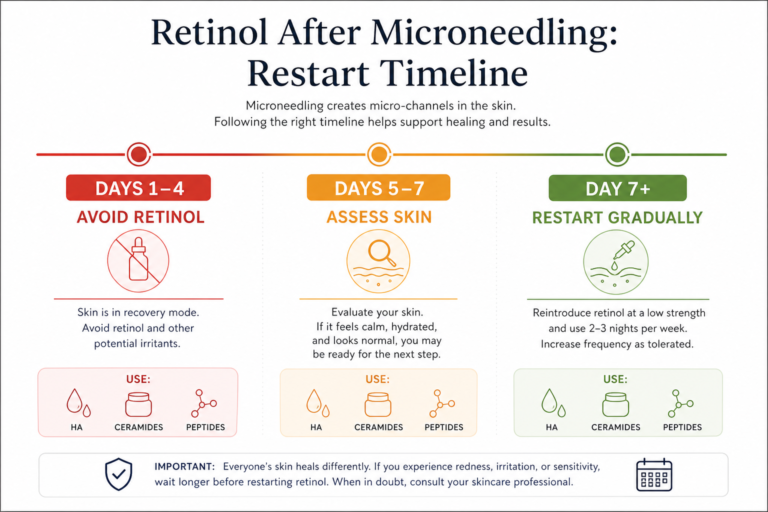
- Retinol or retinoid (on non-exfoliation nights): Introduce retinol gradually — starting once per week and building to three or four nights — to improve cell turnover and collagen production over time.
- Moisturiser: Apply a non-comedogenic moisturiser to support the skin barrier, particularly on nights when active ingredients are used.
Important Ingredient Interaction Notes
Retinol and AHAs or BHAs should not be applied on the same night, as combining them increases the risk of irritation and barrier disruption. Alcohol-based astringent toners used alongside niacinamide can cause flushing in sensitive skin types. If you are new to active ingredients, introduce one at a time and allow two to four weeks before adding another, so you can identify what your skin tolerates.
Skin-Type-Specific Guidance
| Skin Type | Priority Ingredients | Best Product Format | Key Caution |
|---|---|---|---|
| Oily / Acne-prone | Salicylic acid, niacinamide, retinol | Gel cleanser, lightweight serum, oil-free SPF | Avoid over-cleansing; triggers more sebum |
| Combination | Niacinamide, salicylic acid (T-zone), lactic acid | Gel or lotion moisturiser, targeted toner | Spot-treat oily zones; avoid drying dry areas |
| Dry / Sensitive | Lactic acid, niacinamide, hyaluronic acid | Cream cleanser, hydrating serum, rich SPF | Introduce actives very slowly; prioritise barrier |
| Mature / Ageing | Retinoids, vitamin C, glycolic acid | Serum layering, nourishing moisturiser | Consistent SPF essential; collagen support is key |
| Men’s skin | Salicylic acid, niacinamide, retinol | Gel cleanser, lightweight moisturiser with SPF | Higher sebum output; may need more frequent BHA use |
Professional Treatments for Enlarged Pores
When a consistent skincare routine produces insufficient improvement — or when pore enlargement is significant, associated with acne scarring, or driven by collagen loss — professional treatments can deliver more substantial results. These should always be performed by a qualified practitioner following a thorough skin assessment.
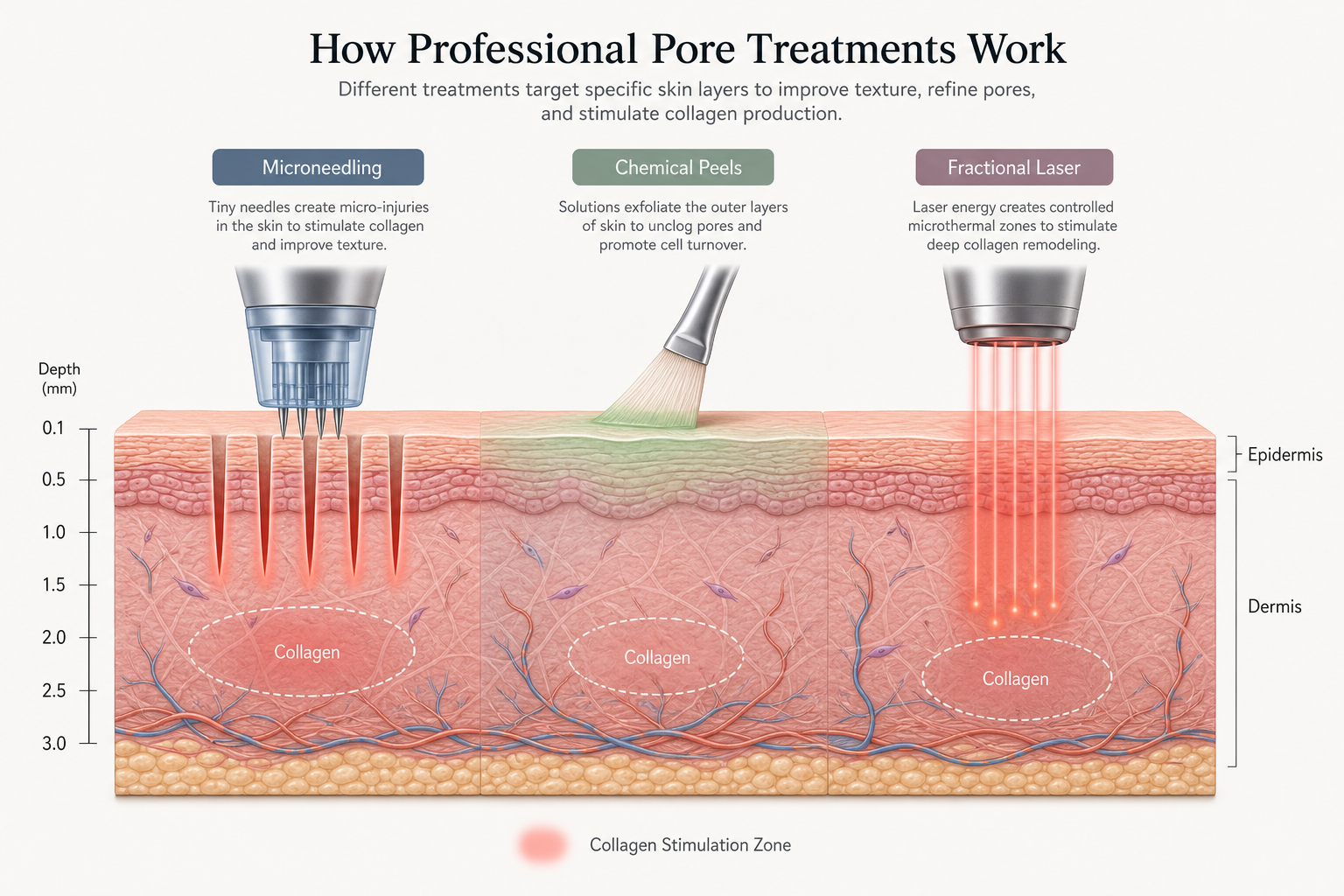
Microneedling and RF Microneedling
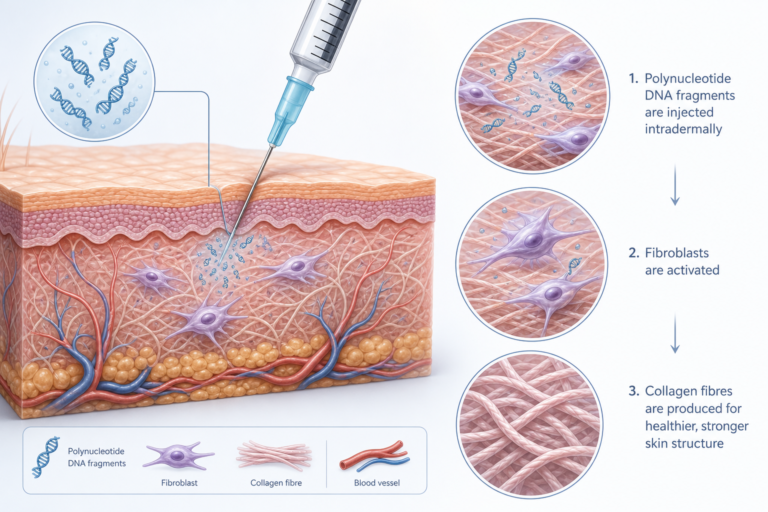
Microneedling uses fine needles to create controlled micro-injuries in the skin, stimulating collagen and elastin production as the skin heals. This collagen induction gradually tightens the tissue around follicle openings, reducing pore visibility over several weeks. Radiofrequency (RF) microneedling combines this mechanical stimulation with radiofrequency energy delivered directly into the dermis, producing a stronger collagen-remodelling effect. RF microneedling is particularly effective for age-related pore enlargement and skin laxity. A course of three to four sessions spaced four to six weeks apart is typically recommended, with results continuing to develop for three to six months after the final session. Downtime is usually two to five days of redness and mild swelling.
Chemical Peels
Professional chemical peels use higher concentrations of AHAs, BHAs, or trichloroacetic acid (TCA) than are available in over-the-counter products. Superficial peels using glycolic or salicylic acid improve cell turnover, reduce sebum congestion, and refine skin texture with minimal downtime. Medium-depth TCA peels stimulate deeper collagen remodelling and can produce more significant pore reduction, particularly for sun-damaged or post-acne skin. The appropriate peel depth depends on skin type, concern severity, and tolerance. A series of superficial peels is often recommended before progressing to a medium-depth treatment.
Fractional Laser Resurfacing
Fractional laser treatments — including CO2 and erbium laser platforms — deliver precise columns of energy into the skin, triggering significant collagen remodelling and surface renewal. Fractional laser resurfacing can produce meaningful long-term pore reduction, particularly for patients with sun damage, post-acne scarring, or significant collagen loss. Results are typically more dramatic than microneedling or peels, but downtime is longer — usually five to ten days of redness, peeling, and sensitivity — and the treatment requires careful patient selection, particularly for darker skin tones where pigmentation risk is higher.
HydraFacial and Carbon Laser (Hollywood Peel)
HydraFacial combines cleansing, exfoliation, extraction, and hydration in a single session, producing an immediate improvement in skin texture and pore appearance with no downtime. It is a useful maintenance treatment but does not produce the collagen-stimulating effects of microneedling or laser. The carbon laser peel — sometimes called the Hollywood Peel — applies a carbon lotion to the skin before using a laser to vaporise it, simultaneously exfoliating the surface and delivering mild thermal stimulation. Both treatments are well tolerated and suitable for most skin types, but results are more modest and shorter-lived than deeper interventions.
Realistic Treatment Timelines
| Approach | Typical Onset of Visible Results | Duration of Effect |
|---|---|---|
| Niacinamide (topical) | 4–8 weeks | Ongoing with continued use |
| Salicylic acid (topical) | 4–6 weeks | Ongoing with continued use |
| Retinol / retinoids | 8–12 weeks | Ongoing; improves further with long-term use |
| Superficial chemical peel (course) | After 3–6 sessions | 6–12 months with maintenance |
| Microneedling (course) | 6–12 weeks post-course | 12–18 months; maintenance sessions advised |
| RF microneedling (course) | 8–16 weeks post-course | 18–24 months; maintenance sessions advised |
| Fractional laser | 4–8 weeks post-treatment | 2+ years; varies with sun protection habits |
Common Myths About Open Pores
Several persistent misconceptions about pores lead people to use ineffective or counterproductive approaches. Understanding what is and is not true helps set realistic expectations.
- “Pores open and close.” Pores have no muscles and cannot open or close. Steam and warm water may temporarily soften sebum, making extraction easier, but they do not physically open pores. Cold water does not close them — it may temporarily reduce redness and give a smoother appearance, but the effect is cosmetic and brief.
- “Pores can be permanently closed.” Pores cannot be permanently closed or eliminated. The goal of any treatment is to minimise the appearance of pores by reducing the factors that make them look larger — not to remove them.
- “Washing your face more often will shrink pores.” Over-cleansing strips the skin barrier and triggers compensatory excess sebum production, which can worsen pore appearance. Twice-daily cleansing with a gentle, non-comedogenic cleanser is sufficient for most skin types.
- “Only oily skin has visible pores.” While oily skin types tend to have more prominent pores, enlarged pores also affect dry and combination skin, particularly as collagen loss progresses with age.
- “Squeezing pores makes them smaller.” Manual squeezing can temporarily empty a pore but risks damaging the follicle wall, introducing bacteria, and causing post-inflammatory hyperpigmentation or permanent scarring.
Open Pores vs. Sebaceous Filaments vs. Acne Scars
Many people mistake sebaceous filaments for blackheads or enlarged pores. Sebaceous filaments are thin, hair-like structures within follicles that help channel sebum to the skin surface — they appear as small grey or tan dots, most commonly on the nose, and are a normal skin feature. Unlike blackheads, they refill within days of extraction and cannot be permanently removed. Treating them with salicylic acid and niacinamide can reduce their visibility, but attempting to extract them repeatedly causes more harm than benefit.
Post-acne scarring — particularly ice-pick scars and boxcar scars — can be confused with enlarged pores because both create textural irregularities. However, acne scars involve structural damage to the dermis and require different treatment approaches, typically fractional laser or subcision, rather than pore-focused skincare. If you are unsure whether your concern is enlarged pores, sebaceous filaments, or scarring, a consultation with a qualified practitioner will clarify the distinction and guide the most appropriate treatment plan.
Diet, Lifestyle, and Pore Appearance
Skincare products address pore appearance from the outside, but internal factors also influence sebum production and skin quality. A high-glycaemic diet — one rich in refined sugars and processed carbohydrates — causes spikes in insulin and insulin-like growth factor 1 (IGF-1), both of which stimulate androgen activity and increase sebum production. Reducing high-GI foods and increasing antioxidant-rich foods such as berries, leafy greens, and nuts may support sebum regulation over time, though dietary changes alone are unlikely to produce dramatic pore improvement.
Adequate hydration supports skin barrier function, and smoking accelerates collagen degradation and impairs skin repair — both of which worsen pore appearance over time. Daily broad-spectrum SPF use remains the most impactful lifestyle habit for preserving collagen and preventing the UV-related pore enlargement that accumulates with age.
When to See a Practitioner
A consistent skincare routine with evidence-based ingredients is the appropriate starting point for most people. However, a consultation with a qualified aesthetic practitioner or dermatologist is worth considering if:
- Pore appearance is worsening despite three or more months of consistent skincare use.
- Enlarged pores are associated with active acne, cystic breakouts, or post-acne scarring.
- You are experiencing hormonal changes — such as those related to polycystic ovary syndrome, pregnancy, or perimenopause — that appear to be driving increased sebum production.
- You are interested in professional treatments and want guidance on which option is most appropriate for your skin type and concern.
- You are unsure whether your concern is enlarged pores, sebaceous filaments, or a form of scarring.
Frequently Asked Questions
Can pores actually be made smaller permanently?
Pores cannot be permanently closed or eliminated, as they are a fixed anatomical feature of the skin. However, their visible size can be meaningfully and durably reduced by addressing the underlying causes — excess sebum, dead skin cell buildup, and collagen loss — through consistent skincare and, where appropriate, professional treatments. Results from professional treatments such as RF microneedling or fractional laser can last one to two years or longer with good sun protection habits.
How long does it take to see results from skincare alone?
Niacinamide typically produces visible improvements in pore appearance within four to eight weeks. Salicylic acid may show results in four to six weeks for congestion-related pore enlargement. Retinoids generally require eight to twelve weeks before meaningful changes are visible, and results continue to improve with longer-term use. Patience and consistency are essential — switching products too frequently prevents any single ingredient from working effectively.
Is niacinamide or salicylic acid better for open pores?
Both ingredients address different aspects of pore enlargement and work well together. Salicylic acid is more effective for clearing pore-clogging debris and blackheads, making it the better choice when congestion is the primary concern. Niacinamide is more effective for regulating sebum production and improving overall skin texture, and it is better tolerated by sensitive skin. Using both — salicylic acid two to three times per week and niacinamide daily — is a common and effective combination for oily and combination skin types.
Do pore strips work?
Pore strips can physically remove the surface portion of blackheads and sebaceous filaments, producing an immediate improvement in appearance. However, they do not address the underlying sebum production that causes pores to refill, and repeated use can irritate and weaken the skin around follicle openings. They are not a substitute for a consistent routine with active ingredients.
Can makeup make open pores worse?
Heavy, comedogenic foundations and concealers can settle into pores and worsen their appearance over time if not thoroughly removed. Choosing non-comedogenic, oil-free formulas and using a pore-minimising primer can reduce the visual appearance of pores as a cosmetic measure. Thorough makeup removal — ideally using the double cleanse method — each evening is essential to prevent pore-clogging debris from accumulating overnight.
Are professional treatments for open pores painful?
Most professional pore treatments involve manageable discomfort. Microneedling and RF microneedling are typically performed with a topical anaesthetic cream applied before the session, reducing sensation significantly. Chemical peels may cause a temporary stinging or warming sensation during application. Fractional laser treatments vary in intensity; lighter settings cause mild warmth, while more aggressive settings may require stronger anaesthesia. Your practitioner will discuss comfort management options at your consultation.
Building a Realistic Plan for Reducing Open Pores
Reducing the visible appearance of enlarged pores is achievable for most people, but it requires realistic expectations and a structured approach. Pores cannot be permanently closed, but their size can be meaningfully minimised through a combination of the right topical ingredients, consistent daily habits, and — where appropriate — professional treatments targeted at the specific cause of enlargement.
For most people, the most effective starting point is a consistent skincare routine built around niacinamide, salicylic acid, retinol, and daily broad-spectrum SPF. These ingredients address the three main drivers of pore visibility — excess sebum, dead skin cell accumulation, and collagen loss — and produce measurable improvements over eight to twelve weeks. If results plateau or the concern is more significant, professional treatments such as RF microneedling, chemical peels, or fractional laser can deliver a more substantial and longer-lasting improvement.
If you are unsure which approach is most appropriate for your skin type and concern, a consultation with a qualified aesthetic practitioner or dermatologist is the most reliable next step. A professional assessment can distinguish between enlarged pores, sebaceous filaments, and post-acne scarring, and help you build a plan that matches both your skin’s needs and your expectations.