
Non-Surgical Facelift: Lifting Without Surgery
A non-surgical facelift is not a single procedure but a collection of minimally invasive and non-invasive treatments designed to lift, tighten, and rejuvenate the face without general anaesthesia or surgical incisions. For many people, the appeal lies in reduced downtime, lower immediate risk, and the ability to address specific concerns gradually. Understanding what these treatments can and cannot achieve is essential before deciding whether any of them are worth exploring.
Key Takeaways
- No single non-surgical treatment replicates the structural lift achieved by a surgical facelift; results are typically more subtle and require maintenance.
- Common approaches include botulinum toxin injections, dermal fillers, thread lifts, ultrasound-based skin tightening, radiofrequency treatments, and combination protocols.
- Suitability depends on the degree of skin laxity, facial anatomy, age, medical history, and individual goals — a thorough clinical assessment is essential.
- Results vary considerably between patients, and most non-surgical lifting treatments require repeat sessions or maintenance to sustain improvement.
- Risks exist with every approach; choosing a qualified and experienced practitioner significantly influences both safety and outcome.
What Does a Non-Surgical Facelift Actually Mean?
The term non-surgical facelift is used loosely in aesthetic medicine to describe any treatment or combination of treatments that aims to restore a more lifted, youthful facial appearance without surgery. It encompasses a broad range of technologies and techniques, from injectable treatments that relax or add volume, to energy-based devices that stimulate collagen production, to absorbable threads that physically reposition tissue. Because the term covers so many different approaches, it is important to understand what each category of treatment does, how it works, and what it realistically delivers.
Facial ageing involves several overlapping processes: the skin loses collagen and elastin, causing it to thin and lose elasticity; fat compartments in the face shift and deflate; bone remodels over time; and the ligaments that support facial structures gradually weaken. A surgical facelift addresses several of these changes simultaneously by repositioning deeper tissue layers and removing excess skin. Non-surgical approaches can address some of these changes — particularly skin quality, volume loss, and mild to moderate laxity — but they cannot replicate the structural repositioning that surgery provides. Recognising this distinction helps set realistic expectations.
Botulinum Toxin: Relaxing Muscles to Create a Lifted Appearance
Botulinum toxin injections are among the most widely used treatments in aesthetic medicine. When injected into specific facial muscles, botulinum toxin temporarily reduces muscle activity, which can soften dynamic lines and, in certain areas, create a subtle lifting effect. The brow lift technique, for example, involves carefully relaxing the muscles that pull the brow downward while preserving or enhancing the activity of muscles that elevate it, resulting in a modest but visible brow elevation in suitable candidates.
The Nefertiti lift is another botulinum toxin technique that targets the platysmal bands in the neck and the muscles along the lower jaw, aiming to improve jawline definition and reduce the downward pull on the lower face. Results from botulinum toxin treatments typically become visible within a few days to two weeks and generally last between three and six months, after which the muscle activity gradually returns and repeat treatment is needed to maintain the effect.
Botulinum toxin is not appropriate for everyone. Contraindications include pregnancy, breastfeeding, certain neuromuscular conditions, and some medications. The outcome depends heavily on the practitioner’s understanding of facial anatomy and injection technique, as poorly placed injections can cause asymmetry, ptosis (drooping of the eyelid or brow), or an unnatural appearance. These effects are temporary but can be distressing while they persist.
Dermal Fillers: Restoring Volume and Improving Contour
Dermal fillers — most commonly based on hyaluronic acid — are injectable gels used to restore lost facial volume, improve contour, and support areas of the face that have descended with age. Rather than lifting tissue mechanically, fillers work by replacing volume that has been lost from fat compartments, adding structural support to areas such as the cheeks, temples, and jawline, and improving the appearance of folds such as the nasolabial folds.
When placed strategically in the mid-face, hyaluronic acid fillers can create an indirect lifting effect by restoring the scaffolding that supports the overlying skin and soft tissue. This approach is sometimes called liquid lifting or volumetric rejuvenation. The results are immediate and can last from six months to around eighteen months depending on the product used, the area treated, and individual metabolism. Hyaluronic acid fillers have the advantage of being reversible using an enzyme called hyaluronidase, which dissolves the filler if correction is needed.
Risks associated with dermal fillers include bruising, swelling, asymmetry, nodule formation, and — in rare but serious cases — vascular occlusion, where filler inadvertently enters or compresses a blood vessel. Vascular occlusion can lead to tissue damage or, in very rare cases, vision changes if it affects vessels near the eye. These serious complications are uncommon but underscore the importance of treatment by a practitioner with thorough anatomical knowledge and appropriate emergency protocols. Overfilling is also a recognised concern; excessive filler use over time can distort facial proportions rather than restore them.
Thread Lifts: Physical Repositioning Without Surgery
Thread lifts use fine absorbable sutures — typically made from polydioxanone (PDO), polylactic acid (PLLA), or polycaprolactone (PCL) — inserted beneath the skin to physically reposition sagging tissue and stimulate collagen production as the threads dissolve. The threads are introduced through small entry points using a needle or cannula, making the procedure minimally invasive compared with surgery.
Thread lifts can be used across several areas of the face and neck, including the cheeks, jowls, brows, and jawline. The immediate mechanical lift from barbed or cog threads can be visible shortly after treatment, while the collagen-stimulating effect develops over the following weeks to months as the threads gradually dissolve. The overall result may last from one to two years depending on the thread material, the number of threads used, and individual tissue response.
Thread lifts are generally considered most suitable for patients with mild to moderate skin laxity who are not yet candidates for surgery or who prefer to avoid it. They are less effective in patients with significant skin excess or very poor skin quality, where the threads may not provide adequate support. Potential complications include thread migration, puckering or dimpling of the skin, infection, asymmetry, and — less commonly — thread extrusion through the skin. A thorough consultation to assess tissue quality and facial anatomy is important before proceeding.
Ultrasound-Based Skin Tightening: Stimulating Deep Collagen
High-intensity focused ultrasound (HIFU) is a non-invasive technology that delivers focused ultrasound energy to precise depths within the skin and the superficial musculoaponeurotic system (SMAS) — the same tissue layer addressed during surgical facelift. The thermal injury created at these focal points triggers a wound-healing response that stimulates new collagen and elastin production over the following months.
HIFU treatments are typically used to address mild to moderate skin laxity on the face, neck, and décolletage. Because the energy is focused below the skin surface, the overlying skin is not damaged, and there is generally no significant downtime. Results develop gradually over two to six months as collagen remodelling occurs, and a single treatment session may provide improvement lasting up to twelve months or longer in some patients, though individual response varies considerably.
HIFU is not painless; most patients experience discomfort during the procedure, described as a heating or prickling sensation at the points of energy delivery. Temporary redness, swelling, and tingling are common after treatment. Rare adverse effects include nerve irritation and, in cases of incorrect technique or inappropriate patient selection, burns or prolonged sensory changes. HIFU is generally not recommended for patients with active skin infections, open wounds, severe skin laxity, implanted metal devices in the treatment area, or certain medical conditions. Evidence for HIFU in facial lifting is generally positive but varies across studies, and results are more modest than those achieved with surgery.
Radiofrequency Treatments: Heating the Skin to Tighten and Lift
Radiofrequency (RF) energy heats the deeper layers of the skin to stimulate collagen contraction and new collagen synthesis. RF devices are available in several forms, including monopolar, bipolar, and multipolar configurations, as well as microneedling radiofrequency systems that combine RF energy with microneedle penetration to deliver heat more precisely into the dermis.
Radiofrequency skin tightening is used to address skin laxity, fine lines, and overall skin quality on the face, neck, and body. Like HIFU, results develop progressively over weeks to months as collagen remodelling takes place. Multiple treatment sessions are often recommended to achieve optimal results, and maintenance sessions may be needed to sustain improvement over time. Microneedling RF devices tend to require some downtime due to the physical penetration of the needles, with redness and mild swelling typically resolving within a few days.
Radiofrequency treatments are generally well tolerated, though discomfort during the procedure varies depending on the device and settings used. Risks include temporary redness, swelling, and bruising; in rare cases, burns or post-inflammatory hyperpigmentation can occur, particularly in patients with darker skin tones if inappropriate settings are used. Patients with implanted electronic devices such as pacemakers are typically not suitable for RF treatments. The evidence base for RF skin tightening is growing, though study quality and outcome measures vary, and results are generally more modest than surgical intervention.
Combination Approaches and Bespoke Treatment Plans
In clinical practice, non-surgical facial rejuvenation is rarely achieved with a single treatment. Practitioners often combine modalities to address different aspects of facial ageing simultaneously — for example, using botulinum toxin to soften dynamic lines and create a brow lift effect, dermal fillers to restore mid-face volume, and an energy-based device to improve skin quality and tightness. This layered approach, sometimes called a combination or bespoke treatment plan, can produce more comprehensive results than any single treatment alone.
The sequencing and timing of combination treatments matters. Some treatments are best performed before others to avoid interference; for example, energy-based treatments may be scheduled before or after injectable treatments depending on the clinical protocol and the devices involved. A practitioner experienced in combination approaches will plan treatments in a logical sequence and space them appropriately to allow tissue recovery and to assess interim results before proceeding.
Combination protocols also carry cumulative costs and a cumulative risk profile. Each additional treatment introduces its own potential side effects and recovery considerations. Patients should receive a clear explanation of the full proposed plan, including realistic expectations for each component, before committing to a course of treatment.
Who May Be Suitable for Non-Surgical Lifting Treatments?
Non-surgical facelift treatments are generally most effective in patients with mild to moderate signs of facial ageing — early jowling, mild brow descent, loss of mid-face volume, skin laxity that has not yet become severe, and fine to moderate lines. Patients in this category may achieve meaningful improvement that delays or reduces the need for surgical intervention, or may simply prefer a non-surgical approach for personal reasons.
Patients with significant skin excess, deep structural descent, or very poor skin quality are less likely to achieve satisfying results from non-surgical approaches alone. In these cases, a surgical consultation may be more appropriate, and a reputable aesthetic practitioner should be willing to discuss this honestly rather than recommending non-surgical treatments that are unlikely to meet the patient’s goals.
Suitability also depends on medical history, current medications, allergies, previous procedures, and individual anatomy. A thorough consultation — including a detailed facial assessment — is essential before any treatment is recommended. Patients who are pregnant or breastfeeding, have active skin infections, certain autoimmune conditions, or implanted devices in the treatment area may not be suitable for specific treatments.
Realistic Results, Longevity, and Maintenance
One of the most important aspects of non-surgical facial lifting is understanding what realistic improvement looks like. These treatments can produce visible, meaningful changes in the right candidates — a more defined jawline, a subtly elevated brow, improved skin firmness, and a fresher overall appearance. However, the degree of change is generally more subtle than surgery, and the results are not permanent.
Most non-surgical lifting treatments require maintenance to sustain their effects. Botulinum toxin typically needs repeating every three to six months. Dermal fillers may last six to eighteen months depending on the product and area. Thread lifts may provide benefit for one to two years. Energy-based treatments such as HIFU and RF may require annual or biannual sessions to maintain collagen stimulation. The cumulative cost of maintenance treatments over several years can be substantial and should be factored into the decision.
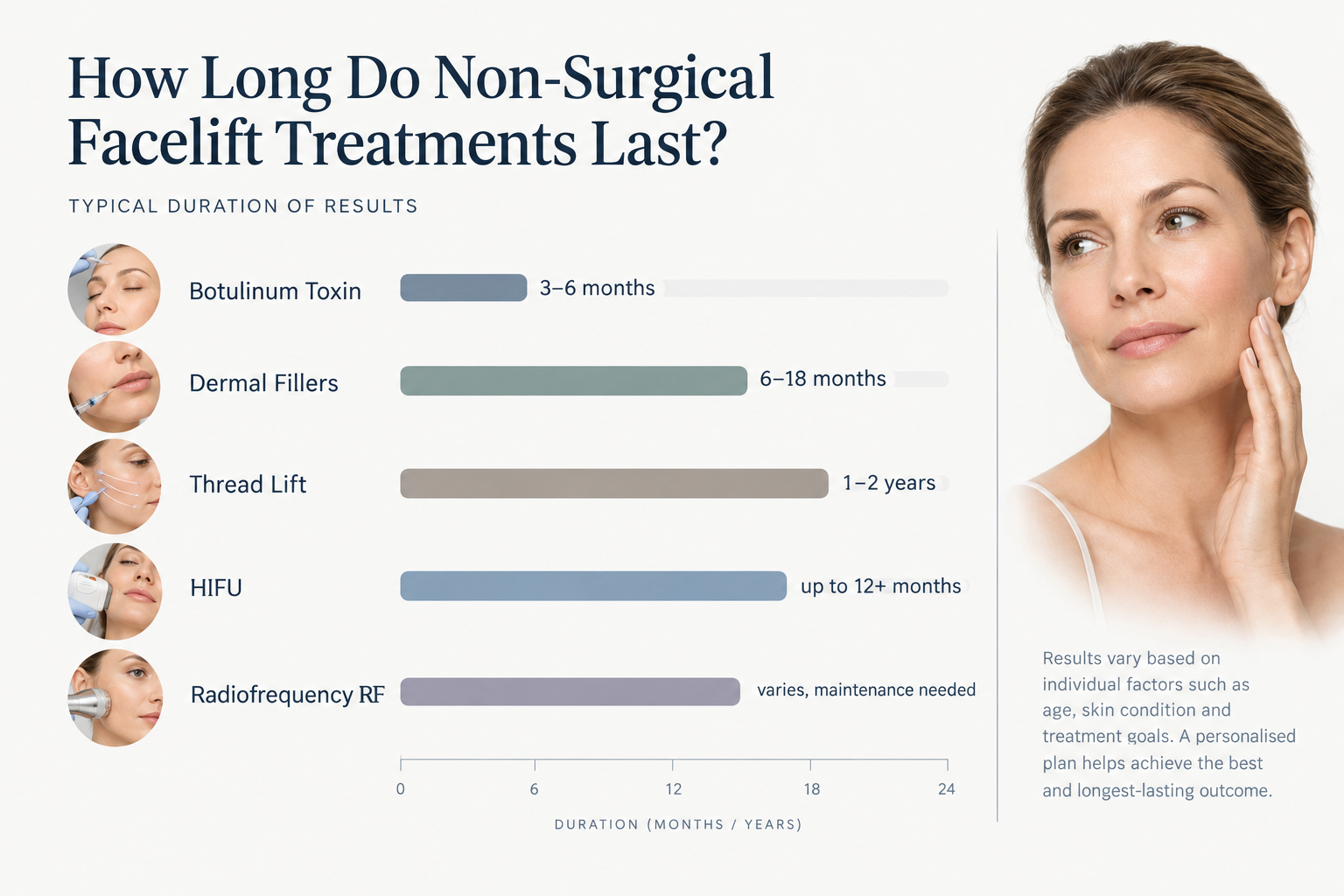
Individual response to treatment varies considerably. Factors such as skin quality, lifestyle, sun exposure, smoking, and the natural rate of ageing all influence how long results last and how pronounced they appear. Patients should approach non-surgical lifting with realistic expectations and an understanding that results will differ from person to person.
Risks, Side Effects, and Safety Considerations
Every aesthetic treatment carries some degree of risk, and non-surgical procedures are no exception. Common side effects across most non-surgical lifting treatments include temporary redness, swelling, bruising, and tenderness at the treatment site. These typically resolve within a few days to two weeks depending on the treatment type.
More significant risks vary by treatment category. Injectable treatments carry risks of asymmetry, vascular complications, and infection. Thread lifts carry risks of thread migration, puckering, and extrusion. Energy-based devices carry risks of burns, nerve irritation, and pigmentation changes if used incorrectly or in unsuitable patients. Serious complications are uncommon when treatments are performed by appropriately trained practitioners using suitable equipment, but they are not impossible, and patients should be informed of the relevant risks for each treatment before consenting.
Choosing a practitioner with appropriate medical qualifications, specific training in the treatments being offered, and access to emergency protocols is one of the most important safety decisions a patient can make. Regulatory requirements for practitioners performing aesthetic treatments vary by country, and patients should verify the qualifications and registration of any practitioner they consult.
Non-Surgical vs Surgical Facelift: Understanding the Difference
A surgical facelift — technically called a rhytidectomy — involves repositioning the deeper facial tissues, tightening the SMAS layer, and removing excess skin through incisions typically placed around the ears and hairline. The results are more dramatic and longer-lasting than any non-surgical approach, and surgery remains the most effective intervention for significant skin laxity and structural descent.
Non-surgical treatments are not a direct substitute for surgery in patients who have reached the point where surgery would provide the most appropriate correction. They are, however, a legitimate option for patients who are not yet at that stage, who have medical reasons to avoid surgery, or who prefer a gradual and less invasive approach. Some patients use non-surgical treatments to extend the results of a previous surgical facelift, addressing the ongoing effects of ageing between surgical procedures.
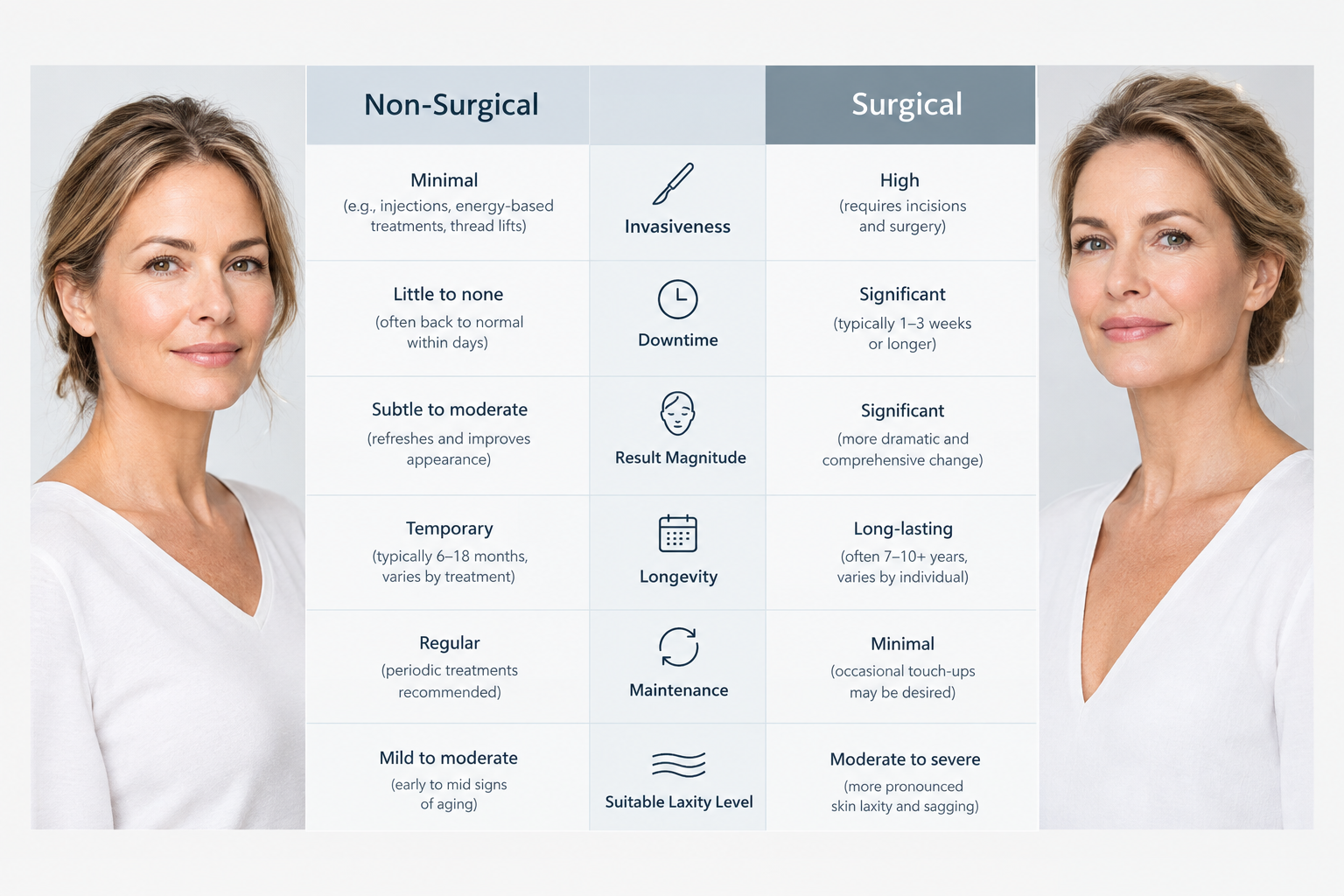
The decision between non-surgical and surgical approaches should be made in consultation with a qualified practitioner — ideally one who can offer both options or refer appropriately — based on an honest assessment of the patient’s anatomy, degree of ageing, goals, and medical suitability.
Frequently Asked Questions
How many sessions will I need?
The number of sessions depends on the treatment type and individual goals. Botulinum toxin and dermal fillers are typically administered in single sessions and then repeated for maintenance. Energy-based treatments such as radiofrequency may be recommended as a course of three to six sessions initially. Thread lifts are usually performed in a single session. A practitioner will recommend a treatment plan based on your specific assessment.
Is a non-surgical facelift painful?
Discomfort varies by treatment. Injectable treatments involve needle insertion, which most patients find manageable, particularly with topical anaesthetic applied beforehand. HIFU can be uncomfortable during the procedure due to the heat sensation at the focal points. Microneedling RF involves skin penetration and may cause more noticeable discomfort. Practitioners typically use topical anaesthetic creams and may adjust device settings to improve comfort.
How long do results last?
Longevity varies considerably by treatment type and individual factors. Botulinum toxin results generally last three to six months. Hyaluronic acid fillers may last six to eighteen months. Thread lifts may provide benefit for one to two years. HIFU and RF results can last twelve months or more in some patients but typically require maintenance sessions. No non-surgical treatment provides permanent results.
Can non-surgical treatments be combined?
Yes, and combination approaches are common in clinical practice. Combining treatments that address different aspects of facial ageing — such as volume loss, skin laxity, and dynamic lines — can produce more comprehensive results. The sequencing and timing of combination treatments should be planned carefully by an experienced practitioner.
Are there any treatments I should avoid if I have had fillers previously?
Some energy-based treatments may affect existing filler, and practitioners will typically ask about previous injectable treatments before proceeding. Hyaluronic acid fillers can be dissolved with hyaluronidase if needed before certain procedures. Always disclose your full treatment history during consultation.
What is the difference between HIFU and radiofrequency for skin tightening?
Both HIFU and radiofrequency use energy to heat tissue and stimulate collagen production, but they work at different depths and through different mechanisms. HIFU delivers focused ultrasound energy to precise depths, including the SMAS layer, and is typically performed in a single session. Radiofrequency heats the dermis and deeper layers through electrical energy and is often delivered in multiple sessions. Both can improve skin laxity, but neither matches the structural correction of surgery.
Is a Non-Surgical Facelift the Right Approach for You?
Non-surgical facelift treatments offer a genuine and clinically supported route to facial rejuvenation for patients with mild to moderate signs of ageing who are seeking improvement without the commitment, recovery, or risks associated with surgery. The range of available treatments — from botulinum toxin and dermal fillers to thread lifts, HIFU, and radiofrequency — means that a tailored plan can often be designed to address the specific concerns most relevant to an individual patient.
The key is honest expectation-setting. Non-surgical treatments can refresh, refine, and subtly lift — but they cannot replicate the structural correction that surgery provides, and their results require ongoing maintenance. For patients with significant skin laxity or structural descent, a surgical consultation may ultimately be the more appropriate path, and a trustworthy practitioner will say so clearly rather than recommending treatments unlikely to meet your goals.
If you are considering non-surgical lifting treatments, a thorough consultation with a qualified and experienced aesthetic practitioner is the essential first step. A good consultation will include an honest assessment of your facial anatomy, a realistic discussion of what each treatment can achieve, a clear explanation of the risks involved, and a treatment plan tailored to your individual goals rather than a one-size-fits-all approach.


