
How Long Does Masseter Botox Last? Longevity, Results & What to Expect
Masseter Botox — botulinum toxin injected into the masseter muscles of the jaw — typically produces results that last between three and six months, though the exact duration varies considerably from person to person. For patients seeking jaw slimming, teeth grinding relief, or facial contouring, understanding what influences longevity can help set realistic expectations and plan maintenance appointments effectively.
Key Takeaways
- Most patients find masseter Botox results last between three and six months, with some experiencing effects for up to six months or slightly longer after repeated treatments.
- The masseter is a powerful chewing muscle, and its high activity level means botulinum toxin tends to wear off faster here than in less-active facial areas.
- Visible jaw slimming from muscle reduction may take eight to twelve weeks to become fully apparent, as the masseter gradually reduces in bulk after treatment.
- Factors such as muscle size, metabolism, injection technique, and treatment history all influence how long results last for an individual patient.
- Repeated treatments over time may extend the interval between sessions for some patients, as the masseter can reduce in size with consistent treatment.
What Is Masseter Botox and Why Is It Used?
The masseter is one of the primary muscles responsible for chewing. It runs along the lower jaw on each side of the face and, in some individuals, becomes enlarged — a condition known as masseter hypertrophy. This enlargement can create a wide, square jaw appearance, contribute to teeth grinding (bruxism), cause jaw tension or pain, and in some cases lead to temporomandibular joint (TMJ) discomfort. Botulinum toxin injected into the masseter temporarily reduces the muscle’s ability to contract with full force, which over time causes the muscle to reduce in bulk.
Masseter Botox is used for two broad purposes: aesthetic jaw slimming and functional relief from bruxism or jaw clenching. For aesthetic patients, the goal is typically a softer, more oval facial contour. For functional patients, the aim is to reduce the intensity of involuntary grinding or clenching, which can protect teeth and relieve associated headaches and jaw pain. Both groups benefit from understanding how long the treatment effects are likely to last and what influences that duration.
How Long Does Masseter Botox Last on Average?
For most patients, masseter Botox results last approximately three to six months. This range reflects the natural variation in how individuals metabolise botulinum toxin, the size and activity level of their masseter muscles, and the dose administered. Some patients, particularly those with very large or highly active masseters, may notice the effects beginning to wear off closer to the three-month mark. Others, especially those who have had repeated treatments over time, may find their results extend toward or beyond the six-month point.
It is worth noting that the masseter is a particularly active muscle. Unlike the forehead or glabellar area, where muscles are used primarily for expression, the masseter contracts repeatedly throughout the day during eating, speaking, and — in bruxism patients — during sleep. This constant activity accelerates the breakdown of botulinum toxin at the neuromuscular junction, which is one reason masseter Botox may not last as long as treatments in less-active facial areas. Patients who grind their teeth heavily at night may find their results wear off more quickly than those who do not.
For functional bruxism relief, many patients notice a reduction in jaw tension and grinding intensity within two to four weeks of treatment. This functional benefit may also begin to diminish as the toxin wears off, often prompting patients to schedule repeat appointments when symptoms return.
When Do Masseter Botox Results Become Visible?
The timeline for visible results from masseter Botox differs from treatments in other facial areas. Initial muscle relaxation — which may reduce jaw tension and clenching — can be noticed within one to two weeks of injection. However, the aesthetic change of jaw slimming takes considerably longer to appear.
Because the masseter reduces in bulk gradually as the muscle is no longer working at full capacity, visible facial contouring changes typically become apparent between six and twelve weeks after treatment. Full results — the maximum degree of jaw narrowing achievable from a given treatment — are usually seen at around eight to twelve weeks. This delayed onset is important for patients to understand, as judging the outcome too early may lead to unrealistic disappointment or unnecessary repeat injections before the full effect has developed.
Patients who are new to masseter Botox and have significantly enlarged masseters may find that a single treatment produces a noticeable but modest change, with more pronounced jaw slimming becoming apparent after two or three treatment cycles as the muscle progressively reduces in size.
Factors That Influence How Long Masseter Botox Lasts
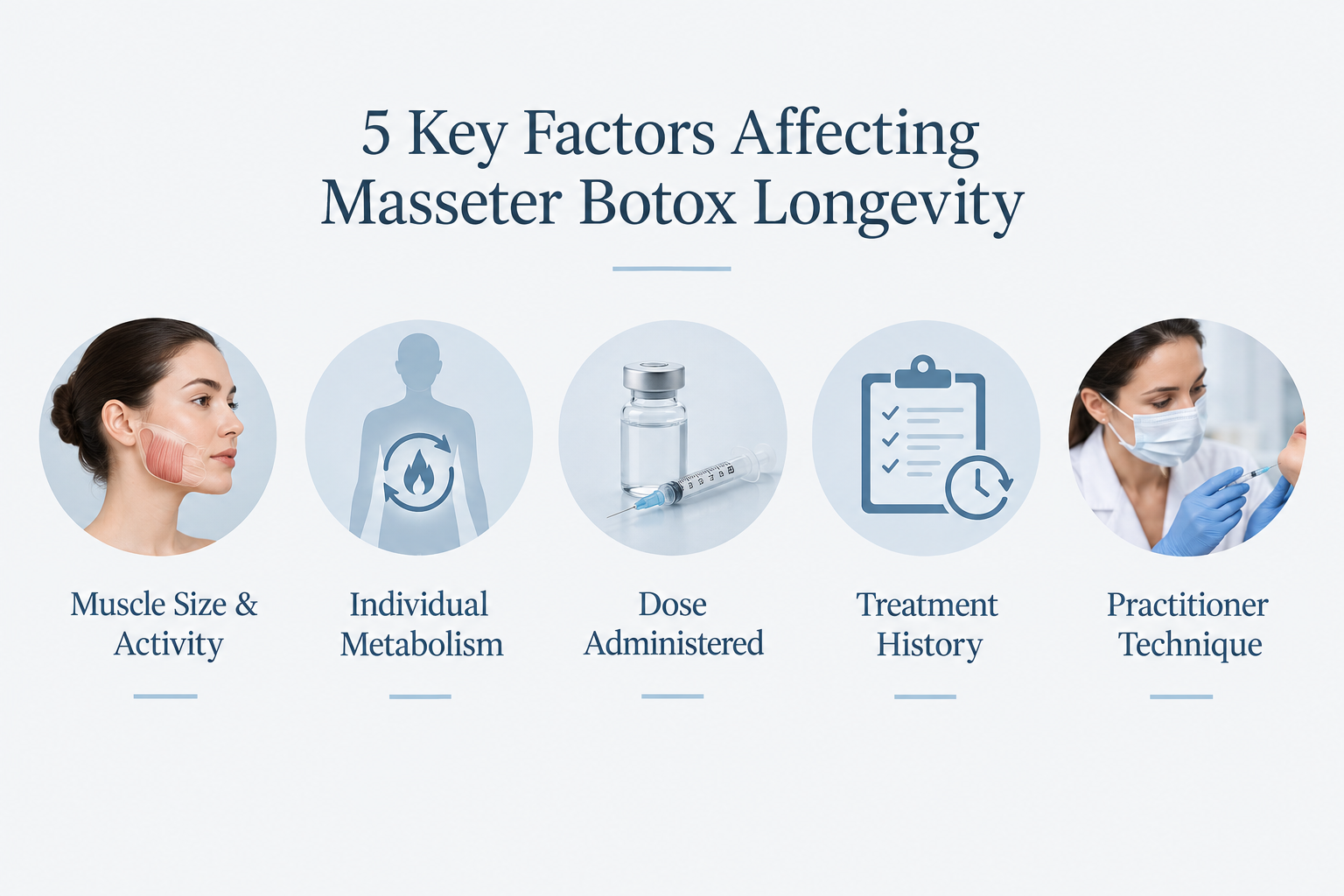
Several variables affect the duration of masseter Botox results for any individual patient. Understanding these factors can help explain why two people receiving the same treatment may have quite different experiences of longevity.
Muscle Size and Activity Level
Patients with larger, more developed masseter muscles generally require a higher dose of botulinum toxin to achieve adequate relaxation. A larger muscle also has more neuromuscular junctions, which means the toxin may wear off more quickly as the muscle gradually regains function. Patients who clench or grind heavily — whether during the day or at night — place greater demand on the masseter, which can accelerate the return of muscle activity and shorten the duration of results.
Individual Metabolism
Botulinum toxin is metabolised at different rates between individuals. Patients with a faster metabolic rate may find that the effects of masseter Botox wear off more quickly than average. This is a biological variable that is difficult to predict before treatment and may only become apparent after the first session. Regular exercise, particularly high-intensity training, has been suggested by some practitioners to potentially influence how quickly botulinum toxin is metabolised, though robust clinical evidence on this specific point remains limited.
Dose Administered
The amount of botulinum toxin used in masseter treatment influences both the degree of muscle relaxation and the duration of effect. A higher dose, where clinically appropriate, may produce a longer-lasting result. However, dose decisions must be made carefully by a qualified practitioner based on individual anatomy, muscle size, and treatment goals. Providing specific dose figures is not appropriate here, as dosing is a clinical decision that requires individual assessment.
Treatment History
Patients who have received masseter Botox consistently over multiple treatment cycles often report that their results last longer over time. This is thought to occur because repeated treatments cause the masseter to gradually atrophy — reducing in size — meaning the muscle requires less toxin to maintain relaxation and may remain relaxed for a longer period between sessions. For some patients, the interval between maintenance appointments may extend from three to four months initially to five or six months after several treatment cycles.
Botulinum Toxin Brand and Formulation
Different botulinum toxin products — such as Botox (onabotulinumtoxinA), Dysport (abobotulinumtoxinA), and others — have slightly different formulations and unit measurements. Units between brands are not directly interchangeable. Some practitioners and patients report subtle differences in onset and duration between products, though clinical evidence comparing longevity specifically in the masseter area is limited. The choice of product is a clinical decision made by the treating practitioner.
Practitioner Technique and Injection Placement
Accurate placement of botulinum toxin within the masseter muscle is important for both the effectiveness and duration of results. Injections placed too superficially may not adequately reach the deeper muscle fibres, potentially reducing both the degree of relaxation and how long the effect lasts. An experienced practitioner with a thorough understanding of facial anatomy is better positioned to achieve consistent, longer-lasting outcomes.
How Does Masseter Botox Longevity Compare to Other Treatment Areas?
Masseter Botox generally lasts a shorter time than botulinum toxin treatments in areas such as the forehead, glabella (between the brows), or crow’s feet. Treatments in those areas often last three to four months on average, but the masseter’s high activity level means results in this area can fall toward the lower end of the typical range — particularly for first-time patients or those with significant bruxism.
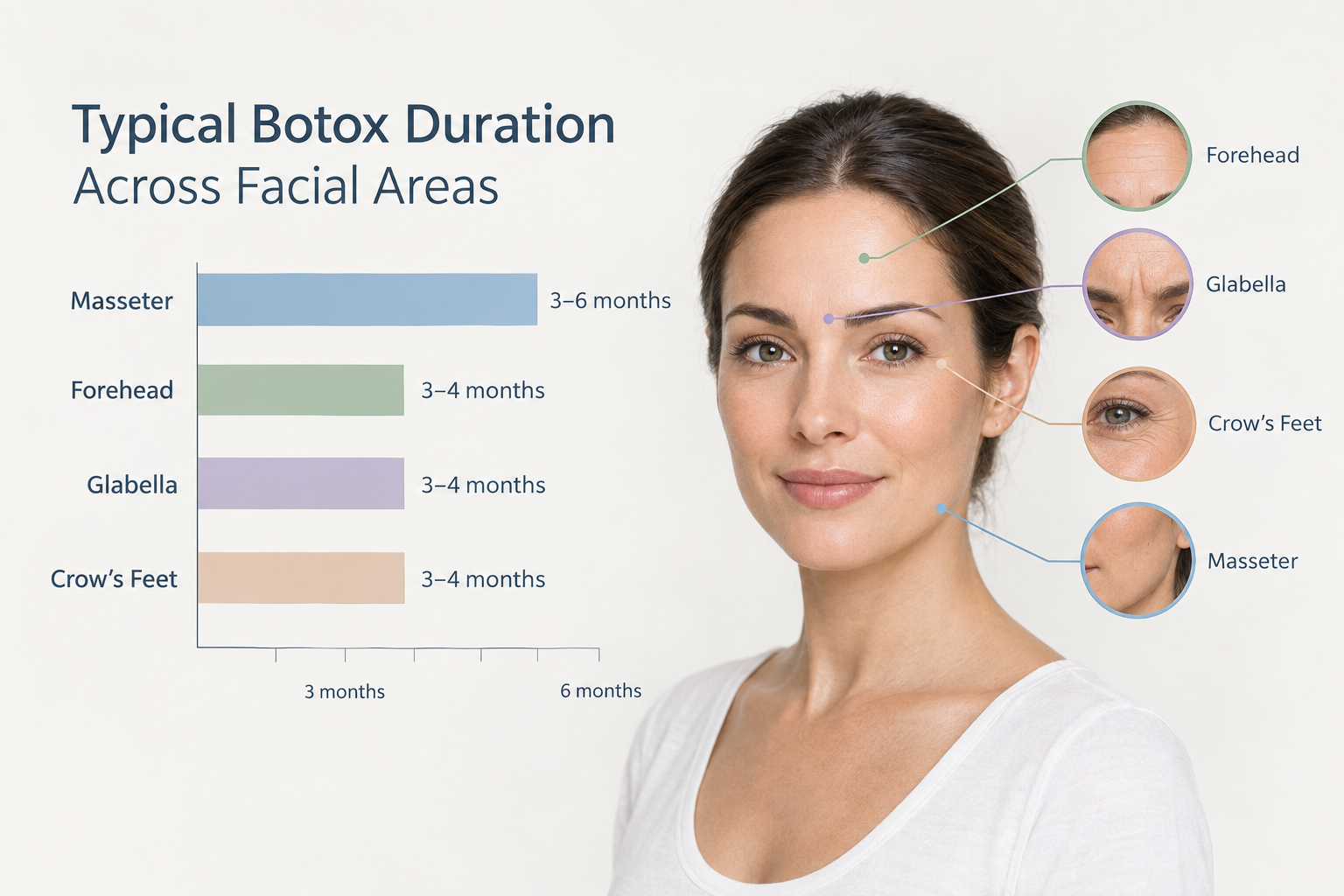
By contrast, botulinum toxin used in areas with lower muscle activity — such as the neck (platysmal bands) or certain lip treatments — may also have variable duration. The masseter is unique in that its functional role in chewing means it is almost constantly in use, which distinguishes it from purely expressive muscles and contributes to the faster breakdown of the toxin’s effect.
Maintaining Masseter Botox Results Over Time
For patients who wish to maintain jaw slimming or ongoing bruxism relief, repeat treatments are necessary. Most practitioners recommend scheduling a follow-up appointment when the effects begin to wear off — typically every three to six months, depending on individual response. Waiting too long between treatments allows the masseter to fully regain its size and activity, which may mean starting the reduction process again from the beginning.
Consistent treatment over one to two years may lead to a sustained reduction in masseter bulk for some patients, potentially allowing longer intervals between sessions. However, this outcome is not guaranteed and varies between individuals. If treatments are stopped entirely, the masseter will gradually return to its original size as muscle activity resumes fully, though the timeline for this varies.
Patients with bruxism may also benefit from combining masseter Botox with other management strategies, such as a custom occlusal splint (night guard), stress management, and physiotherapy, to address the underlying causes of grinding and clenching. Botulinum toxin alone does not treat the root cause of bruxism.
Risks, Side Effects, and Limitations
Masseter Botox is generally considered well-tolerated when performed by a qualified practitioner, but it carries potential risks and side effects that patients should understand before proceeding.
Common side effects include temporary soreness or tenderness at the injection site, mild swelling or bruising, and a feeling of tightness or heaviness in the jaw in the days following treatment. These effects typically resolve within a few days to two weeks. Some patients notice a temporary change in chewing strength, particularly when eating hard or chewy foods, as the masseter is less able to contract with full force. This usually resolves as the body adapts or as the treatment wears off.
Less common but more significant concerns include asymmetry if the toxin affects the two sides of the jaw differently, unintended spread to adjacent muscles (which could affect smile or lip movement), and — rarely — difficulty chewing. Choosing a practitioner with specific experience in masseter injections and a thorough knowledge of facial anatomy reduces these risks but does not eliminate them entirely.
Masseter Botox is not suitable for everyone. It is generally not recommended during pregnancy or breastfeeding, for patients with certain neuromuscular conditions, or for those with known hypersensitivity to botulinum toxin or its components. A full medical history and clinical assessment are necessary before treatment to determine individual suitability.
Alternatives to Masseter Botox for Jaw Contouring
For patients who are not suitable candidates for botulinum toxin, or who are exploring their options, several alternatives exist for jaw contouring and bruxism management, though each has different mechanisms, evidence bases, and limitations.
- Dermal fillers: While fillers are more commonly used to add volume rather than reduce it, strategic placement can sometimes create the appearance of a more balanced facial contour. Fillers do not reduce masseter muscle bulk.
- Surgical jaw reduction (masseter reduction surgery): This involves surgical removal or reduction of part of the masseter muscle or the underlying bone. It produces permanent results but carries significantly greater risks, recovery time, and cost compared to botulinum toxin treatment.
- Occlusal splints (night guards): Custom-fitted dental appliances worn during sleep can protect teeth from grinding damage and may reduce jaw muscle strain, but they do not reduce masseter size or provide the aesthetic jaw slimming effect of botulinum toxin.
- Physiotherapy and jaw exercises: These may help manage jaw tension and TMJ-related symptoms but are unlikely to produce visible jaw slimming in cases of true masseter hypertrophy.
- Radiofrequency or ultrasound treatments: Some non-surgical body contouring technologies have been explored for facial applications, but evidence specifically for masseter reduction using these modalities remains limited and they are not a standard alternative to botulinum toxin for this indication.
The most appropriate option depends on the patient’s primary concern — whether aesthetic, functional, or both — their medical history, and their expectations. A qualified practitioner can help determine which approach, or combination of approaches, may be most suitable.
Frequently Asked Questions
Does masseter Botox last longer after multiple treatments?
For many patients, yes. Repeated masseter Botox treatments over time can cause the muscle to gradually reduce in size, which may mean the toxin lasts longer between sessions. Some patients who initially needed treatment every three to four months find they can extend to every five or six months after consistent treatment over one to two years. This is not guaranteed and varies between individuals.
Will my jaw go back to its original size if I stop treatment?
If masseter Botox treatments are discontinued, the muscle will gradually regain its activity and, over time, return toward its original size. The timeline for this varies, but patients who have had consistent treatment for an extended period may find the return is slower than it would be after a single treatment. The masseter does not permanently atrophy from botulinum toxin alone.
Can I speed up or slow down how long masseter Botox lasts?
There is no reliably proven method to extend the duration of masseter Botox results. Some practitioners suggest that avoiding excessive jaw activity — such as chewing very hard foods frequently — may help, but evidence for this is anecdotal. High-intensity exercise has been suggested to potentially accelerate metabolism of the toxin, though clinical evidence is limited. Maintaining a consistent treatment schedule is the most practical approach to sustaining results.
How soon after masseter Botox can I eat normally?
Most patients can eat normally shortly after treatment, though practitioners typically advise avoiding very hard or chewy foods for a day or two while any initial tenderness resolves. As the treatment takes effect over the following weeks, some patients notice a temporary reduction in chewing strength, particularly with tough foods. This is expected and usually resolves as the muscle adapts.
Is masseter Botox effective for TMJ pain?
Botulinum toxin injected into the masseter may help reduce jaw tension and the intensity of clenching associated with bruxism, which can in turn alleviate some TMJ-related symptoms such as jaw pain and headaches. However, TMJ disorders have multiple causes, and masseter Botox addresses only the muscular component. It is not a treatment for structural TMJ problems and should be considered as part of a broader management plan where appropriate.
How many units of Botox are used in the masseter?
The amount of botulinum toxin used varies depending on the size of the masseter, the degree of hypertrophy, and the treatment goals. Dosing is a clinical decision made by the treating practitioner after assessing individual anatomy. Providing specific unit figures here would not be appropriate, as the same number of units may produce very different results in different patients and across different botulinum toxin brands.
Can masseter Botox change my face shape permanently?
Masseter Botox does not produce permanent changes. The muscle will gradually return toward its original size if treatments are stopped. However, with consistent treatment over an extended period, some degree of sustained muscle reduction may persist for longer than a single treatment cycle. Any changes to facial shape are temporary and reversible over time.
Planning Your Masseter Botox Treatment: What to Discuss at Consultation
Before proceeding with masseter Botox, a thorough consultation with a qualified and experienced practitioner is essential. During this appointment, the practitioner should assess the size and symmetry of your masseter muscles, discuss your primary goals — whether aesthetic, functional, or both — review your medical history and any medications, and explain realistic expectations for results and longevity based on your individual anatomy.
Questions worth raising at consultation include how many treatment sessions may be needed before optimal results are visible, what the recommended interval between treatments is for your specific situation, what side effects to watch for and when to seek advice, and whether any complementary approaches — such as a night guard for bruxism — would be beneficial alongside botulinum toxin treatment.
Is Masseter Botox Worth Maintaining Long-Term?
For patients with genuine masseter hypertrophy or significant bruxism, masseter Botox can offer meaningful benefits — both aesthetic and functional — that many find worth maintaining over time. The treatment is minimally invasive, requires no downtime, and for most patients produces a gradual, natural-looking change in jaw contour alongside relief from jaw tension and grinding-related symptoms.
The main practical consideration is that results are temporary. Maintaining jaw slimming or bruxism relief requires repeat appointments, typically every three to six months, and the associated ongoing cost. For some patients, the interval between treatments may extend with consistent use, making long-term maintenance more manageable. For others, the muscle may remain highly active and require more frequent treatment.
Whether masseter Botox is the right choice depends on your specific goals, the degree of masseter hypertrophy present, your tolerance for repeat treatments, and your overall health. A consultation with a practitioner experienced in facial anatomy and botulinum toxin treatment is the most reliable way to assess whether this approach is appropriate for you and what realistic outcomes you might expect.


