
Filler in Cheeks to Lift Jowls: How Cheek Volumising Works
Jowling — the gradual descent of soft tissue along the lower face — is one of the most common concerns that brings patients to aesthetic consultations. While surgical options such as facelifts remain the most definitive approach, a growing number of people are exploring whether dermal filler placed in the cheeks can provide a meaningful, non-surgical lift to the jowl area. The short answer is that strategically placed cheek filler can improve the appearance of mild to moderate jowling in suitable candidates, though it works differently from surgery and has real limitations worth understanding before you decide.
Key Takeaways
- Cheek filler can help lift and soften the appearance of jowls by restoring lost midface volume and improving structural support for the overlying soft tissue.
- Results are typically visible within one to two weeks and may last between twelve and twenty-four months depending on the product used, the individual’s metabolism, and the volume placed.
- This approach works best for mild to moderate jowling caused primarily by volume loss and soft tissue descent; it is unlikely to replicate the results of a surgical facelift for significant laxity.
- Risks include bruising, swelling, asymmetry, and rare but serious vascular complications; treatment should only be performed by a qualified, experienced practitioner.
- A thorough consultation is essential to assess facial anatomy, skin laxity, and whether cheek volumising is the most appropriate option for your individual concerns.
Why Jowls Develop: The Role of Volume Loss
Understanding why jowls form helps explain why cheek filler can sometimes address them. Facial ageing is not simply a matter of skin becoming loose. It involves a combination of bone resorption, fat compartment deflation, ligament laxity, and changes in skin quality — all occurring simultaneously over decades. The cheeks are particularly important in this process. The malar fat pad, which sits over the cheekbone and gives the midface its youthful fullness, gradually descends and deflates with age. As this central support structure weakens, the soft tissue it once held in place migrates downward, accumulating along the jawline as jowls.
The zygomatic ligaments and masseteric ligaments act as anchoring points for facial soft tissue. When the volume above these ligaments diminishes, the tissue below them — including the jowl area — becomes more prominent. This is why restoring volume to the cheek and midface region can, in appropriate cases, have a lifting effect on the lower face. The principle is sometimes described as a “scaffolding” effect: rebuilding the structural foundation allows the overlying tissue to sit higher and appear more supported.
How Cheek Filler Works to Address Jowling
Dermal fillers used for cheek volumising are most commonly based on hyaluronic acid, a naturally occurring substance found in skin and connective tissue. Hyaluronic acid fillers attract and retain water, adding volume and structure to the area where they are placed. For the purpose of lifting jowls, the filler is typically placed in the deep fat compartments of the midface, along the cheekbone, or in the area just above the zygomatic arch, rather than superficially in the skin.
When volume is restored to the upper and mid cheek, the soft tissue that has descended toward the jawline can be partially redistributed upward. This does not physically move the jowl tissue in the way surgery does, but it can reduce the visual contrast between the cheek and the lower face, soften the jowl shadow, and improve the overall contour of the lower face. The effect is often described as a gentle repositioning rather than a dramatic correction. Practitioners may also use thicker, more cohesive hyaluronic acid formulations — or in some cases calcium hydroxylapatite fillers — when structural lift is the primary goal, as these products tend to provide greater projection and support.
The placement technique matters considerably. Injecting filler too superficially in the cheek area can create an unnatural appearance without providing meaningful lift. Experienced practitioners typically use a cannula or needle to deposit product in precise anatomical layers, taking into account the patient’s existing bone structure, fat distribution, and degree of skin laxity.
Who May Be a Suitable Candidate
Cheek filler for jowl lifting tends to produce the most satisfying outcomes in patients who have experienced noticeable volume loss in the midface alongside mild to moderate soft tissue descent. If the primary driver of jowling is deflation and gravitational descent of previously well-supported tissue, restoring that volume can make a visible difference. Patients who still have reasonable skin elasticity are generally better candidates than those with significant skin laxity, because the skin needs some capacity to respond to the repositioning effect of the filler.
Age is not the sole determining factor. Some patients in their late thirties or forties with early volume loss may respond well, while others in their fifties or sixties with more advanced laxity may find that cheek filler alone provides only modest improvement. A practitioner will typically assess the degree of jowling, the quality and thickness of the overlying skin, the underlying bone structure, and the patient’s overall facial proportions before recommending this approach.
Patients who may not be well suited to cheek filler for jowl lifting include those with:
- Significant skin laxity where surgical intervention would be more appropriate
- Very heavy jowls where the volume of filler required would be disproportionate or unnatural
- Active skin infection or inflammation in the treatment area
- A history of severe allergic reactions to filler components
- Certain autoimmune conditions or bleeding disorders that may affect suitability
- Pregnancy or breastfeeding
- Unrealistic expectations about the degree of correction achievable without surgery
What the Treatment Involves
A cheek volumising appointment for jowl improvement typically begins with a detailed consultation, either at the same visit or separately, during which the practitioner assesses facial anatomy, discusses goals, reviews medical history, and explains realistic outcomes. Photographs are usually taken for reference and comparison.
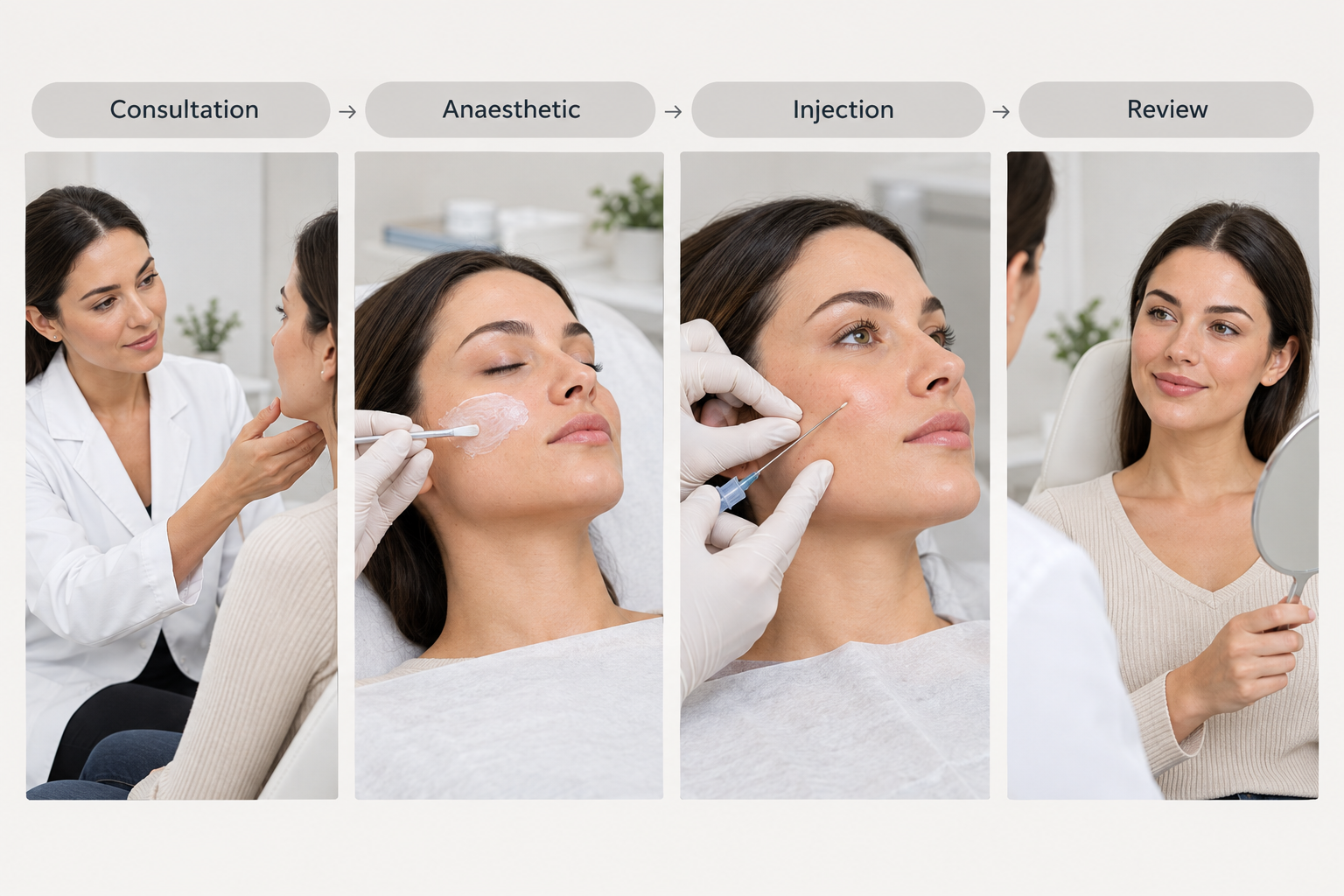
On the day of treatment, a topical anaesthetic cream is commonly applied to the cheek area for twenty to thirty minutes before the procedure begins. Many hyaluronic acid fillers also contain lidocaine, a local anaesthetic, within the formulation, which helps reduce discomfort during injection. The injections themselves are generally well tolerated, though some patients experience a sensation of pressure or mild stinging. The appointment typically takes between thirty and sixty minutes depending on the volume being placed and the technique used.
Practitioners may use a fine needle or a blunt-tipped cannula. Cannulas are often preferred in the cheek area because they can reduce bruising risk and allow the practitioner to deposit product more precisely in deeper tissue planes. The total volume of filler placed varies considerably between patients; some may require one to two millilitres per side, while others may need more across multiple sessions to achieve their desired outcome.
Recovery and Downtime
Most patients experience some degree of swelling and redness immediately after cheek filler treatment, which is a normal response to the injections. Bruising is possible, particularly around the injection sites, and may take several days to resolve. The cheeks may feel tender or slightly firm in the days following treatment as the filler settles into position.
Significant downtime is not usually required, and many patients return to work or daily activities the same day or the following day. However, it is generally advisable to avoid strenuous exercise, alcohol, and excessive heat — such as saunas or hot baths — for at least twenty-four to forty-eight hours after treatment, as these can increase swelling and bruising. Sleeping with the head slightly elevated on the first night may also help reduce swelling.
Initial swelling can temporarily make the cheeks appear fuller than the final result will be. Most practitioners advise waiting at least two weeks before assessing the outcome, as swelling subsides and the filler integrates with the surrounding tissue during this period. A follow-up appointment is often recommended at two to four weeks to review the result and determine whether any refinement is needed.
How Long Results May Last
The longevity of cheek filler results varies between individuals and depends on several factors, including the specific product used, the volume placed, the depth of placement, and individual metabolic rate. Hyaluronic acid fillers placed in the deep cheek area tend to last longer than those placed more superficially, partly because the area experiences less movement. Many patients find that results in the cheek region last between twelve and twenty-four months, though some report longer-lasting effects with thicker, more cohesive formulations.
Calcium hydroxylapatite fillers, which are sometimes used for structural cheek augmentation, may also provide results lasting up to eighteen months or longer in some patients, and they additionally stimulate some degree of collagen production over time. However, unlike hyaluronic acid fillers, calcium hydroxylapatite cannot be dissolved with hyaluronidase if a correction is needed, which is an important consideration when discussing product choice with your practitioner.
Maintenance treatments are typically required to sustain the lifting effect on the jowl area. Over time, as the filler gradually metabolises, the soft tissue support it provided diminishes and the jowling may become more apparent again. Some practitioners recommend a top-up treatment before the filler has fully dissolved, as this can help maintain a more consistent result over time.
Risks and Side Effects
Cheek filler is associated with a range of possible side effects and risks that patients should understand before proceeding. Common and expected side effects include temporary swelling, bruising, redness, and tenderness at the injection sites. These typically resolve within a few days to two weeks.
Less common but more significant risks include:
- Asymmetry: Uneven placement or differential swelling can result in asymmetry, which may require correction at a follow-up appointment.
- Nodules or lumps: Filler placed incorrectly or in the wrong tissue plane can create palpable or visible lumps. Hyaluronic acid filler lumps can often be dissolved with hyaluronidase.
- Tyndall effect: Superficial placement of hyaluronic acid filler can cause a bluish discolouration of the skin, though this is less common in the deeper cheek area.
- Infection: Although uncommon, infection can occur and requires prompt medical attention.
- Vascular occlusion: This is a rare but serious complication in which filler inadvertently enters or compresses a blood vessel, potentially compromising blood supply to the skin or, in very rare cases, causing visual disturbance. The cheek area contains important vascular structures, and this risk underscores the importance of treatment by a highly trained practitioner who carries hyaluronidase and is trained in managing this emergency.
- Delayed inflammatory reactions: Some patients experience delayed nodules or swelling weeks or months after treatment, sometimes triggered by illness or dental procedures.
The risk profile of cheek filler is generally considered acceptable when treatment is performed by a qualified medical professional with appropriate training in facial anatomy and complication management. Choosing an unqualified or inexperienced injector significantly increases the risk of adverse outcomes.
Combining Cheek Filler with Other Treatments
Cheek volumising is often most effective when considered as part of a broader facial assessment rather than as an isolated treatment. Jowling frequently involves not only volume loss in the midface but also changes in the jawline, chin projection, and skin quality. A practitioner may recommend combining cheek filler with other approaches to achieve a more balanced and natural-looking result.
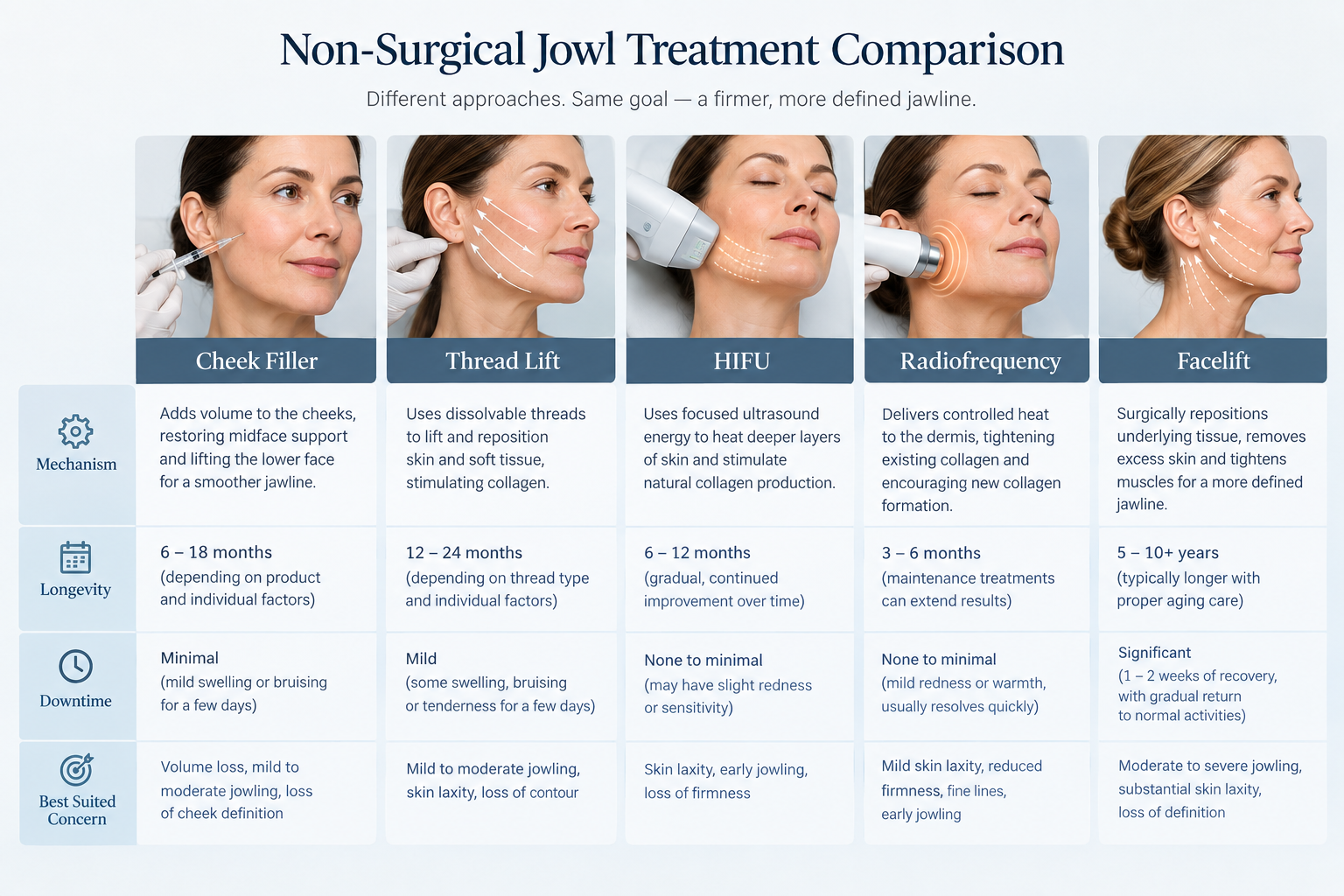
Jawline filler can help define the lower face and reduce the visual prominence of jowls by improving the overall contour of the mandible. Chin filler may improve facial proportions and provide additional structural support. Skin-tightening treatments such as radiofrequency microneedling, high-intensity focused ultrasound (HIFU), or thread lifts may complement the volumising effect of cheek filler by addressing skin laxity that filler alone cannot correct. Botulinum toxin injections in the platysma or masseter area may also contribute to an improved lower face appearance in some patients.
The appropriateness of combining treatments depends on individual anatomy, the degree of concern, and the patient’s goals and budget. A practitioner experienced in full-face assessment is better placed to recommend a treatment plan that addresses the underlying causes of jowling rather than focusing on a single area in isolation.
Alternatives to Cheek Filler for Jowl Improvement
Cheek filler is one of several non-surgical options that may help improve the appearance of jowls, and it is not the right choice for every patient. Understanding the alternatives helps in making an informed decision.
- Thread lifts: Dissolvable threads inserted under the skin can provide mechanical lifting of the jowl and lower face. Results are typically visible immediately and may last twelve to eighteen months. Thread lifts address laxity more directly than filler but carry their own risks, including thread migration, dimpling, and infection.
- High-intensity focused ultrasound (HIFU): HIFU devices deliver focused ultrasound energy to the deep structural layers of the skin, stimulating collagen production and providing a gradual tightening effect. Results develop over two to three months and may last up to a year or more. HIFU is better suited to mild laxity and skin quality improvement than to significant volume loss.
- Radiofrequency treatments: Radiofrequency energy heats the deeper skin layers to stimulate collagen remodelling. Various devices are available, including those combined with microneedling. Results are gradual and cumulative, and multiple sessions are usually required.
- Surgical facelift: For patients with significant jowling and skin laxity, a surgical facelift remains the most effective and longest-lasting option. Surgery directly addresses excess skin and repositions the underlying soft tissue in a way that non-surgical treatments cannot replicate. It carries greater risks and recovery time but can produce more dramatic and durable results.
- Lower face filler alone: Some practitioners inject filler directly into the jowl area or along the pre-jowl sulcus to camouflage the depression rather than lift the tissue. This can soften the appearance of jowls but does not address the underlying cause and may not be appropriate for all patients.
Frequently Asked Questions
Can cheek filler really lift jowls, or is it just a temporary fix?
Cheek filler can produce a genuine lifting effect on mild to moderate jowling by restoring the structural support that has been lost through volume depletion. However, the results are temporary — typically lasting twelve to twenty-four months — and maintenance treatments are needed to sustain the improvement. It is not a permanent solution and does not address skin laxity in the way surgery does.
How much filler is typically needed to see a difference in the jowl area?
The volume required varies considerably between individuals depending on the degree of volume loss and the desired outcome. Some patients see meaningful improvement with one to two millilitres per side, while others may benefit from a staged approach across multiple sessions. Your practitioner will assess your anatomy and discuss a realistic treatment plan during consultation.
Will cheek filler make my face look overfilled or unnatural?
When placed by an experienced practitioner with a thorough understanding of facial anatomy and proportions, cheek filler should enhance the natural contour of the face rather than create an overfilled appearance. The risk of an unnatural result increases when excessive volume is placed or when the product is not positioned in the appropriate anatomical layer. Discussing your concerns and reviewing before-and-after examples with your practitioner before treatment is advisable.
Is cheek filler painful?
Most patients find cheek filler treatment tolerable. Topical anaesthetic cream is applied beforehand, and many filler formulations contain lidocaine to reduce discomfort during injection. Some patients experience a sensation of pressure or mild stinging, particularly when the product is being deposited in deeper tissue planes. Discomfort is generally brief and manageable.
How soon will I see results after cheek filler for jowls?
Some improvement is usually visible immediately after treatment, though initial swelling can make it difficult to assess the final result accurately. Most practitioners recommend waiting two weeks for swelling to fully subside before evaluating the outcome. The lifting effect on the jowl area typically becomes clearer once the filler has settled and integrated with the surrounding tissue.
Can cheek filler be reversed if I am unhappy with the result?
Hyaluronic acid fillers can be dissolved using an enzyme called hyaluronidase, which breaks down the filler relatively quickly. This provides an important safety net if the result is unsatisfactory or if a complication occurs. Calcium hydroxylapatite fillers cannot be dissolved in the same way, which is one reason hyaluronic acid products are often preferred when reversibility is a priority.
At what point should I consider surgery instead of filler for my jowls?
If jowling is primarily driven by significant skin laxity rather than volume loss, or if the degree of descent is advanced, non-surgical treatments including cheek filler are unlikely to provide a satisfying result. A qualified practitioner will be honest about the limitations of non-surgical approaches and may recommend a surgical consultation if your concerns are better addressed by a facelift or related procedure.
Is Cheek Filler the Right Approach for Your Jowl Concerns?
Cheek volumising with dermal filler is a clinically rational approach to mild and moderate jowling in patients whose primary issue is midface volume loss and soft tissue descent rather than significant skin laxity. By restoring the structural support of the midface, strategically placed filler can soften the appearance of jowls, improve lower face contour, and provide a refreshed appearance without surgery or extended downtime. The results are real but temporary, and they are most convincing in patients who are well selected and treated by practitioners with a thorough understanding of facial anatomy.
The treatment is not a substitute for surgery in patients with advanced jowling or substantial excess skin, and it works best when considered within the context of a full facial assessment rather than as a standalone fix. Combining cheek filler with complementary treatments — such as skin-tightening procedures or jawline definition — may produce a more balanced and longer-lasting improvement for some patients.
If you are considering cheek filler to address jowling, a detailed consultation with a qualified and experienced aesthetic practitioner is the essential first step. A thorough assessment of your facial anatomy, skin quality, and realistic expectations will help determine whether this approach is likely to meet your goals, or whether an alternative or combined strategy would serve you better.


