
Mini Neck Lift Cost in the UK: What Affects the Price?
A mini neck lift is a surgical procedure designed to address early to moderate signs of ageing in the neck and lower face, such as loose skin, mild jowling, and the early formation of neck bands. For many patients in the UK, understanding the cost of a mini neck lift is one of the first practical questions before booking a consultation. Pricing varies considerably depending on a range of clinical, geographic, and facility-related factors, and knowing what drives those differences can help you evaluate quotes more meaningfully and ask better questions when you meet a surgeon.
Key Takeaways
- Mini neck lift costs in the UK typically range from approximately £3,500 to £8,000 or more, depending on the surgeon, clinic, and individual treatment plan.
- The price usually reflects surgeon experience, anaesthesia type, facility standards, and the extent of the procedure rather than a fixed national rate.
- A mini neck lift is a surgical procedure with real recovery requirements and risks; cost should not be the sole deciding factor when choosing a provider.
- Non-surgical alternatives exist for milder concerns, but they generally produce more modest and less long-lasting results than surgery.
- A thorough in-person consultation with a qualified surgeon is essential before committing to any surgical plan or price.
What Is a Mini Neck Lift?
A mini neck lift, sometimes called a limited-incision neck lift or a short-scar neck lift, is a surgical procedure that targets the neck and lower jawline with smaller incisions than a traditional full neck lift or facelift. The procedure typically involves incisions placed discreetly around or behind the ears, through which the surgeon repositions underlying tissue, tightens the platysma muscle (the broad, flat muscle running down the front of the neck), and removes or redistributes excess skin. Because the incisions are shorter and the dissection is less extensive than in a full neck lift, recovery time is generally reduced, though it is still a surgical procedure requiring appropriate aftercare.
A mini neck lift is generally considered most suitable for patients with mild to moderate skin laxity, early jowling, or the beginning of a double chin caused by skin looseness rather than significant fat accumulation. Patients with more advanced neck ageing, significant excess skin, or prominent platysmal banding may be better served by a full neck lift or a combined facelift and neck lift procedure. Determining which approach is appropriate requires a face-to-face assessment by a qualified plastic or cosmetic surgeon.
Typical Mini Neck Lift Cost in the UK
Mini neck lift pricing in the UK does not follow a single national standard. Based on general market information, patients can expect to encounter quotes ranging from approximately £3,500 at the lower end to £8,000 or above at established surgical practices in major cities, particularly London. Some highly experienced consultant plastic surgeons in private practice may charge above this range. Prices at the lower end of the market warrant careful scrutiny, as very low quotes may reflect limited surgeon experience, reduced facility standards, or a procedure scope that does not fully address the patient’s concerns.
It is important to understand that a quoted price for a mini neck lift should be a comprehensive figure covering all components of the procedure. Receiving a headline price that excludes anaesthesia fees, facility costs, or follow-up appointments can make meaningful price comparisons difficult. Always ask for a fully itemised breakdown before comparing quotes from different providers.
Factors That Affect Mini Neck Lift Cost
Several distinct factors influence what a patient will pay for a mini neck lift in the UK. Understanding each one helps explain why two clinics may quote very different prices for what appears to be the same procedure.

Surgeon Qualifications and Experience
The training, credentials, and experience of the operating surgeon are among the most significant drivers of cost. Consultant plastic surgeons who are on the GMC Specialist Register for plastic surgery, particularly those with a subspecialty interest in facial rejuvenation, typically charge higher fees than practitioners with less specialised training. This premium reflects years of surgical training, a track record of outcomes, and the ability to manage complications should they arise. In the UK, patients are advised to verify that their surgeon is registered with the General Medical Council (GMC) and, for surgical procedures, to look for membership of organisations such as the British Association of Plastic, Reconstructive and Aesthetic Surgeons (BAPRAS) or the British Association of Aesthetic Plastic Surgeons (BAAPS).
Geographic Location
Clinic location has a meaningful effect on pricing. Practices based in London and other major urban centres such as Manchester, Edinburgh, or Birmingham typically charge more than those in smaller towns, partly reflecting higher operating costs and partly reflecting local market demand. Patients sometimes consider travelling to a different city for surgery to access a specific surgeon or a lower price point, though this should be weighed against the practicalities of post-operative follow-up and travel during recovery.
Type of Anaesthesia
A mini neck lift may be performed under local anaesthesia with sedation or under general anaesthesia, depending on the extent of the procedure and the preferences of the surgeon and patient. General anaesthesia requires the involvement of a consultant anaesthetist and typically increases the overall cost. Local anaesthesia with sedation may reduce the anaesthetic component of the fee, though it is not appropriate for every patient or every surgical plan. The anaesthesia approach should be determined on clinical grounds rather than cost alone.
Facility and Theatre Standards
The type of facility where surgery is performed affects cost significantly. Procedures carried out in a Care Quality Commission (CQC)-registered hospital or surgical facility with full theatre support, overnight stay capability, and emergency protocols in place tend to cost more than those performed in smaller outpatient settings. However, the standards of the facility directly affect patient safety, and this is not an area where cost-cutting is advisable. Patients should confirm that the facility where their surgery will take place is appropriately registered and inspected.
Extent of the Procedure
The scope of the surgery itself influences cost. A straightforward mini neck lift addressing mild skin laxity in a younger patient will typically involve less operative time than a procedure combined with platysmal plication (tightening of the neck muscle), liposuction of submental fat, or additional work on the lower face. If a surgeon recommends combining a mini neck lift with other procedures such as blepharoplasty (eyelid surgery) or fat transfer, the overall cost will increase accordingly. Combining procedures can sometimes be more cost-effective than staging them separately, but the clinical rationale for any combination should be clearly explained.
Pre-operative Assessments and Consultations
Reputable surgical practices typically include a thorough pre-operative consultation, medical history review, and any required blood tests or health assessments within the overall package. Some clinics charge separately for initial consultations, which may or may not be deducted from the surgical fee if the patient proceeds. Clarifying what is included in the consultation process is an important part of understanding the true cost.
Post-operative Care and Follow-up
Comprehensive aftercare is an important component of any surgical procedure. This includes dressings, compression garments if required, follow-up appointments to monitor healing, and access to the surgical team if concerns arise during recovery. Some practices include a defined period of post-operative care within the quoted price; others may charge separately for additional appointments. Patients should ask specifically how many follow-up appointments are included and what happens if complications require additional clinical attention.
What Should Be Included in the Price?
A transparent and comprehensive quote for a mini neck lift in the UK should typically include the surgeon’s fee, the anaesthetist’s fee, theatre and facility costs, any required pre-operative tests, the immediate post-operative dressings and garments, and a defined number of follow-up appointments. Some practices also include a period of revision cover, meaning that if a minor revision is needed within a specified timeframe due to the outcome of the original procedure, this is addressed without additional charge. Not all providers offer this, and the terms vary, so it is worth asking about this directly.
Patients should be cautious of quotes that appear unusually low and should ask detailed questions about what is and is not included. A low headline price that excludes anaesthesia, facility fees, or aftercare may ultimately cost more than a higher all-inclusive quote from a more experienced provider.
Recovery and Downtime After a Mini Neck Lift
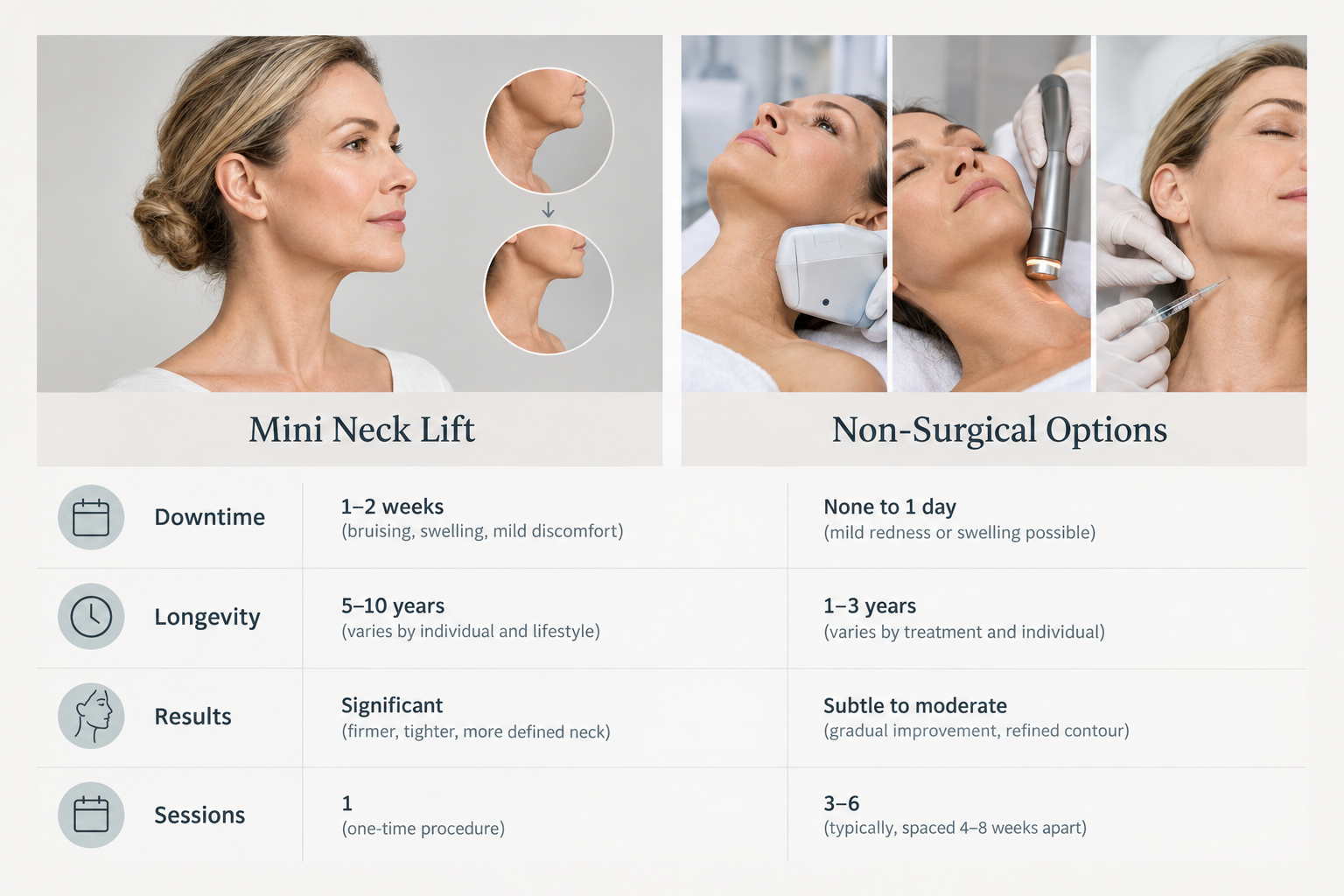
Recovery from a mini neck lift is generally shorter than from a full neck lift or facelift, but it still requires a meaningful period of rest and restricted activity. Most patients experience swelling, bruising, and some tightness in the neck and lower face in the first one to two weeks. Drains are not always required for a mini neck lift, though this depends on the surgical approach. Patients are typically advised to avoid strenuous activity for several weeks and to sleep with the head elevated during the early recovery period.
Most patients feel comfortable returning to desk-based work within one to two weeks, though visible bruising and swelling may persist for longer. The final result of a mini neck lift generally becomes more apparent over several months as residual swelling resolves and the tissues settle. Individual recovery timelines vary depending on age, general health, skin quality, and the extent of the procedure performed.
Risks and Limitations to Consider
A mini neck lift is a surgical procedure and carries the risks associated with any operation. These include the general risks of anaesthesia, infection, bleeding, and poor wound healing, as well as procedure-specific risks such as temporary or, in rare cases, prolonged changes in skin sensation, visible scarring, asymmetry, and changes in hairline position around the incision sites. Nerve injury affecting facial movement is a recognised but uncommon risk of neck and lower face surgery; the likelihood depends on the extent of the procedure and the experience of the surgeon.
Patients should also understand the limitations of a mini neck lift in terms of what it can realistically achieve. The procedure addresses skin laxity and early muscle changes but does not significantly alter bone structure, treat significant fat deposits without additional liposuction, or reverse all signs of ageing in the face. Patients with very significant skin excess, deep platysmal banding, or advanced facial ageing may find that a mini neck lift alone does not fully meet their expectations, and a more extensive procedure may be more appropriate.
Non-Surgical Alternatives and How They Compare
For patients who are not ready for surgery, have milder concerns, or prefer to avoid the risks and downtime of an operation, several non-surgical treatments may be worth discussing with a qualified practitioner. These include high-intensity focused ultrasound (HIFU), radiofrequency skin tightening, and injectable treatments such as botulinum toxin for platysmal bands. These approaches can produce noticeable improvements in skin quality and mild laxity, but they generally cannot replicate the degree of tissue repositioning and skin tightening achievable with surgery.
Non-surgical treatments for the neck tend to require multiple sessions, may need regular maintenance, and produce results that are typically less dramatic and less long-lasting than a surgical mini neck lift. They may be a reasonable starting point for patients in their late thirties or forties with early signs of neck laxity, or a useful complement to surgical results in the longer term. The choice between surgical and non-surgical approaches should be guided by the patient’s anatomy, goals, and tolerance for downtime and risk, ideally discussed with a practitioner who can offer both options objectively.
Financing and Payment Options
Because a mini neck lift is a cosmetic procedure, it is not available on the NHS and must be funded privately. Many surgical practices in the UK offer patient financing arrangements, allowing the cost to be spread over a period of months or years. Interest rates and terms vary between providers and finance companies, and patients should review these carefully before committing. It is worth noting that financing a surgical procedure means taking on a financial obligation regardless of the outcome, so the decision to proceed should be based on a thorough understanding of both the clinical and financial aspects.
Some patients choose to save for the procedure rather than use credit, which avoids interest costs. Regardless of the payment method, the choice of surgeon and facility should not be compromised in order to reduce cost, as the consequences of a poorly performed procedure can be both medically and financially significant to address.
Questions to Ask During Your Consultation
A pre-operative consultation is an opportunity to gather the information needed to make an informed decision. Useful questions to ask a surgeon considering a mini neck lift include:
- What specific technique will be used, and why is it appropriate for my anatomy?
- What does the quoted price include, and what might incur additional charges?
- What type of anaesthesia is planned, and who will administer it?
- Where will the surgery take place, and is the facility CQC-registered?
- What is your experience with this specific procedure, and how many have you performed?
- What results can I realistically expect, and what are the limitations for my case?
- What are the most likely risks and how would they be managed?
- How many follow-up appointments are included, and what is the process if I have concerns during recovery?
- Is there a revision policy, and what does it cover?
Frequently Asked Questions
Is a mini neck lift cheaper than a full neck lift?
Generally, yes. A mini neck lift typically involves less operative time, smaller incisions, and sometimes a less complex anaesthetic approach than a full neck lift, which tends to make it less expensive. However, the difference in cost varies between providers, and the appropriate procedure should be determined by clinical need rather than price alone.
How long do mini neck lift results last?
Results from a mini neck lift can last several years, though the ageing process continues after surgery. Many patients find that results remain satisfying for five to ten years, depending on their age at the time of surgery, skin quality, lifestyle factors such as sun exposure and smoking, and the surgical technique used. A mini neck lift does not stop future ageing, and some patients choose to have further treatment over time.
Can I combine a mini neck lift with other procedures?
Combining a mini neck lift with procedures such as blepharoplasty, fat transfer, or a brow lift is possible and may be recommended by a surgeon if multiple areas of concern are present. Combining procedures can reduce overall recovery time compared to staging them separately, but it also increases operative time and anaesthetic exposure. The decision to combine procedures should be made on clinical grounds following a thorough assessment.
Will the scars be visible after a mini neck lift?
Incisions for a mini neck lift are typically placed in discreet locations around or behind the ears, where they are largely concealed by natural skin folds and hair. Scarring varies between individuals depending on skin type, healing response, and surgical technique. Most patients find that scars fade significantly over several months and are not conspicuous in everyday life, though individual outcomes vary.
Is a mini neck lift suitable for men?
A mini neck lift can be performed in male patients, though surgical planning may differ slightly due to differences in skin thickness, beard distribution, and hairline position. Incision placement requires careful consideration in men to avoid visible scarring in areas where facial hair grows. A surgeon experienced in male facial surgery is best placed to advise on suitability and technique.
What happens if I am not happy with the result?
If a patient is dissatisfied with the outcome of a mini neck lift, the appropriate first step is to discuss concerns directly with the operating surgeon. Minor asymmetries or healing irregularities may improve with time or can sometimes be addressed with a minor revision procedure. Significant dissatisfaction with the result is less common when surgery is performed by an experienced, appropriately qualified surgeon following a thorough pre-operative assessment. Patients should ask about the clinic’s revision policy before proceeding.
Making an Informed Decision About Mini Neck Lift Surgery
The cost of a mini neck lift in the UK reflects a combination of clinical expertise, facility standards, procedural complexity, and geographic factors. While it is natural to compare prices, the most important consideration is whether the surgeon is appropriately qualified, the facility is properly regulated, and the proposed procedure genuinely matches your anatomy and goals. A lower price does not necessarily represent better value if it comes at the expense of surgeon experience or facility safety standards.
A mini neck lift can produce meaningful, long-lasting improvement in the appearance of the neck and lower face for suitable candidates, but it is a surgical procedure with real recovery requirements and risks that deserve careful consideration. Non-surgical alternatives may be appropriate for patients with milder concerns or those who prefer to avoid surgery, though they offer a different level of result. The best starting point is an in-person consultation with a GMC-registered surgeon who can assess your anatomy honestly, explain what is and is not achievable, and provide a transparent, fully itemised quote. Taking time to gather this information before committing to any procedure is always worthwhile.


