
Microneedling Facial Benefits: What to Expect and Who It May Help
A microneedling facial is one of the more widely studied minimally invasive skin treatments available in aesthetic clinics today. It uses controlled micro-injuries to stimulate the skin’s natural repair processes, and it has been applied to a range of concerns including fine lines, acne scarring, uneven skin texture, and dullness. This article explains how microneedling works, what the evidence suggests about its benefits, what the treatment experience involves, and what realistic limitations and risks you should understand before booking a consultation.
Key Takeaways
- Microneedling works by creating tiny, controlled punctures in the skin to trigger collagen and elastin production, which may improve texture, tone, and firmness over time.
- Multiple sessions are typically needed to achieve noticeable results, and improvements often continue to develop for weeks after each treatment.
- Microneedling may help with fine lines, acne scars, enlarged pores, and uneven skin tone, but results vary considerably between individuals.
- The treatment carries a low but real risk of side effects including temporary redness, swelling, and, in rare cases, infection or post-inflammatory hyperpigmentation.
- A thorough consultation with a qualified practitioner is essential to assess suitability, particularly for those with active skin conditions, darker skin tones, or certain medical histories.
What Is a Microneedling Facial?
Microneedling, also referred to as collagen induction therapy, is a procedure in which a device fitted with fine needles creates thousands of microscopic channels in the surface of the skin. These controlled punctures are shallow enough to avoid significant damage but deep enough to activate the skin’s wound-healing response. The result is a cascade of biological activity that includes the release of growth factors and the stimulation of fibroblasts — the cells responsible for producing collagen and elastin.
In a clinical setting, microneedling is performed using either a motorised pen-style device or a dermaroller, with needle depth adjusted according to the treatment area and the concern being addressed. Topical numbing cream is typically applied beforehand to manage discomfort. The procedure itself usually takes between 20 and 60 minutes depending on the size of the area being treated. Some clinics combine microneedling with the application of serums, platelet-rich plasma (PRP), or hyaluronic acid to take advantage of the enhanced absorption that the open channels allow.
It is worth distinguishing between professional microneedling performed in a clinical environment and at-home dermarollers available for consumer purchase. Clinical devices operate at greater needle depths and with more precise control, and they are used by trained practitioners who can assess skin suitability and manage adverse reactions. At-home devices are shallower and carry different risk profiles; this article focuses on professional microneedling facials.
How Microneedling Stimulates Skin Renewal
The mechanism behind microneedling is rooted in the skin’s natural healing response. When the needles penetrate the dermis — the deeper layer of skin beneath the surface — the body interprets the micro-injuries as a signal to begin repair. This triggers the release of platelet-derived growth factor, transforming growth factor beta, and other signalling proteins that recruit fibroblasts to the area.
Fibroblasts synthesise new collagen and elastin fibres, which are the structural proteins responsible for skin firmness, elasticity, and smoothness. Over the weeks following treatment, this new collagen gradually remodels the skin’s architecture. The process is sometimes described as neocollagenesis — the formation of new collagen — and it is the primary reason why results from microneedling tend to appear gradually rather than immediately after the session.
The micro-channels created during treatment also temporarily increase the permeability of the skin barrier. This is why many practitioners apply active serums or growth factor preparations during or immediately after the procedure: the skin can absorb these ingredients more effectively while the channels remain open. However, this same increased permeability also means the skin is temporarily more vulnerable to irritants and pathogens, which is why post-treatment care instructions are important to follow carefully.
Potential Benefits of a Microneedling Facial
The clinical literature on microneedling has grown considerably over the past two decades, and several benefits are reasonably well supported, though the quality and size of studies vary. The following represents what the evidence currently suggests, with appropriate acknowledgement of where uncertainty remains.
Improvement in Acne Scarring
Microneedling has one of its stronger evidence bases in the treatment of atrophic acne scars — the depressed, pitted scars that can remain after inflammatory acne. Multiple clinical studies have reported measurable improvements in scar depth and texture following a course of microneedling sessions. The mechanism is consistent with the general collagen induction principle: new collagen fills in the depressed areas and remodels the scar tissue over time. Results are typically gradual and may require three to six sessions spaced several weeks apart. Deeper or more established scars may show less complete improvement, and combination approaches — such as microneedling alongside chemical peels or laser treatments — are sometimes used for more significant scarring.
Reduction in Fine Lines and Wrinkles
Microneedling may help reduce the appearance of fine lines and superficial wrinkles, particularly those associated with skin laxity and collagen loss rather than repetitive muscle movement. The collagen remodelling process can improve skin firmness and plumpness, which may soften the appearance of lines around the eyes, mouth, and forehead. Evidence for this benefit exists, though the degree of improvement tends to be modest compared with more aggressive resurfacing treatments such as ablative laser therapy. Microneedling is generally better suited to early or mild signs of ageing rather than deep, established wrinkles.
Skin Texture and Pore Appearance
Many patients report improvements in overall skin texture and a reduction in the visible size of enlarged pores following a course of microneedling. Pore size is partly determined by the surrounding collagen structure, and as collagen production increases, the skin around pores may tighten, making them appear smaller. Skin texture improvements — including a smoother, more refined surface — are among the more consistently reported outcomes in both clinical studies and patient satisfaction surveys. These changes tend to become more apparent after two or three sessions rather than after a single treatment.
Hyperpigmentation and Uneven Skin Tone
Microneedling has been investigated as a treatment for certain types of hyperpigmentation, including melasma and post-inflammatory hyperpigmentation. The evidence here is more nuanced. Some studies suggest that microneedling can help distribute melanin more evenly and may enhance the penetration of topical depigmenting agents such as tranexamic acid or vitamin C when applied during treatment. However, microneedling also carries a risk of triggering post-inflammatory hyperpigmentation, particularly in individuals with medium to darker skin tones (Fitzpatrick skin types IV to VI). This means that while microneedling may benefit some patients with pigmentation concerns, it requires careful assessment and appropriate needle depth selection to minimise the risk of worsening discolouration.
Skin Hydration and Radiance
When microneedling is combined with hyaluronic acid serums or other hydrating preparations, patients often report improvements in skin hydration and a brighter, more luminous complexion. The enhanced absorption facilitated by the micro-channels allows hydrating ingredients to reach deeper skin layers than they would through topical application alone. While this benefit is partly dependent on the products used alongside the treatment, the overall effect on skin radiance is a commonly cited reason patients choose microneedling facials.
Stretch Marks
There is emerging evidence that microneedling may improve the appearance of stretch marks (striae distensae) by stimulating collagen and elastin in the affected areas. Results tend to be more noticeable with newer, red or purple stretch marks than with older, white or silver ones. This application is less established than acne scar treatment, and evidence remains limited, so expectations should be managed accordingly.
What the Treatment Experience Involves
A typical microneedling facial appointment begins with a skin assessment and cleansing of the treatment area. Topical anaesthetic cream is then applied and left for approximately 20 to 45 minutes to reduce discomfort during the procedure. Once the skin is sufficiently numbed, the practitioner passes the microneedling device across the skin in a systematic pattern, adjusting needle depth for different zones — for example, using shallower settings around the delicate eye area and slightly deeper settings over thicker skin on the cheeks or forehead.
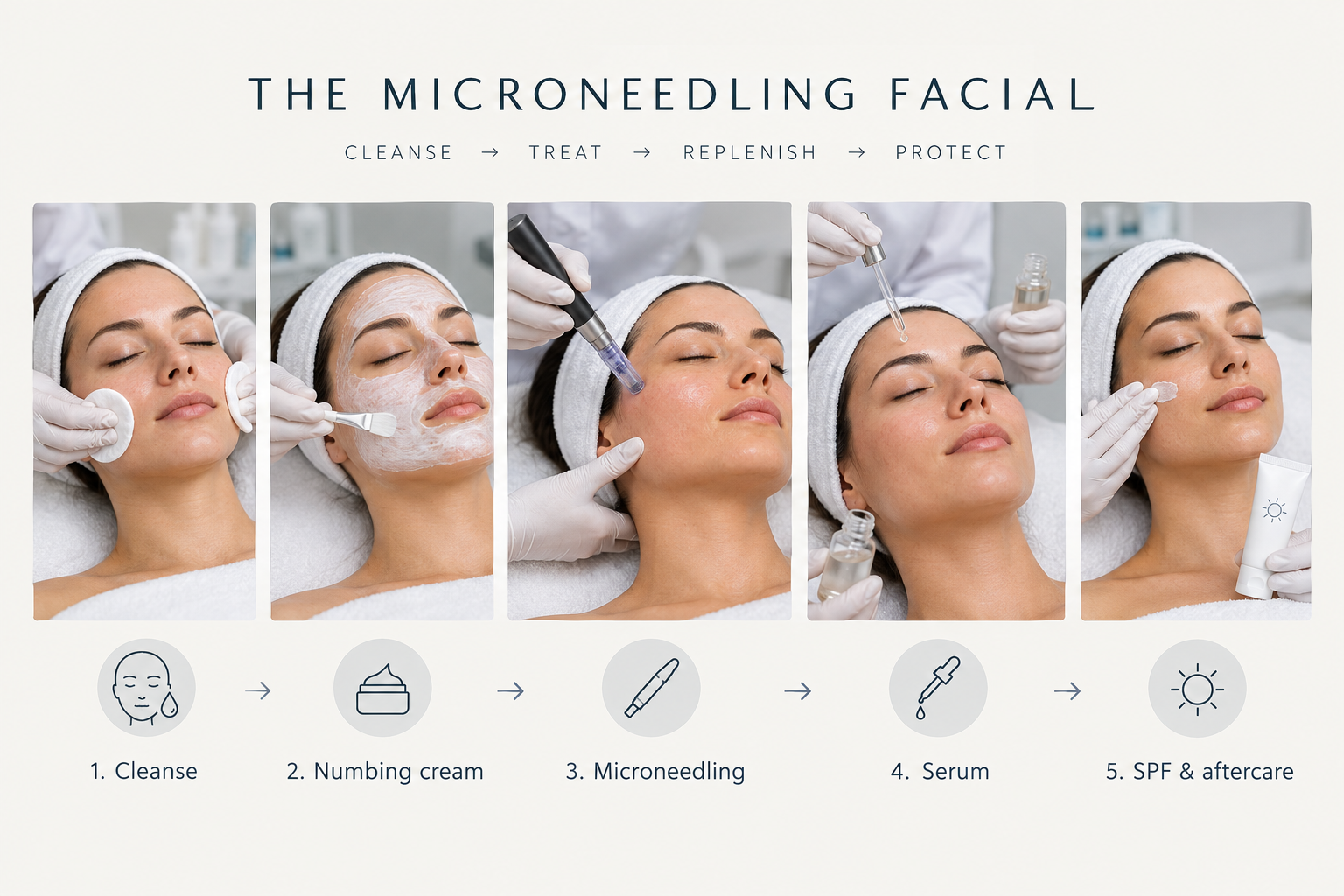
During the procedure, most patients experience a sensation described as mild scratching or vibration. Some areas, such as the forehead and around the nose, may feel more sensitive than others. The level of discomfort is generally considered manageable with adequate numbing, though individual tolerance varies. The skin will appear red and may feel warm immediately after treatment, similar in appearance to moderate sunburn.
If a serum, PRP, or other topical preparation is being applied as part of the treatment, this is typically done during or immediately after the needling phase while the skin’s permeability is at its highest. The appointment concludes with the application of a soothing, barrier-supporting product and sun protection advice.
Recovery and Downtime
Microneedling is generally considered a low-downtime procedure, though this depends on the needle depth used and the individual’s skin sensitivity. Most patients experience redness and mild swelling for 24 to 72 hours after treatment. The skin may feel tight or slightly rough during this period. More aggressive sessions — using deeper needle settings for concerns such as significant acne scarring — may result in more pronounced redness and a longer recovery period of up to five days.
During the recovery phase, the skin barrier is temporarily compromised, which means it is more susceptible to irritation and infection. Practitioners typically advise avoiding active skincare ingredients such as retinoids, alpha hydroxy acids, and vitamin C for several days after treatment. Sun exposure should be minimised, and a broad-spectrum SPF should be applied consistently. Makeup is usually best avoided for at least 24 hours to reduce the risk of introducing bacteria to the open micro-channels.
Visible peeling or flaking can occur in the days following treatment as the skin undergoes its renewal process. This is a normal part of recovery and should not be forcibly removed. Gentle cleansing and moisturising are generally recommended during this period.
When Results May Appear and How Long They May Last
Because microneedling works through collagen remodelling rather than immediate surface changes, results develop gradually. Some patients notice an initial improvement in skin radiance and hydration within a few days of treatment, but the more significant structural changes — improvements in scarring, texture, and fine lines — typically become visible over four to eight weeks as new collagen matures.
A single microneedling session can produce noticeable improvements, but most practitioners recommend a course of three to six treatments spaced four to six weeks apart for optimal results, particularly when addressing acne scars or more established skin concerns. Maintenance sessions every three to six months may help sustain the improvements over time, as collagen production naturally declines with age.
The longevity of results varies between individuals and depends on factors including age, skin condition, lifestyle, sun exposure, and whether a maintenance programme is followed. Results are not permanent in the sense that the ageing process continues, but the collagen produced during treatment does persist for a meaningful period.
Risks and Side Effects
Microneedling is associated with a relatively low rate of serious adverse events when performed by a trained practitioner using appropriate equipment and technique. However, it is not without risk, and prospective patients should understand the possible side effects before proceeding.
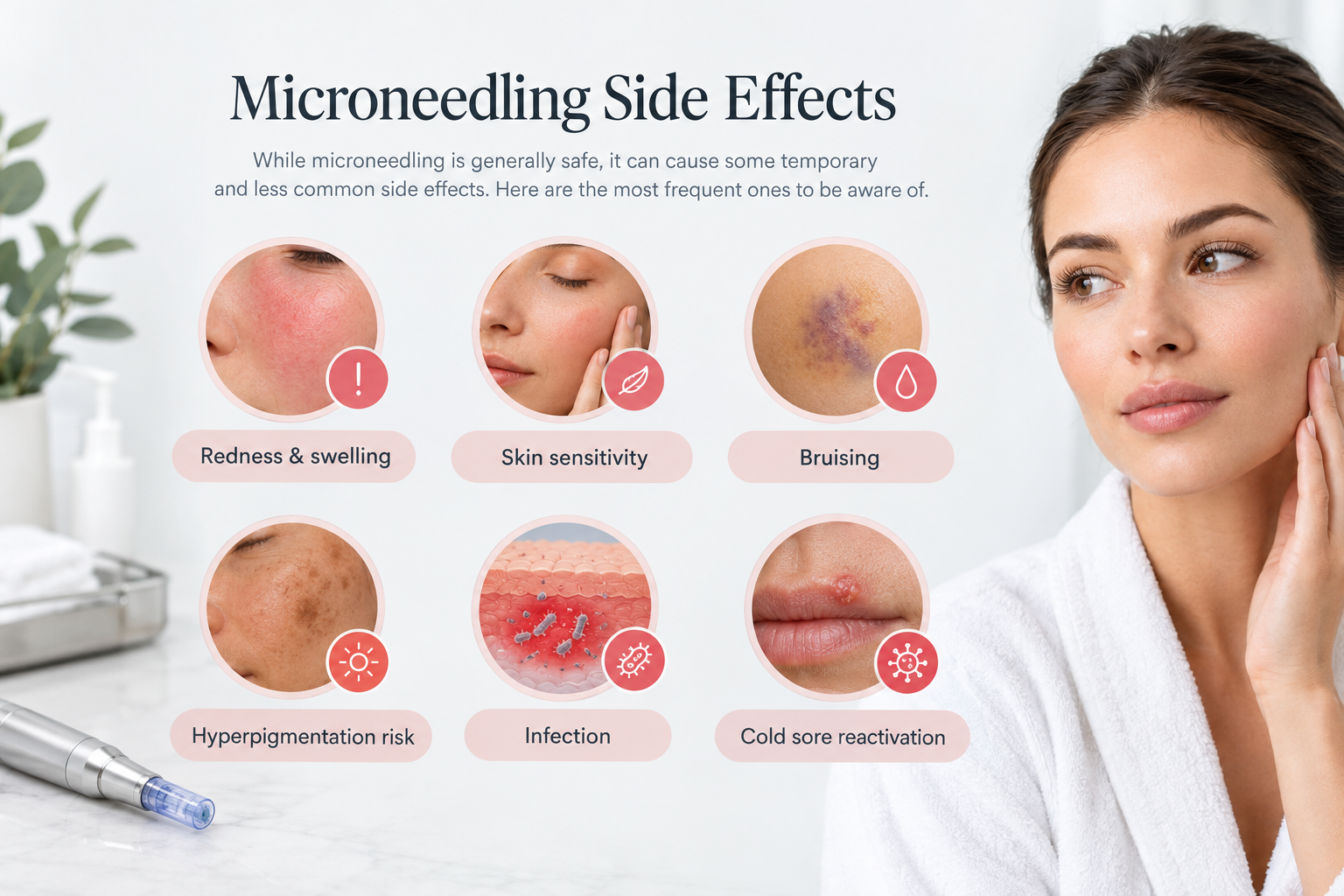
- Redness and swelling: The most common side effects, typically resolving within one to three days.
- Skin sensitivity: The skin may feel tender or tight for several days after treatment.
- Bruising: Mild bruising can occur, particularly in areas with thinner skin.
- Post-inflammatory hyperpigmentation: A risk particularly relevant for individuals with medium to darker skin tones. Careful needle depth selection and post-treatment sun protection are important mitigating factors.
- Infection: Rare when the procedure is performed in a clean clinical environment with sterile equipment, but possible if aftercare instructions are not followed.
- Milia: Small cysts can occasionally develop after microneedling, though this is uncommon.
- Reactivation of cold sores: Individuals with a history of herpes simplex virus may experience a flare-up following microneedling. Prophylactic antiviral medication is sometimes recommended in these cases.
- Scarring: Very rare with professional treatment but possible if the procedure is performed incorrectly or if aftercare is neglected.
The risk profile changes with needle depth, device quality, practitioner experience, and individual skin characteristics. A thorough pre-treatment consultation should identify any factors that increase risk for a particular patient.
Who May Be Suitable for Microneedling
Microneedling may be appropriate for adults who are concerned about acne scarring, fine lines, enlarged pores, uneven skin texture, or mild skin laxity. It is generally considered suitable for a range of skin tones, though the approach needs to be carefully tailored for individuals with darker skin to minimise the risk of pigmentation changes.
Candidates who tend to respond well include those with realistic expectations, good general health, and no active skin conditions in the treatment area. Patients who have not responded adequately to topical skincare alone and are looking for a minimally invasive option before considering more aggressive treatments may find microneedling a reasonable intermediate step.
Who May Not Be Suitable
Microneedling is not appropriate for everyone. A qualified practitioner should assess suitability carefully, and the following factors may indicate that microneedling is not advisable or requires modification:
- Active acne, rosacea flare-ups, eczema, or psoriasis in the treatment area
- Open wounds, cuts, or active skin infections
- A history of keloid scarring or hypertrophic scarring
- Current use of isotretinoin (Roaccutane) or recent use within the past six months
- Blood-thinning medications that may increase bruising
- Pregnancy or breastfeeding
- Compromised immune function
- Certain skin conditions such as vitiligo or scleroderma
- Implanted electronic devices such as pacemakers, if radiofrequency microneedling is being considered
This list is not exhaustive. A full medical history review during consultation is the appropriate way to determine individual suitability.
Alternatives to Consider
Microneedling is one of several treatments that aim to improve skin texture, tone, and collagen levels. Understanding the alternatives can help you have a more informed conversation with your practitioner about which approach may best match your specific concerns.
Chemical peels use acids to exfoliate the skin surface and stimulate renewal. Superficial and medium-depth peels can address pigmentation, texture, and mild scarring, and they may be used alongside or instead of microneedling depending on the concern. Chemical peels tend to involve more surface-level exfoliation, while microneedling works more directly on the deeper dermal layer.
Laser skin resurfacing, including fractional laser treatments, can achieve more significant collagen remodelling and resurfacing than microneedling, particularly for deeper scars and more pronounced skin laxity. However, laser treatments generally involve greater downtime, higher cost, and a more significant risk profile. They may be more appropriate for patients with more advanced concerns.
Radiofrequency microneedling combines the needle-based collagen induction of standard microneedling with radiofrequency energy delivered through the needle tips. This combination may produce more pronounced skin tightening effects and is sometimes used for more significant laxity or deeper scarring. It is a more intensive treatment with a correspondingly higher cost and potentially longer recovery.
HydraFacial is a non-invasive treatment that combines cleansing, exfoliation, and serum infusion without needles. It is better suited to patients seeking hydration, brightness, and mild texture improvement rather than structural collagen changes. It involves no downtime and is generally appropriate for a wider range of skin conditions.
Platelet-rich plasma (PRP) therapy uses growth factors derived from the patient’s own blood to stimulate skin renewal. PRP is sometimes combined with microneedling to potentially enhance results, but it can also be used as a standalone treatment injected into the skin.
Frequently Asked Questions
How many microneedling sessions will I need?
The number of sessions depends on the concern being treated and the individual’s skin response. For general skin quality improvement, two to three sessions may be sufficient. For acne scarring or more established concerns, a course of four to six sessions is more commonly recommended. Your practitioner should outline a realistic treatment plan during consultation.
Can microneedling be used on the body as well as the face?
Yes. Microneedling can be applied to areas beyond the face, including the neck, décolletage, hands, and areas affected by stretch marks such as the abdomen or thighs. The approach and needle depth are adjusted according to the treatment area and the concern being addressed.
Is microneedling suitable for sensitive skin?
Microneedling can be performed on sensitive skin, but it requires careful assessment. Individuals with conditions such as rosacea or reactive skin may be at greater risk of prolonged redness or irritation. A practitioner experienced with sensitive skin types should assess whether microneedling is appropriate and, if so, what needle depth and aftercare protocol would be most suitable.
How soon after microneedling can I wear makeup?
Most practitioners advise waiting at least 24 hours before applying makeup to allow the micro-channels to close and reduce the risk of introducing bacteria or irritants to the skin. Mineral-based makeup is sometimes recommended as a first step back, as it tends to be less likely to cause irritation.
Does microneedling hurt?
With topical anaesthetic cream applied beforehand, most patients describe the sensation as mild scratching or vibration rather than significant pain. Some areas of the face are more sensitive than others. Discomfort levels vary between individuals and also depend on the needle depth used. Deeper settings for scar treatment may be more uncomfortable than shallower settings used for general skin quality.
Can microneedling be combined with other treatments?
Microneedling is frequently combined with topical serums, hyaluronic acid, or PRP applied during the session. It can also be part of a broader treatment plan that includes chemical peels, laser treatments, or injectable skin boosters, though these are typically scheduled at separate appointments with appropriate intervals between them. Your practitioner should advise on the safest and most effective sequencing for your individual plan.
Will one session produce visible results?
Some patients notice improved skin radiance and hydration after a single session, particularly when hydrating serums are used alongside the treatment. However, the more significant structural improvements — in scarring, fine lines, and texture — develop gradually over several weeks and are more apparent after a course of treatments. Managing expectations around the timeline of results is an important part of the pre-treatment discussion.
Is a Microneedling Facial the Right Choice for Your Skin Concerns?
A microneedling facial offers a clinically supported, minimally invasive route to improving several common skin concerns, including acne scarring, fine lines, enlarged pores, and uneven texture. Its mechanism — stimulating the skin’s own collagen production — means that results develop gradually and can continue to improve over weeks following each session. For patients who are looking for meaningful skin improvement without the downtime or risk profile of more aggressive resurfacing treatments, microneedling represents a reasonable option worth discussing with a qualified practitioner.
That said, microneedling is not a universal solution. Results vary between individuals, multiple sessions are usually required, and the treatment is not appropriate for everyone. Those with active skin conditions, a history of keloid scarring, or certain medications may not be suitable candidates. Individuals with medium to darker skin tones should ensure their practitioner has specific experience with their skin type to minimise the risk of pigmentation changes.
If you are considering a microneedling facial, a thorough consultation with an experienced aesthetic practitioner is the appropriate starting point. A qualified professional can assess your skin, discuss your goals realistically, identify any contraindications, and recommend whether microneedling alone or in combination with other treatments is likely to be the most effective approach for your specific concerns.


