
Lip Filler Healing Process: Stages of Lip Recovery Explained
The lip filler healing process unfolds over several weeks, and knowing what to expect at each stage can make the experience significantly less stressful. Swelling, asymmetry, and firmness in the days after treatment are common and usually temporary, yet many patients worry unnecessarily because they haven’t been given a clear picture of the recovery timeline. This article explains each stage of lip recovery after hyaluronic acid filler, what is considered normal, what may warrant attention, and how to support the best possible outcome.
Key Takeaways
- Most visible swelling after lip filler resolves within 7 to 14 days, though the lips may continue to soften and settle for up to four weeks.
- Bruising, tenderness, and temporary asymmetry are common in the first few days and do not indicate a poor result.
- The final appearance of lip filler is not accurately judged until at least two to four weeks after treatment.
- Certain aftercare steps — such as avoiding intense heat, strenuous exercise, and pressure on the lips — may help reduce swelling and support recovery.
- Persistent pain, blanching of the skin, or signs of vascular compromise require urgent professional assessment.
What Happens to the Lips Immediately After Filler Injection
Immediately after lip filler treatment, the lips will appear larger than the intended final result. This is partly due to the volume of hyaluronic acid filler that has been placed, but also because the injection process itself triggers a localised inflammatory response. The needle or cannula used to deliver the filler causes minor tissue disruption, and the body responds by increasing blood flow to the area, which produces swelling, warmth, and redness. This is a normal physiological reaction and is not a sign that something has gone wrong.
Patients often notice that the lips feel firm or slightly hard immediately after treatment. This firmness reflects both the gel consistency of the filler product and the surrounding tissue swelling. The lips may also feel numb or tingly if a topical or local anaesthetic was used during the procedure. Most practitioners include lidocaine either in the filler formulation itself or as a separate numbing agent, and this sensation typically fades within a few hours as the anaesthetic wears off.
Small raised bumps or lumps may be visible or palpable at injection sites in the first hours after treatment. These often represent localised swelling around each injection point rather than the filler itself, and they generally smooth out as the initial inflammatory response settles. Pinpoint marks or minor bleeding at injection sites are also common and usually resolve quickly.
Day 1 to Day 3: Peak Swelling and Bruising
The first three days after lip filler treatment typically represent the most visually dramatic phase of recovery. Swelling tends to peak between 24 and 48 hours after the procedure, and the lips may look significantly larger, uneven, or disproportionate during this period. Patients who have not been prepared for this stage sometimes become alarmed, but pronounced swelling at this point is expected and does not reflect the final outcome.
Bruising is another common feature of early lip filler recovery. The lips have a rich blood supply, and even careful injection technique cannot always prevent minor vessel disruption. Bruising may appear as purple, blue, or yellow-green discolouration around the lips or extending slightly beyond the vermilion border. The extent of bruising varies considerably between individuals and depends on factors including skin tone, the use of blood-thinning medications or supplements, and individual vascular anatomy. Patients who take aspirin, ibuprofen, fish oil, or vitamin E supplements before treatment may experience more pronounced bruising, which is why many practitioners advise avoiding these in the days leading up to an appointment.
Tenderness and sensitivity around the lips are also typical during this phase. The tissue has been punctured multiple times, and the surrounding area may feel sore to the touch. Eating, drinking, and speaking may feel slightly uncomfortable. Applying a clean cold compress gently to the area — without pressing firmly on the lips — may help reduce swelling and provide some relief. Sleeping with the head slightly elevated can also help limit fluid accumulation overnight.
Day 4 to Day 7: Swelling Begins to Subside
From around day four onwards, most patients notice a gradual reduction in swelling. The lips begin to look less inflated and start to give a clearer indication of the likely final result, though they are still not fully settled at this stage. Bruising typically begins to fade during this period, progressing through yellow and green tones before resolving. Arnica gel or arnica supplements are sometimes used to support bruise resolution, though clinical evidence for their effectiveness in this context remains limited.
Some patients notice that the lips feel slightly lumpy or uneven as the swelling decreases. This can occur because the filler product integrates with surrounding tissue at different rates in different areas, and because residual swelling may be distributed unevenly. Gentle massage is sometimes recommended by practitioners at this stage to help smooth the product, but patients should follow their specific aftercare instructions rather than massaging without guidance, as technique matters and inappropriate pressure could theoretically displace filler.
The lips may also feel drier than usual during the first week of recovery. Keeping the lips moisturised with a gentle, fragrance-free lip balm is generally appropriate, though patients should avoid applying products that contain active ingredients such as retinol or exfoliating acids near the treated area during early recovery.
Week 2: Settling and Integration
By the end of the second week, the majority of post-treatment swelling has typically resolved and the lips begin to reflect a more accurate version of the final result. The filler product — most commonly a cross-linked hyaluronic acid gel — starts to integrate more fully with the surrounding tissue, and the lips generally feel softer and more natural in texture compared to the firmness experienced in the first few days.
Asymmetry that was noticeable in the first week often improves significantly by week two as swelling resolves evenly. However, some degree of natural asymmetry may remain, since most faces and lips are not perfectly symmetrical to begin with. If asymmetry is still pronounced at two weeks and does not appear to be improving, this is an appropriate time to contact the treating practitioner for a review appointment.
Patients who had a review appointment scheduled for two weeks post-treatment will typically attend during this phase. A two-week review allows the practitioner to assess the settled result, address any concerns, and determine whether a small top-up might be appropriate. Not all patients require a top-up, and this decision should be based on the settled outcome rather than the appearance during the swelling phase.
Weeks 3 to 4: Final Result Becomes Visible
The lip filler healing process is generally considered complete between three and four weeks after treatment. By this point, residual swelling has fully resolved, the filler has integrated with the surrounding tissue, and the lips reflect the true outcome of the procedure. The texture should feel soft and natural, and any firmness or lumpiness from the early recovery phase should have resolved.
This four-week mark is the appropriate point at which to evaluate whether the result meets the patient’s expectations. Decisions about whether to add more volume, adjust the shape, or dissolve the filler with hyaluronidase should ideally be made after this settling period rather than during the swelling phase, when the appearance is still changing.
It is worth noting that individual healing timelines vary. Patients who metabolise hyaluronic acid more quickly, those who are very physically active, or those who have had previous filler treatments may notice that their results settle slightly differently. A qualified practitioner can provide guidance tailored to individual circumstances.
How Long Do Lip Fillers Last After Recovery
Once the lip filler healing process is complete and the result has settled, patients reasonably want to understand how long the outcome will last. Hyaluronic acid lip fillers are temporary, and the body gradually breaks down the filler product over time through natural enzymatic processes. The longevity of lip filler varies depending on the specific product used, the volume injected, the patient’s metabolism, lifestyle factors, and the area of the lip treated.
Most hyaluronic acid lip fillers last approximately six to twelve months, though some patients find their results persist longer and others notice fading sooner. The lips are a highly mobile area of the face — involved in speaking, eating, and facial expression — and this movement may contribute to faster breakdown of the filler compared to less mobile areas. Patients who exercise intensively or have a faster metabolic rate may also find that results do not last as long.
Maintenance treatments are typically recommended when the patient notices that the volume or definition has reduced to a level they find unsatisfactory. There is no fixed schedule that applies to everyone, and the decision to repeat treatment should be based on the individual’s goals and the assessed state of the lips at the time of review.
Aftercare During the Lip Filler Healing Process
Appropriate aftercare during the lip filler healing process can support recovery and help protect the result. While aftercare protocols vary between practitioners and products, several general principles are widely recommended in the days following treatment.
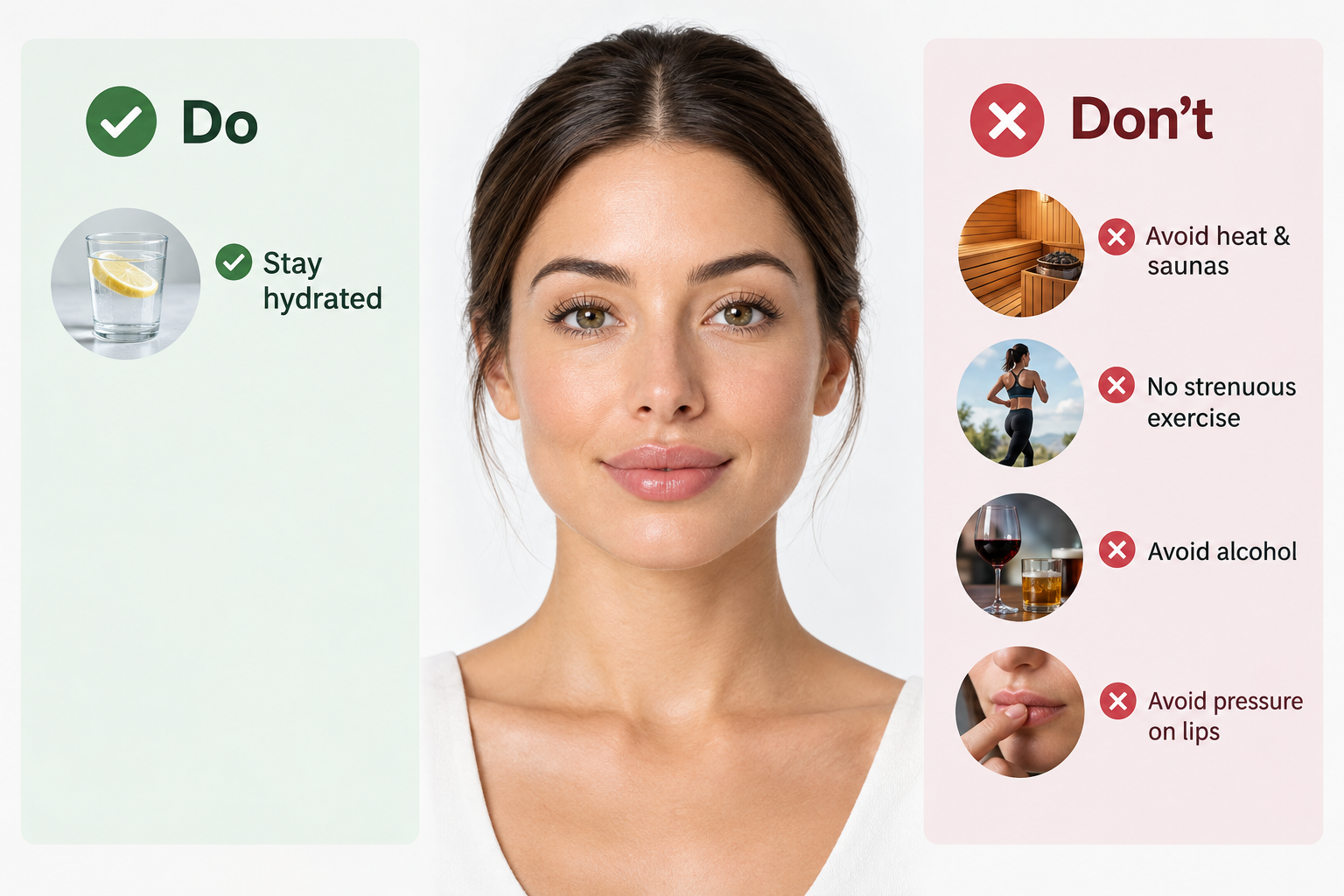
- Avoid intense heat — saunas, steam rooms, hot baths, and prolonged sun exposure in the first 24 to 48 hours may increase swelling and should generally be avoided.
- Avoid strenuous exercise — vigorous physical activity raises heart rate and blood pressure, which can worsen swelling and bruising. Most practitioners recommend avoiding intense exercise for 24 to 48 hours after treatment.
- Avoid alcohol — alcohol is a vasodilator and may increase bruising and swelling in the early recovery period.
- Avoid pressure on the lips — sleeping face-down, wearing tight face masks, or applying firm pressure to the lips in the first few days may theoretically displace filler before it has fully integrated.
- Avoid dental procedures — significant dental work that requires stretching the mouth is generally best avoided for two to four weeks after lip filler treatment.
- Stay hydrated — hyaluronic acid attracts water, and adequate hydration supports the filler’s integration and the overall appearance of the lips.
- Follow practitioner-specific instructions — individual aftercare advice from the treating practitioner takes precedence over general guidance.
Risks, Side Effects, and When to Seek Help
Understanding the difference between expected side effects and signs that require prompt medical attention is an important part of patient safety during the lip filler healing process. Most side effects are mild and self-limiting, but rare complications can occur and require urgent assessment.
Expected and Common Side Effects
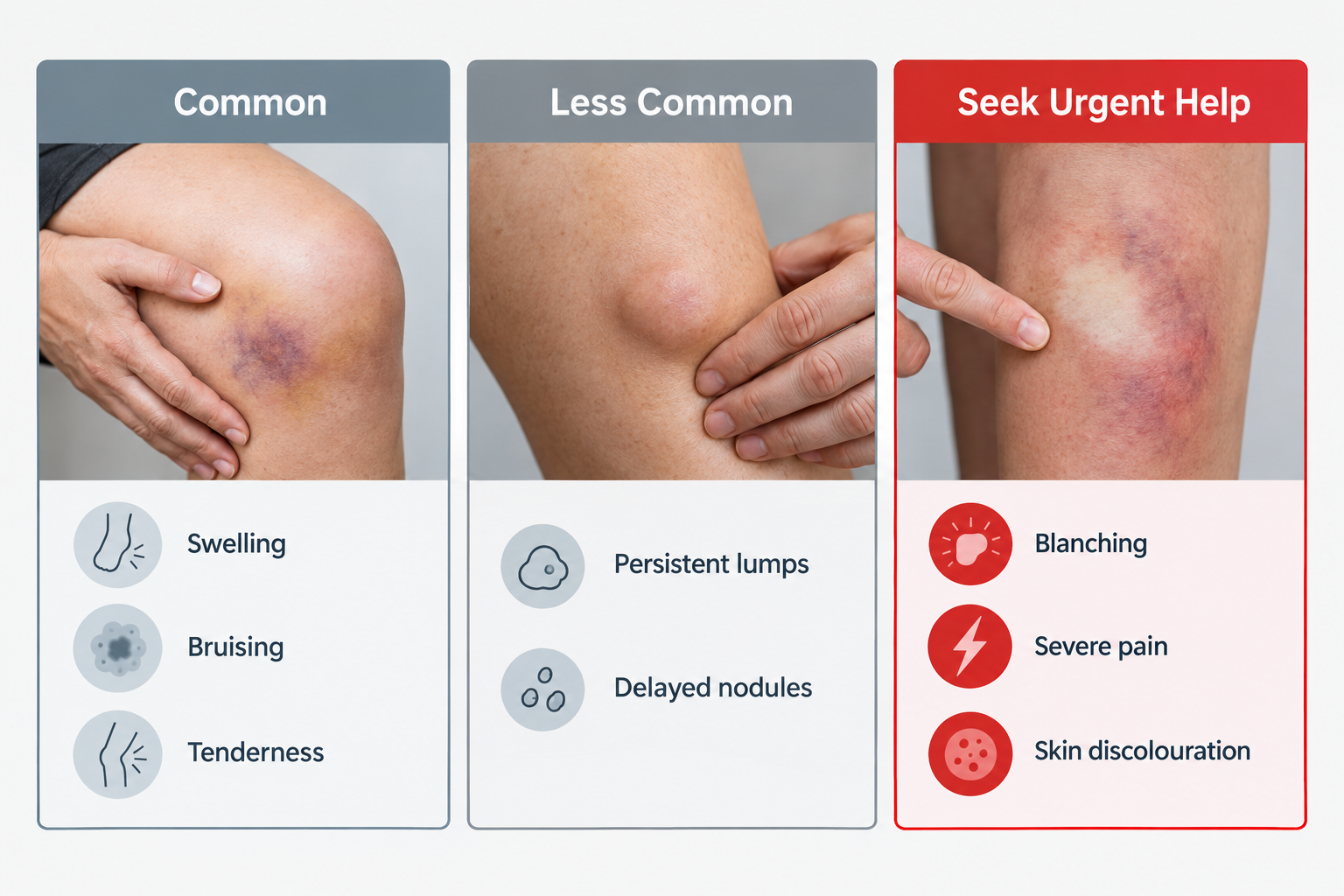
Swelling, bruising, redness, tenderness, and temporary firmness are all common and expected in the days following lip filler treatment. Mild asymmetry during the swelling phase is also normal. These effects typically resolve within one to two weeks without intervention.
Less Common but Recognised Side Effects
Some patients experience prolonged swelling that lasts beyond two weeks, small nodules or lumps that persist after the initial recovery phase, or hypersensitivity reactions. Delayed-onset nodules — firm lumps that appear weeks or months after treatment — can occur with hyaluronic acid fillers and may represent an inflammatory or immune response to the product. These should be assessed by a qualified practitioner rather than managed at home.
Signs That Require Urgent Attention
Vascular occlusion is a rare but serious complication of lip filler treatment that occurs when filler is inadvertently injected into or compresses a blood vessel, restricting blood flow to surrounding tissue. Warning signs include sudden severe pain that is disproportionate to the procedure, blanching or white discolouration of the skin around the lips or nose, a dusky or mottled appearance of the skin, or the development of blisters or skin breakdown. These signs require immediate contact with the treating practitioner or an emergency medical service, as prompt treatment with hyaluronidase may be necessary to dissolve the filler and restore blood flow.
Infection following lip filler is uncommon but possible. Signs of infection include increasing redness, warmth, swelling, and pain beyond the first few days, or the development of pus. Patients with a history of cold sores (herpes simplex virus) may experience a flare triggered by the injection, and antiviral prophylaxis is sometimes recommended for susceptible individuals before treatment.
Who May Experience a Longer or More Complicated Recovery
Most patients recover from lip filler treatment without significant difficulty, but certain factors may be associated with a more prolonged or complex healing process. Patients who bruise easily, take anticoagulant medications, or have a history of bleeding disorders may experience more pronounced bruising. Those with a history of cold sores may be at higher risk of a viral flare. Patients who have had multiple previous filler treatments in the same area may notice that the tissue responds differently over time.
Individuals with autoimmune conditions, active skin infections, or inflammatory skin conditions affecting the lip area may not be suitable candidates for lip filler, and a thorough medical history review before treatment is essential. Lip filler is not recommended during pregnancy or breastfeeding. A qualified practitioner will assess individual suitability before proceeding with treatment.
Alternatives to Lip Filler
Hyaluronic acid lip filler is the most widely used approach for adding volume and definition to the lips, but it is not the only option available. Understanding the alternatives can help patients make an informed decision about which approach may be most appropriate for their goals.
Lip flip treatments using botulinum toxin involve injecting a small amount of muscle-relaxing toxin into the orbicularis oris muscle around the upper lip, causing it to relax and roll slightly outward. This can create the appearance of a fuller upper lip without adding volume, and may suit patients who want a subtle change rather than increased fullness. The effect is temporary, typically lasting two to three months, and does not involve the same recovery process as filler.
Skin booster injections containing hyaluronic acid can be used to improve lip hydration and texture without significantly increasing volume. These may be appropriate for patients whose primary concern is lip dryness or fine lines around the mouth rather than volume loss.
Surgical options such as lip implants or a lip lift procedure offer more permanent changes but carry greater risks, longer recovery times, and are not suitable for everyone. These are typically considered when non-surgical options have not achieved the desired outcome or when a patient is seeking a lasting structural change.
Frequently Asked Questions
How long does swelling last after lip filler?
Most significant swelling resolves within 7 to 14 days after lip filler treatment. Some mild residual swelling may persist for up to four weeks, particularly in patients who are prone to swelling or who had a larger volume of filler placed. The lips are generally considered fully settled at around the four-week mark.
Can I wear lipstick during the lip filler healing process?
Most practitioners advise avoiding lipstick and lip products for at least 24 hours after treatment to reduce the risk of introducing bacteria to the injection sites. After this initial period, a gentle lip balm is generally appropriate. Patients should follow their practitioner’s specific aftercare guidance regarding cosmetics.
Why do my lips look uneven after filler?
Temporary asymmetry during the first one to two weeks of recovery is common and usually reflects uneven swelling rather than a problem with the filler placement. Most asymmetry resolves as swelling subsides. If unevenness persists beyond four weeks, a review with the treating practitioner is appropriate.
Is it normal for lips to feel hard after filler?
Yes, firmness in the lips during the first week after treatment is normal. It reflects both the consistency of the hyaluronic acid gel and the surrounding tissue swelling. The lips typically soften significantly over the first two to four weeks as the filler integrates and swelling resolves.
When can I exercise after lip filler?
Most practitioners recommend avoiding strenuous exercise for 24 to 48 hours after lip filler treatment. Intense physical activity increases blood flow and may worsen swelling and bruising during the early recovery phase. Light activity such as walking is generally considered acceptable sooner.
Can lip filler be dissolved if I don’t like the result?
Hyaluronic acid lip filler can be dissolved using an enzyme called hyaluronidase, which breaks down the filler product. This is one of the advantages of hyaluronic acid over permanent or semi-permanent filler materials. Dissolution is typically performed by a qualified practitioner and takes effect relatively quickly, though some swelling may occur after the procedure.
How soon can I have more filler added after my initial treatment?
Most practitioners recommend waiting until the initial filler has fully settled — typically four weeks — before adding more volume. Assessing the result before this point risks adding unnecessary filler on top of residual swelling, which can lead to overfilling.
Planning Your Recovery: What to Discuss Before Treatment
A clear understanding of the lip filler healing process is most useful when it informs the decision to proceed with treatment rather than being discovered after the fact. Before booking a lip filler appointment, it is worth discussing the expected recovery timeline with a qualified practitioner, including how much downtime to anticipate, what aftercare will be required, and what the review process involves. Patients with important social or professional events in the weeks following treatment should factor in the swelling and bruising phase when planning their appointment date.
Choosing a practitioner with appropriate medical training, a thorough consultation process, and a clear protocol for managing complications is one of the most important factors in both safety and outcome. The lip filler healing process is manageable and predictable for most patients when they are well-informed and supported by a practitioner who takes aftercare and follow-up seriously. If you are considering lip filler, a consultation with a qualified aesthetic practitioner is the appropriate starting point for assessing your suitability and discussing realistic expectations.


