
Can You Tan in UV Index 3? What the UV Scale Really Means for Your Skin
A UV index of 3 sits at the lower end of the moderate range, and yes, tanning can occur at this level — but so can skin damage. Understanding what the UV index actually measures, how your skin responds to ultraviolet radiation, and what protective steps are appropriate at UV 3 can help you make more informed decisions about sun exposure and long-term skin health.
Key Takeaways
- A UV index of 3 is classified as moderate, meaning ultraviolet radiation is strong enough to cause tanning and, with prolonged unprotected exposure, sunburn in fair-skinned individuals.
- Tanning at any UV level reflects DNA damage in skin cells — it is the skin’s protective response to ultraviolet radiation, not a sign of healthy skin.
- Sun protection is recommended from UV index 3 upwards, including broad-spectrum SPF sunscreen, protective clothing, and limiting midday exposure.
- Skin type significantly affects how quickly tanning or burning occurs at UV 3; very fair skin may burn within 30–60 minutes without protection.
- Repeated UV exposure, even at moderate index levels, contributes to cumulative skin damage, premature ageing, and increased skin cancer risk over time.
What Is the UV Index and What Does UV 3 Mean?
The UV index is an internationally standardised scale developed by the World Health Organization and the United Nations Environment Programme to measure the intensity of ultraviolet radiation reaching the Earth’s surface. The scale runs from 0 (no UV radiation, typically at night) upward, with higher numbers indicating greater intensity and faster potential for skin and eye damage. UV index 3 falls within the moderate band, which spans values 3 to 5 on the scale.
At UV index 3, the sun’s ultraviolet radiation is meaningful enough to affect unprotected skin, particularly over extended periods. This level is commonly reached during spring and autumn in many temperate regions, during morning and late afternoon hours in summer, and at higher altitudes where the atmosphere provides less filtering. It is also regularly recorded on overcast days, since cloud cover reduces but does not eliminate UV radiation — a point that catches many people off guard.
The UV index accounts for the angle of the sun, ozone layer thickness, altitude, cloud cover, and surface reflectivity. Snow, sand, and water can reflect UV radiation and effectively increase exposure even when the index reading appears moderate.
Can You Actually Tan at UV Index 3?
Tanning at UV index 3 is possible, particularly with prolonged exposure and for individuals with lighter skin tones. The tanning process begins when ultraviolet B (UVB) radiation penetrates the outer layers of the skin and causes damage to the DNA within skin cells. In response, melanocytes — the pigment-producing cells in the skin — produce and distribute more melanin, the pigment responsible for the darkening effect visible as a tan. Ultraviolet A (UVA) radiation also contributes by oxidising existing melanin, producing an immediate but short-lived darkening that fades quickly.
The tan that develops over hours or days following UV exposure is not a sign of healthy skin. Dermatologically, a tan represents the skin’s attempt to shield deeper cell layers from further DNA damage. The melanin acts as a partial physical barrier, but it does not provide complete protection — the underlying cellular damage has already occurred. This is why dermatologists and cancer organisations consistently describe tanning as a marker of skin injury rather than a wellness outcome.
At UV index 3, the time required to produce a visible tan varies considerably depending on skin phototype. Individuals with very fair skin (Fitzpatrick skin types I and II) may begin to notice redness or tanning within 30 to 60 minutes of unprotected midday exposure. Those with medium or olive skin tones (types III and IV) may tolerate longer exposure before visible change occurs, while individuals with darker skin tones (types V and VI) have greater natural melanin protection and are less likely to burn at this index level, though UV damage still accumulates.
How the Fitzpatrick Scale Affects Your Response to UV 3
The Fitzpatrick skin phototype scale classifies skin into six categories based on its typical response to sun exposure. Understanding where you fall on this scale helps predict how your skin will respond to a UV index of 3 and informs appropriate protective measures.
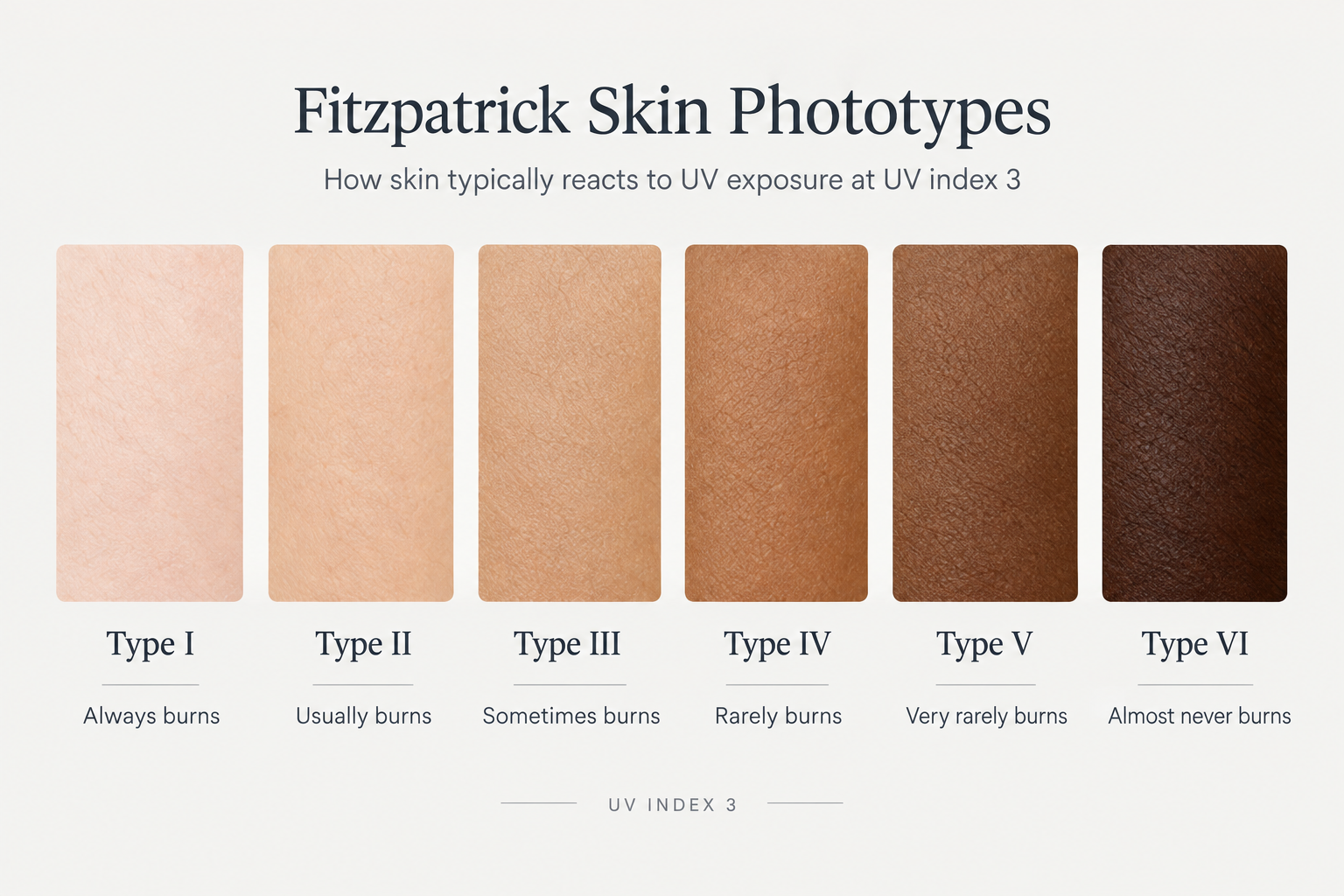
- Type I: Very fair skin, always burns, never tans. At UV 3, sunburn risk begins within approximately 30 minutes of unprotected exposure.
- Type II: Fair skin, usually burns, tans minimally. Tanning may occur with extended exposure, but burning risk is significant.
- Type III: Medium skin, sometimes burns, tans gradually. UV 3 can produce a tan over time with moderate burn risk.
- Type IV: Olive skin, rarely burns, tans easily. Tanning at UV 3 is likely with extended exposure; burn risk is lower but not absent.
- Type V: Brown skin, very rarely burns, tans darkly. UV damage accumulates even without visible burning.
- Type VI: Dark brown or black skin, almost never burns. UV radiation still causes cellular damage and long-term effects despite minimal visible reaction.
Skin phototype is not the only relevant factor. Certain medications — including some antibiotics, diuretics, and retinoids — can increase photosensitivity, meaning the skin reacts more strongly to UV radiation than the index alone would suggest. Anyone taking photosensitising medication should seek specific guidance from their prescribing clinician regarding sun exposure.
Is UV Index 3 Dangerous?
UV index 3 is classified as moderate risk, not low risk. Health authorities including the World Health Organization recommend sun protection measures from UV index 3 upwards. The distinction matters because many people associate danger only with high or very high UV readings, underestimating the cumulative effect of repeated moderate exposure over months and years.
A single session of unprotected exposure at UV 3 is unlikely to cause severe sunburn in most skin types, but it contributes to the total lifetime UV dose that the skin accumulates. Cumulative UV exposure is the primary environmental driver of photoageing — the premature skin changes associated with sun damage, including fine lines, uneven pigmentation, loss of elasticity, and a leathery skin texture. It is also the leading environmental risk factor for skin cancers, including melanoma, basal cell carcinoma, and squamous cell carcinoma.
The risk is not limited to acute burning. UVA radiation, which penetrates more deeply into the skin than UVB, damages collagen and elastin fibres in the dermis and contributes to long-term structural changes in the skin. UVA intensity does not drop as sharply as UVB on cloudy days or in winter, meaning UVA exposure can be significant even when the UV index appears low to moderate.
Sun Protection at UV Index 3: What Is Actually Recommended
Standard public health guidance recommends applying broad-spectrum sunscreen with a sun protection factor (SPF) of at least 30 when the UV index reaches 3 or above. Broad-spectrum formulations protect against both UVA and UVB radiation. SPF 30 filters approximately 97% of UVB radiation when applied correctly, while SPF 50 filters approximately 98%. The difference between SPF values is smaller than marketing often implies, but consistent and adequate application matters more than the specific SPF number chosen.
Sunscreen application is frequently insufficient in practice. Research consistently shows that most people apply far less sunscreen than the amount used in SPF testing, which significantly reduces real-world protection. Reapplication every two hours, and after swimming or sweating, is necessary to maintain the stated protection level.
Beyond sunscreen, protective measures at UV index 3 include:
- Wearing UV-protective clothing, including long sleeves and a wide-brimmed hat where practical
- Using UV-blocking sunglasses to protect the eyes and surrounding skin
- Seeking shade during peak UV hours, typically between 10am and 4pm in most locations
- Being aware that reflective surfaces such as water, sand, and light-coloured concrete increase effective UV exposure
- Checking the daily UV index forecast before planning extended outdoor activities
The Difference Between UVA and UVB at UV Index 3
Ultraviolet radiation reaching the Earth’s surface consists primarily of UVA (wavelengths 315–400 nm) and UVB (wavelengths 280–315 nm). These two types of radiation affect the skin differently, and understanding the distinction is relevant to both tanning and skin protection.
UVB radiation is the primary driver of sunburn and the main stimulus for vitamin D synthesis in the skin. UVB intensity varies significantly with the time of day, season, latitude, and cloud cover — it is the component most directly reflected in the UV index reading. At UV index 3, UVB is present at a level sufficient to cause tanning and, with prolonged exposure, sunburn in susceptible individuals.
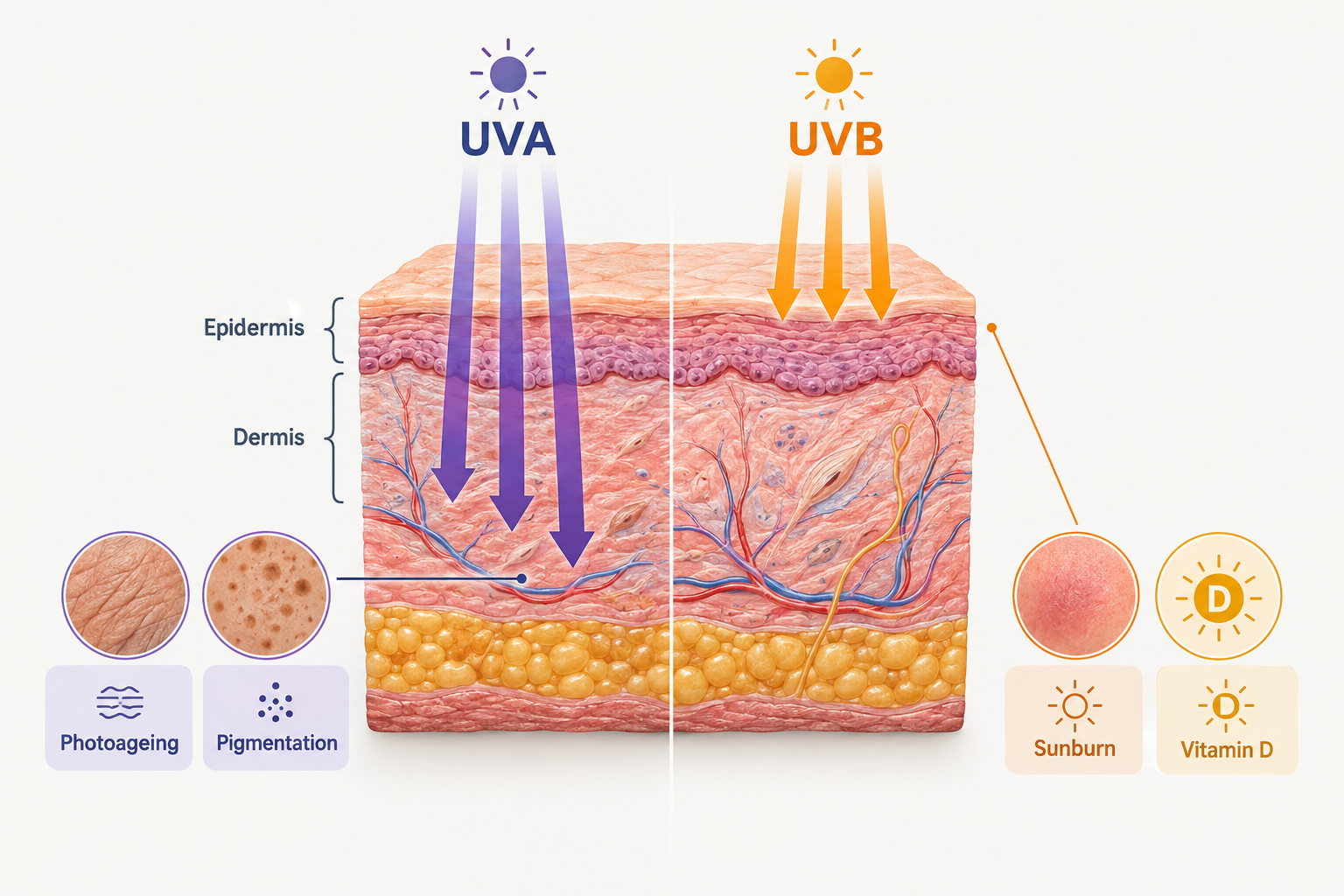
UVA radiation is present at more consistent levels throughout the day and year. It penetrates more deeply into the skin, reaching the dermis where collagen and elastin are found. UVA is the dominant cause of photoageing and also contributes to skin cancer risk. Tanning beds predominantly emit UVA radiation, which is one reason dermatologists and cancer organisations advise against their use — they deliver significant UVA doses without the seasonal or time-of-day variation that limits natural UVA exposure.
Tanning, Vitamin D, and the Balance of UV Exposure
A common reason people seek sun exposure, including at moderate UV levels, is vitamin D synthesis. UVB radiation triggers the conversion of a cholesterol compound in the skin into vitamin D3, which is then processed by the liver and kidneys into the active form used by the body. Vitamin D plays important roles in bone health, immune function, and other physiological processes.
At UV index 3, meaningful vitamin D synthesis can occur with relatively brief unprotected skin exposure — estimates vary, but short periods of 10 to 20 minutes on the arms and face may be sufficient for many individuals, depending on skin type, latitude, and season. This is considerably less time than would be needed to produce a visible tan, which means the vitamin D benefit can be obtained without the extended exposure that increases skin damage risk.
Vitamin D can also be obtained through dietary sources and supplements, which carry no UV-related skin risk. For individuals concerned about vitamin D status, a blood test and discussion with a GP or clinician is the appropriate starting point rather than deliberate extended sun exposure.
Long-Term Skin Effects of Repeated Moderate UV Exposure
Repeated tanning at UV index 3 and similar moderate levels contributes to cumulative skin changes that become more apparent over years and decades. Photoageing — the skin changes attributable to UV exposure rather than chronological ageing — accounts for a significant proportion of visible skin ageing in adults who have had regular sun exposure throughout their lives.
Visible signs of photoageing include uneven skin tone, solar lentigines (commonly called sun spots or age spots), a rough or leathery skin texture, fine lines and deeper wrinkles, and loss of skin firmness due to collagen and elastin degradation. These changes are distinct from the natural ageing process, though both occur simultaneously and can be difficult to separate visually.
From a skin cancer perspective, cumulative UV exposure — including moderate exposure accumulated over many years — is a recognised risk factor. Melanoma, the most serious form of skin cancer, is associated with both cumulative UV exposure and episodes of intense burning, particularly in childhood and adolescence. Non-melanoma skin cancers, including basal cell carcinoma and squamous cell carcinoma, are strongly linked to total lifetime UV dose.
Aesthetic Treatments for UV-Related Skin Damage
For individuals who have already accumulated UV-related skin changes, a range of aesthetic and dermatological treatments may help address specific concerns. These treatments do not reverse the underlying cellular changes caused by UV radiation, but some may improve the visible appearance of photoageing effects.
Treatments that a qualified aesthetic practitioner or dermatologist may discuss for UV-related skin concerns include:
- Topical retinoids: Prescription-strength retinoids (vitamin A derivatives) have the strongest evidence base for improving the visible signs of photoageing, including fine lines and uneven pigmentation. They work by increasing cell turnover and stimulating collagen production in the dermis.
- Chemical peels: Superficial to medium-depth chemical peels can improve skin texture, tone, and the appearance of mild pigmentation changes associated with sun damage. The depth of peel and appropriate formulation should be determined by a qualified practitioner based on skin type and concern.
- Laser and light-based treatments: Devices such as intense pulsed light (IPL) and fractional laser treatments may address pigmentation irregularities and skin texture changes associated with photoageing. These treatments carry risks including post-inflammatory hyperpigmentation, particularly in darker skin tones, and require careful patient selection.
- Broad-spectrum topical antioxidants: Vitamin C serums and other antioxidant formulations may help reduce oxidative stress in the skin and support the effectiveness of sunscreen, though evidence for significant reversal of established photoageing is more limited.
- Skin boosters and hydration treatments: Hyaluronic acid-based skin boosters may improve skin hydration and surface quality, though they do not address the structural collagen changes caused by UV damage.
Any aesthetic treatment for sun-damaged skin should be accompanied by consistent daily sun protection to prevent further damage and protect treatment results. A clinical assessment by a qualified practitioner is necessary to determine which approach, if any, is appropriate for an individual’s skin type, concerns, and medical history.
Frequently Asked Questions
How long does it take to tan at UV index 3?
The time required to develop a visible tan at UV index 3 varies by skin type. Fair-skinned individuals (Fitzpatrick types I–II) may notice skin changes within 30 to 60 minutes of unprotected exposure, while those with medium or olive skin tones may require longer. A tan developing at any UV level reflects skin damage rather than a healthy response, and the process is gradual rather than immediate.
Can you get sunburned at UV index 3?
Yes, sunburn is possible at UV index 3, particularly for individuals with fair or sensitive skin and with prolonged unprotected exposure. The risk is lower than at high or very high UV levels, but it is not negligible. People taking photosensitising medications may burn more quickly than their skin type alone would suggest.
Does UV index 3 vary throughout the day?
Yes. The UV index reading typically peaks around solar noon — the point when the sun is highest in the sky — and is lower in the morning and late afternoon. A daily UV index forecast usually represents the peak value expected for that day. Actual UV intensity at any given hour may be lower than the reported peak figure.
Is it safe to go outside without sunscreen at UV index 3?
Health authorities recommend applying broad-spectrum SPF 30 or higher sunscreen for any extended outdoor exposure when the UV index reaches 3 or above. Brief incidental exposure — such as walking to a car — carries minimal risk for most people, but planned outdoor activities lasting more than a few minutes warrant sun protection at this UV level.
Does cloud cover reduce UV index 3 to a safe level?
Cloud cover reduces UV radiation but does not eliminate it. Light cloud cover may reduce UV intensity by only 10–20%, while heavy overcast conditions can reduce it by up to 70–80%. A UV index of 3 on a partly cloudy day still represents meaningful UV exposure, and protection remains advisable for extended outdoor time.
Can tanning at UV 3 cause long-term skin damage?
Repeated tanning at UV index 3 contributes to cumulative UV damage over time. This includes photoageing effects such as uneven pigmentation, loss of skin firmness, and fine lines, as well as an increased lifetime risk of skin cancer. The damage accumulates gradually and may not become visibly apparent for years or decades after the exposure occurs.
Making an Informed Decision About Sun Exposure and Skin Health
UV index 3 is a moderate level of ultraviolet radiation — sufficient to produce a tan, sufficient to cause sunburn in susceptible individuals, and sufficient to contribute to cumulative skin damage with repeated unprotected exposure. The tanning response at this or any UV level is a biological marker of skin stress rather than a health benefit, and the long-term consequences of habitual UV exposure extend well beyond cosmetic concerns to include meaningful skin cancer risk.
Practical sun protection at UV index 3 — broad-spectrum SPF 30 or higher sunscreen applied adequately and reapplied regularly, combined with protective clothing and shade during peak hours — significantly reduces these risks without requiring complete avoidance of outdoor activity. For individuals who have already accumulated visible UV-related skin changes, a consultation with a qualified dermatologist or aesthetic practitioner can help identify which evidence-based treatments may be appropriate for their specific concerns and skin type. Consistent daily photoprotection remains the most important step both for preventing further damage and for preserving the results of any skin treatment undertaken.


