
Under Eye Laser Treatment: What to Expect, Benefits and Risks
Laser treatment for the under-eye area is one of the more technically demanding applications in aesthetic medicine, largely because the periorbital skin is among the thinnest and most delicate on the face. When performed by an appropriately trained practitioner using the right device for the right concern, laser therapy may help improve fine lines, skin texture, pigmentation, and overall skin quality around the eyes. Understanding what lasers can and cannot realistically achieve in this area is essential before deciding whether a consultation is worthwhile.
Key Takeaways
- Several laser types are used around the eyes, and the most appropriate choice depends on the specific concern being addressed, such as fine lines, pigmentation, or skin laxity.
- Under-eye concerns often have multiple contributing causes; laser treatment may improve some but not all of them, and a thorough clinical assessment is necessary before treatment.
- Downtime varies considerably depending on the laser type and settings used, ranging from minimal redness to several days of visible recovery.
- Realistic results require patience — improvements in collagen remodelling may continue for several months after treatment, and multiple sessions are often needed.
- Risks in the periorbital region require careful consideration; eye protection is mandatory during any laser procedure near the eyes.
Why the Under-Eye Area Presents Unique Challenges
The skin directly beneath the eyes, known as the periorbital or infraorbital region, is structurally different from skin elsewhere on the face. It is significantly thinner, has fewer sebaceous glands, and sits over a complex network of fine blood vessels and delicate orbital structures. These characteristics make it more prone to showing signs of ageing, fatigue, and environmental damage — but they also mean that laser energy must be applied with greater precision and care than in other facial zones.
Under-eye concerns are not a single condition. Dark circles, for example, may result from melanin pigmentation in the skin, the visibility of underlying blood vessels through thin skin, volume loss creating a hollow shadow, or a combination of all three. Fine lines and crepey texture reflect collagen and elastin changes over time. Puffiness may relate to fluid retention, fat pad prolapse, or both. Because these causes are distinct, no single laser treatment addresses every under-eye concern, and a practitioner should assess which factors are contributing before recommending any intervention.
Types of Laser Used for Periorbital Skin
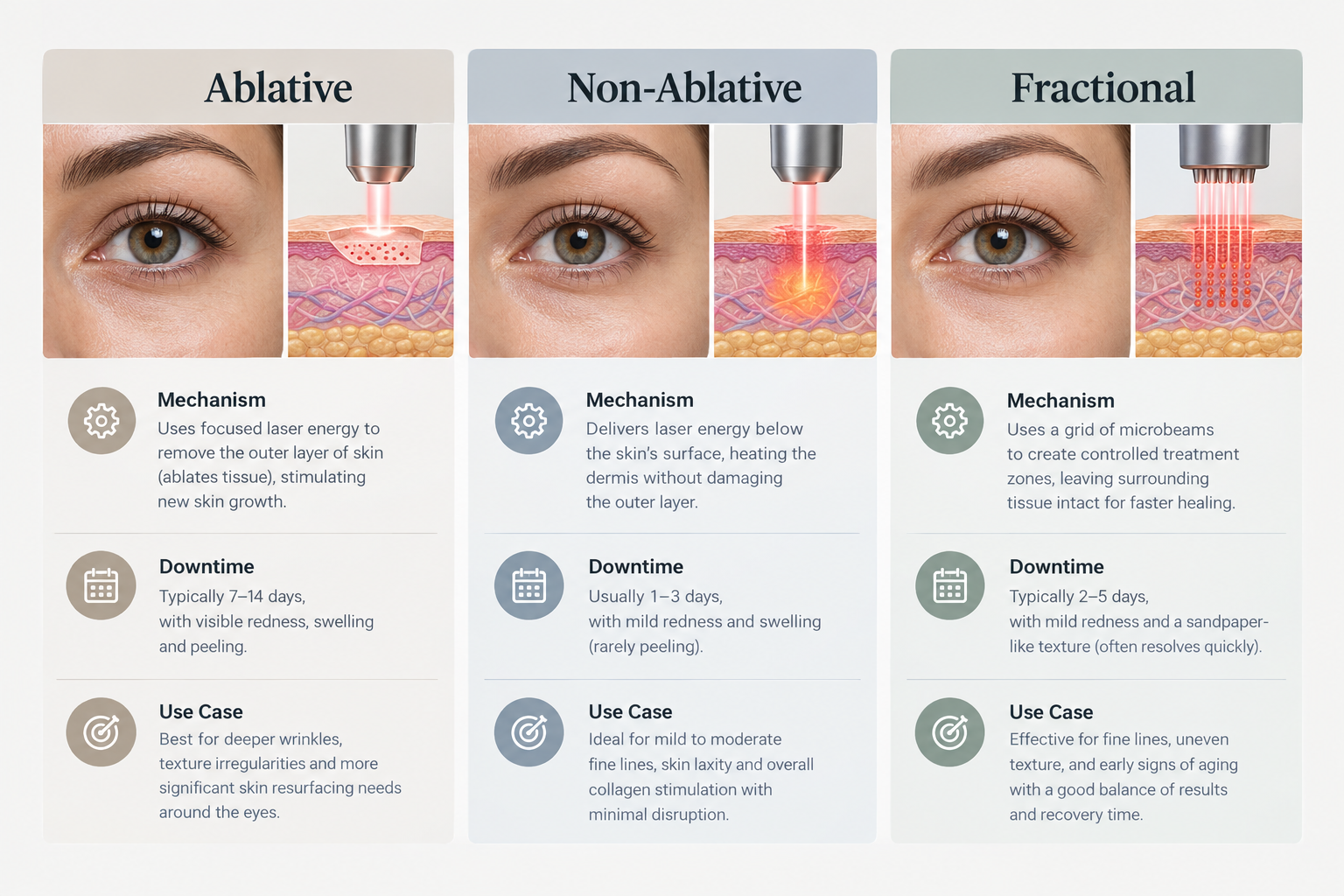
Several laser platforms are used in the periorbital region, each working through a different mechanism and suited to different concerns. The main categories relevant to under-eye treatment are ablative resurfacing lasers, non-ablative lasers, and fractional devices — which can be either ablative or non-ablative.
Ablative Lasers
Ablative lasers, including carbon dioxide (CO2) lasers and erbium:YAG lasers, work by removing the outer layers of skin in a controlled manner. This stimulates significant wound healing and collagen remodelling, which can produce meaningful improvements in fine lines, skin texture, and mild laxity. Full ablative resurfacing around the eyes can be effective for moderate to significant periorbital wrinkling, but it carries a longer recovery period — typically one to two weeks of visible healing — and a higher risk of side effects including prolonged redness, pigmentation changes, and, in rare cases, scarring. Full ablative treatment is generally reserved for patients with more pronounced skin changes and is less commonly used as a first-line approach in younger patients with milder concerns.
Non-Ablative Lasers
Non-ablative lasers deliver energy into the deeper layers of the skin without removing the surface. Devices such as Nd:YAG lasers and certain pulsed-dye lasers fall into this category. Because the skin surface remains intact, downtime is considerably shorter — often limited to mild redness or swelling for a day or two. The trade-off is that results are generally more gradual and less dramatic than those achieved with ablative approaches. Non-ablative laser treatment may be more appropriate for patients with early signs of periorbital ageing, vascular concerns such as visible capillaries, or those who cannot accommodate significant downtime.
Fractional Lasers
Fractional laser technology, available in both ablative and non-ablative forms, delivers energy in a pattern of microscopic columns rather than treating the entire skin surface uniformly. This approach leaves surrounding tissue intact, which supports faster healing and reduces the risk of complications compared with full ablative resurfacing. Fractional CO2 and fractional erbium lasers are among the most commonly used devices for periorbital skin rejuvenation. Fractional non-ablative devices such as fractional Nd:YAG or 1550 nm erbium fibre lasers offer a gentler option with less downtime, though typically requiring more sessions to achieve comparable results. Fractional technology has become a widely used approach for under-eye fine lines and skin quality improvement because it balances efficacy with a more manageable recovery profile.
What Under Eye Laser Treatment May Address
Laser treatment in the periorbital region may be considered for several specific concerns, though the degree of improvement varies between individuals and depends on the laser type, settings, and number of sessions.
- Fine lines and crepey texture: Collagen stimulation from laser energy may reduce the appearance of fine lines beneath and around the eyes over time. This is one of the more consistently supported applications of periorbital laser treatment.
- Skin laxity: Mild to moderate skin looseness in the lower eyelid area may respond to laser-induced collagen remodelling, though significant laxity is unlikely to be adequately addressed without surgical intervention.
- Pigmentation and uneven skin tone: Superficial melanin pigmentation contributing to dark circles or uneven tone may respond to certain laser wavelengths, particularly those targeting melanin. However, pigmentation in this area can be complex and may not respond predictably.
- Vascular concerns: Visible fine blood vessels or redness around the eyes may be addressed with vascular-targeting lasers such as pulsed-dye or Nd:YAG devices.
- Overall skin quality: Improvements in skin hydration, smoothness, and radiance are commonly reported following a course of periorbital laser treatment, even when specific concerns are not dramatically resolved.
It is important to understand that laser treatment is unlikely to correct under-eye hollowness caused by volume loss, significant puffiness related to fat pad prolapse, or dark circles that are primarily caused by the shadow effect of a deep tear trough. These concerns may be better addressed through other approaches, discussed later in this article.
What Happens During a Periorbital Laser Appointment
Before any laser treatment near the eyes, a thorough consultation should take place. The practitioner will assess the specific concerns, skin type, medical history, and any factors that might affect suitability or increase risk. Photographs are typically taken for comparison purposes.
On the day of treatment, the skin is cleansed and a topical anaesthetic cream is usually applied to the treatment area and left for a period of time to reduce discomfort. Protective eyewear specifically designed for laser procedures — either external goggles or internal corneal shields depending on the proximity of treatment to the eyelid margin — must be worn throughout the procedure. This is a non-negotiable safety requirement, as laser energy directed near the eyes without appropriate protection carries a serious risk of ocular injury.
The laser handpiece is passed over the treatment area in a controlled pattern. Patients typically describe a sensation of warmth, snapping, or mild stinging during the procedure. The duration of the appointment depends on the device used and the extent of the area being treated, but periorbital laser sessions often take between fifteen and forty-five minutes in total.
Immediately after treatment, the skin may appear red, feel warm, and show mild swelling. A soothing product or cool compress is usually applied before the patient leaves. Detailed aftercare instructions will be provided, typically including gentle cleansing, moisturisation, strict sun avoidance, and the use of a broad-spectrum sunscreen.
Recovery and Downtime
Recovery after under eye laser treatment varies considerably depending on the type and intensity of the laser used. Understanding what to expect during the healing period helps patients plan appropriately and reduces the likelihood of concern about normal post-treatment changes.
After non-ablative laser treatment, most patients experience redness and mild swelling for one to two days. Makeup can often be applied within twenty-four to forty-eight hours, and most people return to normal activities quickly. Some temporary darkening of pigmented areas may occur before it fades.
Fractional ablative laser treatment typically involves a more noticeable recovery. Swelling is usually most pronounced in the first two to three days, and the skin may feel rough or appear bronzed as the treated columns heal and shed. This process generally takes five to seven days, after which the skin surface is largely healed, though redness may persist for several weeks. Camouflage makeup can usually be applied once the surface has healed.
Full ablative resurfacing carries the longest recovery, with active healing taking up to two weeks and residual redness potentially lasting several weeks to months. This level of treatment is less commonly performed in the periorbital area as a standalone procedure and is typically reserved for patients with significant skin changes who have discussed the recovery commitment in detail with their practitioner.
Throughout recovery, sun protection is critical. The healing skin is particularly vulnerable to UV-induced pigmentation changes, and consistent use of a high-factor broad-spectrum sunscreen is essential for several months following treatment.
Risks and Side Effects of Laser Treatment Near the Eyes
Laser treatment in the periorbital region carries risks that patients should understand before proceeding. While many side effects are temporary and expected, some are more serious and require prompt attention.
- Redness and swelling: These are expected after most laser treatments and resolve within days to weeks depending on the device used.
- Post-inflammatory hyperpigmentation (PIH): Darkening of the treated skin can occur, particularly in individuals with medium to darker skin tones. This is one of the more common complications of periorbital laser treatment and may take weeks to months to resolve. Appropriate laser selection and pre-treatment skin preparation can reduce this risk.
- Hypopigmentation: Loss of pigment in the treated area is a less common but potentially longer-lasting complication, more associated with aggressive ablative treatments.
- Infection: The healing skin is susceptible to bacterial or viral infection. Patients with a history of cold sores may require antiviral prophylaxis before ablative treatment.
- Scarring: Rare but possible, particularly with aggressive settings or in patients with a predisposition to abnormal scarring.
- Ocular injury: Without appropriate eye protection, laser energy can cause serious damage to the cornea or retina. This risk is mitigated by the use of proper protective eyewear throughout the procedure.
- Prolonged redness or sensitivity: Some patients experience redness or skin sensitivity lasting longer than expected, which should be reviewed by the treating practitioner.
Skin type is an important factor in risk assessment. The Fitzpatrick skin type classification is commonly used to guide laser selection and settings. Patients with darker skin tones face a higher risk of pigmentation complications with certain laser wavelengths, and device selection should reflect this. A practitioner experienced in treating a range of skin types is better placed to minimise these risks.
Who May Be Suitable for Under Eye Laser Treatment
Suitability for periorbital laser treatment depends on a range of individual factors that a qualified practitioner should assess during consultation. Patients who may be considered suitable include those with fine lines, mild to moderate skin laxity, superficial pigmentation, or skin quality concerns in the periorbital area who are in good general health, have realistic expectations, and are able to follow aftercare instructions including sun avoidance.
Factors that may affect suitability or require careful consideration include:
- Active skin infections or inflammatory skin conditions in the treatment area
- Recent use of isotretinoin (roaccutane), which may affect wound healing
- History of keloid or hypertrophic scarring
- Pregnancy or breastfeeding
- Certain photosensitising medications
- Autoimmune conditions affecting the skin
- Unrealistic expectations about the degree of improvement achievable
- Darker skin tones requiring specific laser selection to reduce pigmentation risk
Patients with significant under-eye hollowness, pronounced fat pad prolapse causing puffiness, or dark circles primarily caused by vascular visibility or volume loss may find that laser treatment alone does not adequately address their concerns, and a combination approach or alternative treatment may be more appropriate.
How Many Sessions Are Typically Needed
The number of laser sessions required depends on the device used, the concern being treated, and the individual’s response to treatment. Non-ablative and fractional non-ablative treatments typically require a course of three to six sessions spaced several weeks apart to achieve meaningful results. Fractional ablative treatments may produce more noticeable improvement in fewer sessions, sometimes two to three, though this varies. Full ablative resurfacing is often performed as a single treatment, though touch-up sessions may occasionally be recommended.
Results from collagen-stimulating laser treatments continue to develop over several months as new collagen matures. Patients should not expect to see the full benefit immediately after treatment; improvements in fine lines and skin quality typically become more apparent over three to six months following a course of treatment. Maintenance sessions may be recommended annually or as needed to sustain results over time.
Alternatives to Laser for Under-Eye Concerns
Laser treatment is one option among several for addressing periorbital concerns, and the most appropriate approach depends on the underlying cause of the concern rather than a preference for any particular technology.
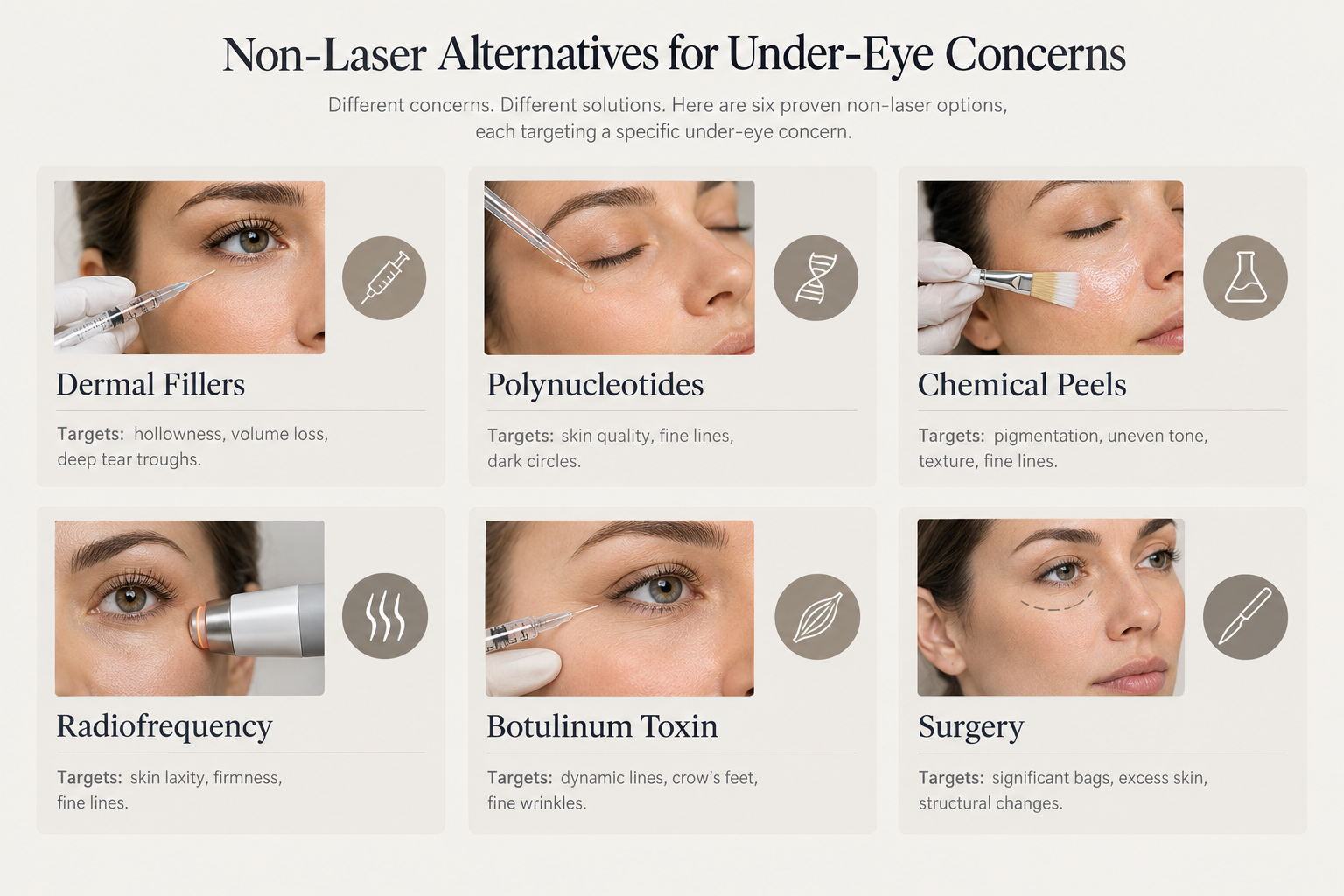
Dermal fillers using hyaluronic acid are commonly used to address volume loss and hollowness in the tear trough area, which can create or worsen the appearance of dark circles and under-eye shadows. Filler treatment does not improve skin texture or pigmentation but can significantly reduce the shadow effect caused by a deep tear trough. The periorbital area is considered a high-risk zone for filler injection, and treatment should only be performed by an experienced practitioner.
Polynucleotides are an emerging injectable treatment that may improve skin hydration, elasticity, and overall quality in the periorbital region. Evidence for their use in this area is still developing, but they are increasingly used as a complementary or alternative approach to laser for skin quality improvement without the downtime associated with resurfacing treatments.
Chemical peels using agents such as glycolic acid or trichloroacetic acid (TCA) can improve superficial pigmentation and skin texture around the eyes, though they require careful application in this sensitive area and carry similar risks of pigmentation changes, particularly in darker skin tones.
Radiofrequency (RF) treatments, including microneedling radiofrequency, deliver thermal energy to stimulate collagen without the chromophore-targeting mechanism of lasers. These devices may be suitable for patients who are not ideal candidates for laser treatment due to skin tone or other factors.
Botulinum toxin injections can soften dynamic lines around the eyes, such as crow’s feet, but do not address skin quality, pigmentation, or static lines at rest.
Surgical options such as blepharoplasty (eyelid surgery) may be the most appropriate approach for patients with significant skin excess, pronounced fat pad prolapse, or structural changes that non-surgical treatments cannot adequately address.
Frequently Asked Questions
Is laser treatment safe directly under the eyes?
Laser treatment in the periorbital area can be performed safely when carried out by a trained practitioner using appropriate protective eyewear and the correct device for the skin type and concern. The thin, delicate nature of periorbital skin means that technique and device selection are particularly important. Risks exist and should be discussed in detail before treatment.
Will laser treatment remove dark circles under the eyes?
This depends on the cause of the dark circles. Laser treatment may improve dark circles caused by superficial melanin pigmentation or visible blood vessels. It is unlikely to correct dark circles caused primarily by volume loss, deep tear troughs, or the shadow effect of hollowness. A clinical assessment is needed to determine the contributing factors before recommending any treatment.
How long do results from periorbital laser treatment last?
Results vary depending on the laser type, the concern treated, and individual factors such as skin ageing rate and sun exposure. Improvements in fine lines and skin quality from collagen-stimulating treatments may last one to several years, but the ageing process continues and maintenance sessions are often recommended. Pigmentation improvements may be more durable if sun protection is consistently maintained.
Does under eye laser treatment hurt?
Most patients find periorbital laser treatment tolerable with the use of topical anaesthetic cream applied before the procedure. Sensations during treatment are commonly described as warmth, mild stinging, or a snapping feeling. More aggressive ablative treatments may cause greater discomfort, and the practitioner can adjust settings or anaesthesia accordingly.
Can laser treatment be combined with other under-eye treatments?
Combination approaches are common in aesthetic practice. Laser treatment for skin texture and quality may be combined with dermal filler for volume loss, or with polynucleotide injections for skin hydration and elasticity. The timing and sequencing of combination treatments should be planned carefully by the treating practitioner to minimise risk and optimise outcomes.
How soon after laser treatment can I wear makeup?
This depends on the type of laser used. After non-ablative treatments, makeup can often be applied within one to two days. After fractional ablative treatment, most practitioners advise waiting until the skin surface has healed, typically five to seven days. Specific guidance will be provided as part of the aftercare instructions.
Is Under Eye Laser Treatment Worth Considering for Your Concerns?
Under eye laser treatment can be a clinically meaningful option for patients with periorbital fine lines, skin texture changes, superficial pigmentation, or mild laxity — provided the treatment is matched carefully to the specific concern, skin type, and individual circumstances. The evidence supporting laser-induced collagen remodelling for periorbital rejuvenation is reasonably well established, particularly for fractional and ablative devices, though results vary between individuals and realistic expectations are important.
The decision to pursue laser treatment in this area should not be taken lightly. The periorbital region is anatomically complex, and the risks — including pigmentation changes, prolonged redness, and the small but real possibility of more serious complications — are meaningful. These risks are substantially reduced when treatment is performed by a practitioner with specific experience in periorbital laser procedures and a thorough understanding of skin type considerations.
For patients whose primary concern is volume loss, hollowness, or structural changes, laser treatment alone is unlikely to deliver satisfying results, and alternative or combination approaches may be more appropriate. A consultation with a qualified aesthetic practitioner who can assess the specific causes of your under-eye concerns and discuss all relevant options — including non-laser alternatives — is the most reliable starting point for making an informed decision.


