
Lip Filler Bruising: How to Reduce It and What to Expect
Bruising after lip filler is one of the most common concerns patients raise before and after treatment. While it is a normal response to injection, its severity varies considerably between individuals, and there are practical steps that can meaningfully reduce both the likelihood and the extent of bruising. This article explains why bruising occurs, which factors influence your personal risk, what you can do before and after your appointment, and when bruising might indicate something that warrants professional attention.
Key Takeaways
- Bruising after lip filler injections is a normal and expected side effect, not a sign that something has gone wrong, though its severity varies widely between patients.
- Certain medications, supplements, and lifestyle habits can increase bruising risk and are worth discussing with your practitioner before treatment.
- Practitioner technique, needle choice, and injection depth all influence how much bruising occurs, making the choice of provider clinically relevant.
- Most lip filler bruising resolves within seven to fourteen days, though individual healing timelines differ.
- Persistent, expanding, or unusually painful bruising should always be assessed by a qualified medical professional promptly.
Why Lip Filler Injections Cause Bruising
Bruising occurs when small blood vessels beneath the skin are disrupted during the injection process, allowing blood to leak into the surrounding tissue. The lips are a particularly vascular area, meaning they contain a dense network of blood vessels, which is one reason lip filler bruising tends to be more noticeable than bruising from injections in other facial areas. When a needle or cannula passes through tissue, even with precise technique, minor vessel trauma is difficult to avoid entirely.
The blood that escapes from damaged capillaries or small veins pools under the skin surface and oxidises over time, producing the characteristic colour progression from red or purple through to green and yellow as the bruise resolves. This process is driven by the breakdown of haemoglobin, the oxygen-carrying protein in red blood cells, and is a normal part of the body’s healing response. The speed at which bruising fades depends on the volume of blood involved, the depth of the bruise, and individual factors such as circulation, skin thickness, and immune function.
It is worth understanding that some degree of bruising does not indicate poor technique or a complication. However, the extent of bruising can be influenced by both practitioner decisions and patient preparation, which is why pre-treatment planning matters.
Factors That Increase Your Personal Bruising Risk
Not every patient bruises equally after lip filler treatment. Several factors affect individual susceptibility, and identifying these before your appointment allows you and your practitioner to take appropriate steps.
Medications and Supplements That Thin the Blood
Certain medications and over-the-counter supplements reduce the blood’s ability to clot efficiently, which means that even minor vessel disruption during injection can result in more significant bruising. Commonly implicated substances include aspirin, ibuprofen and other non-steroidal anti-inflammatory drugs (NSAIDs), warfarin, clopidogrel, and newer anticoagulant medications. Among supplements, fish oil, vitamin E, ginkgo biloba, garlic extract, and high-dose omega-3 fatty acids are frequently associated with increased bleeding tendency.
It is essential that you do not stop any prescribed medication without first consulting the doctor who prescribed it. Your aesthetic practitioner should be informed of all medications and supplements you are taking so that they can advise appropriately. In some cases, stopping a non-essential supplement for a short period before treatment may be recommended, but this decision should always be made in consultation with a qualified professional.
Alcohol Consumption
Alcohol causes temporary vasodilation, meaning it widens blood vessels and increases blood flow near the skin surface. Consuming alcohol in the twenty-four to forty-eight hours before lip filler treatment is associated with increased bruising risk. Most practitioners advise avoiding alcohol for at least twenty-four hours before and after treatment.
Skin Condition and Anatomy
Thinner skin, which becomes more common with age, offers less structural support around blood vessels and may be associated with a slightly higher bruising tendency. The density and distribution of blood vessels in the lip area also varies between individuals, which partly explains why some patients bruise significantly after their first treatment while others experience very little discolouration.
Previous Bruising History
Patients who bruise easily in everyday life, for example after minor knocks or blood tests, are generally more likely to bruise after injectable treatments. This pattern is worth mentioning during your consultation so that your practitioner can plan accordingly.
Menstrual Cycle Timing
Some patients report increased bruising sensitivity around the time of menstruation, which may be related to hormonal fluctuations affecting platelet function and vascular tone. While the evidence for this is largely anecdotal, some practitioners suggest scheduling treatment in the week following menstruation if bruising is a significant concern.
How Practitioner Technique Influences Bruising
The skill and approach of the injecting practitioner has a meaningful impact on bruising outcomes. Several technical decisions influence how much vessel disruption occurs during a lip filler appointment.
Needle Versus Cannula
Lip filler can be administered using a sharp needle or a blunt-tipped cannula. Sharp needles allow precise placement and are commonly used for detailed lip work, but they carry a slightly higher risk of puncturing small blood vessels. Blunt cannulas are designed to push tissue aside rather than cut through it, which may reduce the likelihood of vessel trauma in some areas. However, cannulas are not universally superior for all lip injection techniques, and the choice depends on the specific treatment plan, the anatomy of the patient, and the practitioner’s clinical judgement. Neither approach eliminates bruising entirely.
Injection Depth and Volume
Injecting at the correct anatomical depth is important both for achieving the intended aesthetic result and for minimising vascular disruption. Injections placed too superficially or too deeply relative to the target tissue plane increase the risk of hitting blood vessels. Similarly, injecting larger volumes of filler in a single session may require more injection passes, which can increase cumulative vessel trauma.
Aspiration Technique
Some practitioners aspirate before injecting, meaning they briefly pull back on the syringe plunger to check whether the needle tip is positioned within a blood vessel. While aspiration is not considered a reliable standalone safety measure for all facial areas, it remains part of the clinical approach used by many practitioners to reduce intravascular injection risk.
Ice and Vasoconstriction
Applying ice or a cold compress to the lips immediately before injection causes local vasoconstriction, temporarily narrowing blood vessels and potentially reducing bleeding at the injection site. Many practitioners incorporate this step as a routine part of their pre-injection preparation.
Steps You Can Take Before Your Appointment
Preparing appropriately in the days before your lip filler treatment can help reduce bruising risk. The following steps are commonly recommended, though you should always confirm the specific advice given by your own practitioner, as individual circumstances vary.
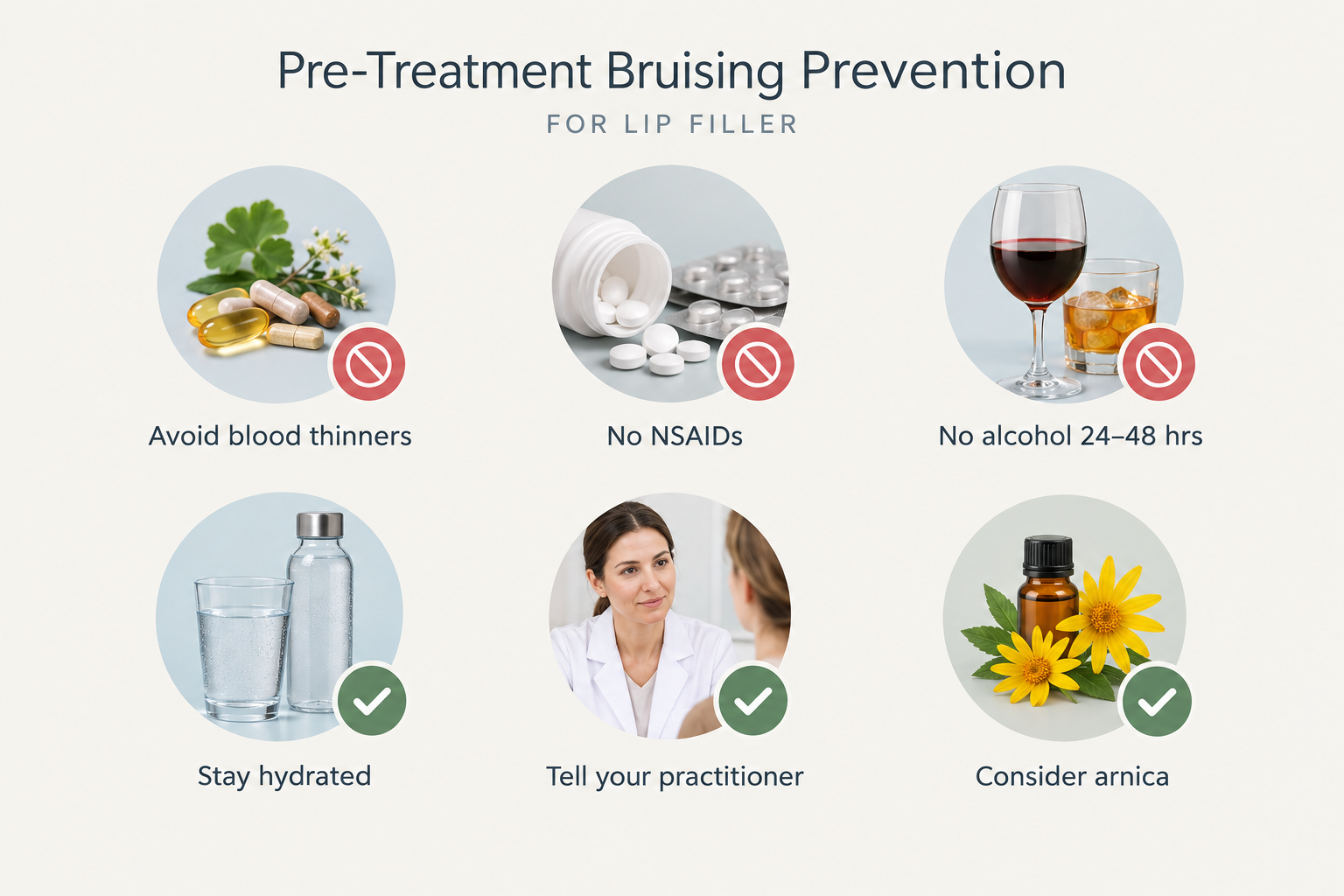
- Avoid blood-thinning supplements such as fish oil, vitamin E, and ginkgo biloba for approximately seven to ten days before treatment, unless advised otherwise by a doctor.
- Avoid NSAIDs such as ibuprofen and aspirin for at least forty-eight hours before treatment if they are not prescribed medications. Use paracetamol for pain relief instead if needed.
- Avoid alcohol for at least twenty-four to forty-eight hours before your appointment.
- Stay well hydrated in the days leading up to treatment. Good hydration supports healthy circulation and tissue resilience.
- Inform your practitioner of all medications, supplements, and relevant medical history during your consultation, not just on the day of treatment.
- Consider arnica in oral or topical form. Some patients and practitioners use arnica montana preparations before and after treatment to support bruise resolution. The clinical evidence for arnica in this context is limited and mixed, but it is generally considered low-risk when used as directed. Discuss this with your practitioner before starting.
What to Do After Treatment to Minimise Bruising
The hours and days immediately following lip filler injections are an important window for managing bruising. Certain actions can help limit the extent of discolouration and support faster resolution.
Cold Compresses
Applying a cold compress or wrapped ice pack to the treated area for short intervals during the first few hours after treatment can help reduce swelling and may limit bruising by promoting vasoconstriction. Avoid applying ice directly to the skin to prevent cold injury, and do not press firmly on the lips, as this can displace freshly injected filler before it has settled.
Avoiding Heat and Exercise
Heat causes vasodilation and increases blood flow, which can worsen bruising and swelling in the early post-treatment period. Patients are generally advised to avoid hot baths, saunas, steam rooms, and vigorous exercise for at least twenty-four to forty-eight hours after lip filler treatment. Strenuous physical activity raises heart rate and blood pressure, both of which can increase bleeding at injection sites.
Keeping the Head Elevated
Sleeping with the head slightly elevated on the night following treatment may help reduce swelling and limit the pooling of blood in the lip area. This is a simple measure that many practitioners recommend as part of standard aftercare.
Continuing to Avoid Alcohol and NSAIDs
The same substances that increase bruising risk before treatment can also worsen bruising if consumed in the days immediately after. Continuing to avoid alcohol and non-prescribed NSAIDs for at least forty-eight hours post-treatment is standard aftercare advice.
Arnica and Bromelain
Topical arnica gel applied gently around the bruised area is used by many patients to support bruise resolution. Oral bromelain, an enzyme derived from pineapple, has also been suggested as a supplement that may help reduce bruising and swelling after procedures, though the clinical evidence in the context of cosmetic injectables specifically remains limited. If you are considering either supplement, discuss this with your practitioner first.
Avoiding Makeup on Active Bruises
While it may be tempting to cover bruising with makeup immediately after treatment, applying cosmetics to the injection sites too soon carries a small risk of introducing bacteria into the skin. Most practitioners advise waiting at least twelve to twenty-four hours before applying makeup to the treated area, and using clean brushes or applicators when you do.
How Long Does Lip Filler Bruising Last?
Most lip filler bruising resolves within seven to fourteen days. Mild bruising may fade within three to five days, while more significant bruising can take up to two weeks to clear completely. The colour of the bruise typically progresses from dark red or purple in the first few days, through blue or green, and finally to yellow before fading entirely. This colour change reflects the staged breakdown of haemoglobin as the body reabsorbs the leaked blood.
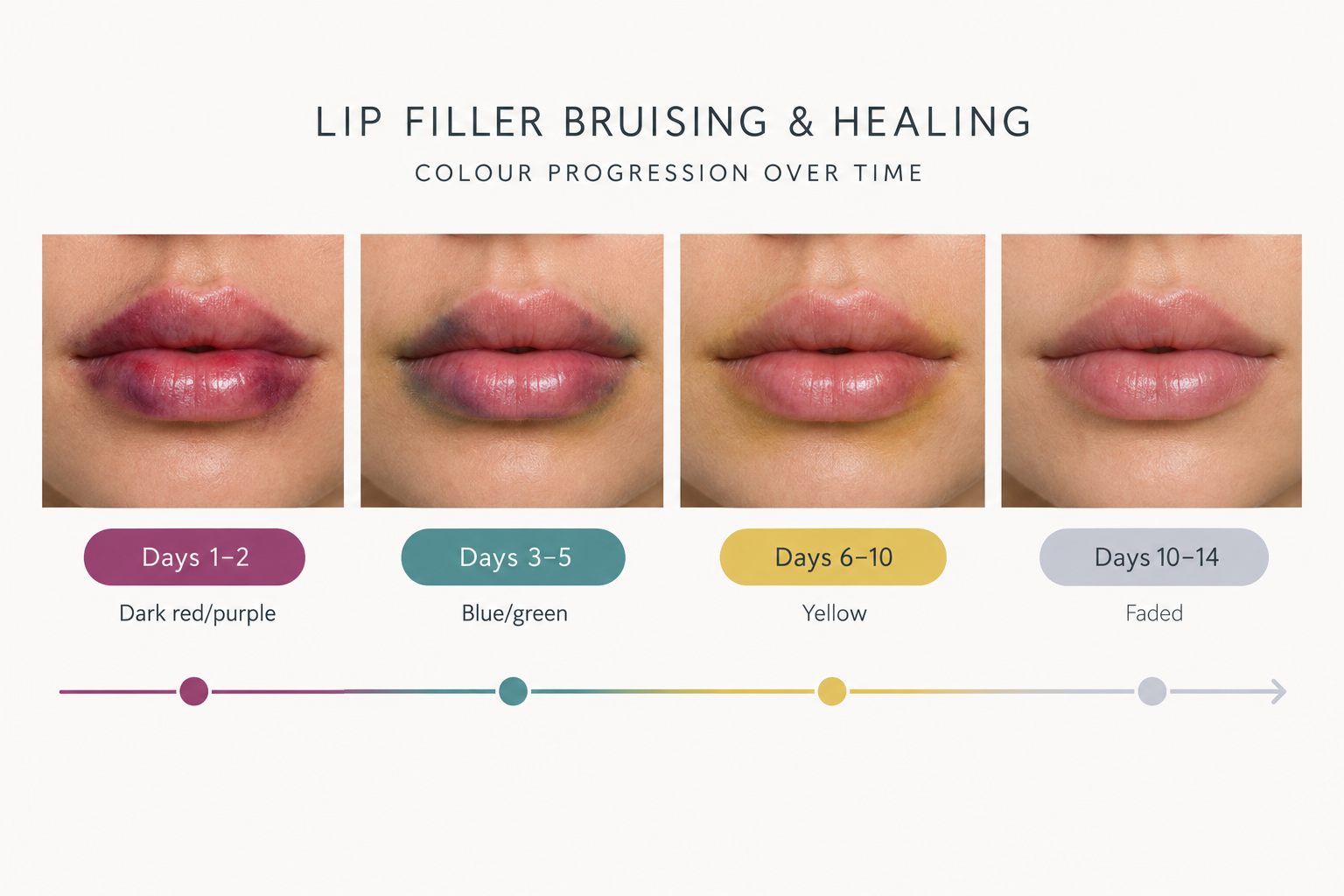
Swelling often accompanies bruising after lip filler treatment and may initially make bruising appear more prominent. As swelling subsides, usually within the first three to five days, the bruising beneath may become more visible before it begins to fade. This is a normal part of the healing process and does not indicate that bruising is worsening.
Individual healing timelines vary based on factors including age, skin type, the volume of filler injected, and the extent of initial vessel disruption. Patients who bruise easily in general may find that lip filler bruising takes longer to resolve than it does for patients with a lower bruising tendency.
Distinguishing Normal Bruising from a Complication
The vast majority of bruising after lip filler treatment is a normal, self-limiting response to injection. However, it is important to be aware of signs that may indicate a more serious issue requiring prompt medical assessment.
Normal post-treatment bruising is typically flat or slightly raised, discoloured, and tender to touch. It should gradually improve over the course of one to two weeks. Bruising that is expanding rapidly, accompanied by severe or worsening pain, associated with skin colour changes such as white or grey discolouration, or accompanied by significant asymmetry or tissue changes should be assessed by a qualified medical professional without delay. These features can, in rare cases, be associated with vascular complications, which are uncommon but serious and require urgent attention.
If you are ever uncertain about whether your post-treatment symptoms are within the expected range, contact your treating practitioner or seek medical advice. Reputable clinics provide clear aftercare guidance and a point of contact for post-treatment concerns.
Covering Lip Filler Bruising with Makeup
Once the initial healing period has passed and your practitioner has confirmed it is safe to apply cosmetics, colour-correcting makeup can be effective at concealing bruising. A peach or orange-toned colour corrector applied before foundation can neutralise the blue or purple tones of a bruise. Setting the corrector with a light powder before applying foundation helps improve coverage and longevity.
Choosing non-comedogenic, fragrance-free products reduces the risk of irritation on skin that may still be slightly sensitive after treatment. Avoid pressing firmly on the lips when applying or removing makeup during the first week after treatment.
Planning Your Treatment Timing
If you have a specific event or occasion approaching, timing your lip filler appointment appropriately can help ensure that any bruising has resolved before the date. Most practitioners recommend allowing at least two weeks between your treatment and any important event, and ideally longer if you have a history of significant bruising. This buffer also allows time for swelling to fully subside and for the filler to settle into its final position, giving you a more accurate sense of the result before the occasion.
Discussing your timeline during the consultation allows your practitioner to advise on whether the proposed treatment plan is realistic given your schedule, and whether any adjustments to technique or product choice might be appropriate.
Frequently Asked Questions
Is bruising after lip filler normal?
Yes. Bruising is a common and expected side effect of lip filler injections due to the high density of blood vessels in the lip area. It does not necessarily indicate a problem with the treatment or the technique, though its severity varies between patients.
How can I speed up the healing of lip filler bruising?
Cold compresses in the first few hours, avoiding heat and exercise, keeping the head elevated when sleeping, and avoiding alcohol and NSAIDs after treatment may all help. Some patients use topical arnica or oral bromelain, though the evidence for these specifically in the context of filler bruising is limited. Always follow your practitioner’s specific aftercare instructions.
Can I prevent bruising entirely?
Bruising cannot be guaranteed to be prevented entirely, as some degree of vessel disruption is inherent to the injection process. However, following pre-treatment preparation advice, choosing an experienced practitioner, and adhering to aftercare guidance can meaningfully reduce the likelihood and severity of bruising.
Should I stop taking aspirin before lip filler?
Do not stop any prescribed medication, including aspirin, without first consulting the doctor who prescribed it. If you take aspirin for a medical reason, inform your aesthetic practitioner during your consultation so that they can advise appropriately. Non-prescribed aspirin taken for general purposes may be discussed with your practitioner in the context of bruising risk.
When should I be concerned about bruising after lip filler?
Contact your practitioner or seek medical advice if bruising is rapidly expanding, accompanied by severe or worsening pain, associated with skin colour changes such as white or grey patches, or if you notice significant asymmetry or tissue changes. These features can occasionally indicate a vascular complication requiring prompt assessment.
Does the type of filler affect bruising?
The filler product itself is less likely to be the primary driver of bruising than the injection technique, the number of injection passes, and individual patient factors. However, the viscosity and injection method associated with different hyaluronic acid filler formulations may influence the approach used, which in turn can affect bruising outcomes. Your practitioner can advise on the most appropriate product for your treatment goals.
Can I have lip filler if I bruise very easily?
Patients who bruise easily can still be suitable candidates for lip filler treatment, but it is important to discuss this tendency with your practitioner during the consultation. They may recommend additional pre-treatment preparation, adjust their technique, or suggest scheduling treatment at a time that allows adequate recovery before any planned events.
Making an Informed Decision About Lip Filler Treatment
Lip filler bruising is a manageable and temporary aspect of treatment rather than a reason to avoid it, provided you approach the process with realistic expectations and appropriate preparation. Understanding your personal risk factors, following pre- and post-treatment advice, and choosing a qualified and experienced practitioner are the most meaningful steps you can take to reduce bruising and support a smooth recovery.
A thorough consultation before treatment gives you the opportunity to discuss your medical history, any medications or supplements you take, your bruising history, and your timeline for recovery. This information allows your practitioner to tailor their approach and provide specific aftercare guidance suited to your individual circumstances. If bruising has been a significant concern after previous injectable treatments, raising this explicitly during the consultation is worthwhile, as there may be adjustments to technique or preparation that could help.
Bruising that resolves within the expected timeframe is part of the normal treatment experience. With the right preparation and aftercare, most patients find that any discolouration is manageable and does not significantly affect their overall experience of lip filler treatment.


