
Microneedling Cost Explained: What Affects the Price and What to Expect
Microneedling is one of the most widely requested skin treatments in aesthetic clinics, but pricing varies considerably depending on where you go, what is being treated, and which technology is used. Understanding what drives the cost can help you compare quotes meaningfully, set realistic expectations, and avoid making a decision based on price alone.
Key Takeaways
- Microneedling prices typically range from around £100 to £600 or more per session in the UK, depending on the treatment area, device, and clinic type.
- Most skin concerns require a course of three to six sessions rather than a single treatment, so the total investment is usually higher than the per-session price suggests.
- Add-ons such as radiofrequency energy, platelet-rich plasma, or growth factor serums increase the cost but may also improve outcomes for specific concerns.
- Price alone is not a reliable indicator of quality; practitioner experience, device standards, and clinical environment matter significantly for both safety and results.
- A thorough consultation before committing to a course is important for assessing suitability and understanding realistic outcomes for your skin type and concern.
What Is Microneedling and Why Does It Cost What It Does?
Microneedling is a minimally invasive skin treatment that uses a device fitted with fine needles to create controlled micro-injuries in the skin’s surface. These micro-channels trigger the skin’s natural wound-healing response, stimulating collagen and elastin production over the following weeks. The treatment is used for a range of concerns including acne scarring, fine lines, enlarged pores, uneven skin texture, and general skin quality improvement. Some devices also deliver active ingredients deeper into the skin through the same channels.
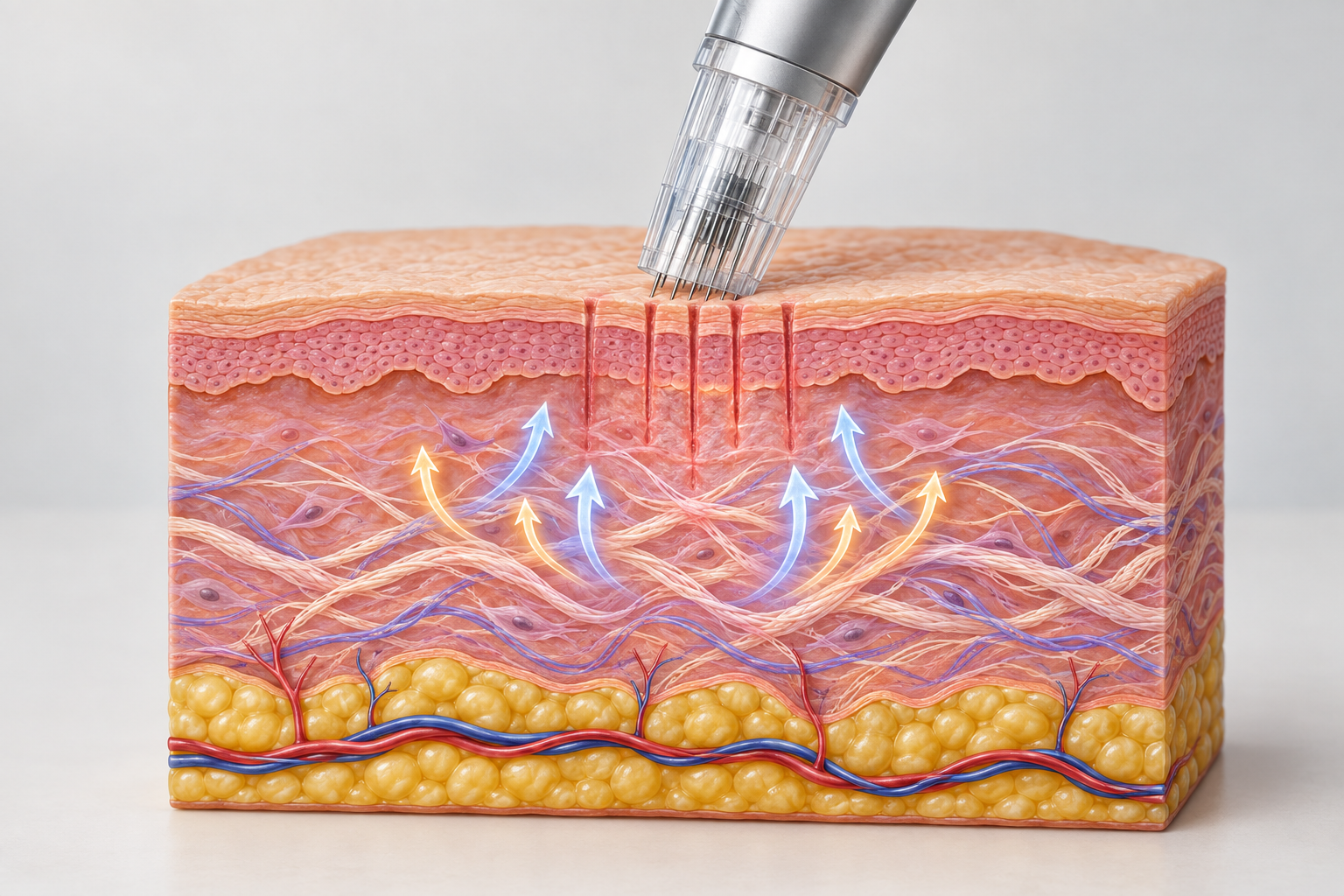
The cost of microneedling reflects several overlapping factors: the clinical-grade equipment required, the consumables used per session (such as sterile needle cartridges), the time the practitioner spends on assessment and treatment, the clinic’s overhead costs, and any additional technologies or serums incorporated into the session. Unlike some treatments where a single appointment may be sufficient, microneedling typically requires multiple sessions to achieve meaningful results, which means the overall cost of a full course is the more relevant figure for most patients.
Typical Microneedling Prices: What to Expect
Microneedling session prices in the UK generally fall within a broad range, and understanding where different price points sit can help you interpret clinic quotes more accurately.
Standard facial microneedling
A single session of standard microneedling for the full face typically costs between £100 and £300 at most aesthetic clinics. Budget-end pricing at this level may reflect a less experienced practitioner, a basic device, or a clinic with lower overheads. Mid-range pricing in the £150 to £250 bracket is common at established aesthetic clinics using professional-grade automated devices. Higher-end clinics, particularly those in major cities or with medically qualified practitioners, may charge £250 to £400 or more per session for standard facial treatment.
Microneedling with radiofrequency (RF microneedling)
Radiofrequency microneedling combines the standard needle-based treatment with the delivery of RF energy into the deeper layers of the skin. This combination is intended to produce more pronounced skin tightening and collagen remodelling compared with standard microneedling alone. Because the devices involved are significantly more expensive and the treatment is more technically demanding, RF microneedling typically costs between £300 and £800 per session, with some clinics charging more for larger treatment areas or premium devices such as Morpheus8 or Genius RF.
Microneedling with PRP
Platelet-rich plasma (PRP) is sometimes combined with microneedling, with the patient’s own plasma — which contains growth factors — applied to the skin during or after the needling process. This combination is sometimes referred to informally as a vampire facial. The additional cost of blood draw, centrifuge processing, and the time involved typically adds £100 to £250 to the base session price, bringing the combined treatment to roughly £250 to £500 or more per session depending on the clinic.
Scalp microneedling for hair concerns
Microneedling applied to the scalp is used as an adjunct approach for certain types of hair thinning, often alongside topical treatments such as minoxidil. Scalp microneedling sessions are generally priced similarly to facial treatments, ranging from approximately £100 to £300 per session, though pricing varies by clinic and whether additional serums are included.
Body microneedling
Treating larger body areas such as the décolletage, abdomen, or thighs for concerns like stretch marks or skin laxity typically costs more than a facial session due to the larger surface area and additional time required. Body microneedling sessions may range from £200 to £500 or more depending on the area size and clinic.
Factors That Affect the Price of Microneedling
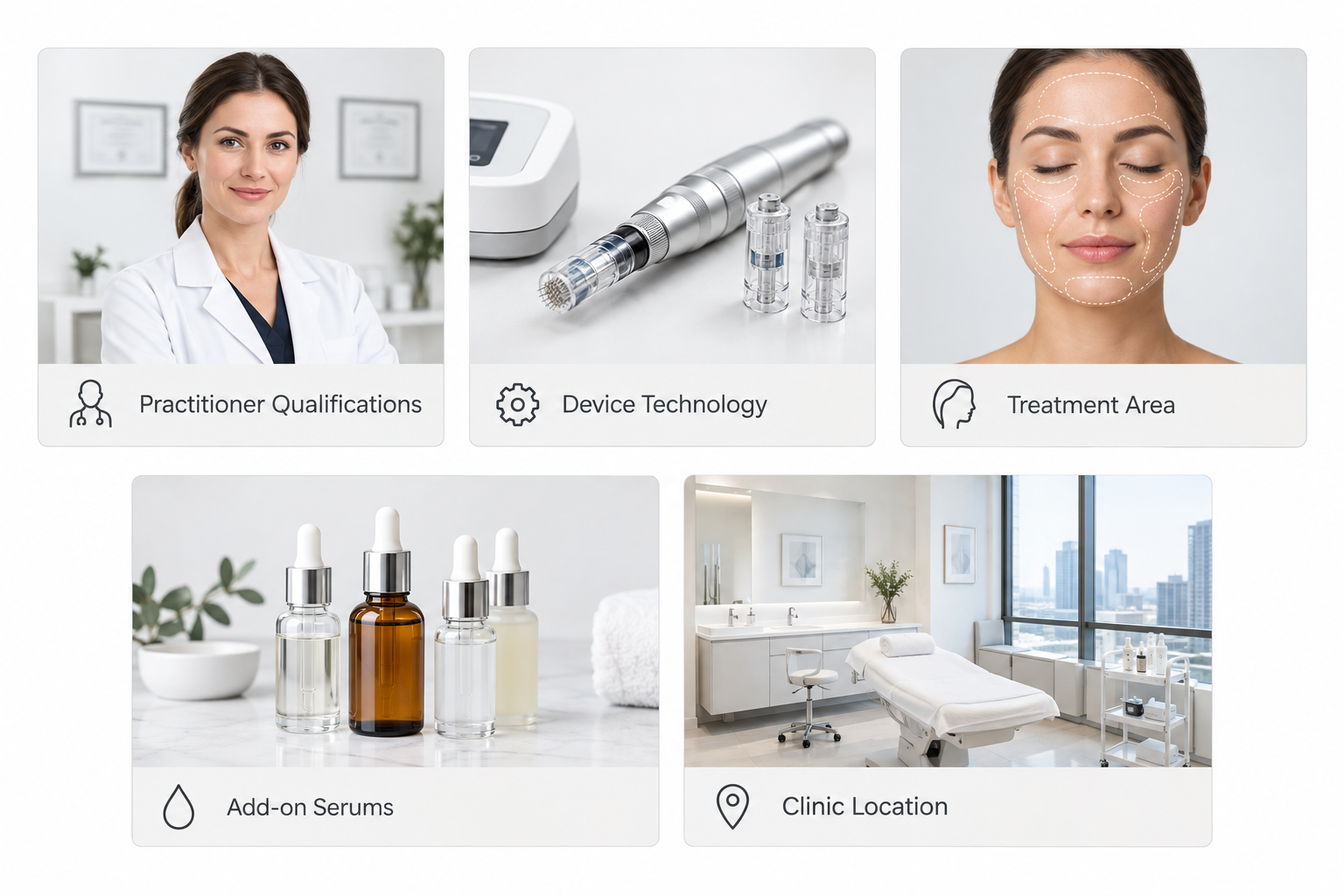
Several variables influence what a clinic charges for microneedling, and understanding them helps explain why two clinics can quote very different prices for what appears to be the same treatment.
Practitioner qualifications and experience
Microneedling can legally be performed by practitioners with varying levels of training in the UK, though regulations are evolving. Treatments carried out by or under the supervision of a medically qualified practitioner — such as a doctor, nurse prescriber, or dentist — typically command higher fees, reflecting the clinical expertise and accountability involved. This is not purely a commercial premium; practitioner experience affects both the safety of the treatment and the ability to manage complications if they arise.
Device type and technology
Not all microneedling devices are equivalent. Professional automated microneedling pens with adjustable needle depth and speed offer more consistent results than manual dermarollers. RF microneedling platforms represent a further step up in both capability and cost. The device used directly influences the session price, and it is reasonable to ask a clinic which device they use and why.
Treatment area and session duration
Larger or more complex treatment areas require more time and more consumables, which increases the cost. A full-face session takes longer than treating a small scar, and a combined face and neck treatment will typically cost more than the face alone.
Add-on serums and boosters
Many clinics offer the option to incorporate hyaluronic acid serums, growth factor preparations, vitamin C, or other active ingredients into the microneedling session. These are applied to the skin so that the micro-channels created by the needles allow deeper penetration. Each add-on increases the session cost, sometimes by £30 to £100 or more depending on the product used.
Geographic location
Clinic location has a meaningful effect on pricing. Clinics in central London or other major UK cities typically charge more than those in smaller towns or rural areas, reflecting higher property and staffing costs. This does not automatically mean that a higher-priced urban clinic delivers better results, but it does partly explain regional price differences.
Clinic type and environment
A standalone aesthetic clinic, a medical spa, a dermatology practice, and a beauty salon may all offer microneedling at different price points. Medical-grade environments with clinical governance structures, proper sterilisation protocols, and qualified oversight generally cost more to run, and this is reflected in their pricing.
Course Pricing and Package Deals
Because microneedling for most skin concerns requires a series of sessions rather than a single appointment, most clinics offer course pricing. A typical course for facial skin quality improvement or mild to moderate acne scarring involves three to six sessions spaced approximately four to six weeks apart. Clinics commonly offer a discount of 10 to 20 percent when sessions are purchased as a package, making the per-session cost lower than the individual rate.
For example, a clinic charging £200 per individual session might offer a course of four sessions for £680 to £720, representing a modest saving. It is worth asking whether the course price is refundable or transferable if you decide not to complete all sessions, as policies vary between clinics.
More significant scarring, such as moderate to severe atrophic acne scars, may require six or more sessions before meaningful improvement becomes visible, and some patients choose maintenance sessions once or twice a year after completing an initial course. The total cost over time is therefore an important consideration when budgeting for microneedling treatment.
What the Price Should Include
When comparing microneedling quotes, it is useful to clarify exactly what is included in the stated price. A responsible clinic should include a pre-treatment consultation or assessment, the use of a topical numbing cream applied before the session, the treatment itself using a sterile single-use needle cartridge, and basic aftercare advice. Some clinics include a follow-up review; others charge separately for this.
Items that may or may not be included depending on the clinic are: specific serums applied during treatment, a post-treatment soothing mask, SPF or aftercare products to take home, and any follow-up appointments. Asking for a clear breakdown before booking helps avoid unexpected additional charges.
Is Cheaper Microneedling Worth the Risk?
Very low-priced microneedling — particularly sessions priced below £80 to £100 — warrants careful scrutiny. At this price point, it becomes difficult for a clinic to cover the cost of a sterile single-use needle cartridge, appropriate numbing, practitioner time, and clinical overheads while maintaining safe standards. Risks associated with poorly performed microneedling include skin infection, post-inflammatory hyperpigmentation (particularly in darker skin tones), scarring, and inadequate results from insufficient needle depth or inconsistent technique.
This does not mean that the most expensive option is always the best, but it does mean that price should not be the primary selection criterion. Checking practitioner qualifications, reading verifiable patient reviews, asking about the device used, and ensuring the clinic operates in a clean clinical environment are all more reliable indicators of quality than price alone.
Microneedling Risks, Side Effects, and Downtime
Understanding the side effect profile of microneedling is relevant to the overall cost-benefit assessment. Immediately after treatment, most patients experience redness, mild swelling, and skin sensitivity that resembles a moderate sunburn. This typically resolves within 24 to 72 hours for standard microneedling, though RF microneedling may involve slightly longer downtime of three to five days in some cases.
Less common side effects include temporary pinpoint bleeding during the procedure, minor bruising, and skin peeling as the healing process progresses. More serious complications such as infection, prolonged redness, or post-inflammatory hyperpigmentation are uncommon when the treatment is performed correctly but are more likely when hygiene standards are inadequate or when the treatment is performed on unsuitable skin.
Microneedling is generally not recommended during active acne breakouts, on skin with active infection or inflammation, or in patients with certain clotting disorders or those taking specific medications. Patients with a history of keloid scarring should discuss this with their practitioner before proceeding, as microneedling carries a theoretical risk of triggering abnormal scar formation in susceptible individuals. Darker skin tones require careful assessment of needle depth and post-treatment care to reduce the risk of hyperpigmentation.
How Many Sessions Are Typically Needed?
The number of microneedling sessions required depends on the concern being treated and the individual’s skin response. For general skin quality improvement, texture refinement, and mild fine lines, a course of three sessions is often a reasonable starting point, with results becoming more apparent over the weeks following each session as collagen remodelling progresses.
Acne scarring typically requires more sessions — often four to six as a minimum — and results are generally more gradual and variable than for texture or tone concerns. Deeper or more established scars may show only partial improvement even after a full course, and realistic expectations are important. Stretch marks and body skin laxity tend to respond more slowly and may require more sessions than facial treatments.
Maintenance sessions every six to twelve months are sometimes recommended after completing an initial course, particularly for patients focused on ongoing collagen support and skin quality. These maintenance costs should be factored into the longer-term budget.
Alternatives to Microneedling and How They Compare on Cost
Microneedling sits within a broader category of skin resurfacing and collagen-stimulating treatments, and understanding the alternatives can help clarify whether microneedling represents the most appropriate option for a given concern and budget.
Chemical peels are generally less expensive per session, with superficial to medium-depth peels ranging from approximately £60 to £250 depending on the formulation and clinic. They address some overlapping concerns such as uneven skin tone, mild texture issues, and fine lines, but they work through a different mechanism and may not be as effective for deeper scarring. Laser resurfacing treatments — including fractional CO2 laser and erbium laser — can address similar concerns to microneedling but typically cost more per session, ranging from £300 to over £1,000 depending on the device and area treated. Laser treatments may achieve results in fewer sessions for some concerns but carry their own risk profile and downtime considerations.
HydraFacial and other medical-grade facial treatments address skin hydration, congestion, and surface texture but do not stimulate collagen in the same way as microneedling and are not equivalent treatments for scarring or significant skin laxity. They are generally less expensive and involve no downtime, making them suitable for different goals. Polynucleotide injections and other biostimulator treatments work through a different mechanism — stimulating fibroblast activity through injected material rather than surface needling — and may be considered alongside or instead of microneedling for certain skin quality concerns, typically at a higher per-session cost.
Questions to Ask Before Booking Microneedling
- What qualifications does the practitioner performing the treatment hold?
- Which device will be used, and is it a professional-grade automated pen or a manual roller?
- Is the needle cartridge single-use and sterile?
- What is included in the quoted price — numbing cream, serums, aftercare products?
- How many sessions do you recommend for my specific concern, and why?
- What results are realistic for my skin type and the concern I want to address?
- What are the risks for my skin tone and condition?
- What aftercare will I need to follow, and are there any restrictions on activities or products?
- Is a patch test or test area recommended before a full treatment?
Frequently Asked Questions
Is microneedling a one-off treatment or do I need multiple sessions?
For most skin concerns, microneedling works best as a course of treatments rather than a single session. Three to six sessions spaced four to six weeks apart is a common recommendation, though the appropriate number depends on the concern being treated and how your skin responds. A single session may produce some improvement in skin radiance and texture, but meaningful changes to scarring or skin laxity generally require multiple treatments.
Why do some clinics charge much more than others for the same treatment?
Price differences reflect practitioner qualifications, device quality, clinic overheads, geographic location, and what is included in the session. A higher price does not automatically guarantee a better outcome, but very low prices can indicate compromises in equipment, hygiene, or practitioner experience that affect both safety and results.
Does microneedling hurt, and does numbing cream add to the cost?
Most patients find microneedling tolerable with topical numbing cream applied 20 to 45 minutes before the session. Reputable clinics typically include numbing cream in the session price, though it is worth confirming this when booking. Without numbing, the treatment can be uncomfortable, particularly at deeper needle settings.
Can I get microneedling on the NHS?
Microneedling for cosmetic concerns such as acne scarring, fine lines, or skin texture is not routinely available on the NHS and is considered a private aesthetic treatment. In rare cases, it may be discussed in a dermatology context, but patients should expect to pay privately for this treatment.
How long do microneedling results last?
Results from a course of microneedling are not permanent, as the skin continues to age naturally. Improvements in skin texture, tone, and mild scarring may last six to twelve months or longer, depending on the individual’s skin, age, and lifestyle factors such as sun exposure. Maintenance sessions can help sustain results over time.
Is RF microneedling worth the extra cost compared to standard microneedling?
RF microneedling may offer more pronounced skin tightening and deeper collagen remodelling than standard microneedling for certain concerns, particularly skin laxity and deeper textural irregularities. Whether the additional cost is justified depends on your specific concern, skin type, and the results you are hoping to achieve. A consultation with a qualified practitioner can help clarify whether the upgrade is likely to be beneficial for your situation.
Are there any skin types or conditions where microneedling is not suitable?
Microneedling is not suitable for everyone. Active acne, rosacea flares, eczema, psoriasis, or any active skin infection in the treatment area are generally contraindications. Patients with a history of keloid scarring, those taking certain medications such as isotretinoin, or those who are pregnant or breastfeeding should discuss their situation with a qualified practitioner before proceeding. Darker skin tones require careful technique to minimise the risk of post-inflammatory hyperpigmentation.
Is Microneedling Worth the Investment for Your Skin Concern?
Microneedling can be a clinically reasonable option for patients with realistic expectations and skin concerns that are well-matched to what the treatment can achieve. The evidence supporting microneedling for acne scarring and general skin quality improvement is reasonably well established, though results vary between individuals and are rarely dramatic after a single session. For skin tightening and more significant laxity, RF microneedling may offer a more meaningful outcome, though at a higher cost.
The total investment — factoring in a full course of sessions, any add-ons, and potential maintenance — is the more honest figure to consider rather than the per-session price. For many patients, this represents several hundred to over a thousand pounds over the course of treatment. Whether that represents good value depends on the concern being addressed, the realistic degree of improvement achievable, and how that compares to alternative treatments for the same goal.
Choosing a qualified, experienced practitioner working in a proper clinical environment is more important than finding the lowest price. A thorough consultation before committing to a course allows you to ask the right questions, understand what is realistic for your skin, and make an informed decision about whether microneedling is the most appropriate path forward for you.


