Laser Tattoo Removal Blisters: What’s Normal and What to Do
Discovering fluid-filled bubbles on your skin after a laser tattoo removal session can be alarming, but for most people, laser tattoo removal blisters are a completely expected part of the normal healing response. Understanding why they form, what they should look like, and how to care for them properly can make the difference between smooth healing and an avoidable complication. This guide explains the mechanism behind blistering, walks through a realistic healing timeline, and helps you recognise when something genuinely needs medical attention.
Key Takeaways
- Blistering after laser tattoo removal is a normal healing response caused by the laser’s interaction with ink particles beneath the skin’s surface.
- Most blisters contain clear or slightly yellowish fluid, appear within 8–72 hours, and resolve within one to two weeks without intervention.
- The single most important aftercare rule is: do not pop blisters — doing so significantly raises the risk of scarring and infection.
- Warning signs including green or foul-smelling discharge, spreading redness, fever, or blisters that continue to enlarge after several days warrant prompt contact with your provider.
- Blistering tends to decrease with subsequent sessions as the volume of ink in the skin reduces.
Why Do Blisters Form After Laser Tattoo Removal?
The mechanism behind blistering is directly linked to how laser tattoo removal works. During a session, a Q-switched or picosecond laser delivers extremely short, high-energy pulses of light that are selectively absorbed by tattoo ink particles in the dermis — a process known as selective photothermolysis. The rapid absorption of laser energy causes ink particles to heat and shatter into smaller fragments, but it also generates a sudden release of heat and pressure within the tissue. This creates microscopic gas bubbles beneath the skin surface, which is responsible for the immediate whitening effect (sometimes called frosting) visible right after treatment.
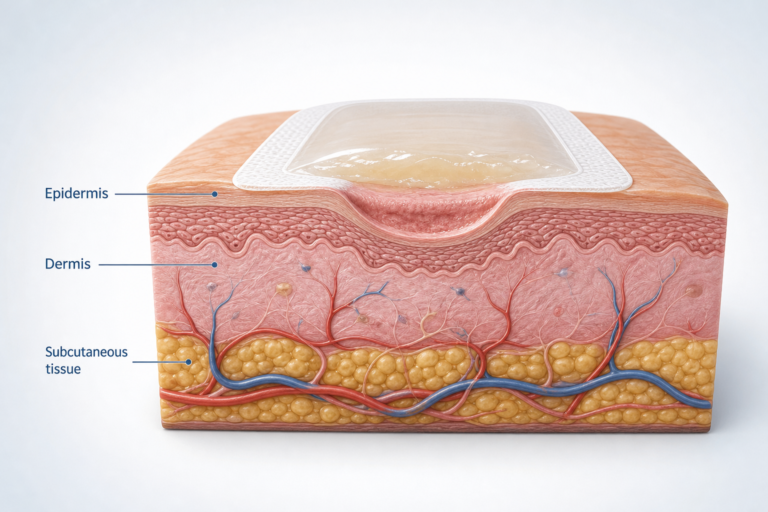
As the treated area begins its inflammatory response over the following hours, the body sends fluid to the site to protect damaged tissue and support repair — much as it does after a superficial burn wound. This protective fluid accumulates between the layers of the epidermis and dermis, forming the visible blisters you see on the surface. The immune system is simultaneously beginning the process of clearing ink particles through the lymphatic system, which is why the area remains active and reactive for several days after treatment.
In short, blistering is not a sign that something went wrong. It is evidence that the laser delivered sufficient energy to the ink and that your body’s healing mechanisms are functioning as expected.
What Do Tattoo Removal Blisters Look Like?
Laser tattoo removal blisters typically appear as raised, fluid-filled bubbles on the surface of the treated area. In most cases the fluid inside is clear or very slightly yellowish — this is normal serous fluid, not a sign of infection. Blisters can range from small pinpoint bubbles to larger sacs covering a portion of the tattooed area, and they may cluster together or appear individually depending on the tattoo’s size, ink density, and the laser settings used.
Blisters generally develop within 8 to 72 hours after the session and may feel tender, tight, or mildly itchy. Over the following days they typically flatten, dry out, and transition into scabbing and crusting — a normal stage of healing. The skin beneath eventually flakes away to reveal new, healing skin underneath. The entire blister-to-healed-skin process usually takes between one and two weeks, though this varies by individual and by the location of the tattoo on the body.
Which Ink Colors Blister Most?
Not all tattoo ink colours respond identically to laser treatment, and this directly affects how much blistering you may experience. Reds, oranges, and yellows are among the most reactive colours because they are typically targeted with the 532 nm wavelength, which is more superficially absorbed and can generate a more pronounced inflammatory response in the upper layers of the skin. Fresh, densely packed black ink treated at higher fluence settings can also produce significant blistering in early sessions.
Older tattoos with faded ink generally blister less because there is simply less ink for the laser to interact with. Similarly, as a tattoo progresses through multiple removal sessions and the ink volume decreases, blistering tends to become less pronounced. If your first session produced notable blisters but subsequent sessions seem milder, this is a reassuring sign that the treatment is working and the ink load is reducing.
Ink Color and Blistering Risk
| Ink Colour | Typical Laser Wavelength | Relative Blister Risk |
|---|---|---|
| Black / dark blue | 1064 nm (Nd:YAG) | Moderate (higher in early sessions) |
| Red / orange | 532 nm | Higher |
| Yellow / light green | 532 nm | Higher |
| Blue / green | 694–755 nm | Moderate |
| Faded / older ink (any colour) | Varies | Lower |
Healing Timeline: What to Expect Week by Week
Having a realistic healing timeline helps you monitor your recovery and identify anything that falls outside the expected pattern.
Days 1–3: Inflammation and Blister Formation
Immediately after treatment you may notice redness, swelling, and the frosting effect on the skin surface. Within the first 8 to 72 hours, fluid-filled bubbles begin to form. The treated area may feel warm and tender, similar to mild sunburn. Some pinpoint bleeding or oozing is possible in the first 24 hours and is generally not a cause for concern.
Days 4–7: Blisters Stabilise and Begin to Flatten
Existing blisters typically reach their maximum size within the first few days and then begin to flatten as the fluid is gradually reabsorbed. The skin around the blisters may look slightly discoloured. Itching is common during this phase and is a sign of active healing — resist the urge to scratch or pick at the area.
Days 7–14: Scabbing and Crusting
As blisters resolve, scabbing and crusting form over the treated area. These scabs are part of the normal healing process and should be allowed to fall away naturally. Forcing them off prematurely can disrupt the new skin forming underneath and increase the risk of scarring or pigmentation changes.
Weeks 3–4: Fading and Skin Recovery
By the third and fourth week, the surface skin should be largely healed. You may notice some residual redness or mild pigmentation changes, which often continue to improve over the following weeks. The immune system continues clearing fragmented ink particles during this period, which is why visible fading of the tattoo often becomes more apparent four to eight weeks after a session rather than immediately.
Aftercare Instructions: How to Care for Blisters
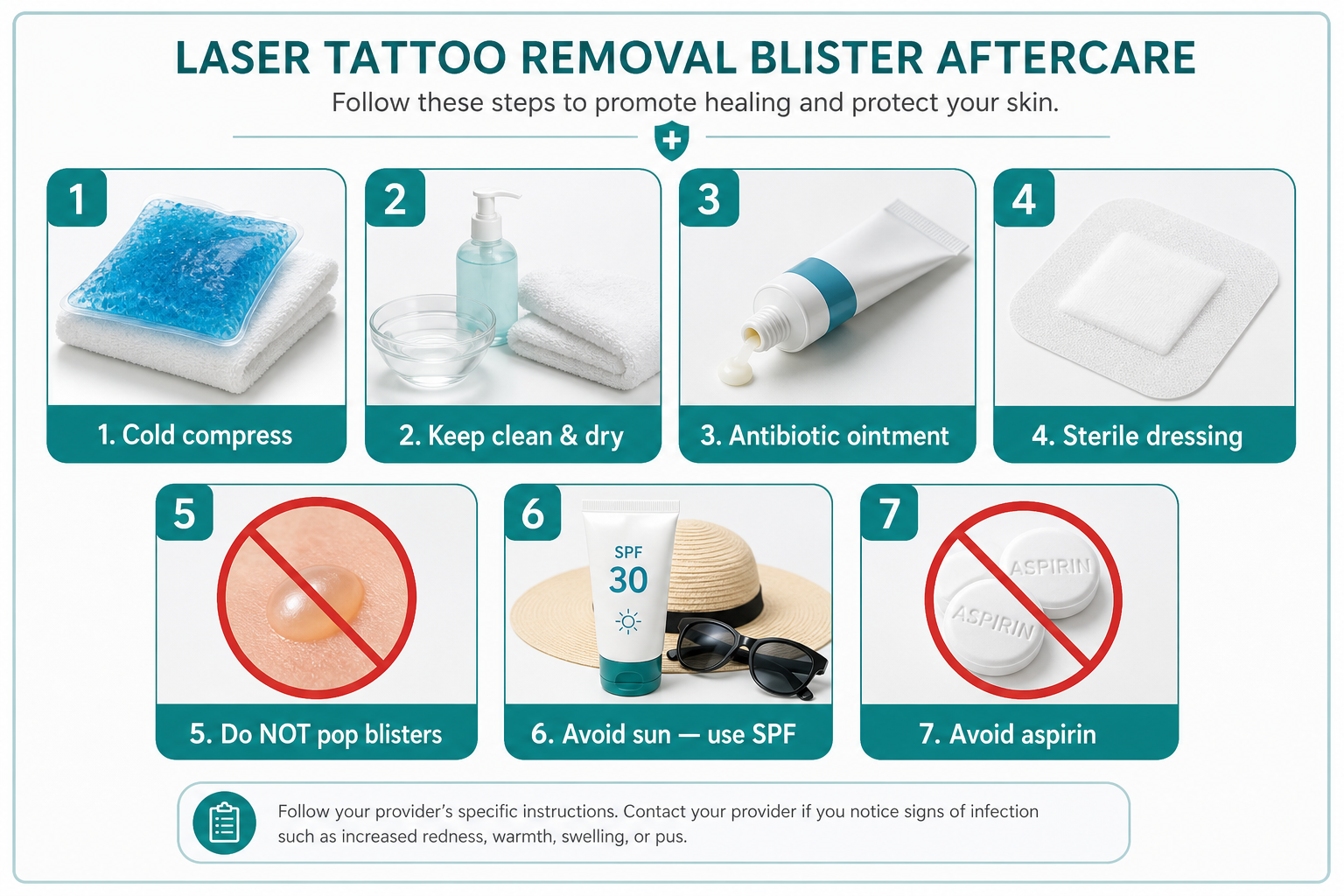
Proper aftercare is essential for minimising the risk of infection and scarring. The following steps reflect standard clinical guidance, though your provider’s specific aftercare instructions should always take priority.
- Apply a cold compress immediately after treatment. Using a clean cold compress or ice pack wrapped in a cloth for the first one to two hours can help reduce swelling and discomfort. Do not apply ice directly to the skin.
- Keep the treated area clean and dry. Gently clean the area with mild soap and water once or twice daily. Pat dry with a clean cloth — do not rub. Avoid soaking the area in baths, swimming pools, or hot tubs until the skin has fully healed, as prolonged moisture softens blisters and increases infection risk.
- Apply antibiotic ointment as directed. A thin layer of antibiotic ointment (such as bacitracin or a similar antibacterial product) applied two to three times daily for the first 72 hours helps protect the skin barrier and reduces the risk of bacterial infection. Use only products recommended by your provider.
- Cover with a sterile dressing. A breathable sterile dressing over the treated area for the first 24 hours protects blisters from friction and contamination. After this, the area can often be left uncovered unless it is in a high-friction location such as the inner arm, behind the knee, or along a waistband — in which case continued light coverage may be advisable.
- Do not pop blisters. This is the single most important rule in blister aftercare. Intact blisters act as a natural sterile barrier protecting the healing tissue beneath. Breaking this barrier — intentionally or through friction — exposes raw skin to bacteria and significantly raises the risk of scarring and infection.
- Avoid sun exposure. Keep the treated area out of direct sunlight during healing. Once the skin has recovered, apply a broad-spectrum SPF 25 or higher sunscreen to the area before any sun exposure. Unprotected sun exposure on healing or recently healed laser-treated skin can trigger hyperpigmentation or hypopigmentation.
- Avoid aspirin and blood-thinning medications unless medically necessary. Aspirin can increase the risk of bruising and bleeding in the treated area. Paracetamol (acetaminophen) is generally acceptable for pain relief, but always check with your provider or pharmacist before taking any medication in relation to your treatment.
What If a Blister Pops on Its Own?
Despite best efforts, blisters sometimes rupture naturally — particularly larger ones, or those in areas subject to movement or clothing friction. If this happens, do not panic. Gently clean the area with mild soap and water, allow it to dry, and apply a thin layer of antibiotic ointment followed by a clean sterile dressing. The goal is to keep the exposed skin clean and protected while it heals, just as you would with any minor skin wound. Monitor the area closely for signs of infection over the following days.
If a blister is very large and causing significant discomfort, do not attempt to drain it yourself. Contact your treatment provider, who can assess whether professional drainage under sterile conditions is appropriate. Self-draining with non-sterile instruments is one of the most common causes of post-treatment infection and scarring.
Normal Healing vs. Warning Signs of Complications
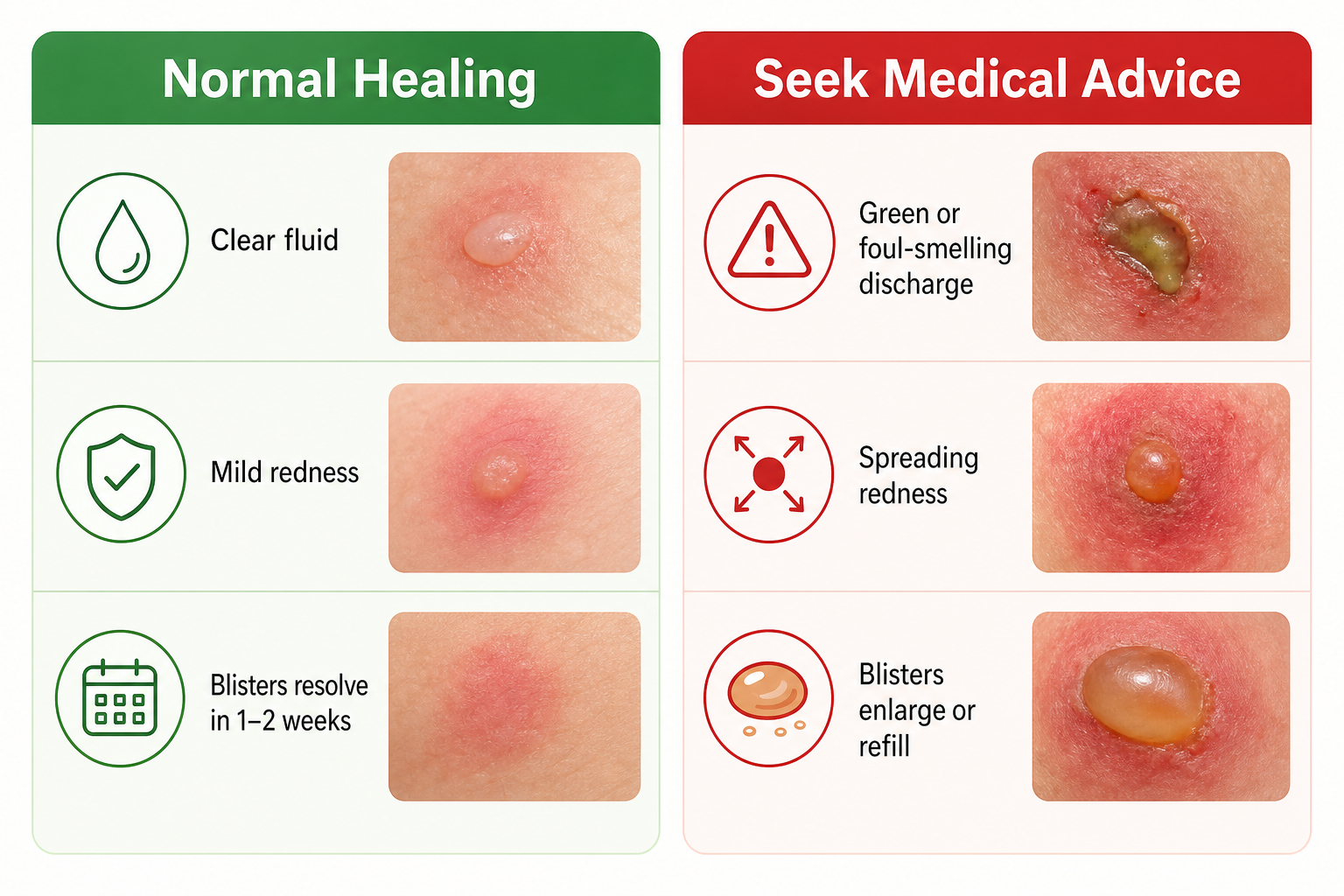
Most blistering after laser tattoo removal resolves without any problems. However, it is important to know the difference between the normal healing response and signs that something may require medical attention.
| Normal Healing | Seek Medical Advice |
|---|---|
| Clear or slightly yellowish fluid in blisters | Green, brown, or foul-smelling discharge |
| Mild redness and swelling around the treated area | Redness that is spreading beyond the treated area |
| Tenderness and warmth for the first few days | Increasing pain, warmth, or swelling after day 3–4 |
| Blisters that flatten and resolve within 7–14 days | Blisters larger than 2–3 cm that continue to enlarge or refill |
| Itching during the healing phase | Pus or thick discharge from the treated area |
| Scabbing and crusting as blisters resolve | Red streaks radiating outward from the site (possible cellulitis) |
| Gradual improvement day by day | Fever or feeling generally unwell |
| Mild pigmentation changes that fade over weeks | No improvement after 7–10 days, or worsening symptoms |
Red streaks radiating outward from the treated area, combined with fever and increasing pain, may indicate cellulitis — a bacterial skin infection that requires prompt medical treatment. If you notice these signs, contact your provider or seek urgent medical care rather than waiting for your next scheduled appointment.
Factors That Influence How Much You Blister
Not everyone blisters to the same degree after laser tattoo removal, and several factors influence the likelihood and severity of blistering in any given session.
- Skin type: People with lighter skin types (Fitzpatrick I–III) may blister more readily, while those with darker skin types (Fitzpatrick IV–VI) face a higher risk of pigmentation changes — hyperpigmentation or hypopigmentation — alongside blistering. Clinicians typically adjust laser settings to account for skin type, which is one reason a thorough consultation before treatment matters.
- Ink colour and density: As discussed above, certain colours and densely packed ink produce more pronounced reactions.
- Laser fluence and settings: Higher energy settings produce more aggressive ink fragmentation and a stronger inflammatory response. Experienced clinicians balance efficacy with safety by calibrating settings to the individual.
- Tattoo age: Older, faded tattoos generally produce less blistering than fresh, saturated ones.
- Session number: Blistering typically decreases across successive sessions as the ink volume in the skin reduces with each treatment.
- Body location: Areas with thinner skin or higher friction — such as the inner arm, behind the knee, or over bony prominences — may blister more and require extra care during healing.
- Existing skin conditions: Conditions such as eczema or psoriasis in or near the treated area may affect healing. People with a history of herpes simplex virus (cold sores) should inform their provider before treatment on or near the face, as laser treatment can trigger HSV reactivation in susceptible individuals.
Risks of Improper Blister Management
The risk of scarring is real but largely preventable with correct aftercare. Scarring most commonly results from popping blisters, picking at scabs, or allowing the treated area to become infected. Keloid or hypertrophic scarring is more likely in individuals with a personal or family history of these scar types, and this should be discussed with your provider before beginning treatment.
Pigmentation changes — both hyperpigmentation (darkening) and hypopigmentation (lightening) — are among the more common side effects of laser tattoo removal, particularly in darker skin types or when the treated area is exposed to sun during healing. These changes are often temporary but can occasionally be long-lasting. Protecting the treated area from sun exposure during and between sessions is one of the most effective ways to reduce this risk.
When to Contact Your Provider
You should contact your treatment provider if you notice any of the warning signs listed in the comparison table above. As a general guide, reach out if blisters are unusually large or painful, if the discharge changes colour or develops an odour, if redness or swelling is spreading, or if you develop a fever. Most reputable clinics have a protocol for post-treatment concerns and will advise you on whether to come in for assessment or manage the issue at home.
For signs of cellulitis — spreading redness, red streaks, fever, and significant pain — seek urgent medical care rather than waiting for a clinic callback. Cellulitis is a bacterial infection that can progress quickly and requires antibiotic treatment.
In rare cases, an allergic reaction to laser-fragmented ink particles can occur, presenting as widespread hives (urticaria) or, very rarely, more severe systemic reactions. This is more commonly documented with certain ink pigments and has been reported in association with picosecond laser treatments. If you develop widespread itching, hives, or facial swelling after a session, seek medical attention promptly.
Frequently Asked Questions
Is it normal to get large blisters after laser tattoo removal?
Yes, larger blisters can form, particularly after the first few sessions, over densely inked areas, or with reactive ink colours such as red and orange. Large blisters should be left intact and protected with a sterile dressing. If a blister is causing significant pain or is very large, contact your provider rather than attempting to drain it yourself.
How long do blisters last after laser tattoo removal?
Most blisters begin to flatten within three to seven days and are fully resolved within one to two weeks. The skin then progresses through a scabbing and crusting phase before new skin is revealed. If blisters persist beyond two weeks or continue to enlarge, this warrants a conversation with your provider.
Can blisters cause permanent scarring?
Blisters themselves do not automatically cause scarring. The risk of scarring increases significantly if blisters are popped, if scabs are picked off prematurely, or if the area becomes infected. Following aftercare instructions carefully is the most effective way to minimise the risk of scarring.
Will I blister less in future sessions?
In most cases, yes. As successive laser sessions reduce the volume of ink remaining in the skin, there is less material for the laser to react with, and the inflammatory response — including blistering — tends to become less pronounced. Many patients find that later sessions produce noticeably milder reactions than their first treatment.
Can I exercise or swim while blisters are healing?
Avoid swimming, hot tubs, and prolonged soaking until blisters have fully healed, as moisture softens the blister wall and increases infection risk. High-impact exercise that causes sweating or friction over the treated area should also be avoided during the active blister phase. Light activity is generally acceptable provided the treated area is protected and kept clean and dry.
What should I do if my blister looks infected?
Signs of infection include green or brown discharge, a foul smell, increasing redness and warmth, pus, or red streaks spreading from the site. If you notice any of these signs of infection, contact your provider or a medical professional promptly. Do not attempt to treat a suspected infection at home with over-the-counter products alone without professional guidance.
Managing Blisters Confidently Through Your Removal Journey
Laser tattoo removal blisters are an understandably alarming sight, but in the vast majority of cases they are a straightforward part of the normal healing response — evidence that the laser has done its job and that your body is actively working to clear fragmented ink. The key principles are consistent: keep the treated area clean and dry, apply antibiotic ointment as directed, protect blisters from friction and sun exposure, and above all, do not pop blisters. These steps give the skin the best possible environment to heal without complications.
Understanding the healing timeline, recognising which ink colours are more reactive, and knowing the difference between normal blistering and genuine warning signs puts you in a much stronger position to manage your recovery with confidence. If anything about your healing feels outside the expected pattern — particularly spreading redness, fever, or discharge that changes colour or smell — contact your provider promptly rather than waiting. Early assessment of a potential complication is always preferable to delayed treatment.
If you are considering laser tattoo removal or have questions about your current healing, a consultation with a qualified practitioner who can assess your skin type, tattoo characteristics, and medical history remains the most reliable way to ensure your treatment is as safe and effective as possible.