
How to Calm a Rosacea Flare-Up Fast: Practical Steps and Professional Options
Rosacea flare-ups can appear with little warning, turning skin red, sensitive, and uncomfortable within hours. Whether you experience persistent facial redness, visible blood vessels, papules, or a burning sensation, knowing how to respond quickly and appropriately can make a meaningful difference to how long a flare lasts and how severe it becomes. This article explains the immediate steps you can take at home, the skincare choices that support recovery, the triggers most commonly responsible, and the professional treatments that may help reduce the frequency and intensity of future episodes.
Key Takeaways
- Rosacea flare-ups are best managed by removing the trigger first, then calming the skin barrier with gentle, fragrance-free products and cool compresses.
- Common triggers include UV exposure, heat, alcohol, spicy food, stress, and certain skincare ingredients — identifying your personal triggers is central to long-term control.
- Over-the-counter products containing niacinamide, azelaic acid, or centella asiatica may help reduce redness and support the skin barrier during a flare.
- Prescription topical and oral treatments are available for moderate to severe rosacea and should be discussed with a dermatologist or qualified clinician.
- Professional clinic treatments such as laser therapy and intense pulsed light (IPL) may reduce persistent redness and visible vessels, but are not a substitute for daily trigger management.
What Happens During a Rosacea Flare-Up
Rosacea is a chronic inflammatory skin condition that primarily affects the central face — the cheeks, nose, chin, and forehead. During a flare-up, the skin’s vascular and immune responses become temporarily overactivated. Blood vessels near the surface dilate rapidly, producing the characteristic flushing and persistent redness. In some subtypes, inflammatory papules and pustules may also appear, resembling acne but without the comedones (blackheads and whiteheads) typically associated with acne vulgaris.
The skin barrier in rosacea-prone skin is often compromised, meaning it loses moisture more easily and reacts more intensely to environmental and chemical stimuli. This is why products that most people tolerate without issue — certain acids, fragrances, alcohol-based toners, or physical exfoliants — can provoke a significant reaction in someone with rosacea. Understanding this underlying sensitivity is important when choosing how to respond during a flare.
Rosacea is generally classified into four subtypes: erythematotelangiectatic (redness and flushing), papulopustular (inflammatory lesions), phymatous (skin thickening, most commonly affecting the nose), and ocular (affecting the eyes). The immediate calming strategies described in this article are most relevant to the first two subtypes, which are the most commonly experienced.
Immediate Steps to Calm a Rosacea Flare-Up
The fastest way to begin calming a rosacea flare-up is to remove or reduce the triggering stimulus as quickly as possible. If you have been in the sun, move indoors. If you have eaten a spicy meal or consumed alcohol, drink cool water and rest in a cool environment. If stress is the likely cause, stepping away from the stressor and practising slow breathing can help reduce the physiological stress response that contributes to flushing.
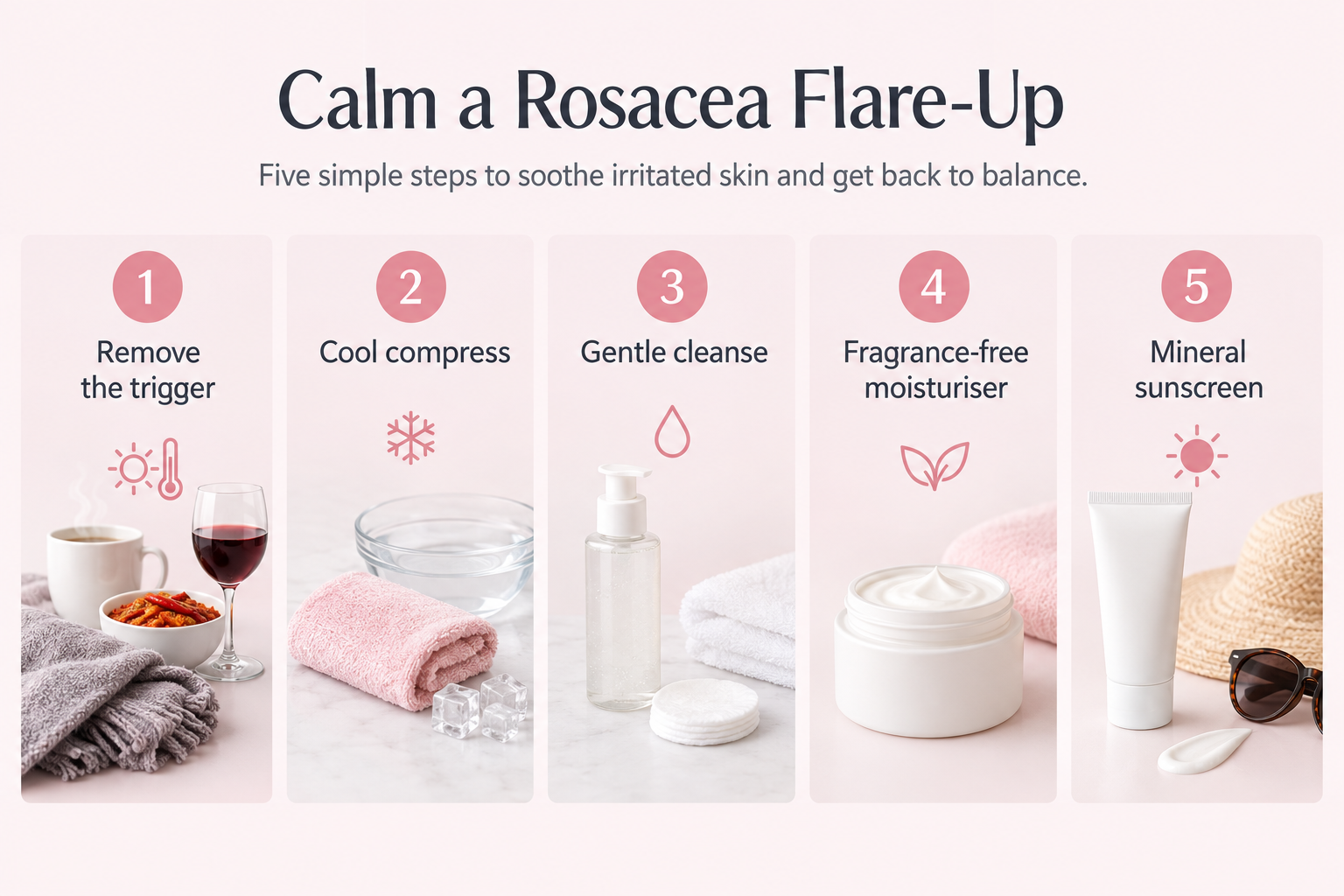
Once the trigger has been addressed, the following steps may help reduce the intensity and duration of the flare:
- Apply a cool compress: A clean cloth dampened with cool (not ice-cold) water held gently against the affected area can help constrict dilated blood vessels and reduce the sensation of heat. Avoid rubbing the skin. Ice or ice-cold water should be avoided as extreme cold can itself act as a vascular irritant.
- Cleanse gently or skip cleansing temporarily: If your skin is actively inflamed, cleansing with even a mild product may worsen irritation. If cleansing is necessary, use a fragrance-free, soap-free, low-pH cleanser and apply it with fingertips only — never a cloth or brush.
- Apply a simple, fragrance-free moisturiser: Restoring the skin barrier is a priority during a flare. Look for products containing ceramides, glycerin, or hyaluronic acid. Avoid anything containing alcohol, fragrance, menthol, eucalyptus, or essential oils, as these are common rosacea irritants.
- Avoid active skincare ingredients: During a flare, pause retinoids, vitamin C serums, AHAs, BHAs, and physical exfoliants. These ingredients, while beneficial in stable periods for some rosacea patients, can significantly worsen inflammation during an active episode.
- Use mineral sunscreen if going outdoors: UV exposure is one of the most consistent rosacea triggers. If you need to go outside during a flare, a mineral sunscreen containing zinc oxide or titanium dioxide is generally better tolerated than chemical UV filters, which can cause stinging on sensitised skin.
Skincare Ingredients That May Help During a Flare
Not all active skincare ingredients are off-limits during a rosacea flare-up. Several have evidence supporting their use in rosacea-prone skin and may actively help reduce redness and inflammation when used appropriately.
Niacinamide (vitamin B3) is one of the better-studied ingredients for rosacea-prone skin. It supports the skin barrier, reduces transepidermal water loss, and has mild anti-inflammatory properties. Concentrations of 2–5% are generally well tolerated during a flare, though individual responses vary. Higher concentrations may cause flushing in some people, so starting low is advisable.
Azelaic acid is a naturally occurring dicarboxylic acid with anti-inflammatory and mild antimicrobial properties. It is available in both prescription-strength formulations (15–20%) and lower-concentration over-the-counter products. Azelaic acid has a reasonable evidence base for reducing rosacea-associated redness and papules, and is generally considered suitable for sensitive skin. Some people experience mild tingling on application, which usually diminishes with continued use.
Centella asiatica (also known as cica or tiger grass) is a plant extract with soothing and barrier-supporting properties. It is commonly found in products marketed for sensitive or reactive skin and may help reduce the sensation of heat and tightness during a flare. Evidence is less robust than for azelaic acid, but tolerability is generally good.
Green tea extract contains polyphenols with antioxidant and anti-inflammatory activity. Some studies suggest it may reduce erythema (redness) in rosacea-prone skin, though the evidence base remains limited and further research is needed.
It is worth noting that even well-tolerated ingredients can provoke a reaction in some individuals during an active flare. Patch testing on a small area before applying a new product to the full face is always a sensible precaution.
Identifying and Managing Your Rosacea Triggers
Long-term control of rosacea depends heavily on identifying and managing personal triggers. Triggers vary between individuals, and what provokes a severe flare in one person may have little effect on another. Keeping a simple diary — noting what you ate, drank, your environment, stress levels, and skincare products used on days when flares occur — can help identify patterns over time.
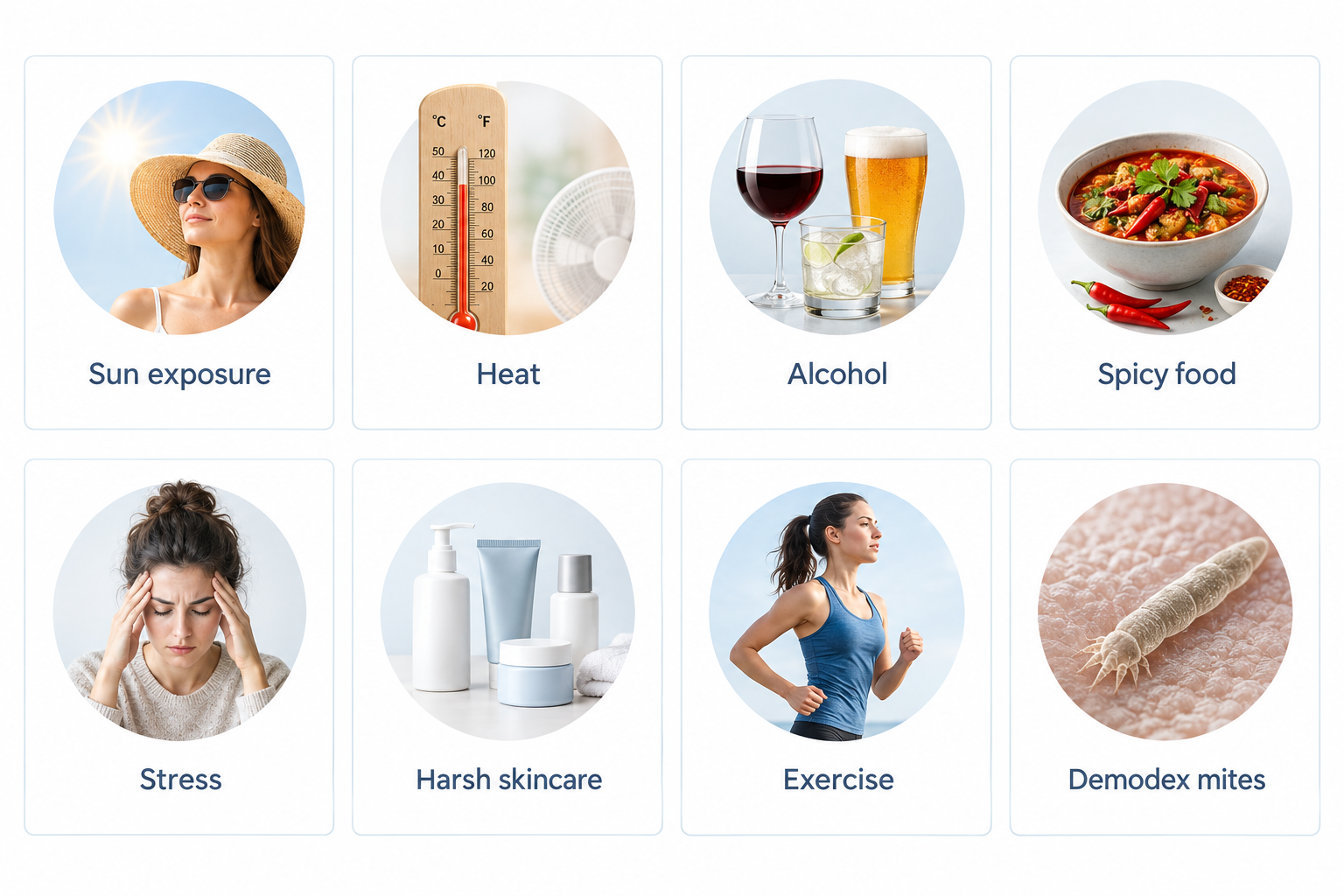
The most commonly reported rosacea triggers include:
- Sun exposure: UV radiation is consistently identified as one of the most significant triggers. Daily broad-spectrum sun protection is considered a cornerstone of rosacea management, not just a cosmetic preference.
- Heat: Hot weather, hot baths or showers, saunas, and hot drinks can all provoke flushing. Cooling the environment and choosing lukewarm water for washing may help.
- Alcohol: Red wine is particularly frequently cited, though all forms of alcohol can trigger flushing in rosacea-prone individuals. The mechanism involves vasodilation and, in some cases, histamine release.
- Spicy food: Capsaicin, the compound responsible for the heat in chilli peppers, activates receptors involved in vasodilation and flushing.
- Stress and anxiety: Emotional stress activates the sympathetic nervous system and can trigger or worsen flushing. Stress management techniques may have a meaningful role in rosacea control for some patients.
- Certain skincare and cosmetic products: Fragrances, alcohol, witch hazel, menthol, and some preservatives are common culprits. Switching to products specifically formulated for sensitive or rosacea-prone skin can reduce reactivity.
- Exercise: Vigorous exercise raises core body temperature and can trigger flushing. Exercising in a cool environment, staying well hydrated, and cooling down gradually may help mitigate this.
- Demodex mites: Research has identified an association between elevated numbers of Demodex folliculorum (a microscopic mite naturally present on human skin) and rosacea, particularly the papulopustular subtype. This is one reason why certain prescription treatments targeting these mites have shown benefit in clinical trials.
When to Use Prescription Treatments
Over-the-counter skincare can support the skin barrier and reduce mild redness, but moderate to severe rosacea — particularly the papulopustular subtype with inflammatory lesions — typically requires prescription treatment for meaningful control. A dermatologist or qualified clinician can assess your rosacea subtype and severity and recommend an appropriate treatment plan.
Commonly prescribed topical treatments for rosacea include metronidazole gel or cream, azelaic acid at prescription strength (15–20%), ivermectin cream (which targets Demodex mites and has anti-inflammatory properties), and brimonidine gel (which temporarily constricts blood vessels to reduce visible redness). Each of these has a different mechanism and is suited to different presentations of rosacea.
For more severe or widespread papulopustular rosacea, oral antibiotics — most commonly low-dose doxycycline — may be prescribed. Low-dose doxycycline is used primarily for its anti-inflammatory rather than antibiotic effect at the doses typically prescribed for rosacea, which helps reduce concerns about antibiotic resistance with long-term use. Oral isotretinoin is occasionally considered for severe or refractory cases, though this requires careful patient selection and monitoring.
It is important not to self-prescribe or use prescription treatments obtained without a clinical assessment. Rosacea can resemble other skin conditions, and an accurate diagnosis is the starting point for appropriate treatment.
Professional Clinic Treatments for Rosacea
For patients with persistent facial redness, visible broken blood vessels (telangiectasia), or frequent flare-ups that are not adequately controlled by topical treatments, professional clinic-based treatments may offer additional benefit. These treatments do not cure rosacea but may reduce the visibility of vascular changes and, in some cases, reduce the frequency of flares.
Laser and Intense Pulsed Light (IPL) Therapy
Laser therapy and intense pulsed light (IPL) are the most established clinic-based options for rosacea-associated redness and telangiectasia. Both technologies work by targeting haemoglobin in the blood vessels beneath the skin surface. The light energy is absorbed by the vessel, causing it to collapse and be gradually reabsorbed by the body. Vascular lasers such as the pulsed dye laser (PDL) and Nd:YAG laser are commonly used for this purpose.
IPL uses a broad spectrum of light rather than a single wavelength and can address diffuse redness across a wider area in a single session. Multiple sessions are typically required — often three to six, spaced several weeks apart — and results vary between individuals. Some patients experience significant reduction in background redness and fewer visible vessels; others see more modest improvement. Maintenance sessions may be needed as rosacea is a chronic condition and new vessels can develop over time.
Potential side effects of laser and IPL treatment for rosacea include temporary redness, swelling, and bruising in the treated area. These effects usually resolve within a few days to two weeks. More significant adverse effects such as blistering, pigmentation changes, or scarring are uncommon when treatment is performed by an appropriately trained practitioner using suitable settings for the patient’s skin type. People with darker skin tones require careful assessment and appropriate device selection, as some laser wavelengths carry a higher risk of pigmentation changes in darker skin.
LED Light Therapy
Low-level LED (light-emitting diode) therapy, particularly using yellow or red wavelengths, is sometimes used as a supportive treatment for rosacea-prone skin. LED therapy is non-ablative and generally very well tolerated, with no meaningful downtime. The evidence base for LED therapy in rosacea is less robust than for vascular laser or IPL, and it is unlikely to address established telangiectasia. It may, however, have a role in reducing inflammation and supporting skin recovery, particularly in patients who are not suitable candidates for more intensive treatments.
Topical Prescription Treatments Administered in a Clinical Setting
Some clinics offer prescription-strength topical treatments as part of a supervised skincare programme. This can be particularly useful for patients who have not previously had access to prescription rosacea treatments or who need guidance on how to incorporate them into a routine without provoking further irritation.
What to Avoid During and After a Flare
Certain actions that might seem helpful can actually prolong or worsen a rosacea flare-up. Being aware of these can help you avoid inadvertently making the situation worse.
- Avoid applying ice directly to the skin: While cooling is helpful, ice can cause vascular shock and worsen redness. Use a cool compress instead.
- Do not use steroid creams without medical advice: Topical corticosteroids can temporarily reduce redness but are not appropriate for rosacea management. Prolonged use can cause steroid-induced rosacea (a condition that can be difficult to treat) and thin the skin.
- Avoid heavy makeup during a flare: If you use makeup to cover redness, choose mineral-based, fragrance-free formulations. Heavy or occlusive products can trap heat and worsen inflammation. Green-tinted primers can help neutralise redness without adding irritating ingredients.
- Do not scrub or exfoliate: Physical exfoliation during a flare can disrupt the already-compromised skin barrier and introduce further inflammation.
- Avoid hot showers or steam: Heat is a direct trigger. Washing with lukewarm water and patting the skin dry gently rather than rubbing is advisable during a flare.
Rosacea and Emotional Wellbeing
The visible nature of rosacea flare-ups can have a meaningful impact on confidence and emotional wellbeing. Research has consistently shown that people with rosacea report higher rates of social anxiety, embarrassment, and reduced quality of life compared with those without the condition. This is not a minor consideration — the psychological burden of a chronic visible skin condition is real and deserves acknowledgement.
Stress is both a consequence and a trigger of rosacea, which can create a difficult cycle. Addressing stress through evidence-based approaches — whether that is regular physical activity (adapted to avoid overheating), mindfulness practices, or speaking with a mental health professional — may have a positive effect on both emotional wellbeing and flare frequency. Some patients find that connecting with rosacea support communities helps reduce the sense of isolation that can accompany a chronic skin condition.
Frequently Asked Questions
How long does a rosacea flare-up typically last?
The duration of a rosacea flare-up varies considerably depending on the trigger, the individual’s skin, and how quickly the trigger is removed. Minor flares triggered by heat or a single dietary trigger may settle within a few hours. More significant flares, particularly those involving inflammatory papules, can persist for several days to a few weeks. Consistent trigger avoidance and appropriate skincare can help shorten the duration of individual episodes.
Can rosacea be cured?
Rosacea is a chronic condition without a known cure. However, it can be effectively managed in most cases. With appropriate trigger avoidance, skincare, and where necessary prescription treatment or professional procedures, many people with rosacea achieve long periods of remission with minimal visible symptoms. The goal of treatment is control rather than cure.
Is rosacea the same as sensitive skin?
Rosacea and sensitive skin share some characteristics — both involve heightened reactivity to certain products and environmental factors — but they are not the same thing. Rosacea is a specific chronic inflammatory condition with defined subtypes and clinical features. Sensitive skin is a broader, less precisely defined term. Some people with sensitive skin do not have rosacea, and a clinical assessment is needed to distinguish between the two.
Can diet help manage rosacea?
For some individuals, dietary changes can meaningfully reduce flare frequency. Common dietary triggers include alcohol (particularly red wine), spicy foods, hot drinks, and histamine-rich foods. However, dietary triggers are highly individual. An elimination approach — removing suspected triggers and reintroducing them one at a time — can help identify which foods are relevant for a particular person. There is no universal rosacea diet that applies to everyone.
Is it safe to wear sunscreen every day with rosacea?
Daily broad-spectrum sun protection is strongly recommended for people with rosacea, as UV exposure is one of the most consistent and significant triggers. Mineral sunscreens containing zinc oxide or titanium dioxide are generally better tolerated than chemical UV filters in rosacea-prone skin. Some people find that certain sunscreen formulations cause stinging or redness, so trialling different products to find one that suits your skin is worthwhile.
When should I see a doctor or dermatologist about rosacea?
You should seek a clinical assessment if your rosacea is causing significant distress, if over-the-counter measures are not providing adequate control, if you develop eye symptoms (redness, dryness, or irritation of the eyes may indicate ocular rosacea), or if you are unsure whether your skin condition is rosacea or something else. A dermatologist or qualified clinician can confirm the diagnosis, identify your subtype, and recommend an appropriate treatment plan.
Managing Rosacea Flare-Ups: What a Realistic Approach Looks Like
Calming a rosacea flare-up quickly is achievable with the right immediate steps — removing the trigger, cooling the skin gently, simplifying your skincare routine, and avoiding known irritants. These measures can meaningfully reduce the intensity and duration of an individual episode. However, fast relief during a flare is only one part of a broader management strategy.
Long-term rosacea control depends on consistent trigger identification and avoidance, daily sun protection, a gentle and appropriate skincare routine, and — for moderate to severe cases — prescription treatment under clinical supervision. Professional treatments such as vascular laser or IPL may offer additional benefit for persistent redness and visible vessels, but they work best as part of a comprehensive approach rather than as a standalone solution.
Rosacea is a condition that responds well to informed, consistent management. If you are finding that flare-ups are frequent, difficult to control, or affecting your quality of life, a consultation with a dermatologist or experienced aesthetic clinician is a worthwhile step. A personalised assessment can identify the most appropriate combination of treatments and strategies for your specific presentation and lifestyle.


