
How Often Should You Have Microneedling? A Practical Guide to Treatment Frequency
Microneedling is one of the more versatile skin treatments available in aesthetic clinics, used for concerns ranging from fine lines and uneven texture to acne scarring and enlarged pores. One of the most common questions patients ask before committing to a course of treatment is how often microneedling should be done — and the honest answer is that it depends on what you are trying to achieve, the condition of your skin, and the depth of treatment being used. This article explains the clinical reasoning behind treatment intervals, how many sessions are typically recommended for different concerns, and what factors a practitioner will consider when planning your schedule.
Key Takeaways
- Most microneedling courses involve three to six sessions spaced four to six weeks apart, though the exact schedule depends on the skin concern being treated and individual skin response.
- Treating too frequently does not accelerate results and may impair the skin’s ability to heal and remodel collagen effectively.
- Maintenance sessions every three to six months are commonly recommended after an initial course to help sustain improvements.
- Needle depth, the addition of topical actives such as growth factors or hyaluronic acid, and whether radiofrequency energy is combined with microneedling all influence how long the skin needs to recover between appointments.
- A qualified practitioner should assess your skin before recommending a treatment plan, as individual factors including skin type, active skin conditions, and treatment goals all affect the appropriate frequency.
What Microneedling Does to the Skin
Microneedling — also called collagen induction therapy — uses a device fitted with fine needles to create controlled micro-injuries in the skin. These tiny channels trigger the skin’s natural wound-healing response, stimulating the production of collagen and elastin. Over the weeks following treatment, this remodelling process can lead to improvements in skin texture, firmness, and the appearance of scars and fine lines. The depth of needle penetration is adjusted depending on the area being treated and the concern being addressed, typically ranging from 0.5 mm for superficial texture concerns to 2.5 mm or more for deeper acne scars.
Understanding this healing mechanism is important when thinking about frequency. The collagen remodelling process that produces visible improvements does not happen immediately after the appointment — it unfolds gradually over four to eight weeks. Scheduling sessions too close together means the skin has not completed its remodelling cycle before it is stimulated again, which can reduce the effectiveness of each treatment and increase the risk of prolonged redness, sensitivity, or post-inflammatory changes.
How Often Should You Have Microneedling?
For most patients undergoing a standard course of microneedling, sessions are spaced four to six weeks apart. This interval allows the skin sufficient time to complete the acute healing phase and begin the slower collagen remodelling process before the next treatment. A typical initial course consists of three to six sessions, after which many practitioners recommend a maintenance schedule of one session every three to six months to help preserve the results achieved.
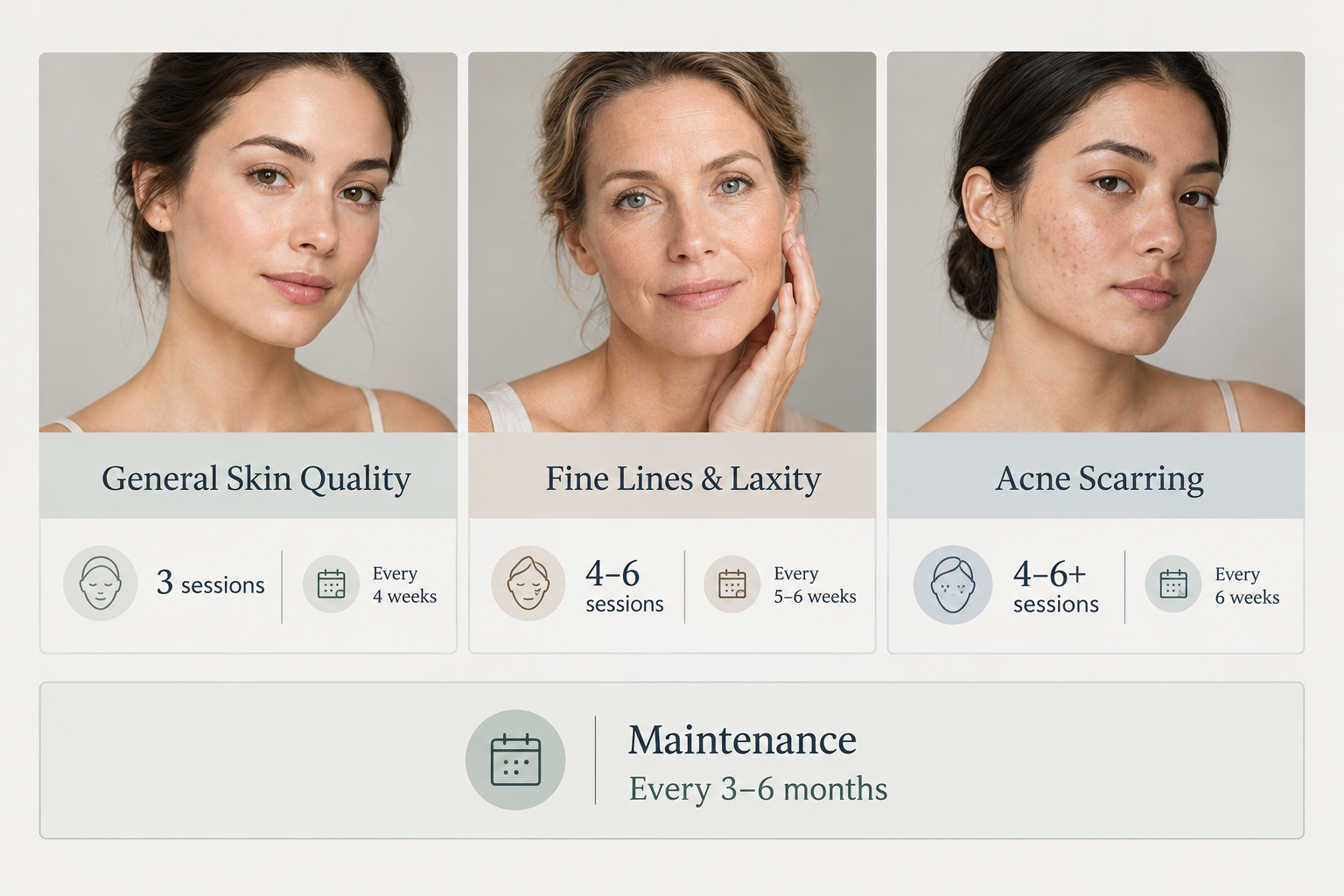
These are general guidelines rather than fixed rules. The appropriate interval for a specific patient depends on several factors, including the depth of treatment, the skin concern being addressed, the individual’s skin type and healing response, and whether any adjunct treatments such as platelet-rich plasma (PRP) or radiofrequency energy are being used alongside the needling. A practitioner who assesses your skin in person is best placed to recommend a schedule tailored to your situation.
Frequency by Skin Concern
Different skin concerns tend to require different numbers of sessions and different intervals. For general skin quality improvements — including mild texture irregularities, dullness, and early fine lines — a course of three sessions spaced four weeks apart is often a reasonable starting point, with results becoming more apparent in the weeks following the final session. For more established fine lines and early signs of skin laxity, four to six sessions may be recommended, sometimes with slightly longer intervals of five to six weeks to allow deeper remodelling to occur.
Acne scarring typically requires a longer commitment. Atrophic acne scars — the depressed, pitted type — involve structural changes in the dermis that take time to remodel. Most clinical protocols for acne scar treatment involve a minimum of four to six sessions, often spaced six weeks apart, and some patients with more significant scarring may benefit from additional sessions beyond this. Results from microneedling for acne scars tend to be gradual, with the most noticeable improvements often visible three to six months after completing a course rather than immediately after the final session.
Stretch marks represent one of the more challenging applications of microneedling. Because stretch marks involve significant dermal disruption, they generally require more sessions — often six or more — and longer intervals between treatments. Evidence for microneedling in stretch mark reduction is less robust than for acne scarring, and realistic expectations are important.
Superficial vs Deeper Treatments
The depth of needle penetration directly affects how long the skin needs to recover before the next session. Superficial microneedling at depths of around 0.5 mm, sometimes used for general skin quality and product absorption, causes less tissue disruption and may allow for shorter intervals — some protocols use intervals of two to three weeks for very superficial treatments. Deeper treatments targeting acne scars or more significant textural concerns require longer recovery periods, and attempting to shorten these intervals is unlikely to improve outcomes and may increase the risk of adverse effects.
Radiofrequency Microneedling: Does Frequency Change?
Radiofrequency (RF) microneedling combines the mechanical stimulation of traditional microneedling with the delivery of radiofrequency energy through the needle tips into the deeper layers of the skin. This combination is intended to produce more pronounced skin tightening and collagen stimulation than standard microneedling alone, and it is commonly used for skin laxity, enlarged pores, and deeper textural concerns. Because RF microneedling delivers a more intensive stimulus to the tissue, the recommended interval between sessions is typically longer — usually six to eight weeks — and a course of three to four sessions is often considered appropriate before reassessing the skin’s response.
The greater tissue stimulus from RF microneedling means the skin’s remodelling process takes longer to complete, and the results may continue to develop for several months after the final session. Patients considering RF microneedling should be aware that the treatment experience and downtime can differ from standard microneedling, with more pronounced redness and swelling in the days following treatment being common.
What Happens If You Have Microneedling Too Frequently?
Treating the skin more often than the recommended interval does not accelerate collagen production or produce faster results. The skin’s healing and remodelling processes follow a biological timeline that cannot be meaningfully shortened by repeating the stimulus before the previous cycle is complete. Treating too frequently may instead lead to persistent inflammation, prolonged redness, increased sensitivity, and a compromised skin barrier. In some cases, excessive treatment frequency has been associated with post-inflammatory hyperpigmentation, particularly in patients with darker skin tones who are already at higher risk of this complication.
There is also a practical consideration: if the skin is still in an active healing phase when the next session is performed, the practitioner may need to use a shallower depth or lower intensity to avoid over-treating the tissue, which may reduce the effectiveness of that session. Allowing adequate time between appointments is therefore in the patient’s interest both for safety and for achieving the best possible outcome.
Maintenance Microneedling: How Often After Your Initial Course?
Once an initial course of microneedling is complete and the skin has had time to fully remodel — typically assessed at a review appointment six to eight weeks after the final session — many practitioners recommend ongoing maintenance treatments to help sustain the improvements achieved. The frequency of maintenance sessions varies depending on the individual’s skin, their age, and the concern being managed, but intervals of three to six months are commonly suggested.
Maintenance microneedling is generally performed at a similar or slightly shallower depth than the initial course, and a single session is usually sufficient at each maintenance interval rather than repeating a full course. Some patients find that annual or twice-yearly maintenance sessions are adequate to maintain their results, while others with more active skin concerns may benefit from more frequent maintenance. A practitioner review is the appropriate way to determine what schedule makes sense for your skin over time.
Factors That Affect How Often You Can Have Microneedling
Several individual factors influence how frequently microneedling can safely and effectively be performed. Understanding these factors helps explain why a treatment schedule that works well for one patient may not be appropriate for another.
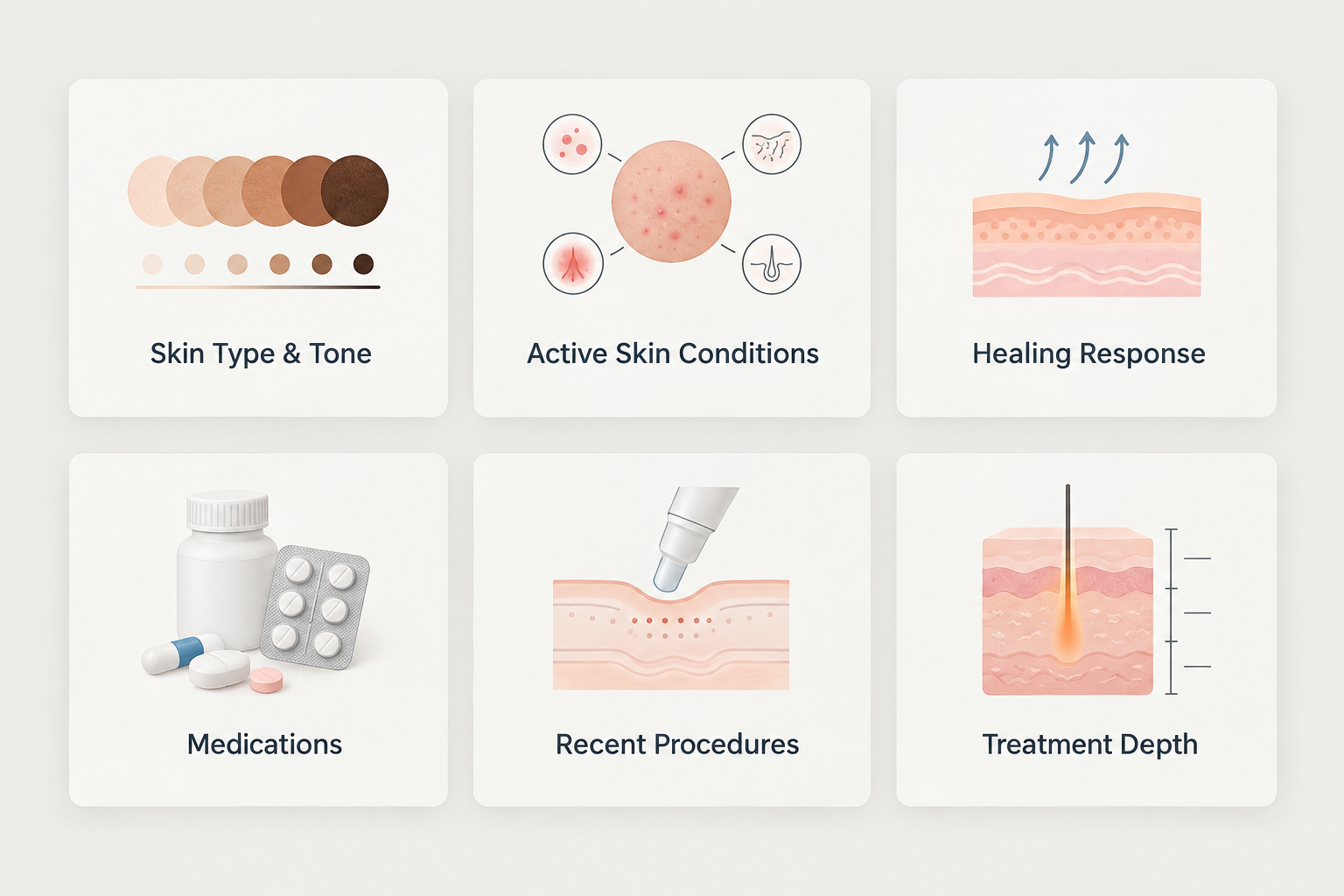
- Skin type and tone: Patients with Fitzpatrick skin types IV to VI (medium-brown to dark skin) are at higher risk of post-inflammatory hyperpigmentation following microneedling. Longer intervals between sessions and careful depth selection are particularly important for these patients, and some practitioners may recommend a more conservative initial approach.
- Active skin conditions: Active acne, rosacea, eczema, psoriasis, or any active skin infection in the treatment area are generally contraindications to microneedling until the condition is controlled. Treating inflamed or compromised skin increases the risk of spreading infection, worsening inflammation, and producing unpredictable results.
- Healing response: Individual healing capacity varies. Patients who take longer to recover from the initial redness and sensitivity following a session may need longer intervals before their next appointment. Age, general health, nutritional status, and certain medications can all influence how quickly the skin heals.
- Medications: Certain medications affect skin healing and sensitivity. Isotretinoin (used for acne) is a well-recognised contraindication to microneedling, and most practitioners recommend waiting at least six months after completing a course of isotretinoin before undergoing treatment. Blood-thinning medications, immunosuppressants, and some topical retinoids may also affect suitability and timing.
- Recent procedures: If you have recently had other skin treatments — such as laser resurfacing, chemical peels, or injectable treatments — your practitioner will need to consider the timing carefully to avoid over-treating the skin or interfering with the results of the previous procedure.
- Treatment depth and device used: As discussed, deeper treatments and RF microneedling require longer recovery intervals than superficial treatments. The specific device used and the settings applied also influence the appropriate interval.
What to Expect During and After a Microneedling Session
Before a microneedling appointment, a topical anaesthetic cream is typically applied to the treatment area and left for around 30 to 45 minutes to minimise discomfort during the procedure. The microneedling device is then passed over the skin in a systematic pattern, with the depth adjusted for different areas. The treatment itself usually takes 20 to 45 minutes depending on the size of the area being treated. Most patients describe the sensation as a mild to moderate prickling or scratching feeling, with some areas — such as the forehead and around the nose — being more sensitive than others.
Immediately after treatment, the skin typically appears red and may feel warm and tight, similar in appearance to mild sunburn. This initial redness usually subsides within 24 to 48 hours for standard microneedling, though deeper treatments or RF microneedling may result in redness and mild swelling lasting three to five days. Tiny pinpoint marks may be visible for the first day or two. Most patients are able to return to normal activities within 24 to 48 hours, though sun exposure, heavy exercise, and the use of active skincare ingredients such as retinoids and acids should be avoided for several days following treatment.
Visible improvements in skin texture and tone may begin to appear within two to four weeks of a session as the initial collagen remodelling takes effect, but the most significant changes — particularly for acne scarring — typically develop over three to six months following a completed course. This delayed timeline is one reason why patience is important when assessing the results of microneedling, and why it is worth completing a recommended course before drawing conclusions about effectiveness.
Risks and Limitations to Consider
Microneedling is generally considered a well-tolerated procedure when performed by a trained practitioner using appropriate equipment, but it is not without risks. Common side effects include temporary redness, swelling, and sensitivity in the days following treatment. Less common but more significant risks include post-inflammatory hyperpigmentation (particularly in darker skin tones), infection if the skin barrier is compromised and aftercare is not followed carefully, and — in rare cases — scarring or granuloma formation.
The evidence base for microneedling is growing, with a reasonable body of clinical research supporting its use for acne scarring and skin texture improvement. Evidence for some other applications — including hair loss, stretch marks, and certain types of hyperpigmentation — is less consistent, and results vary considerably between individuals. Microneedling is not a replacement for treatments with stronger evidence for specific concerns, and a practitioner should be transparent about what the evidence does and does not support for your particular situation.
It is also worth noting that the quality of microneedling devices varies significantly. Medical-grade devices used in clinical settings differ from at-home dermarollers in terms of needle precision, sterility, and the ability to control depth accurately. At-home microneedling devices carry a higher risk of infection and inconsistent results, and they are not equivalent to professional treatment.
Alternatives to Microneedling
Microneedling is one of several options for improving skin texture, reducing the appearance of scars, and stimulating collagen production. Depending on your specific concern and skin type, a practitioner may discuss alternatives or complementary treatments.
- Laser resurfacing: Fractional laser treatments — both ablative and non-ablative — can address similar concerns to microneedling, often with more pronounced results for certain types of scarring and pigmentation. Downtime and risk profiles differ, and laser treatments may not be suitable for all skin tones.
- Chemical peels: Medium and deep chemical peels can improve skin texture, fine lines, and superficial scarring. They work through a different mechanism — controlled chemical exfoliation — and may be used alongside or as an alternative to microneedling depending on the concern.
- Polynucleotides and skin boosters: Injectable treatments using polynucleotides or hyaluronic acid-based skin boosters address skin quality concerns through hydration and tissue regeneration rather than mechanical stimulation. These may be used alongside microneedling or as an alternative for patients who are not suitable candidates for needling.
- Platelet-rich plasma (PRP): PRP is sometimes used in combination with microneedling — applied topically during the procedure or injected — to potentially enhance the healing and regenerative response. Evidence for PRP as a standalone treatment for skin quality is still developing.
- Topical retinoids: For mild texture concerns and early fine lines, a consistent skincare routine incorporating prescription-strength retinoids may produce meaningful improvements over time without the need for in-clinic procedures. This is not a direct equivalent to microneedling for more significant concerns, but it is a relevant consideration for patients with mild concerns or those who are not suitable for in-clinic treatment.
Frequently Asked Questions
Can I have microneedling once a month?
A four-week interval is at the shorter end of the recommended range for standard microneedling and may be appropriate for superficial treatments targeting general skin quality. For deeper treatments or RF microneedling, a longer interval of six to eight weeks is typically more appropriate. Your practitioner will advise on the right interval based on the depth of treatment and how your skin responds.
How many microneedling sessions do I need to see results?
Most patients begin to notice improvements in skin texture and tone after two to three sessions, though the full benefit of a course typically becomes apparent several weeks after the final session as collagen remodelling continues. For acne scarring, a minimum of four to six sessions is usually recommended before assessing the overall result.
Is one microneedling session enough?
A single session can produce a temporary improvement in skin radiance and texture, but meaningful and lasting changes in collagen structure, scar appearance, or skin laxity generally require a course of treatments. One session may be appropriate as a maintenance treatment after completing an initial course, but it is unlikely to produce significant results as a standalone treatment for more established concerns.
How long do microneedling results last?
Results from a completed course of microneedling can last for several months to over a year, depending on the concern treated, the individual’s skin, and their age. Collagen production naturally declines with age, so maintenance sessions are typically recommended to help sustain improvements. Lifestyle factors such as sun protection and skincare routine also influence how long results are maintained.
Can microneedling be done too often?
Yes. Treating the skin more frequently than the recommended interval does not improve results and may cause persistent inflammation, a compromised skin barrier, increased sensitivity, and a higher risk of post-inflammatory hyperpigmentation. Allowing adequate recovery time between sessions is important for both safety and effectiveness.
Is microneedling suitable for all skin types?
Microneedling can be performed on a range of skin types, but patients with darker skin tones require careful assessment and a conservative approach due to the higher risk of post-inflammatory hyperpigmentation. Active skin conditions, certain medications, and recent procedures may also affect suitability. A thorough consultation with a qualified practitioner is essential before beginning treatment.
Can I combine microneedling with other treatments?
Microneedling is sometimes combined with topical treatments such as hyaluronic acid, growth factors, or PRP applied during the procedure to potentially enhance results. It can also be used alongside other in-clinic treatments, though timing and sequencing need to be planned carefully to avoid over-treating the skin. Your practitioner should advise on what combinations may be appropriate for your specific concerns.
Planning a Microneedling Schedule That Works for Your Skin
The right microneedling frequency is not a single universal answer — it is a clinical decision based on your skin concern, skin type, the depth of treatment being used, and how your skin responds over time. For most patients, a course of three to six sessions spaced four to six weeks apart forms the foundation of treatment, followed by maintenance sessions every three to six months to help sustain the results. Attempting to accelerate this schedule is unlikely to improve outcomes and may increase the risk of side effects.
If you are considering microneedling, a consultation with a qualified and experienced practitioner is the appropriate starting point. A thorough skin assessment will help determine whether microneedling is suitable for your concern, what depth and device are appropriate, how many sessions may be needed, and what realistic improvements you can expect over what timeframe. Microneedling can produce meaningful improvements for the right patient with the right expectations — but like most aesthetic treatments, it works best when it is planned carefully and performed at appropriate intervals.


